Tag: OTT

  • ZEE5 targets 20x-30x increase in subscription numbers in next one year

    ZEE5 targets 20x-30x increase in subscription numbers in next one year

    MUMBAI: To mark its first anniversary, ZEEL’s OTT platform ZEE5 recently announced plans to produce 72 new Originals on the platform by March 2020. Despite being part of a media and entertainment conglomerate, the super streamer continues to garner all the spotlight largely thanks to the effective progress it has made since launch. Despite being the last entrant into the high-stakes OTT battle, ZEE5 has not just carved out a unique identity for itself but has also turned into a force to be reckoned with.

    “This past year has been an enriching journey for each one of us who has been a part of it and being the fastest growing OTT platform in the country is testimony to the continual efforts of the team and support from our partners. Since our launch in February 2018, we have achieved milestones not just on the content front, but under multiple pillars including partnerships and technology. Our aim, through all our initiatives, has been to bring a seamless viewing experience for our subscribers, no matter where they are or what their preference is. The learnings have been immense, and from it we have emerged – stronger and bigger. In 2019, our aim is to outdo ourselves in terms of the concepts & shows and technology we drive through ZEE5 and the announcements today are proof that we are fully poised to take this on,” ZEE5 India CEO Tarun Katial recently.

    A key driver of brand ZEE5 has been its business head Manish Aggarwal. Indiantelevision.com caught up with Aggarwal to get a deeper insight into what’s in store for the streaming service and its subscribers going forward.

    Q. How has the journey been? It’s been a year.

    A. So of course, the first year has been very interesting for us, we’ve been able to scale up whether it’s in terms of the kind of shows we’ve launched out in the market, across languages or in terms of the ramp up we’ve done in attracting monthly active users on the platform. So when you look at the kind of content we did, we were the ones who launched highest number of original content across 6 languages or the kind of world digital premiere of movies we did on the platform or the kind of original films we launched on the platform which were originally designed and catered for the ZEE5 platform and not available anywhere else and of course all of this resulted in the kind of audiences we were able to attract.

    Q. What are the main highlights of this year?

    A. To take out 3-4 highlights for you, one would definitely be the originals which we’ve launched across 6 languages. Second, it was very satisfying for us within the content space. We were able to work with the who’s who in the Hindi, Tamil, Telugu, Marathi industries whether we work with Kartik Subbaraj in Tamil who has directed Rajinikanth’s movie, we’ve worked with Parambrata who directed our Kali, our Bengali originals or you know we’ve worked with Bhau Kadam in Marathi or Sai in Marathi. So you name the genre, we’ve worked with the best in class. Thirdly the most gratifying for us was, we started being the global first in launching regional subscription VOD pack. As we speak today Tamil, Telugu, Kannada packs are hugely contributing to the overall subscription numbers.

    Q. So how has been the growth in your subscription based numbers? We know about your MAUs and DAUs. How much has the subscriber base increased in the last year? And how much do you expect going forward?

    A. Unfortunately I can’t declare the subscription numbers to you. We have declared the MAU numbers publically. We have seen very healthy growth in subscription numbers. Today we’ve seen subscription growth coming across India, what kicked off with Karenjit Kaur season 1 and 2, Sunny Leone’s biopic further got scaled up with our Rangbaaz show and our crime thriller which was essentially gangster drama. So, in fact, a market like Lucknow and other UP hinterlands which were contributing highest for us when it came to subscription rolls purely at the back of Rangbaaz, typically one would think that these markets would not contribute so much to subscriptions that they would be congested in more free content and that’s not the case for us. And similarly with Abhay we’ve seen a few subscriptions ramping up and with Final Call with the trailer out we’ve seen very positive response and hoping to continue the momentum.

    Q. How much increase in subscription numbers do you expect in the coming years, the growth rate?

    A. For us the subscriptions come from 2 poles, one is the B2B side which is through our partnerships whether it’s through telco, OEM or broadband partners which is the direct subscriptions. We have very steep targets from both B2B and B2C perspective and we are hoping to easily get 20x-30x on the subscription numbers.

    Q. Any plans to strike deals with broadband players or do you have some?

    A. We already have some, we are already live with ACT Fibrenet and Hathway and we are going to announce two more broadband partners. These are very big broadband players. We’ve almost closed and it’s just the last stages of the announcement of at least 2 more I assure you and we are also in talks with others. We are also working with some regional players.

    Q. How are brands looking at Zee5? Is advertising getting more profit to the platform?

    A. At this point in time, it is more about investing and building the platform in terms of the product, technology, content, marketing and distribution partnerships. The key is to give the best of stories to our audiences across genres in the language of their choice and most importantly, availability so that they can watch where they want to watch it whether it’s a feature phone or a smartphone or whether it’s a large screen connection device. And of course advertisers have received ZEE5 in a big way and as we speak we are working with all top media agencies and brands in India whether it’s in terms of targeting metro audiences or in terms of targeting tier 1, tier 2 audiences, essentially wherever there is a smartphone and wherever there is data, ZEE5 is easily accessible and available.

    Q. As you mentioned media agencies, can you name some media agencies and brands for us?

    A. We are working with all of them – GroupM, Madison, Havas Group.

    Q. You have shows in six different languages. Where do you see more traction coming from? Which language is giving more eyeballs to the platform?

    A. Hindi is high for everyone. The very reason for the existence of ZEE5 was because we realised that there’s a void of regional content for the Indian consumers and with launching ZEE5 we have significantly filled that void in the entertainment industry today. One interesting insight that I have to tell you is that the consumer today is hungry for good content and good storytelling and that is language agnostic. For us Karenjit Kaur which was Hindi did very well and then we dubbed that in Tamil or Kali which was a Bengali original did very well for us in Hindi and there are various such instances where original language has performed well and at the same time an unexpected regional language has also performed equally well and this is across genre whether it is thriller, horror, crime, comedy.

    Q. Are you planning regional subscription packs for other languages as well? The remaining 3 languages that you have.

    A. We have regional subscription plans in Tamil, Telugu and Kannada. Tamil and Telugu have been available since 1 November and Kannada we launched a month later. Of course with Tamil, Telugu and Kanada there is a unique content and requirement from the audiences. We still feel a lot of overlap between Hindi and Marathi audiences. We are very closely watching other languages whether it's Bengali, Marathi, Malayalam or Bhojpuri for that matter. So, we are closely watching that space depending on our audience requirements. We are there to launch regional packs in other markets as well.              

    Q. What has been the consumption trends? Is catchup giving more audience or more active users?

    A. I would say that catchup is giving us recurring audiences. We being number 1 or close number 2 in almost all the markets whether it’s on Hindi or regional markets etc. Of course, there is a recurring audience that wants to watch Kundali Bhagya and others. AVOD gives us recurring audiences.

    Q. So recently ZEE5 made it to Google playstore’s top 10 list. What made it possible? The content, the technology or what?

    A. In fact, we’ve been continuously present on the Google playstore in top 5 for free and grossing entertainment apps, not 10. In fact, there was a time when we also reached number 2 or 3 as well on top free and grossing entertainment apps. So it’s predominantly that the consumers are hungry for good content. Good content is what drives us there and what creates the traffic coming and people wanting to download and install the app and consume on a day to day basis.

    I think good interface is a necessity now in the category. You need to have a strong UI, you need to give great user experience. ZEE5 is the only one where the user gets the choice of 11 display languages while most entertainment apps allow you to select either English or Hindi as the display language. On ZEE5 if you are comfortable in reading in Odia or Marathi or Tamil you can actually go and select.

    Q. Do you plan to increase the investment in your technology along with the content?

    A. We are very aggressively investing in the product and technology front and in the next few months, you will see a lot of changes coming your way.

    Q. Any gaps you want to plugin going forward?

    A. On the technology front there is always a room to improve and like you pointed out we continued to invest heavily on the product and tech front and we’ll be introducing a lot of new features and enhancements on the product front so it’s a continuous improvement process and as a result, every 15 days we release an app update and we make sure that we continuously give the consumers a superior experience from what they have been using in the past and of course our intent is to make it available on as many platforms whether it’s on the telco front or broadband or set top box or smart televisions. You have to be there at the point of consumption.
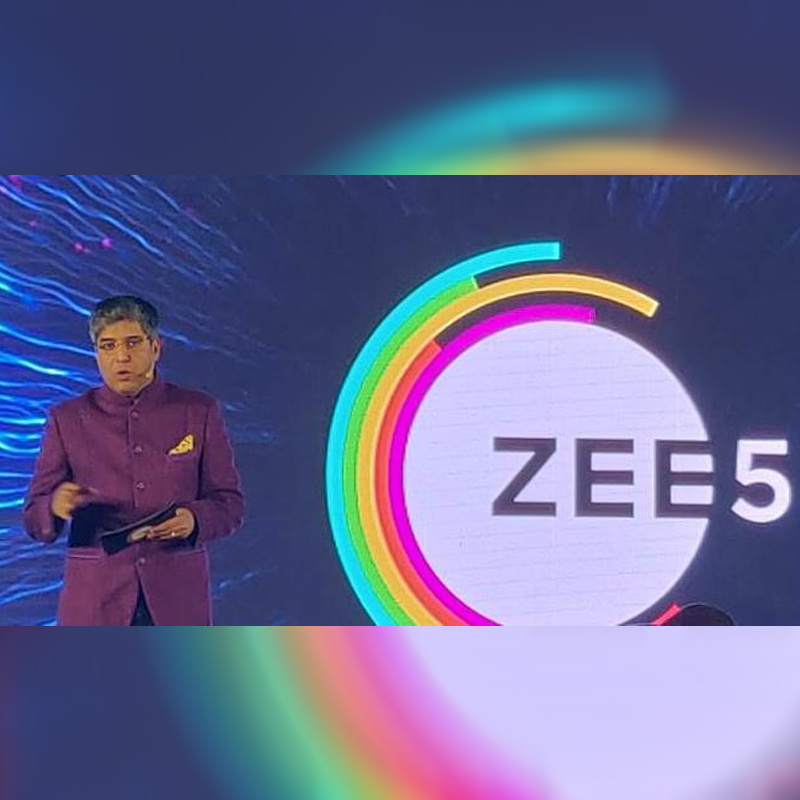
  • ZEE5 lines up 72 new originals till March 2020; continues focus on regional market

    ZEE5 lines up 72 new originals till March 2020; continues focus on regional market

    MUMBAI: Ushering in its first anniversary, ZEE5 announced an extensive line-up of 72 new Originals on the platform till March 2020. Staying true to ZEE5’s founding philosophy of focusing on regional content, this includes shows across multiple genres and languages including Hindi, Tamil, Telugu, Marathi, Bengali and Malayalam. The fastest growing OTT platform in the country also announced an anniversary offer where subscribers can avail a 30 per cent discount on both annual subscriptions – all access and regional, as well as an additional 50 per cent cashback on Paytm.

    The extravaganza was attended by some of the biggest names from showbiz across regions including Arjun Rampal, Saqib Saleem, Pooja Bhatt, Mahesh Bhatt, Goldie Behl, Guneet Monga, S Sreesanth and many more from the Bollywood industry, Parambrata Chatterjee and Raima Sen, Payel Sarkar, Riddhi Sen from Kolkata, Kathir from Chennai, Sujay Dahake, Vikram Gokhale from the Marathi entertainment industry, and so on.

    “It is a very proud moment indeed for us as we celebrate the first anniversary of ZEE5. A year in, we have seen how ZEE5 has, in fact, bolstered the network channels’ fanbase through its Before TV and catch-up content offerings. With its strong content library, the platform has established a niche for itself in the regional markets of our country – a space that has always remained a focus for us as a group. In the next few years, we will be investing in ZEE5 to make it the most widely subscribed and viewed Indian entertainment app globally, ” international broadcast business and Z5 global CEO Amit Goenka commented.

    “This past year has been an enriching journey for each one of us who have been a part of it and being the fastest growing OTT platform in the country is testimony to the continual efforts of the team and support from our partners. Since our launch in February 2018, we have achieved milestones not just on the content front, but under multiple pillars including partnerships and technology. Our aim through all our initiatives has been to bring a seamless viewing experience for our subscribers, no matter where they are or what their preference is. The learnings have been immense, and from it we have emerged – stronger and bigger. In 2019, our aim is to outdo ourselves in terms of the concepts & shows and technology we drive through ZEE5 and the announcements today are proof that we are fully poised to take this on,” ZEE5 India CEO tarun Katial said.

    “The regional markets is where the future of entertainment lies – our next viewers will come from there. We are cognizant of this and building an ecosystem to add more value to our stakeholders in these markets. To celebrate our first anniversary, we have a special offer for our subscribers as well,” he added.

    At the star-studded event, ZEE5 unveiled the logos of the following shows:

    •             Hindi – Rangbaaz Season 2, Karenjit Kaur Season 3 (with Sunny Leone), High Priestess (Amala Akkineni’s digital debut), Skyfire, The Final Call (starring Arjun Rampal and Sakshi Tanwar), Mystic Rose, The Sholay Girl (starring Bidita Baig), Mirror (a short film), 377 (starring Maanvi Gangroo and others), Poison (starring Arbaaz Khan, Freddy Daruwala, Tanuj Virwani), Bandit Queen

    •             Telugu – Ms Subbulakshmi (starring Lakshmi Manchu), G.O.D. – Gangs of Dharmapuri (starring Aditya)

    •             Tamil – Postman

    •             Bengali – Sharate Aaj (starring Parambrata Chatterjee, Payal Sarkar and Riddhi Sen)

    •             Marathi – Sex, Drugs and Theatre, Hutatma (starring Anjali Patil, Vaibhav Tatvavadi & Abhay Mahajan)

    •             Malayalam – Aarpoo, Porn Ok Please

    To celebrate the anniversary, ZEE5 has launched a special 30 per cent discount on both annual packs – all access at Rs 999/- and regional at Rs 499/-. This is applicable from 14 February to 31 March; in case subscribers pay via their Paytm account, they will get an additional 50 per cent cashback on these rates.

  • Madison Group CEO Vikram Sakhuja on TRAI tariff order, Ekam & media landscape

    Madison Group CEO Vikram Sakhuja on TRAI tariff order, Ekam & media landscape

    In a highly VUCA media world, over I’m going to attempt to answer the question of what’s in store for media in the near future. Today 11000 TV and radio advertisers, over two lakh print advertisers, 1500 OOH advertisers and 300 large – 2 lakh long tail online advertisers think long and hard about how to spend their marketing budgets.

    On one hand, it costs 30-40 crore to do a significant national launch, advertising on IPL can exceed a 100cr for some advertisers. A YouTube masthead or a TOI jacket costs excess of a crore, a 10-day OOH plan in Mumbai can cost over a crore. Yet an average advertiser spends under five crore a year on TV, two crore on OOH and lakhs on other mediums. At the top, there are only 12 advertisers with spends more than 500 cr. At a brand level, an equal number (12) spend more than 100 crore.

    For all of them, budget management boils down to making trade-offs between mediums and media objectives. By mediums I mean TV, print, radio, OOH, digital, cinema, and media objectives: reach, frequency, SOV, weeks on air, advertising size and “impact vs regular” inventory.

    How media shapes in the future will depend on how advertisers, agencies and media owners use different mediums across these fundamental media objectives.

    Reach: When it comes to reach we have close to 200 mn TV homes but only a handful of advertisers – large FMCG, political parties and telecom that reach both urban and rural. Even within urban most aggressive plans reach about 70% of TV homes once/month and about 45% three times.

    Byron Sharp amongst other media pundits says that reach is most important, yet at an India level we are reaching less than half. Question to ask is whether that 60% reach overall urban better or 95% reach among a particular market.

    Frequency: At a campaign level, TV typically operates at a 3-5 frequency, online at 7-8, print at 1 or 2. Yet paradoxically as consumers we often see the same ad perhaps three times in an hour while watching a movie or a game. Question to ask here is do we truly understand the concept of media frequency?

    SOV: Most advertisers track SOV/SOM closely as they find that competitive spends have a bearing on their business. Best way to get a client to spend is to tell them that their competitor is spending. Fact is media salience does drive brand choice but do we need to do it over a campaign or a financial year.

    ACD: TV copy length is coming under a microscope even as print sizes are increasing. Digital has expanded the ad range from 6” to long-form video. Rather than approach copy length by the medium question is one of optimizing the effectiveness and efficiency of creative length (typically using analytics).

    Impact vs. regular: Impact unquestionably helps cut clutter and build awareness. Used well it builds equity. However, it comes at a premium. New advertisers hoping to make a quick mark in the Indian market opt for an impact heavy strategy, while legacy marketers approach impact more judiciously. Question to my mind is do brands have an impact strategy?

    WOA: Often the variable that is traded off most. It is felt that it is better to have a campaign that is noticed over an always-on one. Indeed, we have only a few brands who are always-on on TV, display, social, search, performance; but most TV and all print, OOH, radio, cinema activity is typically sporadic and behind specific marketing initiatives. Why is WOA not given more importance?

    Current thinking has carved the pie across TV – 38%, print – 32%, digital – 19% (search 6%, display/video 7% and social 6%) OOH – 5.5% and radio – 3.5%.

    How will this media scenario change in the near future? If the future follows the past we will see the following:

    TV will be the base medium for building awareness and consideration. More TV channels will continue to launch, rate/10” will not increase and may even fall. Fragmentation will lead to an increase in CPRP. CPRPs within a genre will be competitive. Reach will be precious. Overall it will cost more to reach less. There will be the occasional super Premium Impact program that becomes a “tribal moment”.

    The power of others seeing the same thing as you, in the same room and across India at the same moment, cannot be overstated. If I see a Dominos RCB spot during IPL, and I discuss it with a friend who I can safely assume has seen it, a certain legitimacy is created that is called Cultural Imprinting.

    Digital Video will grow on the back of OTT, YouTube, Jio, MX Player, ShareIt and other video consumption and sharing platforms. Digital video has two roles: on advertising, the TV vs. digital video debate will net out at one complementing/supplementing, rather than replacing the other. On content, video will have an amazing run limited only by a brand’s ability to embrace content assets.

    Social will grow on the back of great psychographic targeting and delivery of outcomes and again grow proportionate to brand’s ability to create content based assets.

    Search will grow but more modestly as CPC’s go up and the ROI on search reduces

    Print will have a bumpy ride. It will remain a medium for a call to action and announcement of new news unless it reinvents itself. Categories will put it more under the scrutiny of effectiveness than any other medium. Comparisons will inevitably be with digital. Newspapers will struggle to balance yield with outlays.

    Digital display will grow but less than video. Here the contextual, performance oriented, rich media, tech-enhanced nature will lead to banners winning the battle versus print. Voice will emerge as a display medium

    Radio and cinema will grow as outlays remain modest and local marketing importance grows. OOH will gain from traffic count measurement that is now available at least in Madison and also grows. Put this way, if nothing changes, one could see similar trends in the next t years as we have seen in PMAR 2018. In 2021 we could well see digital being the second most dominant medium.

    But I think an alternative more exciting scenario is possible. This, however, is predicated on the occurrence of three disruptor events and two changes in how advertisers market their brands.

    · Disruptor events are TRAI channel pricing, digital data measurement, and data privacy

    · Marketing changes are true integrated marketing and increased localisation

    Disruptor events

    TRAI channel tariff order

    When TRAI channel tariff order is enforced, channel availability per home will reduce from approx. 350 Channels to 100+50. So, today most GEC channels have 90%+ distribution and about 35% weekly reach. After TRAI these channels could land up having 30% distribution and 30% reach.

    Reality is that an average home watches 16 channels. It is just that with so many more available there is surfing and some snacking and reach extension. Once these extraneous channels go out we will see individual channel reach reduce, ATS go up, and overall fragmentation will reduce. More channels will also go FTA, but carriage fees will also increase. There will be moreexperimentation with consumers opting in and out of channels on a monthly basis.

    Today there is a high degree of substitution possible between channels. In a post TRAI world, we will need a combination of channels to build reach and no two channels will be completely substitutable. Life will also be more dynamic. Using past four week data to predict the next four weeks will become challenging. It is a good time for a media planner to make a difference.

    Digital measurement

    The most accountable medium does not have a measurement currency. We don’t have a currency on digital AdEx, no currency that tells us about viewability and viewership/listenership. Sure, we are fed data by publishers, and we also have our own tags that we track, but there is no industry currency. Ekam was supposed to be one and huge amounts were spent to keep the infrastructure going, but for completely manmade reasons this has not emerged. If it comes we will get a currency on digital viewership and an official read on integrated reach between at least TV and digital video.

    This can redefine the 27000 cr video+ (23500+3500) industry.

    I believe TV and OTT have the common lean back consumer habit to viewing which will lead to a lot of crossover advertising between the two platforms. I also think the OTT content ecosystem will allow advertisers the deal structuring that we used to do with private producers in the DD era.

    This will also allow a narrowcast of a broadcast medium. We can choose markets and genders or ages and cut some wastage.

    Data Privacy

    As a consumer who owns my data will have a profound bearing on how the digital marketing evolves.This is not a current issue in India but is a simmering one in more developed digital economies.

    The detractors say that global digital media giants have the power and ability to manipulate our behaviour as well as profile us if they control our data. The supporters say having consumer data has led to contextual marketing, psychographic marketing and programmatic marketing that has made messaging to consumers more relevant. Indeed, these are powerful tools for any marketer that goes a long way in improving targeting and explaining how media works.

    As a marketer it would be a shame to lose this tool. But with great power comes great responsibility. It is obvious that data needs to be anonymised. That is a given. The crux of the issue lies in internalising the difference between targeting and profiling. It is ok to target me, but please don’t profile me. The difference is subtle but significant. If we cross the line, there is a danger of the entire digital media juggernaut crashing.

    Two marketing practices will impact the way we spend

    Act truly integrated

    We have talked integrated marketing plans for decades but we still act in silos. Sometimes an idea binds the media together, but is this integrated?

    There is a term called consumer journey or path to purchase that tracks a consumer from the time the trigger for the category happens to when purchase and post purchase happens. In this journey the potential media touchpoints are when the consumer is engaged in the activity of listening, viewing, reading, searching, shopping, socialising, learning or gaming. What brands can do with media at these touch points is the opportunity to get consumers to see us, think about us, experience us, buy us and share their views about us.

    Today over 90% of a brand’s marketing budget is involved in getting ads to be seen. As they move to other aspects of the marketing funnel, how the money is spent will change dramatically.

    Biggest catalyst to that will be CPT (or CPM). Today we evaluate a TV plan in CPRP, print in rate/sqcm, radio in rate/10”, OOH in rate/site, digital in CPT or CPO, etc. This needs to move to an apple to apple CPT. Over this we can add outcomes and measure CPO.

    Increased localisation

    We need to factor India’s heterogeneity much more into our marketing plans than we do currently. We approach plans as urban vs rural, 8 metro vs rest of India urban, HSM, 4 southern states, Maharashtra and West Bengal, and on socio economic basis through an increasingly NCCS AB skewed classification. Way forward is for brands to fine tune their battlegrounds. From spray and pray to seek and prey. We have several examples over the years like Ghadi, Santoor, Thums Up, etc that have built dominant regional positions.

    So, what’s in store for media in the near future is essentially harder working outcome based marketing. Brand budget growth follows an arithmetic progression while demands from marketing forces increase at a geometric progression. The following six forces will shape the advertising spend market.

    1. Expansion of marketing funnel: We used to make trade-offs between Mediums and Media Objectives (R/F/SOV/WOA/ACD/Impact). This was largely about getting consumers to see an Ad. Now we will additionally make trade-offs between getting them to see, explore, experience, buy and share across the journey. If that happens TV will lose relatively and all others will gain.

    2.Integrated Reach will continue to be critical: More media touchpoints will be required to get reach. Marketers will seek it in an integrated manner. Campaigns will maximize reach and optimize frequency across media. CPT will become the common currency that equates the cost of an impression across media.

    3. Greater Localisation: it will become increasingly impractical and inefficient to market to one India. Additionally, the trade-offs between markets will become sharper than our current P1, P2 classification. Greater digitisation and channel selection will lead to more localisation. TV will be used as a local medium more than it ever has. Digital, OOH, radio, the cinema will work in combination better than they work in a silo. Print will need to redefine its value to a local marketer and will find a huge role.

    4. Integrated Reach:, CPT, and greater localisation will lead to more intelligent media selling. All Mediums will have a role. From selling Media like onions and potatoes, there will be a need to find brand building solutions. In the near though not immediate future, media in India will get truly integrated as smart devices get connected in what we know as IOT.

    5.Data and technology will revolutionise targeting: We will increasingly target geographically, psychographically, contextually and behaviourally. We will increasingly retarget sequentially with customised messaging. Any medium with digital backbone leverage this capability.

    6.We will decode how media works: Increasingly through a combination of marketing analytics and real-time attribution, we will understand what sequence of Media drives consumer behaviour for each category

    (The author is Madison Group CEO Vikram Sakhuja. The views expressed here are his own and Indiantelevision.com may not subscribe to them)

  • Broadcasters split over rising production cost of GEC content

    Broadcasters split over rising production cost of GEC content

    MUMBAI: The rise in over the top (OTT) platforms has also led broadcasters and production houses to drive up the investment into its TV shows. The same companies are now even producing for both TV and digital.

    TV still has more headroom for growth, despite the OTT hype. India has 64 per cent TV home penetration and much room for growth. Data also shows that 86 per cent of Indian homes still watch TV on CRT sets and only 3 per cent are multi-TV homes. TV viewing in India has grown from 3 hr 14 min (2015) to 3 hr 36 min (2017) but it is still lower than the US, which boasts of an ATS of 3 hr 54 min. This gives a clear indication that there is immense scope for TV and it will further rise. According to FICCI 2018 report, TV viewership has grown by 21 per cent and it has grown across all age groups. On the other hand, even giants like Netflix and Amazon Prime Video are finding it tough to crack the OTT market here. The country’s online video market, valued at over $700 million, is expected to grow to $2.4 billion by 2023.

    According to Zee TV business head Aparna Bhosle, production cost will not increase. Whereas, Sony Sab, Pal business head Neeraj Vyas believes it will definitely increase. Viacom18 youth music and English entertainment head Ferzad Palia said that the cost of production will not be affected massively but will see a win-win situation for broadcasters, production houses and consumers.

    Viacom18 Hindi mass entertainment and kids TV network head Nina Elavia Jaipuria made her point by saying that a GEC needs fresh episodes every day, unlike OTT where the concept is of limited episodes and seasons with intervals. She added that there could be inflation and there could be little talent cost going up but there would not be that kind of inflation where the cost of production will go up.

    Vyas said, “Content house is constantly growing and this is the time where good, differentiated and innovative content is really needed, and that’s not going to be cheap." Whereas, Bhosle said, “The cost of production will not increase. It largely depends on the kind of story, where you set it and how much you want to spend on it. So you can make a story in Rs 40 lakh or you can also make a story in Rs 5 lakh. It all depends on the quality.” She differentiates that OTT viewing is individual in nature while TV here is more family-oriented. So even if shows are being watched on OTT, it does not mean that it’s eating away from television.

    Moreover, Palia said that there have been cases where the cost of production for digital is higher than what one would pay for television. He said that he has also heard about the instances where the bigger production houses had limited bandwidth and had chosen to do a digital show over a television show. According to him, it is a great opportunity for them because they can now monetise it across different screens and also for the production houses who could earlier make content for television to now broaden its base to mobile screens as well. “So I think it’s a win-win and I don’t think it will massively affect the cost of production. The consumers will also have a broader choice for the content that they want to watch and at a time and place where they want to watch,” he said.

    Indian broadcasters produce over 100,000 hours of content annually across languages and formats while newer players are investing higher amounts per episode and are tying up with leading talent. The increase in cost is expected to impact cost of film acquisition more than costs of episodic content. The overall cost of content rose by almost 2-3 per cent of their top line. With OTT companies refusing to take their foot off the pedal, broadcasters have no choice but to pay up. However, if their bid for quality programming fails to generate higher viewership which can be monetised better, broadcasters may not pursue quality, and stick to current cost metrics, according to a report. 

    Jaipuria said that TV needs to be supplied with 10 episodes a day and to meet such demands, the supply has to be at an affordable rate. While there is always inflation, I’m not sure there is going to be so much inflation in the cost of content per se when the demand is so high. "There has to be a demand and supply which will always even out. Even if there is an increase in cost, we are hoping that in the long term, we better our subscription revenue with the tariff order and that means we will invest more in content," she added. 

    Production houses have a similar story to tell. For Peninsula Pictures, led by Nissar Parvej and Alind Srivastava, the cost of production will not observe a hike. On the contrary, Swastik Productions writer, director, and producer Siddharth Kumar Tewary felt the opposite.

    Parvej said that the money is definitely more in the OTT space, but that doesn't make TV insecure.  “TV will be TV. I feel it will go down because I think the advertising money that they used to get before is not the same. The kind of cost we used to get five years is not seen anymore, it has come down and that is why the competition has become stiff. Reliance etc. are pumping in money but how much of it works, we will have to wait and see. There might be a cut-down or might take 4-5 years for OTT to settle,” he said.

    Srivastava chipped in and said, “I don’t think cost of production will go up. It also depends on the storylines like mythological shows can be made in Rs 10-50 lakh per episode.” Since consumers are exposed to global content now, local players, as per Tewary, will have to work on the content quality.

    Twisting it around, Carat India SVP Mayank Bhatnagar gave a different perspective to the mushrooming trend. He said that in 2019, the production quality has to be good but it will all depend on marketing. “People will only watch this content if there is enough awareness. Here, marketing spends will play a major role. If you look at the overall cost, it includes all the marketing expenses plus the production expenses then definitely the cost of production will go up because the kind of clutter that is there in the market, one needs to invest money behind promotion otherwise nobody will notice it,” he concluded.

    According to the KPMG FICCI report 2017, on an average, 20–30 minutes of fictional digital content can cost anywhere between Rs 12–15 lakh, which is higher than content costs on television. Despite significant beliefs from the broadcasters, production houses and media planners, OTT content is equally or more expensive than producing TV shows.

  • Shemaroo Entertainment starts OTT journey banking on its popular titles

    Shemaroo Entertainment starts OTT journey banking on its popular titles

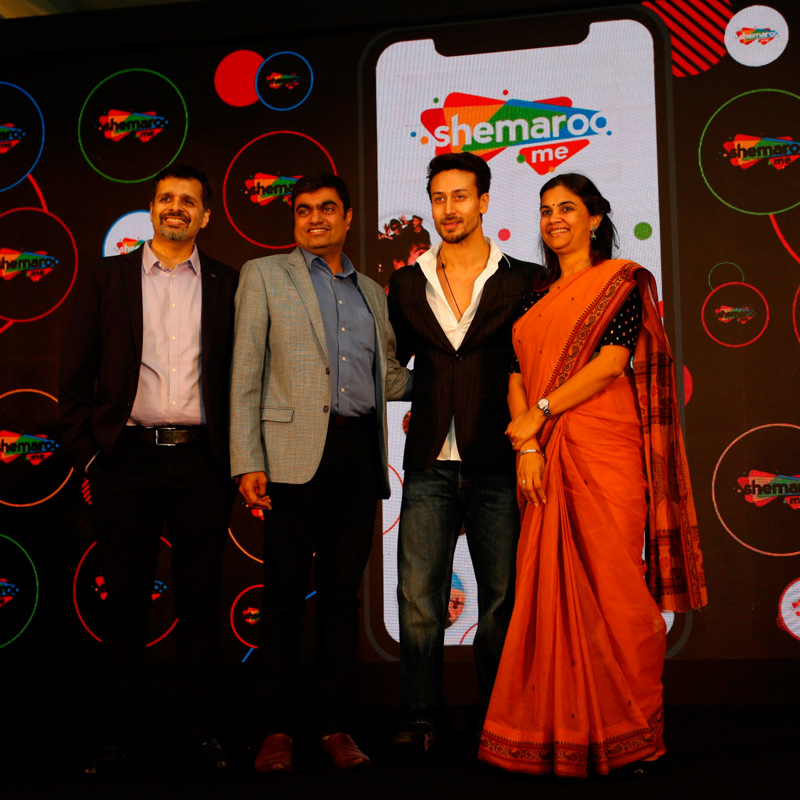
    MUMBAI: Content powerhouse Shemaroo Entertainment has taken the OTT dive. The new platform ShemarooMe will have seven distinct categories on offer – Bollywood Classic, Bollywood Plus, Gujarati, Kids, Bhakti, Ibaadat and Punjabi. Rather than focusing on the rat race, Shemaroo perceives the new journey as a “marathon”. The company does not want to overspend or lay a hand on every genre.

    The new OTT platform also provides consumers with the freedom to pick and choose the categories of content and pay for them separately. Individual category plans cost Rs 49 per month and Rs 499 per year while the all-access plan costs Rs 99 per month and Rs 999 per year. However, the platform will work on the freemium model.

    While Shemaroo Entertainment has produced a number of popular Bollywood movies, the company won’t house every title on the new platform. Talking to Indiantelevision.com, Shemaroo Entertainment CEO Hiren Gada said that the titles which don’t fit with the segmentation or serve consumer needs will not be added to the platform.

    Gada said the platform now has access to overall about 2000 films and 1000+ hours of non-film content. Going forward, the content library will be refreshed every week. He also added that the first three months of refresh line up is already in place but the new entrant has no plan to jump on the web-series bandwagon like other OTT platforms.

    “We want to be true to these segments. We neither want to confuse the customers nor shift focus on our efforts and resources. I will rather strengthen the categories I am serving than doing something which is unlike me,” Gada added.

    A mass media campaign will be rolled out across print, television, radio, outdoor for promoting ShemarooMe. Apart from that, digital dominates the marketing plan heavily.

    “Today we have so many users on our digital platforms who are relevant target audience. Someone who is using Filmygane, or any other Shemaroo YouTube channel, is a natural audience for us. So focus will be on how to inform them, invite them and help them transit from there to here. We don’t know how many of them will transit and at what pace that will happen. That’s too new for us,” he commented.

    While there are over 35 OTT platforms in the country, differentiating the new product to attract more consumers is definitely a challenge. Gada said that there is a large fan base that will consume content if it is familiar territory. According to him, there are people looking for new content and an equal amount looking for familiar content. He added that the ability to provide consumers with familiar content is one of the most important propositions of ShemarooMe.

    Gada said that the whole business model of the OTT platform has been developed in way so that it does not put pressure on Shemaroo Entertainment’s overall expenditure. He also said consumer feedback will play a very important role in course correction leading to addition and removal of certain content.

    “Through ShemarooMe, we wish to pamper Indians with great content that can be watched over and over again. Great content needs greater technology. Our content is offered on a state-of-the-art, robust platform, with a roadmap of features to woo our audiences. From live to linear to VOD content, we have all forms of consumption options available. We will be expanding our OTT distribution through strategic partnerships to offer exciting content across multiple platforms catering to the target audience and we do hope this is cherished by our audiences who have supported us for over 55 years,” Shemaroo Entertainment Digital COO Zubin Dubash commented.

  • Prasar Bharati’s Shashi Shekhar Vempati on DD India revamp, OTT plan, TRAI tariff regime

    Prasar Bharati’s Shashi Shekhar Vempati on DD India revamp, OTT plan, TRAI tariff regime

    MUMBAI: Shashi Shekhar Vempati is the first private sector executive to have a place on the Prasar Bharati hot seat. He is also one of the youngest CEOs at the organisation and in 2017 propelled it towards becoming a corporate 21st century public broadcaster.

    The pubcaster isn’t buckling under to the digital wave. The new Prasar Bharati under his vision is ready for the digital era. Recently, Doordarshan revamped DD India to an English news channel. In the latest week’s Broadcast Audience Research Council data, DD India is ahead of all private English news channels in the core target audience of NCCS AB: Males 22+ individuals.  

    Indiantelevision.com caught up with Vempati to talk about the success of DD India after the revamp, tariff order and Doordarshan’s OTT platform plans. Here are the excerpts:

    How has DD India made it to top slot in English news list? Any change in programming line-up?

    I think this needs a little bit of clarification. We have always known that the English viewership base of DD News was always quite high, but then DD news being a bi-lingual channel over the years, was being measured and reported in the Hindi genre. So, as a result, there was no reflection in BARC data of the size of the English viewership.

    What has really changed is that last year the Prasar Bharati board took a decision that we will have an English news channel in addition to the Hindi news channel and we will eventually position it as our offering to the international space as well. The reason is India doesn’t have a strong global voice unlike BBC, Al Jazeera, Russia Today and CGTN. So, with that in mind, we re-positioned DD India as the English news channel, where the English content of the news generated by DD News will also go.

    Over the last six months, BARC has started measuring it, but they have not reported it. They started reporting it from January in the English news genre. What was already a reality is now getting publicised.

    How many hours of English content is there on the channel?

    Close to 70 per cent of the Fixed Point Chart (FPC) is English news and the rest is English documentaries as of now. But the work is in progress and over the next few weeks we will increase that and it will become a full-fledged English news channel. The next big thing will be DD News and DD India becoming full-fledged Hindi and English news channels respectively.  

    What is your point of view on mandatory sharing of sports feed with the public broadcaster? Will we see IPL this time on DD?

    See when ever such a consultation happens, MIB takes feedback of all the stake holders, so our role comes much later. At this time there is no such proposal to share IPL matches. If there is anything we will let you know.

    CCEA recently approved the ‘Broadcasting Infrastructure and network development’ scheme of Prasar Bharati. How do you plan to use the budget allocated for it?

    The scheme approved by CCEA will include some expansion, modernisation of studios and upgrading of satellite infrastructure. We have a long pending modernisation. (These are some long pending modernisation. Provisions have been kept for modernisation of existing equipment/facilities in studios which are essential to sustain the ongoing activities and also for High Definition Television (HDTV) transmitters at Delhi, Mumbai, Chennai and Kolkata.)

    What is the status of the proposed Doordarshan OTT platform? What type of content will the platform have?

    Sometime in 2019, we will get to it. Right now our priority is news. It is a little early to comment on that. Firstly, we have to get our basic digital assets in place, which is what we are doing right now with the rollout of our iOS and Android apps which happened on the budget day.

    We have about 55 or more active YouTube channels. Digitisation of the archive is happening. At some point in 2019 we will put out the OTT platform for some of the premium content and rare archive and upgraded content.

    What’s your take on the TRAI tariff order?

    I think India, as a market, is clearly innovating on pricing and this tariff order reflects that. It shows the move towards greater subscription-based revenues for the media industry and I think it is a positive move in that direction. From both consumer and the broadcaster standpoint it is a positive move. It also gives flexibility to the consumer.

  • Delhi HC dismisses PIL on OTT content regulation

    Delhi HC dismisses PIL on OTT content regulation

    MUMBAI: The Delhi High Court has dismissed a plea that sought for framing of guidelines for the working of OTT platforms like Netflix, Amazon Prime Video and Hotstar, according to a Press Trust of India report.

    The Ministry of Information and Broadcasting told the bench that online platforms do not need a licence to operate after which the petition was rejected.

    According to a PTI report, the petitioner NGO Justice for Rights Foundation claimed that the platforms show "uncertified, sexually explicit and vulgar" content that aren't for for public viewing. It mentioned shoes like Sacred Games, Game of Thrones and Spartacus as having vulgar, profane, sexually explicit, pornographic, morally unethical and virulent content which often objectify women.

    The petitioner also wanted the court to get the ministries to frame guidelines for the platforms and their content and even make them remove such restricted content.

  • Times Internet’s 2nd OTT bet with revamped MX Player

    Times Internet’s 2nd OTT bet with revamped MX Player

    MUMBAI: Another ambitious player with deep pockets is set to enter the burgeoning OTT space in India. Times Internet is going to launch a revamped version of MX Player on 20 February. Sources close to the development revealed the information to Indiantelevision.com. Reportedly, Times Internet invested more than Rs 1000 crore to acquire majority stake in the Seoul-based local video player.

    With this launch, Times Internet will bet in the OTT segment for the second time. Earlier, in September 2016, the company had pulled down the shutters on its video OTT app Box TV. Soon after it bagged the MX Player deal.

    Like many other OTT platforms, MX Player also wants to tap the millennial audience, the age group of 18-35. Despite the mushrooming digital platforms and abundant content, young India is hungry for more which makes the play easier for new entrants.

    “We are understanding their specific need states and making sure that the programming is aligned to satisfying those need states via our original programming and curated licensing strategy,”  MX Player content head Gautam Talwar said in an interaction with Indiantelevision.com earlier. He also added that the OTT platform will enter the market with at least five to six premium shows.

  • Brands eager to be part of the story today

    Brands eager to be part of the story today

    MUMBAI: The content industry is in a massive flux. Norms and rules turn redundant in months now and the need for good quality content that can attract a global audience is at an all-time high, thanks to the advent and massive growth of OTT platforms like Netflix and Amazon Prime. Brands and marketers have rolled up their sleeves to cash in on this boom.

    The Story Lab, a global content specialist from Dentsu Aegis Network, started its Indian operations just a few years back and is considering to support this highly creative ecosphere in expanding further with its excellence backed by learning from the many international markets including the US, the UK, Russia, and Australia. Its global head of formats Fotini Paraskakis, who was recently in India to meet the team, joined by India head Kumar Deb Sinha had an exclusive chat with the Indiantelevision.com, highlighting the aspirations of the team and some of its strategies.

    Fotini, who had joined the team just a few months back, in September, after a long stint with Endemol Shine, mentions that working with The Story Lab is very exciting for her because it is platform-and client-agnostic. She adds, “I have been working in the Asian region, including India, for the past 20 years and I am very familiar with the content. When I was previously coming to India, it was very traditional for me. We had three or four shows that we pitched to the top GECs but now, it is the creator’s game. I always thought that India was extremely creative and that creativity is coming out now.”

    She added, “Working with The Story Lab, I think we are able to support these creators and producers helping them create forward-thinking innovative ideas and take them to partners and platforms that we already have the leverage of and have strong relationships with. It is interesting for me to see how we can build this strong kind of premium content house.”

    Echoing her thoughts, Kumar says, “At this point in time there is a huge opportunity for content in India. Most of it is OTT but traditional television is also changing its programming in a big way. It is because platforms like Netflix have changed the consumption patterns of the audience. With global content in global language at easy reach, people want more from the content industry. So, being an international network, we can easily execute newer trends in India. It is also faster to grow in India as people are just hungry for content right now.”

    Coming from the head of a content team that is a part of an agency framework, many would like to believe that this zeal is towards creating branded content only, but Kumar contends, “That’s exactly where The Story Lab is extremely different from other players in the market. While others are talking branded content, we are talking about a big content play, not limited to whether a brand funds it or not.”

    While branded content might not be at the core of The Story Lab philosophy, the leadership still believes that brands can anyway benefit from this boom of creative content in the industry. Kumar mentions, “When you talk about brands leveraging on content, it is not today’s thing. In fact, it started several decades back with P&G when they started sponsoring the whole afternoon soap band. It’s called ‘soap’ because P&G started it.”

    He added, “Probably, earlier they were more focussed on brand visibility. But today, they have taken a leap and want their brands to play a role in the story. I would say, in the last one or two years, there has been cutting-edge work done by the brands in digital content space. Interestingly, most of this has been done by start-up brands. Pepperfry, Epigamia, and Furlenco are a few examples.”

    Fotini shares an interesting insight into the global scenario saying, “In other territories, we are seeing brands going a step ahead, in fact. They just want to be associated with good stories. They don’t necessarily need their products in something. The brands now have a better foresight of associating with content that can create talking points for them. And that’s where The Story Lab, again, can play an important role by connecting brands who just want to support a good story with the right content.”

    On being quizzed whether this whole new paradigm will affect the traditional advertising industry in the long run, Kumar denies any such possibility. “The reason being the roles of both are very different. While traditional advertising has a clear role of reach and awareness, content is more about engagement.”

    He further notes, “The budgets, obviously, are very different for both. What might happen is clients start earmarking a certain part of their marketing budget as content budget. Whether that money will come from the advertising budget; I am not very sure about.”

    While both Kumar and Fotini are very eloquent about their plans to support the content market in India, they are still not revealing much about their own marketing strategies. While Kumar notes that it’s still very early to disclose the strategies, Fotini gives some scoop into what the action plan of The Story Lab has been in the global market.

    She elaborates, “So what we do in the UK; we go looking out for talent. We have started a creative programme where we, for example, invite a few people from the industry to share, learn, and work with other creators. There are no strings attached but we develop a good network of potential talent, people who we would like to work with. Also, sometimes we do pitching sessions regarding particular resources we have been looking for. Sometimes, we just support the industry. In the UK we also have a separate fund, purely to shore up production.

    “Basically, what I am saying is that Dentsu as a company is invested in content. They have different funds and a kind of creative collaboration that we fund directly. Or we pitch creators, producers, and writers together to talk about ideas, and share knowledge.  So, these are the kind of things that we want to start replicating in our key territories including India.”

    Fotini sees the Indian market as a highly creative space, which is also willing to spend more on production and distribution. She shares, “Most people might not think like that, but there’s a quite lot of money in the production space in India. It is far ahead of other Asian markets except China. If you look at other Asian territories, their budgets are much lower because the markets there are very ad-driven. Sure, the entry of platforms like Amazon and Netflix is now plowing in a lot of money, so that trend is changing. But they are still behind India.”

    On being asked where does India stand globally in its willingness to allocate funds, Fotini mentiones that there is no comparison because the models across are quite different. “The UK and the US are completely different markets because they have restrictions on advertising. In the US, traditionally there has been no branding and all the money comes from broadcasters. And there has been a lot of money. In the UK, there has been a lot of content and it is very creative as well. But what’s happening there recently is that the broadcasters' budgets have been cut. They are now looking for partners to make up this deficit. Sometimes it’s The Story Lab, sometimes someone else. They are not allowed to do branded content.”

    “In India, on the other hand, quite often the money is made out of brands. We are used to working with limited budgets. And also the people are very creative in terms of thinking alternates; if we can’t do this then let’s try doing that. The way creators and producers think is very different here.”

    Both Fotini and Kumar are very positive about the opportunities that the Indian market has for them right now. Fotini, with extreme confidence, wraps up the conversation saying, “The Story Lab is here to stay. We want to create long-term partnerships with creators, producers, and distributors. We already have long-term partnerships with different platforms and we want to bring them a good lot of content opportunities. Everything is in place already and we are going to build it strong and take it forward.”

  • Manav Sethi joins Eros International as group CMO

    Manav Sethi joins Eros International as group CMO

    MUMBAI: Former ALTBalaji chief marketing officer Manav Sethi has joined content powerhouse Eros International, Indiantelevision.com has reliably learnt. In his latest gig, the senior executive has been handed the role of group chief marketing officer, reporting into CEO Eros Digital Rishika Lulla.

    Sethi joined ALTBalaji in January 2017. He created and implemented brand strategies to build awareness and loyalty of the platform.

    His experience spans over fifteen years in managing and scaling up teams across product, engineering, technology, and marketing both at national and international levels.

    Before taking up the high-profile role at ALTBalaji, he worked with ASKME.com. Sethi has also played a key role in various business verticals of Reliance Big Entertainment.