Tag: OTT

  • Hotstar’s Varun Narang on driving consumer engagement for IPL 2019

    Hotstar’s Varun Narang on driving consumer engagement for IPL 2019

    MUMBAI: The nature of sports broadcasting has witnessed a dramatic shift over the years with fan engagement now playing a pivotal role in the strategy matrix of major channels. Technology has enhanced the core product on TV by enabling broadcasters to provide more statistically-driven insights.  

    Star India has been at the forefront of this change, offering technology-driven content on both TV and digital for some of its marquee sporting properties like the Indian Premier League. The Select Dugout feed for fanatics on TV and Watch’N play on its OTT platform Hotstar are prime examples.

    India has more than 790 million sports viewers, with 740 million of those being cricket watchers. IPL 2018 drew a humongous 700 million plus viewers to the Star Sports Network, with 22 per cent of those being contributed by Hotstar.

    The super streamer saw a concurrent viewership of 10.7 million for the finals between CSK and SRH, a record of sorts in the world of live sports streaming.

    The company has set its sights on shattering more such records this season as it looks to up the fan engagement levels through innovation. Those running the streaming service believe that two aspects in particular hold the key to keeping fans hooked for longer durations during sessions.

    “It’s been quite a phenomenal journey over the last few years for the platform. We are super excited for the upcoming IPL season starting 23 March. We want to make IPL even more compelling and addictive. We think that gamification as well as social are two big areas that will make the enjoyment of sports even more than it already is,” highlighted Hotstar chief product officer Varun Narang.

    Star India has not just been quick off the blocks in adapting to the digital environment but also managed to gallop ahead of competition by benefiting from the Jio-led telecom revolution.

    India is one of the fastest growing 4G markets in world today. The number of 4G users was five times the number of 3G users at the end of December 2018, according to Amazon Web Service (AWS).

    Improvement in internet connectivity, gradually declining data costs and increasing penetration of smartphones has led to rapid growth in online and on-the-go consumption of live sports content in India.

    “We thought that how can we make it more fun from a gamification perspective as hundreds of millions of fans are not in the stadium. We built a game (Watch‘N play) that was based on some principles and tens of millions of users played and enjoyed it. We are super thrilled to take the next step and are looking for really cool filters that are built around IPL games. We looked at the entire spectrum including fantasy leagues, percentage of engagement in fantasy leagues with NFL which is the largest fantasy league in the world,” Narang stated.

    Fantasy sports has emerged as a big winner in recent times due to the growth of digital infrastructure and the emergence of new sports leagues. Fantasy sports is increasingly gaining more traction in India, with the number of fantasy sports operators having risen from 10 in 2016 to 70 in 2018. That number of users on fantasy sports platforms is expected to cross 100 million by 2020.

    Star has demonstrated its success from cricket broadcasting in the Pro Kabaddi League (PKL) as well.

    “It’s a sport which is well known in India and is played by almost everyone in their childhood. So the challenge was how to make it exciting to watch and then over time finding the right partners for the league to ensure that you have momentum in growing the sport. So one of the trusts is the franchises, until two years ago we had eight franchises and now we have 12. When we brought the next set of franchises, we wanted them to know how to build a brand which will engage the fan and broaden the sport,” pointed out Star India president – new strategy and head of PKL Ipshita Dasgupta

    According to her, the fact that 65 per cent of the Indian population is under the age of 35 and 50 per cent is under the age of 25 is extremely crucial.

    “I think going from zero to 300 million viewers in the space of four years, there are so many things that can be attributed to this. The thing that we added to that is involving kids and schools into Kabaddi, that was a big difference. Having kids play and making Kabaddi aspirational for children is important. We are one of the longer leagues which is substantial compared to others. To build a sport you need to have coaches, players making money, teams which can build brands – all of these things play a huge role,” she further added.

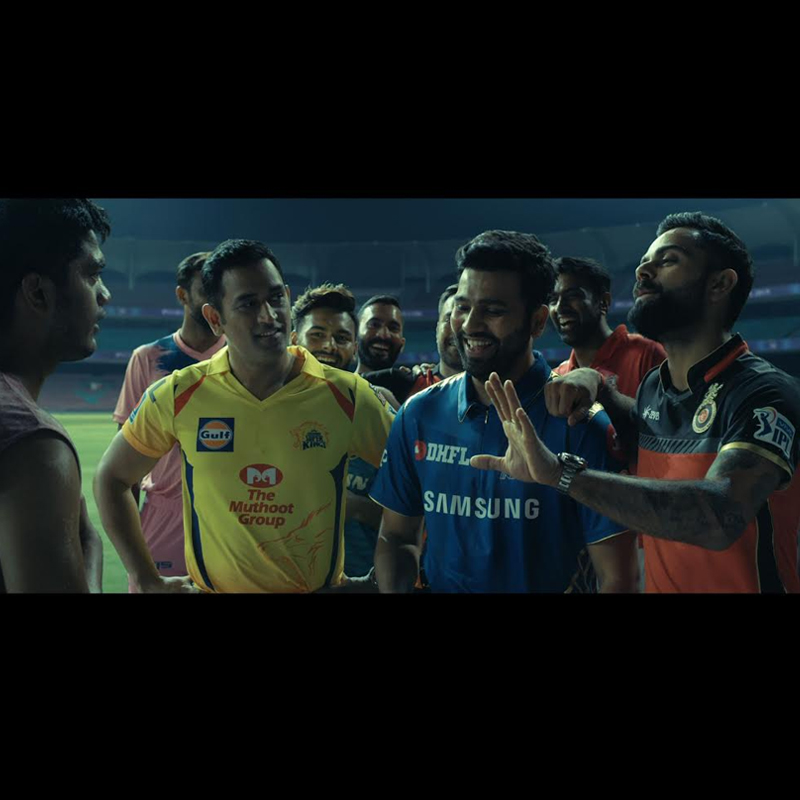
    With the 12th edition of IPL just around the corner, Star Sports and BCCI unveiled the campaign #GameBanayegaName which focuses on IPL as a platform where one’s ‘Talent’ (Game) precedes one’s name.

    The TVC opens with a split screen battle between young players in a maidan on one side and established IPL stars on the other to grab screen space. After an entertaining tussle, the film ends with IPL stars acknowledging the maidan players talent and inviting them to show their game. The TVC is a reflection of the core spirit that IPL resonates, a platform for young talent to showcase their game and an opportunity to make a name.

    The film is being released simultaneously in 7 languages – Hindi, Tamil, Kannada, Malayalam, Telugu, Bengali and Marathi across all platforms, TV, radio, and digital.
  • MultiTV acquires digital sports streaming service VEQTA

    MultiTV acquires digital sports streaming service VEQTA

    MUMBAI: MultiTV has announced that it has acquired Veqta in India from ITW Digital. Veqta is India’s first digital platform dedicated to streaming live sport and providing video-on-demand sports content. MultiTV looks to strengthen its offering with sports content and B2B and B2C integration of the digital sports streaming OTT platform. 

    Through its digital platform, Veqta provides access to live coverage of sports action from around the world to fans in India.

    Commenting on the development, MultiTV founder Vikash Samota said, “MultiTV has been associated with Veqta since its early days. We have been involved with many OTT platforms and are providing them the video platform and technical support. With this acquisition we will now strengthen our offering with sports content and B2B and B2C integration of Veqta. We look forward to using our expertise to grow the brand by bringing great content from the world of sports and providing a seamless viewing experience to the Veqta users”.

    VEQTA co-founder and director Varun Mathur said, “MultiTV has been providing the technical
    backend infrastructure services for Veqta and is quite familiar with the product. This will allow for a seamless takeover of Veqta by MultiTV. We are confident that MultiTV with its large team, technical expertise and vast OTT experience will grow the brand and increase the reach among sports fans in the country.”

    MultiTV aims to empower and create next level digital video eco-system, helping brands, broadcasters, content owners and publishers with cutting-edge technology products to leverage the growing digital video consumption among audiences. With the comprehensive end-to-end video solution, MultiTV offers OTT, monetisation, live broadcasting and tv tracking technologies.

  • SVoD subscribers to touch 743 mn globally by 2023

    SVoD subscribers to touch 743 mn globally by 2023

    MUMBAI: Subscription based video on demand (SVoD) is rising persistently and will draw a level with broadcast TV globally by 2023 in terms of viewing hours per day. According to a report from Rethink TV research, SVoD will surpass traditional TV viewing soon after.

    The report forecasts SVoD usage in all the regions as well as highlights the differences between AVoD dominated Asian market and SVoD-crazy US and European market. The research sees 478 million SVoD subscribers today growing to 743 million by 2023.

    China will have the most SVoD subscribers by 2023 although North America will still drive the largest dollar volume. The report also forecasts the US market reaching 236.6 million subscriptions by the end of 2023, from a base today of some 146.5 million.

    “Europe and Asia will be neck and neck in SVoD revenues by 2023, but with far fewer subscribers in Europe, each paying significantly more than those in Asia, a region dominated by frighteningly large Advertising VoD streaming numbers,” it said.

    Outside China, Netflix will continue to lead in SVoD in subscribers numbers. The streaming giant will make up 194 million SVoD customers out of 743 million globally by 2023, some 26 per cent of overall global subscribers.

    The report has also predicted that WarnerMedia, under its new AT&T defined, freemium strategy will emerge as the new leader in the US Market. It is predicted to reach 29.6 million SVoD homes by 2023. Disney is also likely to have multiple SVoD service types, but may struggle outside the US.

    While the Asia Pacific market is highly skewed with China expected to gather 245 million SVoD subscribers, the average spend will be just $2 to $3 a month. Latin  American market will see competition among Netflix, America Movil’s Claro TV and Televisa’s Blim.

    “Europe will be a mishmash of different approaches with pure-play US operators like Netflix and Amazon now established, US studios beginning to stake a claim, and local broadcasters ganging up to challenge them. The region has its own pure play SVoD players also such as Maxdome, Sky, Zattoo, and Rakuten TV,” it stated.

  • Viu forays into South African market

    Viu forays into South African market

    MUMBAI: The over-the-top(OTT) platform Viu has officially entered South African market. Following this launch, Viu is now available in 17 countries. While Viu’s programming strategy always focuses on locally relevant premium content, South Africa is not an exception.

    The OTT platform which has entered partnerships with Etv, SABC will operate in freemium model and will offer local and original content also. Viu has already licensed South Africa’s most watched local shows and users can watch the country’s leading productions such as Imbewu, Uzalo, Scandal, SkeemSaam.

    “We are excited to be bringing a truly ‘freemium’ video streaming service anchored on local content to South Africa. Through our partnerships with Etv, SABC, and Vodacom, we have built an ecosystem that makes it easier for audiences to engage with our platform. The app is available in the IOS app store, Google Play and in the Huawei app gallery,” Viu SA country manager Ryan Solovei said.

    Viu has also partnered with Vodacom to provide greater access to customers with innovative products. The Viu Premium subscription is available at R69 per month, R20 a week or R5 per day.  

    “Vodacom entered into a strategic partnership with Vuclip over three years ago with the aim of providing a wide range of quality entertainment across various customer segments. Based on the success of Vuclip short form content as well as our Video Play service, we have made the strategic decision to enhance our video portfolio though the launch of Viu, to continue providing local and international premium content to our South African market,” Vodacom group digital and fixed services officer Zunaid Mahomed said.

  • Voot, EROS Now part of UK’s first ever on-demand Asian TV apps pack by Virgin TV

    Voot, EROS Now part of UK’s first ever on-demand Asian TV apps pack by Virgin TV

    MUMBAI: Virgin TV has become the UK’s first ever Pay TV provider to add an on-demand library of films and shows through two Asian entertainment apps.

    The Desi App Pack, which Virgin TV customers can add to their package from Thursday 28th February 2019, brings together two of India’s biggest entertainment apps – Eros Now and Voot – into an easy to access apps pack that allows TV viewers to watch a range of shows and movies at a click of a button.

    There are multiple hours of content for viewers to watch which is available in more than 10 languages.

    Voot is home to exclusive original productions including It’s Not That Simple, Feet Up with the Stars and hit shows Bigg Boss, Khatron Ke Khiladi, Silsila Badalte Rishton Ka amongst others and over 400 movies.

    Eros Now has a blockbuster library of more than 12,000 films including original productions such as Operation Cobra and Enaaya.

    Those who currently have Asian Mela TV as part of their subscription can add the service for just £6 per month. It is £12 per month for all other customers.

    Customers can add the service though their TV set box or over the phone. To access the Desi App Pack, customers will need a V6 box and go to channel 800 and press the red button on their remote.

    Over the past year Virgin TV has invested and bolstered its Asian TV offering with new channels and upgraded many standard definition channels to HD.

    David Bouchier, Chief Digital Entertainment Officer at Virgin Media, said: “We designed our V6 TV box to work seamlessly with on demand apps such as Netflix and to maximise the power of our fibre network for instantaneous access to the limitless programming available on demand. The addition of the Desi apps further strengthens our lead in the on demand viewing experience”

    Commenting on the integration deal, Rishika Lulla Singh, CEO – Eros Digital said: “With increasing consumption of cross border content and popularity of Indian films, we are excited to announce our collaboration with Virgin Media. Eros Now is the largest South Asian Video Service with close to 16M paid subscriber’s world over and the United Kingdom is one of our primary international markets. We are happy to cater to this growing community with best of Indian content and remain focused on expanding our global presence by exploring opportunities to connect with local audiences.”

    Sudhanshu Vats, Group CEO & MD, Viacom18 said: “The UK consists of a vibrant Asian diaspora and is indeed one of our stronger overseas markets. Virgin TV’s Desi Apps pack is a winning proposition for all involved – consumers can now view the best of entertainment, on demand on VOOT, and it opens up an entire range of audiences for our content as well.”

  • IPL 11 saw 61% growth in ad volume from season 1

    IPL 11 saw 61% growth in ad volume from season 1

    MUMBAI: The cash-rich Indian Premier League has witnessed tremendous growth over the years from its inception in 2008. The growth is in terms of different aspects like advertising revenue, sponsorship revenue, number of eyeballs and brands attraction etc.

    According to TAM data, commercial ad volumes grew by 61 per cent in IPL 11 compared to IPL 1 i.e. from 31 hours in season 1 to 50 hours in season 11. Total of 151 brands advertised across 64 different categories during the last season.

    To make the data comparable, one channel each of the respective broadcasters is taken into consideration for both the seasons. Sony Max is for IPL 2008 and Star Sports 1 Hindi for 2018 season.

    Recently, the Board of Control for Cricket in India (BCCI) announced that the 12th season of the cash-rich league will commence from 23 March 2019. Franchises, brands, broadcaster and most importantly the fans were left delighted when the board announced that the 2019 edition will be played entirely in India.

    The 11th season of the cash-rich league enjoyed humungous reach both on TV and OTT platform of Star India. Brands have long recognised the power and popularity of cricket in India and IPL with its undisputed reach and combination of cricket and entertainment is a zero risk property for brands.

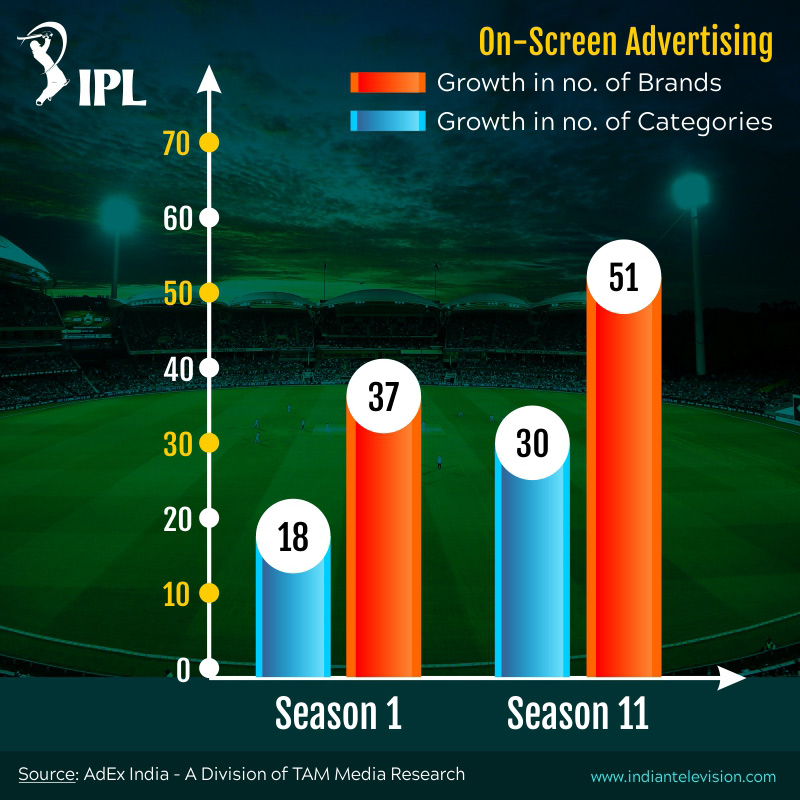
    On-screen advertising, the digitally embedded elements fed by broadcaster during the live telecast of match saw a good spike in the number of brands and categories. Total 51 brands advertised in IPL 11, which is 38 per cent more than IPL season one’s 37 brands. There was a 67 per cent rise in categories from 18 in IPL 1 to 30 in IPL 11.

    Top three categories which dominated the top 10 list across the last three years in cricket genre are perfumes/deodorant, cellular phones-smart phones and cellular services. Experts believe that the event by itself is both a massive opportunity for brands and equally a challenge of sorts to stand out in the storm of brands advertising in it. The shorter format further pushes the challenge.

    Some of new brands that associated with the IPL last season were AMFI, Asian Paints, Berger Paints, Blue Star, Ceat Tyres, Crompton, Dollar, Ford, Haier, Luminous, Pedilite, Sleep Well, Vanessa, Vimal Pan Masala and Voltas joined the existing ones like Vivo, Colgate, Amul, Dream11, Elica, Kent, Parle Agro, Polycab to name a few.

    The season witnessed 21 hours of on-screen advertising with action replay, pull-through and push back the top three on-screen branding units during the play.

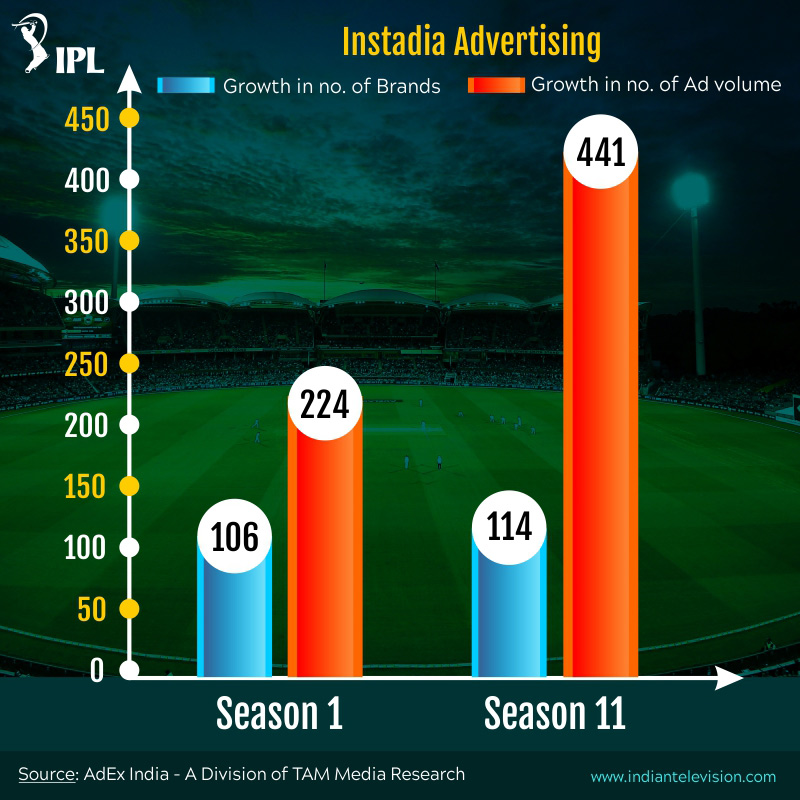
    Talking about in-stadia advertising, 441 hours of in-stadia advertising was registered during IPL season 11. Top three on-screen branding units during the season were t-shirt, backdrop and perimeter board. Compared to the first season, in-stadia ad volumes increased almost by twofold from 224 hours to 441 hours in IPL 11.

    Instadia advertising saw a growth of 8 per cent in the number of brands i.e., 106 brands in IPL 1 to 114 brands in IPL 11.

    To appreciate the spike in brands and advertisers for IPL, Star India in its first year introduced the Re.imagine Awards to recognise and encourage the creativity and innovation in the use of integrated media in advertising campaigns aired during Vivo IPL on Star Sports and its OTT platform Hotstar.

    Not just cricketers on the pitch but brands, marketers and advertisers have gradually upped their game to keep the viewers engaged during the sporting extravaganza.

    In the upcoming season of IPL, a lot of diversified brands will be seen participating. The important thing is how they weave the story into a much more deeply integrated marketing plan. Now, it is about integrating the storyline through both ATL and BTL campaigns.

  • ALTBalaji direct subscriptions up by 60-70% over last quarter

    ALTBalaji direct subscriptions up by 60-70% over last quarter

    MUMBAI: Balaji Telefims’ digital venture ALTBalaji has been quickly growing its subscriber base and subscription revenue, further reinforcing the OTT sector’s belief that Indian consumers are more than ready to pay for engaging content. After three consecutive strong quarters on the digital front, the company is now set to shift gears when it comes to its content strategy. Going forward, the video streamer will lay greater emphasis on strategically acquiring direct consumers.

    “We are now at a process where we are confident that we will do about 24 to 30 shows in a year plus three categories of shows, so that is either male focus shows or female focus dramas. We are reinforcing that content strategy and our focus on international, which will be even more as we go ahead as our library builds up,” Balaji Telefilms group CEO Sunil Lulla said in an earnings call after the company announced its Q3 results.

    The Ekta Kapoor-led production house’s OTT arm boasts of 13.1 million paid subscriptions as of February, with a 2x growth in monthly active users that now stand at 4.6 million. 70 per cent of the platform's consumers have opted for a quarterly subscription.

    In addition to that, ALTBalaji has witnessed nearly 60-70 per cent growth in direct subscription numbers over the last quarter. On the back these consumers’ willingness to pay Rs 300 monthly, the OTT platform has made investments and upped marketing spends to further boost these subscriptions.

    Lulla pointed out the subscriber addition is happening at two levels – new subscribers and those returning post the churn.  Notably, Lulla had said in an earnings call after the Q1 result that about 70-80  per cent of traffic comes from telcos while the ARPU from the sector stands at around Rs 15 per month.

    The veteran media executive stated that not only have the new shows aided subscriber addition, but the old ones too make up for a good share. The overall growth in library has played a key role too, he highlighted. The management hopes to hit a tipping point in the next 12 to 18 months.

    While the group had undertaken an equity infusion of around Rs 450 crore in ALTBalaji, it has already invested Rs 350 crore of that.

    “It will be sufficient while we said that we put in Rs 350 crore. You must understand that a lot of cash that is there in production is in production contract that has been executed and they will also get accrued when they are actually put on air, if you see the two content cost across the two years that is not equal to Rs 350 crore yet,” Lulla argued when asked if the balance Rs 100 crore would be enough for the next two years.

    While the group had projected Rs 60 crore in revenue from ALTBalaji for the financial year, it has so far been able to garner Rs 28 crore. However, the number does not contain revenues from international market, which is yet to be reported. Lulla, however, admitted that the strategy for international market probably hasn’t played out the way he had expected it to.

    While TV business continues to be the highest revenue generator of Balaji Telefilms group, it hasn’t shown exponential growth. The group launched new shows in the first quarter, with TV shows already on air having hit maturity. The management now hopes to further improve the performance from this quarter to about five to ten per cent in the next and keep consolidating thereafter.

  • KBS World channel enters India with Prasar Bharati’s Free Dish

    KBS World channel enters India with Prasar Bharati’s Free Dish

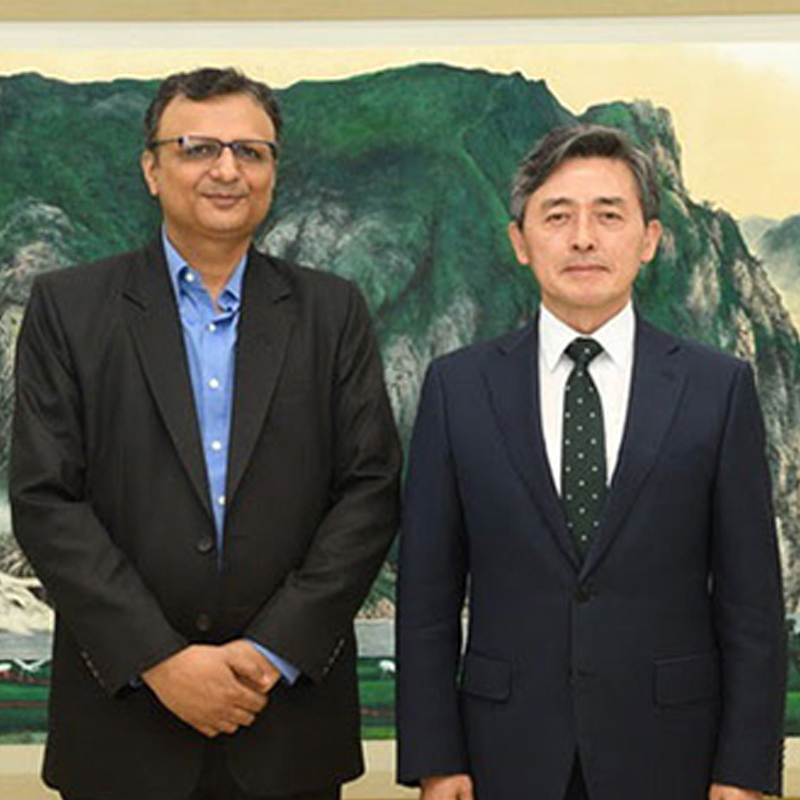
    MUMBAI: Korean Broadcasting System (KBS), the national public broadcaster of South Korea has signed an agreement with its counterpart Prasar Bharati to enter the Indian market with KBS World TV channel. 

    KBS World will be officially broadcasted through DD Free Dish, as soon as the approval process and trial delivery of the Indian government is completed in March. Meanwhile, DD India, the international broadcasting channel of Prasar Bharati, will be broadcasted in South Korea through MyK OTT platform. 

    Korean Cultural Center (KCC) India, which is dedicated to providing insights into the rich cultural heritage of Korea tweeted, “KBS World (English channel of KBS) will be aired through DD Free Dish soon! In return, DD India will available on MyK, OTT platform of KBS in Korea.”

    KBS president and CEO Yang Sung-dong said, “This KBS World TV’s entry into India will be a great bridgehead for spreading K-pop and Korean culture to India, which will become the world’s number one country in the world over the next few years.”

    This agreement is the first case in the domestic broadcasting industry, in which both public broadcasting companies representing both countries mutually support themselves as a local agency to exchange their own international broadcasting channels.

  • Tata Sky favours multiple agencies for TV audience measurement

    Tata Sky favours multiple agencies for TV audience measurement

    MUMBAI: Tata Sky, one of the leading DTH operators in India has suggested Telecom Regulatory Authority of India (TRAI) that there should be multiple rating agencies. The competition will bring in new technologies and new methods in analysis.

    “Yes, multiple rating agencies need to be promoted. Competition will  bring in new technologies, new research methodologies, new methods in analysis, new and better ways to ensure better data quality,” Tata Sky has said in its submission to a consultation paper on TV audience measurement floated by TRAI.

    On the contrary, GTPL Hathway believes that there is no need for competition in the television rating services to ensure transparency and accuracy.

    “If more television ratings agencies are allowed to compete then the sample size will reduce and might even get scattered demographically. Therefore to ensure transparency and accuracy, there is no need for competition in the television rating services,” GTPL Hathway stated.

    The DTH player also commented that BARC India is not transparent regarding sharing the methodology and the representation of the panel home amongst the various platform types.

    Both Tata Sky and GTPL Hathway suggested that the BARC shareholding body should also include members representing the DPO/DTH/OTT platform body.

    To address the issue of panel tampering/infiltration, GTPL Hathway suggested to increase the sample size of the panel household significantly, which will reduce the impact of tampering on overall TV ratings, which in turn will reduce the temptation to tamper with the panel homes.

    Tata Sky argues that there is an under representation of DTH customers amongst the existing panel homes and BARC has taken no steps to publish a list for transparency. The representation of HD homes also needs correction.

    On the question whether BARC India should be permitted to provide raw level data to broadcasters, the MSO said, “We agree with TRAI’s view that release of raw data to broadcasters may potentially compromise on secrecy of households and sanctity of the data. The proposition that availability of raw data would help in giving the broadcaster sharper insights into viewership behavior is not sufficient to take such a huge security risk. There are other ways of sharper insights into viewership behavior such as AI."

    "Provisioning of raw level data to broadcasters will definitely contravene the policy guidelines for television rating agencies prescribed by MIB. The accreditation system mentioned by MIB requires secrecy of panel households, while release of raw data to broadcasters may potentially compromise secrecy of households", GTPL Hathway stated.

  • BARC exhorts TRAI to strengthen existing TV audience measurement system

    BARC exhorts TRAI to strengthen existing TV audience measurement system

    MUMBAI: Broadcast Audience Research Council India (BARC), the country’s premier TV audience data measurer, has suggested to the Indian regulator Telecom Regulatory Authority of India (TRAI) that having more multiple measurement and ratings mechanisms may not be “advisable” and could create confusion. Instead, it was better to invest further in the existing currency with the goal to make it more robust.

    “Having more than one ratings service/currency would not be in the interests of industry, and, hence is not desirable. Instead of increasing number of ratings agencies, it would be advisable to invest in the existing system and make it even more robust and accurate,” BARC India has said in its submission to a consultation paper on TV audience measurement overhaul  floated by the TRAI.

    Making a case to further boost the functioning of BARC India, the organisation has said steps were needed to be taken to “increase the sample/panel through cost effective technologies” like sample return path data (SRPD).

    “TV viewership measurement systems across most mature markets are carried out by a single agency. The existence of more than one rating agencies (and currency) will create confusion and will lead to inefficiency in the market. When there are more than one data sets for a same set of channels, it leads to ambiguity,” BARC India has argued.

    TRAI had floated a consultation paper on ‘Review of Television Audience Measurement and Ratings in India’ on 3 December 2018 seeking feedback from stakeholders with a view to examine various aspects of the system, which is presently done by BARC India that is a joint venture amongst three industry organisations — the Indian Broadcasting Foundation (IBF), Advertising Agencies Association of India (AAAI) and the Indian Society of Advertisers (ISA). The original deadline for making submissions was extended on request from the stakeholders.

    Arguing against promoting more competition in the audience measurement eco-system, BARC India has cited international media reports relating to this particular issue in the Philippines.
    “Philippines presents a typical example of confusion and ambiguity in market due to presence of more than one measurement agency. TV measurement in the Philippines is conducted by Kantar Media Philippines and AGB Nielsen Media Research Philippines. Data produced by the two companies are often used by competing channels to claim leadership,” BARC India has argued.

    Pointing out that accuracy of data can be ensured through larger panel that can, inter alia, be sustained by industry, BARC India has tried to put things in context by highlighting the US TV industry sustains a panel of 108900 individuals with a TV adex of $68 billion, while in India BARC India “runs a panel of 135,000 individuals with adex of approximately $4 billion”.

    However, for a more robust system to be in place, which will also strengthen BARC India, the organisation has said “regulatory and government support” was essential and the support should involve “mandating digital platform operators (DTH and cable), as well as TV OEM manufacturers (of smart TV sets), to share return path data from samples to measurement provider”.

    “To make data more accurate, there are steps required that go beyond the remit and domain of BARC. Legal and punitive framework to weed out panel tampering will go a long way in building further acceptance of our data,” BARC India has stated, reiterating its position on been backed by some legal teeth to fight attempts of data infiltrations and manipulation.

    While admitting that a high-tech landscape like audience measurement needed to constantly evolve as newer consumption and distribution modes and technologies were emerging (for example, digital consumption, proliferation of OTT platforms, etc), BARC India has made it clear it was exploring SRPD, second generation metre with newer detection techniques, and other technological solutions for TV measurement.

    “BARC India has also made progress in building capability to measure digital consumption with the goal of providing industry with cross platform and cross device video consumption: linear and time shifted, broadcast and digital. We have a strong foundation, established credibility and necessary transparency and accountability framework on which we can build further with emerging and suitable technologies,” the measurement organisation stated.