Tag: OTT

  • Draft e-commerce policy: ‘Originals’ uncertainty to persist till efficient implementation course is charted

    Draft e-commerce policy: ‘Originals’ uncertainty to persist till efficient implementation course is charted

    India is emerging as a strong market for the over-the-top (OTT) service providers. Increased access to affordable internet, consumer preference for ‘Original’ content, and the ability to carry exciting entertainment in one’s pocket devices have given the perfect boost to this setup. While the consumers are happy about the service offerings, and the edgy content that is coming their way, social activists, government agencies, and moral vigilantes find this unsettling. The concerns around regulation, potential use and abuse of the platforms and welfare of the presumably gullible consumers have ensued, resulting in legislative speculation.

    Although several public interest litigations seeking stricter legislative regime have been filed in the past, the concerned agencies have chosen to defer to the extant framework. Interestingly, Telecom Service Providers (TSPs) also will for the licence regime to be applicable to the OTT players. Recently, a draft National E-Commerce Policy was released by the Department for Promotion of Industry and Internal Trade, bringing in a greater degree of uncertainty around the operation of OTT platforms in the country.

    The draft policy defines e-commerce as “buying, selling, marketing or distribution of (i) goods, including digital products and (ii) services through electronic network.” Further, the draft policy also uses the terms ‘e-commerce’, ’electronic-commerce’, and, ’digital economy’ interchangeably. It is not far-fetched to presume that OTT platforms will be part of this wider scope. With this definition holding true, the OTT service providers will also be subjected to Press Note 2 (2018 Series) with respect to Foreign Direct Investment (FDI) in e-commerce.

    To clarify, Press Note 2 does not permit FDI in inventory-based model of e-commerce. This is concerning, because Netflix Originals, Amazon Prime Originals, and Hotstar Specials, all focus on the creation and ownership of the content that they stream. Netflix became the first OTT player to foray into the space of providing original content streaming services when it acquired House of Cards in 2011 (show first aired in 2013). Since then, Netflix has been building on the Originals segment and has created a sizeable repository. This ownership of the content that they stream qualifies the OTT players as inventory-based entities, and so the draft policy delineates them from the marketplace-model which stands to benefit relatively.

    All these platforms have made notable investments in creating original content and preserving exclusivity. Needless to say, a lot of the investment money comes from the parent companies, which are not domestic entities. This might no longer be the case, when the draft policy becomes the law of the land.

    All these OTT players have introduced their Indian consumers to a lot of international content and have also invested heavily in sourcing locally created content to connect to their consumer base better. Several OTT players have also engaged with local artists for multiple projects, allowing them to appeal to a global market with relative ease. An embargo on the inflow of capital might result in considerable changes in content creation and delivery.

    It can be expected that the players might have to move to a marketplace model, to ensure that they can avoid being covered under the scope of Press Note 2 and continue to benefit from FDI. A walkaround solution could be streaming of Original content across competing platforms, a tad bit too much to ask of OTT players for this nascent Indian digital economy. If the draft policy is effected as-is, the OTT players will find it difficult to stream the in-house productions/ Original content on their own platforms.

    Along with the issues discussed herein, the implications around collection and processing of data will also add to the cost of compliance for the OTT players. Bringing in heavy-handed regulations will not be the best solution in the present case. Allowing the OTT players to innovate and compete freely will empower consumers with greater choices. As the current trade demonstrates, even home-grown OTT players are making efforts to bring home richer customer experience with original content.

    Under the extant framework, where the OTT platforms are regulated under the Information Technology Act, 2000, and the rules thereof, amongst other claims, subjecting the sector to the proposed regulatory and governance mechanism will not bode well with the players. The harrowing uncertainty will continue to plague the concept of ‘Originals’ till an efficient course of implementation is charted for the draft Policy.

    (Bagmisikha Puhan is senior associate and Abhishek Malhotra is managing partner at TMT Law Practice. The views expressed here are their own and Indiantelevision.com may not subscribe to them)
  • Netflix testing Rs 250 mobile-only subscription in India

    Netflix testing Rs 250 mobile-only subscription in India

    MUMBAI: Giant video-streaming service Netflix is believed to be experimenting with a mobile-only subscription for a select group of users in India. Rs 250 per month is what the streamer is hoping to charge for its mobile-only plan, half of its Rs 500 entry-level subscription price in the country.

    According to ET Tech, subscribers can only consume standard definition (SD) content on one mobile or tablet screen at a time. This plan, however, is not part of Netflix’s currently monthly subscriptions that cost users Rs 500-800 depending on the nature of the plans.

    “We will be testing different options in select countries where members can watch Netflix on their mobile device for a lower price and subscribe in shorter increments of time. Not everyone will see these options and we may never roll out these specific plans beyond the tests," a Netflix spokesperson said commenting on the development.

    Last year, Netflix chief product officer Greg Peters, during earnings call, had said that the company would experiment with their pricing strategy in India in a bid to draw more users to its platforms.

    Competing against the likes of Amazon Prime Video, Hotstar, ZEE5 among others, Netflix will remain the most expensive streaming service in India.

    Earlier this week, Netflix CEO Reed Hastings had described the Indian OTT market as ‘super competitive’ and ‘exciting’.

    "There is also lots happening on Amazon, and on Hotstar, which is now going to be owned by Disney… It's a super competitive, exciting market,” he said.

    One of the hallmarks of the Indian market, Hastings highlighted, is the ongoing telecom revolution triggered by Mukesh Ambani’s Reliance Jio. According to him, there is "nothing more impressive in the world than what Reliance Jio has done in the past four years in India" to democratise internet accessibility.

    This latest move by Netflix, in a sense, hopes to grab a share of the consumer’s attention and wallet by riding on Jio’s disruptive force.­

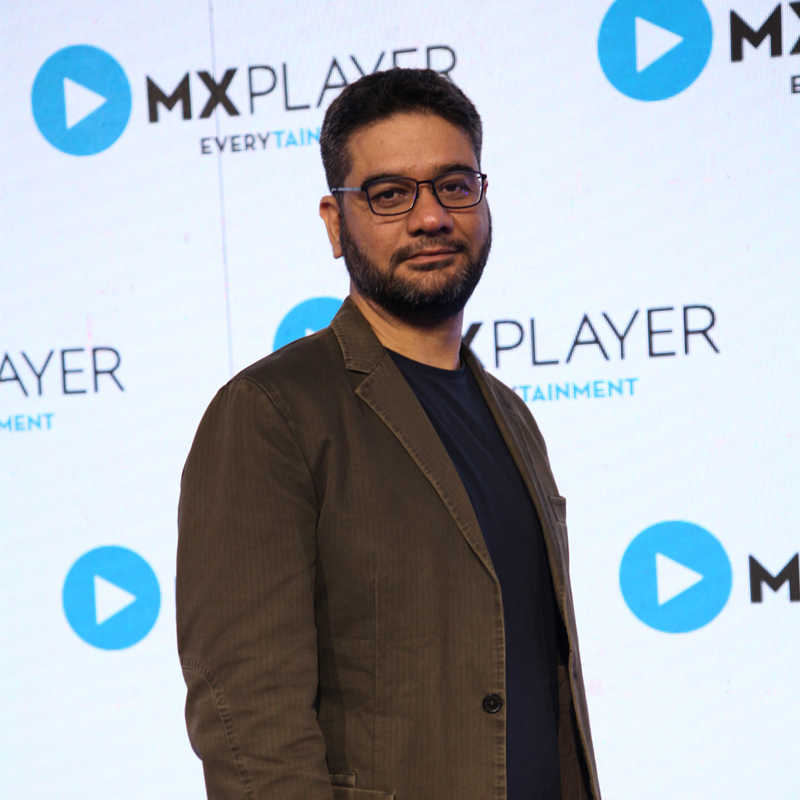
  • MX Player’s Gautam Talwar on content plans and digital measurement currency

    MX Player’s Gautam Talwar on content plans and digital measurement currency

    MUMBAI: The latest OTT entrant Times Internet-owned MX Player recently entered the space with five original series on the back of an ad-supported business model. To keep consumers engaged, it aims to launch five to six shows each quarter. While the platform is already working closely with advertisers, it will also venture into branded content soon.

    In an interaction with Indiantelevision.com, MX Player chief content officer Gautam Talwar spoke about the content strategy, initial audience response and content consumption trend on the platform. Talwar also expressed his views on industry issues such as the need for unified measurement, the possibility of consolidation in the OTT space.

    Edited excerpts:

    You started the journey with 5 series. How many shows do you plan to have in your library towards the end of the year?

    I think the aim is to have at least 5-6 shows every quarter. That means we will be able to launch 1-2 shows every month. We reach out to a very wide cross section audience of India and the only way to cater to such diversity is being able to meet the diversity of content preference as well. So, we intend to have about 25-30 originals during the course of the year. 20-25, I would say to safely put it.

    How often do you plan to refresh your library?

    We will be launching a huge slate of originals and in terms of licencing and curating content we have already over 100,000 hours of content. That is constantly being refreshed in any case. On Sunday, we had the Radio Mirchi Music awards. So, whatever are the big things that we get, we refresh on a regular basis. But the refreshment will largely be driven with the kind of originals that we are trying to launch as well.

    In this one month, which shows have got high traction?

    That’s a very tough question to answer because with the diverse market and audiences, the shows have got different expectations. For all different shows we have different expectations, different benchmarks. Some would garner watch time, some would bring new audiences, some would deliver spike in participation. We have launched around 3 Hindi shows Hey Prabhu, Aafat and Im Mature. They have driven traffic in users and they have really exceeded our expectation and benchmark both. All three of the shows have done exceedingly well for us. The interesting part is that we got a huge spike in the female participation of the platform. That has gone up significantly since launch I think specifically because of Aafat.

    For regional shows, we have also got good traction. The interesting part is that Famously Filmfare in seven languages, Lots of Love is in Tamil and Telugu. So, what we have done is we activated a regional basis also.

    Can you share the significant content consumption trends on your platform?

    I won’t be able to give any specific number but from the trend point of view, three key points are interesting. I think one is the fact that we have got a huge amount of participation from non-metro audiences. Apart from the top 8 metros which have also brought significant contribution, the non-metros have shown us a very significant spike in viewership. That’s one key content consumption trend for us.

    The other interesting point is that a very large part of our audiences are actually newcomers in the age group of 18-35 as well. That’s the other interesting part.

    Most people who are coming in are actually completing shows. Even on Twitter or other social media, the largest question asked are when is season 2 of Hey Prabhu, Im Mature launching. These are the content consumption trends we are looking at.

    You have offline download capability also. Do audience stream more or prefer downloading?

    Downloads have been activated for originals only when we launched. It’s a new feature. It all comes down to saying that because of the interesting content we put up, both the numbers are looking good. The actual number of who want to stream and want to download has increased. We don’t have downloads for all. Some of the licenced content cannot be downloaded. Only a fraction of the library, specifically the originals, are available for download.

    How many advertisers do you currently have on board?

    MX Player has been with the advertising community for very long time. We maintained those relationships and they are coming on to the streaming platform as well. So it’s been a healthy growth I would say, in terms of getting the advertisers on board.

    We will be launching our first ever branded content. By the end of this month, we will be doing a show called Love Ok Please and that has been sponsored by a brand called Too Yumm.

    Can you throw more light on your content strategy?

    We formed a content strategy sometime ago. A lot of our shows are going to be catering to the heartland of audiences. We are going to be targeting the metro audiences. Because of the depth of distribution of MX Player, it is extremely critical that we kind of get shows for all kind of audiences, even all kinds of genres as well. We just started and we have to go a long way to ensure that. But the interesting part is that, from our perspective, I think one thing that we would like doing within this year is probably getting interactivity built into the content as well.

    What’s your take on the need for unified currency for digital measurement?

    We have been hearing about EKAM for a very long time. I think it's about time we get an independent medium to give authenticity that is required for advertisers to make sure that data being pulled out of all private OTT platforms has got a common currency. Once we get a common currency, we think advertisers will be at least clear about the value OTT players bring to the table, therefore, whatever the advertising rate that are being asked for has some amount of justification. I am sure over a period of time, as an industry we will come together for that level of third party measurement for all OTT players.

    Do you foresee consolidation in the OTT space?

    I think there will be some sense of consolidation. It is an extremely difficult business, it’s not only about content but also product, streaming, technology and engineering. You need a lot of things to get an OTT platform going. I think all players are not necessarily good at all things. I think it’s very important to get all parts of the puzzle right and also it requires deep pockets to make sure that do you have the strength and the will to make sure you last in the content business.

  • Netflix declines being part of Apple TV service

    Netflix declines being part of Apple TV service

    MUMBAI: Streaming giant Netflix will not make its content available on Apple’s upcoming video offering. The latter is expected to introduce its video-streaming services on 25 March ramping up the competition in streaming business.

    “We prefer to let our customers watch our content on our service,” Netflix CEO Reed Hastings told as quoted by the Reuters. “We have chosen not to integrate with their service,” he added.

    Till now, Netflix has not adopted the most recent revamp of Apple's TV app for iOS. According to media reports, Netflix chief content officer Ted Sarandos said that their intentions have been moving away from the App Store subscription fee defending the decision not to adopt. He also added that Apple TV was not an important source of revenue for the OTT platform.

    The new service from Apple may have original content as well as resell subscriptions from CBS Corp, Viacom and Lions Gate Entertainment Corp’s Starz among others.  With entry of apple, the upcoming launch of Disney’s streaming service, Netflix is about to face tough challenge in near future.

  • Amazon Prime Video is India’s most-viewed OTT platform in February

    Amazon Prime Video is India’s most-viewed OTT platform in February

    MUMBAI: Amid a large number of OTT platforms, Amazon Prime Video was the most-viewed one in India for the period between 12 February and 3 March. A survey done by market research and analysis company Velocity MR has revealed the high popularity of the international player, which is leaving no stone unturned to make big fortune in the country.

    2,100 participants based in top Indian metro cities including Delhi, Kolkata, Mumbai, Hyderabad, Bengaluru, Chennai, Ahmedabad and Pune were surveyed. The findings revealed that more than 70 per cent of respondents claimed to watch Amazon Prime regularly at least once a week while 56 per cent watched Netflix and 50 per cent of them watched Star India-led Hotstar.

    According to a report by Inc42, Velocity MR managing director Jasal Shah said Amazon Prime has built its popularity on the back of its partnership with telcos which makes the service cheaper compared to other subscription based video on demand services.

    He also added that Netflix’s demand rose due to its originals. As the OTT platform has announced eight more Indian originals, the popularity is not going to fall down anytime soon. On the other hand, Hotstar’s viewership was mainly high on sports content. With IPL starting from 25 March, the viewership of Hotstar is expected to increase more.

    Among other OTT platforms, Voot had a viewership of 28 per cent, Eros Now stood with 17 per cent, ALTBalaji with 13 per cent, Viu had 9 per cent, Sun NXT had 7 per cent and TVF had 6 per cent viewership.

  • Industry experts discuss OTT growth, need for measurement system

    Industry experts discuss OTT growth, need for measurement system

    MUMBAI: To measure or not to measure? Despite the humongous growth of OTT in the country, experts still can’t seem to agree on this question. While some of the experts believe a TV like measurement system will bring more transparency in the ecosystem, other players think third-party tools are already serving the purpose.

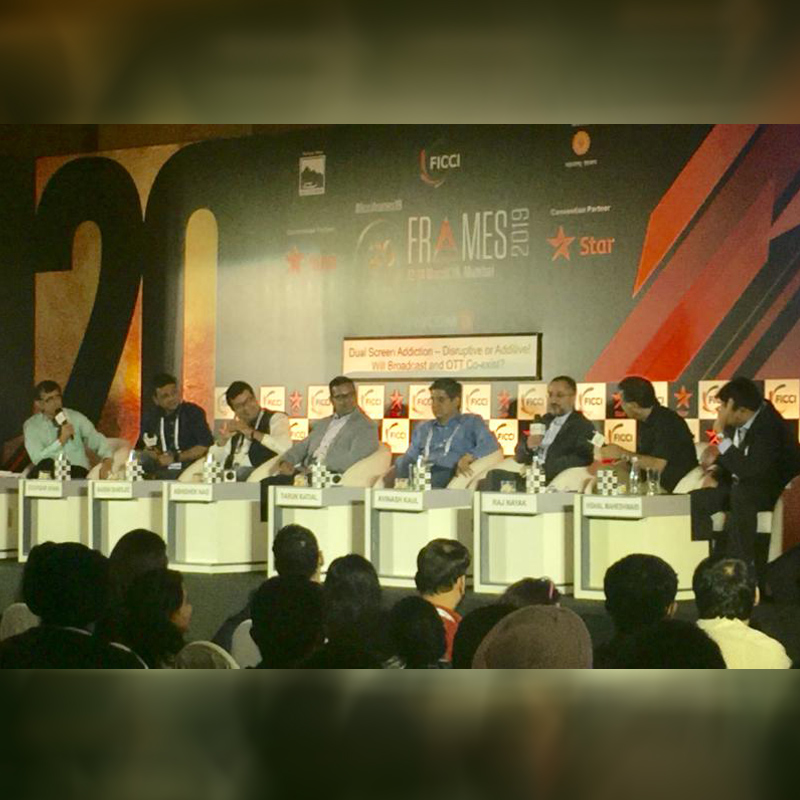
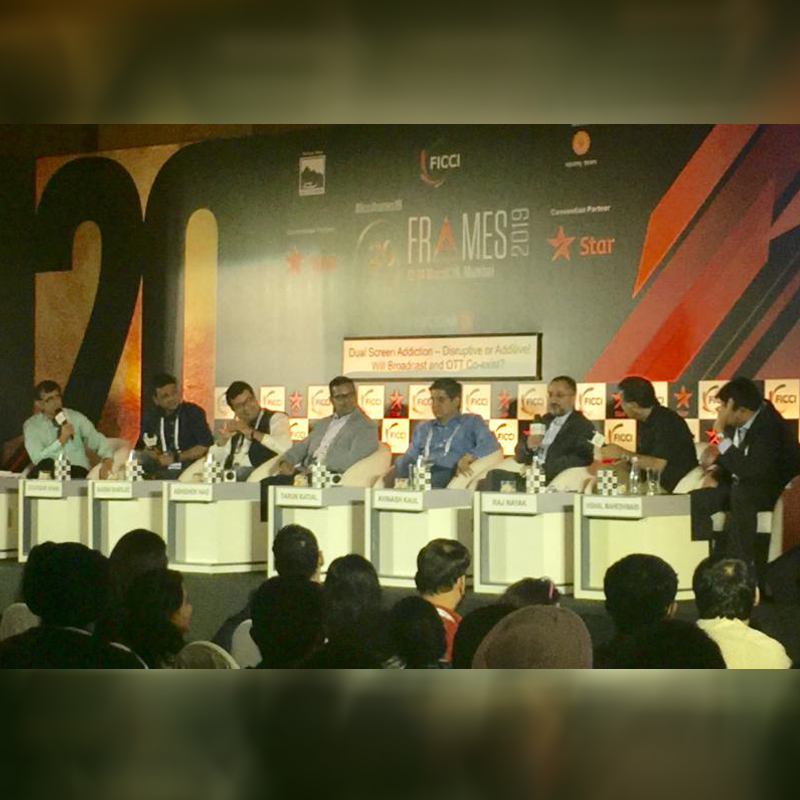
    A session on Dual Screen Addiction saw panellists Star India Hindi GEC president and head Gaurav Banerjee, ZEE5 CEO Tarun Katial, Network 18 COO, A+E Networks MD Avinash Kaul, media veteran Raj Nayak, Netflix partnerships director Abhishek Nag, Hooq India MD Zulfiqar Khan, Vuclip country head Vishal Maheshwari and moderated by Balaji Telefilms group CEO Sunil Lulla.

    Speaking at a session in FICCI FRAMES 2019 Banerjee emphasised on the need of a unified measurement system. “As we have entered into digital, we have not thought of putting in place a measurement system which is extremely robust,” he said. Banerjee thinks it will make assessments of watch-time easier for the advertisers.

    Katial strongly disagreed and argued that there are robust third-party tools in the market. He also cited the example of YouTube and Facebook’s strength in digital advertising. According to him, if there was no credibility in measurement, advertisers would not have put so much money.

    “In the case of TV, when consumers now exercise their choice some channel may lose its base of 198 million and drop to 20 million but that also shows the affluence of the customer who can pay Rs 20 a month. Otherwise, channels on DD Free Dish would have retained revenue three times greater than Star Plus,” Kaul commented.

    Nayak said that advertising money is going to get fragmented and it’s going to get worse with more players coming in. “In the OTT space, the number of players will shrink. I predict that in the next 3-5 years there won’t be more than 10 players in this space. I think then the realisation of value will happen both in terms of subscription and advertising,” he added.

    Talking about monetising on OTT through advertising, Katial said the volume of content on the platform is a necessity. He added that when ZEE5 was launched it kept the faith on three ‘v’s – voice, vernacular and video which worked. According to him, CPM is also rising on the contrary to popular belief in the industry.

    However, the experts agreed to the growing subscription model in the country. Netflix partnerships director Abhishek Nag said this is a great time for subscription business in India. The use of credit cards for online payment without fear of fraud and mobile wallets especially the ones with low bandwidth has opened up revenue channels for the platforms. Nag also thinks bundling of telco or broadband plans with live TV and OTTs can make it stronger.

    ZEE5 CEO said along with B2B2C, the B2C model is growing. According to him, proper bundling and pricing play a major role in B2C revenue. In the case of B2B2C, he said partnerships with e-commerce platforms like MakeMyTrip will add value to the model in future.

  • Broadcasters need to relook at content to cope with OTT platforms

    Broadcasters need to relook at content to cope with OTT platforms

    MUMBAI: With the upsurge in demand for OTT platforms in India, the future of broadcasters has been debated much. TV still has enough headroom to grow thanks to underpenetrated households. While the players in the ecosystem firmly believe that TV is not going to die soon, they also think broadcasters need to rethink their content.

    On the second day of FICCI Frames 2019, experts from the television and OTT industry discussed on ‘Dual Screen Addiction –Disruptive or Addictive! Will Broadcast and VoD Co-exist?’ It had panellists Star India Hindi GEC president and head Gaurav Banerjee, ZEE5 CEO Tarun Katial, Network 18 COO, A+E Networks MD Avinash Kaul, media veteran Raj Nayak, Netflix partnerships director Abhishek Nag, Hooq India MD Zulfiqar Khan, Vuclip country head Vishal Maheshwari and moderated by Balaji Telefilms group CEO Sunil Lulla.

    Banerjee said they are in the business of curating stories where making purposeful stories is important. He thinks it should be left to consumers what stories they want to watch together and on which personal device.

    Agreeing with Banerjee, Katial said, “It’s good to tell stories, eventually you have to make money and yes, we are all trying to monetise content in different formats. What OTT brings to the table is totally different from TV which is a high degree of personalisation and segmentation, and the ability to discover content at your own convenience. That’s not going away. Consumers are going to want more and more of that. I think we all say linear TV should stay, the convenience aspect of digital is huge.”

    Lulla raised the question of how broadcasters should defend their turf with all these changes. Media veteran Raj Nayak said that he is a big believer that television is here to stay. He added that families in small towns, even today, sit together to watch TV in the evening. According to him, OTT and TV will co-exist in India at least for another ten years.

    Banerjee also echoed Nayak’s view that OTT is not going to kill linear TV. According to him, three generations watching TV together and having a conversation is very important in Indian society. He added that TV consumption is only on the upward side in the country.

    But Nayak also reminded the fact that amid ongoing changes in the ecosystem, consumers now compare the quality of TV and OTT content. Hence, Nayak thinks TV channels will have to course correct to give content on linear TV which is as compelling as OTT.

    Hooq India MD Zulfiqar Khan added that streaming services have a direct connection with consumers which helps them to have great knowledge of consumer choice. On the other hand, linear TV has been a consumer facing brand but not consumer facing business. Hence, he said that at a content level as well as business level there has to be a rethink.

    “The households not yet penetrated by TV will continue to be the main stake of linear TV. Most of it is coming from the northern and eastern parts of India. OTT and TV will obviously co-exist. The question is how they will compete with each other and take best practices from each other,” Kaul said while adding that OTT ‘s biggest advantage is its one-on-one relation.

    Vuclip country head Vishal Maheshwari said India is the only country where broadcasters are so well organised on their OTT businesses. According to Katial, broadcasters created a catch-up content environment in the early days and went slow on premium content compared to platforms like Netflix.

    The industry experts agreed that rather than having a debate about TV content and OTT content, the debate should be on linear and non-linear consumption and the need for compelling content.

  • Netflix to keep both dubbing and subtitling options available

    Netflix to keep both dubbing and subtitling options available

    MUMBAI: The fact that India has a higher per cent of mobile streaming compared to the US has caught Netflix’s eye. Speaking at a session moderated by CNN News 18 Editor Anuradha Sengupta on the stage of FICCI Frames 2019, Netflix VP Product Todd Yellin said that despite the liking for the small screens, India’s fondness for the big screen will not fade away.

    While Netflix has already delivered hits like Sacred Games in India, the OTT platform will double its investment in the country. He also added in a presentation that the series was a global hit for the service, with two out of three viewers of the show live outside India. On the other hand, Indians are also loving international shows as Bandersnatch was a huge hit here also.

    “We don’t care about someone’s gender so we don’t collect it. We don’t care about the age so we don’t collect it. The only data we really care about is taste and we don’t want to stereotype. Internet TV is for everyone to liberate and make the experience greater so they can enjoy entertainment on their control and that’s what we care about,” Yellin commented while asked about the demographic and psychographic profile of Netflix users in the country.

    To reach to more people, Netflix is also planning to extend the number of languages in which the content is available. While Orange is the new Black was released in seven languages back in 2013, The Umbrella Academy was released in more than 25 languages six weeks ago.

    Along with subtitling, Netflix also wants to keep the dubbing option always available for users given the past data. “45 per cent of people watched Ghoul in English speaking countries with dubbing, 37 per cent with subtitles and 18 per cent with both,” he highlighted.

    Although Netflix is becoming unbeatable among OTT platforms, Disney’s entry in the space is likely to pose a challenge. However, the company seems to look at it positively as Yellin said competition motivates the team venturing into more interesting things.

    The OTT platform will be doubling down on interactive series also but it won’t necessarily be science fiction or dark. According to Yellin, it could be a wacky comedy or a romance even. With all the plans in store, the next couple of years will be interesting to see how the OTT platform handles its leading position as other big pocket players are stepping in.

  • CEO Rajiv Bakshi unveils transformational roadmap for Big Synergy

    CEO Rajiv Bakshi unveils transformational roadmap for Big Synergy

    MUMBAI: Rajiv Bakshi describes his latest gig – CEO Big Synergy – as a homecoming to the media and entertainment ecosystem. During his 13-year stay at Discovery Networks, Bakshi helped curate thousands of hours of content across factual, lifestyle, kids’ categories among others. More importantly, his stint coincided with the network introducing and expanding new genres that delivered a lasting impact on television and the society at large.

    Bakshi has witnessed the evolution of India’s media and entertainment industry from close quarters. The perks of his ringside seat have helped him compartmentalise that evolution into three distinct phases.

    “When I started in television in the early 2000s, it was the era of ad sales. Everything was about attaining reach and filling the inventory. Post digitisation, the era of distribution set in and pay-TV model emerged as a strong component. Channels started getting rewarded for differentiated and high-value content. Now we have entered the most exciting and dynamic phase where content and consumer form the core of the business. I call it the golden era of content,” he says.

    With the emergence of OTT and Indian broadcast getting sharply segmented into genres and regions, the direct and immediate benefits to the balance sheet from content innovation are substantial. In addition to that, there are exciting possibilities for building personalised relationships with consumers on mobile devices.

    “The research and analytics available in terms of content and storytelling with respective audience sets are both liberating and refreshing for content creators. The content explosion being witnessed is most satisfying and charges us to deliver influence and impact,” highlights Bakshi.

    Reliance Entertainment's Big Synergy today produces content for all platforms. Widely regarded as a content powerhouse when it comes to non-fiction, the company is now pushing to becoming a power player in the fiction arena.

    “In the next 12 months, you’ll witness a lot of disruptive content from Big Synergy across all genres and formats. We have a range of high decibel developed projects aligned with top directors and writers slated for 2020 launch,” Bakshi points out.

    The company is committed to invest in three key areas for growth – original formats and rights, scaling talent and teams, and building the finest production capabilities.

    “The thing we are always working hard is to anticipate change. Client's requirements and business models and the market dynamics are ever changing, and therefore we prefer to invest in research and keep our ears on the ground to stay on top of things and trigger new trends,” the veteran executive adds.

    The dependence on content to differentiate a brand is the biggest new development. With most of the markets now progressing towards a pay model, differentiated content will be the trigger for revenue and audience growth. 

    “It’s a period of transformation. The demand for fiction content, with OTT platforms appearing in the last few years, is on the up. The market has immense confidence in Big Synergy’s capabilities to produce breakthrough fiction content. Our parent company has produced some of the biggest movies and OTT show and offers us access to the finest creative talent and partnerships and an overall environment of mass entertainment. We are all set to wow the market,” says Bakshi with a great deal of confidence.

    There's absolute clarity at the company in terms of what it has set out to achieve. Bakshi's vision has percolated down to the bottom of the pyramid.

    "We want to produce the biggest fiction series on both OTT and broadcast, on both original and acquired formats. Dailies for GECs are something we are investing in. In non-fiction, we have some amazing in-house formats and a large slate of acquired formats and then we are also evaluating co-developing new formats with international partners. Expansion into regional space, on both broadcast and OTT is also high on priority," he states.

    So, what are the obstacles that could prevent the team from accomplishing its goals?

    "The only challenge could be to prioritise the right stories, formats, partners, acquisition and talent," he remarks.

    Content creation is an intricate affair. It’s also an expensive affair. According to industry estimates, the top 15 OTT platforms are spending Rs 1000 crore annually on Originals. Therefore, content creators apply a series of filters to a project before giving it the green signal. There’s more to the process than just the power of the story. Content creation today comprises algorithms and data analysis. And yes, consumption trends.

    Bakshi, however, has a rather different take on the matter at least when it comes to adopting trends as a marker for content creation.

    “Trends typically do not occur over quarters, they establish over years. So I can’t certainly say we’ll have a dramatic new change this year. The trends from the last couple of years will continue – to produce sharper and bolder stories with great characters. And, I think the biggest trend will be to invest in a variety of content and not over depend on any one particular genre,” he says.

    So, how does he greenlight a project?

    “Story, characters and team's conviction. These factors help us in backing a project. We have a good sense of what is happening and we continue to invest in research to comprehend emerging trends,” is his instant response.

    Creating content for some of India’s largest broadcast and OTT platforms is now a high-stakes play. The top five streaming platforms are not shying away from writing big checks and are certainly here to stay. As companies vie relentlessly for a piece of the consumer’s attention and wallet, collaborating with the best content producers is of paramount importance.

    Therefore, companies like Big Synergy are bound to play a vital role in helping further build and scale up India’s content creation ecosystem. While Bakshi does not carry the burden having to shell out millions of dollars for consumer acquisition, he does have to achieve some significantly lofty targets. “Surpassing client's goals, team's ambitions and establishing new performance and quality benchmarks. And yes, a growing bottom line,” he signs off.

  • ACT Fibernet partners with Netflix

    ACT Fibernet partners with Netflix

    MUMBAI: Broadband service provider ACT Fibernet has entered into a partnership with streaming giant Netflix. Under the partnership, "Entertainment" plan users of ACT Fibernet would be able to pay for their monthly Netflix subscription through their ACT Fibernet bill with an assured cashback of up to Rs 350 per month. The offer will be available for ACT Fibernet customers Delhi, Chennai, Bengaluru and Hyderabad in the beginning.

    "In line with our brand philosophy  ‘Feel the Advantage’, we are excited to partner with Netflix, one of the most preferred choice of entertainment for our customers, and provide exceptional benefits and convenience to our users who will now be able to stream and enjoy the best of 4K and HD content seamlessly. Further, under our advantage entertainment promise, we are delighted to launch a unique assured cashback program for all our customers who choose to subscribe for Netflix via  ACT,” Atria Convergence Technologies Ltd marketing head Ravi Karthik commented.

    In Bengaluru, the ACT Entertainment variants are available on ACT Storm, ACT Lightning, ACT Incredible and ACT GIGA broadband plans. Likewise, in Hyderabad, ACT Entertainment variants are available on A Max-1050, A Max-1299, ACT Incredible and ACT GIGA. In Chennai, the ACT Entertainment variants are available on ACT Blast Promo, ACT Storm, ACT Lightning, ACT Thunder, ACT Incredible and ACT GIGA. Similarly, in Delhi, the ACT Entertainment variants are available on ACT Platinum Promo, and ACT Diamond broadband plans.

    The offer would be effective from 7 March and later will be expanded to other markets. Earlier, ACT Fibernet also entered partnership with another OTT platform SonyLIV to strengthen entertainment content offering.

    “Rising video consumption is at the heart of the growing broadband internet ecosystem in India. We are delighted to partner with ACT Fibernet to enable their customers to pay seamlessly for their Netflix subscription as part of their ACT bill and enjoy our incredible catalogue of content on any internet-connected screen,” Netflix India business development director Abhishek Nag commented.