Tag: OTT

  • Publicis Capital bags the creative mandate of ZEE5 India

    Publicis Capital bags the creative mandate of ZEE5 India

    Mumbai : Carrying on with its winning momentum, Publicis Capital has bagged the creative mandate of ZEE5 India, India’s fastest growing OTT platform. The agency will manage the creative duties for the leading OTT brand across their AVOD, SVOD, Regional SVOD and Trade (B2B) verticals.

    The account will be serviced out of Mumbai.

    ZEE5 is a leading OTT player in India offering 12 navigational and featured languages across original features, live TV, catch up TV, lifestyle shows, children's programmes, exclusive short series and acclaimed plays. It offers an exhaustive array of content; with 80+ live TV channels and 1.25 lac+ hours of viewing across the languages of English, Hindi, Bengali, Malayalam, Tamil, Telugu, Kannada, Marathi, Oriya, Bhojpuri, Gujarati and Punjabi making it a complete video destination for OTT viewers.

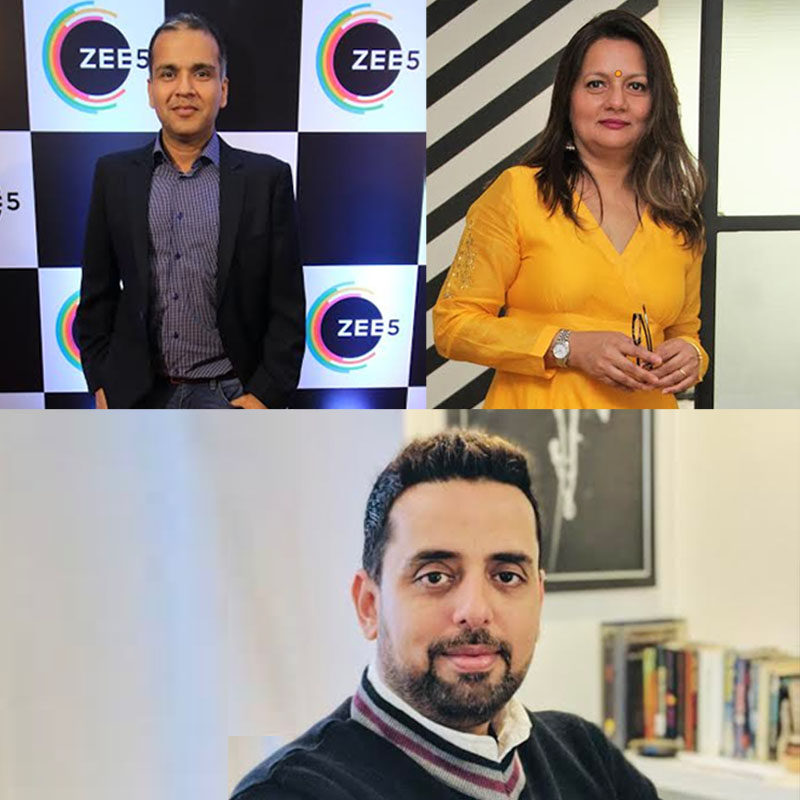
    On appointing Publicis Capital as its agency, Manish Aggarwal, Business Head, ZEE5 India commented, “Earlier this year, we completed one year of operations. This year has been one of many learnings and insights. We were keen to bring on board partners who understand our business and have the ability to scale with us. As we continue to be the fastest growing OTT platform in India, we found Publicis delivering on all boxes. We look forward to partnering with Publicis in our next phase of growth.”

    On winning the account, Srija Chatterjee, MD, Publicis India commented: “In 2017, we inaugurated our relationship with the ZEEL family with the broadcast bouquet, in 2018 we expanded it by winning the mandate to launch ZEE5 in the international markets, and now in 2019, the team at ZEE5 India has awarded us the creative mandate for partnering the OTT business in the domestic market as well. It’s when we grow with our clients that we feel true gratification. We’re looking forward to this exciting journey and in partnering ZEE5 India to leadership in what’s an increasingly action-packed category.”

    Adding his views, Suraj Pombra, EVP, Publicis Capital said: “The decibels in the OTT category find no parallel today. The future leadership of content consumption is what all brands are fighting for. We feel privileged to have been chosen by ZEE5 India to partner them in what’s going to be a thrilling battle with daily non-stop action. With their unmatched content library that finds appeal across the country, ZEE5 is poised to be the go-to destination for all Indian viewers. Here’s to leading the change together.”

    ZEE5 is home to 1 lakh hours of On Demand Content and 80+ live TV channels. With over 3500 films, 500+ TV shows, 4000+ music videos, LIVE TV Channels across 12 languages, ZEE5 presents a blend of unrivalled content offering for its viewers across the nation and worldwide. ZEE5 also offers ground-breaking features like 11 navigational languages, content download option, seamless video playback and Voice Search.

  • Content choice drives Indians’ subscription to multiple OTT platforms

    Content choice drives Indians’ subscription to multiple OTT platforms

    MUMBAI: OTT subscription fatigue is a myth in India for now. While subscribing to multiple OTT services, Indian subscribers rely on content as the driving force. There are three primary reasons for this – demand for more content options (42 per cent), satisfying the content needs for an entire family (42 per cent) and all content not being available on one single OTT service (42 per cent).

    “Our research findings suggest that the online TV consumer in India sees the value in TV content whether they are paying with greater focus and attention, or with their money,” says Brightcove India sales director Janvi Morzaria.

    The study run by Brightcove polled 9,000 participants across nine countries in Asia, including 1,000 consumers in India. It also revealed that 79 per cent of respondents welcomed the hybrid model of OTT. The report said that 35 per cent of respondents are open to a reduced monthly subscription package that serves ads depending on the price, whereas 44 per cent said they would definitely sign up.

    25 per cent of Indian respondents wants to pay nothing and watch ads as a trade-off to consuming content while 25 per cent elected to pay a lower fee with limited ads. Just 14 per cent agreed to pay a higher fee to be free from ads and 14 per cent would like an option where they can customise their price and ad packages. 37 per cent of respondents wanted to pay less than $1 per month, 27 per cent would pay $1-$4 per month, and 16 per cent would pay $5-$9 per month.

    “Indian consumers do not mind seeing ads as part of their shows, especially if they are getting a deal. 79 per cent of Indian respondents stated that they are open to a hybrid plan of ad-funded SVOD that comes with a reduced price,” she added.

    It also emerged that offline downloads, access on mobile, and using less data on mobile were the top three OTT service features most wanted by Indian consumers. 22 per cent of Indian respondents found two ads as an acceptable advertising load per ad break and 13 per cent were open to three ads per break. In addition to that, 67 per cent of respondents were receptive to the idea of shoppable TV.

    “OTT service providers should take advantage of this preference and make the advertising experience engaging while limiting ad loads per break. Consumers are now willing to watch ads if they have the option to subscribe to a reduced price plan,” she commented.

  • Eros International’s Andhadhun Grosses Over $14 Million in China in First Weekend

    Eros International’s Andhadhun Grosses Over $14 Million in China in First Weekend

    Isle of Man, April 8, 2019– Eros International Plc (NYSE: EROS) (“Eros” or “the Company”), a Global Indian Entertainment Company, today announced that Andhadhun, an engaging thriller starring Tabu, Ayushmann Khurrana and Radhika Apte has collected over $14.0 million within four days of its release in China. Andhadhun was released in China on April 3, 2019 and continues to enjoy a very strong box office performance. The film was originally released theatrically in India and internationally on October 5, 2018 to widespread critical acclaim. Andhadhun was produced by Viacom18 Motion Pictures and Matchbox Pictures, and distributed internationally by Eros International.

    Speaking on the film’s performance, Kumar Ahuja, President of Business Development, Eros International, said, “With the success of Bajrangi Bhaijaan and previous Indian releases, China has emerged as a key market and a major box office earner for Indian films. We are delighted with the impressive run the film is enjoying and how the fans in the country can now witness the magic of Andhadhun unfold in theatres across the country.”

  • Netflix starts testing Rs 65 mobile-only weekly plan for Indian users

    Netflix starts testing Rs 65 mobile-only weekly plan for Indian users

    MUMBAI: Taking note of mobile’s popularity for digital content consumption, streaming giant Netflix has started testing mobile-only subscription plans in India. According to media reports, the company has started testing a mobile-only weekly plan priced at Rs 65 in the country. However, it has also been confirmed by the OTT platform that it is only a test, not a price cut.

    Although users will get access to the entire catalogue of films and TV shows under this plan, it does not offer HD or Ultra HD content. The mobile-only plan will allow users to access the platform on mobile phone and tablet but only on one screen at a time.

    Last month, it was reported that Netflix is testing a mobile-only monthly plan priced at Rs 250 for users in India. According to reports, the plan will be rolled out to everyone in phases.

    "We are always looking for ways to make Netflix more enjoyable and accessible. We will be testing different options in select countries where members can, for example, watch Netflix on their mobile devices for a lower price and subscribe in shorter increments of time. Not everyone will see these options and we may never roll out these specific plans beyond the tests," the company also said.

    Netflix has significantly upped its game in India since last year. Along with launching hits like Sacred Games, it has also come up with original movies. But in India, it is competing with a number of homegrown players such as ZEE5, Voot, ALTBalaji along with its international rival Amazon Prime Video.

  • Netflix India’s Abhishek Nag on streaming challenges, connected TVs and local stories

    Netflix India’s Abhishek Nag on streaming challenges, connected TVs and local stories

    MUMBAI: Internet network speed hasn’t kept pace with the growth of internet adopters in India. Hence, streaming giant Netflix, which sees the potential of its next 100 million subscribers from this country, is heavily investing in compression technology to provide good viewing experience of high quality video even without a fast connection. Along with that, the OTT platform is highly committed to delivering locally relevant stories.

    “There was a time when if you watched a high quality video on Netflix you will be on a 750 kbps connection. Today you can watch extremely high quality video on Netflix at 270kbps. You can do this because we invest significantly on compression technologies,” Netflix India business development director Abhishek Nag said while speaking at The Future Of Video India 2019 summit organised by the Asia Video Industry Association (AVIA).

    Nag also emphasised on the importance of connected TVs as the partner of the OTT platform. Although handheld devices have emerged as the most popular medium to consume digital content, the Netflix executive said that users are gradually watching the streaming platform on large screens. He added that 42 per cent of accounts’ primary viewing in India became connected TVs within six months of activating subscription for the first time. Even broadband partnerships are extremely important for the company to provide a good viewing experience.

    According to him, the dichotomy between OTT and broadcaster is outdated now. He opined that the industry today is bifurcated as content creators and distributors. Rather than the medium and the delivery pipe, consumers ultimately care about content.

    Nag also reiterated the importance of locally relevant stories. Along with Sacred Games’success outside India, he also cited the example of Dark which had a successful run in its home country Germany but garnered more viewership across the globe. According to him, as the company continues to diversify content and personalise the service people will see value in subscribing.

    When it comes to the issue of censorship, which has become the centre of attraction for regulation since last year, OTT players teamed up to create a self-regulation code. Nag is of the view that the code balances creative freedom and expression along with getting consumers' choice to watch what they feel is right.

  • Netflix amends law to let shareholders nominate board members

    Netflix amends law to let shareholders nominate board members

    MUMBAI: Streaming giant Netflix has amended its bylaws to allow its shareholders with a 3 percent stake to nominate board members. This move is definitely a victory for the stakeholders on a key corporate-governance issue after a year of voting for such proposal known as proxy access.

    The amendment allows a shareholder, or a group of up to 20 stakeholders, owning at least 3 percent of its outstanding shares for at least three years may nominate up to two directors, or can have a representation of up to 20 percent of the company’s board.

    “The board periodically reviews our corporate governance, and determined that adopting proxy access is appropriate at this time, ” the streaming platform said in a statement. At Netflix’s annual meeting in last June, a non-binding proposal to adopt the proxy access bylaw was approved. Previously, the company opposed the proposal by shareholders.

    “By enacting proxy access, Netflix is finally giving investors a meaningful voice in board elections and they are no longer an outlier holding out on their long-term shareowners,” New York City Comptroller Scott Stringer commented on the move.

  • Access, language variety, local partnerships to drive next billion subscribers

    Access, language variety, local partnerships to drive next billion subscribers

    MUMBAI: Despite the overwhelming growth of the OTT sector, players still need to pay more focus on issues such as content discovery, distribution, partnerships across verticals.

    The Future of Video India 2019 organised by Asia Video Industry Association (AVIA) hosted a session on “Capturing the next billion subscribers”. ZEE5 India CEO Tarun Katial, Amazon Prime Video India director and country general manager Gaurav Gandhi, Viacom18 Digital Ventures marketing and partnerships head Akash Banerji and Discovery digital business and partnerships director Issac M John participated in the panel moderated by TriLega partner Nikhil Narendran.

    Gandhi pointed out that screens and connectivity are the routes to the next billion users in the sector. According to him, the next important aspect is the hunger for content. Going against the common notion that Indian consumers are price conscious, he said that they are, in fact, value-conscious who will not mind paying for the right content at the appropriate price point.

    “Then there are questions of access and distribution. How easy is it to get these content or service by virtue of mobile phones, apps and then is the option of easy payment. Another important part is bringing the ecosystem together whether it’s cable companies or telcos trying to make sure they are able to offer customers the service,” he added.

    Discovery’s John spoke about the importance of content in regional languages as the next wave of consumers is coming from rural India. He also added that short-form content is going to drive content consumption citing the popularity of TikTok videos. According to John, offering unique content can create a clear demarcation of value.

    Banerji said that the next billion subscribers are not certainly going to come on the back of OTT videos only. It’s going to be multiple industries spanning retail, travel, etc. Banerji emphasised on the role of technology so the streaming services work seamlessly in tier II and III markets. He opined that ensuring the product works even in patchy network is a necessity, especially for someone who is possibly coming to the internet universe for the first time.

    Terming the present phase an exciting period, ZEE5 CEO Katial said everybody knows video, vernacular and voice search are going to change the game. He added that India will have an ad-supported model along with premium content behind a paywall but both will keep evolving.

    Gandhi pointed out content discovery, getting customers to see value in content and making them pay for it, and piracy as the hurdles to overcome. In addition to that, the media veteran spoke about the unsatiated demand for content which is a challenge for creators to fulfil in relevant languages. Katial agreed with Gandhi’s view giving an example of the demand for returning seasons of popular shows. In addition to that, he threw light on the need for personalisation and segmentation on the platforms with proper technology.

    While Banerji said that content is going to be a key differentiator for further growth, he cited the example of the FMCG industry for sales, distribution and brand building. For ensuring distribution in far-flung places, he thinks to work closely with local partners, local broadband players and local cable/DTH players is important. From the marketing aspect, he mentioned how FMCGs do micro marketing by working with local radio stations and print mediums. He even raised the question of attracting those not in the internet universe or older audiences.

    However, the experts reaffirmed the co-existence of linear TV and digital content at least for the next five to ten years. Demand for all types of content is increasing even as the TV becomes more accomodating to TV and non-TV content.

  • ZEEL’s Siju Prabhakaran on TRAI tariff order impact, regional growth and rural viewership

    ZEEL’s Siju Prabhakaran on TRAI tariff order impact, regional growth and rural viewership

    MUMBAI: The situation created by the new TRAI tariff order (NTO) has become a reality check for the whole television industry. Big networks could earlier ensure that several channels are clubbed together by the DPO but now with power in the hands of the consumer, each channel has to fight hard for every TV set. Indiantelevision.com caught up with Zee Entertainment Enterprises Ltd (ZEEL) south cluster head and Zee Tamil business head Siju Prabhakaran, discussing the impact of the regime on its regional cluster’s viewership and advertising pattern, the scope of regional TV viewing against mushrooming OTT platforms and others.

    He is of the opinion that unique content will always get your channel to be picked. Breaking the myth that rural audiences aren’t engaged, Prabhakaran says that, in fact, rural viewers are more loyal than urban viewers.

    Edited Excerpts: 

    Could you elaborate a bit about the performance of the south cluster channels? Has the viewership increased or decreased?

    We, as a network, have a healthy growth this year. We have our strong number 2 channel in Tamil which is Zee Tamil. We have also seen a huge growth in fiction. Even in Karnataka, Zee Kannada is the number 1 channel this year. That is a big shift from last year where we were in second place and this has come on the back of great fiction and non-fiction content where we have always been very strong. Part of the growth of the cluster has also been possible because of the launch of Zee Keralam.

    How has been the impact on the viewership pattern due to the implementation of the new TRAI tariff order?

    As per BARC’s rules, we are not in a position to quote number. Having said that, we do have an advantage from the TRAI tariff order that the consumers select the channel that they want and they pay for only those channels. The making is in their hands, so the brands and channels which have been built on the back of great content, always get picked. We do see Zee channels being picked.

    What do you think is the impact of the TRAI tariff order on the whole regional space?

    We know for a fact that India is a country of many languages and if you give good content in their own language, they would rather prefer that. To that extent, regional content is growing across India and in the southern regional space there has been a great penetration of TV. This growth will have an impact on advertising and subscription because viewers are willing to watch and pay for it. But the other aspect is that we need to improve the advertising rates in the regional space.

    Several consumers had complained of a blackout due to the implementation of NTO. Did that affect you in any form?

    There were obviously timelines set and there were many extensions that happened but the whole transition for the regional segment has been very smooth. There wasn’t any blackout as such, there must have been a few issues here and there but consumers have been asking for the in-demand channels.

    Will this new regime also affect your content strategy? Especially since bills are rising and consumers could be forced to unsubscribe some channels.

    While the regime has come now, consumer focus was always there because in this business consumers’ love for content is what we want. Yes, it is more responsibility on content providers and broadcasters and for that we are continuously keeping an ear to the ground to understand consumer preferences and changes so that we can make our content strategy on the basis of that.

    It was reported that the Adex on Hindi GECs reduced to 9 per cent in FY18 as compared to an increase of 5.4 per cent in regional channels. What, according to you, is the reason?

    There are two aspects to it. First is the huge quantity of content that is now being offered in regional versus previously where English or Hindi was the focus. Second is the quality of content. The formats, the best of storytelling and films are available in regional markets and the scale is only improving. The quality of making is also equal to some national market shows. Even OTT platforms are making good regional content today.

    As you said, OTT platforms are constantly investing in regional content. Does that add more pressure on regional TV? How is regional TV competing with OTT?

    If you look at the viewership data, the time spent on TV is growing. TV as a medium is only growing. But having said that, OTT is giving a lot of original content and content that is available on TV. So the good way to look at it is that both will grow at a different level. Maybe since it’s a new space and it will grow at a much faster pace, but TV is a more stabilised medium.

    In rural areas, do you think consumers will be willing to pay for the regional channels? How are you attracting these rural audiences?

    Yes! In every region, there is always an upper hand rural market and conventional understanding is that rural areas are more rooted in language culture. If we are giving content that resonates with the rural audience, they are more loyal than urban audiences.

    With IPL ongoing and with elections around the corner, do you think that the viewership pattern for the regional segment is going to be affected? Any plans to alter your programming line-up?

    IPL has been going on for more than 10 years now so broadcasters know their timings too. Elections are also a periodic phenomenon that comes after 4-5 years. One needs to understand that most of the channels are habit driven channels and they are the part and parcel of daily entertainment. We do have launches planned across our channels. So these things don’t matter as such.

  • Draft National e-Commerce Policy: Why international OTT platforms need not worry just yet

    Draft National e-Commerce Policy: Why international OTT platforms need not worry just yet

    MUMBAI: The national e-commerce policy draft appears to have created quite a stir in India's OTT business. In its current form, the proposed policy is bound to pose a regulatory hurdle to international streaming giants, some say. Despite the clear distinction in the dynamics of OTT and e-commerce sector, the policy appears to bring the former under its ambit. That has given rise to speculation over the future of popular OTT platforms like Netflix, Amazon Prime Video and Hotstar.

    At the heart of the problem is the way e-commerce has been defined in the ‘Draft National e-Commerce Policy’ by the Department for Promotion of Industry and Internal Trade (DPIIT). The draft says, e-commerce is “buying, selling, marketing or distribution of goods, including digital products and services; through electronic network". Notably, it also refers to the FDI policy in e-commerce which restricts platforms with foreign direct investment to “exercise ownership or control over the inventory sold” on it. This poses a threat to Netflix Originals, Amazon Prime Video Originals and Hotstar Specials, argue some.

    The situation, however, isn't as dire as it is being made out to be.

    Given the obvious dissimilarities between the two services, there is a need to craft a separate policy for OTT platforms, if at all. Content consumption and buying products online doesn't make for a fair comparison.  When it comes to OTT apps, there is no fixed delivery period unlike an e-commerce platform. OTT platforms cannot swap the inventory model of business with an instant delivery model.

    While subscription based video-on-demand services carry out transactions, they don’t provide an option for permanent download of digital goods that could be regarded as a replacement of physical goods. Unlike e-commerce companies, OTT apps also don’t connect companies while providing content to subscribers.

    Policies of this nature don’t get finalised without struggle in the Indian regulatory system. The authority itself will go through multiple layers of discussions before sending off the final draft. In addition to that, stakeholders also have a fair chance to argue against what they'd like to believe are the flaws in the draft. The upcoming Lok Sabha election will also offer a breather to stakeholders when it comes to any potential forward movement on the bill. Industry sources Indiantelevision.com spoke to claim there is a good chance we may not see a final policy even before 2020.

    According to legal experts, the intent of the policy is good for small retailers in the country. But bringing digital services and data storage issues along with e-commerce platforms will cause more ambiguities for the entire digital economy. Moreover, lack of clarity on how the implementation will happen is being highlighted as a major problem of this draft. They have also pointed out the need for open house discussions to address some of these issues.

    However, it is certain that if the draft in current form becomes the law of the land, international OTT players will be left with no option than to adopt a marketplace model. That, however, would make little sense, as it would force them to showcase their content on other OTT platforms, as per the definition of what constitutes e-commerce. The micromanagement of ownership and control over content will only harm the industry, which is still at a nascent stage of growth.

    While there is a perspective that the proposed policy will help homegrown OTT players, there is also a danger that a less competitive market may lead to fall in quality content. Along with the emergence of homegrown players, the localisation strategy of international OTT players has driven the growth of demand for original conten. Depriving Indian viewers of international shows and original programming may also reduce their enthusiasm for streaming platforms overall.

  • TRAI tariff order to drive people to online consumption

    TRAI tariff order to drive people to online consumption

    MUMBAI: Of late, there have been several speculations on the impact of the TRAI tariff order on consumers including hike in monthly cable bill and migration to OTT platforms.

    The research agency YouGov conducted a study to find its impact among 1,020 respondents. As per the study, 92 per cent are aware of the new TRAI tariff order while 76 per cent have already made alterations to their DTH subscription as per the new guidelines.

    “In general, 3 in 5 (62 per cent) of North India residents look at the new TRAI framework favourably. On the other hand, a third of residents from South India (32 per cent) are not so optimistic about the new regulation and more than half (54 per cent) feel they may have to spend more on their subscription going forward,” the report says.

    However, despite TRAI’s onstant claim that the new order will bring down cable bill, 54 per cent of those who have made modifications to their channel subscription said they pay more than what they paid earlier. On the other hand, 32 per cent feel they pay lesser than what they paid earlier. Only 14 per cent feel there has been no change as they pay the same amount as before.

    Interestingly, 59 per cent of the customers who have already switched to new plans think this rule is going to be favourable for end customers like them. Even among those who haven’t yet upgraded their subscription, 58 per cent look at this change favourably.

    The research also shows that 49 per cent of the respondents feel that the new regulatory framework will increase the amount of time they spend watching original content on OTT. In addition to that, two out of five people feel this move will increase the amount of time they spend online watching TV content.

    “The countrywide implementation of the new regulation is bound to have an impact on viewership and advertisers need to revisit their media plans in accordance with the changing consumer behaviour. Although TV viewing may not change drastically, we see the likelihood of people moving online. Advertisers thus need to carefully align and study how they can reallocate their budgets,” YouGov India general manager Deepa Bhatia commented.