Tag: OTT

  • Doordarshan’s future roadmap hinges on new tech, content development & monetisation

    Doordarshan’s future roadmap hinges on new tech, content development & monetisation

    MUMBAI: Public broadcaster Prasar Bharati is waking up from its slumber. With technology redesigning the media industry, the pubcaster has to quickly adapt to upgradations like ultra-high definition (UHD) along with focusing on over-the-top reach and tapping the huge digital base.

    Several recommendations to boost DD were discussed in the first ever India International Broadcast Conclave 2019 held at Hyderabad in March under the aegis of the Ministry of Information and Broadcasting (MIB). Experts across the media value chain shared their insights for further growth of DD and the industry.

    One of the important recommendations was the participation of DD and AIR in international forums like MIPCOM and other international festivals.  While PB has a huge repository of archival content, monetisation of this asset is the need of the hour. Along with helping in revenue augmentation, it would also ensure a wider reach of rich content to enthusiasts.

    DD also needs to quickly adopt HD and UHD technologies for better picture quality. It has also been suggested that DD should prepare a roadmap for moving towards HD completely. On the other hand, DD needs to tap the huge digital base of consumers nationally as well as globally and take necessary steps for digitising of content and infrastructure. While all the traditional broadcasters are taking the over-the-top (OTT) road, DD can either create its own platform or collaborate with third parties in a revenue sharing agreement.

    Technology is not only important for distribution but also needs to be implemented as a part of overall programming such as augmented reality and virtual reality (AR and VR) in order to innovate and present content tactically. The need to have a separate cell in DD for data analytics for better insights on content has been allowed.

    “DD needs to adopt a professional outsourcing model for content development and acquisition in view of a large number of vacancies of production staff and ageing manpower. DD needs to revamp its tariff rates, put in place a robust sales and marketing teams and monetisation of content to stay ahead in the competition,” the report read.

    To make the changes smoother, there should be a focus also on capacity-building initiatives. At the time of rapid changes, a well-designed skill upgradation programme is the need of the hour. Moreover, collaboration with private agencies to provide training on contemporary skills in areas covering the entire value chain has been suggested. 

    “Commercial activity of broadcast to be efficient to pay for the public service activity. Onus is to be self-sustaining so that it can sustain the organisation. DD Freedish is a good example of public service mandate and achieving commercial sustainability,” PB CEO Shashi Shekhar Vempati highlighted in his ‘Master Class’.

  • Amazon Prime Video, ZEE5 in talks for partnership

    Amazon Prime Video, ZEE5 in talks for partnership

    MUMBAI: Two strong players in the Indian over-the-top (OTT) ecosystem i.e, Amazon Prime Video and ZEE5 are in talks for a partnership. According to a report in the Economic times, the platforms are currently negotiating for a platform deal.

    The report also added quoting an unnamed source that it may take a month for both the parties to reach an agreement. Moreover, the structure of the deal and different models are being explored currently.  

    Whether ZEE5 content should be made available as an in-app or app-in-app format that is also being discussed. ZEE5 which is now more reliant on AVOD revenue is looking to expand its subscription video-on-demand (SVOD) business with the deal.

    While in the United States Amazon has an optional add-on service called Prime Video Channels, Amazon might launch Prime Video Channels in India too. If the deal works out, ZEE5 could be the first service on the platform.

    “Acquiring and retaining a customer and running an app is a completely different ball game altogether. Many people are now discovering that it is good to focus on content and partner with other players for distribution. Also, it is not sustainable to have 30-40 OTT services in a market. Economically too, these kind of partnerships are better for the consumer,” a top executive form a leading streaming service said as quoted by ET.

  • Netflix ropes in BBC Studios’ Jackie Lee-Joe as CMO

    Netflix ropes in BBC Studios’ Jackie Lee-Joe as CMO

    MUMBAI: Amid intense competition in the streaming market worldwide, the streaming giant has made another important move by appointing Jackie Lee-Joe as chief marketing officer. Lee-Joe who has been CMO of BBC Studios since 2015 will take up the new role in September.

    “Jackie is a truly original thinker with a wealth of global experience — making her the perfect fit as our next chief marketing officer. I’m excited to work with her in promoting our brand and original programming in new and creative ways to our members all around the world,”  Netflix chief content officer Ted Sarandos said.

    Lee-Joe replaces Netflix’s CMO of seven years Kelly Bennett who left the company in March. Earlier this year, Spencer Neumann was appointed as chief financial officer in the organisation.

    “Netflix is a much loved and respected brand, entertaining audiences everywhere with it’s rich and thought provoking original programming. I’m thrilled to be joining one of the world’s most creative, dynamic and fearlessly innovative companies,” Lee-Joe commented.

  • Amit Goenka on ZEE5 growth, monetisation and language-based content strategy

    Amit Goenka on ZEE5 growth, monetisation and language-based content strategy

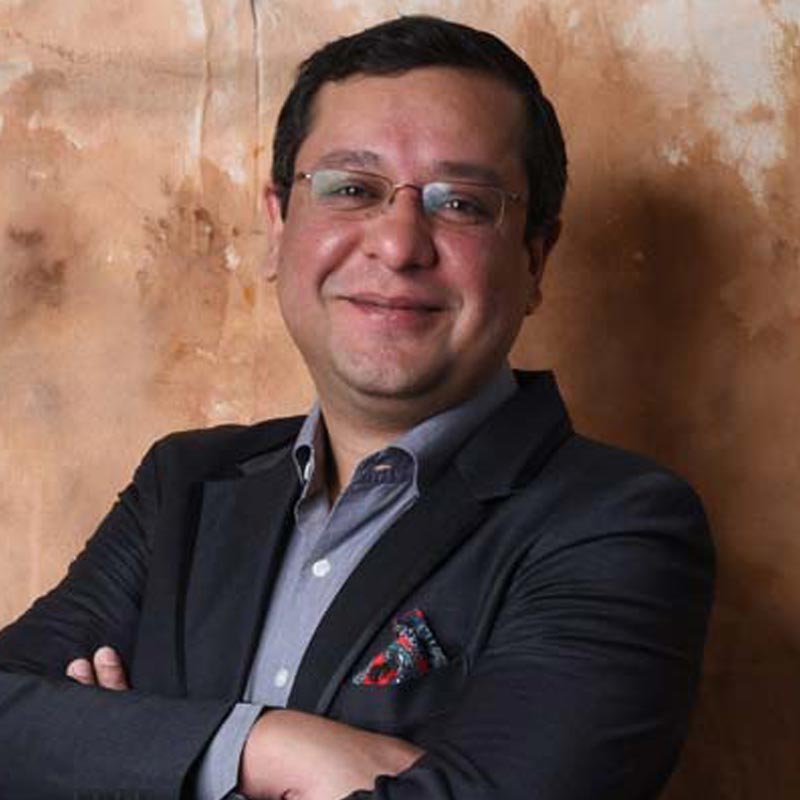
    MUMBAI: Within a very short span after its launch, Zee Entertainment Enterprises Ltd's (ZEEL) digital venture ZEE5 has been able to gain good traction in the Indian market reaching 61 million monthly active users (MAUs). While the company is monetising this viewership through advertising for now, digital subscription is also seeing good initial traction. However,  ZEEL international broadcast business and ZEE5 Global CEO Amit Goenka noted that for a sustained growth it needs to establish a strong value proposition with a large catalogue of differentiated content.

    In a Q&A published in the company's annual report, Goenka spoke on a wide array of topics in the context of ZEE5’s performance in 15 months, user base, content strategy, and monetisation. Here are the edited excerpts of the interview:

    ZEE5 was launched in a crowded OTT space. How would you rate its performance after 15 months of launch?

    We have been pleasantly surprised by the overwhelming response ZEE5 has received. Reaching 61 million monthly active users within a year of launch is a great start. In the first year itself, we have significantly expanded our original content offering and have become the number one producer for digital exclusive content. ZEE5 has rolled out several new features for its consumers and is also offering differentiated solutions to advertisers. Although the progress in year one has been satisfactory, we would have liked to launch ZEE5 a little earlier. We always believed that the right product with a compelling content catalogue would be able to make its mark. This is just the beginning and ZEE5 will continue to scale up on the three pillars of content, technology and partnerships.

    An Indian consumer has multiple OTT options for entertainment. What in your opinion makes a consumer choose ZEE5 over the others?

    Over the past two and half decades we have observed that viewers in India prefer to consume content in their own language. Content across 12 languages has been the focus of ZEE5 since launch. We also understand that viewers’ needs are diverse and therefore we offer a wide range of content. That is where our expansive movie library, ZEE5 Originals, TV shows, curated news, music videos, live events and cine-plays come into the picture. While ZEEL’s extensive library of catch-up TV is driving organic growth on our AVOD offering, the taut storytelling of our original content has appealed to viewers and is driving SVOD adoption. ZEE5’s features like navigation in 11 languages, voice search, and option to download and consume offline have been designed considering the realities of the Indian market. ZEE5 is committed to offering enough choices and improving convenience for consumers to make it the go-to destination for entertainment.

    Could you share your philosophy for selection of stories for original content?

    Based on the insights from our extensive research of OTT’s target audience, we have devised a philosophy for original content that is based on the 3Rs – Real, Relevant, and Resonant. It helps us to select stories from across the country’s diverse cultural and linguistic backgrounds. Over the last 15 months, we have created content across several genres – biopics, thrillers, horror, comedy, and action. In India, young audiences (18-35 years) have been the early adopters of digital platforms and these genres have seen great success with this segment. Our shows like Karenjit Kaur: The Untold Story of Sunny Leone, Rangbaaz, Parchayee: Ghost stories by Ruskin Bond, Babbar ka Tabbar, or movies such as Tigers and the line-up of ZEE5 Film Festival have seen immense success. Our FY20 slate of original content is building up well and we are on track to launch over 70 original shows and movies across 6 languages.

    ZEE5 has built a sizeable user base in a short time. How are you monetising this base and how do you see the split between advertising and subscription revenues?

    India is a unique market when it comes to OTT, especially with respect to advertising and subscription. At present, television and free content dominate viewership on OTT platforms and on ZEE5 as well, catch-up TV attracts a large proportion of eyeballs. We are monetising this viewership through advertising, and this is driving acceleration in the company’s overall ad revenue growth. In the price-sensitive Indian market, digital has to compete with a very economical television offering to build a subscriber base.

    While the digital subscription is seeing good initial traction, for a sustained growth it needs to establish a strong value proposition by offering a large catalogue of differentiated content. ZEE5 is focused on creating content that caters to needs not addressed by television. ZEE5’s revenues will be dominated by advertising initially but as we populate our platform with more original and premium content, we expect the subscriber base to scale up faster. In the longer term, digital subscription could be as big an opportunity as advertising in India.

    ZEE5 has struck several partnerships over the last one year. What is the framework for selection of partners and how do you evaluate the performance of a partnership?

    We are evaluating partnerships primarily with two objectives in mind – reaching untapped audiences and improving the viewing experience. Digital video consumption in the country is being driven by mobile, accounting for over 90 per cent of viewership. Telecom players are playing an important role in driving this growth by bundling content with their services and have become natural partners for content producers. Our partnerships with all the leading telcos boost the consumption of our AVOD content and also helps to drive our subscription service by offering SVOD content for their premium consumers. We are also partnering with device manufacturers to benefit from the rising penetration of smartphones and smart TVs. Some of our partnerships in the digital ecosystem are with businesses that already have an established user base in our target segments. In addition to providing additional touchpoints for reaching consumers, these partnerships also enable better content discovery and viewing experience.

    With so many players investing in their OTT offerings, how do you see the landscape evolving?

    The data and technology revolution has considerably changed the media landscape, bringing new players into the entertainment industry and enabling the existing ones to explore new opportunities. Several technology-first companies that started off with licenced or user-generated content are now producing original content. On the other hand, the incumbents are also upgrading their technological capabilities along with expanding their content offering. Integration of technology will have several lasting impacts on the way content is created and consumed. However, I believe that in the long run, technology-led differentiation will diminish, and the only key differentiator for any platform will be content. While some platforms will find and operate in a niche, only a few will be able to reach a pan-India scale. ZEE5 remains focused on becoming a one-stop digital entertainment destination for Indian audiences by creating content that resonates with them and by continually expanding its content offering.
  • Paytm, Tencent Holdings to invest $100 mn in MX Player

    Paytm, Tencent Holdings to invest $100 mn in MX Player

    MUMBAI: Indian e-wallet and payment gateway giant Paytm and Chinese conglomerate Tencent Holdings have reportedly planned to invest about $100 million in Times Internet-led streaming platform MX Player. Although the talks have reached final stages but some investment terms might still change.

    Tencent launched its first overseas video streaming service last month in Thailand as it is looking at expanding abroad. It has also invested in movies, television shows and other content to increase user engagement. With the MX Player deal, it will be able to make its presence in India where online streaming services are booming since the last 2-3 years.

    As per a PwC report, India’s content streaming market is projected to grow at an annual rate of 22 per cent to Rs 120 billion ($1.7 billion) by 2023.  Within a few months of its launch, the newest OTT player of India has gained high traction. According to a recent report revealed by Times network, it witnesses over 1.2 million new installs every day while it is already installed on over 600 million devices globally. Moreover, it is also present in over half of all Indian smartphones.

    While Paytm reported 5.5 billion transactions in the year ending March 2019 with a gross value of over $50 billion, the MX Player deal will help it to user increase engagement.

  • SonyLIV to launch India’s first OTT gaming destination with exclusive augmented reality and show based games, targets 50 MN users

    SonyLIV to launch India’s first OTT gaming destination with exclusive augmented reality and show based games, targets 50 MN users

    MUMBAI: In an industry first, SonyLIV announced the launch of India’s first OTT gaming destination with over 100 exclusive show-based games, to be launched in a phased manner. With this move, SonyLIV aims to reach out to 50 MN new users offering them a one-stop gaming destination. These games are curated around some of Sony Pictures Networks’ (SPN) biggest IP’s across channels like KBC, CID, Crime Patrol, The Kapil Sharma Show, Patiala Babes, Baalveer, Kicko & Super Speedo, amongst others.

    SonyLIV is not only scaling up its portfolio with Multiplayer Video Quiz and Augmented Reality-enabled formats but Is again the first OTT player in the country to launch show-based games. This is another pioneering first from SonyLIV, which was the first OTT to be launched in the Indian market in 2013.

    As per a recent *KPMG report, the Indian gaming industry is estimated at INR 43.8 billion in FY18 and is expected to grow further at 22.1% CAGR taking it to INR 118.8 billion by 2023. Increased digital usage and the rise in the number of gamers, will be key in headlining this growth in online gaming. SonyLIV’s launch of the OTT gaming destination is reflective of this progress and is sure to catalyse more change in audience consumption patterns. 

    Home to an ever-growing content catalogue, SonyLIV aims to tap over 50 MN new users with this one of a kind gaming experience. From video quiz formats to uniquely designed board games to big ticket tournaments, there is something for everyone between the age group of 7-35 years in this one-stop gaming destination. In addition to this, SonyLIV will also introduce exciting Augmented Reality (AR) games around iconic shows from Sony Pictures Networks India (SPN) like Crime Patrol, Baalveer, CID, Aladdin Naam To Suna Hoga, and Tenali Rama amongst others.

    The platform will also introduce an array of user engagement features to gratify winners with abundant opportunities. With the Game Store hosting a 24X7 tournament feature, consumers will stand a chance to win cash anywhere between Rs 1/- to Rs 5000/- depending upon the size and duration of the tournament. But that’s not all! For the first time ever, through the “Daily Rewards Feature” users will also stand a chance to meet-and-greet celebrities or attend famous shows like KBC, Indian Idol, The Kapil Sharma Show, Super Dancer and others just by playing games on the platform.

  • IAMAI requests TRAI to recognise OTT services as “digital applications”

    IAMAI requests TRAI to recognise OTT services as “digital applications”

    MUMBAI: The Internet and Mobile Association of India (IAMAI) has reiterated that the term over-the-top (OTT) does not justify the innovation in the digital applications at the application layer. In its submission on counter comments to the OTT communication services consultation paper by industry body Telecom Regulatory Authority of India (TRAI) it has asked the regulator to recognise OTT communication services as ‘digital applications’.

    “Using the terminology of OTT paints digital applications as free-riding over telecom networks, as they are accessible to all users with internet service without any arrangements / agreements with TSPs. Using the internet to offer services to consumers does not amount to free-riding, as consumers pay TSPs for the data that they use,” IAMAI said.

    The industry body has also added that digital applications provide different services with diverse functionalities that do not merely replicate legacy telecom services. It has also noted that the use of the term “over the top” tries to equate the services while differentiating the mode of their accessibility. According to IAMAI, the services provided by digital service providers in the areas of communication, e-commerce, news, social media etc., do not provide substitutable services.

    While submitting comments on the OTT consultation paper, some of the telecom operators and COAI sought to qualify the services provided by some of the digital applications to be similar or substitutes for telecom services. IAMAI is of the view that digital applications are qualitatively very different from telecom services.

    “Identifying Rich Interaction Applications (“RIAs”) as comparable to telecom services is highly reductionist and unjustified. Moreover, digital applications are not available to those telecom subscribers who do not have access to the internet. While internet penetration in India is increasing with the rapid adoption of smartphones, this number is still a very small percentage of the Indian population. On the other hand, users can access telecom services without internet access or even smartphones,” it commented.

    Some of the stakeholders also spoke about the regulatory gap between ISPs and digital application providers. In response to that, IAMAI has said that the digital applications are duly governed by the IT Act under the Ministry of Electronics and Information Technology. It added that any new regulations under a different regulatory authority will only convolute the existing regulatory regime and adversely affect the ease of doing business in the country.

    “The argument of “same services same rules” was laid to rest in previous TRAI consultations on the matter. TSPs, with access to scarce national resources like spectrum and having restrictive access over physical infrastructures cannot possibly be compared to services being provided at the application layer, and any discussion of regulatory imbalance between the two would be comparing apples with oranges,” it highlighted.

    IAMAI thinks all arguments of service or functional substitution by the telcos ultimately stem from a narrow perception of revenue substitution. In this context, it has highlighted that earlier some telcos acknowledged that the rise of digital applications has actually led to a rise in data revenues for these service providers.

    “IAMAI would like to request the authority not to encourage TSPs to cherry-pick digital applications that help raise their revenues while choose to clamp down those they perceive as a threat for their revenues. Regulations should be based on principles and using regulations as restrictive tools for protecting business interests is a myopic outlook that harms the greater interest of the nation at large,” it commented.

  • SPNI tells TRAI OTT platforms can’t be compared to broadcasting services

    SPNI tells TRAI OTT platforms can’t be compared to broadcasting services

    MUMBAI: Sony Pictures Networks India (SPNI) has again batted for the policy of forbearance for the fullest potential growth of the OTT industry. The broadcaster has also strongly advocated that OTTs providing content/media cannot be brought within the ambit of substitutability with broadcasting service.

    SPNI is of the view that since OTT distribution platforms are not granted permission/licence by the Ministry of Information and Broadcasting (MIB), they are not comparable with broadcasters. According to the broadcaster, the licensing/regulatory provision applicable to broadcasters cannot be applied to OTT distribution platforms. It explained that OTT services also do not use spectrum for providing their services but ride on the top of data services provided by licensed telcos unlike broadcasters who require uplink/downlink spectrum for transmission of signals.

    The broadcaster made these suggestions as part of its counter comments to a TRAI consultation paper. It has also disagreed with earlier comments of some of the stakeholders that emergency services should be made mandatorily accessible via OTT content service providers. SPNI has explained that OTT content, except for live content, are consumed at consumer’s discretion not on real time basis. Hence, it has noted that display of such communications over OTT content platforms may not reach the consumers on a real-time basis which would defeat the purpose of making emergency communications available on OTT content platforms.

    Earlier, public broadcaster Prasar Bharati has suggested to the TRAI that certain norms be made mandatory for OTT providers, in order to bring them on a level playing field with TV broadcasters and not just limit their comparison to telecom service providers (TSPs). It also stated that OTT providers should abide by certain rules including one that OTT platforms streaming live TV should mandatorily carry all Doordarshan channels like DTH, MSOs or cable operators do. OTT service providers offering news content should be registered with MIB.

    SPNI has clearly disagreed with this view without taking the name of the stakeholder. It also added that the mode of operation, revenue generation and the nature of offerings of OTT service providers are not comparable with that of broadcasters/TSPs. Hence, the same yardsticks cannot be made applicable to two inherently distinct platforms. However, it noted that on the carriage of Doordarshan channels, those that are unencrypted and FTA may be made available at the option of the OTT service providers.

    “On the recommendation for audience measurement system to be devised for OTTs carrying live television channels by certain stakeholders, the OTT players already have their internal mechanisms in place for audience measurement systems. This apart there are several private players providing audience measurement services. Hence attempting to mandate one only for those OTT players carrying television content will be a fruitless exercise. The way forward would be to unify the broadcast TV measurement system so that it captures,” it added.

    SPNI has also spoken against a claim from one of the stakeholders alleging certain broadcasts on OTT platforms being against national security. It has highlighted that in light of the entire set of regulations governing the OTT platforms coupled with judicial interventions from time to time, there are sufficient checks and balances in place to ensure that content provided on such platforms are not in violation of the law of land.

  • Netflix testing pop-out video player

    Netflix testing pop-out video player

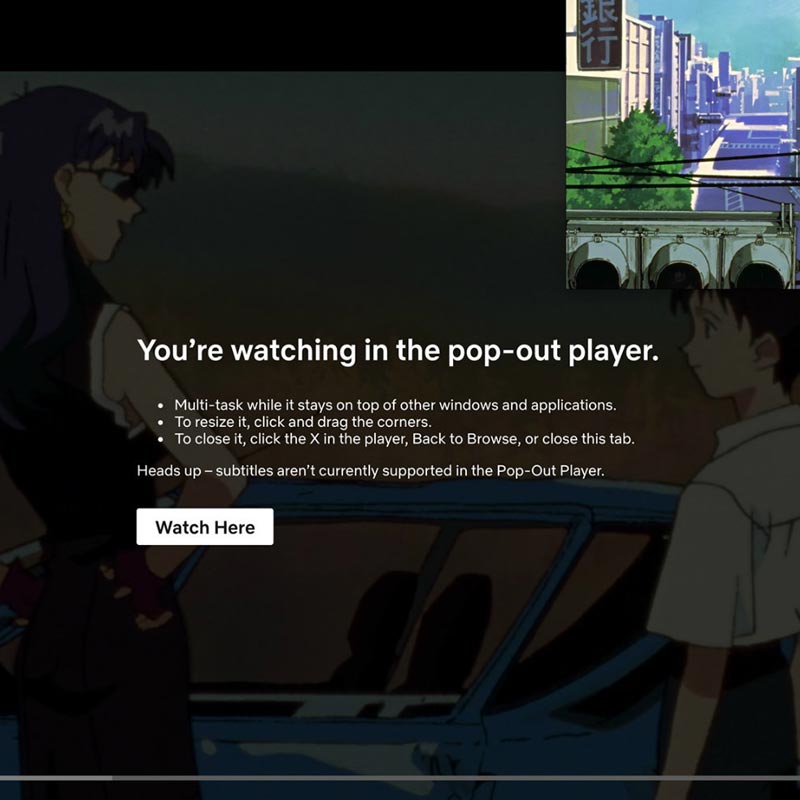
    MUMBAI: Netflix seems to be testing a new feature, a pop-out video player, that will allow users to stream videos in a small floating box that hovers above other windows and applications. The new feature means a user can watch videos on Netflix while doing other work, a perfect tool for multi tasking.

    According to engadget report, users will have to click on a small icon along the bottom of the screen to use the pop-out player. Users can resize it and position it according to their own choice once the window appears. However, subtitles are not yet available in the window.

    Although Netflix has yet to formally announce the feature,  the pop-out player seems to be rolling out slowly. But Netflix has confirmed to engadget that it is testing a pop-out player.

  • Young Indians under 35 years of age drive OTT consumption

    Young Indians under 35 years of age drive OTT consumption

    MUMBAI: Although users of all age groups are consuming over-the-top (OTT) platforms, young Indians under 35 years of age accounted for 89 per cent of OTT platform users. The age groups of 16-24 and 25-35 contributed equally to the overall market, Counterpoint Research’s India OTT Video Content Market Consumer Survey revealed. Moreover, male users account for 79 per cent of the total users.

    The report also revealed that the top five metros accounted for 55 per cent of OTT video platform users, while tier I cities accounted for another 36 per cent of users. In addition to that, Hotstar leads the Indian OTT video content market, followed by Amazon’s Prime Video, SonyLIV, Netflix, Voot, Zee5, ALTBalaji, and Eros Now in terms of the percentage of respondents subscribed to each platform.

    While subscription-based market (SVOD) continues to grow significantly, the market remains highly focused on the ad-based model (AVOD), where advertisements drive revenues.  Notably, Eros Now users were the most engaged users, with 68 per cent indicating that they watched content on the platform daily. As per the report, 9 per cent of Eros Now’s users watch content on the platform for more than 21 hours a week.

    As per the survey, salaried employees was the largest consumer group of OTT users, followed by students, business owners, housewives, and others in terms of overall demographics. While more than one-third of the respondents indicated that they were inclined to use free services, another third indicated that they were paying for the subscription. Among the remaining respondents, some of them were either on trial period or indicated that their friend or family paid the subscription cost.

    In line with popular belief, smartphone has emerged as the most popular device for OTT video content consumption and Xiaomi has acquired the place of most popular smartphone brand. Reliance Jio has taken the place of the most popular network among OTT users, followed by Airtel and Vodafone-Idea.

    Although regional languages are gradually becoming very important, most preferred languages for video content are Hindi and English till now. However, Telugu was found to be most popular among regional ones, followed by Punjabi, Bengali, Marathi and Tamil.

    The market leader Hotstar has the highest penetration of non-paying user and 56 per cent of Hotstar users hail from metro cities. On the other hand, international giants Netflix and Amazon Prime Video have high popularity in metros as top five metros account for more than 65 per cent users on these platforms.

    Among others, 40 per cent of SonyLIV users hail from these cities and Voot has the greatest reach among female users. ALTBalaji scored the highest among 25-35 age group users, who account for 59 per cent of its users while Eros Now has the largest share of its users in the 25-39 age group in tier II/III cities.