Tag: OTT

  • Ad Suite designed to help advertisers meet business objectives: ZEE5’s Yogesh Manwani

    Ad Suite designed to help advertisers meet business objectives: ZEE5’s Yogesh Manwani

    MUMBAI: While digital advertising spend in India has been traditionally mostly concentrated with Google and Facebook, OTT platforms with their massive user base have also started attracting brands lately. ZEE5, with a huge library of catch-up content from its parent network, has been focusing not only on curating the library but also its Ad Suite offering to enable advertisers to effectively meet their business objectives.

    In 2019, ZEE5 launched tools like INFONOMIX, Ampli5, Ad Vault, PLAY5 under its AD Suite which clearly indicated the platform’s aggressiveness to increase ad revenue. ZEE5 India head AVOD, SEO, news and stories Yogesh Manwani spoke on the relevance of Ad Suite and the increasing interest and investment of brands on OTT platforms in an interaction with Indiantelevision.com.

    “Our attempt is to enable brand or advertising partners to leverage the platform to reach their consumers, get their brand message out and meet their brand and business objectives. At the consumer level, we are investing and we always say that it is the power of content and technology that will help us deliver superior,” Manwani said.

    “At a consumer level we are using hyper-personalisation and using AI and ML. We are also deploying the same thing for advertisers. The idea is to leverage the best of content and technology to give our advertisers the ability to meet their goals and objectives. We designed this Ad Suite, which has a whole host of products that any advertiser, depending on their brand objectives, can choose,” he added.

    Advertisers can pick banners, videos, live streaming and a host of other options. FMCG, consumer durables, mobile handsets and telecom partners are their largest clients. Regional brands are also showing interest along with national brands.

    HSM is a large market but Maharashtra, Tamil Nadu, and Karnataka are growing markets while Bengal is emerging as a strong one as well.

    “We have one of the strongest AVOD content portfolios. We have content across 12 languages. We have strong characters people love and connect with and strong shows. We don’t have any plans to change that but we constantly look at how we allow consumers to discover and enjoy from old content as well,” he commented on the AVOD content strategy.

    “The marketing approach to AVOD content, considering the distinction of duration, frequency and nature of content, is different. It is more from a curator’s perspective other than a creator’s. The tools we use may be similar in terms of whether you are doing performance marketing, social media marketing or digital marketing but the way you approach the product is creator vs curator,” he added.

    The marketing mix also depends on the stage of the show. The platform also leverages the power of multimedia to create awareness for original offerings and to get consumers on the platform.

    “Digital is a big medium because it allows targeting consumers with the help of Consumer Life Cycle Management Techniques. It is a multimedia mix but it completely depends upon the main goals and objectives that we want to achieve,” he added.

    While many reports have predicted that the Indian OTT ecosystem will be skewed towards advertising revenue, there is no unified measurement system. Manwani said that a unified currency always works for all stakeholders and for it to work all stakeholders have to come on-board. But he mentioned that until that happens, they will work closely with their advertiser partners to ensure there is full transparency.

  • Eros Now announces collaboration with YouTube Music

    Eros Now announces collaboration with YouTube Music

    MUMBAI: Eros Now, a premier South Asian OTT entertainment platform with more than 177 million registered users, today announced a collaboration with YouTube Music in India to introduce a special subscription package at INR 99 for 90 days for new users of YouTube Music Premium subscription. The offering will be available to all new users of YouTube Music Premium, Google Play Music in India. At the end of the offer, the customer will be charged separately as per prevailing plans for Eros Now and INR 99 per month for YouTube Music Premium.

    With a plethora of options to choose from, Eros Now’s content library of 12,000+ movies, TV shows, Eros Now Originals, short-format content – Eros Now Quickie, users will also get access to YouTube Music’s catalogue including tracks in English, Hindi and nine other Indian languages. This collaboration is certain to be a delight for both Bollywood buffs and music aficionados.  This collaboration promises to further enhance consumer engagement by offering the best of entertainment content and access to an extensive music library with user-friendly interface.

    “Eros Now’s collaboration with YouTube Music is inimitable and we are thrilled to have collaborated with YouTube as this will provide consumers a massive music library in conjunction with our premium film and other programming. Amongst several initiatives we deeply invested in growing the base of paid digital subscriptions in India and this strategic alliance with YouTube and Google is another example to ensure we are able to move the needle for the growth of this business in India, whilst providing for a super value to our consumers,” Eros Digital chairman and CEO Rishika Lulla Singh commented.

    According to the Counterpoint 2019 India OTT Video Content Market Consumer Survey, Eros Now has the largest share (59%) of users in the 25-39 age bracket in Tier II/III cities, highest among all major OTT platforms with a total of 68% of its consumers watching content on the platform daily. According to the FICCI KPMG Report released in September 2019, Movies and Music contribute to greater than 50% of the OTT content consumption on both matrix of unique viewers and time spent.

  • “OTT, TV and cinema complement each other”: UFO Moviez’ CEO Rajesh Mishra

    “OTT, TV and cinema complement each other”: UFO Moviez’ CEO Rajesh Mishra

    The movie-exhibition business in India is stuck in contradictions. On the one hand, the country produces the highest number of movies in the world, on the other, its screen-density remains one of the lowest. Various state governments provide subsidies to promote shooting in their states, yet GST rate on movie tickets in multiplexes was 28 per cent initially and has been reduced to 18 per cent only recently. And while OTT platforms stream originals directly to homes without any certification or pre-screening, movie-exhibitors need government approvals for every advertisement.

    All this leaves the film folks in a sticky situation. While there is a huge untapped potential for expansion of cinema-networks in tier-II, tier-III cities, entrepreneurs and movie-enthusiasts are often hesitant to invest for fear of getting entangled in endless government regulations.

    UFO Moviez, India’s largest digital cinema distribution network and in-cinema advertising platform, has been successfully navigating these contradictions for over a decade now. Not only has the company digitised over 5,000 screens and revolutionised movie-distribution in India, in order to salvage community movie-viewing in tier-II, tire-III cities, the company has also launched a sub-brand Nova Cinemaz under a franchise model, along with Caravan Talkies, a novel movie-on-wheels concept, wherein non-ticketed shows are played at media-dark villages at sundown for rural folks who would otherwise have been deprived of this entertainment.

    “At the heart of all our efforts,” says UFO Moviez CEO Rajesh Mishra, “is an attempt to add value to all stakeholders in the movie value chain, spanning movie producers, distributors, exhibitors and the cinema-going audience.”

    Indiantelevision.com’s Sumit Ahlawat spoke to Mishra on a range of issues involving expansion in smaller cities, how to improve ease of doing business in the movie-exhibition sector, the need for an overhaul of the regulatory framework, the benefits of adopting transparent, computerised ticketing systems, the revenue-sharing model between movie producers, exhibitors and distributors and on the future of in-cinema advertising. Edited Excerpts:

    On FY19 for UFO Moviez.

    Overall 2019 has been a stable year for us.  The digitisation part of our business is working very well. We had completed the digitisation phase broadly by 2013. Currently, we are in the maintenance and growth phase.

    On the in-cinema advertising revenue decline in FY19.

    We did see a small decline in revenue generation, owing largely to the decline in in-cinema government-sponsored advertising because of the 2019 general elections and the Model Code of Conduct that was in place during the first two quarters. We were expecting this decline and were prepared for that. Advertising revenue from private players, however, has increased by 11 per cent, partly assuaging this shortfall. Going forward in 2020, we are confident about government advertising picking up once again.

    Has India’s falling GDP also impacted in-cinema advertising revenues?

    On the contrary, advertising by private players has increased by 11 per cent. India’s growth has, indeed, seen a modest decline owing largely to global factors. But this has not impacted the movie-exhibition business in India as demonstrated by the FICCI Frames report 2019 which estimated that while in-cinema advertising revenues have increased from Rs 7.5 billion in 2018 to Rs 9 billion in 2019, domestic theatrical revenues have also increased from Rs 102 billion in 2018 to Rs 110 billion in 2019.

    On the need to look beyond metro cities.

    As far as the metro cities are concerned, we are reaching a saturation point. Most metro cities in India have 100 plus screens. Even Surat has nearly 70 screens. And smaller cities having a population of 200,000-300,000 are managing with just one-screen cinemas. This imbalance needs to be addressed. India has a multi-layered economy and for the growth of all stakeholders in the movie value chain, from movie producers, distributors, exhibitors to the cinema-going audience, expansion in smaller cities is a must. We believe the next phase of growth in the Indian movie business will come from these smaller cities.

    Cinema growth potential in tier-II, tier-III cities.

    We have seen single-screen cinemas in tier-II cities struggling for survival. On the one side, they have limited options of movie display due to limited screens. In addition, they have limited in-cinema advertising revenues. These single-screen cinemas can be converted into two to three screen multiplexes. Entrepreneurs in small towns also have disposable income and they are keen to enter the movie-exhibition business. But over-regulation in the cinema sector puts them off. Licensing is a huge obstacle. In some states, one has to get clearances from over 50 nodal authorities before starting a multiplex business.

    That’s why we started Nova Cinemaz. To support entrepreneurs in the small cities who are eager to get in but lack the required expertise and know-how. Under a Nova  Cinemaz franchise, we partner with entrepreneurs at the local level. We not only take care of their content booking but put standard operating procedures (SOPs) in place, provide our years of technical expertise in computerised ticketing systems, market research, as well as provide clients for in-cinema advertisements.

    Currently, we have around 47 screens operating under Nova Cinemaz and another 75 are under discussion.

    On Caravan Talkies.

    We have a two-pronged strategy for Caravan Talkies. It’s a non-ticketing platform and works totally on advertising. The idea was to take movies in media dark areas at the bottom of the pyramid. This provides potential for advertisers to reach an audience where no other media reaches. It also provides an outreach opportunity for government agencies. Whether it's public health messages, or the Swacch Bharat campaign, or the crop insurance scheme, Caravan Talkies is a great platform for government outreach campaigns. This medium excites us and we will continue to invest our resources in it.

    On computerised ticketing systems.

    Single-screen cinemas are also struggling on account of lack of transparency and their refusal to join a transparent computerised ticketing system. They suffer because they have to furnish huge minimum guarantees (MGs) for a movie even before its release. Multiplexes work on a revenue-sharing model but single-screen cinemas in smaller cities, which are the most vulnerable, have to shell out MGs. So, I believe, computerised ticketing should be made mandatory across the board (currently it’s mandatory only for multiplexes). It’s vital for the survival of cinemas.

    On revenue sharing.

    Historically speaking, only 10 per cent movies are a hit, another 10 per cent do average business, while the rest lose money. Given that for movie producers, cinema is the only touch-point with the audience, their survival is a must. And, thus, it’s vital for movie producers to move towards a revenue-sharing model and not insist on MGs.

    On Regulation.

    Today, the greatest bane for the movie-exhibition business is over-regulation. Over-regulation of content, over-regulation of licenses and high GST rates. A movie ticket below Rs 100 is taxed differently than a multiplex ticket. This Robin Hood-attitude must go. Cinema remains one of the most regulated sectors in the entertainment space. Print, TV, OTT, nothing is as regulated as cinema. The reason China could add 10,000 screens in one year, more than we have been able to add in the last 70 years, is because movie exhibition remains one of the most heavily regulated sectors in India. A complete overhaul of licensing and regulation is a must to realise the full growth potential of the cinema business in India.

    On single-window clearances.

    The ease of doing business should translate in the movie-exhibition business as well. Single-window clearance for cinemas is the need of the hour. This will help the cinema business tremendously.

    On the OTT challenge.

    I do not see OTT as a challenge. Rather, I believe that OTT, TV and cinema can all complement each other and help build an ecosystem conducive for the growth of quality content. However, OTT, which streams original content directly into people’s houses does not have to deal with censorship for these whereas, we have to take approvals even for advertisements. While we do not envy the freedom on OTT, we definitely believe that there should be less censorship on cinema well. There should not be a disparity between OTT and cinema.


  • Kantar and VTIONTM announce partnership to roll out ‘OTT Audience Measurement’ solution

    Kantar and VTIONTM announce partnership to roll out ‘OTT Audience Measurement’ solution

    MUMBAI: Kantar, the world’s leading data, insights and consulting company, has partnered with VTIONTM to roll out ‘OTT Audience Measurement’, India’s first, real-time audience measurement solution that redefines audience measurement.

    The joint, go-to-market offering brings together Kantar’s expertise in media measurement and Consumer insights with VTIONTM’s proprietary audience measurement technology and data management framework to provide a unique, comprehensive understanding of audience behaviour, insights for communication planning as well assessment of ROI for media investments across OTT Video platforms, OTT Audio Streaming & Podcasting and Broadcast Radio FM Platforms. 

     “With consumers moving seamlessly across screens, it is imperative that their behaviour across different media platforms is tracked comprehensively. The explosion in smart phone ownership, availability of affordable data plans and launch of multiple OTT based media options, have resulted in consumers increasingly spending time on their phones and seek their entertainment solutions. OTT platforms have broken the shackles of linear broadcasting and are changing consumers’ entertainment and media consumption habits. With the launch of OTT Audience Measurement solution, we hope to provide rich insights into audience profiles, their content and platform preferences as well as give guidelines for communication planning and activation. We are confident that our partnership with VTIONTM will bring immense value for all the constituents of the industry – content creators, platforms, brand owners and media planners”. Kantar Insights Division managing director Hemant Mehta said.

     “Today, more than half of the world’s population has the power of smartphones. This is profoundly changing the way in which consumers are satisfying their entertainment needs by using their devices to discover and consume content of their choice as per their convenience. At VTIONTM, we, are utilising this power to study their entertainment consumption habits. Our mission is to bring to the market a real-time audience measurement powered by latest technology. Our partnership with Kantar and our proprietary data management framework, which utilizes advanced Machine Learning algorithms, will significantly enhance consumer understanding and add new layer of intelligence for the industry, ” VTIONTM founder and CEO Manoj Dawane said.

  • Eros Now partly assuages Eros International’s syndication declines

    Eros Now partly assuages Eros International’s syndication declines

    BENGALURU: Eros International Plc (Eros) reported 49.1 percent decline in aggregate revenue to $23.1 million for the quarter ended 30 September 2019 (Q2 2019, quarter or period under review) as compared to the corresponding year ago quarter’s $63.4 revenue. Eros explains that lower revenue was mainly due to lower syndication revenue for Q2 2020, which was partially offset by increase in revenues from the Eros Now business. “Our Eros Now business continues to ramp up and grow its paid user base worldwide, supported by one of the largest libraries of Indian movies, along with its unparalleled market position and brand name,” says a statement by Eros.

    In Q2 2020, the Eros film slate comprised 11 films of which 11 were low budget as compared to 17 films in Q2 2019, of which four were medium budget and 13 were low budget. In Q2 2020, the company’s slate of 11 films comprised two Hindi films and nine regional films as compared to the same period last year where its slate of 17 films comprised five Hindi films and 11 regional films and one Tamil/Telugu regional film.

    Operating adjusted EBITDA declined to less than a third (declined by 2.53 times)  y-o-y to $7.8 million in Q2 2020 as compared to $27.5 million in Q2 2019. Eros claims that the decrease in Adjusted EBITDA was on account of increase in administrative costs due to expected credit loss expense accounted as per default method under IFRS 9.

    Gross profit for the period under review declined 38.7 percent y-o-y to $15.5 million from $25.3 million in Q2 2019. Eros reveals that the decrease was mainly due to lower amortisation, marketing, advertising and distribution costs for Q2 2020 which was partially offset by increase in administrative cost.

    The company reported a lower operating loss of $13.6 million for Q2 2020 as compared to an operating loss of $261.9 million in the year ago quarter.

    The company says that cost of sales decreased by 55.6 percent to $16.9 million in Q2 2020 compared to $38.1 million in Q2 2019. Eros says that the decrease was mainly due to lower amortisation costs. Administrative cost increased by 72.2 percent in Q2 2020 to $29.1 million compared to $ 16.9 million in Q2 2019. The increase was mainly due to increase in expected credit loss accounted as per default method under IFRS 9.

    For Q2 2020, Eros’s net finance costs increased by 866.7 percent to $2.3 million, compared to $(0.3) million in Q2 2019 mainly due to increase in finance costs and reduction in interest income on account of unwinding of credit impairment loss.

    Eros says that as of 30 September 2019, Trade Receivables decreased to $189.8 million from $196.4 million as of March 31, 2019 after considering expected credit loss reserve upon adoption of new accounting standards during the period.

    Company speak

    Excerpts of a statement made by the company:

    “This quarter we generated $32.3 million of top-line revenue and $7.8 million in adjusted EBITDA. Our Eros Now business continues to ramp up and grow its paid user base worldwide, supported by one of the largest libraries of Indian movies, along with its unparalleled market position and brand name. As of 30 September 2019 our Eros Now OTT platform reached 23.5 million paid monthly subscribers and 177.7 million registered users, increases of 81percent and 39 percent, respectively, over the same period last year. This represents net additions of 4.7 million paid subscribers and 23 million registered users during the first half of Fiscal Year 2020. Eros Now currently garners viewership from over 150 countries around the world. Eros has a strong slate of films and original series scheduled for release over the coming quarters, and we expect this to help drive continued growth in our Eros Now business as well as box-office revenue.

    “For the full fiscal year 2020, we are reiterating our consolidated revenue guidance in the range of $200-220 million, and Adjusted EBITDA of $80-$95 million. We have a healthy balance sheet with net debt of $112.6 million and $99.4 million of cash and cash equivalents.”

  • Indian OTT audience: Young, urban and male-dominated

    Indian OTT audience: Young, urban and male-dominated

    MUMBAI: India has seen a healthy growth of OTT audience in the last few years. Yet, brands and OTT service providers know very little about the demographics of their fast-increasing audience. How many are they in number, where do they exist, how do they watch, which genres of content do they prefer, are all important questions that can help in decision-making in the areas of content selection, target audience choice, media planning, market research and brand communication.

    To fill this knowledge-gap, Ormax Media has released its OTT Audience Report: 2019, with a large sample size of 10,000 over the period of May-September 2019. The report puts the regular OTT (online video content) audience in India at 76.5 million. The study defined ‘regular OTT audience’ as someone who watched two or more hours of OTT content every week.

    While the report confirms many of our perceptions about the Indian OTT audience, it also throws many new and interesting facets of its demographics.

    The report finds that Mumbai and Delhi lead with 3 million regular OTT audience each, followed by Bengaluru, Hyderabad, Kolkata, Ahmedabad, Surat, Chennai, Pune & Jaipur.

    Earlier in June, a study by Counterpoint Research found that tier I cities bring in 36 per cent of the audience and the top five metros account for 55 per cent of OTT users in the country.

    The audience, however, is heavily male-dominated. As many as 66 per cent regular OTT audience are men while only 34 per cent are women. ALT Balaji’s GandiiBaat emerged as the most male-skewed show, while Amazon Prime Video’s Mind The Malhotras emerged as the most female-skewed show, the study finds.

    The OTT audience, expectedly, is also young. Nearly 60 per cent of the regular OTT audience is below the age of 30, 21 per cent are in the age group of 31-40 and 20 per cent in the 41+ age group.

    Among the OTT platforms, YouTube emerged as the most-preferred OTT brand, followed by Netflix, Amazon Prime Video and Hotstar closely vying for the second position.

    The report also highlights how solo consumption is still the dominant viewing behaviour seen in the OTT category, with 82 per cent audience typically watching online videos alone. Hindi emerges as the most preferred language of online video consumption at 62 per cent, followed by English at 22 per cent, while regional languages, led by Telugu and Tamil, control the balance 16 per cent share.

    Speaking about The Ormax OTT Audience Report: 2019, Ormax Media CEO Shailesh Kapoor said: “OTT is an emerging and fast-growing category in India. While individual platforms have a lot of data on their own audience, there is little industry-wide understanding available on who the OTT audience in India exactly is, how many are they in number, where do they exist, how do they watch, which genres do they prefer, what are their subscription triggers, and many other such questions that are extremely relevant to any OTT business. This report, which will be an annual feature, answers many such questions in a manner that’s highly actionable.”

  • Disney+ crosses 10 mn subs within days of launch

    Disney+ crosses 10 mn subs within days of launch

    MUMBAI: Disney’s much-anticipated OTT platform Disney+ has signed up 10 million subscribers within days of its launch on 12 November, from just a few international markets of Canada, USA, and the Netherlands, and in spite of the technical glitches consumers endured on the day of its launch.

    Disney+ is yet to roll-out in many important markets.  The video-streaming service will be available in Australia and New Zealand from 19 November and more countries will join the list in the coming months. While Disney+ will not be launched in India, viewers will still be able to stream Disney+ content in India through Hotstar, even though there is no clarity on the time-frame yet.

    As Disney+ starts rolling out in newer markets, the media conglomerate will see its subscriber base soaring and as per the latest Digital TV Research report, it could have over 100 million subscribers by 2025. The company itself estimates its subscriber base to be between 60 and 90 million by 2024.

    Given Disney+’s unmatched content library strength, offering 500 films and 7,500 episodes of television, the OTT platform was bound to be an instant hit. However, 10 million subscribers from just a few international markets within days of its launch is a huge disruption in the OTT segment by any standard.

     To put this in perspective, video-streaming giant Netflix has only 150 million global subscribers after many years of existence. Hulu, another streaming service owned by Disney, has 28 million subscribers after its launch more than a decade ago.

    The huge response to the Disney+ launch was not dampened even by the technical glitches people faced on the day of its launch that made its services unavailable for a few hours. The company cited higher-than-expected demand as a factor.

    Disney+ subscribers will have access to over 500 movies, including three of the four highest-grossing films of all time – Avengers: Endgame, Avatar and Star Wars: The Force Awakens – as well as films from Marvel Studios including Captain America: Civil War, Guardians of the Galaxy, The Avengers, Iron Man 3, Doctor Strange, Guardians of the Galaxy Vol. 2, Captain Marvel, Iron Man, Thor: The Dark World, Captain America: The Winter Soldier, Iron Man 2, Thor, Avengers: Age of Ultron, Captain America: The First Avenger and Ant-Man.

    In addition, Disney+ will offer content from National Geographic including the critically acclaimed and award-winning documentary Free Solo and the streaming debut of Science Fair.

    Also in the library are all six of the original classic Star Wars films released between 1977 and 1999, in addition to recent blockbusters Star Wars: The Force Awakens and Rogue One: A Star Wars Story. At the end of 2020, the entire Skywalker saga will be available on the service. Besides, it has 30 seasons of The Simpsons, 18 Pixar movies – including Wall-E, Up, Monsters Inc., Finding Nemo, The Incredibles, Toy Story, Inside Out and Brave – plus thousands of episodes of Disney Channel and Disney Junior series. These include The Suite Life of Zack & Cody, Kim Possible, Mickey Mouse Clubhouse, PJ Masks and Jake & the Never Land Pirates.

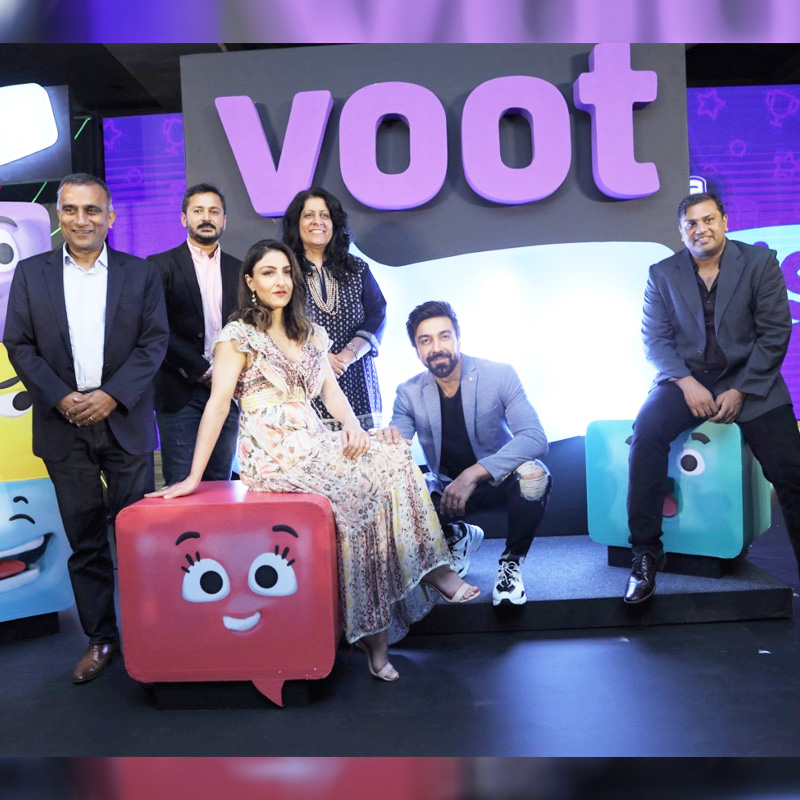
  • We want VOOT Kids to be the go-to destination for parents: Viacom18’s Saugato Bhowmik

    We want VOOT Kids to be the go-to destination for parents: Viacom18’s Saugato Bhowmik

    MUMBAI: Viacom18, after establishing its main OTT service Voot, is now entering the digital space for kids with VOOT Kids. The subscription-based app targets the age group of two to eight year olds.

    VOOT Kids, which is priced at Rs 99 per month and Rs 799 per year, houses content in seven different languages. While all of the content is available either in Hindi or English, a certain part of the content is also available in five other regional languages. VOOT Kids business head Saugato Bhowmik said that the content will soon be available in all the seven languages. The app has 20,000 pieces of content including over 6000 hours of video.

    “Parents are always looking to curate multiple fun-learning opportunities for their kids because parents believe in holistic development of their children which means emotional development, mental faculties development, social skills development, physical development and entertainment. They are looking for all these developmental needs like curating multiple different fun-learning opportunities for their child. They invest in DYI, books, toys, crafts, puzzles today and they are spending a lot of money. So, for us the challenge was how do we go beyond entertainment where we are leaders and create a leading proposition which nobody has been able to do till now delivering both entertainment and fun-learn together,” he said.

    Bhowmik is confident that people will subscribe because VOOT Kids seamlessly delivers and offers videos and tools, fun-learn tools, e-books, audio stories, fun-learn quizzes across five skill domains with parental control in a kid-friendly environment and design.

    Considering their offering, the company feels that the pricing is justified. Parents are anyway spending a lot on each of these individually.

    “We believe that fun-learning multiple different skills is very important at this stage. As you grow older, formal pedagogy becomes much more important. We did not want to get into that. We are not an ed-tech platform. So, that’s the clear choice we made. We wanted to impact early skill and learning development skill of the child. We also believe that this age group is not being served properly. There is lot of offering for 8-10-year-old kids. This early generation is under-served. We did not find anything that serves fun and learning together,” he explained the rationale of the target group.

    The platform wants to leverage the entire power of Viacom18 for marketing the new kid in the house. Although it has its own media vehicle at home, it will still go beyond that by running cross-media, cross-TV, out-of-home campaigns along with on ground activities and influencer marketing. Bhowmik added that it will also be engaging in conversation with school, school teachers and the entire community in future to drive the message that screen-time is not bad if parents can make it meaningful.

    Interestingly, the app just launched two days before Children’s Day. “We just want VOOT Kids to become the go-to destination for parents. If we are able to do that, there are millions of households who are willing to invest money in valuable fun-learning services like us,” he signed off. 

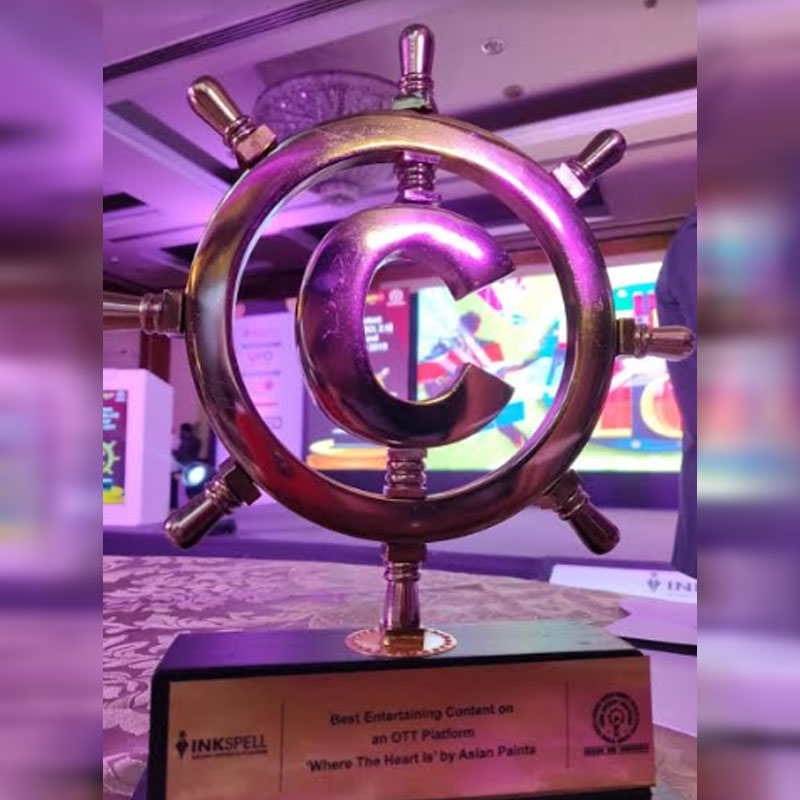
  • Asian Paints’ ‘Where the Heat is’ wins Best Entertaining Content award on OTT

    Asian Paints’ ‘Where the Heat is’ wins Best Entertaining Content award on OTT

    MUMBAI: Asian Paints won the Best Entertaining content award for ‘Where the Heart is’ Season 3. The season kick started on 23rd August with six celebrities of B-town along with captain fantastic, Sunil Chettri.

    The unique content was initiated across the social media platform have facilitated Asian Paints to achieve the title of ‘Best Entertainment Content on an OTT Platform’ at the 2nd Annual India Content Leadership Awards in New Delhi. India Content Leadership is a forum designed specifically to promote content developers, discuss the trends in the content industry, and identify and reward individuals and agencies that have done exemplary work in content development, content marketing- online as well as offline channels.

    ‘Where the Heat is’ Asian Paints Season 3 featured Boman Irani, Huma Qureshi, Gaurav Kapur, Kajal Agarwal, Neena Gupta and Suni Chhetri. The web series was a slight departure from the previous two seasons as it focused on the beauty of relationships, and how these relationships truly make a home. The chosen celebrities come from different parts of the country as well as different walks of life and this diversity gets reflected in how they envision and build their home.

    Speaking on the achievement, Asian Paints  General Manager Jaideep Kanse said, “We are proud to win the Best entertainment content award for ‘Where the Heart is’. This award has added more to the success of our campaign. Each episode has beautifully captured the essence of ‘Where the heart is’ season and it rightly highlighted the uniqueness of each celebrity home. Till now we have rolled out 3 successful seasons on ‘Where the Heart is’ and looking forward to more such successful campaigns in coming years.”

    From the “Har ghar kuch kehta hai” days, Asian Paints has always believed that a home is really a physical embodiment of those who inhabit it. The brand is leading the content space on the social media platform and has received great number of viewership with the launch of ‘Where the Heart is’ season 3 campaign.

  • Strong Netflix growth underlines OTT growth potential in India

    Strong Netflix growth underlines OTT growth potential in India

    MUMBAI: Netflix India has just posted its earnings with the registrar of companies and reportedly, the video streaming giant has grown more than 700 per cent in the past 12 months.

    While the company doesn’t share these details publicly, an ET Tech report, quoting Netflix’s annual filing, says that the Indian-arm of American video streaming giant recorded overall revenues of Rs 466.7 crore with a net profit of Rs 5.1 crore. In 2018, the company had a turnover of mere Rs 58 crore with Rs 20 lakh net profit.

    No doubt, Netflix has upped its game in India by investing in expanding local content, a high-stakes marketing blitzkrieg and the launch of mobile-only plans starting at as low as Rs 199 per month, Netflix’s lowest subscription plan anywhere in the world. The strong growth posted by Reed Hastings-owned company, however, only underlines the tremendous growth potential for OTT platforms in the Indian market.

    As per EY and FIICI 2019 report – ‘A Billion Screens of Opportunity,’ the OTT sector in India grew by a whopping 59 per cent in FY2019, growing from Rs 13.5 billion in 2018 to Rs 17 billion in 2019. The sector is estimated to reach Rs 24 billion by 2021. PwC, in its 2019 annual report – ‘Global Entertainment & Media Outlook 2019-2023,’ estimated that the Indian OTT market will grow to Rs 11,976 crore by 2023, growing at a CAGR of 21.8 per cent. During that period, India is also slated to be the eight biggest OTT market overtaking South Korea.

    OTT platform expansion in India is also supported by rising digital penetration and disposable income. In 2018, digital media grew 42 per cent to reach Rs 169 billion. As per the FICCI 2019 report, paid video subscribers grew from around 7 million in 2017 to around 12-15 million in 2018. The report further estimates that India could have 30-35 million paying OTT subscribers (and a further 350+ million subscribers accessing bundled OTT services from telcos) by 2021.

    All these market studies only buttress one point, i.e. there is enough space for over 30 OTT players in India, both home-grown like Zee5 and AltBalaji, as well as global-giants like Netflix, Amazon and Hotstar, to co-exist and grow simultaneously. The same is also reflected in the ever-increasing subscription base of all these platforms.

    While Netflix in India registered near 700 per cent growth, in terms of subscribers, it’s still dwarfed by Hotstar that has upwards of 300 million active monthly users in India. In comparison, both Netflix and Amazon, the two global-giants in video-on-demand industry, together have less than 30 million subscribers in India. Even the home-grown late-entrant to the party, ZEE5, digital-arm of Zee Entertainment Enterprises Ltd's (ZEEL) launched in February 2018, increased its monthly active users from 21.7 million in the first quarter of 2018 to 76.4 million in the first quarter of 2019.

    It’s pertinent to note that different OTT platforms in India are also adopting different expansion strategies. While global premium content was Netflix’s strength, Amazon expansion was helped by its clubbing of Amazon prime video with its online-retail service. Hotstar banked on sports telecast, whereas ZEE5 launched in 12 different languages, making it a strong player in the expanding regional market.

    To be sure, though, the road-ahead for OTT platforms in India is not all that rosy. For one, no OTT platform has yet cracked the perfect monetisation model. While revenue and subscriber base are, indeed, increasing at a healthy pace, net profits are still meagre. Even Netflix, despite registering a 700 per cent growth rate, has posted a net profit of only Rs 5 crore. Barring Hotstar, that generates revenue through advertising during live sporting events, no other OTT player has successfully integrated advertising on their platforms.

    For now, Netflix India is reaping dividends of being the early-mover in the market, as well as strong global premium content combined with local original shows and movie titles. Last fiscal, Netflix released six original films, five web-series and one docuseries in Hindi. The company has also signed an exclusive output deal with Karan Johar's Dharmatic Entertainment. However, the OTT war for subscribers in India is only heating up. With the foray of global players like Apple TV+ and Disney+, as well as region-specific OTT platforms like Hoichoi and Simply South, the Indian OTT market may see further segmentation, forcing companies to constantly innovate, expand and experiment with a variety of new advertising models.