Tag: OTT

  • ALTBalaji completes three years with over 60 original shows across genres

    ALTBalaji completes three years with over 60 original shows across genres

    MUMBAI: ALTBalaji, one of the country’s leading homegrown OTT platforms, has completed three years, continuing to break new ground and setting milestones on its way to further success.

    On the back of an extensive, diverse content library that spans multiple genres, the platform has established a niche for itself in the originals space and played a vital role in inculcating an individual binge-watching habit amongst Indian audiences. Owing to its resounding mass appeal, ALTBalaji has emerged as the fastest-growing homegrown platform with more than 60 originals to its name and aims to  curate more in the coming days. 

    Since its inception, ALTBalaji has been able to stay well ahead of the curve and grab the audience’s attention through its unique narratives, innovative business strategies, and clutter-breaking original Hindi content. Growing from strength to strength, ALTBalaji has today become a major player in the Indian OTT industry and gains further encouragement by the massive spike in subscribers. With a plethora of original content that keeps viewers thoroughly entertained, ALTBalaji has consistently ranked number three in the list of top grossing video streaming apps in the country across the app store (Source: App Annie).

    Adopting a completely different strategy to its competitors in terms of content creation, partnerships or marketing, ALTBalaji is well on its way to profitability. Witnessing its costs getting controlled in the first half of fiscal 2020 and the loss margin further reducing at the end of the current fiscal, the platform aims to break even in 2020-21. With content being ALTBalaji’s biggest differentiator, the platform has reached out to all kinds of audiences across the length and breadth of the country through a healthy mix of thriller, drama, romance, teenage drama, horror, and comedy, among others.

    Giving importance in growing its regional subscriber base, the leading OTT player has a host of its Hindi offerings dubbed in Indian as well as foreign languages like Tamil, Telugu, Malayalam, Bahasa, and Arabic, amongst others. In their endeavor to engage the audience and offer them an immersive viewing experience, ALTBalaji is also working towards strengthening its UI/UX by focusing on aspects like language interface, voice search, targeted retention strategies, tailored recommendations, quick onboarding, and convenient payment gateways.  

    “ALTBalaji, since its inception, has served as a flag-bearer for clutter-breaking original content and shall continue to do so. Being from the house of Balaji Telefilms, which have been catering to the audiences' ever-changing preferences for over 25 years now, ALTBalaji has an advantage like no other with a deeper understanding and familiarity with the viewer’s consumption preferences. By constantly working on an effective content strategy to cater to individuals, we aim to ramp up our original offerings at an exciting pace. Our core focus right now is to capture the Hindi-speaking market through our innovative content offerings along with expanding our regional language content library in the coming years. As we set sights towards breaking even in this new year, we shall continue to keep our viewers as the focal point, build our strategies around them and cement our position as a market leader in the industry,” ALTBalaji CEO and Balaji Telefilms group COO Nachiket Pantvaidya said. 

    ALTBalaji has been a pioneer in starting the trend of original soundtracks in the web-series space. In addition, ALTBalaji also launched some interesting and innovative initiatives; naming a few would be the ‘Breast Buffer’ campaign which was initiated to create awareness against breast cancer. 

    ALT has also renovated a public school during the launch of the school drama 'Class of 2020, providing better infrastructure for the students. Recently, ALTBalaji associated with Impact Guru for a fundraising effort ‘One Meal at a Time’ for the distribution of food to the underprivileged during the COVID-19 pandemic. Further enhancing the user experience, the OTT platform brought its most-acclaimed series Apharan to Alexa, enabling its users to listen to dialogues, the trailer and other exclusive content from this successful show. Fans of the show can enjoy and soak in the immersive and gripping experience provided by the suspense thriller, with just a simple voice command to their favorite Echo device.

    Spanning a host of diverse genres, the year saw plenty of ALTBalaji shows garner rave reviews from audiences and critics alike. Mentalhood, the recently-launched drama on parenthood, went on to earn a resounding 8.9 rating on IMDb. On the other hand, Mission Over Mars (M-O-M), the inspirational tale of four women, raked in a rating of 8.6. ALTBalaji continued to keep the thriller-suspense and courtroom drama genre as exciting as Code M and The Verdict – State Vs. Nanavati received a rating of 8.3 and 8.6 respectively.

    In this lockdown period, ALTBalaji has come to everyone’s rescue by entertaining audiences via their diverse bouquet of originals. Its soaring popularity has resulted in the ALTBalaji app, being one of the top three grossing apps in the OTT category, according to App Annie. With recent launches like 'Mentalhood', which featured a talented pool of actors like Karisma Kapoor, Dino Morea, Sandhya Mridul, Sanjay Suri, Shruti Seth, Shilpa Shukla, and Tillotama Shome, 'Who’s Your Daddy?' and 'XXX Uncensored Season 2', the platform has kept the entertainment quotient high. ALTBalaji will continue to do so with planning to launch almost 25-30 shows this year including 'Kehne Ko Humsafar Hai 3', 'Baarish 2', 'Bebaakee', 'Mumbhai', 'Apharan 2' and many more.

  • We’re rightly positioned to get back in the Indian market: YuppTV’s Uday Reddy

    We’re rightly positioned to get back in the Indian market: YuppTV’s Uday Reddy

    MUMBAI: The year was 2006 and the word streaming hadn’t yet become synonymous with digital video. It was then that YuppTV started its journey in the online video ecosystem when over-the-top platforms were not a buzzword. The concept of streaming services was alien to most parts of the world, especially India, at that time. Hence, YuppTV was focused on showing Indian content in international markets. As the tide has turned in the last few years, Yupp TV is also relooking at India, one of the most lucrative markets for streaming platforms currently.

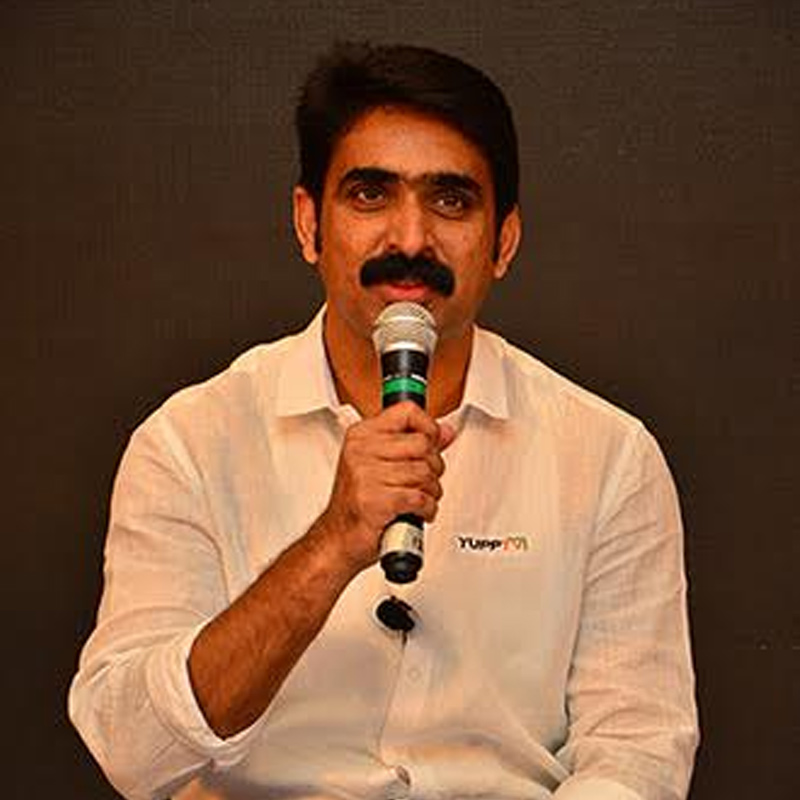
    “We are rightly positioned now to get back in the Indian market and there are need gaps here. Yupp TV is very uniquely positioned to fill that and there are not many players in the market to do that right now,” YuppTV and YuppMaster founder and CEO Uday Reddy tells Indiantelevision.com in an interaction.

    YuppTV is currently working on a product for India which has been slightly delayed due to the ongoing lockdown. Reddy promises to come up with a “very disruptive product” in collaboration with some of his partners.

    The streaming service has recently ventured into the ed-tech space with a platform called YuppMaster. The platform has brought together top-notch faculty with experiences ranging between 10-25 years in mentoring students and live streaming technology to provide the best online education to students.

    “We have rock-solid technology and we have an excellent reach. We thought we understand education better and in terms of what is needed and how to deliver it, using technology. So that's why we launched and in this country, there is a huge gap of top-quality coaching centres in tier II, tier III, tier IV cities,” Reddy shares the rationale of the new venture.

    Although the platform is currently offering free content till the lockdown is over, it will move to pure-play subscription service after that. The pricing will range between Rs 10,000 to Rs 20,000 per year which is marginal compared to the Rs 2-3 lakh students pay for coaching classes. Moreover, Reddy also adds that education needs to be democratised given the lower per capita income in the country.

    When one mentions OTT, it is generally restricted to entertainment but Reddy says that it is much more than that. Additionally, while there is a high dependency over other content creators in the entertainment space, Reddy says that in the education space, they can create own content easily.

    The timing of YuppTV’s ed-tech platform launch collided with the COVID-19 crisis and so; the engagement for the overall app has gone up from existing subscribers. But as call centres malfunctioned due to lockdown across countries, the sales have been impacted in the international arena.

    “I think in the last couple of years there's been a lot of education in the Indian market. There's also learning for the consumers and content provider. So, there is much more maturity right now. And we have not missed our boat,” Reddy states.

    “We will be a tech-driven aggregator platform. We will try and make an easy delivery platform for consumers. We have been the leaders and we still have the large original South content, but we realise that there are a lot of good production companies, that's their DNA. And we will focus as a tech player to facilitate the delivery of content,” he said about YuppTV’s venture into original content.

    The upcoming product of YuppTV will be subscription-based and focused on pan-India rather than just the South market. It will be partnering with the same big broadcast content providers for the “extension of its international business.”

  • Indians watched a mix of digital content: BARC-Nielsen

    Indians watched a mix of digital content: BARC-Nielsen

    MUMBAI: There is no formula to catch the audience online. Lately, many of the streaming players have been stating that every genre has different audiences and there’s not just one genre which works better. The latest report by BARC-Nielsen establishes the fact that the top five content for digital audience is a mix of fiction, history, mythology and supernatural. 

    BARC-Nielsen have put together the fourth session in the insights series assessing the impact of COVID-19 on television consumption and smartphone usage. January has been referred to as the pre-Covid-19 period, compared to recent weeks.

    What did India watch?

    Money Heist by Netflix, which caught the attention of streamers, has ranked as the top content in the week. Other trending shows are Mahabharat, Devon ke Dev..Mahadev, Big Boss, Panchayat, Yeh Rishta Kya Kehlta Hain, How I Met Your Mother, Savdhaan India along with news.  Mission Mangal, Angrezi Medium,  Housefull 4, Arjun, The Lion King, Aladdin, Frozen II, Good Newzz, Shikara are the most watched movies online. The report has been made based on content of Amazon Prime, Hotstar, MX Player online, Netflix, Voot and ZEE5. Money Heist, Stranger Things, Out of Love, Special Ops, Little Things, Sex Education, Asur, Hostages, Narcos, Tom Clancy’s Jack Ryan were among the top ten original series.

    How did the consumption go up?

    As per the report, overall VOD consumption is at four hours per week, up by 12 per cent. However, the 35-44-year age group’s consumption has seen the highest jump at 34 per cent. While the consumption in metro cities has gone up by 19 per cent, the growth in non-metro city is 23 per cent.

  • Disney+ Hotstar Premium to launch all 31 seasons of iconic show ‘The Simpsons’

    Disney+ Hotstar Premium to launch all 31 seasons of iconic show ‘The Simpsons’

    MUMBAI: After the successful launch of Disney+ Hotstar in India, the platform is now set to bring the world’s favorite nuclear family from the award-winning, history-making series The Simpsons to India.

    Created by Matt Groening, globally recognised as a pioneering animator, The Simpsons made its debut in 1989 and is the longest running sitcom in American history with a collection of over 675 episodes. Episodes of the latest season of this iconic show will be available to stream on the platform just minutes after they are aired in the US. The popular 2007 feature film The Simpsons Movie and the recently-released short film Playdate with Destiny will also be available. 

    Through the years, the yellow family of five – Homer, Marge, Bart, Lisa and Maggie – have emerged as pop-culture icons and have tackled numerous subjects in their own humorous way. The series is a satirical depiction of a working-class life, epitomised by the Simpson family and parodies everyday society, television, and the human condition. The characters have been voiced by Hollywood’s eminent personalities: Dan Castellaneta, Julie Kavner, Nancy Cartwright, Yeardley Smith, Hank Azaria, and Harry Shearer.

    Developed by James L. Brooks, Matt Groening and Sam Simon, The Simpsons has won over a hundred awards including the Primetime Emmy, People’s Choice and Writer’s Guild; and holds three Guinness World Records, making it an absolute must-watch!

    In this time of social distancing, Disney+ Hotstar Premium continues to provide an unmatched entertainment experience by adding popular shows and latest Hollywood blockbusters. With the world’s best superhero movies like The Avengers, Iron Man, Thor: Ragnarok; unrivalled animated films like Frozen II and Toy Story 4, popular kids’ programs including Mickey Mouse and Gajju Bhai, Disney+ Originals including The Mandalorian, High School Musical: The Musical: The Series, Lady and the Tramp and shows from the best studios, Disney+ Hotstar Premium makes for the best entertainment companion for people looking for compelling content. 

  • Amazon Prime Video to exclusively stream multi-award winning movie ‘Joker’

    Amazon Prime Video to exclusively stream multi-award winning movie ‘Joker’

    MUMBAI: Following the launch of Academy Award-winning titles such as Parasite and Once Upon a Time in Hollywood, Amazon Prime Video today announced the exclusive India digital premiere of multi-award winning film Joker. Directed and written by Todd Philips, the film follows the story of a troubled wannabe comedian Arthur Fleck, who embarks on a downward spiral of revolution and crime to become the infamous Joker of Gotham City. The film received a phenomenal box office response as well as critical acclaim for Joaquin Phoenix’s breathtaking performance as Arthur Fleck, with him winning the Best Actor award at all the leading movie awards including the Oscar, the Golden Globe, the BAFTA and the Screen Actors Guild Award. Prime Members in India can now enjoy the thrilling film Joker starting 20 April 2020.

    Synopsis

    Joker centres on the origin of the iconic arch nemesis and is an original, standalone story not seen before on the big screen. In Gotham City, mentally troubled wannabe comedian Arthur Fleck is disregarded and mistreated by society. He then embarks on a downward spiral of revolution and bloody crime. This path brings him face-to-face with his alter-ego: the Joker. Todd Phillips' exploration of Arthur Fleck, a man disregarded by society is not only a gritty character study but also a broader cautionary tale.

    Joker will join the thousands of TV shows and movies from Hollywood and Bollywood in the Prime Video catalogue, including Indian produced Amazon Original series such as The Family Man, Mirzapur, Inside Edge and Made In Heaven, and award-winning and critically acclaimed global Amazon Original series including Tom Clancy’s Jack Ryan, The Boys, Hunters, Fleabag and The Marvelous Mrs. Maisel, all on Prime Video, which is available at no extra cost for Amazon Prime members. The service includes titles available in Hindi, Marathi, Gujarati, Tamil, Telugu, Kannada, Malayalam, Punjabi and Bengali.

    Prime members will be able to watch all episodes of Joker anywhere and anytime on the Prime Video app for smart TVs, mobile devices, Fire TV, Fire TV stick, Fire tablets, Apple TV, Airtel, Vodafone, etc. In the Prime Video app, Prime members can download episodes on their mobile devices and tablets and watch anywhere offline at no additional cost. Prime Video is available in India at no extra cost to a Prime membership for just Rs 999 annually or Rs129 monthly, new customers can find out more at  www.amazon.in/prime and subscribe to a free 30-day trial.

    For more consumer-facing television news, read https://www.tellychakkar.com

  • Start-up Filmboard to address the pain points of producers

    Start-up Filmboard to address the pain points of producers

    MUMBAI: Filmboard prides itself as the only media and entertainment start-up that is out there to solve the problem of the producer (the content IP owner). More often, the content production budget tends to go beyond the predicted cost and estimated timeline. However hard it has been planned, it becomes difficult for producers to produce a TV show, OTT content or movies within the predicted budget. In fact, the producer has a “ten per cent rule”; if the budget doesn't go beyond ten per cent for a project, then it is not considered an over-budget project. Film Board, a media and entertainment start-up seeks to solve this problem faced by producers producing content for TV, OTT or films in India. With booming number of eyeballs and high growth rate, it’s a high time the Indian entertainment industry became world class in the way it makes its content and Filmboard aims to be the engine in that onward journey. 

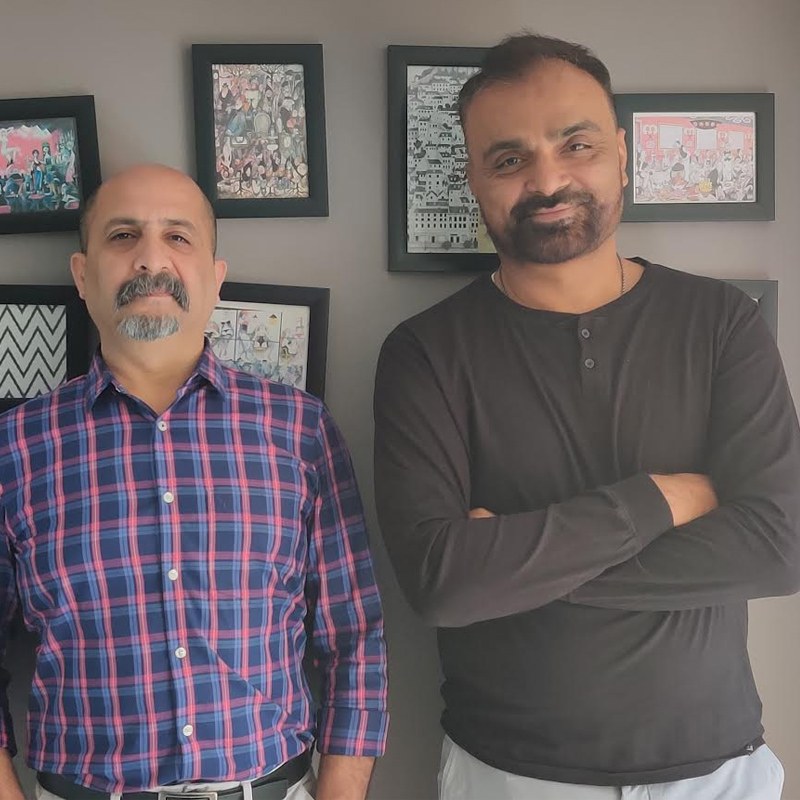
    Established in 2017, the company aims at addressing the pain points of producers in our country, from small producers to larger studios. It has launched services like BidnBuy which allows a producer to go beyond his/her immediate network to reach out to a larger set of vendors. In an interaction with Indiantelevision.com, the company's co-founder Sandeep Varma shares his views on the inspiration behind starting the company, its operations, revenue model, etc. 

    Excerpts:

    Why was the Filmboard founded? What is the vision of your company?

    Filmboard started operations in 2017, but we have been in stealth mode for beyond a year after starting. The way audio visual content is made in India is very archaic and has been ready for disruption. Most projects do not have predictability in terms of cost or timelines and go over budget and timeline overruns. Filmboard has unique insights on why this happens and is out to solve this and reduce this incidence. The overall vision is that with its booming number of eyeballs and high growth rate, it’s about time the Indian entertainment industry became world class in the way it makes its content. Filmboard will be the engine to do this.

    What is the unique selling point of your start-up?

    Filmboard is the only M&E startup that is looking to solve the problem of the producer (the content IP owner). It focuses on those areas that are probably the only ones that are out of the producer's control, ranging from the small new producer to the largest of studios, and puts them under the producer's control.

    What was the inspiration behind this startup?

    The first ad film I made went over budget by seven per cent. That was criminal for me since I'd come in from large consumer marketing firms where we could predict large-scale projects as a matter of course. Worse was when I was congratulated that it was achieved 'in budget'. Soon, I realised that the 10% rule in filmmaking in India – under 10 per cent, escalation is not even considered over budget.

    One of our key insights is that almost 70 per cent of the decisions affecting the budget are not creative in nature at all. For non-core areas, that's obvious – like where the cars will come from, or the hotel the unit will stay in, etc. But in even core areas, for example, the director may have a view on which camera to use, but not on which camera vendor to source it from. She/he would not know any better either. Or any equipment for that matter.

    Years later, I made Manjunath, my first feature film, based on the life of Manjunath Shanmugam, the IIM graduate who was killed for doing the right thing. It was made with Viacom and NFDC and the moral support of the Manjunath trust fighting his case and his parents. Clearly, it was a passion product and here again, we went over budget and I was told it’s a creative product. However, I was the director and writer of the film and I had not changed even one decision from what was planned. Clearly, there was something wrong, and clearly, it was time to do something about it.

    It was these pain points that created Filmboard. Along with an urge that our content creation process really needs to get world class. There are scores of overseas projects waiting to come into India, for all its talent and ability, but producers, and production studios abroad really need to have an easy, seamless and professional entry and exit. One of the key visions of Filmboard is to provide such a platform for overseas work to come in – this will lead to a surge in opportunities for the tremendous talent that exists in India.

    How exactly does the operational model work? Explain the model

    Filmboard is an omni channel B2B marketplace for filmmaking. All service providers in the market are verified, rated and reviewed (by past users of their service) so buyers (producers/filmmakers) can easily identify who they want to work with and why, figure out their availability, compare rates and book them end to end. Services include from equipment hire (camera, sound, lights), to locations (we have locations from Mumbai, Madh Island, to Uttraranchal to many more attractive locations adding up every day), to talent (actors, dancers etc) to crew (cameramen, sound recordist, writers etc).

    We believe this puts the power right back into the hands of the producers instead of them depending on the freelance Line producers. Since the industry currently is used to the turnkey model (project execution), Filmboard also offers premium line production services. This appears like the current freelance line producer execution, but it’s quite different.

    In this, all bookings are done on Filmboard; so a producer knows why our line producer is recommending one service provider over the other (basis ratings, reviews, rates). By introducing this kind of transparency, we are opening ourselves to being challenged by producers, which is part of the power we want to give the producers.

    Our insight is that with the influx of cleaner source of funding via international studios like Sony Pics, Viacom, Disney, etc., and now Netflix, Amazon, along with listed Indian entities like Alt Balaji and Zee5, accountability and transparency of production expenses is going to be more and more in demand.

    Therefore, we feel we are here at the right time, on the cusp of change.

    What are your products or services?

    Our solution is a marketplace portal which is buyer-facing with first ever verified, rated and reviewed database of service providers is completely transactional with the key features of- Convenience to book any service required for filmmaking categorized under talent, crew, services and locations; transparency on rates and availability of spot rates and bargains; discovery of vendor and price;  comprehensive to cover all that is needed for film production; and payment/service assurance.

    One key attribute to Filmboard is 'Innovation'. This means we will be constantly launching a series of innovations, the kind of which the industry has never seen before. For example, right now, we have already launched BidnBuy, which allows a buyer (producer) to go beyond his/her immediate network to reach out to a larger set of vendors to bid for a service he wants, or the execution of a whole project. Our first trial post, based on a genuine requirement, received almost 20 bids in the first two hours itself. This is when we have as yet hardly spent any money on promotion even on social media.

    Another innovation we are in the process of launching is a GPS-driven actor's app, given that a lot of actors miss out on auditions in a radius around them, and production houses/ casting directors miss out on good talent. Soon, we will upgrade this to a tech-innovation which allows live online auditions from anywhere in the world, customised so that the director/ assistant director can direct an actor on how to do an audition better.

    Another innovation we are working on is 'Spot Rate’. This uses the excess inventory available with a lot of vendors. For example, a camera vendor may have 10 cameras and we have seen that a lot of them have an average under 40 per cent utilisation. So, we have convinced many of them to drop rates on excess inventory for limited periods. Producers can then execute projects cheaper; excess inventory gets used (therefore maintained), and everyone's happy.

    We expect that such 'first time ever' innovations will brand Filmboard as a new-age innovative kid changing the way content is made.

    How much does your products / services cost to the buyer?

    In terms of charges/ revenue, for booking any service on the portal, there is a transaction fee to be charged from the service provider (seller). This is typical market place fee, and ranges between 8-15 per cent of the transaction value.

    However, the industry right now is more used to someone handling the project on turnkey basis, which is called line production. Filmboard offers line production services as well, where the whole project is planned, and executed by Filmboard. While this is done by existing freelance line producers as well, Filmboard uses technology and a lot of transparency in this.

    All bookings are done on the portal and Filmboard follows typical project management principles and is developing a unique proprietary software to execute projects. For line production, a fee is charged from the producer. Filmboard charges between 12-20 per cent of project value for line production.

    A third, and new fee that has emerged as an opportunity unique to Filmboard, is 'convenience fee' which may be charged in certain cases. For example, if there is a geographical distance between buyer and seller and Filmboard provides easy access which otherwise was not there, or a difficulty to find technology needed, which Filmboard because of its large database has access to and other such cases. In such cases, Filmboard will charge a convenience fee from the producer (buyer).

    Tell us about your target audience. How did you acquire first set of customers/clients? Name a few clients.

    On the supply side, Filmboard deliberately focuses on the non-glam side. No one has focussed on this, and the main business happens here. Equipment suppliers, location providers, service providers to talent and crew.

    On the demand side, while the total addressable market includes producers of feature films (all languages), digital videos, TV, music, ads & VFX/animation, we identified our early adopters to have two key attributes. One, need for financial accountability, and two, being tech-savvy/forward in business approach/willing to experiment. Therefore, ad film makers who need to report their commercials to brands and corporates/ have smaller ticket sizes, and those making short films/ web series became our first line of target and early adoption is already happening at their end.

    The highest and probably juiciest fruit is the well-entrenched production studios especially those that are family-oriented (like Nadiadwala/Dharma etc), and one of the visions of Filmboard is that in a few years, each and every project should have hired something from Filmboard. So, we expect the marketplace model to grow substantially for even the above players to fill their gap at Filmboard.

    Some of our clients on board and have used Filmboard's services include Rebel Foods (Faasos/Behrouz etc), Times Internet, Large Short Films (Royal Stag), Gaana.com, Radio Mirchi, British Council, IIM Lucknow etc. We are in active talks with companies like Josh Talks and One Network Entertainment (Suresh Menon’s company) for a long-term engagement.

    What is the business model and how has been the revenue growth? Please share revenue data, YoY, MoM growth data.

    The revenue projected at Filmboard is on these primary streams:-

    Line production revenue (premium service): This is a fee already existing in the industry where freelance line producers charge a fee ranging 12-20 per cent from producers for planning and executing a project.

    Transaction Fees: This is charged from service providers (sellers) to the opportunity to get business. Internationally, this ranges between 8-15 per cent of project value.

    These are already existing in the industry and so there is no concept selling involved in getting people to accept this.

    Convenience Fees: This is charged from buyer for a service rendered which is otherwise difficult to get like services in different geographical access.

    We have earned a total revenue of Rs 78 lakh out of which 61 lakh is from our premium line production services. We are going at about 10 per cent month on month growth. Our GMV (on marketplace portal) stands at Rs 17 lakh.

    What are the funding details? Are you planning to raise funding in the future?

    Filmboard has got seed capital from some internationally highly placed individuals to form a versatile board of strategic investors – Global HR head of ABB in Zurich; leading IT expert in the US; top supreme court lawyer; and ex-creative head of a top radio channel, ex-MD of Aditya Birla Group company, top executive of top FMCG company. We got in these strategic investors is because we feel credibility is the main thing missing in this industry.

    We are in the process of having a Pre-Series A round to raise $1 million and are in active discussion with a few early-stage funds. Having said that, there is also a fair amount of interest from more high networth individuals with high credibility. A lot of people seem to have been waiting for this industry to be disrupted.

    What challenges have you faced so far? How did you overcome them?

    Challenge is the archaic attitude especially of old timers in the industry. This shows up in:

    The 'Chalta hai' attitude towards film budgets constantly going over what was planned. This really puts off corporates coming in as well as overseas players. They just can’t understand it.

    Most new things in the industry are announced and nothing comes through. A lot of films are announced even in media and we never hear of them later. To ensure we don’t get into that trap, we took on a lot of high networth professionals who are achievers in their own fields to come in as strategic investors.

    None of the above challenges is unexpected – we knew there would be a lot of heavy lifting involved.

    Having said this, being a genuine pioneer throws up many other challenges.

    For example, even the formal investment community in India is more prone to easily fund the me-too's from the international market. We are creating a genuine intellectual property which we will then plan to take abroad to film-rich markets like the UK, the US and South East Asia (Hong Kong, Singapore). However, there is only a handful of investment teams who have the bandwidth to look seriously at something completely new and yet lucrative and with great potential. And we are very sure that we want only partners who not only are looking at a good, healthy exit but also would like to partner in creating something that's a 'first time ever' – with legacy.

    How do you think Filmboard will be especially relevant to the TV and OTT industries?

    TV series production tends to be tighter, more corporatised because of large players in India for a much longer time (TV channels), but high volume (lot of continuous production needs).  Feature films tends to be more individualistic, so possibly is more disorganised.

    OTT platforms are new but are actually building on the model of the way the TV industry operates. A lot of big TV producers are now big OTT producers, so the same knowledge/ways of working are being transferred. So we expect in the OTT also, there will be a few large players who are outsourcing creation of content to production companies.

    In TV, often, one popular series is produced by different companies all selected by the channel creative teams. So, the creative consistency is maintained by those.
     

  • Hoichoi’s Vishnu Mohta on lockdown subscriber metrics, pre-production plans and team collaboration

    Hoichoi’s Vishnu Mohta on lockdown subscriber metrics, pre-production plans and team collaboration

    MUMBAI: The OTT industry has been able to evade a large chunk of the impact of the COVID-19 pandemic with users thronging to streaming services for entertainment during lockdown.

    SVF-backed Bengali OTT service Hoichoi is also witnessing the sudden growth of paid subscribers, new users and engagement at a 4-5x rate. While there is a worry of churning new content as shootings have paused, Hoichoi is working to keep its story bank ready with more focus on pre-production right now to have a quick pick up after the crisis is over.

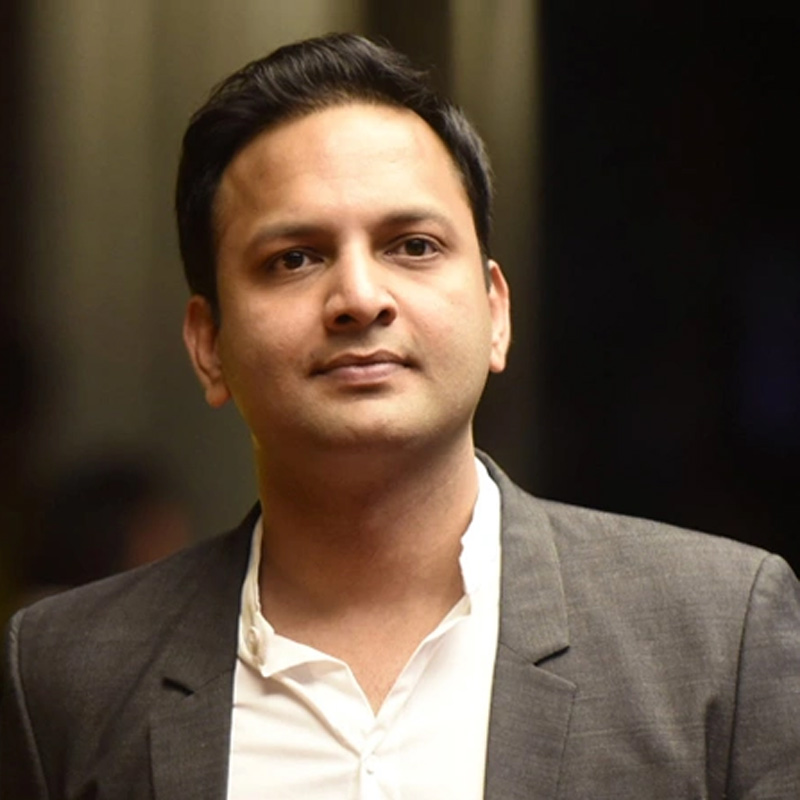
    In an interview with Indiantelevision.com, Hoichoi co-founder Vishnu Mohta speaks on how the situation has worked in the platform’s favour, how its content team is working and how the teams are coordinating effectively during work from home.

    Edited excerpts:

    How has the current situation unfolded for Hoichoi?

    Hoichoi is growing very fast. We have noticed a 4-5x growth in a lot of metrics overall, from the subscriber point of view, from an engagement point of view and from the number of new people coming on the platform. To be accurate, we have seen a 5X growth from paid-subscription point of view. 

    But the worry is that there's not going to be enough series that are going to be ready because West Bengal was first to stop all shootings and we went into lockdown even before the national lockdown. So there has not been much shooting during March and April. So, which new shows will be launched and how will you launch them?

    Have you noticed any particular demographic consuming more content during this lockdown?

    Everyone is watching equally, but the interesting thing is that there are so many people in the 50-plus age group who are also at home and watching it on devices like Amazon Firestick. That's a very interesting demographic. So, I think, now, Hoichoi is becoming a platform for everyone. Some people want to see old movies, some people want to see new movies while some people want to see original shows. 

    We have launched something called Live TV also so that people don't have to browse on other apps and say on Hoichoi all day. We have curated the best movies that we have on Live TV and we have created different TV channels out of it.

    How is the coordination taking place between your teams?

    We are working fairly well actually. Being a digital company, most of our content, documents have always been on Microsoft Teams which is meant for remote working. We already have teams in the US and Gurgaon, etc. So it's not been too much of a big effort.

    We get on a call every alternate day for one to two hours in the morning and everybody talks about what they're up to such as challenges, dependencies, etc. So, there is a little bit of interaction, also, in that virtual conference where all the team leaders are present. And different teams get on a call every day between themselves. So it's working out good.

    I think it also helps to be away from the office because you have fewer interruptions. People are more productive and they are working to the point and trying to get the job done.

    What are the key areas you are focusing on currently?

    We are working on customer happiness a lot, technical changes and innovations like Live TV. We have added some free-to-air channels. We are trying to create as much engagement channels as possible. In fact, we had seven or eight world digital premieres during this lockdown period. We have been lucky that we had that much content available that we could premiere on Hoichoi for the first time. 

    Are you planning to push some of your premium content to TV channels as those are running out of fresh content?

    We have discussed with a few people, but it's not something that we can announce at this stage. We have had discussions with Star, Zee and all these bands, but a deal has not been signed yet. But, on our platform, we have made a lot of content, including some new ones, free.

    Are you looking at easier payment gateways as more subscribers hop on board?

    We are going to start Google Pay very shortly. We never used to support Google Pay seamlessly. You could do UPI always, but now we have enabled an ability to pay via Google Pay in a much smoother manner because you don't even have to put in your UPI ID. We are launching referral programs where a subscriber can refer Hoichoi to a friend and both will get one month extra subscription. 

    How are you scripting shows now and ideating future projects?

    It's time for us to make sure that we finish scripting faster for all the content that we want to make so that pre-production can be better than ever. And we will try to gear up as much as possible so that when it opens our shoot can start immediately when it is safe enough to do it. We have also managed to create a story bank for the next six months already. So, instead of setting two or three shoots at a time, we will start four to six. After this gap period of probably two months, it will go back to normalcy maybe and then we will activate multiple teams to do multiple jobs at one go.

    Will you be looking at cutting down budgets given that a significant part of the year has been eaten up by the crisis? Will there be lay-offs for cost-cutting?

    We don't know yet about our budget.  It is very difficult to predict at this point. We are just taking one step at a time. Right now the business is up and we are in a growth phase. Another thing we have announced is that we're going to give a percentage of our subscription revenue earned during this period to various entities like the PM CARES, CM relief fund, Bangladesh relief fund, etc. However, there will be no lay-offs at Hoichoi. 
     

  • Netflix emerges as largest OTT beneficiary during lockdown: report

    Netflix emerges as largest OTT beneficiary during lockdown: report

    MUMBAI: With the first phase of the lockdown coming to an end, it has become evident that the over the top (OTT) streaming industry has picked pace. It is, perhaps, one of the few industries that will emerge positively out of the economic impact of this pandemic. Streaming colossal Netflix has emerged as the largest beneficiary among OTTs.

    According to a report from KalaGato, which takes into account the lockdown period of 5 February to 29 March, Netflix users have been spending an average of eighty minutes a day on the platform by the time the lockdown was in place. Recently, the streaming service, which is still considered as a premium, has churned out original episodic content as well as digital movies which have gained word of mouth like Jaamtara, Taaj Mahal 1989 and Yeh Ballet. 

    “Juxtapose this with Hotstar that has experienced a thirty per cent decline in total session time. This could be a result of the different content libraries of the two platforms. Netflix creates the sensation of an endless well of content while Hotstar’s library feels much more limited. Netflix is built for binge-watching while the other feels more point and shoot,” the report added. 

    In the same period, the open rate of Netflix and MX Player went up by 68 per cent and 18 per cent respectively. Both platforms have seen an increase in daily active users as well. Netflix’s DAU has jumped by 102 per cent whereas MX Player has experienced a 14 per cent spike. Despite a falling open rate, Amazon Prime Video which has recently pushed some of its premium content before the paywall, has gained 83 per cent more DAUs.

    On the other hand, the leader in the Indian OTT space has witnessed a fall in both DAUs and open rates by 55 per cent and 43 per cent respectively. The report attributes the weaker performance of Hotstar to the absence of a sporting event, the USP of Hotstar’s popularity. However, the case may change soon with the launch of Disney+ in India as the rebranded Disney+Hotstar service already has around eight million subscribers.

  • OTT, cinema will exist in a symbiotic ecosystem: Mukta Arts MD Rahul Puri

    OTT, cinema will exist in a symbiotic ecosystem: Mukta Arts MD Rahul Puri

    MUMBAI: Mukta A2 Cinemas, from the house of Mukta Arts Ltd, now has 72 screens across the country after including the JV that it had with Asian Cinemas (11 properties). It also owns 22 properties and one in Bahrain. It is looking at properties at a place where it can fulfil a niche. The southern part of India is relatively under-screened terms of multiplexes, so that’s a destination Mukta Arts Ltd finds interesting.  “The important thing is that we are looking at screens that add value, that are profitable and the screens that we believe that are going to make sense for our stakeholders,” says Mukta Arts Ltd managing director Rahul Puri, in a freewheeling conversation with Indiantelevision.com. He dwells at length on the impact of COVID-19 in the cinema industry, industry trends, expansion plans, etc.

    He feels that there is still great potential for the industry. For an industry like this, he says, 8000 screens for 120 crore people is nothing. So there is great potential. But, according to him, it can’t be done by the private sector alone, because the government holds the largest land bank in the country; everyone can talk about recession, but this is a sector that is resistant to recession. Though this is an interesting time for the OTT platforms considering the lockdown, he believes, OTT cannot supplant a theatre experience. As far as India is concerned, cinemas are part of household habits. The treat of a cinema visit, he says, cannot be replaced for many families across the country. He feels that the OTTs and cinemas will exist in a symbiotic ecosystem, both having their own USPs.

    Excerpts from the interview:

    How has the COVID-19 outbreak impacted the cinema industry in India? What kind of impact – short- and long-term – will it have on the sector?

    The COVID-19 has impacted the sector and all businesses hugely. Projects are delayed, theatres are closed and business, in general, is at a standstill. This is hurting theatres most as they are businesses with high fixed costs which need to be running in order to make ends meet. In the short term, there will be a lot of issues for smaller players just being able to stay afloat at this point and in the long run as things return to normal you will see a bunching together of delayed projects which will continue to put pressure on distribution and exhibition infrastructure. The industry is in for a tough 2020.

    What are the technological advancements and experiences Mukta A2 Cinemas offer?

    Technological updation is imperative for any cinema chain to keep up with the progressing times. Mukta A2 Cinemas constantly updates itself with the latest technological trends to provide a high level of consumer satisfaction. With Dolby speakers and advanced projections, Mukta A2 Cinemas provides its patrons with pocket-friendly pricing, best quality technology and services, comfortable seating and varied options in food and beverages.

    Please talk about the current footprint across India. What are the growth strategies and expansion plans of Mukta A2 Cinemas in India?

    We are now at 72 screens across the country after including the JV that we have with Asian Cinemas in the Southern part of India. We are now at 34 properties across the country – with Asian Cinemas we have 11 properties. We own 22 properties and one property in Bahrain. The important thing is that we are looking at screens that add value, that are profitable and the screens that we believe that are going to make sense for our stakeholders.

    Having said that, we have plans to expand in the next two years.  Our model has been two – three screens and we have some single screens. But mainly our advantage is that these screens were never particularly large with 250 – 300 seats. Therefore, our occupancy remains relatively high. And our catchment area does not have to be significantly large. However, now we are looking at much larger properties – some greenfield properties. In Bangalore, we are looking to build a 10-12 screen project in Yehlanka. In Bahrain, we have a six-screen theatre, which is also our largest by far. So, the model has shifted over the years.

    Now the idea is to look at a much more big format where one can afford to dedicate certain screens to certain target groups – kids screen, screens for the bigger films, and particularly in the South that helps – they have Tamil, Telugu, Kannada, Hindi, English, Malayalam, so that helps. So those have a wide range of content. You can then fill up eight to 10 screens reasonably well.

    What are your efforts in the preservation and restoration of various old theatres across India to preserve their heritage value?

    It depends on where these heritage properties are. If they are in the heart of the city, then they are a value add. In Mumbai, we did Excelsior (at Fort), which was a renovation. I think it’s important to understand that we have to go where we believe there is a strong value proposition for us. That ultimately helps in pulling the TG to that screen, particularly if that is a two- to three-screen theatre. And I think that has been our model for success – you pick your content to bring TG, you get them loyal and then you surprise them with the content on screens.

    Please talk about your expansion into tier I, II, III cities.

    They are spread across the country – Kharagpur, Pune, a couple of properties in Bangalore and Ahmedabad. The south is a market of interest. We are looking at properties at a place where you can fulfil a niche. The southern part of India is relatively under-screened (not in terms of single screens, but in terms of multiplexes), so that’s a destination we find interesting. We are looking at doing a good mix between these bigger format screens, which probably will be the bulk of it, and less of traditional screens that we have done in the past – single screen renovations.

    How has the industry evolved over the years? How do you evaluate the current and future trends in the field?

    Well, the cinema business has been growing from level to level. If I must analyze the past few years, I could attribute the growth to two major factors. Primarily, the focus of cinema chain brands on updating technology and their endeavour to deliver a premium service to their consumers. Secondly, there is a major shift in the kind of content in films today. Last year, for example, was a landmark year. We had the superstars of the industry delivering underwhelming box office numbers while the “content-driven” films seemed to have masses flocking to the cinemas instead. Of course, this also has to do with the shifting mentalities of the audience; however, the shift comes from the producers first. In totality, for a cinema chain, this is all music to my ears. To have small films do two-three week runs at the box office.

    The struggle, however, is more macro in that sense. For an industry like ours, to be honest, 8000 screens for 120 crore people, is nothing. So we should be looking for a way to try to push five to seven years to get up to 12,000- 14,000 screens but for that government as well as the policies are important. It can’t be done by the private sector alone, because the government holds the largest land bank in the country and everyone can talk about recession, but this is a sector – would not say is recession-proof but resistant to recession.

    Do cinemas face an existential threat from the OTTs? How are cinema houses coping up with the change?

    This is an interesting time for the OTT platforms considering the lockdown. People have no other option but to watch shows and films online. But to talk about the trend in general, the streaming industry has certainly found their niche; however, the cinema-going experience cannot be compared. Hindi cinema has always been evolving and coming with interesting technologies that are making the movie-going experience all the more exhilarating. However, there are films that need a cinematic platform. As far as India is concerned, cinemas are part of household habits. The treat of a cinema visit, I suspect, cannot be replaced for many families across the country. To answer your question objectively, I think the OTTs and cinemas will exist in a symbiotic ecosystem, both having their own USPs.

  • Digital marketing becomes mainstay for OTT platforms during COVID-19

    Digital marketing becomes mainstay for OTT platforms during COVID-19

    MUMBAI: The COVID-19 pandemic has thrown a spanner in the works of every single organisation. Even as the media and entertainment industry comes to terms with this ‘new normal’, the over the top (OTT) industry seems to have got a thrust. As digital viewership keeps increasing week on week, it is imperative for streaming services to ensure viewers are aware and engaged.

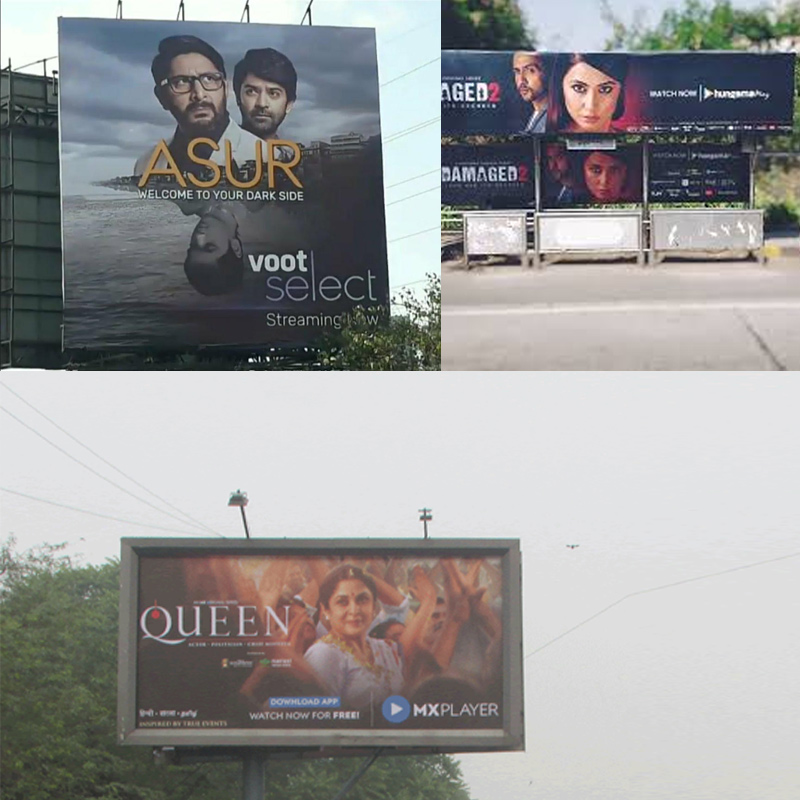
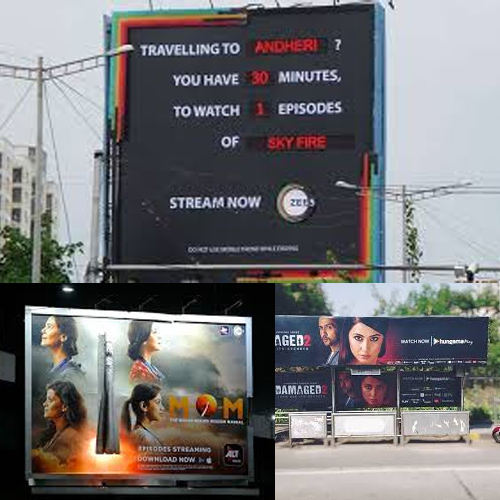
    Right at the beginning of the lockdown, several services opened up their premium content for free viewing. Since there is hardly any chance in the resumption of OOH advertising in the next few weeks or even months, OOT platforms are mulling over innovative ideas to attract and retain customers. In part two of this series, we explore how these platforms are communicating to its consumers who are stuck at home and hungry for good content.

    The BARC-Nielsen report states that VOD viewership on digital is at 3 hours 59 minutes a day in week three of lockdown, with a 12 per cent increase from pre-COVID time. This is being fuelled by movies and original series. Understanding this change, services have shifted their OOH spends to these two mediums.

    On the digital front, ZEE5 is focusing on reach and frequency campaigns along with expertise on entertainment and news websites. “News and entertainment are our two key segments on digital and TV now since people’s attention is currently diverted there. We have moved a lot of our OOH display advertising to the digital medium. We have also started a lot of video advertising,” says ZEE5 India SVOD marketing head Reilly Rebello.

    Voot Select and Viacom18 youth, music and English entertainment head Ferzad Palia is confident that Voot Select, which launched days before the country went into lockdown, has a huge slate of originals that can easily attract consumers. With the ongoing crisis, the aim is to focus on creating awareness. One of the ways is through chat shows with talented artists from their shows. Palia says that Voot had intended to take this approach even without a lockdown.

    According to Palia, the impact lies in how effectively they use the two available mediums – TV and digital – in the crisis as the words need to be maximised.

    ALTBalaji, the streaming service from the house of Balaji Telefilms, struck a deal with Zee TV to air some of its family dramas. The duo also has an OTT partnership in place. ALTBalaji marketing, analytics & direct revenue SVP Divya Dixit says that for them, digital marketing comprises all social media handles, platforms and websites that are being accessed by the audience.

    “We create backlinks across our media communications to ensure our website witnesses a continuous influx of new and existing users. Influencer marketing is another tool that has worked wonders for us and the shows. When you see actors and vloggers talking about the show and the characters directly with their fanbase, it tends to create a personal bond with the audience and engages them in the journey of their favourite characters and actors,” she says.

    She adds that memes have become mainstream and an important and engaging tool for marketers. So, ALTBalaji has incorporated meme marketing as an integral part of its marketing campaigns. “Besides Instagram and Twitter, we also actively use WhatsApp to engage with audiences,” she adds.

    Switching over to digital, ZEE5 has started moving press screenings online. Rebello says that they have sent the key information to reviewers and media people along with a link to a 20-30 minutes preview.

    MX Player launched eight shows in March and the first week of April for which campaigns were seen across social media to create personalised experiences. “We have digital PR, an increase in spends on mobile marketing, optimising performance marketing to reach out to viewers at every possible touchpoint as well as contextual advertising. More so, since our own platform hosts 75 million daily active users, we have used our own internal inventory to cross-promote across categories. It’s more personalised with focused audience buckets,” MX Player marketing and business partnerships head Abhishek Joshi says.

    Hungama Digital Media COO Siddhartha Roy states that on the basis of the double-digit growth in consumption Hungama Play has noticed on the platform since the beginning of March, it will continue channel marketing spends on the digital medium for the next set of original shows that are ready for release.

    It is an opportune time for streaming platforms to target existing customers as well as attain new ones to sample the content in the hope that not only viewership but also revenue through advertising and subscription will increase over time.