Tag: OTT

  • Covid2019 cuts back customer acquisition costs

    Covid2019 cuts back customer acquisition costs

    MUMBAI: Covid2019 has plummeted what was a skyrocketing cost of customer acquisition, according to a report that delves deep into the correlation between the pandemic and the entertainment industry. According to the special report, Navigating Covid-19, by Parrot Analytics, this is exciting for platforms launching in the middle of pandemic such as Quibi, HBOMax, and Peacock. Yet, as time stretches on, OTTs may lose subscribers whose free trials end or who churn due to the recession. After the lockdown, the demand for content may be even more important as out-of-home activities will pose greater competition.

    Under stay-at-home orders, OTTs are gaining subscribers due to consumers’ heightened perceived value of their catalogue offerings.  

    The report says that the global lockdowns, forcing everyone to be home, have led to increased content consumption (viewership, ratings, etc.). Yet, this increased consumption has been accompanied by the unique challenges of satisfying audiences while production of key tentpoles has been halted and delayed. Broadcasters and cable (Pay-TV) have additional hurdles compared to OTTs. They must also cope with reduced ad revenue within the industry, making their ability to optimize their airing schedules and to fill content gaps even more crucial. Nonetheless, OTTs and Broadcasters alike are looking to solve their challenges by acquiring and producing virus-proof content.

    Meanwhile, distributors have an opportunity to revisit and leverage their reserve of content. They can offer unique packages of titles that will allow platforms and channels to retain their viewers and subscribers. Producers are challenged with finding innovative ideas and formats as well as adapting existing ideas to new restrictions placed during and post-lockdown. Simultaneously marketers are left searching for fragmented and dispersed audiences, recalculating and holding on allocating budget.

    Pay TV

    In the short-term, Pay TV has similarly seen a surge in viewership and ratings. Yet, as industry analyst Rich Green- field points out, this bump has been underwhelming. Greenfield is not alone; many analysts expect networks to feel more repercussions due to their losses of advertising, their reliance on live TV, and their battle for a digitally orient- ed key audience: those between 18-24. When consumers are faced with hard choices, Covid2019’s impact long-term may accelerate cord-cutting, contributing to Pay TV’s decline. However, broadcasters can avoid this by capitalizing on audiences who are tuning in now.

    What qualities have created opportunity under stay-at-home measures?

    According to the report, there are a few characteristics of SVODs that have been advantageous during the lockdowns.

    •           Size of catalogue:  The lockdown conditions have temporarily increased the value of all content, making it easier to reach the threshold of demand needed to acquire a customer. Thus, the larger the catalogue the greater the likelihood of customer acquisition at the moment.

    •           Supply of originals:  As stay-at-home orders continue, boredom and loneliness is on the horizon for many consumers. This makes original content that connects people more important than ever.

    •           Flexible viewing: With families, roommates, and others forced to share living spaces, SVOD content avail- ability on multiple screens is an advantage. The flexibility to watch on TVs, laptops, and phones allows consumers to watch their preferred content wherever they want and with whomever they want.

    •           Ad-free: Declining revenue from advertising poses a unique challenge at the moment; many companies have cut their marketing teams, frozen budgets, and are limited in ad-production capabilities. Thus, SVOD’s diminished reliance on ad-revenue is beneficial.

    Netflix

    Consider Netflix. Its large catalogue, supply of diverse original content, flexible availability and lack of ad-reliance allows it to thrive at this moment. The crisis has also temporarily reverted Netflix to an earlier phase in OTT life-cycles, in which total demand for content dictates subscriber growth and retention.

    Netflix is not alone, Disney+ also exhibits similar qualities. Although it has a limited supply of originals, its flexible access, ad-free platform, and large catalogue of premium children’s and family-friendly IP support its ability to thrive. Amazon Prime Video and Hulu are also well positioned with large catalogues, many originals, and flexible viewership.

    For Pay-TV, channels with large catalogues of family-friendly content, such as Discovery and Disney, are fulfilling increased demand from kids who are home due to school closures. Other broadcasters which are experiencing holes in programming are employing repeats or flashbacks of favourite episodes, searching for foreign acquisitions, and considering moving exclusive content from their OTT platforms back

    The key for producers and distributors is therefore to capitalize on this need for a larger catalogue and greater supply of originals. They can solve the pains of an aching industry with innovative content that fulfils and attracts the audiences that platforms, networks, and marketers are seeking to find.

    What can the industry do to thrive moving forward?

    In the midst of uncertainty, data allows decision-makers to be agile, says the report.

    Covid-2019’s effects on the global TV industry have likely just begun to unfold. As new consequences emerge, the industry will need to adapt swiftly by combining the art of storytelling with the science of human behaviour.

    Content preferences

    Audience content preferences have shifted due to Covid2019, these include a desire for original content, especially content that fills holes left by cancellations or delays.

    OTTs have an opportunity for growth due to increased streaming volume, but in order to prevent churn they must optimize their release schedules and content acquisitions.

    Broadcasters are challenged with holes in programming schedules, but can adapt by reinvigorating fandoms and finding replacement titles that will attract target audiences.

    Distributors should optimize their content packages for broadcasters and OTTs in need.

    Producers, despite shutdowns, can be resilient by prioritizing projects that fulfil audiences’ shifting demand and finding new formats to create fresh content.

    Marketers may need to pivot their channel spends, but can find ways to maximize their audience reach and tap into emerging preferences.

    OTT solutions
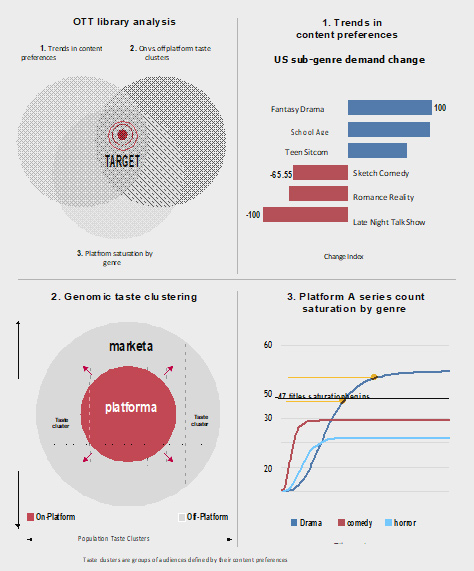
    Capture shifting preferences: By examining trends in content preferences, OTTs can prioritize speeding up releases or acquiring titles that may appeal to audiences’ shifting needs.

    Acquire vs. retain subscribers: Platforms must evaluate whether titles fulfil the preferences of existing subscribers or those yet to be acquired. Depending on an OTT’s goals, they may choose to prioritize a title that targets retention or to prioritize a title that targets acquisition.

    Ensure audiences are satisfied, but not overloaded:  Saturation is another term for diminishing marginal returns. Based on past data, OTTs can derive an optimal point or a point of saturation. To ensure audiences are not over- whelmed, OTTs should evaluate if there is headroom before speeding up releases or acquiring titles. Otherwise, due to genre saturation, titles may underperform.


  • Global streaming viewership skyrockets 57% in Q1 2020

    Global streaming viewership skyrockets 57% in Q1 2020

    MUMBAI: Streaming viewership saw rapid increase in the first quarter of the year with time spent up by 57 per cent globally year over year. On-demand content drove the lion’s share of this growth, as per a report from Conviva. Moreover, March proved a turning point in the acceleration of streaming, as stay-at-home orders rolled out in countries and regions around the world.

    “On demand content carried the lion’s share of growth, up 79 per cent and capturing 72 per cent share of viewing time in Q1, up from 63 per cent share in Q1 2019. Live programming grew more modestly, up just 19 per cent overall and lost market share to 28 per cent from 37 per cent the previous Q1,” the report said.

    Growth was led by Europe, up 70 per cent, and the Americas, up 57 per cent, while Asia and Africa saw 30 per cent and 25 per cent viewing growth respectively.

    The report also stated that as viewers stayed home in March, consumption habits shifted rapidly. In the span of a single month, comparing February 2020 to March 2020, overall time spent streaming grew a stunning 20 per cent with on demand viewing up 28 per cent.

    However, missed ad opportunities rose up to 26.9 per cent in Q1 as compared to Q4 of 2019 in the wake of Covid2019 pandemic. For 46.3 per cent of missed streaming ad opportunities, the most common issue was the lack of ad demand. While the report predicted that advertising will continue to be dampened by the evolving situation, it will return with fervor in 2021 and beyond. The advertising data included in the report is based on an analysis of 12.5 billion ad attempts in Q1.

  • SonyLIV selects Intertrust’s cloud-based multi-DRM service

    SonyLIV selects Intertrust’s cloud-based multi-DRM service

    MUMBAI: Intertrust’s cloud-based multi-DRM service, ExpressPlay DRM, has been selected by SonyLIV in India to protect content streaming and downloads including both online and offline playback on all devices.

    The partnership covers all channels and entertainment programming on the SonyLIV platform, including over-the-top (OTT) live and on-demand streaming of TV, premium shows, movies, and sports events.

    Owned by Sony Pictures Networks India Pvt. Ltd., SonyLIV is one of the top five OTT services in India. It houses more than 40,000 hours of VOD programming across five languages—Hindi, English, Marathi, Tamil, and Telugu—coupled with more than 24 years of content from channels of Sony Pictures Networks India. Last year, the service launched in the Middle East and has plans to expand its complete bouquet of services in several Southeast Asian countries.

    “Riding on its compelling stories and diverse content catalogue, SonyLIV has garnered a record growth in MAUs, engagement, and subscriptions over the last year,” said Manish Verma, head of technology, SonyLIV. “The content protection service enabled by the ExpressPlay DRM is key to our ability to gear up for even more traction in the year ahead. ExpressPlay DRM will be key to augmenting our phenomenal success with live sports which has triggered a doubling of overall consumption growth over the last year alone.”

    Intertrust’s technology will protect both live and on-demand OTT sports streaming on SonyLIV, which achieved a landmark viewership of 70 million for the FIFA World Cup 2018, the highest-ever for football in India. Last year, the broadcasting of the Indian cricket team’s overseas tour of Australia and England commanded a viewership of 50 million and 30 million respectively, accounting for a five-fold jump in time spent on the platform.

    “The forces of technology and competition continue to erode media silos. Protecting both content creators and service operators is essential to remaining agile as streaming services look to offer up the best viewing experience,” said Talal G. Shamoon, CEO at Intertrust. “The ExpressPlay DRM service lets OTT providers protect and control media consumption across any mobile or smart device, allowing viewers to enjoy a personalized selection of channels, live entertainment, and sports enabled by a world-class streaming app like SonyLIV.”

    The market-leading Intertrust ExpressPlay multi-DRM service, which supports all streaming platforms, DRM, and media formats, now protects OTT content for one-quarter of the world’s population. It is the only multi-DRM cloud service that supports Apple FairPlay Streaming, Google Widevine, Adobe Access, Microsoft PlayReady, and the open-standard Marlin DRM. It is a complementary solution to ExpressPlay XCA, which provides seamless interoperability for hybrid TV operators on mobile, web, smart TVs, and set-top boxes. The ExpressPlay content security suite offers forensic watermarking and anti-piracy services (powered by Friend MTS) to protect live and premium 4K/UHD content.

  • Amazon Prime Video users nearly doubled in March 2020

    Amazon Prime Video users nearly doubled in March 2020

    MUMBAI: It's a trend worldwide that over-the-top (OTT) platforms have seen huge uptake in consumption under shelter-in-place directives due to the Covid2019 crisis. Amazon Prime Video is no exception. The streaming service segment of the e-commerce giant is also experiencing a lot more usage from prime subscribers. Moreover, it's the first time that users also nearly doubled in March. 

    “In March, the first time, viewers nearly doubled, which is I think a good thing for people when they are looking to stay entertained and see our video collection. It's also beyond just Prime Video, our channels and video rentals also went up as I'm sure others in the entertainment business saw that as well,” Amazon senior vice president and chief financial officer Brian T Olsavsky said in an earnings call.

    Olsavsky also mentioned that in the US, the UK and Germany movies are going direct to pay-per-view because of the lack of theatres and that was a good move by the team. It has been very well received and they have also made a lot of kids and family content available free to watch on Prime Video. He said that people are getting a better look at what's available with their Prime memberships other than shopping. 

    Additionally, users are finding more benefit from Alexa as they stay at home. They are listening to more music and asking many questions related to issues around Covid2019. Alexa is also being used for educational purposes for children. Moreover, it is being used a lot more on the communication side as people are using Alexa calling and drop in.

    “So I think the Prime story is that shopping is really important for people now, especially when those people can't leave their houses. I think the digital benefits are scaling well. I think they are handling the additional demand and it gives people a good time and reason to use all of their Prime benefits that maybe they hadn't used as much in the past,” he added. 

  • Netflix reinforces focus on post-production, holds virtual Q&A session for editing community

    Netflix reinforces focus on post-production, holds virtual Q&A session for editing community

    MUMBAI: It's no wonder that streaming giants across the globe are trying to strengthen their business in India as the country has amongst the highest consumption of online video in the world. Streaming giant Netflix had hosted a first-of-a-kind workshop on post-production in Mumbai last October and recently it held a virtual Q&A session for the editing community in India with Emmy Award-winning editor Stuart Bass on 30 April. Netflix CEO Reed Hastings promised Rs 3000 crore for content in India in 2019-20. Hence, the streaming giant is not overlooking the training requirement of the local creative community as well.

    Bass, who has worked for iconic shows like The Wonder Years, Arrested Development, The Office, and Pushing Daisies along with his long-time assistant editor Preston Rapp, shared his insights with over 100 participants from India and South East Asia. Primarily editors were part of the session along with assistant editors, post-production supervisors, writers, showrunners and/or directors.

    The conversation focused on best practices in editing for complex episodic storytelling, how it differs from editing feature films, editing for different genres and the latest editing technologies. Even with the number of original content flooding the ecosystem, the country has limited experience in editing for series which requires a different approach from a creative, logistical, and management perspective. Hence, skills in editing for series will become increasingly relevant as India produces content at scale.

    “We’re seeing a flourishing of stories from India across multiple genres and for every mood and member of the family. As more episodic series are made in India, there is a desire for best practices in long format storytelling. We were thrilled to see the response to the session led by an editor as prolific and experienced as Stuart Bass. We are grateful to the Indian creative community who, despite this difficult time, joined us and made this an incredibly insightful session that ranged from in-depth creative discussions to the technical aspects of editing for series,” Netflix post-production director Vijay Venkataramanan said who also moderated the session.

    The streaming service has significantly upped its investment in Indian stories and storytellers. Netflix has announced over 50 productions in India. Its recent releases include Guilty, She, Jamtara- Sabka Number Aayega, Yeh Ballet has gained enough word of mouth. Even Chris Hemsworth-starrer Extraction was released on Netflix with dubs in Hindi, Tamil and Telugu indicating its ambition to engage viewers across the country.

    “We've seen a big growth in viewing in India, and have had great success on our local originals there as well. Most recently was She and Guilty and a few others that have really been driving a lot of engagement in local content on our India service, and they also are big fans of our global original content like Lacasa de Papel was a huge hit in India for us, as well as most of our other originals that we have out of the US. So we're growing the business of licensed original international domestic across the board content and content taste,” Netflix chief content officer Ted Sarandos said in an earnings call after q1.

  • Tennis Channel launches OTT service

    Tennis Channel launches OTT service

    MUMBAI: Pay-TV platform Tennis Channel has launched a subscription-based streaming video service in Germany, Switzerland, and Austria, where tennis has mass followers.

    The OTT service, launched on 28 April, offers on-demand and live content. It will be rolled in other markets later. The 24-hour OTT platform has been made available at www.tennischannel.com. It is also available in Android and iOs mobile devices, FireTV, tablets, and some smart TVs for a monthly fee of $2.70.

    The OTT platform has been launched prior to the Tennis Point Exhibition Series, a four-day men’s tennis competition between 1 and 4 May. The matches will be shown live and on-demand on Tennis Channel International.

    The series, the first live tennis event after the Covid2019 lockdown, will see 32 closed-doors matches in four days.

    Apart from archived content, the bouquet of programming includes tennis Channel series, features, documentaries, highlights and select matches on-demand.  

    “We’re especially excited to launch this groundbreaking service in Germany, Austria and Switzerland, where tennis has a storied past, strong levels of participation and fan interest, and is positioned for growth,” said Andy Reif, SVP, international, Tennis Channel.  

    Follow Tellychakkar for the consumer facing news & entertainment

  • New normal: What’s in it for marketers?

    New normal: What’s in it for marketers?

    In today’s landscape, most brands are experiencing marketing budget cuts and looking for more affordable and result-oriented channels like programmatic advertising which can deliver an impeccable ROI. The ‘new normal’ in the advertising and marketing industry is being interactive, informative and creative. Brands are constantly focusing on creating shoppable landing pages and creating new online stores.  Supply and distribution are becoming more important than demand, so it’s very crucial for brands to stay in touch with their B2B audiences like retailers, distributers, and ‘kirana’ stores.  Also, this is a time where brands are now exploring partnerships beyond hyper-local delivery apps and looking for more meaningful connection with consumers in categories like online education, digital wallets and other utility apps. 

    Trends redefining the market

    There has been a big shift in consumer behaviour with more people have started searching and reading content around homeschooling, parenting, immunity, fitness videos, personal hygiene, pet care, healthy cooking and eating. Apart from the usual primetime late evening slots, we are also seeing more prominence being given for other slots such as the one from 12 pm to 2 pm, across news, gaming, and OTT platforms. For media buying, in case of biddable media, we are seeing a trend of a floor price decline by 15 per cent to 20 per cent week-on-week. However, the bigger challenge for marketers now is around advertising goals and strategies that are understandably shifting. Brands today need a deeper understanding of what’s driving real-time results and plan, execute, and measure the success of their media investments better.

    What a marketer should do in these times?

    Being a marketer, one must stay focused on both short and long-term goals and look out for new growth opportunities. But most importantly, in crisis times as such the current one, brands must take the responsibility as consumers need reassurance and they are noticing which brands are playing an active role in their lives and which ones have retreated. Going dark or silent during these times might cost brands heavily in the longer run, as active brands would like to take the advantage to create a halo effect and establish themselves as leaders in their industries. Our recommendation to all brands is to focus on accelerating digital experience and e-commerce capabilities. And prepare for the rebound build strategy for the coming ‘The New Abnormal’.

    The author is Xaxis India Country Head. The views expressed are his own, and Indiantelevision.com may not subscribe to them. 

  • Is FB-Jio deal just a great Indian e-commerce story?

    Is FB-Jio deal just a great Indian e-commerce story?

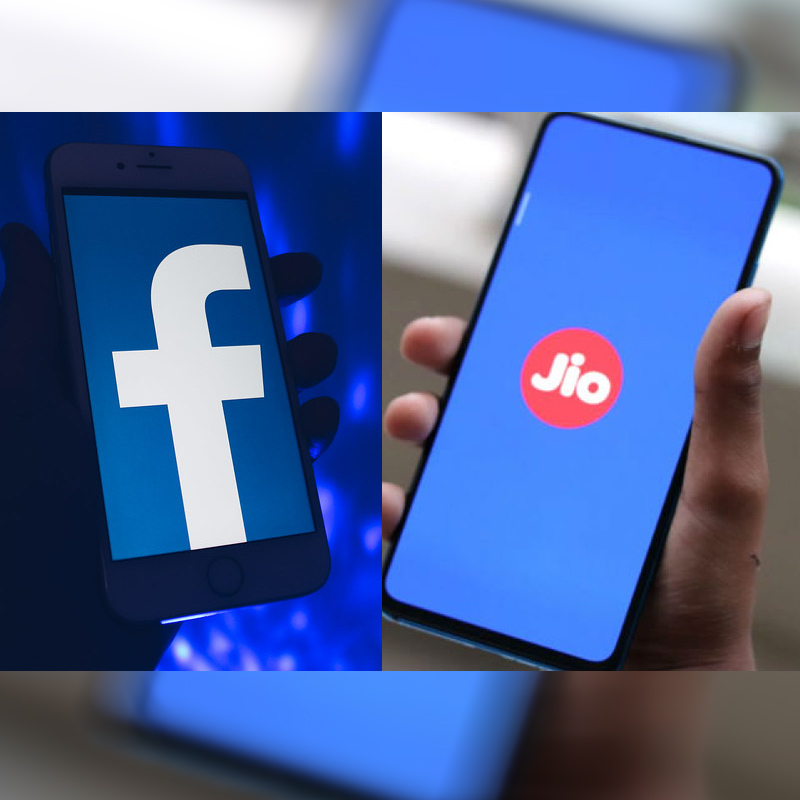
    MUMBAI: What has been hogging the limelight lately? The Rs-43,574-crore Facebook-Jio deal. When the entire country continues to be bogged down by the Covid2019 pandemic, when marketing sentiments were at their nether, the deal came as a big surprise, a refreshing break from all the gloom and doom. Indeed, it is worth the tom-tom, for, the world’s largest social media group has just invested in India’s largest telecom operator, Jio, run by the country’s richest man Mukesh Ambani. Irrefutably, it's a multifaceted deal, but more skewed towards e-commerce play. Even though Jio’s parent company Reliance Industries Ltd (RIL) has a hold over the Indian media and entertainment ecosystem, there have been speculations about its impact on the sector but it's going to be a minor one for now.

    Because the two giants have been known to disrupt the ecosystems over and again, it's not easy to predict the direction this new association might take. But the e-commerce ambition is unquestionable and has become more evident with JioMart going live on WhatsApp in some areas of Mumbai. Announcing the deal, Jio said: “Our focus will be India’s 60 million micro, small and medium businesses, 120 million farmers, 30 million small merchants and millions of small and medium enterprises in the informal sector.”

    Will India get its own WeChat?

    SBICap Securities institutional equity research head Rajiv Sharma says WhatsApp Payments is in the process of getting launched and it took five years for Paytm to get all the vendors and merchants signed up. While Jio is doing this kirana commerce, it will be significantly faster for WhatsApp Payments to go to market thanks to the partnership. 

    “For Facebook, it is ‘get set go’ on the WhatsApp Payments and WhatsApp Business and if it can make it work here then not only it will improve the value but also the investment it has made, and it will create a new revenue stream. And that model can be replicated in other countries,” he adds.

    An analyst unwilling to be named says WhatsApp will turn out as WeChat of India as Facebook will use even Instagram and look at expanding the horizon by looking at other sectors like healthcare as well. According to him, Jio is going to create a market along with Facebook through this “thick partnership.” It will empower them to do multiple businesses. 

    “I'd always said India will be eventually a hybrid e-commerce market with neighbourhood kirana stores being an integral part of fulfilment strategy. JioMart and WhatsApp have the potential to significantly build on this model and change the rules of the e-commerce landscape in India. While on one side the ease of WhatsApp will make it convenient for consumers to transact, the reach and prowess of the JioMart engine will provide the necessary boost to WhatsApp to exponentially grow as a business platform. It will be interesting to see how Google Spot and Paytm Mall play out their strategies in this space,” PwC India media, entertainment and sports advisory, partner and leader Raman Kalra says.

    What Jio gets out of it?

    Ambani’s biggest bet for the future will also benefit from the deal. The first and foremost is Jio’s debt coming down as RIL may go soon with the former’s initial public offering (IPO). Moreover, the company had laid out a plan to become net debt-free. The deal also comes at a time when the market is significantly hit by the Covid2019 crisis, making business worse for many tycoons. And not to be forgotten, RIL’s oil business may face a huge headwind in the future, especially with the delay in its deal with Saudi Aramco too.

    Sharma explains that while Jio is focusing a lot on commerce, WhatsApp is a great brand to make it very easy for the kirana guys to relate to, if you have payments linked to your chat. Elara Capital VP – research analyst (media) Karan Taurani says that access to Facebook’s large user base across apps will help Jio’s e-commerce ambition, making it a large entity after Amazon and Flipkart. 

    “Across various platforms (Facebook, WhatsApp, Instagram), FB enjoys significant time wallet share of Indian consumers and with Jio's reach across content and commerce, it creates an attractive value proposition and stickiness for existing consumers as well as the incremental net new consumers. This boost can fuel the digital adoption across multiple untapped segments of society across end consumers and small businesses. With Facebook's focus around groups and communities, the extended reach can provide an exponential boost across healthcare and education segments,” Kalra adds. 

    Will the media and entertainment sector see an immediate impact?

    Although e-commerce is the biggest narrative here, stakeholders and experts across the media and entertainment sector are also evaluating the deal. This is not unpredictable as RIL has built its own media empire by acquiring majority stakes in networks, content production studios, etc. While there is no short-term impact, the combined force can create another wave of disruption in the industry.

    Sharma says that both could share insights around consumers and subscribers, based on data that could allow them to understand consumer behaviour around digital content in a much better way. If Facebook shares some of the consumer insights on Indian users and Jio shares that of all its users, both the parties can have a huge understanding of how the larger part of India is consuming content.

    “From a media and entertainment perspective, the combined force will carry the potential. However, a lot would depend on the content creation and sharing strategies between the two. With extended reach into the hinterland and rural segments, Facebook will have the opportunity to provide extended services around short-form video creation like TikTok and end the monopoly in that segment. I do expect sports streaming to become a strategic focus for the combined force in times to come. All this leading to higher time share on FB platforms could also help them with a few incremental points gain in the digital advertising market share,” Kalra says.

    Data sharing concerns?

    With the massive extraordinary user base, both the parties have access to huge data which has created a concern in the ecosystem. One of the legal experts in the M&E sector says it's important to evaluate the conditions of data sharing, given Facebook’s tainted record, especially in the recent past with regard to data privacy and sharing. Considerably, India is yet to finalise a data protection law. He also adds that the unfair advantage of data sharing may throw more challenges to competitors. However, according to media reports, both the parties emphasised that there would be no data sharing. 

  • Is it all gloomy for independent OTT players?

    Is it all gloomy for independent OTT players?

    MUMBAI: Though everyone is ravenous to take a bite out of India's rich streaming phenomenon, it's not all hunky dory for independent players. Consumer acquisition, retention and chalking out a sustainable monetisation plan are tougher than they seem. While deep-pocketed giants may survive, the road is rocky for independent platforms. 

    The downfall of two ambitious players

    Towards the end of 2019, Hong Kong-based over-the-top (OTT) platform Viu shut down its India business. The company cited highly competitive nature and the requirement of heavy investment without a path to sustained monetisation. Viu’s downfall was followed by Singapore-based telecom company, Singtel-backed, Singapore-based HOOQ. The service, available across Singapore, the Philippines, Thailand, Indonesia and India, which was also backed by Warner and Sony, filed for liquidation last month in Singapore. HOOQ said in a statement that it had been unable to grow fast enough to keep up with global and regional rivals and also noted “significant structural changes” in the OTT video market in the five years since its launch.

    The statements of both Viu and HOOQ show the inability to grow a viable business model amid stiff competition. While the wave of online content started with small independent creators in the country, it's time for them to either join hands with bigger players or exit. Especially, when players like Netflix and Disney+Hotstar are earmarking billions for this market. Homegrown players are also investing highly. The sheer amount of content library, production quality along with smart UIs speak in their favour. 

    What lies ahead for independent players?

    “There is a global recession right now and these OTTs are vouching on a lot of these global fundings, private equity fundings. COVID-19 has a big impact and there will be a recession in many countries and lot of the funding activities will slow down. Because of the current crisis, if their mtrics like success rate, viewership, time spent etc., are not good, many OTTs will also shut down in near to medium term despite being well-funded. India is an extremely fragmented market. We have 35 plus OTTs causing all the more chances of many more shutting down,” Elara Capital VP – research analyst (Media) Karan Taurani says.

    SBICap Securities institutional equity research head Rajiv Sharma brings up three aspects. He talks about customer acquisition which is becoming an expensive exercise for independent OTT platforms with more serious players coming into the picture. He also adds that Netflix can amortise content produced in India in 130 markets. Broadcasters have catch-up TV content, the movies which they had acquired for the broadcasting business as a source of basic traffic for engagement.

    “Independent platforms have a small library, no access to other content or market and moreover, they are working on a small budget. Their mortality rate is high because users will watch something and delete it. So low stickiness means higher customer acquisition cost and whatever they are producing, they are not able to amortise it over a higher set of users. So per unit content cost or production cost is higher. These are the reasons we are seeing independent platforms struggling,” Sharma explains.

    Is it all gloomy for smaller and independent players?

    Platforms like ALTBalaji, Hoichoi are thriving without funding from any big network, broadcaster or tech giant. These two platforms have witnessed good uptake in users with an attractive content slate. Moreover, they have collaborated with existing rivals also to increase their reach and find an alternative source of revenue. While we tried to find what are the factors that help them to survive, both of the platforms cited the parent company’s long-term experience of producing content, hence understanding of consumer preference.

    “I think understanding of the customers is very important and having control over content is very important. Twenty five years of understanding consumers is very important because as we make a show or acquire a  movie, we exactly know what a consumer might want. We have been in the business long. It's not a question of money only. Another thing what works well for SVF is that we  have made 150 plus movies till now. We have relationships with all the producers of the business. So, when we wanted to license a movie, we could do it from every person in the industry. We had production experience, key understanding of content, relation with the industry and talents,” Hoichoi co-founder Vishnu Mohta says.

    “Being from the house of Balaji Telefilms, who have been catering to the audiences ever-changing preferences for over 25 years now, ALTBalaji has an advantage unlike no other of having a deep understanding and familiarity with the viewer’s consumption preferences. With content being our biggest differentiator, we have been catering to all kinds of audiences through our diverse content offerings spanning multiple languages. Moreover, Indian originals have picked up pace in the past few days as audiences are on the lookout for local relatable content and are spending more time online. With content being king, there is a growing acceptance amongst consumers to pay for unique narratives and good story telling which keeps them hooked to their screens,” Balaji Telefilms group COO and ALTBalaji CEO Nachiket Pantvaidya states.

    Yupp TV, another OTT platform which is tuning its business towards ed-tech direction in India, thinks that being an early mover, consolidation has helped it.YuppTV and YuppMaster founder and CEO Uday Reddy acknowledges, “ All the players who are in space are big broadcasters. They are already in the content space. They are just evolving from linear to digital. I don’t think many independent players are left now. If they don’t invest in capital, they won’t be able to sustain.”

    With the COVID-19 crisis, things are bound to change once the situation normalise.

  • Airtel launches new prepaid data pack with Disney+ Hotstar VIP subscription

    Airtel launches new prepaid data pack with Disney+ Hotstar VIP subscription

    MUMBAI: Airtel has come up with a new prepaid data pack which gives the user subscription to one year of Disney Plus Hotstar VIP. A prepaid recharge plan of Rs 401 comes bundled with the OTT platform’s subscription which also offers 3GB of high-speed data access for 28 days.  

    Airtel launches the pack at a time when OTT consumption is witnessing a very high growth across the country due to the ongoing lockdown. Airtel has listed the new pack on its
    website mentioning the subscription, and details like shows, movies, and kids content from Disney+, exclusive Hotstar Specials, and live sports.  

    Disney+ made its entry in India on 3 April 2020 in conjunction with Hotstar as the latter upgraded to Disney+ Hotstar with a fresh new look and enhanced user interface. The service already boasts of eight million subscribers, as Walt Disney Direct-to-Consumer and international chairman Kevin Mayer shared earlier this month.