Tag: OTT

  • Eros International, STX Entertainment announce completion of merger-of-equals transaction

    Eros International, STX Entertainment announce completion of merger-of-equals transaction

    KOLKATA: Eros International and STX Entertainment have announced the completion of their merger-of-equals transaction. The newly-combined company will migrate in the coming weeks to trade on the NYSE under the symbol ESXI and will operate under the name Eros STX Global Corporation. The company will continue to be domiciled in the Isle of Man and headquartered in both Burbank, California, USA and Mumbai, Maharashtra, India.

    Pursuant to the merger agreement, Eros International issued contingent value rights (CVRs) to the former stockholders of STX Entertainment in the merger. The CVRs will be settled in ordinary shares of Eros STX on a date between 75 days and six months after the effective time of the merger.

    Eros STX will benefit from diversified underlying sources of revenue and consumers with a truly global media and consumer entertainment play, building a powerhouse between East and West. Eros STX has a unique capability to present film and episodic libraries and pipeline of original content to a broad and growing global audience through multi-year output deals, strategic alliances and the market leading Eros Now streaming platform. Eros STX is well positioned to create long-term value for shareholders, partners and employees.

    In India, Eros STX will continue to have a leading box office presence and one of the largest and most valuable libraries of Indian language films. In China, the Company will benefit from and expand upon some of the most comprehensive business and creative relationships in the industry. In the United States and the rest of the world, it will utilise its revolutionary, industry-disrupting and cost effective, data-driven production, marketing and distribution system innovations to create the studio system of the future: visionary, nimble, efficient and sustainable.

    Eros STX capital structure includes $110 million of incremental equity, with an additional $15 million to be completed within the next 90 days, from new and existing global investors including TPG, Tencent, Hony Capital and Liberty Global. The combined company is expected to generate approximately $50 million in annual run-rate operating synergy.

  • ALTBalaji witnesses a significant growth in the subscription base

    ALTBalaji witnesses a significant growth in the subscription base

    KOLKATA: One of the major players in the OTT space – ALTBalaji (India’s leading homegrown OTT platform) has witnessed higher engagement with the platform, with consumers watching more shows, including older library content that offers a bouquet of different genres of content spread across 62 original shows.

     Understanding the changing OTT behaviour in urban towns v/s rural places, the percentage of traffic observed from top eight metros including Delhi NCR, Mumbai, Pune, Bengaluru, Jaipur, Ahmedabad, Hyderabad, and Kolkata during the fourth quarter is 44 percent as compared to viewership from non-metros, tier 2 /tier 3 towns, and cities, which equals to 56 percent. It translates to an increase in subscriber base from the hinterlands, with them spending more time on the platform hence providing a dual advantage.  

    ALTBalaji CEO and Balaji Telefilms group COO  Nachiket Pantvaidya said, “There has been substantial growth in the subscription of ALTBalaji even before the lockdown had begun and more importantly during the three months of lockdown. As per statistics, India’s tier two and three towns have seen an upswing of internet users that has been hugely beneficial to the OTT platforms." .”

     There’s no denying the fact that there has been tremendous growth in digital consumption, especially during the Covid-19 lockdown. Naturally, there has been a huge spike in the OTT subscription by the content-hungry populace.

     He further added, “The last few months have been beneficial, in terms of content and subscribers’ growth. The growing demand for new seasons of the popular shows including, Baarish 2 and KehneKoHumsafarHain 3, among others, have also added to the brand popularity. Post lockdown, the target is to launch two shows every month, and we have got around 10-12 shows that are in various stages of production. We are the No 1 player with 62 original shows in various genres, and we will continue fuelling that position by putting more shows on our platform.” 

    According to a recent survey, the percentage of increasing internet users in rural areas is surprisingly more than the urban cities. The latest report by the Internet and Mobile Association of India (published in Times of India) suggests that rural India had 227 million users, 10 per cent more than urban India’s about 205 million.

  • ZEE5 launches ‘ZEE5 CLUB’ at Rs 365/year

    ZEE5 launches ‘ZEE5 CLUB’ at Rs 365/year

    KOLKATA: ZEE5 today announced the launch of ‘ZEE5 Club’, a unique proposition for every Indian at Rs 65/year. This is in line with its commitment to democratise access to bespoke content for diverse Indian audiences across genres, languages and a spectrum of devices.

    ZEE5 Club, a complete OTT television entertainment pack is set to delight the consumers with exclusive access to most popular shows before telecast on TV,  apart from select ZEE5 and Alt Balaji shows, – 1000+ blockbuster movies, ZEE Zindagishows and over 90+ Live TV channels. With ZEE5 Club, subscribers will be able to enjoy-engaging entertainment content without any intrusive ads and across devices.

    Speaking about this new offering, ZEE5 India SVOD senior VP and head Rahul Maroli said, “We are a customer obsessed OTT platform and the launch of ZEE5 Club is a result of the feedback we received from our consumers. Furthermore, democratising access for all Indians to their favourite entertainment content, at a value price, was brewing as an idea for the longest time. With a strong consumer value proposition, ZEE5 Club will help us to board every Indian and provide them with a hyper-personalised and a seamless content viewing experience all at Rs 365/year.”

    The launch of ZEE5 Club would enablemillions of Indianstosample their favourite TV shows and OTT exclusives at their convenience at an affordable price. The Club Pack has been created keeping in mind the platform’s diverse user behaviour, regional preferences and viewership patterns. 

    Some of Zee’s popular TV shows like KumumBhagya and KundaliBhagya in Hindi, Sembaruthi in Tamil, JotheJotheyaliin Kannada and MazyaNavryachiBayko in Marathi and many more would be now available on ZEE5 Clubbefore telecast on Television, making anytime a new prime time for consumers to catch up on their favourite shows.

    Follow Tellychakkar for the consumer facing news & entertainment

  • The Big Shift: Where is digital taking the M&E industry?

    The Big Shift: Where is digital taking the M&E industry?

    NEW DELHI/MUMBAI: It’s a rainy afternoon in Delhi and 48-year-old homemaker Sunita is looking for recipes for fritters on YouTube on a smartphone she was recently gifted by her husband. She has made fritters a thousand times in her life and she knows the recipe to it by heart, but she likes to watch chefs online to “learn new tricks” for perfecting her already excellent culinary skills. Sometimes, she plugs in the firestick on her smart TV and scrolls through Amazon Prime and Netflix for old movies. Even her evening TV watching has shifted to apps like Hotstar and Voot, which she is still learning to use properly but nevertheless enjoys the ad-free entertainment on demand. 

    This is not just the story of Sunita, but a whole lot of other people from all age groups and interests. Her husband prefers watching news online rather than switching on the TV channels as it is more comfortable to watch it on his phone, though without earplugs. Their three-year-old grandson is learning his ABCs on yet another mobile app and doesn’t miss his Peppa Pig sessions every evening. And as the never-ending lockdown imposes its dark shadow on his probability to attend physical classes like his parents or grandparents, there are investments being made into paid subscriptions of many educational apps and sites, along with other digital tools. 

    Digital, as we know, is dominating all aspects of our lives. From grocery shopping to learning, to working out, to dating; everything has found a digital counterpart and in many cases a competition. 

    The media and entertainment industry is also not untouched from this trend. As per PwC Global Entertainment and Media Outlook 2019-2023, digital revenues are accounting for a larger share of the industry’s total revenue, year-on-year, starting at 40.7 per cent in 2014 and reaching 55.4 per cent in 2019. It is expected to reach 61.6 per cent in 2023. 

    India is not far behind from the global trends. In fact, it is one of the top markets to embrace this digital boom. As per EY-FICCI report 2020, digital media overtook filmed entertainment in 2019 to become the third-largest segment of the M&E sector. Digital media grew 31 per cent to reach Rs 221 billion and is expected to grow at 23 per cent CAGR to reach Rs 414 billion by 2022. 

    “Digital subscription revenues more than doubled from 2018 levels and digital advertising revenues grew to command 24 per cent of total advertising spend. The sector continues to grow at a rate faster than the GDP, driven primarily by growth in subscription-based business models and India’s attractiveness as a content production and post-production destination,” read the report. 

    The same report suggests that OTT subscription market will approximate 10 per cent of the total TV subscription market by 2020 and there will be over 40 million connected TVs by 2025. And while there is no concrete comparative data to see the growth of digital in comparison to traditional forms of media, there have been many agencies and people claiming that Covid2019 has only accelerated this process. Several reports by bodies like BARC, Nielsen and Kantar have hinted at the increased time spent on digital platforms during the lockdown. 

    So, is this big shift to digital indicating a slow demise of traditional media?

    Swastik Productions MD Rahul Kumar Tewary notes that while digital media has gained traction during the past few months, there is not going to be a takeover of the market space that television enjoys by it. Both the mediums may overlap to a certain extent, but in the end, these are two different market segments. 

    “I believe digital is growing but TV will remain the same. I don’t think there will be too much of an impact on TV programming. There is a certain age group of consumers for the digital content; there is a trend that the youth of India is moving towards the digital side,” he shares. 

    Locomotive Global co-founder Sunder Aaron adds, “We will come out of this pandemic at some time and the domination of pay television and the advertisement on pay TV will continue. But it will have a new balance with digital media and digital delivery of content. We still are a country where there is low penetration for digital consumption. Mobile consumption is actually high but if you look at wirelines into households, it’s still very low as compared to the rest of the world. Hopefully, we will see an increase in the wireline broadband penetration over several years and that will be a big game-changer for digital delivery and digital content consumption.” 

    But are there enough rigid lines between TV and digital anymore? Once, during an interview, someone had asked to define television and the gentleman then went on to elaborate that television is more than the idiot box we knew a few years back. It has camouflaged in a ‘smart box’ now, which also hosts traditional entertainment as well as the modern digital options. It also enables personal chatting and social media apps on the big screen and has a far bigger role to play as a shared screen as well.  

    And definitely, no one can deny the part of digital technologies in keeping this traditional form of entertainment up. In the past few years, almost all the big GECs and news channels have launched their own apps to keep pace with the digital age. Be it Hotstar, Sony Liv, Voot, or Zee5, all these applications first started as an inventory of television shows and then went on to host original content as well. 

    All the major telecom players are a part of the revolution as they were in the DTH era. With Airtel launching its own entertainment app and partnering with other OTTs to offer its consumers exclusive access to content, Idea offering live channels on its movies and TV apps and the very popular and Jio announcement Jio TV+ aggregating TV as well as OTT content, digital dominance seems to stay here. Even on the regulators’ side, TRAI recently launched a channel selection app to facilitate easy subscription modifications for users. 

    Digital technology is now everywhere and that’s what made it possible for the world to continue running even during the strictest of lockdowns for the past few months. 

    One of the biggest industries to benefit from it has been the online news industry. In an earlier story , Indiantelevision.com wrote on the movement of mainstream journalists like Vikram Chandra and Faye D’Souza to digital content curation. It showed how the democratic environment that digital offers as a medium allows journalists to be more true and free to express themselves. The added technological features and better reach are cherries on the top. 

    While Chandra admitted of being heavily reliant on AI-based execution of his editorial functions and being in advanced-level talks with some of the OTT players to push his content, Pankaj Pachauri said, “GoNews has been successfully able to converge satellite TV technology with digital technology as our product can be uplinked on any satellite channel digitally for broadcast. We have tried and tested this technology during the last general elections with APN news for its prime time broadcast,” highlighting the vast roles digital technologies are playing there. 

    All this, undoubtedly, has opened up the gates to great opportunities for digital marketers. Most of the functions of an agency have turned data-driven and are claiming to provide a never-attained-before hyper-targeted reach to advertisers. 

    Digitalkites sr. VP Amit Lall, a few weeks back, discussed s the ability of marketers to follow a consumer’s journey not just across platforms but also devices to provide them with a seamless experience and help advertisers understand user behaviour better. 

    Madison Media & OOH group CEO told Indiantelevision.com on Media Minds 2 that the entire digital renaissance has been a big part of his successful five-year-long journey at the agency, thus far. He shared that the share of digital in agency billings has increased from two to three per cent to 20-22 per cent in this time. 

    And this digital intervention is not only helping the programmatic, SEO, search, social and other digital aspects of marketing but also helping traditional options to be more targeted and improved. The whole lot of data collection that is done via digital media is used to chart out trajectories for mainline campaigns. 

    Additionally, the oldest mainline medium of traditional advertising, out-of-home (OOH), has begun its digital journey, again pushed by the Covid2019 lockdown. 

    Eyetalk Media Ventures MD Gautam Bhirani says, “Fuelled by technological advancements as more devices connect with the power of internet-of-things, location-based mobile data can bridge the gap between digital-physical worlds and converging them can give us holistic consumer insights. As we adapt to the pandemic induced lifestyle changes often termed as ‘The New Normal’, it is constantly impacting consumer behaviour, sentiment and journey which makes it imperative for us to learn and integrate these learnings in OOH planning. Detailed analysis of mobile data that determine brand affinity, interests, preferences, income size, gender, commute patterns, dwell time in the online and offline world can help identify locations for OOH placement and mobile device IDs can be used to retarget the consumer.” 

    Laqshya Media Group CEO Atul Shrivastava adds his own experience, “Our transformation from an OOH to a multi-media conglomerate has followed a carefully coordinated strategy of delivering the most optimised consumer-contact solution to our clients by combining digital, OOH and experiential. In order to make our OOH and experiential offerings more interactive, we added a digital marketing company to our network, which gives us the bandwidth to offer our clients an unbeatable offline-online combination.” 

    Digital dominance is clearly shaping up a distinct world, dominating the media and entertainment industry. While there are high chances that traditional platforms will survive this big shift, one can look forward to redefined versions of televisions and newspapers. 

    (With inputs from Anjali Thakur and Shikha Singh) 

     

  • Netflix’s ‘Indian Matchmaking’ shows content is the best marketing tool for OTT platforms

    Netflix’s ‘Indian Matchmaking’ shows content is the best marketing tool for OTT platforms

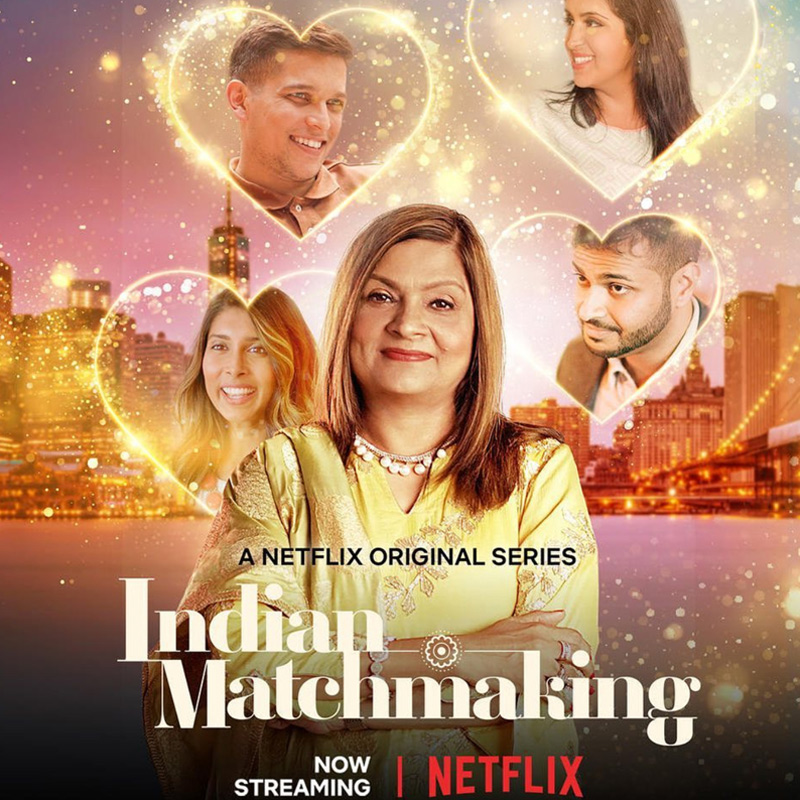
    KOLKATA: A week after Netflix dropped Indian Matchmaking, Mumbai-based matchmaker Sima Taparia had her face splashed on memes and posts on social media. Unlike its reality TV breakout hits Love Is Blind and Too Hot To Handle, Indian Matchmaking does not show a liberal dating culture setup or deep connection of love. Instead, it promotes the Indian arranged marriage trope. 

    Media, content creators and millennials across the globe have expressed their views and written official reviews about the latest trending show. While some think we can’t hide bitter truths for long, some are of the view that Netflix should not have promoted such a tainted social system. The appearance of colourism and casteism has made it receive a fair amount of backlash.

    “While the show normalises patriarchy and racism, the reason why we are hooked (including those of us who are outraged by it), from my observation, is because Indian Matchmaking gives us an opportunity to project our ideals and ‘wokeness’ on the back of the show. Screenshotting problematic statements and uploading it on my Instagram stories is a part of my ‘full watching experience,’” says Dentsu Webchutney creative director Binaifer Dulani.

    The trend again establishes a cliched notion that content is the biggest marketing tool for OTT platforms. The appealing shows broaden the appeal of the platform and help to grow a diversified following. And obviously, content travels globally. The show was not an Indian original from Netflix but it has received a great response from the country. As on Thursday morning, it was trending as the number one show in the country. Oddly, its local originals have not been able to create any buzz lately. 

    “For an OTT player, there are two kinds of products, the tech platform and the content it hosts. And irrespective of the business category, the rules stay the same. No matter how buzzworthy the marketing campaign is, if the product lives up to it, it takes it notches higher. The show almost immediately opened up an undercurrent of conversation and everyone wants to be in on the memes they scroll past. This need for belongingness is a big driver for subscriptions. And a good marketing strategy would only add to it by evolving and capitalising on this wave,” Dulani adds.

    “As the OTT market matures, we would begin to see genre-specific specialised platforms emerge, and so a distinct image. However, as of now most OTT platforms are generic entertainment service providers with content driving their imagery. New content campaigns become their marketing drive to recruit new subscribers and segments,” says Brand-nomics managing director Viren Razdan. 

    The audience has always perceived Netflix as a progressive, socially-aware platform and the platform has always been aware of its take on sensitive issues.

    Dulani adds, “Funnily enough, Netflix has managed to create this persona where you feel it thinks like you and is secretly laughing at some of the catchphrases with you (in spite of the ‘Netflix, what is this trash’ comments). Perhaps because Netflix manages to play the role of creator and spectator seamlessly. Through its owned content on social, it’s part of the Indian Matchmaking meme culture, like the rest of the internet.”

    “However, I feel that all content creators, advertisers and OTT platforms should further content that shows a world that’s more equal and questions problematic norms rather than glamorising them. I strongly believe that time and money should be invested in the pursuit of that versus clickbait. We carry this responsibility together,” she points out.

    Razdan says that in the new scenario, with movie halls going out of the social scene for a while, new releases lining up on OTT platforms are going to create the new blockbuster labels of content viewing.

    For now, Indian Matchmaking, though not made in India, has created all sorts of criticism on social media and has only served to spread the name of Netflix. Despite the negative comments, it could work well in getting more subscribers as Netflix targets India with new lower-priced plans.

  • News consumption declines from the highs of lockdown weeks

    News consumption declines from the highs of lockdown weeks

    BENGALURU: News consumption has been declining in the past few weeks from the highs of the COVID2019 weeks according to the BARC-Nielsen Reports. Broadcast Audience Research Council of India (BARC) and information, data and measurement company Nielsen or BARC-Nielsen have used the average consumption between Weeks 2 and 4 of 2020 as the yardstick to compare the growth of television consumption in the weeks starting Week 11 of 2020 onward. Of the four major genres that together garner 90 percent of television consumption in India – GEC, Movies, News and the Kids genre, News is the third most consumed genre. 

    During the lockdown weeks that commenced midweek 12 of 2020, television was one of the most important and credible sources of what was happening for a world that was just grappling with the concept of a true new global pandemic that was to change the way of life to the many living generations of humanity. Life as most knew changed forever as social distancing became one of the new normals. Man is a social animal – a true cliché, now humanity had to relearn how to continue being so and at the same time not come too close to other humans. A majority of humans worked from home, stayed at home and television along with the internet became the two biggest sources of news and entertainment. Theater, restaurants, resorts, hotels, malls, public places, places for recreation, parks, gardens, tourist places were shut down, production of new entertainment content stopped. News was the new currency for ‘drama’ as channels beamed content that showed how the challenges posed by the pandemic ware being faced in different geographies. Heartening stories of the survivors of the virus, of the people, the COVID2019 warriors who made life bearable for the rest of us were aired across news channels. Prime minister Narendra Modi’s speeches drew never before imagined eyeballs to the news channels that aired them ‘live’. Slowly humans started to know more and more of the devil that forced them to stay at home.

    Overtime, as humans understood more and more about the pandemic, the initial training that the lockdowns imparted began to be a part of the new normal, nations including India, started to open up once again, to unlock. Many people returned to work, television consumption in terms of minutes, average time spent and reach has been declining from the highs of the lockdown weeksas did news consumption. There were a few blips when television news did see viewership increase – this was in week 24 of 2020 when Indians were hit with two big blows on consecutive days – June 14 of 2020 saw the death by suicide of the very popular Bollywood actor Sushant Singh Rajput, which was followed by the Galwan Valley attack on 15 June. 

    Please refer to the figure below that shows consumption share of the top 4 genres up to Week 26 of 2020.

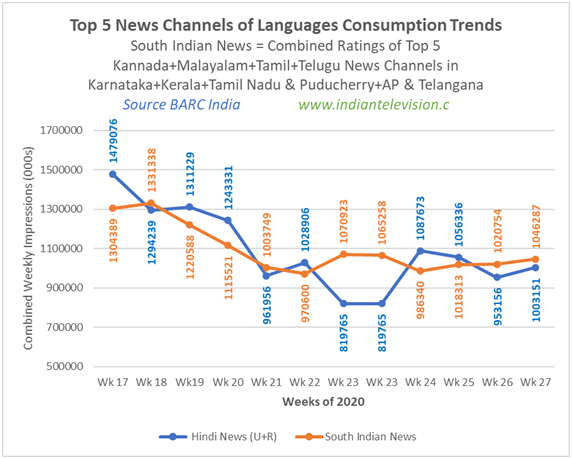
    The Hindi News genre in the Hindi Speaking Market or HSM has significant viewership. News consumption in the four South Indian languages of Kannada, Malayalam, Tamil and Telugu spoken in Karnataka, Kerala, Tamil Nadu and Puducherry, and Andhra Pradesh (AP) and Telangana respectively is quite high. BARC defines HSM as all India minus the states where these four South Indian languages have evolved. BARC publishes data in the public domain of the Top 5 News channels in Hindi in HSM, English (all India), Assamese (Assam / North East / Sikkim(U+R)); Bangla (West Bengal), Kannada (Karnataka), Malayalam (Kerala), Marathi (Maharashtra & Goa), Oriya (Odisha), Tamil (Tamil Nadu and Puducherry), Telugu (AP and Telangana). The demographics in the all the cases as of Week 17 of 2020 are 2+ in that particular market. Begore Week 17 of 2020, BARC published data for different demographics in the case of Hindi and English News in the public domain, hence the charts below show data from Week 17 of 2020 onward.

    The figure below shows that consumption of the top 5 Hindi News channels and the South Indian languages has been declining.

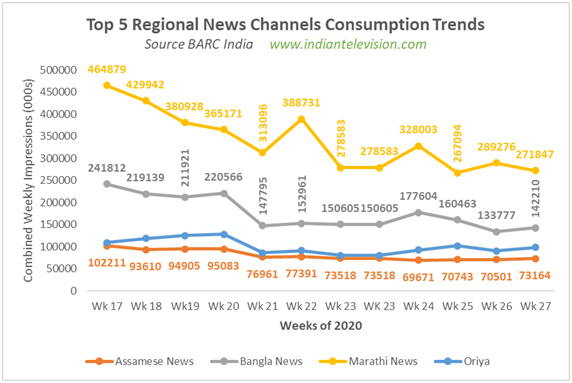
    Consumption of the Top 5 News channels in the regional languages has also been declining. Marathi News had the highest consumption in Maharashtra and Goa as compared to the other languages news channels in their respective territories, Mumbai, the financial capital and the capital of Bollywood is in Maharashtra were impacted by the two events in Week 24 of 2020 as is obvious from the graph below.

    English News consumption has also been declining over the past few weeks and the trend would have continued, but for data for the Arnab Goswami led Republic TV which seems to have bucked the trend in week 24 of 2020. Despite the combined weekly impressions of the Top 5 English News channels in Week 27 of 2020 declining versus Week 26, Republic TV, which heads the genre, saw viewership increase 7.2 percent during the same period.

    Please refer to the figure below for consumption trends of the Top 5 English News channels.

    New GEC content production commenced in a few places after Unlock 1.0 came into force. Hindi content production has commenced in the previous week. OTT platforms such as Netflix have announced premieres of a lot of new entertainment content. This is sure to take away the viewership from News channels, more so during primetime. However, the world will never be the same.
     

  • Even amidst a pandemic Netflix’s content slate is full

    Even amidst a pandemic Netflix’s content slate is full

    KOLKATA: Wall Street was busy yesterday discussing one of its most favourite stocks in recent years. While Netflix executives spoke about cashflow, subscribers and competition, what interests the audience more is the upcoming content slate. Although production has halted in major parts of Netflix markets, fans don’t need to worry since the streaming service is not going out of new content for 2020 at least.

    What’s new in store?

    Other than returning seasons, Netflix is launching a few brand new shows. On 17 July itself, a day after streaming giant announced its q2 results, Cursed premiered. The brand-new series stars Katherine Langford from 13 Reasons Why and reimagines the King Arthur legend.  It is also coming up with Project Power, an action movie starring Jamie Foxx.

    The platform has a sequel to one of its biggest movies, Kissing Booth 2, the one which led to re-birth of rom-com on the back of Netflix.  One of its most global and most successful series, Umbrella Academy’s new season will be dropping in Q3.

    Film acquisitions like The Trial of the Chicago 7 from Aaron Sorkin and The Spongebob Movie: Sponge on the Run will also amuse viewers later. Moreover, it has also acquired nearly completed seasons of unreleased original series like Cobra Kai (seasons 1, 2 and a brand new season 3) and Emily in Paris starring Lily Collins. 

    What the world watched?

    Never Have I Ever, a fun, young adult dramedy from Mindy Kaling, broke through with 40 million households in its first four weeks. New comedy Space Force also reached the same number of households. 

    In original films, 27 million households chose to watch Spike Lee’s Da 5 Bloods, which was celebrated as a “soul stirring film for the ages.” Extraction (starring Chris Hemsworth) and The Wrong Missy, a comedy starring David Spade and Lauren Lapkus, were also big hits with audiences as 99 million and 59 million households, respectively, chose to watch in their first 28 days.

    Along with scripted shows, Netflix members have loved non-scripted shows which can be added to the watch list.  On the heels of Love is Blind, Too Hot to Handle and Floor is Lava are among the latest buzzy unscripted shows. 

    Wave of protests broke out globally against discrimination following the killing of George Floyd in the US. While a number of people are raising their voices to eradicate white supremacy, they are also turning to anti-racist collection. Some older titles like 13th, American Son and Dear White People – part of its Black Lives Matter Collection saw increased viewing.

    Last but the one of most famous shows were La Casa de Papel (aka Money Heist): Part 4, launched on 3 April, was watched in 65 million households through its first 28 days. If a Netflix member has not watched it, it should go straight to his or her watchlist now.

  • Netflix adds 10.1 mn subscribers in Q2; warns of slow Q3 growth

    Netflix adds 10.1 mn subscribers in Q2; warns of slow Q3 growth

    KOLKATA: It’s not a surprise that Netflix has added 10.1 million paid subscribers in the second quarter of 2020. With the massive shelter-at-home mandate brought in by the Covid2019 pandemic leading to another phase of digital acceleration, the streaming services have emerged as beneficiaries. Although it has beaten the expectations for this quarter, the third quarter subscriber addition guidance is low as the world is gradually adjusting to the pandemic effect and may not jump onto new subscriptions to fight social distancing.

    It forecasts 2.5 million paid net adds for the third quarter compared to 6.8 million in the prior-year quarter. “As we indicated in our Q1’20 letter, we’re expecting paid net adds will be down year over year in the second half as our strong first-half performance likely pulled forward some demand from the second half of the year,” Netflix said in a statement.

    Netflix has added 26 million paid memberships in the first half of 2020 while it achieved 28 million in the year 2019. However, it has mentioned that the growth is slowing as consumers get through the initial shock of Covid2019 and social restrictions. 

    The streaming giant has reported $6.15 billion revenue, 25 per cent growth year over year, while quarterly operating income exceeded $1 billion. Average streaming paid memberships in Q2 rose 25 per cent year over year while streaming ARPU increased 0.4 per cent year over year. Netflix has given a third-quarter estimation of $6.33 billion. 

    “Since our content production lead time is long, our 2020 plans for launching original shows and films continue to be largely intact. For 2021, based on our current plan, we expect the paused productions will lead to a more second-half weighted content slate in terms of our big titles, although we anticipate the total number of originals for the full year will still be higher than 2020,” it said on the pandemic impact on the content slate.

    It also spoke of competitors like WarnerMedia, Disney along with mentioning that Apple, Amazon have been growing their investment in premium content while also regarding TikTok as a competitor given its 'astounding' growth. However, it mentioned that Netflix continues to improve content and service at a faster pace compared to others.

  • ZEE5’s HiPi gears up for India’s 1 billion video consumers

    ZEE5’s HiPi gears up for India’s 1 billion video consumers

    KOLKATA: Evolution is the key to sustain in a transforming ecosystem; India’s leading entertainment network Zee Entertainment Enterprises Ltd (Zeel) is following that route. While it has been charting its growth in the online ecosystem with over-the-top platform ZEE5, the latter is now venturing into short-format video too. It’s not a mere expansion but the ambition is to be able to create a sustainable business over a period of time which essentially addresses a billion users in India, as ZEE5 India expansion projects business head and product head Rajneel Kumar says.

    “Very soon we will have a billion Indians who will be consuming videos on a monthly basis. That time could be one, two or three years from now. That’s the overall market size we are gunning for. We have a very long-term strategy around short-form content where we will see new users who will start consuming this content. Of course,  we would like million and millions to come on the platform but our main ambition is to be able to create a sustainable business over a period of time which essentially addresses a billion users in India,” Kumar said in an interaction with Indiantelevision.com.

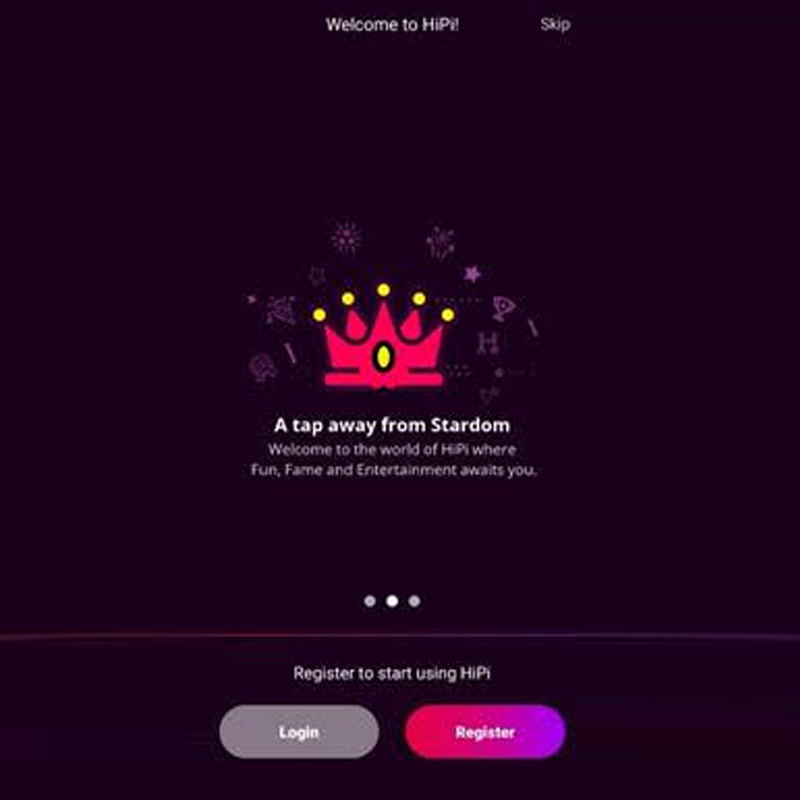
    Nearly two weeks ago, ZEE5 revealed the name of its short-form content platform, HiPi. The announcement came right after the Indian government imposed a ban on 59 Chinese apps including TikTok, the giant in the short-video segment. As opposed to launching as a separate app, HiPi will be a part of ZEE5. 

    “We have been working on it for over a year with consumer research, content research, product research as well as trying to understand what features consumers like. The timing was honestly coincidental; it was something we already planned in this quarter. However, once the news came out we did expedite certain priorities to be able to get this out as early as we can while not compromising quality or experience,” he added.

    ZEE5 is not waiting for consumers or influencers discover the platform once it launches the new segment. Rather, it is actively getting a lot of influencers who are on other platforms and onboarding them to ZEE5. With these influencers, their followers will be also able to find their content on the new platform. Initially, HiPi is launching with 300 influencers while it also has a list of other 200 influencers that will come on the platform very soon. 

    Moreover, it has opened the platform for new influencers as it is launching ‘Creators Dashboard' in the next couple of months. Through this, influencers can upload profiles for the kind of content they have created and references of other platforms where they exist. If they become verified, they would enter into a revenue-sharing model with ZEE5. There will be remuneration and compensation for all content they create. Currently, they can reach out to ZEE5 through the latter’s social handles.

    In the past, we have seen user-generated content platforms getting dragged into controversies for sensitive content. While the company is in the final stages of testing, it is highly focusing on user experience and brand safety. Kumar assured that both human and AI intervention will be there to filter content. “Unlike other platforms, no content which is uploaded goes straight and people can see it. Every content which is uploaded goes through a layer of both AI and human moderation,” he added.

    ZEE5 has several content pieces ranging from catch-up content to premium originals, news and sports. “Each one of them has individual experiences built up to see which is best for the users. When a user comes on the platform, he or she is able to see all the content which is available. Only when they start to consume a particular piece of content, whether it is a movie or a short-form content, the appropriate interface for the user comes up. The short-form content area will be a vertical scrolling video which is full-screen,” he added.

    Now a bunch of short-format video sharing apps are mushrooming as OTTs did two-three years ago; even Instagram launched Reel a few days back. Hence, despite the giant being gone, it is not easy to attract consumers. 

    “We have put together a very strong content team which will curate the kind of content to make it different and interesting for users. We will be launching different kinds of AR filters which will enable users to create interesting content. We are focused on a road map of engagement which is beyond just consuming content; so how can the user interact with other people, how can the user play games? We are working on those kinds of areas which will be part of our roadmap and essentially our distinguishing features,” Kumar sounded confident.

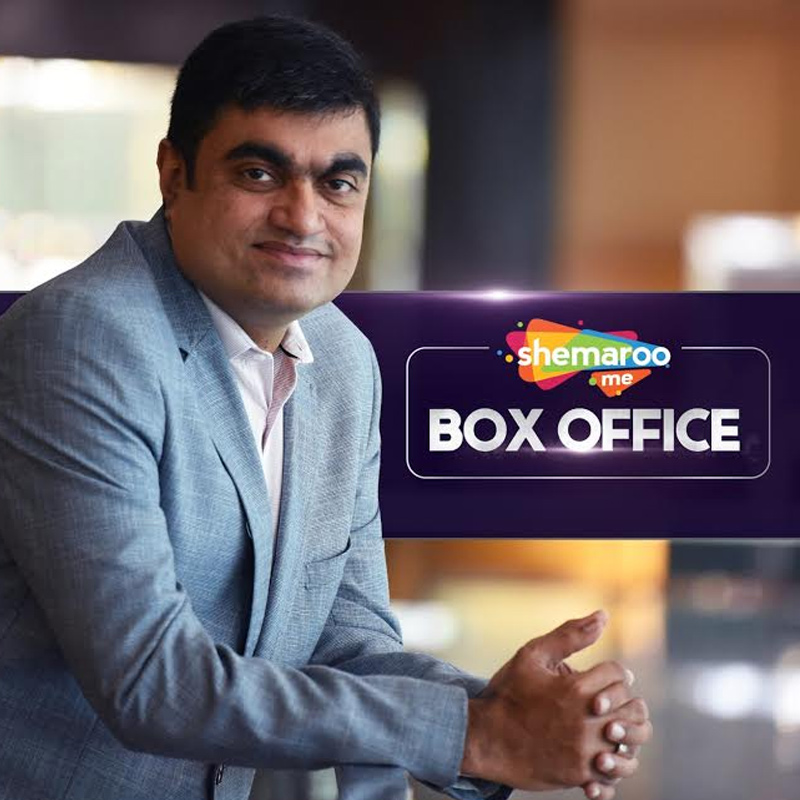
  • ShemarooMe launches Box Office, a platform to release new movies directly on Digital

    ShemarooMe launches Box Office, a platform to release new movies directly on Digital

    KOLKATA: With the unprecedented times and restrictions on movements especially across entertainment activities and with the unavailability of theatres has all led to the film circuit in India to look at newer ways to cater to the entertainment needs of movie enthusiasts. In line with this, ShemarooMe announced the launch of ‘ShemarooMe Box Office’, a platform that gives cinema curators/producers an opportunity to unlock the true value for their films by offering them access to digital avenues like never before.

    ShemarooMe Box Office is poised to create an ecosystem for small budget Bollywood and Regional movies that have an audience but limited avenues to reach out to the viewers. To widen the scope of relevant audience reach for such films, ShemarooMe has also inked a strategic partnership with BookMyShow, India’s leading entertainment destination to ensure more cine-goers have access to the rich content made available by ShemarooMe. 

    ShemarooMe Box Office is the right platform which gives an opportunity to the producers, to not only present their creations to a whole new set of audiences but also gives viewers a chance to enjoy small budget, critically acclaimed movies at the comfort of their homes. Viewers can book their tickets for these films by logging on www.bookmyshow.com or directly on the ShemarooMe App or www.ShemarooMe.com. Once booked, users can watch the film on ShemarooMe any number of times over three days from the booking period. 

    Under this business model, Shemaroo will market the films to a wider audience base and build awareness about the new releases. This will further assist film producers to unlock newer monetization opportunities for the films as well, and post the viewing window on ShemarooMe, these films can be offered to Satellite, SVoD and other syndication avenues as well. Thereby creating an opportunity for producers to extract value on the back of heightened visibility and content appreciation through this transparent model along with providing real time reporting of ticket sales to the producers. ShemarooMe Box Office hence is an ideal solution to the temporary challenges faced by the entertainment industry. On one hand viewers get access to some of the most critically acclaimed movies while on the other the producers get to unlock a new set of audience that matches the TG of these films.

    Commenting on the launch, Shemaroo Entertainment Limited CEO Hiren Gada said, "During these trying times when moviegoers are missing watching new releases in theatres, we are glad that we can bring home some great releases. With ShemarooMe Box Office, we are creating a model for the film industry and audiences. Our association with BookMyShow will further redefine the consumer movie-going experience and bridge the gap for cinemagoers across India. We are absolutely confident that when cinemas are able to reopen safely, the public will once again respond to the unsurpassable big-screen experience, meanwhile our platform will be bridging the gap by entertaining audiences thereby living by the traits of Shemaroo being the platform for movie lovers at all times.

    Adding to the launch, Shemaroo Entertainment digital COO Zubin Dubash said, “Covid 19 has made every organisation, innovate at the speed of light. ShemarooMe Box Office is an innovation that helps not only one organisation but the entire ecosystem – viewers get to watch new releases, producers get a transparent platform for release, ticketing partners get a model for the new normal. And ShemarooMe ensure it lives up to its promise of entertainment at all times.”

    BookMyShow Cinemas COO Ashish Saksena said, "We are glad to partner with ShemarooMe to bring cinematic entertainment to the comfort and safety of audiences' homes. We look forward to keep bringing newer options to experience entertainment for all our users.”

    My Client’s Wife will be the first movie to premiere on ShemarooMe Box Office on the 31 July 2020, featuring Sharib Hashmi, Anjali Patil and Abhimanyu Singh followed by award winning film – Scotland, Sharman Joshi’s drama entertainer – Graham Staines Ek Ankahi Sachhai The Least Of These based on true events and action thriller packed movie – The Hidden Strike are sure to keep audiences glued to their screens.

    The digital first release of movies as a concept has been accepted globally by patrons and will soon become a trend amongst Indian audiences as well. With the launch of ShemarooMe Box office, the company is all set to partner with producers and introduce new movies on the platform. The brand new initiative by ShemarooMe will have two legged benefits where they are sure to satiate the needs of all the Bollywood buffs with new releases and will also definitely give a boost to the entire film industry by opening newer avenues for unreleased movies to be showcased.