Tag: OTT

  • 65% millennials and Gen Z prefer OTT over TV, report says

    65% millennials and Gen Z prefer OTT over TV, report says

    KOLKATA: Urban India’s youth has relied on OTT platforms to kill monotony. Amid other options, the streaming services have emerged as the most popular source of entertainment as 70 per cent of the youth have turned towards OTT platforms in their spare time. Along with existing subscribers, new OTT subscription purchases during the lockdown period spiked throughout the country across demographics.

    According to a report from The Data Sciences Division of Dentsu Aegis Network (DAN) India, 65 per cent of millennials (25-39 years) and Gen Z (5-25 years) prefer consuming video content on an OTT platform over TV. The younger the audience is, the habit of consuming OTT is higher. The report also shows that daily OTT content consumption among Gen Z is higher than millennials. 

    While before lockdown 95 per cent of the respondents used to consume only two-three hours of daily content, during lockdown on average each millennial has consumed 1.66 hours of additional content and GenZ is consuming two-three hours of additional content too.

    As a result of having more time at hand, binge-watching is becoming a prime trait of popular culture. While five per cent of the research universe has claimed to consume between six-twelve hours of daily content on OTT platforms in pre-pandemic period, currently 20 per cent of the sample is enjoying binge-watching. Millennials and Gen Z’ s purchased two and three additional OTT platform subscriptions respectively since the start of the lockdown. The average daily consumption hours have remained around four hours.

    The international platforms with expanding local content library are becoming popular choices. 60 per cent of the sample has a subscription to either Amazon Prime Video or Netflix. Disney+Hotstar also has been able to attract nearly 19 per cent of the urban youth. Homegrown platforms like ZEE5, Voot are creating a buzz gradually. Comedy, thriller and action-based entertainment were the top three preferences of GenZ audiences while millennials were more inclined towards consuming a lot more Sci-Fi over thrillers. Money Heist, Breaking Bad, Paatal Lok, Narcos, Riverdale, Friends were all the rage among the episodic content. 

    Another interesting trend that has come out of the study is that OTT based gaming has gained significant popularity during the lockdown period. While the curve of heavy gaming remained constant, casual gaming saw a steep increase in popularity. However, millennial audiences were significantly less likely to consume OTT based gaming when compared to their GenZ counterparts.

    OTT platforms have traditionally been more favoured by the young audience for the nature of the content it produces. Surprisingly, 11 per cent of the respondents criticised OTT platforms of imposing, glorifying and promoting “Content disgracing a religion or a caste”. These criticisms were accompanied by a majority (73 per cent) criticising the depiction of anti-national sentiment, foul language and bold as well as smutty content.  “Pop up Ads” were also criticised for harming the seamless viewing experience. Despite the growth of broadband across the country, connectivity issues are prevailing until now.

    The OTT industry is anticipated to grow 45.5 per cent during the forecast period 2019 to 2026. Along with the humongous growth, increased collaborations between OTT platforms and pay up TV, further hybridization and evolution of OTT monetization models could be more noticed going forward. India is expected to emerge as the second-largest OTT market with 500 million users by 2020 itself. 

  • India to reach 66 million SVoD users in 2025, report says

    India to reach 66 million SVoD users in 2025, report says

    KOLKATA: The rapid surge of OTT consumption in India is not anymore limited to free usage. A recent report has underlined that the subscription-based model is holding a potential future. India will reach 66 million paid subscribers in 2025, analyst firm Digital TV Research estimates.

    While the Indian market is estimated to triple its subscriber base in 2019, the entire APAC region will also see a substantial increase. The region will have 467 million SVoD subscriptions by 2025, up from 267 million in 2019.

    China will remain the largest contributor at 2025 too with 279 million subscribers. Japan will add 18 million subscribers to reach 40 million. Among other markets, South Korea will exceed 25 million and Australia will surpass the 18 million mark slightly.

    “Although China dominates the region, there will be plenty of growth elsewhere. Netflix will have 44.4 million subscribers by 2025; closely followed by Disney+ [including Hotstar] with 43.6 million,” Digital TV Research principal analyst Simon Murray said.

    This is not the only report which is indicating a huge subscriber growth in the next decade. To capture the opportunity, all the international players are ramping up their investment in premium content while local players are also rising to prominence on the back of consumer insights.

  • Viacom18’s Sonia Huria to join Amazon Prime Video as communications head for India

    Viacom18’s Sonia Huria to join Amazon Prime Video as communications head for India

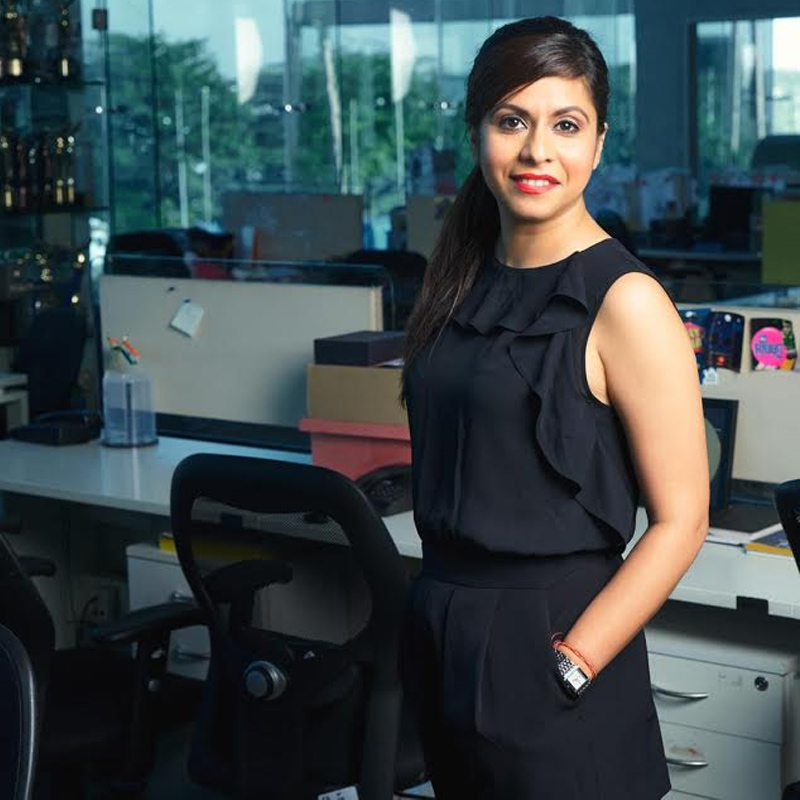
    KOLKATA:Viacom18 corporate marketing, communications and sustainability head Sonia Huria has ended her 12-years long stint with the organisation. She will join Amazon Prime Video to lead all its communication efforts for India operations. 

    Huria will be a part of the global communications team – leading PR and Communications for Amazon Prime Video in India. She will be reporting to Amazon Prime Video PR Asia Pacific and Canada PR head Tobias Tringali who is based in Seattle. 

    Ramping up Amazon Prime Video’s communication outreach, Huria will bring in her extensive experience of the entertainment industry and corporate communication. She will be directly responsible for driving the PR narrative for Amazon Prime Video while also leading communication and reputation management across the media spectrum.

    With over 18 years of experience in the entertainment and the consumer space, she led brand and corporate communications for Viacom18 across all its five lines of business – broadcast entertainment, filmed entertainment, digital entertainment, experiential entertainment and consumer products – as well as led one of the industry’s most decorated internal communication functions. 

    Huria began her journey with Viacom18 in 2008, as part of the team that launched Hindi GEC – COLORS which became the no.1 channel in the category within a span of nine months from launch. Auguring the role of sustainability, Sonia has successfully created a model of multi-partner funded behaviour change communication content at Viacom18. First with the TV series Navrangi Re! which focused on sanitation in peri-urban India to more recently with MTV Nishedh. In addition to managing internal and external communication, Sonia also leads trade marketing and digital media for the organisation – ensuring streamlined messaging across touchpoints.

    As an industry thought leader, Huria serves as managing committee member at The Advertising Club. Under her leadership, Viacom18 has won several prestigious awards at PRWeek Asia Awards, South Asia Sabre Awards and Indian PR and Corporate Communications Awards (IPRCCA). She has been featured on Impact Magazine’s Top 50 Women Leaders in Advertising, Media and Marketing for four  years in a row.

  • Leading OTT players agree to universal self-regulation code

    Leading OTT players agree to universal self-regulation code

    KOLKATA: The Internet and Mobile Association of India (IAMAI) has unveiled the Universal Self-Regulation Code for OCCPs (“Code”). The code has been adopted by 15 leading Online Curated Content Providers in India. The present set of signatories include Zee5, Viacom 18, Disney+Hotstar, Amazon Prime Video, Netflix, MX Player, Jio Cinema, Eros Now, Alt Balaji, Arre, HoiChoi, Hungama, Shemaroo, Discovery Plus, Flickstree.

    The goal of this industry-wide effort is to empower consumers with information and tools to assist them in making informed choice with regard to viewing decisions for them and their families, while at the same time, nurturing creativity and providing creators the freedom to tell the finest stories. By aiming to do what is best for both consumers and creators as guiding principles, the Code intends for India to be one of the most dynamic and fastest-growing entertainment industries in the world.

    To give consumers more choice and control, the Universal Self-Regulation Code includes a framework for age classification and content descriptions for titles as well as access control tools. The code also introduces a clear, transparent and structured grievance redressal and escalation mechanism for reporting non-compliance with the prescribed guidelines. As a part of this mechanism, each OCCP will set-up a consumer complaint department and/or an internal committee as well as advisory panel which will deal with complaints, appeals and escalations. The advisory panel will constitute a minimum of three members, including an independent external advisor and two senior executives of the respective OCCP. 

    IAMAI digital entertainment committee chairman Tarun Katial said, “The Universal Self-Regulation Code for OCCPs is built around a shared belief that consumer empowerment and creative excellence are key to the long-term success of the Indian entertainment industry. With the framework for age classification, content descriptions and parental controls in combination with a grievance redressal system, we’ve made it easier for consumers to make the right viewing decisions for themselves and their families.” 

    “The combination of empowering consumers and enabling creative excellence will help Online Curated Content Providers be at the forefront of taking the best stories from India to the world and bringing the finest stories from around the world to Indian consumers. Most of the major streaming services have adopted the Code and we look forward to others joining.” he added.

    The code is effective from 15 August and allows OCCPs to comply with all the guidelines in a timebound manner. Each signatory to the code has agreed to appoint an external advisor as part of the grievance redressal mechanism within 60 days from today.

  • Streaming successfully, the ViacomCBS way

    Streaming successfully, the ViacomCBS way

    MUMBAI: A couple of weeks ago, ViacomCBS CEO Bob Bakish announced a new international streaming service – replacing CBS All Access –  which would be launched in the first phase  in Australia, Latin America and  the Nordics in 2021. It would be the second streaming service under the Viacom-CBS umbrella, the first being the free streamer Pluto TV, which it acquired in 2019 for $340 million.

    Speaking at APOS yesterday ViacomCBS Networks International (VCNI) president & CEO David Lynn said that “Asia is a significant territory, the markets there are extremely advanced in OTT and streaming. However, we have not decided on the markets. What differentiates us is the free play we have through Pluto and the paid one through the super streamer we are planning. Having two products allows us the flexibility to decide what plays out where. Indonesia is an advertising- based market whereas Japan is subscriber-oriented. What we know is that the partnerships we have had with mobile in those regions are going to be important, particularly around 5G, and we can work with the operators to market that service.”

    He additionally sees opportunities in Asia for Noggin, the preschool kids services which have been launched internationally on Amazon and Apple channels.

    Lynn revealed that in India, ”Viacom-CBS has a very material successful business in Viacom18 that has been built out over more than a decade. That business-like several other businesses has had the impact of Covid2019, but we are beginning to move past that. We are seeing our production ramp-up again, we are seeing viewership follow the new production and we are seeing the ad markets recovering.”

    He further explained that the strategy for India is similar to the international streaming strategy.  “We have a very successful leading free streaming service in Voot. Then we have a premium paid premium service called Voot Select, which has got off to a significant start,” he said. “The core business is very strong, the move into streaming presents a huge opportunity and is off to a successful start, and not the least because of our partnership with Reliance and their ownership of Jio which is an incredible driver of streaming. “

    Clearly, even as different publications have been going to town writing for the past two years – and more aggressively recently – about the impending merger of Sony with Viacom18, Lynn did not once mention that any such talks were on.

    Lynn further expressed that the new global subscription OTT will have an output premiere deal with Showtime, CBS-All Access, content from Paramount Pictures, MTV, Nickelodeon and Comedy Central. “It is going to be a supersized streaming service,” he said. “With the massive content from Viacom-CBS. “

    Lynn revealed that the 30 countries that Viacom-CBS has operations in and the assets, and relationships, the local content will be leveraged to push the super- sized streaming service.  “We want to become a material player from the advertising, subscription and licensing perspectives and become a market leader in streaming internationally,” he stated.

  • Netflix offers free content sampling to viewers without signing up

    Netflix offers free content sampling to viewers without signing up

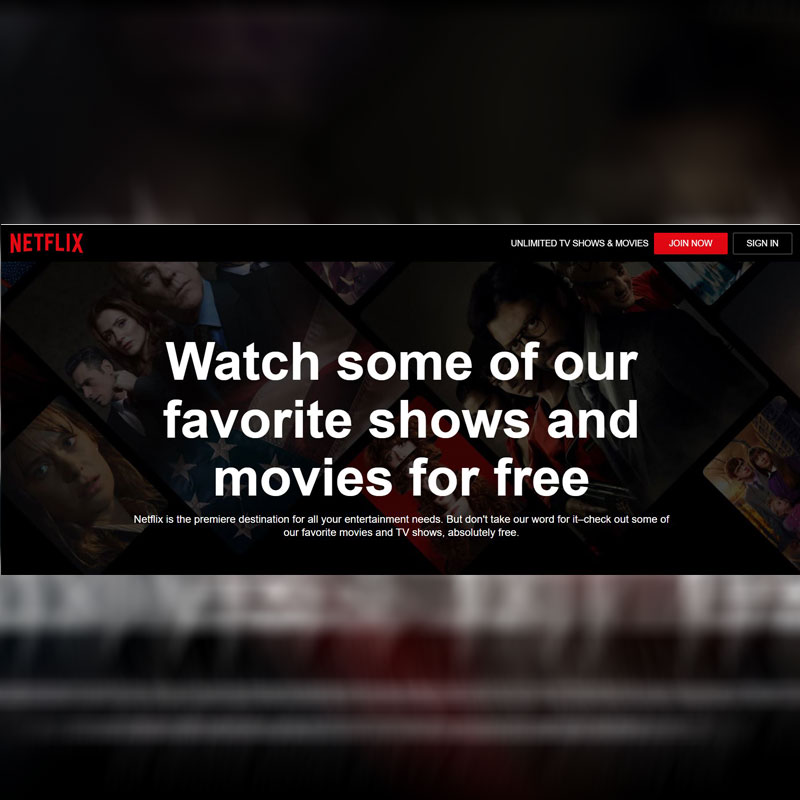
    KOLKATA: Netflix takes a new route to bring more consumers to the platform. It will now let viewers sample some of the most popular content without an account. It has launched a page dedicated to Netflix's original movies and TV shows that are free to watch globally. 

    It is offering the first episodes of popular episodic originals like Stranger Things, Our Planet, Boss Baby: Back in Business, When They See Us, Love is Blind, Elite, and Grace and Frankie. Films like Bird Box, Murder Mystery, The Two Popes. 

  • MediaCom bags media mandate for Lionsgate Play

    MediaCom bags media mandate for Lionsgate Play

    NEW DELHI: Following a competitive multi-agency pitch, GroupM’s media agency MediaCom has won the media mandate for Lionsgate Play in India.

    As their full form AOR, MediaCom will be responsible for the media strategy, planning, buying and implementation for all media as per Lionsgate’s requirements. The last year has been exciting for MediaCom with a couple of big wins, with Lionsgate adding another feather in their hat. 

    The account will be managed and supervised by the MediaCom Mumbai office.

    Lionsgate is a global content platform whose stellar range of films, television series, digital products and linear and over-the-top platforms are available to audiences around the world. Lionsgate Play is the global giant’s most recent OTT service offering in India, which features internationally acclaimed content such as Twilight series, Hunger Games, Wonder, Now You See Me, John Wick series, recently Oscar-nominated Knives Out and Bombshell to name a few to the Indian audiences.

    Lionsgate South Asia MD Rohit Jain said, “This is an exciting year for Lionsgate Play. We will be launching our B2C app soon and aim to reach out to the maximum number of audiences with the right media mix. We are glad to partner with MediaCom and are confident about their result-oriented approach.”  

    MediaCom South Asia CEO Navin Khemka says, “Content consumption has witnessed unprecedented growth in the last couple of years more so over the last few months as a result of the lockdown. Lionsgate Play has some great content in their arsenal. Being the first OTT platform in the country to also focus on offering key Hollywood content in region-specific language will definitely make the right connect with the Indian consumer. We look forward to creating an unmatched brand experience for them.”

  • Around 80% of ZEE5’s revenue is attributed to India: Punit Goenka

    Around 80% of ZEE5’s revenue is attributed to India: Punit Goenka

    KOLKATA: ZEEL is working towards creating a digital dominance in the Indian media and entertainment market. Their plan has been on track as ZEE5 has significantly grown in the last one year.

    At the second leg of APOS2020, ZEEL MD & CEO Punit Goenka reported the last quarter’s financial results of ZEE5 for the first time since its launch. He mentioned that 80 per cent of ZEE5’s revenue is currently attributed to India, and the rest comes in from Asia.

    Goenka shared that the platform has not seen a lot of revenue coming in from the western world till now as ZEEL’s linear business is pre-dominantly still running there. Goenka thinks this part of the world could offer the next phase of growth for ZEE5.

    ZEEL will shut its linear business in the UK and Europe sometime around the end of this year and ZEE5 will carry the content instead. Later, the move will be repeated in the US and other developed markets. Given the Indian diasporas demand for content, it is presumable that ZEE5 will certainly see fair traction in traffic.

    However, the plan is not similar in APAC, MEA, and Africa due to different market dynamics. As TV and digital co-exist in these markets yet, ZEEL is not planning complete digital migration immediately. But, Singapore and Hong Kong exceptionally provide an opportunity for such migration although the timing is not decided yet.

    “We have to understand ZEE5 will be played out in the Indian context very differently compared to the developed world. In India, we are still a 97 per cent single TV household market. Therefore, the consumption of television still remains prime. What happens in the digital world or on ZEE5 is that we get consumption in individual capacity which is private consumption. We don’t have enough penetration of alternate screens like PCs or laptops that you see around the world which can replace television,” he states.

    “In India, the second screen is usually a mobile phone. You can never replace the TV experience on the phone. Therefore, the consumption of ZEE5 while at home will be replacing television for all people who are either not TV consumers or have moved out of television because of the sheer kind of content. I look at ZEE5 or digital content consumption as an incremental consumption of content. It is not TV versus digital,” he further opines.

    ZEE5’s advertising revenue has been impacted in the second quarter of the calendar year as well due to the unprecedented situation as it largely depends on television content. But like the linear business, Goenka is confident that ZEE5 will see a resurgence in advertising from the second or third quarter onwards as it comes out of the Covid2019 situation.

    “The biggest thing I had said as a part of the agenda last year was to take ZEE5 ahead and build ZEE5. I put a five-year horizon where it could be as much as 30 per cent of the total business of the company. The business of the company is growing at healthy 12-13 per cent on a CAGR over five year period. That would mean, even on today’s context, ZEE5 revenue could potentially go up by 4x or 5x in the next four years,” Goenka puts it as. 

  • Raj Malik joins Miraj Group as business head

    Raj Malik joins Miraj Group as business head

    MUMBAI: Raj Malik, the producer of the acclaimed film Madaari has now joined Miraj Group as film production and acquisition business head.

    Miraj Group’s recent release was Pati Patni Aur Woh starring Riya Sen. The show was launched on MX Player. The organisation wants to accelerate its efforts towards producing engaging content that would find resonance with audiences across revenue streams. Malik will be leading the film production business for Miraj Group and build a slate of films, and OTT offerings.

    With a career spanning over 22 years in the M&E sector, Malik in his earlier assignments has held senior positions at Rhiti Group, Cinestaan, Krian Media, Walt Disney, Eros and Warner Bros.

    Miraj Group is a 34-year-old organisation with a diverse portfolio of businesses like food snacks, printing, and packaging, pipes and fittings, engineering, hospitality, retail, real estate and film production besides the award-winning “Miraj Cinemas”, India’s fifth-largest multiplex chain with 121 Screens across 33 cities.

  • Does TVoD model have a long run in India?

    Does TVoD model have a long run in India?

    KOLKATA: The recent shakeup in the media and entertainment industry due to the pandemic has given rise to more experiments. Recently, media giant The Walt Disney Company (Disney) decided to take live-action remake of Mulan to its streaming platform Disney+. While direct-to-digital debut has become a common phenomenon during the lockdown, Disney has opted for a premium transactional model rather than offering it as a part of its overall subscription. Naysayers have refuted the viability of pay-per-view or transactional video-on-demand (TVoD) in the Indian market but local players have started experimenting with the model.

    Shemaroo Entertainment’s digital arm ShemarooMe is trying the model through its ShemarooMe Box Office feature where movies will be available for Rs 80-100 for a three-day viewing. A new budding regional player, Planet Marathi, has also recently announced a ticket window for Marathi films. Although bigger players have not uttered any word on taking this route.

    “Traditionally, Indian OTT ecosystem has not experimented with the TVoD business model. But with the changing scenario, we are seeing OTT players have started trying the transaction per content model globally, especially as movies are getting direct digital premiere.

    The pay-per-view model or TVoD is an established concept in the west, and it coexists with the subscription model. Audiences and consumers have accepted it and it has been a window for viewing movies,” Shemaroo Entertainment CEO Hiren Gada says.

    SBICap Securities institutional equity research head Rajiv Sharma mentions that firstly the OTT pricing today is on a very affordable line except for Netflix. On the other hand, he thinks TVoD does not give a scale but only customers who may not stick around. He contends that an OTT business model means having the visibility of revenue and stickiness of the subscriber base which will allow the investment for the production of new content. 

    However, he also mentions that the model can work better if it is seasonal. He shares an interesting view that tvod will be like running a campaign for consumers to experiment and sample the content. If there is parallel pricing, the subscribers who use other platforms may come for very appealing content. Hence, it is good from sampling and penetration perspective and also to build a huge customer database for further promotion, Sharma opines. But he also shares on a cautionary note that having tvod for long-term may cannibalise existing SVoD or AVoD customers revenue.

    Elara Capital VP – research analyst (Media) Karan Taurani is not very optimistic about TVoD’s uptake in India. According to him, consumers in India don’t pay here easily and they will pay for a service that is long -term because that is reasonable and adds value. Moreover, he mentions that globally, the audience pays around $30-35 under this model (Disney has fixed Mulan’s price in the US at $30), whereas Indians won’t pay 10 per cent of that price. Taurani also speaks about the poor payment mechanism in many parts of the country.

    Deloitte India partner Jehil Thakkar does not subscribe to the view as many consumers are using different payment gateways for OTT, e-commerce, grocery shopping. Moreover, the pandemic has boosted the uptake of online payment mechanisms.

    “ShemarooMe Box Office has seen many critics and reviewers extend their support to the platform and if the entire ecosystem accepts this, then TVoD as a model in India can see success as desired. For now, this is a very experimental phase, where the audience discovers the platform and starts interacting with it. We have witnessed decent traction so far,” Shemaroo’s Gada comments on the uptake.

    Deloitte India's Thakkar also thinks it is a viable option but at this time the market may remain fairly small. He adds that it may be more successful for some exceptional events like a blockbuster movie or a cricket event. He emphasises that despite all the odds it is a good time to experiment, test the water, tweak the business model, and pricing. According to him, the experiments will make it clear if there is an appetite for this model.

    “Nothing can defeat the unsurpassable theatre viewing experience, since we are facing a difficult time, some experiments and changes can definitely fill the void. Nonetheless, platforms like ShemarooMe Box Office should always have an audience. The idea was to make movies accessible to a larger consumer base and inculcate the habit of TVoD viewing. It would help create a new monetisation window,” Gada states.