Tag: OTT

  • Hits debuts on Jio

    Hits debuts on Jio

    NEW DELHI: Hits, one of Asia's top English networks bringing the best of Hollywood and UK TV shows, will now be available to Jio users. It will be introduced as a value-added linear service on JioTV for mobile users as well as JioTV+ for JioFiber users.

    Jio users can immerse themselves in their all-time favourite shows in HD quality and reconnect with well-told stories and iconic characters. Blockbuster TV series like Mind Your Language, Diff’rent Strokes, Small Wonder, Sherlock Holmes, Knight Rider, Baywatch, M*A*S*H, Murder, She Wrote and many more are part of the programming line-up.

    Rewind Network CEO Avi Himatsinghani said, “We are really happy and excited to be associated with Jio to launch Hits and bring a hand-picked selection of the superhit Hollywood and other favourite UK TV shows of all time to their subscribers. I am certain that these shows will stir up happy memories and will be thoroughly enjoyed today as good stories transcend time. Hits has been topping the charts in other Asian markets and we are confident that the service will be equally loved and well received by the 400 million-strong Jio family.”

    Hits features a carefully curated selection of top TV dramas and sitcoms from Hollywood and UK majors such as The Walt Disney Company, ITV Studios, ViacomCBS, NBCUniversal, Fremantle and Sony Pictures, and will progressively introduce more titles from other studios. 

  • ABP Network moving beyond usual ad spots through integrated content

    ABP Network moving beyond usual ad spots through integrated content

    KOLKATA: Over the years, ABP Network has earned a place in the country as a reliable multi-lingual network. With the winds of change, it has strengthened digital presence as well as clocked over four billion views on YouTube, more than ten million followers on Twitter and around 21 million on Facebook. Along with high connect on social media platforms, it reaches a number of users through its app, which boasts over ten million downloads.

    No doubt brands are drawn to the network’s platforms to reach their target audience across the country. It is not only traditional businesses who usually spend on news category that are choosing ABP Network, but new-age ventures are also collaborating with it. For instance, leading streaming platform Amazon Prime Video has yielded good results, courtesy out of the box campaign.

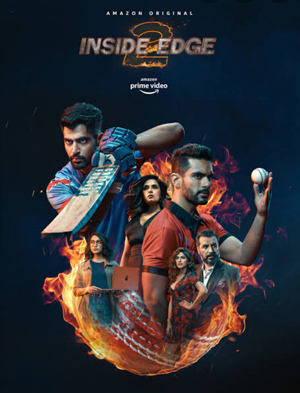
    The OTT platform wanted to promote its big hit Inside Edge season 2, with a view to go beyond commonplace marketing. Rather than promoting it as a returning season, the platform wanted to highlight it as a new IP in line with the tagline “Game beyond the game” without revealing too much about the show. ABP Spotlight, the creative content team of ABP Network, identified the theme of crime syndicate, dope, drugs similar to its own crime show Sansani.

    Taking an innovative approach, Spotlight decided to take the same promotional route as the one for Sansani. The show’s anchor Shrivardhan Trivedi was featured to tap into his strong follower base. Along with the usual promos run on the network, trailer snippets of the Prime Video show were run in the background while Sansani was on air. The show appeared an integral part of the latter thanks to the co-relation in the themes. No forceful changes or inclusion in anchors delivery, style and script were undertaken. 

    Read more news on ABP News 

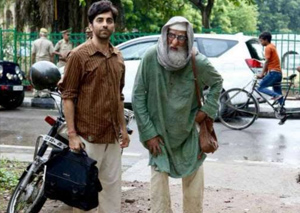
    The trust built in the first integration brought Amazon Prime Video back to ABP Network for the digital premiere of Gulabo Sitabo starring Amitabh Bachchan and Ayushman Khurana. Breaking the myths of news channels being used only for driving frequency, ABP Solution team took creativity one step ahead through content integration. It was not easy as the country woke up to Covid2019 shock right ahead of the movie’s release.

    Along with a massive change in content consumption trends, the lockdown compelled brands to alter the usual movie marketing strategy. Amazon Prime Video team did not agree to the strategy planned out after the first brief. The ABP creative team tweaked the first brief to come out with an innovative solution.  Instead of running promos featuring lead actors, ABP Spotlight opted for animated characters to meet the requirement of unique brand integration.

    While producing an animated capsule using lead characters played by Amitabh Bachchan and Ayushmann Khurrana, there were other challenges as the industry was still adjusting to the deadly crisis. The animation agencies found it difficult to deliver it in a record time of five-six days along with the challenge of finding the right dubbing artists to match the exact voice of the lead actors. Overcoming all the challenges, the ABP team was able to deliver the creative in a timely manner. Without any change in the format of usual content, the animated version of two lead characters were interviewed by Shrivardhan Trivedi, along with snippets of the movie running in the background. The 135 second-long vignette was aired on 11 June 2020. The experience was as immersive as a piece of news content.

    Moving away from usual ad spots, ABP Network has successfully implemented new-age marketing for Amazon Prime Video. While news networks were not being looked as an ideal option for content integration until few years ago, the effective ABP-Prime Video collaboration clearly indicates that times are changing.

  • This generation will witness shift from linear TV to OTT: Sameer Nair

    This generation will witness shift from linear TV to OTT: Sameer Nair

    MUMBAI: Ever since the Covid2019 pandemic cast its shadow over the world, the consumption pattern of audiences has altered drastically. The entertainment industry, for one, has witnessed radical changes as the shutdown of theatres led to viewers taking to smartphones to keep themselves engaged. This shift has further prodded the digital landscape to pick up the pace and the streaming platforms across the world to acquire a fresh audience base. To bring these changes to light and platform an in-depth discussion, the Asia Society in southern California held a  webinar on ‘Cinemas to Smartphones: Streaming Wars and the Future of Bollywood and India Content’.

    The discussion was a part of the eleventh US-Asia Entertainment Summit, and the country in focus was one of the largest consumer markets in the world – India. To represent the country on a global scale, Applause Entertainment CEO Sameer Nair shared his insightful perspective on the topic. Other panellists included filmmaker Shekhar Kapur and entertainment lawyer Gowree Gokhale.

    On OTT landscape in India

    Nair began by highlighting the impact of Covid2019 on the streaming industry in India, the future of television, and the big opportunities that await in a nation of content-hungry viewers.

    The current state of the OTT landscape in India is a lot like the early days of television, related Nair. Just like in the ‘90s when a whole bunch of TV channels emerged from a number of players and investors, a similar trend is at play in the streaming business now. “In India we have a potential of 500 million-strong audience base and the streaming platforms have touched around 20 million, so it is a long way to go. India is a large market connected with smartphones and broadband connectivity, cheapest data in the world, already savvy with television and film. This is a growth phase where there will be a lot of investment as we essentially move audiences from television to streaming,” said Nair.

    He went on to add that theatrical revenue is a very important income stream –

    Those who draw a comparison between 9,000 theatrical screens versus 900 million smartphone screens miss the fact that the 900 million smartphones are not going to generate the sort of revenue compared to what the country can potentially generate theatrically. “So, taking the theatrical experience off the market translates to a significant economic change and you are also leaving a great chunk of retail revenue on the table. I think streaming platforms can compensate for those $80-100 billion to offset the theatrical revenue loss.”

    On the other hand, film Director and producer Shekhar Kapur quipped that there is no competition between theatre and OTT platforms. The success of any content, be it on television or OTT platform, largely depends on the technology as well. Every new technology creates a new culture of content creation and a new culture of content consumption. Therefore, he finds Netflix and Amazon as technology companies rather than content companies who, in the end, took advantage of technology to deliver content. But due to Covid2019, people are very comfortable watching content while sitting at home, and so it becomes very difficult for theatres to bring audiences back, mused Kapur.

    On the future of television in India

    The linear television industry in India has reached 197 million TV and cable satellite homes. There is about 10-15 million more to go and it is now scraping the bottom of the barrel. As every content platform and every technology creates a content habit, TV was the classic talking to the consumer technology and it told you to watch your favourite shows at specific time slots so you had to reorder your life accordingly.

    But then came the streaming platforms, which made content available to you whenever you want it, thereby precipitating one of the biggest changes in consumer habits. Nair theorised that it won’t be long before traditional TV viewing becomes completely obsolete. Said he: “The way TV is progressing, dependent on advertising and subscribers, it has reached its scale. This is a decade where we will be able to see a gradual transitioning out of typical linear television to streaming platforms and then moving on to even more dramatic technological advancements.”

    On the success of Scam 1992: The Harshad Mehta Story

    One of the platform’s latest offerings, Scam 1992: The Harshad Mehta Story, has become the talk of the town. It is currently the highest rated show on IMDB in India (9.6) and #16 amongst the top 50 television shows globally. With phenomenal ratings and record-breaking performance, the show has made it to the list of the top five OTT shows for the last week of October, according to a streaming tracker by Ormax Media.

    This is a clear indication of the demand for differentiated content and the need to cater to the audience in this regard.

    “People watch programmes, not channels. And in a way how people watch movies and go to theatres because of the ambience, similarly now with platforms or with any form of content, people are more drawn to individual experiences and a collection of that content makes a platform,” Nair said.

    He noted that for a platform to succeed, its offerings have to be much larger and deeper, as eventually they depend on a subscription model or they want their customers to come back again and again.

  • Cosmos-Maya secures global digital distribution deals

    Cosmos-Maya secures global digital distribution deals

    MUMBAI: Singapore-based animation studio Cosmos-Maya has secured three key digital distribution deals which will see its original content made available across 120 platforms globally, including Amazon Fire TV, Apple iTunes, Hulu, ROKU and Vudu.

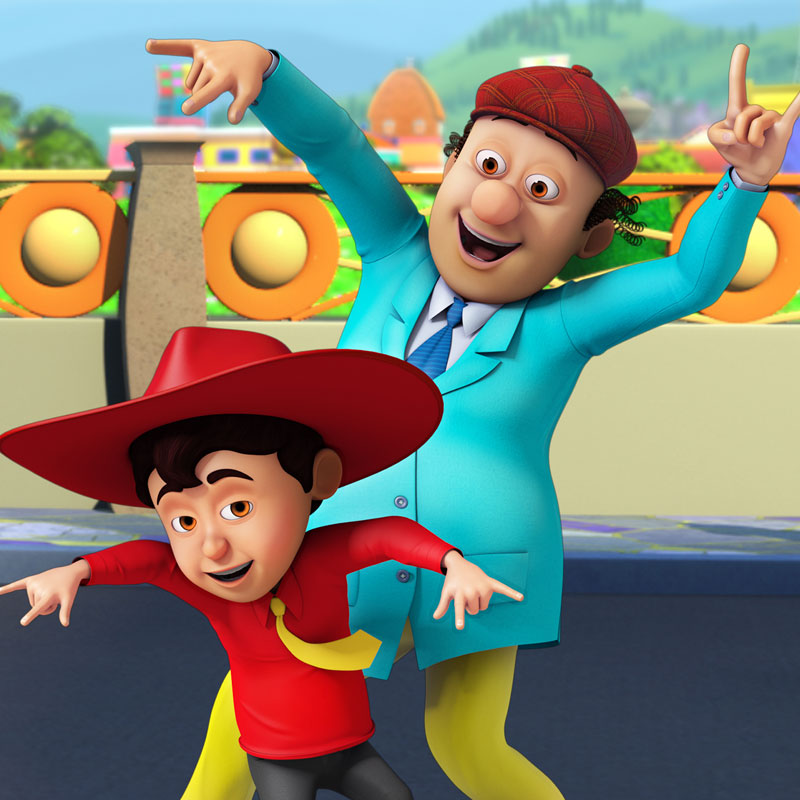
    US-based OTT Studio has picked up four Cosmos-Maya titles – Vir The Robot Boy, Motu Patlu, Tik Tak Tail, and Chacha Bhatija – for its own Cartoon Plus channel which sits on both Roku and Amazon Fire TV.

    In a separate deal, Cosmos-Maya has secured a far-reaching agreement with Binge! Networks which sees the same four original titles air on over 100 platforms across North America and globally (excluding India and the Indian subcontinent).

    In addition, Cosmos-Maya’s own digital channel WowKidz is available on Roku and Amazon Fire TV under the terms of the Binge! Networks agreement. Cosmos-Maya’s WowKidz channel airs animated shows from around the world as well as the animator’s own original series. WowKidz gives children 24/7 streaming access to multiple popular kids’ programs like Motu Patlu, Vir The Robot Boy, Chacha Bhatija, and Tik Tak Tail.

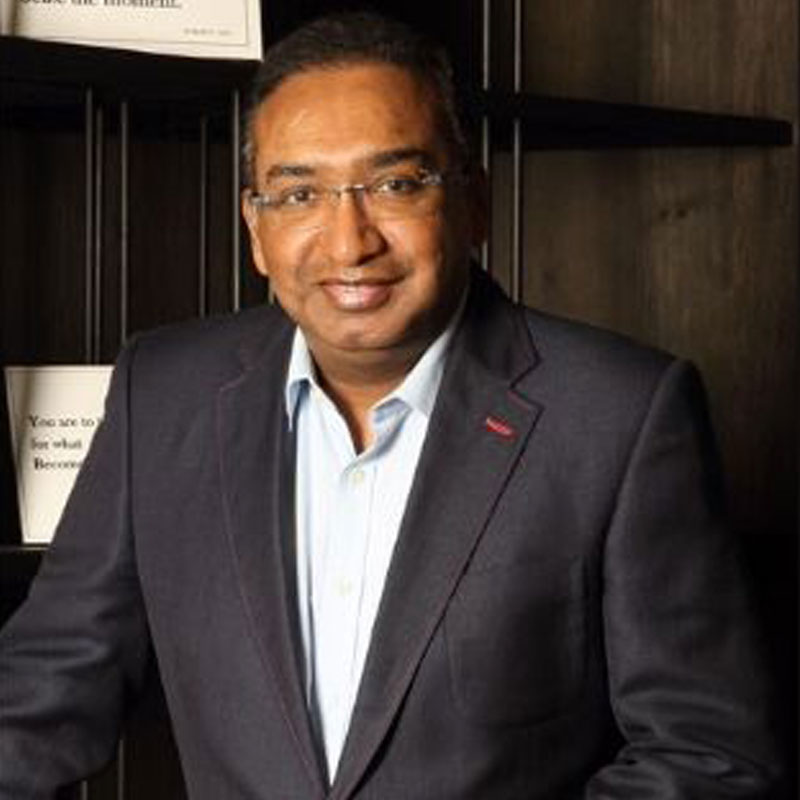
    Cosmos-Maya CEO Anish Mehta said, “The syndication of our content across digital platforms is a strategic focus for our global growth. We are delighted that through these three agreements, our content and channel are now available on over 120 platforms across the world – starting with North America which is a key territory for our expansion. We look forward to a whole new international audience for our entertaining and unique collection of shows.”

  • Swati Mohan quits Netflix India

    Swati Mohan quits Netflix India

    KOLKATA: Netflix India marketing director Swati Mohan has moved on from the organisation. She spearheaded the streaming giant’s marketing strategy at a very crucial time and led several big campaigns.

    She spent over two years at the organisation.

    Back in 2018, Mohan resigned from her position at Nat Geo and Fox Networks Group as India country head to join Netflix 

    (http://www.indiantelevision.com/television/tv-channels/people/swati-mohan-quits-nat-geo-to-join-netflix-180508).

    Under her leadership, National Geographic too underwent a rebranding exercise in 2016. This was a part of a global exercise that took place.

    Mohan has over 18 years of experience in the industry, with a wide spectrum of work across companies, including Group M, O&M, FBC Media and Endemol.

  • Puneet Gupt on Times Internet’s performance post-Covid

    Puneet Gupt on Times Internet’s performance post-Covid

    KOLKATA: Given the sudden uncertainties, digital publishers were fretting about the downturn in business at the beginning of Covid2019 crisis. Anticipating a very troublesome period, the publishers prepared to counter the worst situation. Fortunately, the industry has witnessed a better-than-expected state of business post Covid, Times Internet Ltd (TIL) COO Puneet Gupt said.

    In a virtual fireside chat with Indiantelevision.com founder, CEO and editor-in-chief Anil Wanvari, Gupt spoke about the overall sentiment in the industry which is turning out to be brighter with each passing month. According to him, TIL, as well as other publications, are now gaining momentum across all metrics. While there was a huge slump in ad spend in the first couple of months when physical movements were curtailed and the market was down, there has been a gradual growth month-on-month basis since things have started opening up, especially in the last four-five months.

     “As I say, it is a culmination of sequential growth that we are seeing month-on-month in our businesses. Maybe from July onwards revenue has picked up. I would be slightly worried about Q4 but at least with Diwali and going up to December I see that there is possible traction to build,” Gupt said.

    Despite the pessimism around festive spend in the industry, TIL has witnessed good business during Diwali compared to the last year. Categories like ed-tech, OTT, gaming and digital-only products were the big spenders this festive season. These categories have picked up the overall ad spend, leading the way while other categories are following.

    Amid the Covid crisis, several brands have moved their budgets to digital. Gupt acknowledged that the re-allocation of funds has helped them. “I personally think it’s a short term move and will be more even for a slight shift on digital and not the 30-40 per cent shift that we are seeing right now. But it may stay back at 10 per cent higher shift and rest goes back to the mediums where it came from,” Gupt noted. He added that TIL has witnessed significant growth in native advertising and video segment but display advertising has stayed under pressure.

    “We are doubling down on what we are doing. As an organisation, we have always said that programmatic is good as it gets us revenue and gives transparency to the buyer, but a one-on-one relationship with the buyer is important. Hence, we have a large sales team when some of the publishers were scaling down their sales teams and doubling programmatic. We were saying that we welcome programmatic but we want to double down on our sales team, relationships, people-to-people connect,” Gupt elaborated on the measures that have helped TIL to stay on the growth track.

    In terms of user engagement, there has been a huge spike on MX Player. The over-the-top (OTT) platform has seen 5X growth on time spent post-Covid. But the audio segment has not been to catch up with the growth of the video segment. TIL’s news properties have seen 40-50 per cent growth both in terms of engagement and visitors.

    While TIL has built a strong business on the back of ad revenue over the years, it still has a long way to go on subscription side, with a base of two million subscribers. “I don't think that 2 million subscribers is a challenge. It is a big success. We started this journey a few years ago and it’s something that all of us are learning. We are experimenting, learning and building it out. I think the next level of growth is just ahead of us. We think that in four-five years of time, about three-five per cent of our users would be paying in some form or the other. We are building for the long haul and creating consumer products across the ecosystem,” Gupt commented. He hopes TIL to maintain an average revenue per user between Rs 500-1000 per annum for that large subscriber base.”

  • Netflix India draws ire over a scene in A Suitable Boy

    Netflix India draws ire over a scene in A Suitable Boy

    KOLKATA: Netflix India has landed in yet another controversy – this time, over a kissing scene in the series A Suitable Boy. The sequence depicting a Hindu girl kissing a Muslim boy against the backdrop of a Hindu temple seems to have offended a section of viewers as well as right-wing political leaders.

    The outrage is not limited to #boycott anymore. Bharatiya Janata Party’s youth wing leader Gaurav Tiwari filed a police complaint about the drama for “shooting kissing scenes under temple premises.” The complaint named Netflix India VP content Monica Shergill and public policy director Ambika Khurana. According to Tiwari, the show encourages ‘love jihad’.

    Narottam Mishra, the minister of home affairs in the government of Madhya Pradesh, also said on Twitter that he has asked the police to examine this controversial content. "This has extremely objectionable content which hurts the sentiments of people of a particular religion,"  Mishra commented.

    A Suitable Boy is based on a 1993 novel by Vikram Seth and revolves around a young Hindu woman struggling with her mother's edict that she must soon be wed. The six-part series, originally produced by the BBC, is directed by acclaimed filmmaker Mira Nair, who is known for her big screen ventures like The Namesake, Queen of Katwe, and Monsoon Wedding.

    This isn’t the first time the streaming giant has found itself in hot water with Indian audiences. Calls of #BoycottNetflix did the rounds on social media over the Telugu film Krishna and His Leela, apparently for associating the names of Hindu deities with erotic content. Deepa Mehta’s web-series Leila also stoked controversy, with naysayers claiming the show was propagating ‘Hinduphobia’. More recently, it was embroiled in a legal tussle over its documentary Bad Boy Billionaires when the fugitive moguls featured in the series challenged its broadcast in court.

    The timing of the outcry is also to be noted, coming on the back of a recent government notification bringing content on OTT platforms under the regulatory ambit of the ministry of information and broadcasting.

  • From ream to reel: The boom in book to screen adaptations in India

    From ream to reel: The boom in book to screen adaptations in India

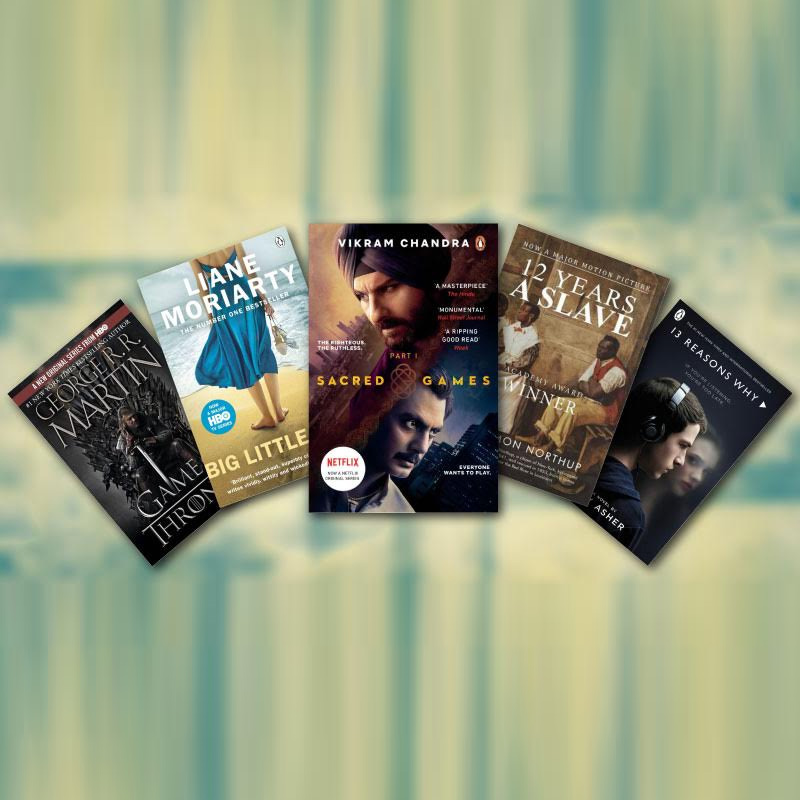
    MUMBAI: From golden age classics like Gone with the Wind and To Kill a Mockingbird, to the more recent young adult adaptations of the 2010s like The Hunger Games and The Fault in Our Stars, Hollywood has a legacy of churning out book to screen iterations. Fortunes in tinseltown have been built on entertaining the masses with 70mm productions of their favourite tomes, be it children's stories (Wizard of Oz, Harry Potter) or suspense thrillers (The Shining, Gone Girl), historical dramas (Schindler's List, Argo) and romantic fiction (Pride and Prejudice, The Notebook). While there have been constant refrains of "the book is better than the movie" by the public, Hollywood has seldom been inclined to buck the trend of motion picture or TV adaptations of mass-market publications. In fact, the massive success of Game of Thrones, whose original source material is A Song of Ice and Fire saga by George R R Martin, led to a renewed interest and spurt in adapting novels for the small screen (think The Handmaid’s Tale, American Gods, Big Little Lies et al)

    But when it comes to Bollywood, historically there has been a dearth of book to screen adaptations. While they have been around for a long time – Satyajit Ray's Pather Panchali (1955) was based on Bibhutibhushan Bandyopadhyay's novel of the same name – their frequency became too few and far in between to really count. Indian audiences were blessed with the occasional gem like Mira Nair’s The Namesake, but mostly, they're used to sub-par replications of frothy Chetan Bhagat paperbacks.

    However, book adaptations in recent years have improved, in both quantity and quality – in fact, we appear to be in the midst of a high-profile book-based production boom. Adapting a hit book isn’t a guarantee of success, but producers, more than ever, are perusing bookshelves for inspiration for the next big show or movie.

    So what has changed? When did books become a foundation for popular films and series? And what does it mean for the future of producers, authors and book publishers alike?

    If one were to pin-point the resurgence of this trend, it was Sacred Games, Vikramaditya Motwane and Anurag Kashyap’s cerebral tour de force adapted from Vikram Chandra’s massive 2006 tome of the same name, which proved to be a game-changer in the Indian OTT space. The dystopian series Leila was also based on the book by Prayaag Akbar; and the cricket drama Selection Day had its roots in the novel by Aravind Adiga. Red Chillies Entertainment’s Bard of Blood was penned by the young Indian author Bilal Siddiqi.

    Beyond OTT platforms, other content producers are also looking at books as source material. Endemol Shine India has recently acquired rights to Richa Mukherjee's Kanpur Khoofiya Pvt Ltd, Chitra Banerjee Divakaruni's unreleased book Lioness: The Last Queen, Salil Desai’s novel The Sane Psychopath along with Damyanti Biswas' crime novel You Beneath Your Skin

    Book to Screen adaptation

    HarperCollins India rights and backlist manager Arcopol Chaudhuri mentioned that in India, screen adaptations from novels have gathered pace over the past five years thanks to new and emerging broadcasting platforms, primarily driven by OTTs.

    Endemol Shine India CEO Abhishek Rege explained that adapting a book comes easy to content producers. “With adaptation, it is like a certain level of the story is already prepared and the other important aspect is popularity. If you have a certain book that is popular, you would want to use it for your story because there is a certain type of fan following which will come to watch it. I think it is something that will be continued as a book right acquisition model. Currently, OTTs need content to fill up their library, and books offer ready material, it kind of cuts short the mainline process. That is why book rights are going to be popular in the coming years.”

    Applause Entertainment content head Deepak Segal also highlighted that long-form dramas have opened many opportunities for content creators. The episodic format allows creators to deep dive into the storyline, sketch different and longer character arcs and allows them to innovate with the plot. With the digital boost, it has become one of the important mediums of storytelling as earlier the adaptations were restricted to films. This helps create more opportunities for everyone – creators, talent, platforms etc.

    Choosing Stories

    For Segal, the story is one of the key deciding factors while choosing a book. Aspects like relevance and connectivity with the audience are thoroughly examined. He said, “With India’s Most Fearless, we knew that this subject is of national importance and we wanted to highlight the storyline in four parallel tracks which the audiences have not seen.”  

    Another parameter that Applause Entertainment looks into is the shades of the character, the uniqueness to bring out a progressing reaction in the audiences. Segal further discusses the subject with the creative team, on how to pan it out into eight to ten episodic series, keeping the audiences engaged and entertained with strong storytelling at the core. Then the creative team makes an observation on how the characters will scale and how much potential it offers to build a room for innovation.

    To help writers sell their books to filmmakers and content producers, Sidharth Jain has started ‘The Story Ink’, India’s first story company. Jain said, “There are very few players in India who have been pursuing screen adaptations. But what we are doing new is to take the screen adaptation business from mere agenting to curating content strategy. I don’t think of us as an agency as it is more like a platform for writers. While we work on a fee model, we are in the business of turning books into projects.”

    Picking Genres

    Rege discovered that post Covid2019, audiences want to see happy stories. The studio is currently focusing on creating light-hearted shows. In terms of understanding viewers’ preferences, Rege uses metrics that are released by some agencies as a report for digital media consumption. Apart from this, there are different reports available that talk about genres. He also reaches out to OTT platforms to understand their research and consumer feedback.

    By contrast, Segal is looking at all sorts of genres as he wants to reach out to all buckets of audiences. “Today the viewers are open to exploring different genres and as content creators, we want to have diverse offerings. Digital has become a great way to gather insights, understand consumer psychology and their points of view on topics. It gives leverage to mould out setup, characters and storytelling,” he added.

    Jain stated that biographies and real stories have been in great demand recently. But a solid thriller, horror or mystery always makes for a good adaptation.

    Process of book adaptation

    Rege revealed that the team at Endemol Shine directly reaches out to authors and inquire if they are represented by any agents or publishers. Nowadays there are a lot of agents that work on book to series productions, and it is not the publishers who hold the rights. There is a set structure on how books are adapted to screen. Endemol Shine follows rules from global learning and then applies that to the contract. It also keeps the rights of all languages as well. When the story pans out the team decides on what could be made from it, whether it is for film, television, OTT and in what language. Packaging is another critical aspect. Post that, the director for that genre, writer, and then the cast is finalised.  

    At The Story Ink, the team has a recommendation-driven approach to pitching. They study the content strategy of the platform, map access to talent and available resources of the producer – and then recommend the right story to them for consideration. Jain added, “We don’t send out lists or catalogues. Our approach is very boutique and curated. I work with authors, publishers, and literary agents. Usually, I find a book that I feel should be adapted and then I reach out to them (the author first and then the publisher). But now, increasingly, authors are reaching out to me on their own.”

    Chaudhuri mentioned that the process involves the licensing of audio-visual rights to the producer, for a fee. The publisher or the author can reach out to the producer to pitch a book and solicit interest to license the rights. “Alternatively, producers/filmmakers themselves reach out to the publisher to acquire the rights for books they're interested in adapting for the screen.”

    According to Neelakantan, in India, the concept of IPR is still in its infancy. Usually, the writer is paid a lump sum for the book adaption rights. Theoretically, an author can put any conditions, but in practice, once the rights are sold, the author does not have any control over the product, he claimed. “Unlike books, films and television are industries and have their own constraints and demands and has scant space for writer’s ego. Once you sell the rights, it is better to forget having any creative control over it.”

    Jain disclosed that writers get somewhere around Rs 15-30 lakh and then the amount is divided between the agency and the writers, and sometimes, the publishing house.

    New Found Interest

    Is content producers newfound interest in books as source material for films and series because of the success of big-screen adaptations of Chetan Bhagat’s novels? Jain held the view that the real reason is the entry of international streaming giants like Amazon and Netflix. They are seeking better content and that’s putting pressure on the limited talent and story pool that is there in the industry.

    On the other hand, Anand Neelakantan, the bestselling author of Asura: Tale of the Vanquished and the Ajaya series, opined that not all books lend themselves for film or TV production. “The screenplay is a concise art, and many stories cannot be told in a short time of two hours. That is why there are so few screen adaptations that have lived up to the standards set by the books. Original series is a better medium to adapt novels, while the film is better served by adapting short stories or novellas. Of course, exceptions are there to this rule,” he shared. Neelakantan has written screenplays for several popular TV series, including Star TV’s Siya Ke Ram, Sony’s Mahabali Hanuman and Colors TV’s Chakravarthi Samrat Ashoka.

    According to Neelakantan, creative writing, on the whole, is moving towards the screen these days – be it movies, television or the OTT platforms. “It is the way to go. That does not mean other forms of writing would die out but would become more and more niche. Films did not finish off plays or poetry but superseded most other forms of storytelling in sheer reach and commercial power. Like any other field, those who keep pace with change in society and technology would retain leadership.”

    Impact of OTT platforms on writers 

    The question arises: are streaming giants like Netflix, Amazon, Disney+Hotstar and various other platforms changing the way books are being written, especially in India? There is a possibility that more and more writers are writing with a view of making their books accessible across audiences through these multi-media platforms.

    Jain pointed out that authors pen stories that inspire them, and OTT platforms rarely, if ever, influence how they write. Good and compelling stories will always work, in any medium. He said, “Thousands of books get published in a year, but a fraction of those will make it to screen. But yes, I believe some writers will make a lot of money because of the emergence of new platforms. Also there is no time for creators to write stories. It is at times difficult to meet the demand. In certain cases where we take on development of the scripts for books to screen adaptation, we always stay focused on what’s the best way for the audiences to enjoy the story – whether they have read the book or not. Organic and honest storytelling, keeping in mind the expectations from the format+medium will always work best.”

    Future of book adaptations

    From content creators, agencies to authors, everybody’s of the opinion that going forwards, book to screen adaptations are bound to grow by leaps and bounds. With the focus of strong storytelling at its core, this is something that will be explored more and more in the future.

    Chaudhuri contended that due to increasing demand, studios will invest more in writers' rooms. Said he: “A few years down the line, the film industry awards and the National Awards will have a category for 'best adapted screenplay', like they always do at the Academy Awards.”

    Neelkanth held the view that more books will get adapted as there is a paucity of content in the show industry. He concluded, “Book adaption does not depend on the commercial success of books. If you have a compelling story and you know how to tell it well, it does not matter how many copies the book sold. The film/ TV industry would lap up the books that would yield you a lifetime worth of royalty of a best seller in one go. So, all the writers out there, keep writing.”


  • SonyLIV goes big to retain buzz around Scam 1992

    SonyLIV goes big to retain buzz around Scam 1992

    KOLKATA: Amongst the homegrown OTT players, SonyLIV was late to enter the original content space. After its recent rebranding, the OTT platform has made a splash, especially with the launch of Scam 1992: The Harshad Mehta story. Following its success, the platform is leaving no stone unturned to retain the buzz around the show.

    On Saturday, SonyLIV published a four-page advertorial in The Times of India. The separate sheet of the feature contains interviews with actors, the production house, the director, and a review of the show along with the promotion of other original content on the platform. It further included original headlines from newspapers around the scam and photographs of Sucheta Dalal, Harshad Mehta and his lawyers.

    The content was exclusively created and served as a teaser for the audiences to watch the show on SonyLiv.

    While it is not the first time when an OTT player is promoting a new show, but it is one of the rare occasions, when any OTT player has taken the content route in the print media to promote a show.

    Use images of news papers attached 

    The 10-part series began streaming on SonyLIV, from 9 October. It is one of the highest-rated shows on IMDB in India (9.6) and has bagged a place among the top 50 television shows globally. With phenomenal ratings and record-breaking performance, the show has made it to the list of the top five OTT shows for the last week of October, according to a streaming tracker by Ormax Media. Scam 1992: The Harshad Mehta Story was the second on the list with 6.6 million views.

    The show has received a remarkable response from audiences for gripping performances from Pratik Gandhi and Shreya Dhanwanthary, stellar direction by Hansal Mehta, and an exceptional script written by Sumit Purohit, Saurav Dey, Vaibhav Vishal and Karan Vyas. 

  • Netflix to offer free weekend access on 5-6 December

    Netflix to offer free weekend access on 5-6 December

    KOLKATA: Netflix has finally unveiled the dates for its free weekend access to Indian audiences. The viewers can binge Netflix content without subscription on 5 and 6 December during ‘StreamFest’.

    To get access to the vast content catalogue of the streaming service, users have to simply enter their name, email address, and create a password on the dedicated SteamFest page. They will be able to stream the platform across devices including smart TV, gaming console, iOS, and Android apps and on PC. However, the streaming will be restricted to standard definition (SD).


    The streaming giant is promoting StreamFest aggressively through its social media platforms and has roped in Anil Kapoor, Yami Gautam, and Nawazuddin Siddiqui to spread the word. “That’s right, it’s time to cancel your plans and settle in to watch Netflix. We don’t need any payment details – just your love and undivided attention,” Netflix said on its website.


    Netflix has been constantly innovating its marketing and promotion strategy in India to get more users to sign up. “We think that giving everyone in a country to access Netflix for free for a weekend could be a great idea to expose a bunch of new people to the amazing stories we have and hopefully get a bunch of them to sign up. We will try that in India and we will see how that goes,” Netflix COO and chief products officer Greg Peters said.