Tag: OTT

  • Vi partners with Firework to offer vertical video stories to users

    Vi partners with Firework to offer vertical video stories to users

    KOLKATA: Telecom operator Vi has inked a strategic partnership with Firework, the world’s largest story publishing platform based in Silicon Valley.

    This is the first time an Indian telecom operator has offered the Stories format to its users. Globally, almost every platform is adopting the Stories format to enable higher engagement for its audiences. The partnership allows Vi to leverage Firework's massive content repository from global content studios and also get access to unique occupational generated content (OGC) creators who are expert storytellers across a wide genre of subjects.

    “We provide an array of content from multiple OTT players varying across genres like live TV, movies and web series in multiple languages on Vi Movies and TV app. Vi is excited to be the first Telco to partner with Firework for powering the most trending short videos, specially curated for Vi customers. The format is designed to entertain you in ‘30 seconds’ across various categories and interests. Mobiles have become the preferred screens for entertainment and the average time spent on watching short videos is significantly higher than long-form content, demonstrating that the engagement levels provided by short videos remain unparalleled. Through our partnership with Firework, Vi subscribers will get a wide choice of trending stories across genre and languages,” Vi chief marketing officer Avneesh Khosla said.

    Firework president at Mobile Anand Vidyanand said, “Vi’s users can now enjoy their favorite content without the need of downloading another app. With this partnership, Firework is further strengthening its reach across telecom operators, device manufacturers, and app developers. Firework is fully committed to Vi’s vision in bringing the best occupationally generated short-video content to its customers across nearly 40 delightful categories, including multiple Indic languages.”

    While the collaboration enhances Vi’s customer experience and Firework’s reach significantly, it also addresses the need of the creator community with exceptional discoverability in a cluttered content space, pivotal on Firework’s large story ecosystem globally that include top tier traditional publishers, OEMs, network operators, and blogs.

  • #Throwback2020: The year the world of TV changed

    #Throwback2020: The year the world of TV changed

    KOLKATA: If there's one signal that 2020 strongly gave: it was that consumption of content via streaming, both video and audio, is here to stay. And media and entertainment organisations globally have to pivot around that change in viewing that has taken strong root; that they have to go direct to consumer.

    Yes, the doomsayers have for a few years been shouting from the rooftops that the days of TV are numbered, considering the rash of consumers who have cut the cord on cable and satellite TV. Yes, media conglomerates have been pottering around with digital, not fully confident that Netflix’s streaming gambit is the future. But the Covid2019-induced lockdown, which accelerated digital adoption by a few years, not only allowed OTTs to take flight and soar, it also gave linear TV a new lease on life.

    For traditional broadcast outfits, cable, satellite and terrestrial transmissions are not the only modes of distribution – wherein they have to go through intermediaries to get their content to viewers – it has become crucial, a question of survival to deliver content via IP directly to viewers who watch what they want to watch and whenever they want to. Streaming is at the forefront of change that they are undergoing.

    Global media giants overhaul organisational structure:

    The OTT revolution was started by Netflix a decade ago and the platform has led the change for years now. But following the success of the Reed Hastings-led streamer and Amazon Prime Video, large media conglomerates which traditionally offered TV content and owned rich movie libraries are placing big bets on their digital arms. The Walt Disney Co (Disney) is the greatest example of this.

    While the media empire was already embracing a new future gradually under its new CEO Bob Chapek, it accelerated the reorientation due to the challenges posed by Covid2019. In October, the company revealed its plan to centralise its media businesses into a single organisation that will be responsible for content distribution, ad sales and Disney+. Kareem Daniel has emerged as the star of the re-organisation as he has been promoted to lead the new media and entertainment distribution group. After the announcement, Chapek also acknowledged that Covid accelerated the rate at which they made this transition, albeit the transition was bound to happen anyway.

    Later at its investor day, the entertainment giant shared some glimpses of “tremendous success” achieved through its portfolio of streaming services with 137 million subscribers worldwide. Riding high on this humongous wave, it now expects its streaming services to hit 300–350 million total subscriptions by fiscal 2024.

    Moreover, a new service is also in offing, from the international general entertainment content brand Star. Hence, it is clearly inevitable that Disney will put all its money behind streaming over in the next few years.

    Warner Bros is another media giant raising the stakes in the digital game, as it recently unveiled its plan to launch its slate of 2021 films on HBO Max on the same day they’re released in US cinemas. It could be seen as a crisis-led response but it indicates how streaming could significantly shorten the theatrical window overall in reaction to rapidly changing consumption habits. Like Disney, WarnerMedia also rejigged its organisational structure this year under new CEO Jason Kilar. He said the changes were meant to help WarnerMedia successfully reach consumers amid accelerated direct-to-consumer demand during the pandemic. While the two Hollywood giants made a buzz recently, other media companies like NBCUniversal, ViacomCBS, Discovery are also experiencing the same wave of reorganisations and betting their futures around streaming video.

    Indian media companies rejig organisation too:

    Cut to India. Zee Entertainment Enterprises Limited (ZeeL) has been investing highly in its streaming business in the last couple of years. ZeeL CEO and Punit Goenka announced that the company would gather all of its digital assets under a single umbrella, which includes Zee5 (domestic AVOD+SVOD), Zee5 Global, SugarBox and digital publishing to align with its future strategy. As a part of the restructure, Amit Goenka took over as digital businesses and platforms president. 

    In line with the global overhaul, another major broadcaster Star India (a part of Disney post 21st Century Fox acquisition) is also facing major shake-up at the top executive levels. Star & Disney India president Uday Shankar announced his departure from the organisation and Star Sports CEO Gautam Thakkar also called it quits just a few days after Shankar’s resignation. A separate head of Disney+Hotstar, Sunil Rayan, was roped in after a global search to replace Ajit Mohan, who left to head Facebook India.

    Many industry sources indicated that Disney Star India would reduce its spend on TV, and its sports content catalogue and increase its focus on Disney+Hotstar. Expect considerable muscle to come behind Disney+Hotstar as its subscribers makes up 30 per cent (26.8 million subscribers) of the total subscriber base of parent Disney+.

    Traditional broadcasters put more money in online content:

    Another noticeable trend in 2020, other than the restructuring that has swept through the Indian streaming services, is higher investment in content. Sony Pictures Networks India (SPN) entered the streaming war on the back of its TV content and sports portfolio. With more global and homegrown rivals ramping up their spends, it was not able to make a mark in the race. In mid-2020, SPN relaunched its digital service SonyLIV 2.0 with increased spends on original content and a fresh brand identity. With the rebranding, SonyLIV has emerged as the dark horse in the Indian OTT space, especially due to successful shows like Scam 1992 which have been appreciated widely.

    Among other broadcaster-led streaming platforms, Viacom18 also upped its game in premium content with the launch of subscription service Voot Select. Regional broadcasters like Sun TV are also not far behind. The south-based network is planning to invest around Rs 200 crore in its digital venture SunNXT. Not to be outdone, Public broadcaster Doordarshan is also building up its digital portfolio through its YouTube channels.

    What do the numbers say?

    The reason for everyone moving their guns in one direction could be explained through numbers. The OTT market is expected to grow at a CAGR of 28.6 per cent over the next four years to touch revenues of $2.9 billion, a report from PwC forecasts. Moreover, the pandemic has tuned more consumers to pay for subscription-based services as the segment has registered a 55-60 per cent year-on-year growth in India in 2020. Further, more than half of these new users are likely to continue using the service, according to the annual M&E report by the Boston Consulting Group (BCG). Even the pay-per-view model is also gaining traction as mental barriers for online payment are slowly lifting. To grab a slice of this growing market, all the traditional players are also trying to secure a place for themselves in the consumers’ consideration sets.

    For Indian companies, the story may play out differently as compared to their western counterparts. They will be surfing two concurrent waves: the digital one and the traditional linear TV, as they cannot overlook the latter courtesy its potential to grow further.    

  • Filmfare OTT Awards 2020: Paatal Lok, The Family Man take top honours

    Filmfare OTT Awards 2020: Paatal Lok, The Family Man take top honours

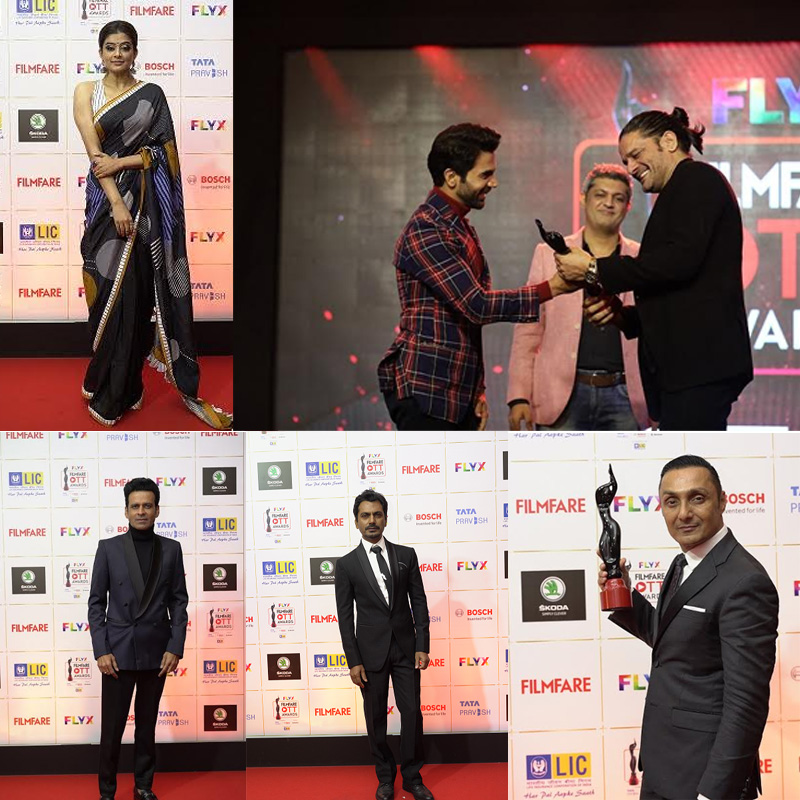
    KOLKATA: The Indian OTT industry has grown by leaps and bounds this year, and has been a force to be reckoned with in fostering innovation and creativity in the country. Celebrating the indelible mark of the streaming industry and lauding stellar performances, Filmfare hosted the inaugural edition of the Flyx Filmfare OTT Awards on 19 December at the Taj Lands End in Mumbai. 

    It was a starry night filled with glamour and brilliance as the Black Lady was bestowed on the finest OTT content creators, actors, and their creations.          

    The gala event witnessed the most-recognisable names from the Indian entertainment industry, including Pratik Gandhi, Nora Fatehi, Alaya F, Rajkummar Rao, Manoj Bajpayee, Priyamani and many more who raised the glam quotient on the red carpet. The event was hosted by comedians Varun Thakur and Danish Sait, who kept the audiences entertained with rib-tickling humour and zestful jibes. 

    Making a clean sweep, Paatal Lok won the most awards across categories in addition to bagging the Filmfare for Best Series. Raat Akeli Hai won the Best Movie (web original) award. The winners of the night – Jaideep Ahlawat (Best Actor in a Drama Series Male), Rahul Bose (Best Actor in a Supporting Role in a Web Original Film Male), and Nawazuddin Siddiqui (Best Actor in a Web Original Film Male) culminated the ceremony on an emotional note with their heart-warming acceptance speeches that reminisced their journey leading up to the grand night. Popular actors Sushmita Sen (Best Actor in a Drama Series Female) and Neena Gupta (Best Actor in A Supporting Role in a Comedy Series Female) lit up the extravaganza virtually by delivering endearing messages of love and acceptance.

    The first edition of the ceremony also saw internet personalities such as Mithila Palkar, Dhruv Sehgal, and Sumukhi Suresh make their Filmfare debut by winning Best Actor in a Comedy Series (Female) for Little Things Season 3, Best Actor in a Comedy Series (Critics) for Little Things Season 3 and Best Actress in a Comedy Series (Critics) for Pushpavali Season 2 respectively.

    The award ceremony also lauded and celebrated talented artists in the critics category with The Family Man bagging the Best Series (Critics); Krishna DK and Raj Nidimoru (The Family Man) won Best Director (Critics), Manoj Bajpayee bagged the trophy for Best Actor in a Drama Series (Critics) and Best Actress in a Drama Series (Critics) went to by Priyamani (The Family Man).

    The sponsors for this year included title partner Flyx, co-powered by Tata Pravesh and Bosch Home Appliances, driven by Skoda, associate partner LIC and more partners including Sugarbox.

  • ‘Value proposition’: Why OTT platforms are here to stay

    ‘Value proposition’: Why OTT platforms are here to stay

    KOLKATA: The Covid2019-induced lockdown was boom time for over-the-top (OTT) players. Making obvious gains at the expense of shut theatres and lack of fresh content on television, SVoD services drew in millions of subscribers who were more than willing to pay for their entertainment, which is why experts believe that there will be no significant churn post-pandemic, thanks to the value proposition offered by OTT platforms.

    Consequently, the pressure has been on the streaming services to provide more content and ensure they keep delivering to users, pointed out Disney+Hotstar president Sunil Rayan. However, the streamer has taken multiple bets like launching direct-to-digital movies as multiplexes were closed. Although it has been a hectic nine months, it has led to the point where it’s normal for people to come to OTT platforms for most of their entertainment needs.

    “Leaving aside the concerns for OTTs, this platform has grown in clarity and prominence. It has been a great opportunity for talented people in the country, huge opportunity for actors, singers, musicians and technicians to present their skills,” ministry of information & broadcasting (MIB) joint secretary Vikram Sahay said at Confederation of Indian Industry’s (CII) ninth edition of the Big Picture Summit 2020.

    Amazon Prime Video country general manager Gaurav Gandhi mentioned that the sector has already seen huge interest in the last few years and the last few months have only accelerated the change. According to him, customer habits are transforming rapidly, and for good. Moreover, users haven’t missed the fact that streaming services are trying to bring a very different premium quality content experience for them – after all, the Indian consumer is very value-conscious, quipped Gandhi. Hence, this adoption is not short term and there would not be a significant churn after people go back to their normal lives, he added.

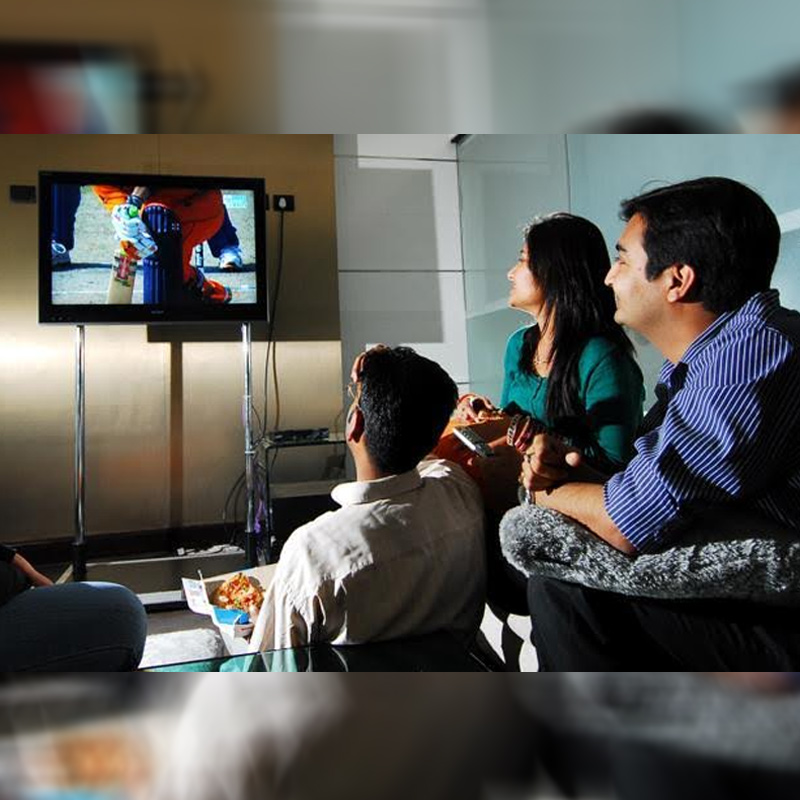
    One of the trends that OTT platforms have seen is a shift towards watching in the living room as opposed to mobile device viewing, highlighted Rayan. “So that has helped us prepare for more traffic, higher bit rates and all. Will these trends continue? Maybe, maybe not, but the good news is it helps us deal with multiple behaviours. Predominantly a lot of people used to watch OTT on mobile devices and now they are moving to living rooms. Maybe they will come back to mobile devices, though the good news for OTT is that it is accessible on all these different platforms,” he remarked.

    Gandhi also agreed, but qualified this observation by mentioning that mobile viewing is also going deeper. As Amazon Prime Video has subscribers in over 4,300 cities, it indicates subscription service is not confined to a limited part of the country, he noted.

    Overall subscription has seen higher adoption during this period, especially as users have become more accustomed to online payment. “While our ad revenue based business was looking very well, it (SVoD) was completely challenging for us because it was a service that was born in the pandemic. We could map how users migrated from free service to subscription service and that acceleration was significantly higher than we thought,” Viacom18 digital ventures COO Gourav Rakshit shared.

    While investment in OTT content is at its peak right now, the comparatively smaller players believe staying true to their value propositions will help them to create a viable business model, Shemaroo Entertainment CEO Hiren Gada said. Eros Digital general counsel and legal head Bishwarup Chakrabarti echoed the sentiment, adding that it’s not about choosing X or Y, but going for “and.” According to him, consumers are trying to get a feel for what they have access to.

    However, amid the rapid growth of OTT platforms, the fear of censorship has also risen online content has been brought under the ambit of the MIB. Allaying concerns, Sahay stated that there shouldn’t be scepticism around the government’s decision. But he averred that certain sensibilities, especially of children, need to be protected. “Therefore, we will continue to be in touch with the industry to work out a (regulatory) model which is acceptable to all of us, so that nobody can say India has a large amount of content which it cannot be proud of,” he concluded.

  • Viewing on TV, digital doesn’t have to be either-or question

    Viewing on TV, digital doesn’t have to be either-or question

    MUMBAI: For decades, television has been the platform that’s commanded the attention of the maximum number of people in India. However, thanks to cheap mobile data costs and smartphones, there has been a surge in digital video consumption, and audiences are fast changing the way they view content.

    With viewers starting to divide their content consumption across TV and digital, it now makes sense for broadcasters to also spread their budgets across both mediums to reach more audiences.

    To address this change, the Confederation of Indian Industry (CII) has organised the Big Picture Summit 2020, where it deliberated upon India’s multi-screen obsession and what it means for content owners. The panel comprised Shemaroo Entertainment COO Kranti Gada, ministry of information and broadcasting additional secretary (broadcasting) & CVO Neerja Sekhar, ABP news CEO Avinash Pandey, Discovery India MD Megha Tata, and Boston Consulting Group MD & partner Vikash Jain.

    Of late, and especially with the onset of Covid2019, broadcasters are pushing the digital agenda, realigning their content strategies, business models to cater to consumers’ interests; some fear this may be to the detriment of their traditional business, noted Gada. However, Tata, who has spent more than three decades in the media and entertainment industry, pointed out how every time a new platform emerges, talking heads pronounce the death of the previous one. Contrary to this perception, all mediums have stayed strong and grown – whether its print, radio, cinema, television, and now digital.

    “We don’t have to be an either-or world all the platforms can co-exist. It is absolutely not an easy decision to make but yes we need to think about where we are putting our money. These are very difficult questions where there is no rule book. Our approach is that both need to survive,” said Tata.

    She highlighted that unlike the west, where the death knell has been sounded on linear television, India has actually beaten the trend. This requires a fine balancing act on the part of broadcasters. Both the mediums are important – one is the business of today and the other is the business of tomorrow.

    “During pandemic, there has been a huge growth in television consumption but at the same time OTT growth has been stupendous. We launched Discovery+ in the middle of the lockdown. The question is how do you balance this act. You have to protect our linear business that is funding your digital business because there is still time for digital business to reach profitability and monetisation status and TV has to play a key role in that,” she explained.

    There’s no denying that streaming platforms have emerged as a major challenge to linear television, but the latter is a Rs 79,000 crore industry that has stood the test of time and is still going strong, claimed Sekhar. “We are seeing the convergence in infrastructure where wired broadband and wireless distribution are much in demand and both are giving better choices to consumers. We are seeing one content on different platforms with multiple screen options.”

    She went on to say that the pandemic threw up major changes in viewership pattern, where family viewership has taken over. But one factor that has remained consistent is content. There has been a huge uptick in demand for entertainment, followed by localised or regional content. She also shared that during the lockdown, OTT content was watched double that of linear programming. But linear television remains primary as far as the consumer is concerned. “With the number of OTT players rising we don’t know how self-sustaining OTT platforms are going to be. Market will change, technology will change but content will be of utmost importance.”

    The question that arises in a multiscreen world is how the business model changes. Television was largely advertising-driven whereas in digital, larger multinational companies take away 60 to 70 percent of the ad pie and then broadcasters grapple with what is remaining. There are other players also who are looking at the same ad pie. It is quite a challenging situation for broadcasters.

    Pandey explained that the whole ecosystem has changed: a content is created then there is a distributor cable operator which downlinks the signal and sends it to the consumer. Based on the business model, whether you are a free channel or a paid channel, you get the subscription money which is shared by the DPO operators. Then the carriage fee is accordingly paid to some other person. Broadcasters are in control of their audience through a third party – BARC, which tells you what the consumer is watching, and the price is determined on that basis. Things work differently on digital – streaming platforms that serve the consumer on pull medium, where the viewer looks for his choice of content and consumes that; the entire push system of that content is now controlled by two companies.

    “Streaming platforms decide what rate to sell and they give you the share. There is no value for the content that we are creating. If you look at two big content creators, they take your content and serve it to the consumers. They know the data and how to push their content and they will be the one who will take the share out of the advertising and give you some money,” he stated.  

    Behind all this lies the platforms’ algorithm, which pushes the content, but no one knows what makes it tick. In Pandey’s view, the government will have to step in and see to it that all parties are treated fairly. At the end of the day, content creators need to get their due.

    “Fortunately, we are seeing that in the European Union and Australia, creators are looking at getting good value for their content,” said Pandey, adding that he hopes that the day’s not far off for India, too.

  • Koode, a new Malayalam platform enters OTT landscape

    Koode, a new Malayalam platform enters OTT landscape

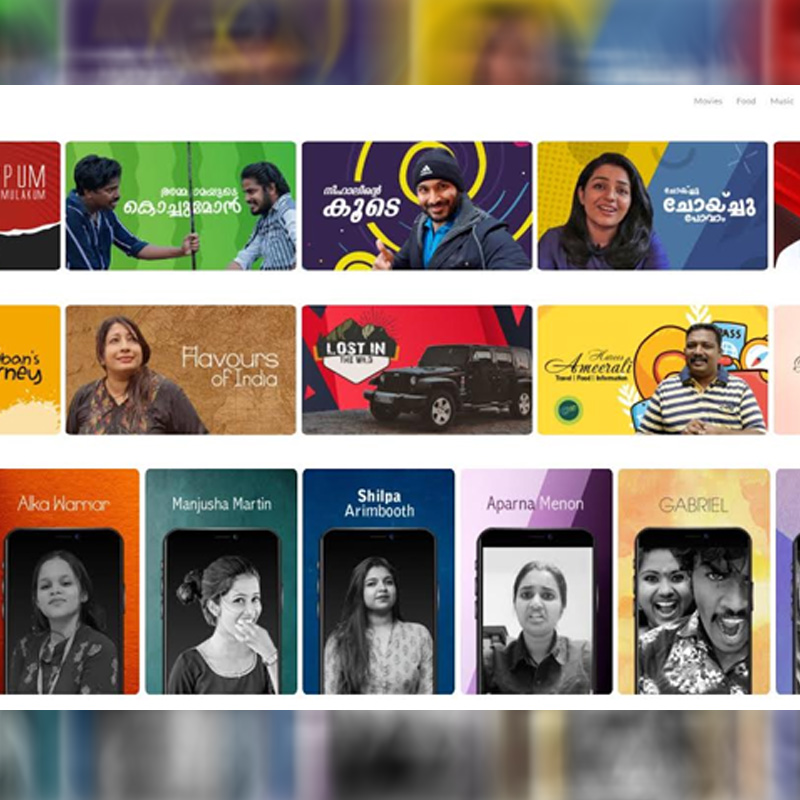
    KOLKATA: Riding on the regional wave of over-the-top (OTT) platforms, a new independent service has entered the Malayali market. Studio Mojo has launched the Malayalam OTT Koode in September, which is now available across android, IOS devices as well as on android TVs. At present, the streaming service is operating on free model to reach more users.

    For the record, Studio Mojo was amongst the first to launch an OTT platform in the country with iStream. While the service did not pick up well back then, the company decided to get back into original programming for OTT platforms with video consumption going through the roof over the past few years.

    “This time around we thought of focusing on Malayalam to begin with, since none of the large OTT platforms were seriously looking at Malayalam. Except for movies, original programming was not just happening. And we all know Malayalam creates possibly the finest content amongst all Indian languages, if our movies are anything to go by,” Studio Mojo founder and CEO Radhakrishnan Ramachandran said.

    The company is trying to build a new content ecosystem by bringing together a bunch of fresh talent who are looking for an alternate independent platform. Ramachandran said that they are putting together a content creator network in Malayalam. The platform will support these creators in creating compelling content by providing infrastructure support to them along with mentors to fine tune their creative capabilities. He noted that their first studio is soon coming up in Kochi. While most platforms are primarily focusing on movies, Ramachandran added that they would like to bet on a wider range.

    He described Studio Mojo as a tech-first media company. He went on to explain that data and analytics will give deep insights into consumers consumption patterns which will greatly help in the content strategy. Although iStream could not make a significant mark in the OTT landscape, Ramachandran recounted lessons from the past which could be applied to Koode as well.

     “Betting on the right content is critical. With most of the OTT players struggling with their business model, one needs to spend wisely on content. It needs to be a win-win situation for the content producers and the platform,” he said.

    As Koode is running on free model, it will look at branded content as an important source of revenue. The marketing team will focus on bringing brands and creators together. Moreover, it will also be launching a pay per view model very soon for some select exclusive programming.

  • Insight TV lands in India with MX Player

    Insight TV lands in India with MX Player

    KOLKATA: Millennial-focused global content creator Insight TV has struck an exclusive distribution deal with MX Player, marking its foray into the Indian market. Under the partnership, Insight TV will launch the channel on MX Player India, as well as on its international platforms in the US, UK, Canada, Australia, New Zealand, Bangladesh and Nepal. The announcement was made today by VP media sales and Insight TV Studios US, and Mansi Shrivastav, SVP & head – content acquisition at MX Player. 

    “Being available on MX Player provides Insight TV an opportunity to reach a massive audience in India and around the world,” said Boot. “With 65 per cent of India’s population below the age of 35, Insight TV is the ideal network for the country’s burgeoning gen-Z and millennial population.”

    MX Player has fast grown into becoming an entertainment super app on the back of its vast range of OTT offerings, games, audio music and video playback, all seamlessly integrated on one platform for the discerning viewer. Streaming premium content for free, this ad-supported video on demand (AVOD) platform caters to over 200 million monthly active users in India. The brand expanded its OTT services to select markers across Southeast Asia, Middle East, North America and the United Kingdom in March of this year to help serve quality digital-first entertainment to a wider global audience.

     “Audiences today are open to experimenting with OTT content, trying new genres/formats from across the globe. We strive to curate a wide range of previously inaccessible content that is available to stream for millions of users, not just in India and the Indian diaspora in international markets, but for all audiences globally," added Shrivastav. 

    Insight TV is currently available in 49 countries on a myriad of linear and digital platforms around the world. The channel specialises in influencer-led adventure sports, travel and lifestyle story-driven content for millennial and gen-Z audiences. MX Player viewers will have access to hundreds of original programs on Insight TV such as the new esports competition series Making the Squad: FIFA 21 Edition.

    Starting 23 December, Insight TV can be found on MX Player under the live tab for mobile viewing. On the web browser, viewers can find Insight TV under both the entertainment channels and live TV categories.

  • Telugu OTT platform Aha announces content slate for 2021

    Telugu OTT platform Aha announces content slate for 2021

    KOLKATA: After a grand Diwali event with Allu Arjun in November, Telugu OTT platform Aha continues with its orange wave of entertainment by bringing forth its 2021 programming line-up featuring 52 originals.

    Helmed by the finest filmmakers from the Telugu industry, the content slate will range from blockbuster movies, original web shows, talk shows, and docudramas across multiple genres, targeting global Telugu-speaking from various demographics. Through this, Aha, currently with 7 million app downloads, will serve its strong user base of over 20 million with one of the most innovative and diverse Telugu content libraries in the country.

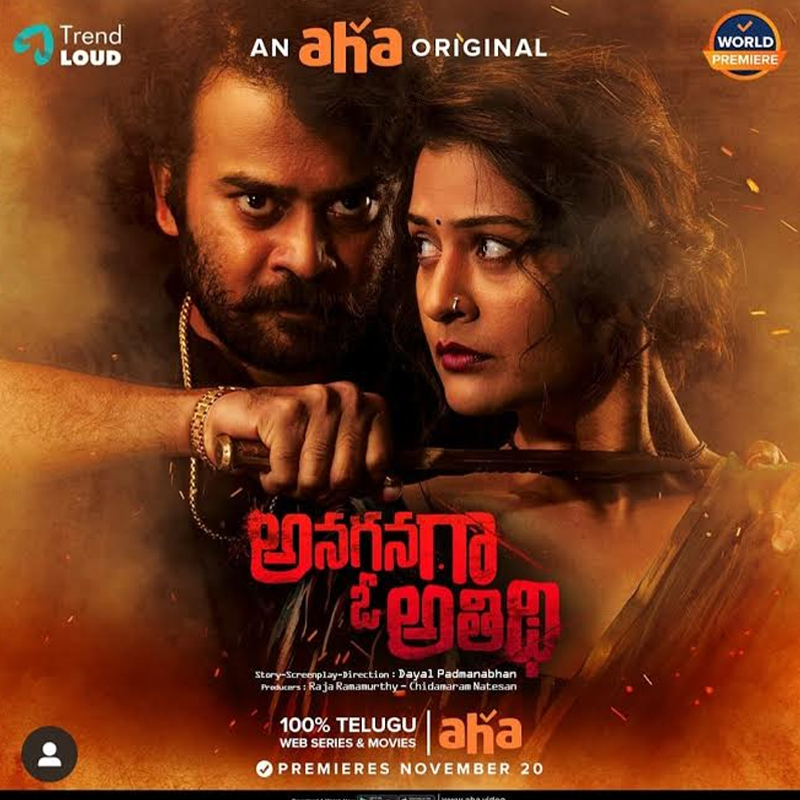
    Previosuly, Aha brought in superstar Allu Arjun on board as its brand ambassador, along with esteemed directors Sukumar, Harish Shankar, Surender Reddy, Vamshi Paidipally, Nandini Reddy, Praveen Sattaru, Dr Sailesh, Pawan Kumar,VenuUdugula, Sudheer Varma, Sagar Chandra, Ranga Yali, Vidya Sagar, Uday Gurrala, Pranav Pingle Reddy and Pallavi Gangireddy amongst others, to team up with eminent actors from the industry. Furthermore, the platform also recently launched the massive talk show Sam Jam hosted by star actor Samantha Akkineni, The Viral Fever (TVF)'s original web series Permanent Roommates’ Telugu remake CommitMental, Maa Vintha Gaadha Vinuma, Anaganaga O Athidhi as its festive offering this Diwali, which opened to a huge response from audience and critics alike.

    Coming soon are some of the most-awaited projects like 11th Hour which features actress Tamannaah Bhatia making her debut in the OTT space; well-known producer Swapna Dutt’s Kambalapalli Kathalu, Baahubali producers Arka Media’s Anya’s Tutorial, Sooper Over, Maidanam, Maze, Beyond Textbook, Kudi Yedamaithe, In the Name of God, Thodelu, Rudraveena and Qubool Hai, amongst others.

    Aha promoter Ramu Rao Jupally said, “In a short span of time, aha has grown to be recognised as a gamechanger in the Telugu entertainment industry. Today, the OTT industry is one of the fastest-growing markets which is expected to grow at a CAGR of 28.6 percent for the next four years as per the PwC report. With over 50 million Telugu content consumers across both Telugu states, we believe the market potential is huge. We are confident that the line-up featuring the biggest names in the industry will offer our audiences to enjoy through relatable and entertaining content.”

    Going from strength to strength, Aha is counted amongst the fastest-growing OTT platforms in India. On the back of offerings that can be enjoyed by one and all, Aha will ensure that its content in the coming year keeps viewers entertained.

  • How Eros Now plans to reach 50 mn subscribers by 2023

    How Eros Now plans to reach 50 mn subscribers by 2023

    MUMBAI: OTT platform Eros Now caused a hubbub in the industry last week, when it unveiled its plan to roll out 46 new titles in 2021. The revamped content slate comprises 33 film premieres and 13 original series, produced by and starring some of the most talented individuals in the Indian film fraternity. Couple of these shows have already started launching on the platform.

    In tune with the maxim 'go big or go home', Eros Now has set its sights on acquiring 50 million subscribers by 2023. The streaming service also has interesting "content and experiences" in store for its Indian audience in the upcoming year.

    Original content slate

    The original films part of the 2021 content slate are Nawazuddin Siddiqui-starrer Roam Rome Main, The Last Rave, and Switch, among others. Original series include Pyaar, Salt City, Metro Park 2,754, The Swap, Flipkart and 7 Kadam among others. The titles will feature artists like Siddiqui, Vikrant Massey, Rajkummar Rao, Akshaye Khanna, Ranvir Shorey, Amit Sadh, Dulquer Salmaan, Mahesh Manjrekar, Rituparna Sengupta, Mammootty, Sonali Kulkarni, Rohini Hattangadi, and others.

    Eros Now is targeting to become both a national and a regional brand at the same time. The company is planning to release minimum one and sometimes two originals per month over a 12 month term. With this move, Eros intends to drive higher impact and higher reach for its original and have deeper quality narrative and better performances from the talent. Eros Now chief executive officer Ali Hussein quipped that they believe in spending more time in the writer's room, script, post-production, casting and quality of content.

    Marketing and promotions

    Each film and original will have a unique promotional plan. Most of the shows will be available dubbed in different regional languages. Hussein disclosed that initially most of the dubbing was done manually but now the team is working on backend technology where he is piloting something with dynamic subtitle. The platform will debut this process by the end of the month, where technology will automatically pick up the script supposedly in Hindi and convert it into English and then convert it into local languages in subtitles. In 2021, the company is looking at a technology that will convert the subtitles to computer generated voice – an automated dubbing. Version one of this technology will be launched before the end of 2020. A partnership with NBC is also being worked out.

    Focus on actors rather than A-listers

    One of the things that Eros Now is enforcing as a culture is moving away from A-list celebrity driven content to more narrative or story driven content. There is a clear change seen in consumer preferences on OTT platforms with more regional content being sampled, said Hussein. “There will be a larger investment in terms of content and then we will build the business over a period, it is about a four-six quarters phenomenon.”

    Key takeaways from Covid2019

    The Covid2019-induced lockdown was the first major moment when the country saw an increase in video-on-demand content with home viewership increasing almost three times. Eros Now, too, witnessed 3X growth in large scale viewing. Hussein reveals that the company is more conducive to in-home viewing. He added, “One of the most encouraging factors was looking at in-home viewing because that kind of implies two real factors, first being less churn on m-o-m basis metric, and second is additional amount of time spent.” A large part of the new subscribers are coming from tier-3 and 4 cities in India and they’re interested in watching original content in their native tongue, which has led the platform to announce the addition of 46 new titles in eight languages for 2021.

    Subscriber base and growth rate

    In the half-year ended 30 September 2020, Eros Now increased its paid subscriber base by 6.9 million, to a total of 36.2 million. The company is banking on this new content slate to further deepen user engagement and reinforce the platform’s growth. The company targets to be at 50 million subscribers in the next 18-24 months or by March 2023.  “We are also looking not just at overall subscriber matrix looking at various slices and dices in avenues like what’s the growth coming from the devices side in tier 3 and tier 4, what is our growth in large screen viewership, we are high lightly focused on two major announcements coming on in the international market in upcoming weeks of what are we doing in developed markets like US and UK and developing markets like Africa and South East Asia,” detailed Hussein.

    Pre-production and direct OTT release

    The Eros Now CEO shared that his partnership with Epic revealed that a lot of production work including graphics is happening real time on a game engine. So, leveraging technology for post-production is Hussein’s key focus.

    The OTT platform, along with its parent's theatrical arm, has invested $1 billion in content creation over the last five years and will continue investing, he asserted. Apart from digital expansion, from the studio perspective Eros will be aggressively looking at content slate in the first quarter. Comparing his shows with other streaming giants in the market, Hussein said that the company is not just looking at thriller dramas but also at romance comedy and regional content, where it sees a significant amount of growth coming from.

    With the surge in Covid cases in the US and Europe, there is a lot of news in the international market as well about direct OTT release. In the meantime, he is trying to get a sense of how international movies like Tenet and Wonder Woman are performing and what is the overall consumer sentiment before releasing movies directly on the OTT platform.

    Technological advancements and bundle deals

    Hussein revealed that Eros is in talks with NBC regarding a partnership; it’s also working closely with Microsoft to launch new backend technology. “The platform has got delayed hence we pushed back the launch of the English language service, which will now happen in Q1 of 2021. So, once the service gets launched very similar to consumer psychographic, there will be different segments, you can either choose to watch a particular genre or you can opt for a bundle. Obviously, they all will be housed under larger Eros Now filters but larger vision is to have micro-bundles. It will be based on both language and genre.”

    Changing regulatory landscape

    When asked about online content being brought under the MIB’s ambit, Hussein said the OTT platforms were governed by the IT Act earlier as well and hoped for the effective implementation of the newly introduced changes in 2021. From a business side, Eros is not jumping into any assumption about what can happen and what will happen. When the IAMAI along with other digital organisations came up with a self-regulatory code last year, he considered it a progressive step to give responsibility back to the content creators and streaming platforms. He pointed out that the I&B ministry has a good understanding that their audience is not the same as on television.

    Importance of partnership and collaboration

    Eros Now has partnered with Apple+ and has scaled it to four markets including the US, the UK, Canada and India. The platform will soon be introduced on Apple+. It has also partnered with YouTube Music, for a special first-time user plan of Rs 99 for three months. This was a situation where two services were bundled together strategically. Hussein opined, “In the times to come, on the distribution side, whether it is two brands competing or collaborating to create a customer value proposition is one aspect; another aspect of partnership is going to work with mobile, telcos, distribution partners around the world, and how we scale the consumers.
  • MX Player bags laurels at Asian Academy Creative Awards 2020

    MX Player bags laurels at Asian Academy Creative Awards 2020

    New Delhi: After its impressive wins in the national level at the 2020 Asian Academy Creative Awards, MX Player has now gone on to win 2 record-setting honors at the Grand Finals of the awards, being the only homegrown Indian OTT platform to win at an Asia level. Competing with some of the biggest shows pan Asia, the brand stood out in two categories – the Best Original Programme by a Streamer/OTT was bagged by its Ramya Krishnan starrer Queen and the Best Music/Dance Programme was won by its larger-than-life music reality chat show – Times of Music.

    MX Player chief content officer Gautam Talwar said, “Both these web series have been extremely special projects for us, and they’ve been an industry first – be it Queen that was mounted at a never seen before scale for a regional series or Times of Music that was genuinely a first of its kind concept. One of the top priorities for us was to offer differentiated content that would resonate with audiences and we're very pleased to receive such an honour for our efforts, not only on an India level but Pan-Asia as well.”

    “Elated that Queen has won the best original programme by a streamer/OTT at Singapore’s Asian Academy Creative Awards, and more so because we won on the very same day that we started filming for season 1 of the series! It’s great to be recognised alongside some of the biggest shows across all Asian countries. A big shout-out to the entire team and I am looking forward to filming season 2 soon”, added Ramya Krishnan as she speaks about the win for Queen.

    Times Music host Vishal Dadlani said, “The concept of Times of Music is fresh, unique, and something the audiences haven’t seen before. MX Player has done a great job of constructing the show and detailing out each aspect – be it artiste pairing, the fantastic stage or finding hidden stories that have been lost over time, which made for such great conversations. This has been one of the biggest musical stages in the digital space and this award is a win well deserved for the entire team.”

    The Asian Academy Creative Awards are Asia-Pac’s most prestigious awards for creative excellence, honoring the excellence in craft and technical discipline across multiple platforms including television, digital, mobile, streaming and any other emerging technologies.