Tag: OTT

  • Throwback2020: Not in moolah but digital marketing grew in virtue

    Throwback2020: Not in moolah but digital marketing grew in virtue

    NEW DELHI: It has been quite a few years that the digital marketing industry is enjoying a fabulous run rate in India. It is a no-brainer that growing internet penetration, cheap data rates, and just the sheer availability of digital entertainment and logistical options have contributed to its stellar rise. While the traditional modes of advertising have been struggling to keep the  cash registers ringing, partly because of the continuing dip in the economy and partly due to the Covid2019 lockdown’s impact on businesses across the spectrum, digital marketing enjoyed quite a positive stay in an otherwise positively uncomfortable 2020. 

    The year was a mixed bag of challenges and opportunities for the digital marketing industry, though the latter were overpowering. Despite a slump in growth numbers, the industry seems to be staring at a rather bright future. Tech advancements, positive sentiments within the industry, and the sheer scope of growth ahead makes the ride an interesting prospect for the future too. 
    The spike in digital adoption

    For nearly two-months, starting March, the whole country was forced to stay indoors following strict lockdown rules, courtesy the global viral pandemic Covid2019. It forced people to work online, connect online, shop online, teach online, consult online and do what have you online. This led to a crazy uptake in digital adoption. 

    Logicserve Digital founder & CEO Prasad Shejale said: “The pandemic has definitely caused a huge shift in the industry. While the country’s economy and GDP took a massive hit, the digital industry has been rapidly growing with regards to its consumption, penetration as well as engagement. The global e-commerce sales growth and number of digital adopters accelerated in the initial three months; in the normal course that would have taken three years.”

    According to a Kantar report released in May this year, India’s monthly active internet user base is estimated to reach 639 million by the end of 2020, from the currently estimated 574 million. The country had clocked 734.82 million wired and wireless broadband subscribers up to 31 October 2020 according to Telecom Regulatory Authority of Indian monthly telecom data reports.

    Mobile became the preferred choice of internet consumption and the average time spent on smartphones in a day grew with average usage growing 11 per cent to 5.5 hours in March 2020 (pre-Covid) from about 4.9 hours on average in 2019. This further grew by another 25 per cent to 6.9 hours April onwards (post-COVID), a report by Vivo and CMR highlighted. 

    India also saw the biggest jump in video consumption, of 40 per cent to over 2.9 billion hours during the week starting 22 March as compared to the last week of December 2019, when it was 2.1 billion hours, as stated by an Internet & Mobile Association of India (IAMAI) and Nielsen report. 

    Naturally, this sharp spike in digital consumption had a positive impact on digital marketing and advertising too. 

    Digital marketing growth story 2020

    At the beginning of the year, a DAN report had predicted that the digital advertising industry would grow 27 per cent in 2020. However, that might not turn out to be the case entirely. 

    The sector, much like every other business, took a hit in Q1 FY21, because of the market uncertainties and lockdown. Ad rates went down as much as by 15-20 per cent according to an industry insider. 

    A panel discussing the widening scope of digital marketing with Indiantelevision.com founder, CEO, and editor-in-chief Anil Wanvari in June stressed that the growth digital marketing has clocked in the year will not be immediately visible in the CAGR, but will be a defining factor in how the advertising pies of individual marketers changed. It insisted that after six months of struggle in 2020, the industry will have a very prosperous six years ahead. 

    iProspect India AVP-strategic solutions Nihal Nambiar had said: “Digital, in 2020, will definitely not have a similar CAGR of 27 to 30 per cent as it has been recording for the past few years.” But he mentioned that he is looking forward to some positive quarters ahead in terms of brands moving to digital platforms.

    Shejale pointed out: “Various reports suggest that in spite of the slowing economy, the digital segment has seen a growth of around 20-27 per cent by November 2020. The numbers might vary in different research articles. However, this is the broad range within which the growth is seen, and it’s very promising.” 

    However, GenY Medium co-founder & CEO Yashwant Kumar is more hopeful and is expecting that the industry will grow by 35-40 per cent in 2020-21. 

    He noted: “Digital advertising has gained tremendously during the pandemic and has become the preferred medium with a huge surge in e-commerce across categories together with consumers spending a lot more time with their families at home on their connected TVs and mobiles. Digital has been consistently growing at 27 per cent CAGR over the past few years ahead of television, print and outdoor. We are seeing a significant movement towards digital in Q2 and Q3 this year after a slow Q1. My expectation is that digital advertising will grow by 35 to 40 per cent for the year 2020-21.” 

    While the industry has contrasting views towards the growth numbers, KPMG’s ‘A Year Off Script’ report released in September indicated that online advertising is expected to result in a 12 per cent growth overtaking traditional media like television which will contract by 17 per cent this year. 

    The report added, “At ₹22,300 crore, total digital advertising revenue will beat the ₹21,700 crore revenue of TV over FY21.”  

    Trends that defined the industry in 2020

    The biggest trend that strengthened the roots of the digital marketing industry in 2020 was the sheer influx of rural users in the internet world. As per a report by the Internet and Mobile Association of India (IAMAI) and Nielsen, rural India had 227 million active internet users, 10 per cent more than urban India’s about 205 million, as of November 2019. A Kantar report further suggested that this number will increase to 304 million by 2020. “Local language content and video drive the internet boom in rural India, with a 2.5 times increase in penetration among the population in the last four years,” it added. 

    This, added with digital retailers going deep into the heartland India, led to a great jump in the need for “hyperlocal” content by brands. This kept the digital agencies busy through the year. 

    Additionally, giants like Facebook, Swiggy, and Instagram entering the local market with thier own shopping platforms, growth of edtech companies like WhiteHat Jr, Vedantu, and Instagram releasing a new content section called Reels, were some new found opportunities for the digital industry to explore. 

    Wavemaker India chief client officer and head-west Shekhar Banerjee had mentioned in an earlier conversation with Indiantelevision.com that brands went heavy on performance marketing in 2020. “Apart from the usual search, social, and e-commerce mix, one platform that has become the biggest gainer during the period is the e-groceries section, taking a huge part of the digital pie. Going ahead, hyperlocal platforms, with their changing business models will be more conducive to advertising.”

    Another interesting opportunity for the digital marketing industry came in the form of online events. Almost 95 per cent of the physical events moved to online platforms giving digital agencies great opportunities to work with brands. It included marquee events like IPL, which was hosted without a live audience and saw viewers engaging with it either through TV or digital platforms. 

    OTT platforms also saw a remarkable rise in viewership during 2020. Kumar highlighted, “According to one industry report (Velocity MR Study), Amazon and Netflix saw +60 per cent growth in their subscriber base in the AMJ '20 quarter. Similar numbers have been reported for other platforms like Hotstar, YouTube and others. This massive shift towards the OTT platforms becoming the go to destination for entertainment, sports and news is driven by increased consumption of video content by consumers across all the age groups and demographic segments. Daytime video usage by the working professionals has become the new norm as they have started watching TV or streamed video content during their work breaks or while actively working.” 

    Additionally, what moved the industry significantly was FMCG brands getting more serious about digital platforms. As per industry experts, FMCG brands increased their expenditure on digital platforms to 12 per cent, compared to around 7 per cent in 2019. 

    This also paved the way for a significant hike in influencer marketing activities. 

    Mompresso co-founder & COO Prashant Sinha said, “Digital marketing has seen transitional growth in the year 2020. The majority of advertising and marketing spends by brands this year has been towards digital channels and with no doubt, this will continue to grow further in 2021. We can also expect to see big portions of these budgets to go towards influencer marketing and macro and micro-influencer led campaigns. The overall digital marketing industry has seen a boost this year, where creators, brands, and marketers have learned to work together. Brands have revaluated the metrics and shifted focus to prioritize channels where they receive the most engagement. While video content has dominated the space, more diversification is expected. Live streaming and user-generated content will continue to be popular among influencers and marketers.” 

    The growth in the e-gaming industry resulted in increased ad spends by players and also the development of a whole new media option for the brands. While most of the marketers still sat on the fence about exploiting the medium, it is expected that it will flourish in the coming quarters. 

    The year was a mixed bag of challenges and opportunities for the digital marketing industry, though the latter were overpowering. Despite a slump in growth numbers, the industry seems to be staring at a rather bright future. Tech advancements, positive sentiments within the industry, and the sheer scope of growth ahead makes the ride an interesting prospect for the future too. 
  • 2020: The tipping point for the Indian OTT ecosystem

    2020: The tipping point for the Indian OTT ecosystem

    KOLKATA: The Covid2019 pandemic has walloped many industry verticals this year but digital-first categories including over-the-top (OTT) or streaming video services have actually been given a leg up. A host of new users, paid subscribers have tuned in to consume online platforms, due to stay-at-home directives, limited social activities, enforced theatre shutdowns, fewer entertainment options. With multifold growth across metrics, the sector has witnessed growth that would have normally taken four to five years.

    The Indian OTT industry has been steadily growing in the past couple of years, especially since Jio democratised internet for the country’s masses. As the country entered into lockdown, fresh content on TV dried up and OTT platforms emerged as the most sought after medium for entertainment. India’s data consumption went through the roof with demand on OTT and VoD platforms rising by a whopping 947 per cent within July compared to the pre-pandemic period, according to data from internet exchange DE-CIX.

    As the curtains to 2020 are being pulled down, we look at not only statistics but at the emerging trends as well.

    Indian consumers are willing to pay more than ever for OTTs:

    Along with the growth in consumption and users, the number of paid subscribers has also gone up during the year. Back in 2017-18, there was a myth in the market that Indian subscribers would not pay for premium content. While 2019 was already indicating otherwise, 2020 has strongly broken all notions. According to a Boston Consulting group report, pandemic has increased growth of over-the-top (OTT) subscriptions by 60 per cent. It is not only a fad but more than half of these new users are likely to continue using the service. A PwC report has also forecast that subscription based video-on-demand (SVoD) will be the prime driver of revenue, growing at a 30.7 per cent CAGR.

     Although global streaming giant Netflix has not released any country-focused data as yet, it is likely to end the year with 4.6 million paid subscribers in India, as per estimates from researcher Media Partners Asia (MPA). Previously held estimates for 2019 were two million subscribers. Media giant The Walt Disney Co. (Disney)’s digital arm Disney+ entered in India combined with the existing Hotstar service as Disney+Hotstar. Now, Indian streamer accounts for 30 per cent of Disney’s overall subscriber base that is 26 million subscribers. Among indigenous players, ZEE5 also contributed significantly to its parent company’s overall revenue, thanks to its subscription revenue growth. Other platforms like ALTBalaji saw daily additions of 17,000 subscribers at the beginning of lockdown. Newly launched subscription services like Voot Select, Discovery Plus also claimed that the platforms exceeded expectations around customer acquisition.

    Launches, relaunches, the rush continues, even as some exit

    India is seen as the new streaming Mecca and the OTTs are rushing in like lemmings.  Both international and local players launched their services this year. Apple+ which launched towards late 2019, pushed forward with its customer acquisition plans through the year. And one of the most awaited services, Disney+ entered the country through its Indian cousin Hotstar, part of the Star India network, which it acquired the previous year from Twenty First Century Fox. The service was branded Disney+Hotstar and it was introduced just as India was entering the Covid2019 lockdown. Discovery began its video streaming journey with the launch of Discovery+. Hollywood Studio Lionsgate strengthened its direct-to-consumer presence with Lionsgate Play, while it was playing earlier in a distribution partnership model. SonyLiv went in for a relaunch, serving out a very different looking new version Voot from Viacom18 introduced its Voot Select offering.  ErosNow – a part of Eros Media – went for a refresh announcing the launch of new extensions and services  after its merger with US entertainment mid-sized player STX Entertainment.  

     A host of new hyperlocal platforms have also been launched like Aha as they strive to capture a piece of the regional language preferring audiences. Telugu diaspora targeted YuppTV took another shot at domestic audiences by launching an educational service as well as launching new shows.

    Like in satellite television, pan Asian or global  streaming services backed with relatively less capital and by local entrepreneurs, went belly up or restricted their focus on specific countries. Five year old Hooq – a streaming service which promised a lot – shut shop by May 2020, including its Indian operations. The just as the year 2019 was ended, another streamer Viu promoted by HongKong based PCCW, wound up in India.  The biggest disaster was the downward spiral of the Jeffrey Katzenberg-Meg Ryan run short from professional produced video streamer Quibi after guzzling down nearly a billion dollars in investment worldwide. In the US, AVod service Tubi, which had its eye on India, was acquired the Murdoch-run Fox Corp for $440 million. Expect some India play from this player going forward.

    OTT platforms increases direct-to-digital releases:

    The streaming services started premiering movies directly on the platforms earlier but this year saw movies with big names also debuting on those platforms as theatres were closed for six months across the country. Deep-pocketed  players including Amazon Prime Video, Disney+Hotstar went aggressive to acquire big-budget movies. A PwC report has stated that global SVoD revenue will overtake box office spend in 2020.

    At the initial phase of the lockdown, Disney+Hotstar launched  its ‘Multiplex’ feature and went on an acquisition binge acquiring titles such as Laxmmi Bomb, Dil Bechara, Lootcase, Sadak 2. Amazon Prime Video, the Jeff Bezos owned platform, also released Gulabo Sitabo , Shakuntala Devi and several others. Netflix jumped on the bandwagon with the likes of Ludo, and  Gunjan Saxena. Platforms like SonyLIV, Zee5 also turned to old, unreleased films. This trend is not only limited to India but is reflected globally. For instance, WarnerMedia has announced to release its entire 2021 movie slate on HBO Max and simultaneously in theatres. At the same time, ShemarooMe also launched Box Office to release small budget Bollywood movies. 

    Higher investment in original content:

    As the user base, consumption rate grows; appetite for quality premium content amongst India’s massive populace has also ballooned. For consumer stickiness, broadcaster led OTT platforms are heavily investing in original content. One of the early movers in the OTT segment SonyLIV has reinvented itself this year with a higher focus on churning out original content like its runaway hit Scam 1992. The idea was to increase its subscriber base significantly. Viacom18’s Voot also launched a subscription service called Voot Select with a promise of releasing more than 30 originals. Other international OTT players like Amazon Prime Video, Netflix, Disney+Hotstar are also upping their content significantly. London-based technology research and consulting firm Omdia has projected that the three OTT players are expected to collectively spend approximately Rs 2824.9 crore ($383 million) on original content in India in 2021.The OTT players are collectively expected to spend Rs 4,905 crore ($665 million) in 2021. However, Covid2019 restrictions have postponed around 30 per cent of the projects programmed to start in 2020.

    Enriching content library with diverse content, new features:

    Many of the OTT players are aiming to build themselves as super apps. ZEE5 has forayed into short-video category HiPi, gaming. Times Internet’s MX Player has also built a short video platform Mx TakaTak which has been considered as one of the most successful user generated apps post the  TikTok ban. To provide more value to users, ZEE5 partnered with an edu-tech platform at the beginning of the year. During the lockdown, Disney+Hotstar, Voot expanded their health and wellness portfolio on the back of new partnerships. Another niche area,  the kids segment , has also emerged as a big area of attention. While Voot already launched Voot Kids in 2019, ZEE5 added a dedicated section for kids this year with content focused on a blend of fun and learning. Amazon Prime Video which has already established a stronghold with its rich original content, has forayed into live sports acquiring rights for broadcasting New Zealand cricket matches in India. 

    Rising regional market:

    A recent BCG-CII report has shown that 35-40 per cent of the consumption on OTT services happens in local languages. And the hours of original programming in local languages have tripled in the past two years standing at 1,400-1,800. Throughout the year, a number of hyperlocal platforms have sprung up. Many among them, like the Telugu language Aha have committed huge investments to release more than 50 originals in a year. Bengali OTT platform Hoichoi has also announced a huge line up of content on its third anniversary. SunNXT is also looking at investing Rs 200 core for original content in FY 22. National players like ZEE5, Voot, and MX Player have strengthened their local offerings producing many hits across languages. Even international players have also gone deeper into regional markets as digital infrastructure across tier-II and III cities and  rural areas has increased, gradually leading to more traffic.

    Business models expand

    The year 2020 also saw attempts being made at unearthing a new business model transactional video on demand, with ZEE5, Shemaroo and bookmyshow announcing initiatives in this direction. The latter two at least have been planning their services seriously in building such a model. They are taking heart from the tremendous success that Universal’s Trolls World Tour had from digital rentals logging in almost $100 million in collections.

    Of course, the most prevalent model in the OTT ecosystem is the AVoD one or one that depends on advertising and offers free content to subscribers. Amongst the biggest players in this space is MX Player which claims around 200 million subscribers. Of course all the Indian majors – Disney + Hotstar, ZEE5, SonyLiv, Voot – have skin in this game, but their premium shows, sports events, and films are behind pay walls. The free content is used to upsell subscribers to premium services. Advertising is expected to contribute 43 per cent of all OTT revenues.

    Almost every player experimented with pricing during the year. Netflix was the prime example with the introduction of the mobile only plan of Rs 199 per sub in 2019, followed by a mobile+ package of Rs 349 in 2020 which offered streaming to handsets, tablets or laptops. Others too launched varying pricing points to cater to different audiences.  

    Connected TV viewership growth:

    The lockdown has not only increased consumption but has brought significant change in how online content is consumed. While India has been always described as mobile centric market, the growth in high-speed broadband connectivity, and affordable smart TVs has brought more users to connected devices. Moreover, the spike in family viewing has boosted connected TV viewership. A few leading players like ZEE5, Amazon Prime Video, Disney+Hotstar has seen it as a potential trend which can emerge soon. In addition to that, the steady rise in home broadband and increasing OTT partnerships with internet service providers will boost the viewership.

    Challenges ahead:

    2020 has definitely been the tipping point for Indian OTT market, albeit few challenges. The regulatory intervention into online content has ignited the fear of censorship with a negative sentiment looming over the players, and the creative fraternity. A number of petitions are pending before several Indian courts challenging a number of shows. While users flock to OTT platforms for more progressive content, it would be a challenge for the latter to balance between creative freedom and the regulatory noose.

  • Myleeta Aga quits Netflix

    Myleeta Aga quits Netflix

    KOLKATA: Following an internal realignment of the southeast Asia and Australia content teams, Myleeta Aga has moved on from Netflix. Aga joined the streaming service in 2019 after a decade-long stint at BBC Studios.

    She was mandated to head content operations for southeast Asia and Australia. “It’s been an amazing year! I am proud of the work that our team has done, putting Southeast Asia and Australia on the map for Netflix, and showcasing the phenomenal potential of the creative community across these countries to audiences at home and around the world. I believe in the power of great stories, and I am confident in the success that lies ahead,” she said as quoted by Variety.

    According to the report, Seoul-based Kim Minyoung will oversee content planning in the region. Aga’s departure is a result of Netflix’s country-specific focus in the region, rather than having a centralised control. The platform has also thanked Aga for her contributions.

  • Amazon Prime Video releases new character looks for its biggest political drama ‘Tandav’

    Amazon Prime Video releases new character looks for its biggest political drama ‘Tandav’

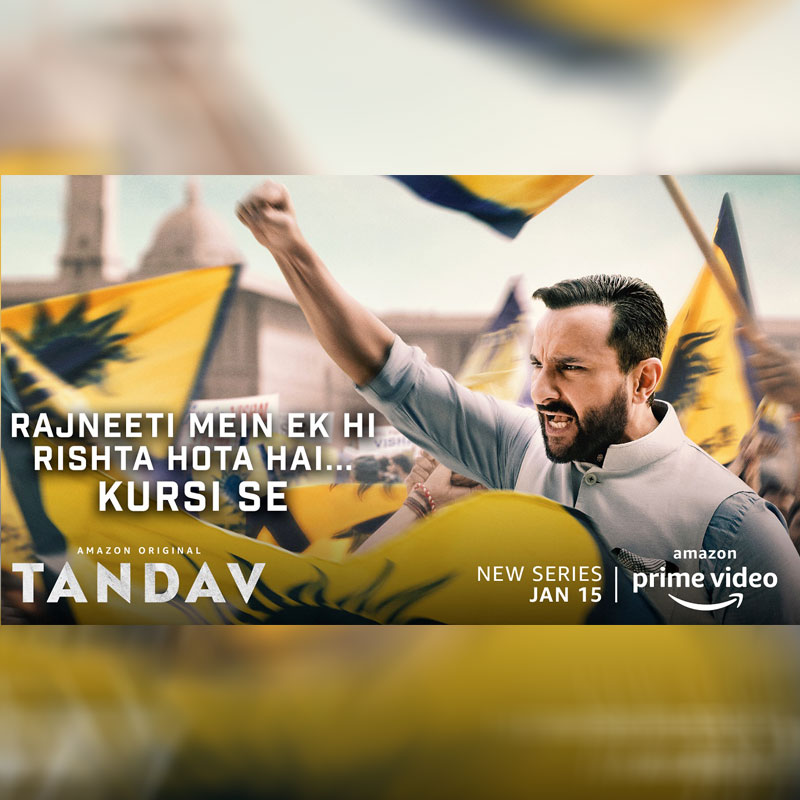
    New Delhi: After creating a storm with its first teaser, the Amazon Original series Tandav is all set to introduce us to the phenomenal cast of this riveting political drama. Amazon Prime Video today unveiled some exceptional character looks of the ensemble including Saif Ali Khan as Samar Pratap Singh, Dimple Kapadia as Anuradha Kishore, Sunil Grover as Gurpal Chauhan, Mohd. Zeeshan Ayyub as Shiva Shekhar and Kritika Kamra as Sana Mir.

    Never seen before in such a staggering avatar, the posters truly uncover the powerful roles that every character entails in the upcoming gripping story. The nine-episode series marks the creator and director Ali Abbas Zafar’s exciting debut in the digital streaming world and will rest assured leave the audience astounded.


    Set in the capital city of the world’s largest democracy, Tandav will take viewers inside the closed, chaotic corridors of power and uncover the manipulations, charades as well as the dark secrets of people who will go to any lengths in pursuit of power. The series will be available for Prime members in India and in more than 200 countries and territories from 15 January onwards.

  • 2020 and the debate of TV vs digital video

    2020 and the debate of TV vs digital video

    MUMBAI: It’s been two decades since I have been listening, participating and speaking about the great inflection point in digital in India. Every five years with some growth in consumer usage of the internet, adoption of platforms and growing online shopping, the claim used to only add fuel. Further to tons of VC money going into start-ups, every third person used to say “Digital Inflection Point” has truly arrived in India.

    So, I am kind of tired of this whole story, but wait… 2020 has been that year when the digital inflection point truly arrived. I say it with total conviction, data points and authority as a media agency head, based on what I am seeing on the ground and how clients have responded to the turning landscape and massive consumer behavior changes happening around us.

    VCs invest in ideas for the future and 90 per cent of them fail but the ones that stick, address the growing need when the inflection point arrives, solving a problem and making the business viable because the business has a purpose. Purpose of disseminating information or spreading joy through entertainment or enabling healthcare in remote places or bringing education to people’s homes or even making financial transactions simpler.

    This would not be possible without the technology that could back the high-speed internet required for addressing any of the purposes I have mentioned above. India as a country still has affordability issues. So,  when the high-speed internet became affordable, consumer intent naturally swayed towards cheaper options, making viewability of content agnostic in nature.

    That is the only true reason why I believe that the inflection point has arrived and it’s here to not just stay but grow exponentially. Now how does that translate to comparing digital video to TV?

    TV is known as the idiot box and it will continue to be one. Mobile will be known as an idiot brick, but these idiotic products are the only mediums that enable communication with the latter being a two-way mechanism of communication at the highest levels.

    Indians have consumed AV since the early fifties  through movies, which was later followed by terrestrial TV, then the VCR wave settled in with cable TV from early nineties. Indians are emotional and therefore anything that brings in emotional highs has always worked, which is why entertainment as an industry is so large in India. Naturally, the progression would be towards affordable consumption, and high-speed internet did just that. It enabled consumption of the ever-growing content from emotional to comedy to dramatic to romantic to edgy to sexual to the next level. Add to that social media, where you could be a star with millions of followers generating income for the content you create, made the medium even more adoptable for creators and stickier for the consumers.

    We haven’t even spoken about cricket here!

    Add to that the pandemic in 2020, every aspect of consumption soared, and India’s favorite pastime now made its entry into the idiot bricks or what we call mobile phones. Everything changed and I am going to quickly explain how the growth of mobile internet actually grew the market and did not take away the share from TV.

    I recently met an MD of a very large financial institution with my team and we started talking about how OTT is taking away the share from TV in terms of reach and I begged to differ with him because the data that I am narrating shows that not only has TV grown in size and consumption, but digital video has also in fact created newer audiences, thereby breaking the myth of OTT taking over TV in the future.

    India is the second largest television market in the world with 195 Million households of which 80 per cent are paid C&S channels, which makes it a subscription market for TV at around 156 million as per Statista. As per BARC, TV viewership grew by 10 per cent  in 2020 over 2019 (consolidated – urban + rural, Jan – Nov). India is looking at a projected revenue generation of $3 billion  from TV as an industry through advertising in FY 21.

    Despite the growth in C&S, digital advertising is going to overtake TV advertising in FY 21 with a projected revenue of $3.5 billion. As per KPMG, the 20 per cent drop from projections is largely the dismal economic situation due to the Covid 19 pandemic but what that did was to enable the massive adoption of OTT and grew the whole base of paid subscribers which will cross 40 million in FY 21 fueling the growth of digital advertising northwards.

    There are standing examples of these claims with the release of movies on OTT and its subsequent adoption, IPL on Hotstar which saw unprecedented growth reaching over 300 million handheld devices and the ever-growing connected TV story, for which Samsung is gearing up to provide solutions on advertising in the near future.

    With an average of $10 in subscriptions, we are estimating  paid subscription revenue on OTT to be around $400M which clearly indicates that consumers are willing to pay to consume more and more video content. Players to watch out for in 2021 will be YouTube, Hotstar, Instagram Reels, Netflix, Amazon Prime, Zee5, SonyLiv, MX Player, Ullu, Hoichoi and SunNext.

    If TikTok makes a comeback then it will see tremendous adoption but there are players like Josh who are taking that space up quickly, so while OTT consumption will continue to grow, social video sharing apps are also now part of the same mix when it comes to content consumption if it has to be classified as digital video.

    So, my humble submission therefore is, “inflection point” has truly arrived in 2020 and was accelerated by the pandemic, which is why in FY 21, digital advertising will overtake television advertising and while TV is seeing growth in viewership, it is declining in revenues due to the drop of 20 per cent  in advertising spends again due to the pandemic that impacted our economy on the whole. TV and OTT are parts of the same coin as heads and tails are. Hence, while we see OTT adoption is growing at a rapid pace, it will necessarily not replace TV anytime soon. OTT behavior is in silos except when on connected TVs  and television viewing is typically family driven, again a big difference in consumer behavior thus making a niche for both these mediums which is why I continue to believe that OTT as disruption has increased the overall size of audience and not taken away share from TV. Therefore, both these mediums will co-exist in India for some time to come, period!

    (The author is managing partner at DDB Mudra Group and is responsible for the media business. )

  • What Santa could gift us this Christmas

    What Santa could gift us this Christmas

    MUMBAI: As children, Santa Claus was very real for us. Even if he sat under a fake Christmas tree in an Akbarally’s department store in Mumbai, with padding under his suit to give him that potbelly, and rouge on his cheeks, and a false snow white beard, which jiggled every time he said ‘Ho! Ho! Merry Christmas.’ For us, it was exciting to see other children big-eyed, nervous, eager smiles on their faces, as they waited their turn to get to Santa. Father Christmas, as he’s known in English folklore, embodies the very spirit of the season: that of love and giving.

    The world overall – and our media and entertainment industry –needs a lot of loving and giving this year. Bruised and battered by the Covid2019 induced lockdowns in various states, and countries, it is celebrating Christmas with severe restrictions in place. A new mutant strain of the SARS CoV2 virus that has popped up in the UK has made governments in almost every nation jittery. Curfews, various levels of lockdowns, and border closures have been re-imposed, once again choking the breath out of any economic revival that could have happened.  

    Fear is very much prevalent all around.  The season to be jolly appears to be pretty un-jolly. Christmas is going to be cold – really cold, without the warm emotions the season brings.

    The good news is that various vaccines are going to be available on a massive scale. But we don’t know clearly how long they will be effective; and how much time it will be before every one of us gets a jab.

    The good news is that jolly old Santa is still around. And if he is listening – which we are sure he is – we’d like him to shower the world with oodles of good gifts and tidings this Christmas 2020. Here’s a wish list from us at Indiantelevision.com for the world and the media and entertainment industry:

    ·    Miraculously, as if by sleight of hand or an act of God, the SARS CoV2 virus loses its potency, and does no harm to any human being. Yes, we cannot bring back the ones we have lost. But we can definitely do with knowing that we will lose no more and that we are free to go where we want to without terror coursing through our veins.

    ·    Now if that is not possible, ensure that the vaccines miraculously provide a permanent defence against the dratted bug and that with one fell stroke, every human being on this planet gets an injection. For that, the pharma companies and governments will have to be sensible, honest and get their acts together super quick.

    ·    The world we live in is a beautiful place. The lockdowns enabled us to see it for its beauty without the horrors and synthetic creations of mankind damaging it. Governments the world over and earth’s denizens need to remember this for eternity. Natural rather than artificial needs to be the mantra, if we want our future generations to enjoy it.

    ·    The economic engine needs to start chugging and gain momentum. Money, the magical fuel, needs to flow smoothly to enable this to take place.

    ·     Consumer sentiment needs to turn around from being cautious and hoarding to one which is open to spending and living life to its fullest.

    ·     For the media and entertainment industries, this means that brands will be willing to spend to get king and queen consumer to buy them.

    ·    Result: the print, television, OTT, cinema industries will serve as a good medium to induce consumers to make purchases through persuasive communications in the form of advertising and TVCs.

    ·    Net outcome: the red ink on the balance sheets of many a company will steadily turn to black.

    ·   The content that is pumped out on TV, cinemas, and OTT platforms is innovative and attracts sticky eyeballs, stickier than ever before.

    ·   Let new talent in every sphere of entertainment get a chance to flower, to showcase his or her skills.

    ·   Let inclusiveness be real, and be put into practice in day to day work: alternate sexualities, genders, differently-abled and folks from every caste and creed truly be given equal opportunity.

    This is our bucket list of what we would like Rudolf the red-nosed reindeer and his boss to bring us this year. It’s by no means comprehensive; it may not even be apt, but it is the message we are sending out to the universe; hopefully it will reciprocate in full measure.

    We would love you to share your wish list for Santa too. Do it. It can be fun. Please post in the comments below.

  • BBC Studios looks to partner with local platforms to bolster India presence

    BBC Studios looks to partner with local platforms to bolster India presence

    MUMBAI: India has become a fiercely contested territory for major streaming players as they look to drive sub-growth outside the maturing North American and western European markets.  

    BBC Studios, from the stable of the British public service broadcaster, recently unveiled a new content catalogue deal with new kid on the OTT block, Lionsgate Play. Under the agreement, five of BBC Studios' scripted dramas have been selected for the streaming service, with the shows subtitled into multiple regional Indian languages. The new deal, while bolstering the premium Lionsgate Play content portfolio, is tweaked to suit the tastes of the vastly diverse Indian audiences.

    BBC Studios South Asia distribution VP Stanley Fernandes revealed that the partnership with Lionsgate Play was nurtured when the pandemic was at its peak.

    “This augurs well for the state of the OTT industry. It’s good to see that there is demand and a growing audience for quality English-language entertainment. BBC Studios as a brand attracts its own set of audiences and we are happy to see that our programmes will now settle into Lionsgate Play amongst a rostrum of popular US shows,” said Fernandes.

    At the heart of good content is storytelling, for which the BBC is well-known. The series covered under the deal are an eclectic mix of contemporary genres, including Brexit: The Uncivil War, starring Benedict Cumberbatch, which dives into the activities and strategies behind the 2016 "Vote Leave" campaign in the U.K. Also included is the eight-episode series Class, set in the universe of Doctor Who; Les Misérables, starring Dominic West and Oscar winner Olivia Colman; Pure, about a 24-year-old woman coping with obsessive-compulsive disorder; and the epic period drama SS-GB, which tells an alternative history set in 1941, where the Germans have won the Battle of Britain.

    Fernandes is confident that the line-up will attract, engage and be appreciated by the discerning Indian viewer on Lionsgate Play. Said he: “We cater to a global audience and our aim is to bring world-class entertainment, with British sensibilities, to audiences locally. Thus far we have been successful with our content partnerships, branded blocks, and with our own branded channels which are appealing to Indian audiences. Our content is particularly viewed and enjoyed by audiences who invest time and money into their interest in content. This is a segment of the audience that Lionsgate is reaching out to, and we are confident that our content profile proposition will make for a successful partnership.”

    Asked how he plans to distribute the content, he quipped that it’s not about mass appeal, rather it’s about targeted appeal. “It is a partnership – it’s a two-way process. As owners of our intellectual property, we know our content best and our partners understand their audiences. Finding that right mix of shows to not only attract audiences but sustain them is what makes a deal successful.”

    Fernandes pointed out that BBC Studios’ content spans the bandwidth of, without being limited to, drama, comedy, natural history, science, children, lifestyle, documentaries, among others. This range of genres assists the content studio in supporting its partners to curate the right mix of shows that will garner audiences to their platforms by meeting targeted viewing requirements.

    “In India, for now, our business plans are to align with local platforms and it’s in these platforms that we see our best partnerships. Having said that, this is an ever-evolving space and we are always on the lookout for opportunities to increase our brand outreach and audience share,” he explained.

    But is the studio planning to target other Asian countries like Bangladesh, which is another big market in terms of content consumption? Fernandes shared that the aim is to reach out to as many audiences as it can, across platforms and territories. He further revealed that local partnerships in other South Asian markets are in sight.

    “However, currently there is so much to focus on in India; our key business agenda is to grow existing partnerships and create new relationships across both linear and digital services with India as our priority market. Having said that, most of our licensing deals with key partners extend to territories within South Asia, covering territories such as Bangladesh, reaching out to our audiences within these bases,” he detailed.

    BBC Studios is vaunted for its premium shows; it has a huge content library and due to the pandemic, there has been a surge in content consumption. Thus, investing in the streaming platforms is an obvious step, reasoned Fernandes. He pointed to BBC iPlayer in the UK, launched in 2007, and which can be accessed by all license fee payers in the UK. Subscribers of BBC Channels in Singapore and Malaysia have been given access to BBC Player. More recently, it launched BritBox in the US and Canada, followed by Australia in the last couple of months. BritBox is its JV partnership with ITV, bringing the best of British content to one dedicated service. 

    Additionally, BBC Studios all is set to launch a new, ad-free subscription streaming channel, BBC Select, in early 2021 on Amazon Prime video channels and the Apple TV app. BBC Select will offer a rich range of programs from the UK covering three main topics – culture, politics, and ideas. 

    Apart from Lionsgate Play, the studio is in talks with content players in both the digital as well as the linear space with new and innovative deals and business models. These deals are under contractual discussions and will be unveiled when formalised. For now, Fernandes mentioned the studio’s content is well received across both of its operated channels –CBeebies, which provides fun learning through play for pre-school kids, and on its JV partnership channel Sony BBC Earth, showcasing the best of factual entertainment. BBC Studios’ content is also seen across various digital platforms such as Netflix, Amazon, Discovery Plus, Disney+HotStar, Hungama, Tata Sky, Voot, and Voot Kids.

    Shedding light on licensing and merchandising, Fernandes highlighted that content sales over the years have changed from pure fixed-fee license deals. Audiences know and understand content and brands, a key factor for BBC Studios’ businesses. For him, it’s all about adding value. In India, BBC brands and branded content are important to its audiences. The studio’s branded blocks such as BBC First on Zee Café, the cult following for shows such as Top Gear on Discovery Plus, Doctor Who on Amazon Prime Video attract core fan audiences. BBC Studio will also adapt BAFTA-nominated series One of Us in Telugu for Disney+ Hotstar.

    He concluded, “Branded partnerships have been key in shaping our businesses, bringing our audiences closer to the best of world-class, bold, British entertainment in India.”

  • Netflix’s Reed Hastings skims $225 mn in stock sale

    Netflix’s Reed Hastings skims $225 mn in stock sale

    MUMBAI: Netflix co-chief executive officer Reed Hastings has collected $225 million from a stock sale, the latest in a series of such transactions the billionaire has made this year, totalling $616 million.

    A Bloomberg Quint report states that Hastings has cashed in enough moolah in 2020 to produce all four seasons of marquee series The Crown, all six seasons of Peaky Blinders, or the equivalent of about 4.7 million annual Netflix subscriptions, based on average monthly subscription costs. The sales, the latest of which was on 21 December, were made as part of a trading plan believed to boost the streamer-producer’s content creation budget.

    Netflix stock has climbed 63 per cent this year as the streaming service has added 28.1 million new subscribers during the first nine months of 2020, accelerated by increased demand for at-home entertainment during the Covid2019 pandemic. In fact, Hastings has seen his wealth increase about $2.2 billion this year to $6.4 billion, going by Bloomberg Billionaires Index, which also pegs him as the 120th richest person in the US.

    Hastings sold 437,311 shares of Netflix stock on 21 December 2020 at an average price of $527.26 a share. The total sale was $230.6 million. Prior to this, he sold 213,346 shares on 23 November 2020 at the average price of $482.51. The price of the stock has increased by 9.29 per cent since.

    For the uninitiated, Hastings started his first tech business, Pure Software, in 1991, before going on to co-found Netflix with Pure colleague Marc Randolph in 1997.

    Another former Netflix director Anthony Wood, who is also the co-founder of Roku Inc, has made hay during the pandemic. Wood’s wealth has doubled in the last three months as sales of the firm’s streaming players increased 57 per cent in the third quarter from a year earlier.

  • Eros Now Select now on Apple TV channels in 11 new countries

    Eros Now Select now on Apple TV channels in 11 new countries

    KOLKATA: Eros Now, a leading South Asian streaming entertainment service owned by Eros STX Global Corporation, has made its content available through Eros Now Select for Apple TV channels on the Apple TV app on iPhone, iPad, Apple TV, iPod touch, Mac, and other platforms in 11 new countries.

    After its successful launch in the US, Canada and India, Eros Now Select is now available to customers in significant overseas markets, such as Australia, New Zealand, Singapore, South Africa, Cambodia, Indonesia, Israel, Malaysia, Philippines, Sri Lanka, and Tajikistan.

    The global demand for Bollywood movies and Indian originals makes Eros Now Select an ideal online destination for South Asian diaspora worldwide to access the best video streaming experience. As Indian entertainment content continues to attract a massive audience base worldwide, the expansion through Apple TV channels deepens Eros Now Select’s consumer footprint in these growing OTT markets.

    Subscribers to Eros Now Select through Apple TV channels can watch online or enjoy offline downloads of their favourite shows on the Apple TV app. Through family sharing, up to six family members can share subscriptions to Apple TV channels using their own Apple ID and password on their own devices.

    Eros Now CEO Ali Hussein said, “The rise in OTT consumption worldwide opens up immense opportunities for Eros Now Select – widely known for its extensive Bollywood and Indian originals – to expand reach and ramp up distribution in 11 new territories on the Apple TV app.”

    The Apple TV app brings together all the ways to watch shows and movies into one app and is available on iPhone, iPad, iPod touch, Apple TV, Mac, select Samsung, LG, and Sony smart TVs, Roku and Amazon Fire TV devices, and PlayStation and Xbox consoles. The Apple TV app also features Apple TV+, Apple’s video subscription service offering original shows, movies and documentaries from the world’s most creative storytellers, as well as other Apple TV channels, personalised and curated recommendations, and movies to buy or rent.

  • #Throwback2020: The rise of hyperlocal OTT platforms

    #Throwback2020: The rise of hyperlocal OTT platforms

    KOLKATA: A number of pure play language-specific over-the-top (OTT) platforms entered the streaming space across the country throughout the year, with deep-pocket big streamers also expanding into major regional languages. Notably, the new platforms have been launched not only in major regional markets but in long-tail ones too.

    Of all the new entrants, Aha has emerged as the most eye-catching. The Telugu OTT entered the market in early 2020 but with the onset of the pandemic, it had to push back some of its plans. It is owned by Arha Media and Broadcasting Pvt Ltd, a joint venture by Geetha Arts and My Home Group, one of the largest construction groups in south India. During its official launch in November, the promoters vouched that they would pump a high amount of money into the platform.

    While it is targeting 50 million Telugu speaking internet users who are already consuming online videos, the huge appetite for language content has helped it to five million downloads and 18 million unique visitors in a few months. Aha has fixed a price point of Rs 365 per year, a cheaper and more affordable price point compared to bigger players.

    A dedicated Malayalam OTT platform also entered the landscape this year. Studio Mojo, the team behind India’s first OTT platform iStream.com, launched the independent OTT platform Koode in September. Koode was born with the vision to help Malayalis across the world discover content they love. Along with creating premium content, the service aims to focus on curating content from other social media platforms too.

    However, unlike other niche platforms, Koode has not adopted a subscription-based business model. Based on the learnings from iStream.com, Studio Mojo has kept the content free for users. Going forward, it will have branded content and pay-per-view model as its revenue stream.

    South Indian languages, Bengali, Marathi have always been at the forefront of media and entertainment revolutions. Surprisingly, few OTT platforms catered to or made a mark in long-tail markets. Hoping to buck this trend is CityShor.TV, another language-specific OTT platform that debuted in the Gujarati market.

    Although the quantity of content offered by CityShor.TV is not at par with services like Aha or Hoichoi, it has promised to bring at least one original each month for its users. Initially in a bid to lure viewers, the platform is running a promotional offer of Rs 100 in December for its yearly subscription plan, to be hiked by Rs 50 each month till February.

    Another OTT platform which is ready to hit the market very soon is Planet Marathi. The Marathi service, which looks to cater a target audience of 100 million globally, will offer a wide range of content including films, theatre, TV shows, and infotainment. Further, it will also stream content like karaoke songs, recipes, yoga, health, and live-fitness videos. Singapore-based Vistas Media Capital recently announced its plans to invest up to $5 million in Planet Marathi.

    In addition to that, a second Marathi OTT Letsflix is all set to enter the arena.

    It may seem like these new entrants have a minimal audience but the next wave of OTT growth is coming from the hinterlands of India. The annual media and entertainment report by the Boston Consulting Group (BCG) states that 35-40 per cent of the consumption on streaming services happens in local languages. Even the hours of original content in vernacular languages have gone up by 3X in 2020 from 2018. No doubt, this year has registered the rise of the regional OTTs, and it’s only onwards and upwards for these platforms from here on.