Tag: OTT

  • Disney+ surpasses 100 million subscribers

    Disney+ surpasses 100 million subscribers

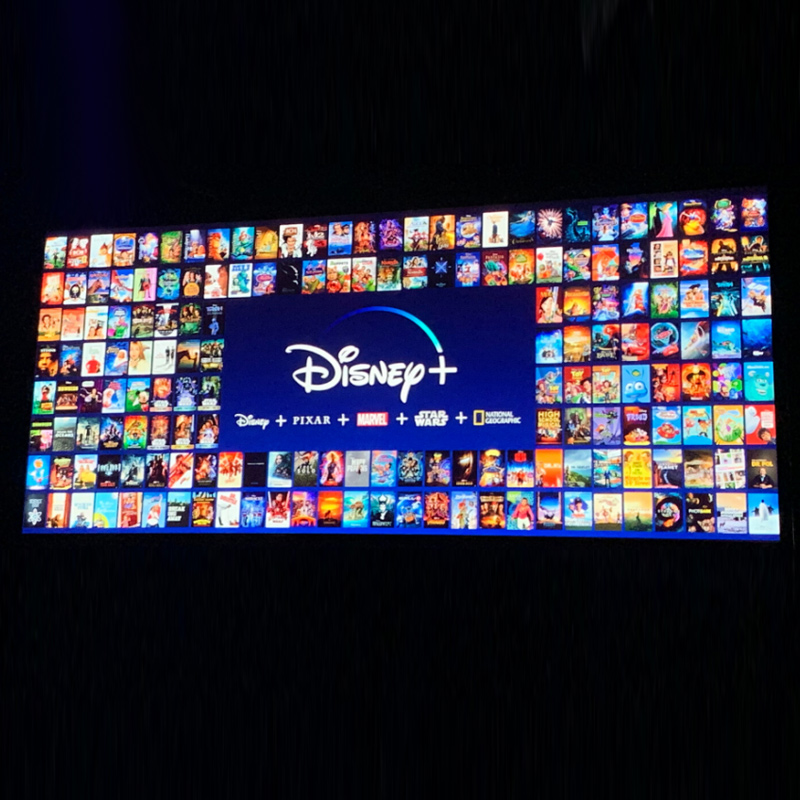
    KOLKATA: In the last one year, the direct-to-consumer (d2c) segment has been prioritised by The Walt Disney Company more than ever before, and it has yielded results for the media giant. Its d2c streaming platform Disney+ has surpassed 100 million subscribers, Disney CEO Bob Chapek stated during its annual meeting of shareholders.

    “The enormous success of Disney+, which has now surpassed 100 million subscribers, has inspired us to be even more ambitious, and to significantly increase our investment in the development of high-quality content,” Chapek said.

    Disney+ was launched in November 2019 and has reached the impressive 100-million mark in 16 months. He also noted that the incredible success of the streaming platform in its first year prompted them to accelerate their pivot to d2c first business model. In fact, at the peak of the pandemic, the company reorganised its media and entertainment businesses –  separating content creation from distribution – to boost d2c growth strategy.

    Further, Chapek has revealed that the mouse house has set a target of 100+ new titles per year, and this includes Disney Animation, Disney Live-Action, Marvel, Star Wars, and National Geographic. While the d2c business is the company’s top priority, the robust pipeline of content will continue to fuel its growth, he added.

    Disney+ launched the general entertainment brand Star on 23 February in Australia, New Zealand, Canada and Western Europe. As Chapek shared, the response has been overwhelmingly positive in all the markets. Moreover, the company will drop an exclusive Star+ service in Latin America this summer, as well as Disney+ including Star in other European markets.

    Disney+ Hotstar has also seen rapid growth in India. While India is expected to remain a major growth driver for overall Disney+, the rebranded Disney+ Hotstar is projected to end 2021 with more than 50 million subscribers, a recent Media Partners Asia (MPA) report stated.

    Chapek had expressed his confidence at a recent conference that Hotstar would scale from 30 million to 100 million paid subs by 2024, pointing out to the investment in programming that the company is making.

  • Netflix India in step with global trend of nearly 50% female representation: Srishti Behl Arya

    Netflix India in step with global trend of nearly 50% female representation: Srishti Behl Arya

    KOLKATA: Netflix added inclusion as its cultural value in 2017. Recently, the streaming giant released its first ‘inclusion report’, which revealed that women comprised 47.1 per cent of its workforce. The company, a vocal proponent of gender equality, has featured women in the lead role in many of its original shows and films as well. The balance between an inclusive internal community and female representation on screen is being followed in India as well, Netflix India international original film director Srishti Behl Arya said.

    Since joining Netflix in 2018, Behl Arya has been front and centre in building the streamer’s local content library. She has seen the industry grow and evolve – from the time when there were only a handful of women on film sets, before streaming platforms had entered the scene. She used to be the only woman on set as an assistant director; things have come a long way since then, but there is still a lot to be done. For starters, said she, we need to reach a point when we stop referring to “women director” as something extraordinary.

    “As far as Netflix is concerned, we have even put out an inclusion report globally, we are showing that almost 50 per cent of our workforce is women and that’s the same thing we are seeing in India as well. Not just in the workforce but also in leadership positions,” Behl Arya shared during a virtual interaction. In 2021, the company will be working with 18 women directors and it is already collaborating with over 1,000 women creators in various roles.

    She further added that last year, 50 per cent of Netflix’s film titles had a woman producer or a woman director. Nearly half of its entire content had women playing central roles. Moreover, the company is giving equal opportunity to newer people as well, rather than riding on established names alone.

    “As you see all the members, you see all our subscribers are divided between male and female. When the population of the world is divided in such a way, it’s not right to not represent half the population of the world. That’s a very logical next step for us. And I think what has happened is more and more female members are also finding their voice now. That itself is giving rise to more and more stories about women and more stories, very importantly, from women’s point of view,” she noted.

    Behl Arya reemphasised how Netflix is committed to diversity of all types. According to her, it will come by including more and more voices and stories, as more people want to see themselves reflected on screen.

    The Netflix executive also said the change is also about giving women access to tools to aid their quest for equality and representation. The streaming giant recently created a $100 million global fund for creative equity aimed at more inclusive pipelines behind the camera. $5 million of that fund will be deployed for women all over the world. As part of the initiative, Netflix will be conducting screenwriting workshops for women over the course of a year. In India, the company had many first time female producers, writers, directors.

    “The idea is to enable women to come forward and provide comfort for them to share their stories and that is something that we are actively working on. In fact, right now, in one of our titles, we have a first-time female cinematographer,” she commented.

    There is a common notion that companies hire women leaders in tried and tested roles. However, the scenario is entirely different for Netflix. “We have great representation in the tech side at our Los Gatos office. We have lots of women working on our film side, all our regions, we have them in our production management, VFX, we have women working in marketing and different aspects of it. India office is also following the global trend of close to 50 per cent representation of females. There is no function we can say that is not touched by women,” she remarked.

    While many OTT platforms boast their ratio of female viewership, Netflix India takes a different approach. Behl Arya clarified that Netflix does not divide viewers on the basis of gender, age. It’s the viewing of the title that matters.

    “We have the same high bar for all the countries we are programming and for all the employees and the same standard, we want to maintain all our subscribers. It helps us think things a little differently from how other traditional players think,” she stated.

    Overall transformation in the industry, including at Netflix, was not easy to come by. Women have increasingly stepped up in uncomfortable circumstances to prove their competence. Along with that, men also frequently supported and enabled them.

    “As we break more and more bastions, we will find more and more opportunities to prove how good we are and we are here to entertain and do it really well and it just makes sense to work with more and more people bringing in the diversity,” Behl Arya shared on a confident note.

    Despite the positive changes, one may observe there are only a few women in the upper echelons, which applies to video streaming services too. However, Behl Arya begged to differ. She cited the example of industry leaders like Ekta Kapoor who runs the OTT platform ALTBalaji; Reliance media segment has Jyoti Deshpande at the top, south-based Annapurna Studios CEO Supriya Yarlagadda, ex-Sony Pictures Networks’ (SPN) film production division head Sneha Rajani. Having said that, she raised an important point.

    “There are women in the position but I think that we are still not used to seeing them so they stand out. That’s exactly my dream is that one day gender will not stand out because it will be so common,” she summed up.

  • Monetising Ishara is the primary focus in next few quarters: Aditya Pittie

    Monetising Ishara is the primary focus in next few quarters: Aditya Pittie

    MUMBAI: In September 2016, Anand Mahindra-owned television channel Epic roped in Pittie Group CEO Aditya Pittie as its managing director. Since then, the Anand Mahindra-and Pittie-promoted IN10 Media has expanded – from television (Epic), to OTT platforms (Epic On and Docubay), and even a production house (Juggernaut) in its kitty.

    After establishing its linear broadcast channels in their respective genres, Epic, Filamchi, Gubbare and ShowBox, the In10 Media Network is all set to foray into the Hindi GEC market with Ishara. Five original shows debuting as part of the channel’s inaugural line-up include mythological masterpiece Paapnaashini Ganga; crime-thriller Faraar Kab Tak; and three fiction shows Agni-Vayu, Humkadam, and Janani. Besides that, it was recently announced that Juggernaut Productions and Mango People Media will also produce a show based on the life of Maharani Gayatri Devi, to air on Ishara.

    Pittie finds his passion in creating value and wealth and building scale. “That’s why I am interested in multiple businesses, not just any particular business. I am passionate about business, and building businesses that have scale, that gives employment to many people. That is what drives me,” says Pittie in a conversation with indiantelevision.com’s Shikha Singh, during which he spoke at length about new kid on the GEC block – Ishara, its programming line-up, marketing strategies and much more.

    Edited excerpts:

    On launching Ishara amid the pandemic.

    As a media broadcast channel, we have the ambition to have another market share and after adding Showbox in our portfolio and launching Filamchi, it was always in our plan to venture into the Hindi GEC genre, hence we launched Ishara. The planning was in place before the pandemic took place. Now as the market is bouncing back, and the GDP is coming back on track, we feel the demand for content is comparatively more and most importantly, we felt that the timing is right to offer something which is slightly differentiated and fresh to the audiences.

    On the channel’s standout USP.

    We are positioning the channel as a celebration of life, while the stories are about real India, we are trying to bring the element of freshness and progressiveness. The idea is to provide something that is deeply rooted in values but also progressive in nature. Our idea is already resonating with people on social media and other consumer engagement sites. I think our USP is communicated fairly well, and that is how we are going to differentiate from other competition existing in this space.

    On the initial sampling of the channel.

    The way we have chosen our line-up is unique. Sampling is a factor of availability, very rarely do you see a channel in the pay and HSM (Hindi speaking market), so availability plays a very important role. We tried to create a lot of awareness including using an extensive marketing plan. Then obviously, how interested audiences are after seeing the trailers and the promos that you communicated, and what kind of conversion you are trying to get out of sampling. The fact that we have chosen Paapnaashini Ganga as our mythological show and Janani is a very powerful concept which everybody can relate to. We feel that with the combination of all of these factors there definitely will be a strong sampling for our channel. We have a mix of fiction and non-fiction shows which are in the pipeline.

    On conducting research and deriving consumer insight pre-launch.

    We have engaged with certain focus groups and agencies; we collected some data and qualitative analyses to understand consumer preferences. The fact that we are launching a channel with a 7-9 pm programming slot and again 9-11 pm, it’s very rare that a channel repeats its prime-time programming in the same primetime slot. Our channel is our own competition. The decision has been taken after the deep consumer research including both quantitative and qualitative.

    On its target audience.

    The genre is targeting both urban and rural audiences. However, as our country is growing so fast, consumers are evolving it would be difficult to find where our audiences live, but we have a slightly more urban slew. Similar to any other GEC, our major target audiences are females.

    On advertisers’ response.

    The responses are quite encouraging, the feedback is very strong. They feel our content is very fresh and there is potential to get market share. They are willing to partner with us at the early stages.

    On content and distribution strategy.

    At present, we have launched all our channels as part of the  Epic value pack which is a Rs 2 bouquet. From 1 April onwards we are increasing our price to Rs 7, where you will get all the five channels in the same amount.

    On their media mix and how much digital will occupy.

    For Ishara, we have allocated maximum resources to television slots. That is the fundamental strategy, we feel the convergence is higher from television to another TV channel. We have also taken lots of EPG spots with cable and DTH players. Apart from that, we have partnered with all radio networks across India. We are also leveraging digital, print and OOH mediums.

    On linear feed availability on the network’s OTT platform Epic On.

    We are still considering when to make Ishara available on our OTT platform, the linear feed won’t be coming soon to Epic On. We’re still deciding on when to make livestreaming available, and catch-up will be available subsequently. Currently, maximum sampling of our channel is going to happen on broadcast before we start moving some of the audiences to digital. But eventually, it is going to be the combination of both linear TV and OTT. We are living in a world where both are complimentary so definitely the content will be available on Epic On at some point in time.

    On getting into sports broadcasting.

    We are very clear about our strategies, and we are definitely not getting into sports broadcast. It is not part of our agenda.

    On the secret ingredient that has kept the In10 brand going for years.

    I think being a challenger brand or a product is something that as an entrepreneur I enjoy building. The whole mentality of starting up when the odds are against you is what encourages and drives the organisation to grow our business. I have an inherent love for creating content, whether it is creating compelling infotainment which is India centric or loved by so many people, we are the only music channel which has 40 per cent non-Bollywood music. The love for offering and creating content is actually the main driver for our ambition. This is the only reason we call ourselves content engines.

    On content consumption trends, and what themes will rule 2021.

    With India’s disposable income rising and internet connectivity improving, there will be more consumption of premium content. People’s ability to pay for premium content will increase, hence we are witnessing a growth in OTT content consumption. However, I think television content will still continue to be a priority for Indian viewers. Both television and OTT will be complimentary to each other, while content will become the main driving force in consumption. People will switch between watching content on disconnected services like mobile phones or broadcast set-top boxes. In terms of genre, feel-good, spiritual content, and comedy content will resonate more with viewers. Apart from that, horrors and supernatural shows will also be there.

    On his vision for 2021.

    We have created a good product with Ishara, we hope viewers will appreciate it. Obviously, monetising Ishara will be our focus for the next few quarters. In the coming six to eight months, we will make sure our entire bouquet of channels continues to grow.

  • Rules focus on self-classification, not censorship: Javadekar tells OTTs

    Rules focus on self-classification, not censorship: Javadekar tells OTTs

    KOLKATA: Minister of information and broadcasting Prakash Javadekar on Thursday held an interaction with representatives of various OTT platforms including from Disney+ Hotstar, Amazon Prime, Netflix, Jio, Zee5, Viacom18, Shemaroo, Mx Player, ALTBalaji.

    The Union minister mentioned that the government had engaged in several rounds of consultation with OTT players in the past and stressed the need for self-regulation.

    Javadekar stated that he had received representations from cinema and TV industries that while there were regulations for them, none existed for the video streaming industry. Thus, it was decided that the government would come out with a progressive institutional mechanism for OTT players and develop a level playing field with the idea of self-regulation. The minister appreciated that many OTT platforms had welcomed the rules.

    Informing the industry representatives about the provisions of the rules, the minister said it merely requires them to disclose information and that there is no requirement of registration of any kind with the ministry. He added that a form for this will be ready soon. Quelling fears over curtailment of creative freedom, he stated that the new digital media rules focus on self-classification of content instead of any form of censorship. Further, OTT platforms are expected to develop an effective grievance redressal mechanism.

    Previously, the Centre had proposed a three-tier mechanism for these platforms for content-related issues. The first tier would be officials appointed by these companies. As a second-tier, there would be a self-regulatory body that would address complaints. The third tier would be a government-appointed panel.

    Dispelling rumours, the minister clarified that in the self-regulatory body, no member will be appointed by the government, and that an inter-departmental committee will be formed to look into complaints that remain unresolved at the self-regulatory level.

    The industry representatives welcomed the rules and thanked the minister for addressing most of their concerns. Finally, the minister added that the ministry is open to any clarification or queries from the industry.

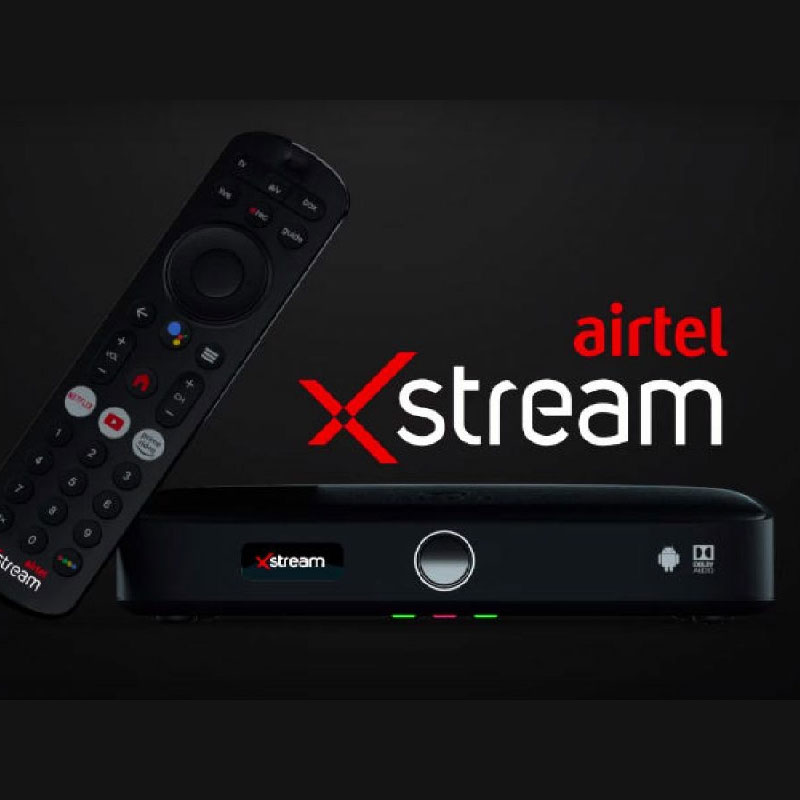
  • Epic On now streaming on Airtel Xstream platform

    Epic On now streaming on Airtel Xstream platform

    KOLKATA: Premium OTT platform Epic On has tied up with Airtel Xstream to offer its users the Epic On subscription at a special price.

    The partnership would allow Xstream users to access the comprehensive library of thousands of hours of titles ranging from movies, TV shows, and documentaries.

    There is a constant rise in demand for OTT from not just the urban and tier-1 cities, but also within the tier-2 and tier-3 cities across India. The upsurge continued through the year 2020 as outdoor entertainment venues remained under an extended lockdown. Amid this, streaming platforms have grown phenomenally and consumers have re-calibrated their expenses from outdoor entertainment to OTT subscriptions. 

    IN10 Media Network managing director Aditya Pittie said, "IN10 Media Network is committed to engaging with its audience across varied geographies and demographics through its outstanding content. With handpicked TV shows, documentaries, and movies we have witnessed the franchise of Epic On grow, and Airtel’s reach and distribution will further bolster its growth.”

    Epic On chief operating officer Sourjya Mohanty said, “We are elated to collaborate with Airtel Xstream and offer our content on their platform. This partnership will allow us to cater to a larger segment of entertainment seekers across India by augmenting our reach in tier II and III markets. Through the discounted subscription model on the Airtel Xstream platform, we will be able to provide our premium content to a new set of the digital audience.”

    Airtel Xstream customers can now avail of the Epic On subscriptions at a discounted price. A one-month Epic On subscription will cost the Airtel Xstream customers Rs 29 whereas and annual subscriptions are available at Rs 249.

  • ShortsTV forays into OTT space with Airtel Xstream

    ShortsTV forays into OTT space with Airtel Xstream

    KOLKATA: ShortsTV has partnered with Airtel to launch its first video-on-demand service on Airtel Xstream that can be enjoyed on both the mobile app as well as television screens. ShortsTV is now available at a nominal subscription of Rs 99 per month and Rs 499 for a year.

    ShortsTV through Airtel Xstream offers an expansive catalogue of quality short films that includes shorts which were nominated for and won at The Academy Awards, Cannes, BAFTA, and high-quality CGI animation from international independent and local Indian filmmakers. Equipped with a specially curated library of over 4,000+ titles from across the globe spanning genres such as comedies, musicals, documentaries, thrillers, dramas, and animation, the service is here to allure all the short film fans and offer a seamless binge-watching experience. The catalogue includes short films across English, foreign, and local Indian languages, including Hindi, Gujarati, Bengali, Marathi, Kannada, Tamil, Malayalam and Telugu.

    ShortsTV chief executive Carter Pilcher said, “TV and mobile phones are both integral to the Indian viewing experience—a perfect combination for ShortsTV and our ground-breaking short movie entertainment. ShortsTV is present in over 60 million TV households in India already, and our partnership with Airtel Xstream will bring us to Airtel’s 340 million subscribers. From Oscar nominated movies to travel documentaries to exciting new films from India’s hottest new directors – ShortsTV is amazing entertainment.”

    “Short films are slowly making their presence felt among mainstream cinema, thus adding momentum to the growth of shorts on the Indian movie map. At ShortsTV, we always believed in providing a global platform for filmmakers to showcase their work since the audience's affinity towards the short format is growing. Understanding the rise in content consumption on the small screen, our partnership with Airtel Xstream will not only help us extend our reach into the Indian heartland but also provide an opportunity for Indian filmmakers to expand in India and beyond,” ShortsTV Asia president Tarun Sawhney said.

    ShortsTV’s catalogue of short films features critically acclaimed stars such as Benedict Cumberbatch, Emilia Clarke, Jude Law, Nawazuddin Siddiqui, Naseeruddin Shah, Radhika Apte, and others. Some of the unique shorts available on the platform include internationally popular Oscar winner Skin, BAFTA nominee The Voorman Problem, Cannes Jury prize winner Swimsuit 46.

    The top short films from best of India and Latin America like Natkhat starring Vidya Balan, Shameless starring Sayani Gupta, Safar starring Shweta Tripathi, Soundproof starring Soha Ali Khan, Trapped starring Abhishek Banerjee, The Lillies Seller will be showcased as part of Worldwide Film Festival from 24 to 27 February. In addition to an enviable selection of short films, the service also features various segments on local film festival coverage, film school vignettes, ‘making-of’ features, interviews with directors, actors, and other leaders in the industry.

  • Pay-per-view takes off in India, but has a long way to go

    Pay-per-view takes off in India, but has a long way to go

    KOLKATA: While the last year has seen the entry of new over-the-top (OTT) players, it has witnessed the burgeoning of new business models as well, pay-per-view being one of the most noticeable trends. A number of new entrants, along with some of the existing over-the-top players, launched this transactional model. Very recently, online ticketing player BookMyShow and telecom player Vi introduced their own on-demand services under the TVoD category.

    Despite it being the latest bandwagon, experts are sceptical about pay-per-view’s success in the market. For the value-conscious Indian viewers, who are much more inclined to pay for bundled catalogues, this model will tempt only a minuscule set of audiences. But with effective pricing and marquee content, pay-per-view may increase its attractiveness.

    Vi announced the launch of its pay-per-view streaming service, available on Vi Movies and TV app, in collaboration with Hungama Digital Media. Vi customers will be able to rent premium Hollywood movies at Rs 120 and others at Rs 60 for a period of 48 hours.

    Media expert Rajiv Sharma thinks content under this model should not disappear so soon. According to him, the model can work better if the library is phenomenal, and moreover, whatever is being picked up should be available for long term, at least for six months.

    While movie theatres being shut for a long time led to a line-up of movies pending releases, there is a huge backlog that will not hit theatres right now for multiple reasons. Hence, some of the pay-per-view platforms feel that consumers might shell out for watching movies at home, Elara Capital VP research analyst (media) Karan Taurani said. But he also pointed out that most Indians pay for cinemas considering it as an outing and for the overall experience. So, it can be challenging to get consumers to just pay for one content.  He also mentioned that the model has been tried and tested by DTH players but they have not been able to scale it up.

    ShemarooMe was one of the first players to launch a pay-per-view service ShemarooMe Box Office during lockdown. Zee Entertainment Enterprises Ltd rolled out Zee Plex in October. In early February, BookMyShow’s streaming service debuted under the TVoD model, offering 600 movie titles and 72,000 hours of content. Notably, BookMyShow Stream allows users to either buy or rent a movie and the price point ranges between Rs 40 to Rs 700. Some smaller regional players are also testing the waters with this model.

    Kuarte Digital’s Uday Sodhi noted that the pay-per-view model is not new in India. Earlier, telecom operators had tested this model or other aggregators like Apple also went for this pricing model, albeit OTT platforms have been trying it for the first time in the wake of Covid2019.

    “This model is still at a very nascent stage. Also, if you look at BookMyShow streaming service, this is more of an evolved ticketing system for movies. TVoD is a good proposition for live events, sports coupled with effective pricing. It is very unlikely for major OTT platforms to choose TVoD for mainstream entertainment content,” Sodhi added.

    However, according to Sharma, if pay-per-view is strategised properly, it will give users more flexibility and control over payout. An average user sometimes watches only one-two content in a month paying for the library. With a proper price gap, it might attract that part of the user base. Even so, every piece of content cannot be a marquee property, “killer content” is very rare, which is one of the biggest gaps for this model.

    Among the top players, SonyLIV is dipping its toe in the pay-per-view pool by introducing WWE to its viewers with the WWE Network pack curated specially for fans of pro wrestling. Most experts are of the view that the chances of major platforms exploring this model are very rare. Instead, they will look at innovative comprehensive pricing like Netflix did with its mobile only plan, Taurani stated. To reach critical mass, the subscription should be the focus area for bigger players as of now, experts believe. 

  • Netflix India reveals 2021 line-up consisting 40+ originals

    Netflix India reveals 2021 line-up consisting 40+ originals

    KOLKATA: Netflix is upping the stakes when it comes to its streaming game in India, revealing its 2021 line-up comprising 40 plus originals. At a virtual event called ‘See What’s Next India 2021’, the streamer has given glimpses of its new content slate that cuts across genres.

    “Everyone has different taste, different preferences, different moods and they watch Netflix on different devices. Whether you are watching alone or with your family, whether you have 20 minutes or two hours, we work hard to make sure Netflix always has something great for you. This is exactly why we create so many stories across genres, languages, formats for you to choose. This year we are ready to take our next big leap to entertain India,” Netflix India vice president content Monika Shergill said at the event.

    Its newly announced 15 episodic series slate includes mystery thriller Aranyak, Bombay Begums, Decoupled, ray, Yeh Kalie Kalie Akhein. Along with the new releases, returning seasons of famous shows like Masaba Masaba, Jamtara, Little Things, Mismatched, and She will land on the platform soon.

    The fresh line-up also includes more than Netflix original movies, like the moving family drama Sardar Ka Grandson with Arjun Kapoor and Neena Gupta. Taapsee Pannu starrer Haseen Dillruba, the relationship drama Ajeeb Daastaans, and Ekta Kapoor production Pagglait are set to release on the streaming service tum the coming months.

    “In India, we love films, everything about films – stories, storytellers, starts, sometimes the songs, sometimes the action, thrill. But more than anything it’s the magic of cinema we love. Netflix has had the honour of bringing 30 Indian original films so far , including 17 films just last year,” Netflix India international original film director Srishti Behl Arya said.

    “Our upcoming line-up features more variety and diversity than we have seen before. From the biggest films and series, to gripping documentaries and reality, and bold comedy formats,” Shergill said in a blogpost. Netflix has also expanded its comedy library onboarding TV star Kapil Sharma, along with other known comedians like Sumukhi Suresh. The international streaming giant has content lined up in non-fiction genres like reality TV ( and documentaries.

    In India’s crowded streaming market, Netflix is still lagging behind Disney+Hotstar, the shining star with nearly 28 million subscribers in the country. According to a report from Media Partners Asia, YouTube (43 per cent), Disney+ Hotstar (16 per cent), Netflix (14 per cent), Amazon Prime Video (seven per cent) remained the top five platforms which accounted for a combined 80 per cent share of total revenues in 2020.

    The country's overall online video market is projected to grow at a compound annual growth rate of 26 per cent over 2020-25 to reach $4.5 billion. Netflix which has been widely perceived as a “premium” service compared to its contenders, putting all efforts to reach the critical mass. It even unveiled a mobile only plan to woo the users.

  • #Throwback2020: For M&E industry, there’s no such thing as closing shop

    #Throwback2020: For M&E industry, there’s no such thing as closing shop

    MUMBAI: It has not been the easiest of years and none of us ever dreamt that the last couple of months would be the way they have been. But I always believe that there is always a silver lining and that there is a lot to learn from what has transpired in the last ten months. Having said that, I think we have stayed true to our promise of keeping our viewers entertained, even in a crisis situation. We made sure that we were there for them when they needed us the most because there were no other entertainment outlets available.

    We adopted different strategies across different genres to make sure that our viewers get what they want. But, the one big thing that stood out for us as an entertainment broadcast company and the franchise that I oversee, is that we were true to our DNA. We were true to our promise of continuing to narrate great and relatable stories and keep our viewers engaged and entertained in a time when they really needed us the most. That to my mind, brings true value to my organisation and our brand.

    Looking back at 2020

    We didn't have a single minute or day of blackout despite the lockdown, which happened overnight. We continued to run our channels with content that engaged and entertained our viewers across genres whether it was in GEC, Hindi movies, kids, music, English, youth and regional portfolio. So, I think, resilience, determination and entertainment stood out for us, as storytellers, to do what we do best. Definitely, we all pivoted our plans to adapt to the new normal.

    If you look at Hindi GEC, which is the biggest and the most mass genre of them all, a big surge in non-prime time viewing was noticed because of the lockdown. We did lose out on some viewership to the other genres in the primetime slot due to lack of original content as a result of the shoots coming to a halt for some time. We witnessed a comeback strategy in Hindi GEC because we realised that there was a lot of family bonding and family viewing happening – a big trend that has continued to stay. Keeping this trend in mind, we went back into our libraries and brought back shows like Mahakali, Shani Dev and Jai Shri Krishna. We even looked at external libraries as well and aired Om Namah Shivay and Mahabharat. Some of our old legacy shows that brought back a lot of nostalgia included Balika Vadhu, and Uttaran, to name a few.

    Post the opening of the lockdown, we launched many new shows. Some of them were shows that had a social commentary and became household conversations. With shows like Molkki, Namak Issk Kaa, which is a romantic drama, or Ishq Mein Marjawan which is a romantic thriller, or Pinjara Khubsurti Ka, we managed to launch a lot of new content including our biggest reality television show Bigg Boss. So, variety in entertainment was a trend that we managed to keep. With the resumption of original content, viewership during primetime and non-primetime have more or less gone back to pre-Covid2019 levels now.

    How shows have performed

    Colors has had a fantastic run. We were the first ones to start with original content once shoots resumed. We are slot leaders with Ishq Mein Marjawaan and are slot leaders at 7 to 7:30 pm with Choti Sarrdaarni and then at 8 pm with Shakti. Bigg Boss continues to rule the roost from 10:30 pm onwards which is a very good slot for us. Barrister Babu has also given us superb ratings. Post the unlock, we have a robust 19 per cent market share. We are also a very strong number two in our all-day primetime. With a 22 per cent market share, we had great launches and out of the top five launches in the unlock, three of the launches belong to us, which includes Naagin, Pinjara Khubsurti Ka and Namak Issk Ka. All the shows have propelled our prime time viewership on weekdays and weekend viewership with Bigg Boss.

    We couldn't be happier because our entire prime time from 7 pm onwards has kicked in. Molkki is doing very well for us at the 10 pm time slot. So, variety entertainment is at its peak across genres along with family drama, romantic thriller, romantic drama, social issues, and adventure. We even experimented and innovated during the lockdown with Khatron Ke Khiladi Made In India for the first time, followed by Hum Tum Aur Quarantine with Harsh and Bharati. 

    Some of these strengths have sort of rationalised themselves over a period and some of these trends, such as co-viewing, relatable, relevant characters and storyline continue in Hindi GEC. At Colors, we do our best in terms of fiction, as well as reality television. And we are hoping to launch our next reality show once Bigg Boss concludes.

    Biggest Trends

    Apart from that, we saw a lot of the viewership moving to kids, news and movies. Existing for almost two years now, Rishtey Cineplex, in a very short period of time, has acquired a seven per cent market share which is a great beginning as far as we are concerned. We have grown tremendously by focusing on premieres, festivals that we do every month. Movies is a genre that we at Viacom18 are very serious about. With the Freedish and FTA trend, we re-entered with Colors Rishtey and Rishtey Cineplex. I am glad we did so, because there has been a huge amount of growth in terms of viewership and in terms of monetisation in the FTA space. In a very short span both the channels have secured a 15 per cent market share in their respective genres. We are really very happy to see that because we are actually sweating our assets even more and that makes our ROI much better. So from that perspective, the Freedish trend is here to stay.

    I think the other big piece which cannot be denied, is that the last ten months have reaffirmed our view that in India, unlike the western countries, OTT and digital is going to co-exist with linear television and broadcast television. This is particularly a market, which is an ‘and’ market and not an ‘either-or’ market. Thanks to this co-existence of digital and linear, as storytellers and content creators it is a fabulous opportunity for us, since there is a huge growth in demand and consumption of content. Therefore, as an organisation, we are looking at creating stories, shows and content that is sometimes pipe or screen agnostic. This is a huge and I think 2021 will only reaffirm this further as a trend.

    Consuming content in regional languages is also seeing an upswing. As marketers, we have pivoted our plans to ensure that we engage and interact with our viewers outside of the formal mass media vehicle. We have moved our engagements to digital, to our websites and social media. We engaged and created communities in the online world and engaged our audiences and told stories with games, through Instagram and many other innovations.

    Adapting to the new normal

    We have already adapted to the new normal with shows that we launched in the recent past, which is Namak Issk Ka and Molkki. Some of these shows are already being stitched together with the fabric of the nation, which is about family bonding and family viewing. It is about catering to human emotions and narrating relatable and relevant stories. So, I think a large part of it has already been actioned. As far as we are concerned, I think we will continue to see this trend for a while until Covid2019 vaccines are in and life and economy comes back to normal. I think the economy is recovering and so is the broadcast industry and so is Viacom18 and all our brands.

    So, one is of course, to tell relatable and relevant stories. The other one is to cater to the need of action, adventure, and voyeurism reality, which Colors is known for. Coming up in 2021 is the finale of Bigg Boss, followed by the launch of several impact properties, including Dance Deewane. Our machinery is on and we will see some disruptive content coming this year as well.

    Performance in terms of revenue

    We did see a very soft q1 and Q2 because the economy had slowed down big time and now as the economy recovers and as unlock happens, we have had a great comeback in Q3. We saw a fabulous festive season. In fact, we were able to slightly surpass quarter three of last year. Q4 looks good. A lot of advertisers are coming back to us because we are the only means of reaching out to a mass audience in light of the other vehicles falling off. TV continues to deliver mass reach, relevant reach, captivated reach, and therefore a measurable reach as well. Due to this, advertisers have come back to us and continue to come back to us post festive season as well. When we launched Bigg Boss, we actually got 17 sponsors.

    Ad spends in the foreseeable future

    I think the ad spends will continue to remain stable because the economy is on a path of recovery. We have seen demand coming back, consumption going up. I think the power to spend is also returning and with that advertisers will have to continue to create and gain their share of voice. In my view, there is no better medium than television, which will continue to be one of the single largest mode of advertising in the future as well. There is a grown advertiser interest in digital too. But having said that, television will be advertisers’ favourite. We do see a trend of television continuing to monetise ourselves and advertiser interest continuing to be at an all-time high in Q4 as well.

    Investment in Hindi GEC

    When a lockdown happens, you can cut costs and you can shut down your factories and save and not spend or manufacture and therefore save your cost. But in the entertainment industry, there is no such thing as closing down a factory. We need to continue to grow and churn content every single day to ensure that we entertain our viewers. So there is no pulling back on content costs at all.  We are preparing to enter 2021 with a whole new plethora of primetime and weekday and weekend content. 

    There is no lack of good investment in any of the genres. We will continue to buy movies and movie catalogues and premieres.

    Creating other revenue streams

    I believe ancillary revenue streams are here to stay and I think they will only be more relevant in the years to come. Advertisers are looking at innovative ways of reaching out to their audiences and for me, brand integrations, product licensing, promo licensing and brand solutions and brand integrations are a win-win for all the stakeholders because the advertisers are able to convey the message to viewers in a very interesting and clutter-breaking manner.
    (The author is head of Viacom18 Hindi mass entertainment & kids TV network. Indiantelevision.com may not subscribe to her views.)

  • #Throwback2020: Scriptwriters on the new normal

    #Throwback2020: Scriptwriters on the new normal

    MUMBAI: The great irony about the year 2020 is that a year that will forever be defined by one of the worst pandemic known to humankind is also one that redefined entertainment and paved the way for many millions. It would not be wrong to say that 2020 was the writer’s year. Over the course of the last 12 months, streaming platforms served us gems like Scam 1992, Mirzapur, Paatal Lok and Panchayat, to name a few. The television industry is also experimenting with content. While film and TV producers are grappling with challenges in production, writers are swamped with creating content to meet the consumption demand.

    Production houses are in need of scripts more than ever – a kind of a blessing in disguise for writers, who are working furiously to wrap up pending episodes and current seasons. From the lows of lockdown to the highs of the post-Covid production boom, writers have one thing in common: they have had to adapt swiftly to a new normal.

    The lull of lockdown

    Screenwriters Association member Satyam Tripathi revealed that with the abrupt imposition of lockdown, work came to a grinding halt, and just like any other industry, writers were also affected. But personally for him, working in the confines of his home and coordinating through online platforms was a welcome change, as otherwise a lot of time is wasted in the physical meetings.

    Zoom also provides a workaround, albeit a rather clumsy one, to the key feature of the writers room – the whiteboard, where character arcs and plot lines are scribbled, erased and obsessively rearranged until final things get into place.

    “For a creative person, perhaps this was a time where a lot of introspection was happening in terms of the content we write, in the manner in which we approach our work. When you face a hard time it is then you realise how much you are really connected with the emotions you write about. In those times there was so much insecurity around us in terms of money, work, and life itself,” Tripathi mused. 

    Author, writer, documentary filmmaker Jaya Mishra, who has written for shows like Kehne Ko Humsafar, Cold Lassi aur Chicken Masala, spent her time dashing off scripts in the first few months of the lockdown. “There was pressure to deliver the scripts because nobody realised how much time it would take to get back to normalcy. People wanted to finish the writing processes of all the shows; basically that was the only work we were doing at that moment,” she shared. “But how does one write about normal life when life was not at all normal? The world was at a standstill. I couldn’t focus because all my shows are romantic comedies and there was no romance, I mean how do two people even meet anywhere without the fear of the virus?”

    She went on to add that shows which were almost ready to go on floors required last-minute changes. So, there was a lot of rewriting that happened during that time. 2020 eventually gave Mishra the chance to take a pause from hurtling between writing and delivering scripts. She devoted this free time to her other love – crocheting.

    At present, her in-tray is overflowing. She has started work on her second book, which has been a long time coming. Mishra’s first book was the fiction novel Kama~the story of Kama Sutra published by Om Books. She has her hands full writing for Alt Balaji’s Toxic, Married woman, United, and is also penning screenplay dialogues for an unnamed original series with One Life Productions.

    Director, lyricist, and Happy New Year writer Mayur Puri defined the first few months of lockdown as tough, with shoots cancelled and no dubbing taking place. Apart from this, Puri’s company which does a lot of translation projects for OTT platforms saw a period of lull.

    Said he: “Before the lockdown, my company produced 30 hours of content and the idea was to make it to 45 hours of content till 2021 but now it looks quite difficult to achieve. In fact, for the first three months, there was no work but from October onwards we have reached our monthly targets. I am hoping by the first quarter we will be back on track as far as bulk business is concerned.”

    On the bright side, more projects have started flowing in from June and July onwards. Puri now has three projects lined up for release this year, including Disney and Marvel Studios’ Black Widow, and Free Guy. All the movies were commissioned in 2020.

    Besides volume, the nature of work has also changed for writers. People who were earlier writing two movies are now working on four projects. The past year has also been a wake-up call for screenplay writers. “For instance, when it comes to OTT, there is more pitching and development before actual writing happens. So, writers are becoming more disciplined, they now understand that style of working. Since the writing activities have increased, hopefully it will harbinger better content for us.”

    Production blues

    The industry breathed a sigh of relief when the government allowed filming to resume, under strict guidelines. Of course, production while being Covid compliant comes with its own share of hassles.

    Writers are now being asked to rethink what could be feasible as there are restrictions in terms of shooting, budget, people and much more. They are asked to lean on fewer characters along with special effects and VFX to provide scale and make the show more relatable.

    To make the scripting process more convenient, multiple staff are splitting into mini-rooms, with senior-level producers doing Zoom sessions while lower-level personnel work offline on script changes or other details. Some showrunners are also scheduling one-on-one Zoom or Google Meet sessions with members of the staff in an effort to ensure that everyone is getting the support they need.

    Despite the occasional technical hiccups, like bad internet connections, sound and the transition to teleconferencing has been a source of comfort to many in this new quarantined world.

    Mirzapur writer and creator Puneet Krishna is currently basking in the success of his original series. But the behind the scenes story is not so sunny. Mirzapur was in the middle of post-production, so it was an ordeal for him to shoot while following Covid protocols. Due to this, the dubbing process became elongated.

    Tripathi, who is busy developing an OTT series with Reliance Big Synergy, did not have any programmes on air so he did not face any immediate challenges. He got an ongoing show – Zee TV’s Ishq Subhanallah – just when the lockdown was lifted. The only problem he encountered was when somebody on set tested Covid positive, forcing him to rewrite certain scenes.

    Regardless of directives, that vary from studio to studio, screenwriters say their anxiety lies largely in the uncertainty looming over them. 

    Puri asserted that it is important for a writer to have the freedom to take his pick of work. “What we look at is we get enough choice of projects and decide what is best suited for me and when the work stops you are not left with any choices,” he noted. “Not having a choice of subject was one big challenge. I am a small entrepreneur who runs a business of writing. For me, it was very difficult because payments stopped coming and I have a team of writers I need to pay. Thankfully, when work started my team picked up the pace and we started working harder and we accommodated Diwali bonuses also. I think the worst has passed and we are in a better position.”

    The silver lining

    The emergence of OTT platforms has been a gamechanger for writers. Puri said that thanks to these streaming services, writers are now getting recognised. In addition, with most theatres shit or running at 50 per cent capacity and no big budget movie releases happening, the race for box-office numbers is virtually non-existent. Now, it is completely a contest of skills, which is why Puri believes the overall quality of writing should go up.

    He quipped, “With OTT there are so many stories which can be now explored which are not conventionally box-office. The only criteria is to make the content right and think of the audience as an intelligent audience. The value of writers is going up, in terms of the value, payment, and respect for their work. I am hoping this continues even when the theatres are open.”

    Acknowledging that there has been a spike in OTT consumption, Krishna noted that people who were releasing films in cinema halls are now opting for OTT release –so it has become a level playing field. At the same time, he is hopeful that once things normalise, people would flock back to movie theatres.

    Forecast for the future

    Digital adoption in various walks of life surged by leaps and bounds in 2020 and writing is no exception. For a while now, more and more people have voiced that TV, movie and OTT scripts shouldn’t be made with paper, as paper scripts being tossed around a set might cause problems. So, writers suggested alternatives such as electronic scripts and electronic sign-in/out should be explored in the post-Covid world.

    But what about the big picture? Mishra was of the view that the entertainment industry is going very strong.

    “Fortunately, the market has been pretty good to writers. A lot of ideation went on, it has helped me to work on new shows. All this work came to me in the last five months. We are still in a better position compared to directors, actors and producers,” he said.

    Tripathi opined that the market is still picking up and will take time to settle. The entertainment industry was already facing issues after TRAI’s intervention, digitisation, and then the BARC incident happened. And while the OTT juggernaut is no blip on the radar, traditional linear TV still has a lot going for it. “The industry was kind of settling in when the pandemic knocked on our doors. I also believe that the OTT spike is just a rumour, it is more of an urban phenomenon. Because during the lockdown we have realised that reruns are doing much better than any form of content,” he added.

    A lot of negativity that has come to be associated with daily soaps will decrease, and audiences will react to it, claimed Tripathi. That is why a lot of older shows are working as they bring a sense of nostalgia and good times.

    Writers also echoed the view that smaller budgets and fewer crew on sets would force directors to tell more intimate and pertinent stories.

    These are exciting times to be a screenwriter, with the industry in transformative stage, new forms being explored and a burgeoning need for content among new and diverse consumers. The page is fresh and the quill is ready, now it remains to be seen what story they write.