Tag: OTT

  • GUEST COLUMN: OTT serves the nation while the internet counsels it

    GUEST COLUMN: OTT serves the nation while the internet counsels it

    Mumbai: The Covid-19 pandemic has upturned all walks of life. People’s lives have switched to a virtual setup and personal choices have moved from interacting with people to purchasing products, availing services, and even spending leisure time to a click or a swipe! The significance of this transition, however, has established itself as a big opportunity for the Internet. While the exponential growth of the Internet is undeniable, three sectors, in particular, continue to witness mammoth amounts of data traffic – collaborative communication tools, gaming, and OTT.

    A weekend without binge-watching or watch-parties today is more like a restaurant that’s taken your favorite food off the menu! Hence OTT is far from experiencing a post-Covid slackening. In fact, with such a large user base and the confidence, the content creators found in releasing content on OTT ever-growing platforms, OTT & VOD traffic rose by 139 per cent from January to August.

    March 2021 culminated with the Telecom Regulatory Authority of India (Trai) marking 825.30 million internet users in the country. Amongst these, active ad-support and paid streaming users accounted for 325 million. A phenomenal breakthrough was observed in rural India, and numbers as high as 65 per cent of India’s total OTT consumption were reported by the Broadband India Forum. At an all-time high, the OTT industry is only set to boom, and as reports by RBSA Advisors suggest, the OTT market is set to grow to $ four billion by 2025 and $12.5 billion by 2030. From 20 minutes to 50 minutes and one-hour average time spent on OTT platforms, from two OTT platforms to 40+ platforms, the OTT revolution in India has come a long way.

    One facet of this revolution that took the center stage included OTT platforms launching themselves into the hyper-competitive environment by catering to local tastes and preferences that enabled them to reach a wider audience in less than no time. As part of their content variety offerings and in an endeavor to bridge the gap beyond the urban setups, OTT platforms across the diverse geography of India, launched regional content in India. This led to one impressive surge in regional content viewership, and industry analysts suggest that 40 per cent of the total viewership in India now comprises regional content consumers. Additionally, this regional content also witnessed a surge overseas particularly in countries like the USA, UK, Dubai, Malaysia, Singapore, etc.

    Observing this stark rise and the massive demand from the Indian market, international players like Netflix, Disney, and Amazon got into an arms race by launching regional and India-centric content in addition to international content. This availability of content in both original and dubbed languages further boosted the momentum of OTT making it one of the hottest segments across the Indian subcontinent.

    However, while the demand is only set to grow, matching the growth of the sector at the same pace requires a stable, reliable, secured digital infrastructure making it more critical than it was ever expected to be thereby giving interconnection center stage.

    Internet exchanges have established their importance in the OTT world primarily on three grounds. Firstly, internet exchange points reside within data centers that offer world-class facilities and the ability to shoulder critical and customised digital infrastructures. Secondly, interconnectivity creates an ecosystem with widespread points of presence all converging at a single place while also providing peering, DirectCloud, and other similar services. This enables the reduction of latency, the ability to bypass as high as 90 per cent of the internet traffic, the scaling down of costs associated with bandwidth and transmission. Additionally, in an environment placing an urgency on security, internet exchange points provide network services that enhance data security.

    If you considered key runners in an OTT-hiccup race, latency would bring home a medal. While the live video experiences can be killed by high latency, even constant buffering in recorded content can lead consumers far from service. In fact, studies suggest that a two-second delay while loading a website can result in a 100 per cent bounce rate.  This emphasises the importance of keeping content as close to the user as possible. To quantify it, live streaming in HD/4K should ideally be less than 1,200 km away from the user. While it is easier for broadcast networks to circumvent congestion and avoid latency, the challenge lies in finding long-term, reliable, and cost-effective solutions. An Internet Exchange Point allows networks of all segments to exchange traffic while keeping local traffic local. This enables OTT providers to reach the Internet’s ‘long tail’—ISPs who distribute content to regional users. Keeping traffic local reduces the distance data must travel which in turn reduces latency thereby improving content performance and user experience. Interconnection services can give OTT players the secure and resilient digital infrastructure they require while also giving them the ability to upgrade a 10 Gigabit Ethernet (GE) port to a 100GE port.

    Digital entertainment is an ever-evolving medium and that the need for seamless and secure internet access will continue to soar high. It also brings in higher possibilities of network collisions and contentions. This can lead to a downstream or a slowdown of a platform’s functioning. That again finds answers in an Internet Exchange built to deal with peak internet traffic with also the ability to manage outages making it an indispensable solution even in the face of a major crises situation.

    India is the second-largest country in terms of internet users and is the fastest-growing OTT market globally and is predicted to become the sixth-largest by 2024. Reports by RBSA indicate that the industry has the potential to grow into a $15 bn industry over the next decade. This can also be accredited to OTT players partnering with telecom companies like Airtel, Jio, and VI, the entry of global players like Netflix, Amazon, Disney+ Hotstar through customised content and major investments, and the growth of home-grown booming OTT platforms. This aggressive pace of growth has further fueled the demand of the data-hungry nation which has trends across the industry as proof.

    This emphasises the need for a secure, scalable, and compliant infrastructure to support this demand now more than ever. It is only in the presence of an innovative and unfailingly reliable internet infrastructure that the OTT industry in the country will be able to meet the needs of the nation it has held firm to until now.

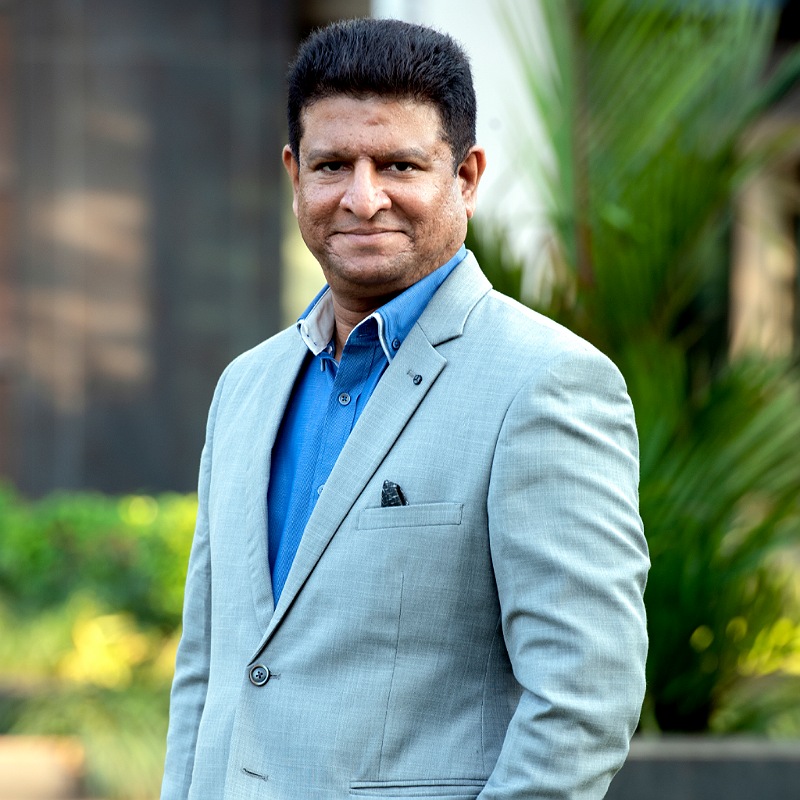
    (Sudhir Kunder is the country director of DE-CIX India. The views expressed in the column are personal and Indiantelevision.com may not subscribe to them.)

  • ShortsTV is now on Amazon Prime Video channels in India

    ShortsTV is now on Amazon Prime Video channels in India

    New Delhi: ShortsTV- 24×7 linear and OTT channel dedicated to short-form content has announced a partnership with Amazon to launch ShortsTV on Amazon Prime Video channels in India.

    ShortsTV is already broadcasted in India across major DTH platforms including Tata Sky, Airtel TV, Dish TV, and d2h, and earlier this year, it entered India’s OTT world through the Airtel Xstream App. Through Amazon Prime Video, the short form entertainment network will now extend its reach into the Indian heartland at a cost of Rs 299 for a year, it said on Tuesday.

    The collaboration is led by ShortsTV’s larger aim to expand its digital footprint in the country, and reach a new set of highly engaged viewers. Prime members will now be able to access the short film channel alongside a specially curated on-demand short film library of over 4,000 titles.

    ShortsTV chief executive Carter Pilcher said, “Short films are India’s cauldron of creative energy, with some of the world’s most surprising and interesting movies emerging in what can only be described as a post-Bollywood revolution.  We are thrilled to join with Amazon Prime Video to bring these ground-breaking films to audiences across the sub-continent on the Prime Video platform.  Our goal to bring the short film revolution to every hamlet in India is one step closer.”

    “From star-studded, internationally acclaimed films by The Academy Awards, Cannes, BAFTA, and others, to the movies produced by international, independent, and local Indian filmmakers, ShortsTV offers a complete binge-watching experience,” the company said in a statement. “In addition to a vast array of short films, the service also features various segments on local film festival coverage, film school vignettes, ‘making-of’ features, and interviews with directors, actors, and other leaders in the industry.”

    The service features multi-language short films across English, foreign language, and local Indian languages, including Hindi, Gujarati, Bengali, Marathi, Kannada, Tamil, Malayalam, and Telugu.

    According to ShortsTV president- Asia Tarun Sawhney, the service will provide viewers with the flexibility to watch their favourite shorts anytime, anywhere. “Our strategy is to continue partnering with the top content aggregators in India and worldwide to present the largest selection of short films to our viewers,” he added.

    Head of Prime video channels Chaitanya Divan said the streaming platform is excited to bring even more selection to its Prime members in India with the launch of Prime Video Channels. “As consumers consume more content on the go and on their mobile phones, there has been increasing interest in short-form content in India, especially high-quality short films. We are happy to collaborate with ShortsTV and provide access to their deep library of short films from across the globe to Prime Members, with an add-on subscription. Consumers can select, subscribe and enjoy their favourite short-form content all within the Prime Video app and website,” he said.

  • GUEST COLUMN: Mobile marketing in the OTT landscape: Big opportunity for digital marketers

    GUEST COLUMN: Mobile marketing in the OTT landscape: Big opportunity for digital marketers

    Mumbai: The rise in both viewership and engagement of over-the-top (OTT) has opened up a world of possibilities for marketers looking for new and better ways to reach their consumers sitting in the comfort of their homes. Recent reports estimate that the OTT segment will grow to approximately $ four billion by 2025. 

    Confirming this trend, India saw a huge upsurge in media consumption between March and June 2020. By the end of 2020, OTT video subscribers almost tripled to nearly 62 million, up from 32 million at the end of 2019. This accelerated growth of the Indian SVOD industry is assumed to be caused by the Covid-19 pandemic. 

    Despite the fact that the OTT streaming business is dominated by large corporations such as Netflix, Hulu, YouTube, and Amazon Prime, smaller OTT streaming services continue to emerge. In order to have an edge over these budding competitors, it’s essential to utilise the power and proven results of mobile marketing.

    Before we dive into the strategies, below are some major trends that mobile marketers must be cognisant of, to make the best use of this ripe opportunity:

    Mobile is becoming the first choice for content: Mobile has surpassed traditional TV as the main growth route for video distribution. In fact, mobile collaborations now account for more than half of all recent OTT video bundle deals, indicating that customers are increasingly using mobile devices. As more MNOs subsidise at no additional cost to encourage upsell and retention, this trend is anticipated to continue.

    The rise of 5G: Because 5G internet is projected to become the standard, especially in metropolitan areas, it will permanently transform streaming patterns.

    Shared viewing due to lockdown: The entire population has been forced to stay at home owing to worldwide lockdowns, which has resulted in a fast rise in the consumption of content. Many OTT platforms, such as Netflix and Disney+, quickly acted on this and launched technology that allows individuals to view films together on a video chat, allowing platform users to stream in sync, to assist customers to isolate themselves and social distance. GroupWatch on Disney+ and Teleparty on Netflix have been huge hits, and it’s a trend that is likely to remain.

    Shift in OTT Model: Live and linear OTT services, which are projected to be an essential element of the future generation of OTT video, have a large growth opportunity based on existing watching trends and untapped video segments. Pay-TV providers are ideally positioned to offer live streaming services that make use of content that is best enjoyed in real-time, such as news, weather, talk programs, and sports. In the future, the content will be re-bundled under an OTT structure, whereas the previous cable model concentrated on content unbundling.

    Now, in OTT, when it comes to developing a short- or long-term marketing strategy, mobile marketing is a critical component. There’s a mobile marketing channel for every segment of your audience where they are most comfortable, from email to pay-per-click (PPC), search engine optimisation (SEO), content marketing, and social media marketing. 

    To be effective with mobile marketing, marketers must provide a consistent experience that customers expect—which may be difficult to do when you’re trying to attract, engage, and retain people across several platforms.

    Following are some of the key things that marketers must keep in mind while crafting strategies for the OTT landscape-

    Push notifications are key: User-behavior-driven push notifications should remain a crucial component of the entire engagement plan, which are proven to boost engagement rates by as much as 80 per cent. 

    Value recommendations of customers: It’s extremely important for marketers to understand the preference of their customers and value their suggestions. Viewing history, in-app behavior, and daily time of app launch are some of the data points that when accumulated continuously will give a wealth of information on customer behavior, significantly helping personalisation. This personalisation will further help in increasing in-app time spent by generating the most appropriate content recommendations over time.

    Timing is crucial: Focusing on personalisation and context is very important to make mobile marketing work for OTT platforms. However, what’s also important is delivering the content, suggestions, and notifications at the correct time, the results of which are proven to be phenomenal.

    Conversion of freemium subscribers to paying customers is imperative: Acquiring users is definitely important when it comes to implementing a growth strategy, but the end goal should be to turn the subscribers who are consuming content for free into paying customers. Hence, marketers need to focus on pitching the platform’s subscription options, with appropriate personalisation, to the customer.

    Make the customers feel important: Finally, building brand loyalty is the key at every stage, and this can be done by making customers feel valued by addressing their feedback. Hence, through personalised and crafted push notifications and in-app messages, repeat users can be encouraged to rate and review the OTT platform.

    Connecting the links between online and offline media is the future of mobile marketing. When used with other, more traditional media, mobile is a strong tool that should be viewed as the glue that holds everything together. The competitive environment for OTT apps, both native and browser-based, is continuously shifting. Benchmarking one’s performance and development versus industry norms is essential for marketers. 

    OTT marketers need to note that distinctions between the provision of and accessibility to high-quality content across OTT platforms will continue to merge. How they can achieve a substantial competitive edge is by using data-driven AI-powered customised, relevant, and time-bound multi-channel dialogues with consumers. For successful user engagement for your media, marketers must take advantage of every single mobile moment!

    (Dave Dabbah is former chief marketing officer of CleverTap. The views expressed in the column are personal and Indiantelevision.com may not subscribe to them.)

  • Glamyo Health onboards Rajat Kapoor as brand ambassador

    Glamyo Health onboards Rajat Kapoor as brand ambassador

    Mumbai: Glamyo Health, an Asset Light healthcare startup operating in the field of elective surgeries, has announced Bollywood actor and filmmaker Rajat Kapoor as its brand ambassador.

    According to a statement, Kapoor will feature across online campaigns of the brand that are aimed at generating awareness around elective surgeries. The new digital campaign will be executed across OTTs and other digital platforms.

    “This is an initiative taken with an aim to inform the society at large about the inefficiency of the existing healthcare delivery in India,” said Glamyo Healthcare co-founder Preet Pal. “At Glamyo Health we are keeping the patient at the centre -by offering best and experienced surgeons, the latest advanced technology, hassle-free admission and discharge, insurance approvals, no hidden charges, and zero cost EMI. In order to communicate this, we selected Rajat Kapoor, an actor who signifies trust and appeals to the aspirational middle class of India.”

    The entire concept for the digital campaigns revolves around the offerings of Glamyo Health to ensure a hassle-free surgical experience for the patients, said the brand.

    “Our new campaign ‘Surgery Ka Naya Address’ featuring Rajat Kapoor has a mission to reach out to a greater number of patients, his presence will definitely have a huge impact on the brand and will build a trust of the patients,” stated Glamyo Health co-founder Archit Garg. “He is a very respectable personality in the industry and can prompt people to consider him better. It has been a pleasure working with him, and we look forward to a stronger association.”

  • Netflix adds 2.2 million subs from APAC in Q3 2021

    Netflix adds 2.2 million subs from APAC in Q3 2021

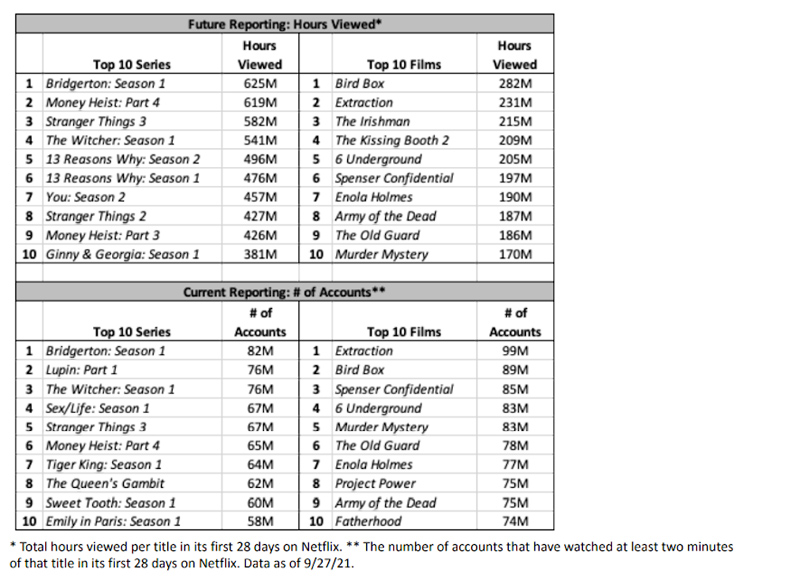
    Mumbai: OTT Giant Netflix announced its results for Q3 2021. The company grew its revenues by 16 per cent to $7.5 billion year-on-year and added as many as 4.4 million paid subscribers globally bringing its total subscriber base to 214 million subscribers.

    For the second consecutive quarter, the Asia-Pacific (APAC) region was the largest contributor to Netflix’s subscriber growth with 2.2 million subscribers coming from this region alone. The streaming giant added 1.8 million subscribers from the Europe, Middle East, and Africa (EMEA) market.

    The company forecasted 8.5 million subscriber additions for Q4 2021.

    Netflix also reported that ‘Money Heist- Season five’ and ‘Sex Education- season three’ were two of its biggest returning shows of the quarter reaching 69 million and 55 million households, respectively. Korean drama ‘Squid Game’ became its “biggest TV show ever” by reaching 142-million-member households in its first four weeks of launch. The show has ranked #1 in Netflix’s top ten shows across 94 countries including the US.

    The streaming giant said it will shift its metrics to ‘hours viewed’ for its titles rather than the ‘number of accounts that choose to watch them’ later this year.

    “There is some difference in rankings but we think engagement, as measured by hours viewed, is a slightly better indicator of the overall success of our titles and member satisfaction,” it said on Wednesday. “We will start to release title metrics more regularly outside of our earnings report so our members and the industry can better measure success in the streaming world.”

    Barring unforeseen events that result in large-scale production shutdowns the company anticipates a more normalised production slate for 2022 with even more originals releasing than 2021.

    During Q3, Netflix announced its agreement to acquire the Roald Dahl Story Company pending regulatory approval and acquired video game developer Night School Studio.

    Netflix also reported that when Facebook experienced a global outage for several hours on 4 October, the streaming platform saw a 14 per cent increase in engagement during that time period.

  • Audiences have replaced slots as the new language of transaction: Kantar’s Puneet Avasthi

    Audiences have replaced slots as the new language of transaction: Kantar’s Puneet Avasthi

    Mumbai: Following the ratings controversy in the US that led to the revocation of Nielsen’s MRC accreditation, the TV measurement Company late last month announced an “Impressions First Initiative” to support an industry-wide move to impression-based buying and selling in local markets across the US. This shift to an impression-based currency will lay the groundwork for implementing Nielsen ONE – Nielsen’s single cross-media product – across local, national, and digital measurement.

    The alacrity with which the Company has acted indicates the growing importance of CTV measurement for advertisers and how it has been at the core of the entire unrest. Closer home, similar voices are being heard, though at a much lower intensity. One may recall that at the height of the Barc TRP controversy last year, a section of the industry had expressed dissatisfaction with the ratings agency’s efforts and even intentions to bring forth a unified, cross-platform measurement system.

    According to Ormax Media’s recent research, the Indian OTT audience universe is now 353.2 million people, translating into a penetration of 25.3 per cent. This means that one in four Indians watched online videos at least once in the last one month. CTV viewing in India increased by 31 per cent as per mediasmart’s India CTV Report 2021. Amazon streaming services that were once considered niche in India are today being accessed by 99 per cent of the pin codes in the country. Now that Amazon has turned into a super app with the launch of Prime Video Channels, further massification is expected. Add to all this, the availability of linear TV on OTT platforms, and the medium becomes a staple in media plans for brands across categories.  

    Needless to say, advertisers are clamouring for a third party measurement system for OTT and a unified metric across linear and connected TV that serves all their data needs. While there is no industry body that has been recognised as the standard, individual players both global and independent, are working to meet marketers’ demands, with each contributing its own unique technology, methodology as well insights to evolve a robust and competitive OTT measurement ecosystem in the country.

    Taking the discussion forward, Indiantelevision.com’s Ashee Sharma connected with Kantar director (specialist businesses) –South Asia Insights Division, Puneet Avasthi to understand the work being done by the data and insights Company in the field of OTT measurement in India, and the shift in TV measurement over the years.

    Edited Excerpts:

    On the big shift in TV measurement

    The advertising market has seen a significant shift in recent years with the old order of having TV commercials placed on (time) slots changing. Instead of slots, audiences are being sold today, and that has become the new language of transaction. In the old linear TV viewing world where there used to be a fixed time for a content piece, we were measuring the viewership for a particular time spot. But now as viewership and programming become non-linear we have to offer audiences in terms of size and profile, at a particular point in time, and on the content of choice. This effectively means that what used to be a time-centric measurement system is today viewer-centric.

    On the challenges of measuring OTT

    OTT Measurement is challenging because, one has to not just measure the time when the audiences are available online but, also what content are they watching on the OTT platforms. In the earlier world, the task was principally to estimate how many people are going to be watching TV and which channel, and that could be used to ascertain the particular programme being watched and therefore you had the rating. Now you are estimating not just the viewership at a particular time slot, but also looking at the content that has been specifically beamed into a device. So, media measurement is going to be about both time as well as the content.

    On the problem of duplication

    In a world of multi-screeners, it is possible that a million impressions that have been counted might actually be fewer because the same individual who is toggling screens may have been served the ad multiple times. Therefore, when it comes to OTT viewership we should ideally be capturing the frequency i.e. how many times someone has watched a particular ad, and not how many times it was served. The latter is what the OTT platforms are able to tell anyway. 

    On how Kantar is addressing these issues

    Kantar, along with its partner VTION, measures OTT viewership through a consent-based app that can be installed on android devices of people who have been recruited into a 16000-strong panel online. We focus on all on-mobile viewership in towns that have a population of over one lakh. Since it is a recruited panel we have a fairly good understanding of the audience profile. The system allows us to tell the time of viewing and the content that is being watched. It is also possible to extend this service to measure ‘what ads have been served on various devices’, and therefore, theoretically speaking, it is possible to assess the reach of advertising, online.

    Another level at which we measure OTT is through the annual baseline or internet usage study called ICUBE. It is conducted on a sample size of 75000 to determine the reach of the internet across urban and rural India. Within that we track the usage of different internet services which includes video entertainment as well; OTT specifically. This gives us an idea of the reach and how it has evolved over a period of time for different OTT platforms.

    On Convergence

    Eventually, there has to be a convergence where one is able to integrate the viewership of programmes across different modes of content delivery, whether linear on OTT. That is something everybody is working towards. There are technologies that are available. 

  • OACT2021: Plugging the gap of measurability

    OACT2021: Plugging the gap of measurability

    Mumbai: The burgeoning of OTT content consumption in the past couple of years fuelled a proportional increase in the demand for third-party viewership data which, in turn, led to the proliferation of tools and technology available for digital measurement. Some of the important trends and challenges that emerged as a result of these developments were discussed at the OTT Advertising and Connected TV Summit organised by Indiantelevision.com on 7 and 8 October. The two-day event was powered by Mediasmart, an Affle Company and summit partner The Q.

    During the session titled ‘Plugging the gap of measurability’ the expert panel comprising of Integral Ad Science- India Country Head, VP Engineering & Operations – Mehul Desai, DoubleVerify- head of sales, India, Nachiket Deole, Synamedia- principal product manager, Advanced Advertising – Synamedia, Daniel Wohlfart, and Nielsen Media India MD, Dolly Jha shed light on why digital measurement cannot be a simple ‘plug and play’ game, and the need for evolving metrics, for data sharing as well as well-thought-out measurement strategies optimised for through-the-funnel advertising. The discussion was moderated by Madison World, Madison Media Sigma CEO Vanita Keswani.

    Sharing some stark facts to explain the emergence of fraud prevention as the top trend in the digital measurement space, Integral Ad Science’s Mehul Desai said, “Annually, close to 35 billion advertising dollars are lost to global ad fraud. It is the second biggest industry, after drugs, in terms of organised crime.” Daniel Wohlfart further pointed out that “almost every ad campaign in Europe comes with a built-in requirement for ad verification by third-party.”

    In the Indian context where OTT measurement is in the early stages and many advertisers are starting out on their digital journeys, trends point towards increasing awareness on the issue.

    At Neilsen, measuring the percentage of ad fraud is one of the deliverables on every campaign, yet “not more than 25-30 per cent of ad spends are getting measured currently,” observed Dolly Jha. She added that systematic and consistent measurement of ROIs, the technology and tools for which exist and are being implemented as well, has to be set in to scale up ad fraud prevention, attributions, data sharing, and other aspects of OTT measurement.

    As Desai indicated the growing importance of brand suitability for a particular ad environment and context matching in a world where “advertising has changed from being persona and user-driven to being context-driven”, Nachiket Deole of DoubleVerify shared his understanding of marketers moving beyond traditional metrics such as CTR, VTR, CPRP, and even polls and attributions to measure the impact of consumer action in real-time – how consumers are responding to/engaging with their campaigns. “We always recommend our clients to optimise campaigns on all aspects – ad fraud, viewability, brand safety. Every single impression must pass through all three quality parameters for it to become a quality impression and deliver results.” 

    With the above, almost all components for evolving a third-party cross-platform digital measurement ecosystem – the demand for which is seeing a significant push from advertisers across categories, are in place, except the industry has to work around accessing, and not breaching, the Walled Gardens. Jha shared that while there has been some tight-fisting from expected quarters “the number of publishers that have come on board for measurement at Nielsen in the past nearly 18 months has been phenomenal.”

    Concerted efforts are needed to sustain this extremely positive development towards the inevitable goal. “There is increasing awareness among the walled gardens and independent broadcasters/publishers of third-party cross-platform measurement as a thing that advertisers want to achieve. The unique identifiers that these broadcasters have are their most valuable asset; naturally, they want to be able to monetise as well as safeguard it. As platform providers, it is important for us to convince and enable them – through tech and tools – to buy at their own standards, because otherwise, the budgets are just not there,” Synamedia’s Wohlfart explained in his closing remarks to the session.

  • Mipcom 2021: Stage set for world’s largest content market

    Mipcom 2021: Stage set for world’s largest content market

    CANNES: All the naysayers must be regretting not hoofing it down to the south of France for the annual jamboree of the content trading and production community – Mipcom 2021. Not only were the planeloads coming into Nice full of TV, streaming, and feature film executives, the weather gods too seemed to be playing fair, by keeping the sun out blazing strong, and the rain away.

    The streets of Cannes were bustling with people most unmasked, the restaurants overflowing onto the sidewalks. Tables at favourite restaurants were hard to get.  Welcome Back, read the signs everywhere. It felt like the old times of the content market were back. The Palais was playing host to screening some of the most premium series and TV films. Conversations were being struck in bistros, on the Croisette, on sidewalks. There were smiles everywhere as new acquaintances were made, and old friendships revived.

    The reality, however, is that RX France (into which Reed Midem has now been absorbed) announced that it was expecting 4,000 attendees for MIPCom from 11-14 October. That may pale compared to the 13,000-14,000 professionals, it attracted in Mipcom 2019, but once again if truth be told, the number is impressive in pandemic times:

    – when only select vaccines are recognised in Europe;

    – when media and entertainment companies are still reeling from the financial side effects of covid 2019;

    – when travel red alerts and bans continue to be in place between nations;

    – when corporate cutbacks have not been reversed,

    – when fear and confusion continue in the minds of all about the stage we are in conquering the virus

    – when the virus continues to mutate and the new Delta Plus bug now seems to lay millions to waste the world over.

    For those not in the know, the Palais’ basement or P-1 where almost 30-40 per cent of the exhibitors used to collect in their booths, is shut this year on account of safety protocols. Riviera 7 area is this year’s new basement as the premium area has been reorganised to accommodate as many booths as possible. But it is here where some of India’s leading content producers, distributors, has decided to locate themselves.

    Zee Entertainment (called Zee Content Sales), Indiacast, and AnimationXpress (part of Indian Television Dot Com group) have set up the tent in this very premium location. Around 35 Indians are slated to attend this year’s extraordinary Mipcom. Among some of the known professionals: the new head of Zeel content syndication Ashok Nadmboodri, the new Indiacast distribution boss Sheetal Mehra. Of course, Mipmarkets India, Pakistan Sri Lanka, and Bangladesh head Anil Wanvari was seen going from stand to stand to resolve any issues Indian clients face or requests they may have.

    Hopes were running high that offers would be made; deals and collaborations would be struck from 11-14 October.

    For those in the Riviera 7 and eight sections of the Palis de festival, however, things were buzzing as the clock counted down to the opening of the exhibition. And those who have chosen to stay back home can also be part of the Mipcom experience by signing up for the digital version of MIPCOM.  With a simple-to-use user interface and networking tool, RX France has outdone itself, corrected, whatever errors popped up in the previous edition.  

  • OACT2021: What are the opportunities for OTT & CTV advertising

    OACT2021: What are the opportunities for OTT & CTV advertising

    Mumbai: Is it the right time for monetisation of OTT from a business perspective for advertisers?

    This set the ball rolling for the panel discussion on – ‘The opportunities for OTT and CTV Advertising’ on the first day of the OTT Advertising and Connected TV Summit being organised by Indiantelevision.com. The two-day event is co-powered by mediasmart, an Affle company and summit partner – The Q. 

    The panel was led by Patanjali Ayurved COO-media and communications Anita Nayyar, Airtel VP-media Archana Aggarwal, Pyxis One CEO- APAC Neel Pandya, Samsung Ads India & South East Asia – senior director Prabhvir Sahmey and moderated by EY partner and national leader – advisory markets Monesh Dange. 

    Responding to the question, Nayyar highlighted that the time is perfect for monetisation for OTT platforms, as the content has never been more important than now in the pre-, post-, and during the Covid-19 time. “For advertisers, ROI is very important. The clichéd conversion will always stay as it is. But as of now, the industry is at an evolving stage that is clearly a top of funnel scenario with reach, awareness, engagement -all that’s happening. But whether we can attribute that directly to a bottom-funnel is not very clear at this point of time,” she added.

    On whether the digital boom in content was bound to happen or it happened due to the time available on hand due to the Covid-19 era, Airtel’s Archana Aggarwal noted that the start of the revolution was with the crash in data prices and affordability of smartphones and people using a lot of mobile internet. “Obviously, Covid accelerated it due to the dearth of new content on linear Television and no new movies being released in theatres, etc. But it was a matter of time that people would start consuming a lot of content on OTT,” she said.

    Talking about how majority of the premium content available on OTTs is behind the paywall, Aggarwal said, “What is it that the OTTs want to monetise- Do they want to monetise through advertisements or through subscription? That is something which OTT players need to think through – how to find the right balance between the two.”

    Neel Pandya of Pyxis One added another insight on the OTT boom by commenting that it takes just twenty-one days for a person to build a habit and they were talking about 1.5 years of watching digital content. “So it’s a very strong habit which consumers have built and it’s not going to go easily,” said Pandya. “Obviously it’s not an artificial boom completely, but it has gone 5X from what the acceleration would have been in normal circumstances.” 

    From Samsung Ads’ perspective, Prabhvir Sahmey said, “We are relatively a new business and also a unique proposition where we are bringing the advertising opportunity directly on the device itself, it’s not running on the back of a content.”

    He added, “It’s still at a very nascent stage, in fact we are in a testing category. We will try to plug the gap in measurability, and develop a multi-device solution for advertisers.”

    Taking the discussion further, Pandya said it is high time that OTT as a platform starts attracting ad spends, attracting avenues. “It is growing globally really fast. The only new thing we need to attract new users is measurement. OTT needs to bring more customised solutions for brands and take some bold decisions,” he added.

    Nayyar shared insights on the current dynamics of OTT and how it is similar to what happened a couple of decades back on television from one Doordarshan to multiple TV channels when the satellite boom materialised. “So it is important for OTT players to put some skin in the game collectively as an industry with accountability and measurement if they want to scale up monetisation,” she added.

    Talking about Patanjali and its investment in OTT, Nayyar said that Patanjali is working to upgrade the brand and make it more premium by targeting the youth. “OTT is a very important medium to influence youth. The first deal we went with was Dance Plus on Disney Hotstar,” she added. 

    While Airtel has been advertising on OTT as well as connected TV for a long time now, and have been experimenting with it. “We are looking at on-target reach & duplication of audience. It’s important for us to look at what kind of audience the platforms are giving us. We have evolved from being broad-based to being more targeted, focused on a set of audiences,” shared Aggarwal.

    Transparency, when it comes to the results of the campaign, is a very critical factor, was agreed by everyone.

    Prabhvir Sahmey of Samsung Ads said the elephant in the room for every publisher is revenue ad risk and that has to be addressed. “Everybody knows there is significant overlap at the end-user behavior,” he added.

    With acceleration to OTTs, the question of whether television is going to disappear was met with a unanimous ‘No.’ The panelists agreed that TV as a screen or as a medium is not going anywhere. At the most, it may evolve to connected TVs, rather than remain as a device of one-way linear transmission.

    For more information: https://indiantelevision.com/events/oact-summit-2021/

  • OACT2021: The evolution of Connected TV in India

    OACT2021: The evolution of Connected TV in India

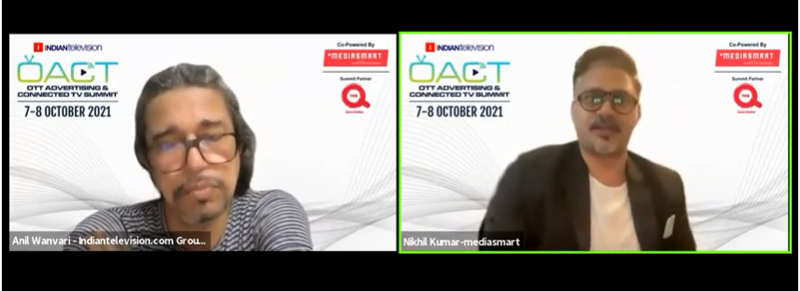
    Mumbai: The addressable connected TV (CTV) advertising universe is estimated at six to eight million, according to mediasmart, an Affle company, India and SEA, senior director- brand and strategy Nikhil Kumar.  The CTV evolution has arrived in India. Today, you can easily join the CTV ecosystem via a smart TV, dongle, gaming console, or connected set-top-box (STB).

    Kumar was addressing the ‘OTT Advertising and Connected TV Summit 2021’ organised by Indiantelevision.com on 7 October. The two-day event is co-powered by mediasmart, an Affle company and summit partner – The Q. Stakeholders across the industry engaged in insightful discussions on the dynamics of OTT and CTV advertising.

    The growth of CTV in India is driven by several factors. Chinese manufacturers have played a pivotal role by introducing low-cost smart TVs for as much as Rs 15,000. Low-cost dongles like Amazon Firestick and Google Chromecast are popular ways to access web content. Jio has led the adoption of connected STBs. These technologies have driven the penetration of the CTV market to a point where you don’t necessarily have to be from a metro or Tier-1 city to be a part of the CTV ecosystem. According to a report by Counterpoint Research, India’s smart TV market saw 65 per cent year-on-year growth in Q2 2021 due to increasing demand.

    Some may conflate over-the-top platforms with CTV but they are completely different ecosystems. While OTT can be seen as a subset of the CTV ecosystem, its journey began almost two decades back with Netflix. Certainly, a majority of the usage on CTV is driven by OTT viewing. A report indicates that 91 per cent of users watch movies on CTV, there is also a small but growing audience that is listening to music, playing games, and catching up on the news.

    “CTV is reaching an incremental base of evolved users who have come into the ecosystem to enjoy everything that the internet has to offer,” said Kumar, adding that the pandemic has played the role of a catalyst for CTV.

    “People confined at homes realised that linear TV was mundane because of repeated content and were looking at new ways to entertain themselves,” he added. It helped that India has the cheapest data costs in the world at $ 0.09 per Gb. A survey showed that 78 per cent of smart TV users were accessing the internet via direct apps instead of search and discovery platforms.

    Even though the base of CTV was nascent compared to other media, mediasmart was excited to tap into the opportunity. “We’ve always been a platform that’s believed in strong digital ownership of the consumer journey,” said Kumar.

    The company did not look at CTV in isolation. When it targeted a CTV household, it assumed that there were three to four members in the household who owned a smartphone. They developed a technology system called ‘Household Sync’ that maps the user journey on CTV and mobile.

    Marketers have always bifurcated between brand and performance, opined Kumar. “Here’s a technology that puts your brand advertising on the largest screen possible but also delivers middle and bottom-funnel conversions, so it takes you across the entire funnel. At mediasmart, we’ve always valued metrics such as cost per conversion and verticalisation approaches.”

    mediasmart’s solutions looked at delivering immediate action-oriented feedback to advertisers on the brand impact. Their platform allowed them to look at completion rates on TV followed by retargeting on mobile devices. It also let them measure click-through rates to analyse if the brand was reaching the last mile. “Ultimately, what every brand is concerned about is the bottom-funnel,” opined Kumar.

    The CTV market is growing in double-digits month-on-month that will lead to an increase in users, advertising penetration, and reach. In markets like the US, the share of video impressions on CTV is as high as the share of video impressions on mobile. While the US was never a major mobile market, unlike India, Kumar explains that the opportunity is still attractive because even though the base is small, the impact is large.

    He added, “There is a lot of headroom for CTV to grow in India. There is still a significant base of box TV users in India who may potentially migrate to low-cost smart TVs. Apart from cord-cutting, there is a whole new generation of ‘affluent cord nevers’ who are opting for CTV systems over DTH and cable connections.”

    (Source: India CTV Report 2021 by mediasmart, an Affle Company, VTION, and Interactive Avenues)

    For more information: https://indiantelevision.com/events/oact-summit-2021/