Tag: OTT

  • Zee5 unveils its content line-up for 2022

    Zee5 unveils its content line-up for 2022

    Mumbai: The video streaming platform, Zee5 has unveiled their blockbuster content slate for 2022 with 80+ titles spanning across Hindi, Tamil, Telugu, Punjabi, and Bengali.

    The slate encompasses 40+ original shows and 40+ movies featuring an expansive gamut of genres, including cutting-edge thrillers, high-voltage action, gripping dramas, light-hearted comedies, and soul-stirring romances.

    In line with its content strategy, ZEE5’s vision is to narrate stories that mirror the viewer’s soul and cater to every consumer cohort across the country. As part of this approach, ZEE5 has also announced collaborations with leading creative minds like BBC Studios, Applause Entertainment, The Viral Fever (TVF), along with powerhouse cinematic talent like Vetrimaaran, Prakash Raj, Amitabh Bachchan and Nagraj Manjule amongst others.

    The slate of Hindi originals includes the riveting, TAJ – an epic tale of succession, the much-anticipated Forensic, Duranga – a romantic thriller, latest seasons of audience favourites like Abhay 3, Pitchers 2, Sunflower 2, Tripling 3, Never Kiss Your Best Friend 2 and Rangbaaz 3 amongst many more.

    Amping up the ante, the platform will also feature the digital release of some of the biggest theatrical blockbusters like The Kashmir Files, Amitabh Bachchan’s Jhund and John Abraham’s Attack to name a few.

    The content slate also comprises a strong line-up of regionals, with the recently launched Anantham and Gaalivaana along with some of the most awaited shows and movies in Tamil, Telugu, Punjabi, and Bengali like Nilamellam Ratham, Fingertip S2, Paper Rocket Recce Kinnerasaani, Yaar Anmulle Returns, Fuffad Ji, and Main Viyah Nahi Karona Tere Naal, Shikarpur, Raktakarabi and Swetkali.

    https://f.io/I3EUz9By

    Commenting on the announcement, Zee5’s chief business officer Manish Kalra said, “We are enthused by the response that Indian OTT viewers have given to Zee5, it has further encouraged us to curate a slate that caters and connects to the audiences across India. As a consumer-first brand, we have invested in expanding our creative pool bringing India’s diverse talents, creativity, culture, and stories closer to the people across the nation and to the global audience.”

    “The growth has been remarkable with a significant share coming in from the regional markets, as we bolstered our presence in South and Punjab. We have increased our investments with a concerted focus on regional content as we stand open to partnerships with global studios, independent creators, and premium content production houses across regions and languages. At Zee5, the vision has been to be the platform of choice and I am certain the 2022 slate will address the varied interests of today’s audience,” he added.

    Speaking about ZEE5’s content strategy and the new content slate, Zee Entertainment Enterprises, president-content and international markets, Punit Misra, said, “Over the last couple of years, the OTT ecosystem has undergone a significant transition due to constantly evolving consumer preferences and consumption patterns. At ZEE5, our #SoulToScreen approach continues to be a critical pillar in conceptualizing the content slate for various markets and designing our content strategy. We are proud to unveil our content slate for 2022 across languages and reaffirm our commitment of engaging viewers with premium quality content. Keeping in mind the dynamism of this ecosystem and our sharp insights into India’s diverse cultural preferences, we are confident that ZEE5’s extensive mix of new originals and movies will be successful in entertaining audiences in India and globally.”

    Zee5’s chief content officer Nimisha Pandey added, “At ZEE5, our endeavor has been to narrate real, authentic, compelling stories, and expand the canvas of entertainment; a strategy aimed to cater to our multiple consumer cohorts. We have already begun 2022 on a great note, with encouraging audience response for Mithya, Love Hostel, Abhay 3, and Bloody Brothers to name a few. At ZEE5, we are obsessive about new ideas, narratives and working with exceptional creators who are passionate about their craft. Our slate for 2022 encompasses all of this and much more, and we are confident of raising the entertainment quotient further as we move forward. We are certain 2022 will be a power-packed year for our viewers with intriguing, inspiring, and innovative storytelling.”

    Zee5 also has a robust slate planned for their Tamil, Telugu, Punjabi and Bengali-speaking audiences as well. The recently announced Tamil slate includes names like Valimai, Nilamellam Ratham, Anantham, Paper Rocket, Five-Six-Seven-Eight, Alma Mater, Ayali, Thalamai Seyalagam, Fingertip 2, Kolaigara Kairegaigal and Aindham Vedham. The Telugu slate includes titles like Gaalivaana, Kinnerasaani, Recce 2, ATM Prema Vinam ,Maa Neella Tank and Aha Naa Pellanta. The Punjabi content titles on the platform include Yaar Anmulle Returns, Fuffad Ji, and Main Viyah Nahi Karona Tere Naal, along with Bengali titles like Shikarpur, which marks the OTT debut of Ankush Hazra, Raktakarabi featuring Raima Sen and Vikram Chatterjee, and Swetkali. These titles will join marquee names like Radhe, Uri: The Surgical Strike, Break Point, Rashmi Rocket, Sunflower on ZEE5.

  • Netflix, Formula 1 announce new seasons of ‘Drive to Survive’

    Netflix, Formula 1 announce new seasons of ‘Drive to Survive’

    MUMBAI: The OTT platform Netflix and Formula 1 have announced the renewal of the popular docu-drama Drive to Survive Season fifth and sixth on Netflix. Season four has been accepted by the viewers in 33 different nations. 

    The next season will be held in 2023 and the show will continue on Netflix till 2024, according to the media report.

    Netflix claims that the show has grown in popularity over time and in its last season has attracted the biggest audience. 

    The new seasons will once again take fans behind the scenes, to witness first-hand how the drivers and teams prepare to battle it out for the next season. The series will offer never-before-seen footage and interviews from the sport’s biggest names.

  • OTT has democratised storytelling and consumption: MX Player’s Gautam Talwar at Goafest’22

    OTT has democratised storytelling and consumption: MX Player’s Gautam Talwar at Goafest’22

    Mumbai: The OTT ecosystem in India has been growing by leaps and bounds in recent years, with new players coming into the fray every day and novel, edgy content being churned out. The way we look at online streaming is also changing with it emerging as an exciting prospect for an increasing number of marketers and advertisers keen to promote their brands and ads on these upcoming platforms.

    The day two of Goafest saw actors Vikrant Massey and Ali Fazal along with MX Player chief content officer Gautam Talwar taking centre stage to talk about the topic ‘OTT Superpower – Freedom and Nuances of Creativity.’ The panelists spoke about how OTT has changed consumer behaviour in regards to content and democratised content, in the session moderated by anchor and creative director Atika Farooqui.

    “While still a nascent industry in India, OTT has given a platform for creators and writers to explore their skills, and the exposure to international content made them pull their socks up,” said Vikrant Massey, adding that in the last two years of pandemic the platform presented a tremendous opportunity to explore newer avenues.

    Ali Fazal said that with the amount of diverse OTT content available today on the varied players, the competition is spiking, with each show at the risk of being just one button away from rejection. “The relatable and realistic content on these streaming platforms showed that writers are the real stars today. With films still trying to get out of formula-based structure, that’s where OTT gets a little freedom. By pushing the bar and breaking the rhythm. Tell stories as fearlessly as we can within the framework,” said Fazal.

    Upon being asked if there is a sense of competition among the two media, Fazal stated, “Cinema must not die. Film watching is community watching. Every person in the industry comes with the dream to be a part of movies and this dream always remains. Idea of OTT is just to be able to tell more stories, follow newer narratives.”

    On whether OTT can cater to family audiences like cinema and TV, Gautam Talwar said, “OTT content is for personal watching. 95 per cent of people watch on their personal phones. Only the elite or urban audiences perhaps will have access to chromecast and connected television sets supporting the platforms, adding that these are not necessarily the target audience of players such as MX always. Family viewing is far away for OTT or may never happen as there are less percentage of people who would want to sit with family and watch the online streaming content.”

    He further summed it up by saying, “India or Bharat is a time rich and money poor country and that is what we consider while targeting.”

    “Freedom cannot be absolute and like in other mediums, with Freedom comes responsibility,” the panelists agreed. “What OTT has managed to do is democratise storytelling. It’s a genre of storytelling that’s not been available to audiences ever.”

    The panelists also weighed in upon the changed prototype of the ‘likeable hero/heroine’ brought on by the OTTs. “Every content is essentially an extension of the world and times we are living in,” said Fazal. “We want people who are relatable and accessible on screen, characters whom viewers can relate with- not a demi-god to worship or characters in black and white.”

    On the concern that less than 10 per cent of the viewers on the Online streaming sites have subscribed for consumption, Talwar admitted it’s going to be a tough battle towards monetising the content, as Indians inherently don’t believe in paying for content.  That’s also the reason why piracy remains a big issue in the country.

    “The reach to mass India is one of the greatest advantages for OTT players like MX player,” said Talvar. “There is no appointment viewing, and most viewers on OTT watch as per individual convenience. The OTT ecosystem is a melting pot of all the three platforms of films, advertising and television with both short and long form content,” he added.

  • aha unveils its content line-up, 40 titles in plan for May

    aha unveils its content line-up, 40 titles in plan for May

    Mumbai: The regional OTT platform, aha has announced on Thursday a stellar content slate for the month of May, which includes 40 titles for their Telugu section.

    The new titles will provide 100 percent local entertainment to the people globally. The slate, directed by some of the industry’s best filmmakers, will include regional programming as well as the most popular Hollywood films, which will be available in the Telugu section of aha. Viewers will be able to watch international titles, which include,  Sam Raimi’s Spiderman series, the Men in Black series, Django Unchained, Black Hawk Down and others.

    Overall, the platform will make over 30 Hollywood films available in Telugu to their audience.The launch of the regional slate in May also ensures that the platform maintains the innovative and diverse content library with the continuation of Telugu Indian Idol, one of the emerging local talent shows hosted by Sree Ram Chandra, with actress Nithya Menon, music composer Thaman, and singer Karthik as its judges.

    The other high profile reality show that will continue in the month of May will be the second season of the super hit reality game show Sarkaar, hosted by Pradeep Machiraju. The season started on 29 April.

    Fahad Fasil’s Thondimuthalum Drikasakshiyum, a national winning film is set to premiere as “Dongata”. The film will exclusively premiere on the platform this week on 6 May from 12 am.

    Speaking on the launch for the month, aha’s ceo Ajit Thakur said, “We at aha are focused on offering diverse content that appeals to all age groups. The platform is expanding and diversifying itself by creating an original slate and streaming highly popular Hollywood films in the local language. We have recently launched a stunning Tamil slate in association with immensely talented creators. However, our stint in curating and creating Telugu content for the local audience has already made aha, a reliable platform for accessing Telugu entertainment.”

  • Goafest 2022 returns after a gap of two years to inspire

    Goafest 2022 returns after a gap of two years to inspire

    Mumbai: Goafest returns back once again! For advertising and media businesses, it is one of the important celebrations. 15 years of Goafest is truly a special milestone. What makes it more special is that it is being celebrated after a gap of two years. Many have braved the hard times as it got affected due to covid pandemic.

    The pandemic brought forth the superpower within each one of us. When we thought we were down and out, we were compelled to dig deeper and find courage and resilience. Not just people, businesses discovered their own unbeatable spirit to survive and thrive, so did governments and countries. Now, it is time to acknowledge this power within each one of us that makes us unique, that enables us to face challenges with ease and helps us make the world a better place. It is time to celebrate “The Superpower Within”.

    The event will bring together under one roof 28 highly accomplished, power-packed speakers, who will share valuable insights of their knowledge on content, creativity, strategies, stories and experiences from new-age media like OTT, social media, gaming, health & wellness along with an attention to policies and regulations.

    Goafest will have iconic personalities from Indian Sports and Bollywood inspiring us with their achievements and stories of strength. The festival will focus on the superpower of Bharat and its growing digital reach, and on the rich startup ecosystem with Shark Tank India’s Vineeta Singh of SUGAR and Unicorn builder, Ankush Sachdeva. No growth can be achieved if personal well-being is ignored, and for that, we have the exceptional Rujuta Diwekar, nutritionist and influencer.

    There will be the presence of stalwarts like SS Rajamouli, Kash Sree and Menno Kluin amongst others. The story of perseverance from a graceful actress like Madhuri Dixit along with stories from the fearless Kiran Bedi, the indomitable PV Sindhu, the courageous Mithali Raj and the man with the unwavering faith to win, Kapil Dev! In addition to this, leaders like Level Ex founder and ceo Sam Glassenberg, Ministry of Consumer Affairs & Food Distribution’s Secretary, Aqilliz’s Ceo Rohit Kumar Singh, Gowthaman Ragothaman co-founder Web3 Marketing Association,   Sandeep Bhushan, Director & Head of GSM (Global Marketing Solutions) India, Meta will share their invaluable insights.

    There will also be nine empowering Knowledge Masterclasses this year including topics like ‘The Power of Camera Marketing’, Creative workshops by FCB Ulka, Snapchat, Publicis Groupe and many more interesting workshops from Meta, Sharechat, and Google.

    Entertainers like Sukhbir and Shilpa Rao will be performing at the event. The event will take place between 5-7 May at Grand Hyatt, Goa.

  • Kaushik Izardar takes over as CEO of Sarrva Productions

    Kaushik Izardar takes over as CEO of Sarrva Productions

    Mumbai: Sarrva Productions Studio and a new kids-centric OTT service by Sarrva Studio has announced the onboarding of Dr Kaushik Izardar as it’s new chief executive officer.

    Sarrva Productions will create content across fiction, non-fiction, digital programming as well as films. Commenting on this OTT venture, Izardar said, “We will be launching Kids exclusive OTT platform very soon by creating innovative and engaging content.”

    Izardar previously served as executive director of EORTV.

    “Little over two years ago, I took a big leap & had set up EORTV. Setting EORTV is in fact have been the most exciting time of my professional life. My Journey has ended but boy what a ride it was! Very rarely do you get a chance to build a product at such an immense scale and like to wish the team all the best for taking it ahead,” he further added.

    Izardar earlier also worked with media conglomerates including Viacom18 Media, Zee, INX Media and Fulford India Ltd (Subsidiary of Merck & Co, USA). 

    He has also been an entrepreneur with exchange4media as Chief Business Officer and COO in Asia TV.

    Izardar has a Doctorate in Philosophy (PhD). He has completed his thesis under Dr Piyush Sinha (IIM- Ahmedabad). He has a MBA in marketing and has completed his senior strategic management from IIM Kolkata. He did his graduation from Visva Bharati University (Siksha Bhavana- Santiniketan), founded by the renowned poet and noble prize winner Rabindranath Tagore.

  • Amazon Prime Video announces its biggest content slate for India

    Amazon Prime Video announces its biggest content slate for India

    Mumbai: Amazon Prime Video is all set to launch its biggest content slate in India. The streaming major on Thursday announced over 40 new titles in Hindi, Tamil and Telugu, across original series, original films and co-productions that it plans for over the next twenty-four months.

    Prime Video also announced its foray into original film production in India with films in Hindi and Telugu, to be released directly on the servics and new multi-year licensing deals and co-productions with some of India’s biggest and most successful studios.

    The service recently completed five years of service in India, and announced that it will more than doubling its investment in Prime Video India over the next five years.

    The upcoming Amazon Originals will enthral customers by offering a wide gamut of genres, ranging from cutting-edge thrillers, high-octane action, engaging dramas to light-hearted comedies and heart-warming romances. The service is augmenting its original programming for young adult audiences, and also exploring genres like supernatural and horror for the first time in its India journey. Furthermore, Prime Video is enhancing the scope of its unscripted series catalogue to explore genres like biographies, true-crime and investigative docu-dramas.

    Prime Video aims to be a home for talent. It is working with a wide set of diverse creators with unique, cinematic voices from across the country. Almost 70 per cent of the new upcoming titles will feature new talent – both in front of and behind the camera.

    After launching Prime Video Channels last year, in another significant step towards creating a video entertainment marketplace, Amazon also launched Prime Video Store, its transactional video-on-demand (TVOD) film rental service in India. Customers can now get early access to the latest Indian and international films, including a rich catalogue of popular films from around the world on a transactional (per-film) basis.

    Prime Video’s customer footprint is set to expand even further as the TVOD rental service will be available to all Prime members, as well as, anyone who isn’t a Prime member. Customers will get early rental access to movies across languages and the rental service can be accessed via the store tab on and the Prime Video app, said the statement.

    Commenting on this, Amazon Prime Video India country head Gaurav Gandhi said, “In the last five years, we have built a strong slate of locally produced content across languages, super-serving the diverse entertainment needs of Indian customers.  With increased access and distribution, we have helped these great stories travel far and wide in India, and around the world. We have played a key role in helping expand the linguistic palette of Indian customers, thereby, increasing the audience base for creators and talent.”

    “Prime Video India today sees viewership from 99 per cent of the country’s pin-codes. India continues to be one of Prime Video’s fastest-growing & most engaged locale globally. We are humbled by the love we have received from our consumers and continue to be deeply committed to delighting our customers with great content, while also fuelling the creative economy,” he added.

    Speaking about the multi-pronged approach on expanding the movies segment in India, Gandhi added, “In tune with our vision to become the most-loved entertainment hub, we have steadily innovated in the way we offer movies to our consumers, from offering films in a post-theatrical early-window to direct-to-service premieres bringing the most anticipated films to consumers’ living rooms and preferred devices. We are deeply committed to grow this segment further and are going bigger on our film licensing partnerships, expanding our co-production initiatives and are now excited to announce our foray into original movies. In addition to our investments in great content, we are super excited about the launch of our TVOD film rental service, that will not just give even more expanded reach to these films but also give customers more choice in how they want to access and watch content.”

    Elaborating on the expansive content slate, Amazon Prime Video head of India originals Aparna Purohit said, “Our mission has been to tell compelling, authentic and rooted stories that not just connect with audiences in India but resonate with audiences across the world. We feel humbled that the characters of our shows and films have inspired new archetypes, blazed a new trail, and in fact, become a part of the cultural zeitgeist. As we move forward, we are excited to partner with some of the most prolific creators to bring forth powerful stories across different formats, genres and languages for our customers. We are confident that our upcoming slate of shows and films will transcend all barriers of language, nationality or formats.”

  • Ad spends are likely to get impacted if consumption reduces: Carat India CEO Anita Kotwani

    Ad spends are likely to get impacted if consumption reduces: Carat India CEO Anita Kotwani

    Mumbai: In March this year, India completed a year of double-digit wholesale price inflation (WPI inflation). This is the sixth occasion when inflation has remained over 10 per cent for a year or longer, and it came more than a quarter of a century after the last such episode — between March 1994 and May 1995.

    In an exclusive interaction with IndianTelevision.com, Carat India CEO Anita Kotwani noted that inflation is already impacting FMCG which is the broadcast industry’s highest ad spender. She offers her take on the impact of inflation noting that right now ad spend patterns are unlikely to be impacted and the market is recovering from Covid-19. But she warns that if the price of commodities significantly goes up, then that could impact consumption negatively. And ad spends are the easiest to cut back on when commodity prices rise. She offers the example of domestic aviation cutting back on TV ad spends in a significant manner so far this year. On a more positive note, she sheds light on the resilience of TV as an ad medium.

    Edited excerpts:

    There is talk about high inflation. How is this impacting companies especially FMCG?

    High inflation is likely to bite into the FMCG sector’s volume growth in 2022. Retail inflation in India rose to a seven-month high from 6.01 per cent in January, breaching the upper tolerance level. The rise was mainly on account of high food inflation, which jumped to a 14-month high of 5.43 per cent, along with a high base.

    A majority of FMCG companies have already reported a decline in volume growth in the third quarter of FY22. At this juncture, FMCG firms face the dilemma of choosing between margins and volumes. However, the analysts believe that protecting the margins will further impact volumes as consumers will hold back consumption.

    A recent Nielson IQ report suggests that demand in the rural segment has taken a hit, with volume growth declining by 2.9 per cent. Inflation in the price of fertiliser and diesel has impacted the disposable income of the farmers, thus, impacting the consumption in the rural regions.

    Some of the recent reports also suggest that consumers may have to pay more for their daily essential items. Since the FMCG companies are mulling over another round of price hikes, to offset the impact of an unprecedented level of inflation in commodity prices such as wheat, palm oil and packaging materials. A 10-15 per cent hike is expected across industries. The market is volatile as of now, therefore, brands will consider multiple factors before finalising the incremental in the price for their product.

    Do you see clients’ ad spending getting impacted in the coming quarters as consumer sentiment turns negative and spending slows down?

    Currently, the negative sentiments are not very strong and things are still volatile. Ad spends are likely to get impacted if consumption reduces. However, the impact on consumption will be determined by the increase in the cost of the product. Yes, the essentials are getting a bit expensive but that is largely due to the increased fuel cost led by the Russia-Ukraine conflict. Apart from that, the market has been steadily recovering from Covid and the advertiser spend patterns are unlikely to see any impact. Only if the price of commodities significantly goes up, then that could impact consumption negatively.

    Which are the sectors that you see coming under stress due to inflation?

    As per the Consumer Price Index (CPI) of March 2022, India stood at an inflation rate of 6.95 per cent.

    Amidst the hardening of fuel prices, India’s wholesale price-based inflation quickened to 14.55 percent in March from 13.11 percent in February. Retail inflation for March has also climbed to 6.95 per cent, a 17-month high. According to the country’s CPI-based inflation report, the spike in prices was led by food items.

    A continuous rise in fuel prices since March 22 has not been completely captured in the latest data, suggesting that inflation may remain elevated in the coming months. A surge in crude oil prices to a 14-year high has resulted in broad price pressures on Indian households.

    Among food items, the index for oil and fats recorded the largest sequential price hike, by 5.3 per cent in March. This may raise pressure on the government to make edible oils cheaper.

    The worst affected sectors include food (+1.4 percent over February), clothing and footwear (+0.9 percent over February), and fuel and light (+0.9 percent over February).

    Do you see urban and rural India both being equally affected?

    Since the beginning of 2021, inflation has started to see a gap between urban and rural geographies. For rural consumers, their basket has a higher weightage on food and essentials. Whereas, for urban consumers, the non-food items dominate their shopping baskets as well. Recreation (malls/cinemas) also impact urban consumers more than rural.

    While the inflation gap between urban and rural audiences is always going to remain, rural is also likely to see an impact in consumption due to increased prices of fertilisers and diesel. This impacts the disposable income of people in the rural region.

    The people who are most affected by rising inflation are the final consumers of goods. The prices of goods and services are constantly rising. However, the salaries and income of consumers do not rise proportionately. Hence, there is a lag leading to goods and services becoming less affordable to the final consumers. The CPI inflation witnessed significant and sustained moderation during 2012-13 to 2018-19, before rising thereafter.

    Rural and urban inflation exhibited a similar trend; the only difference witnessed was that urban inflation started rising from 2018 to 2019.

    Moreover, the annual average urban inflation which was ruling below rural inflation till 2017-18, moved above it during 2018-19 and 2019-20 (Chart 1a). Food and non-food inflation contributed to the divergence between urban and rural inflation (Chart 1b).

    The consumer food price inflation for rural areas was 3.94 per cent in March 2021. It went up to 8.04 per cent in March 2022. Similarly, the CPI for rural India has also gone up to 7.66 per cent in 2022, from 4.61 per cent in March 2021.

    The rural food inflation in March has also registered a steep hike in comparison to February 2022. It has gone up to 8.04 per cent in March, from 5.81 per cent in February.

    The Consumer food price inflation for India as a whole, including rural and urban, has gone up to 7.68 per cent in March 2022, from 4.87 per cent in March 2021. Given this understanding, yes, inflation will impact rural and urban consumers equally.

    What does the media industry need to do to prepare for growth potentially not being as smooth?

    Ad spends are the first and the easiest way to cut costs during times of high commodity prices. It is already evident. Hit by high aviation fuel prices, domestic airlines in the country have cut television advertising by as much as 27 per cent , during the first five months of the year.

    When companies try to reduce the ‘extra’ spending, the packages provided by marketers for consolidated marketing become way more lucrative for the brands concerned.
    It is imperative for brands to understand that the focus of cost-cutting should be on reducing wastages and not reducing activity that can generate future sales or build a brand.

    When a brand is in its growth phase, a reduction in ad spends is unadvisable, even during times of inflation. If a brand is sensitive to media ad spends, which consequently drives movement in business impact, then they too should not cut ad costs. This education to brands by media agencies and partners is imperative.

    360-degree media campaigns are the most lucrative campaigns. They combine the most effective and efficient mediums that drive business impact for the brand and further boost media outcomes to the best possible, depending on the category.

    Exploring newer advertising options like addressable TV, geo-fencing on digital, digital OOH and interactive print is not only more efficient but far much more sharp-targeted to the audience, avoiding spillage and minimizing costs.

    Is there a likelihood of revising the projected ad spend growth of  Rs 82,500 crore?

    As an industry we are keeping a close watch on how the media spends are progressing, advertisers and agencies have come to terms that things need to normalise despite rising in covid cases, we will have to co-exist with the virus and continue business as usual. We are hopeful that the situation will not deteriorate, and growth projections if needed will be upward only.

    It is a bit unclear right now if the projection for the ad spends will get changed. There has to be a situation as major as the 2020 Covid crisis for the ad spend projections to change significantly.

    Will print be the first medium to suffer if clients cut back on spends? What is your take?

    In a world wherein all media inputs are determined by ROI, print is the low-hanging fruit. It always witnesses cuts whenever there are budget cuts. A lot of marketing mix modeling (MMM studies) show that for a lot of FMCG brands, print has the lowest ROI, and hence print is always under the scanner.

    Dentsu’s ad forecast report mentioned TV being the most resilient. What is the reason for this?

    Linear television remains to be the most popular and resilient media in India with a 40 per cent share of spend. Linear television ad volumes continued to post a healthy growth starting H2 2021, as marketers leveraged the reach and power of TV to raise the profile of their brands.

    We have seen this in the past as well. In 2021, the TV spends were fully recovered and since TV is still the highest reach building media, brands must leverage TV for building equity and for the movement in top-funnel metrics. While there has been a shift in content viewing with some audiences moving from TV to OTTs and demand for OTT advertising is rising, the impact on TV spends is minimal.

    On TV which are the top five properties for an advertiser?

    The properties are bucketed under different genres and are listed below:

    ⦁ Cricket – IPL & CWC
    ⦁ Dance Reality Shows (“Dance India Dance,” “Dance+”)
    ⦁ Singing Reality Shows (“Indian Idol,” “SaReGaMaPa”)
    ⦁ Unscripted Shows (“Bigg Boss,” “Fear Factor”)
    ⦁ Fictions/Scripted Shows (“Anupama,” “Imli,” “KumKum Bhagya”)

    Will smaller genres like music continue to find the going difficult?

    Over the last couple of years, there has been a drop in the viewership of the music genre. A major reason is the movement of audiences from music to news and film genres, especially post Covid. Additionally, music listeners who also like to watch music videos have moved to YouTube to watch the videos of their choice. While the viewership for smaller genres will continue to remain low, relevant brands can still look at these genres for the right targeting. Brands targeting youth and females can look at this genre to build frequency.

  • VidNet 2022: Advertising On OTT – the way forward for the industry

    VidNet 2022: Advertising On OTT – the way forward for the industry

    Mumbai: The OTT ecosystem in India is growing every day with new players coming into the fray and novel, edgy content being churned out. The way we look at online streaming is also changing. Today the market has 40 odd players including regional players. For these platforms to sustain, there are two ways- one: is the AVOD, that’s advertising-supported and the second is the SVOD which is subscription-supported. In a market like India, SVOD remains a challenge. Even as the OTT subscription market in India continues to grow at a gradual pace, it remains an exciting prospect for an increasing number of marketers and advertisers who are keen to promote their brands and ads on these emerging platforms.

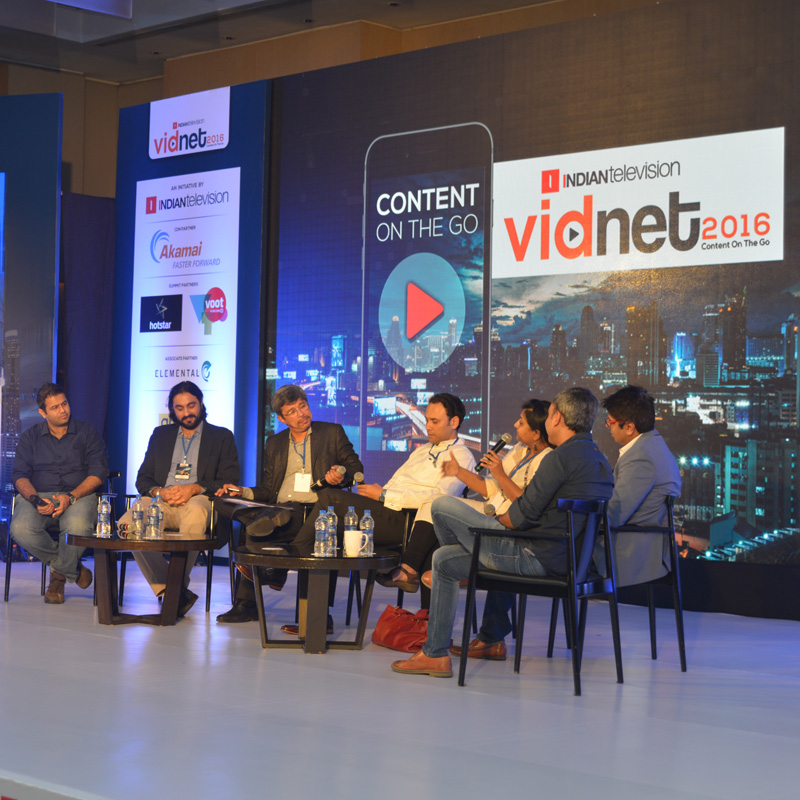
    The sixth edition of IndianTelevision.com’s annual VidNet Summit took an in-depth look at the way forward for the OTT ecosystem and all the platforms on it, and the opportunities and the challenges in the space.

    The two-day summit had technology partners Dell Technologies and Synamedia, summit partners Applause Entertainment and Viewlift, industry support partners Gupshup, Lionsgate Play and Pallycon, community partners Screenwriters Association and Indian Film and Television Producers Council, and gifting partner The Ayurveda Co.

    Day one of VidNet 2022 saw an interesting mix of sessions on the subject of advertising on OTT from industry experts and stakeholders on the various panels. The panel on ‘Advertising On OTT – Connecting The New Brand Order’ oversaw bristling conversations from panelists that included MediaCom chief product officer Averill Sequeira, Swiggy head of brand marketing Saurabh Nath, Zee Entertainment Enterprises chief revenue officer-Digital & SMB, South Asia Gaurav Kanwal, ITC head media & PR Jaikishin Chhaproo, Byju’s brand and creative strategy vice president Vineet Singh and Syska Group head of marketing Amit Sethiya. The session was moderated by Madison World vice president Kosal Malladi.

    Today data has become a complete commodity with large OTT players like Netflix, Prime Video, Zee5, Hotstar, Sony liv etc coming in, observed Malladi. Recently Netflix declared that it has decided to support advertising. The advertising revenues on these platforms in the last four years have grown by 400 per cent, Malladi shared. So will the subscription model stay or perish in India? Also, as brands are the numbers large enough for advertising on AVOD?

    According to Zee’s Gaurav Kanwal, the OTT industry in India is in its infancy. “There’s a huge AVOD play for sure, with increased reach more brands will come on board. On the SVOD side, as the economy progresses, people will pay for varied content that they can watch at their convenience. We already have about 70 million people paying for content on various OTTs across the board,” he said while adding, “As we evolve as an ecosystem, the pricing models will evolve as well and then we shall see a massive upswing in the SVOD subscriptions. It will be difficult to sustain only on the back of SVOD so an advertising-supported hybrid model will be the way forward.”

    Speaking about how OTT has caught the attention of brands, Syska’s Amit Sethiya said, “We have started exploring OTT from the last three to four years and the money that we are putting in it is increasing year on year in the entire media mix. From single-digit investment in the medium about four years back the brand has now expanded to double-digit investment. We are in a position to fetch incremental audiences with this new avenue and connected TV is aiding the entire process.”

    The role of agency here is more of a consultant or facilitator, rather than a gatekeeper in bringing the two worlds of brands and the rich, emerging ecosystem of OTTs together, MediaCom’s Averill Sequeira averred. “Am very bullish about the OTT sector, the pace at which they are growing, especially the phenomenal growth, regional OTTs and the void they have fulfilled in terms of quality content. They have opened people’s minds to new forms of storytelling.”

    Sequira spoke of two ways to validate OTT reach and audience. “As far as programmatic is concerned it is simpler as you’re buying the audience and not inventory on the platform. But where programmatic is not available, she encouraged all stakeholders to actively seek metrics such as search volumes, brand recall, and social chatter to serve as ‘proof of the pudding’.”

    On what attracted FMCG brands to OTT, ITC’s Jaikishin Chhaproo explained that their primary target audience is women. “We knew most women were missing the first telecast of their favourite shows and watching repeat telecasts. When that consumption moved to OTT they could watch it at their convenience on hand-held devices, rather than by appointment viewing as on TV. OTT provided that platform seamlessly,” he said, adding that “the other huge chunk of their TG is the youth 18-40, who watch differentiated on OTT only and who aren’t interested in appointment viewing. This age group that forms the core TG of FMCGs is also present on OTT.”

    Swiggy’s Saurabh Nath pointed out that for a food tech brand, the consumer journey is key as there are specific times of the day when food is relevant to their lives. “One can only increase their ‘desire to action’ by building awareness via advertising but one cannot expect immediate action. The kind of marketing that we are talking about is changed and is different when it comes to tech and D2C from that of FMCGs as the cycle is much more condensed,” he said, adding that, “the attribution for the FMCGs was very clear, that the brand will build over a period of time.”

    Nath shared three-pointers on brand equity for any brand to perform well- saliency, meaningfulness, and differentiation. Putting the ad on an OTT may give the brand salience but the outcome in terms of recall, engagement and differentiation will depend on one’s campaign relevance. The industry stakeholders agreed on the importance of “tracking the right metric” for the same.

    For D2C brands like edtechs, content marketing is the way to create love for the brand, affirmed Byju’s Vineet Singh, adding, “We need to figure out what works for us and what doesn’t as marketers first- Brand recall, salience, relevance etc.” Going back to basics is important such as understanding what our requirement is, instead of unnecessarily complicating. We’ve evolved from a world where just pushing the narrative is going to work. Creative excellence from a brand is important.”

    Investments in content continue to burgeon as viewers’ insatiable appetite continues to demand more and more. With all agreeing that OTT’s a high-growth industry with everyone wanting ‘a piece of the OTT pie,’ panelists agreed that the end goal/objective has to be clearly defined for the brand or a particular campaign. Cookie-cutter branding is not going to work for brands.

    It was agreed that OTT platforms need to take some responsibility too, even as marketers need to own it, for ‘passive integration’ will not work. With nearly 18-20 percent of FMCG’s money for television going to OTTs today, expectation setting needs to be clear and realistic.

  • Vidnet 2022: Gen-Z, millennials driving OTT consumption pattern along with non-urban audience, says Carat report

    Vidnet 2022: Gen-Z, millennials driving OTT consumption pattern along with non-urban audience, says Carat report

    Mumbai: The OTT ecosystem in India has been evolving by leaps and bounds in recent times with amazing and diverse content being churned out on the plethora of platforms on the connected web today. Even as the OTT subscription market in India continues to grow at a gradual pace, it remains an exciting prospect for an increasing number of marketers and advertisers who are keen to promote their brands and ads on these emerging platforms.

    IndianTelevision.com organised the sixth edition of its Annual Vidnet Summit with an aim to have an in-depth look at the way forward for the OTT ecosystem and all the platforms on it, and the opportunities and the challenges in the space. The two-day summiit had technolgy partners Dell Technologies and Synamedia, summit partners Applause Entertainment and Viewlift, industry support partners Gupshup, Lionsgate Play and Pallycon, community partners Screenwriters Association and Indian Film and Television Producers Council and gifting partner The Ayurveda Co.

    The first day of Vidnet 2022 saw an interesting mix of sessions on the subject with bristling conversations from industry experts and stakeholders on the various panels. The day’s sessions kicked off with an informative report on ‘OTT Consumption & Advertising Trends’ presented by Carat India associate vice president- strategy Sayami Podder. The report provided insights on the key factors that have driven the growth in the space such as OTT first releases, low subscription cost, regional content, live events and Connected TV. The report also looked at who is driving the growth and estimated that the large potential audience base of 70-80 million paid subscribers comprises the age group of 15-35 years, while amongst women consumption is driven by the 25-35 years age group.

    The report also estimates that the viewing time spent on these streaming platforms have gone up from two hours pre-covid to 4.45 hours, even as the minutes of consumption have spiked from 181 to 204 billion minutes in 2021.

    Video consumption of non-fiction content beyond television on streaming platforms is also on the rise, as per the report, with the viewership for such series on Netflix alone growing by over 250 per cent.

    Digital viewership of non-cricket sports too saw an increase of 310 per cent, according to the report, while the IPL audience is expected to become even bigger with a 20-30 per cent spike in match watch time over IPL 2021 on Disney+ Hotstar.