Tag: OTT

  • OTTplay launches quirky campaign to woo audiences across India

    OTTplay launches quirky campaign to woo audiences across India

    New Delhi:  OTTplay has rolled out a new campaign ‘Maze Karo Multiply’, introducing a one-of-its-kind proposition for the fast-growing OTT audience in India. 

    The campaign takes inspiration from the power of content in bringing together & connecting people hailing from different cultures, backgrounds and demographics. The video ad focuses on the blockbuster content library, which includes availability of 20,000 shows and movies on OTTplay platform, coining the ‘Har Din Kucch Naya Dekho’ catchphrase.

    OTTplay has introduced five curated subscription packs for the OTT audiences, from the ‘Power Play Pack’, which includes all 12 OTTs in one pack to the ‘Jhakaas Pack’ that offers ‘masaaledaar’ blockbuster Bollywood content. The other subscription packages include ‘Simply South Pack’ offering curated regional content, whereas the ‘Chota Pataka Pack’ and ‘Totally Sorted Pack’ brings together an assorted mix of Premium OTT platforms. With these packs starting at Rs 50 per month, the nominal pricing provides access to around 65,000 titles, which are currently available to stream on the OTTplay platform with ultra HD streaming quality.

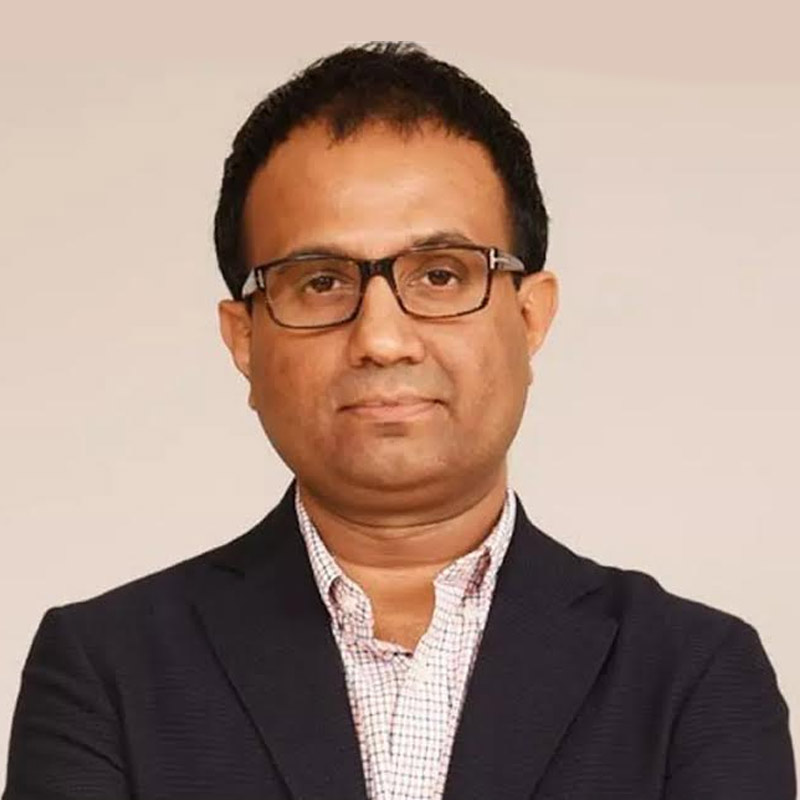
    Talking about the #MazeKaroMultiply campaign, OTTplay co-founder & CEO  Avinash Mudaliar, “We are delighted to announce the launch of our inaugural ad campaign, as we introduce the brand’s ‘Maze Karo Multiply’ positioning to OTT audiences across India in a quirky way. As category-creators, we strive to provide an exceptionally personalised viewing experience to our subscribers, by enabling audiences to consume relevant content from across genres, languages and platforms. Further, our extensive content library provides subscribers with world-class movies, web series and shows to consume basis their distinctive moods.”

  • Balaji Telefilms reports revenue of Rs 118.8 crore for Q1 FY23

    Balaji Telefilms reports revenue of Rs 118.8 crore for Q1 FY23

    Mumbai: Balaji Telefilms earned a revenue of Rs 118.8 crore for Q1 FY23 of which ALTBalaji contributed Rs 36.8 crore through its direct subscription, which stood at Rs 6 crore in Q1 FY23, the company said in a statement.

    The group’s EBITDA loss is Rs 20.4 crore and the loss after tax is Rs 24.5 crore. 

    Balaji Telefilms Ltd managing director Shobha Kapoor said, “Our content has always resonated with audiences at large as it is deeply ingrained in India’s socio-cultural fabric and this quarter has been no different given that we have continued to provide content-driven and quality entertainment while simultaneously focusing on sustainable growth for our investors.”

    “We continue to have strong controls on the cash spend while driving overall profitability including some strong strategic content sharing deals which allows us to further our growth,” she added. 

    OTT-business

    ALTBalaji has 93+ shows live on its platform. ‘Lock Upp’ which was live streamed, gained enormous popularity and went on to become the most watched reality show in the OTT space, with 500+ million views. As a result, the company generated significant long-term IP because this format had never been seen in the Indian entertainment domain before. This quarter they released Apharan- Season two which garnered more than a million views within a short time.
    For the three months ending 30 June, the company sold 3.1 lakh subscriptions (including 1.62 renewals). This excludes subscribers on partner apps where the content continues to do well. 

    The company, in its release, said, “ALTBalaji continues to produce content-driven shows and we are confident that it will be regarded as one of the leading Indian OTT players shortly as we have a strong content library catering to classes and masses alike with consistent hit shows across genres.”

    The company continues its strategy to drive deeper audience engagement by creating quality and content-driven shows that are targeted at a mass audience seeking differentiated stories. Currently, the engagement time stands at 62+ mins, with watch time at 16.19 billion minutes. Video views stand at 1.37 billion cumulative to date.

    Some of our shows continue to be highly rated and popular amongst our audiences, especially the youth, and also include our immensely popular niche reality competition show (that was released last quarter). 

    TV Business

    In Q1 FY23, Balaji’s TV business continued at normal for three months with 246.5+ hours of production across 8 shows compared to 174.5 hours in Q1 FY22. Two more TV shows are lined up across genres for the next quarter. ‘Apnapan’ was launched in Q1 FY23 which generated a good audience response.

    Kapoor said, “As always, we are confident that our content will strike a chord with audiences as our storytelling is backed by strong creative capabilities which drive our business growth.”

    Movie business 

    In terms of movies, “Ek Villain Returns” starring John Abraham and Arjun Kapoor, was released on 29 July to positive reviews, earning 51 crore plus at the box office. 

    Kapoor said, “Considering that theatres are now operating at 100 percent capacity, we are confident that our movie business will be back on track given that we have six more movies up for release in FY23, out of which two films are ready to release stage, three films in post-production stage and one film under production. We have pre-locked exciting revenue deals on our movies slate, thereby de-risking our movie business segment.”

  • FoxyMoron wins the digital creative mandate for OTT player aha Tamil

    FoxyMoron wins the digital creative mandate for OTT player aha Tamil

    Mumbai: Zoo Media Network’s digital creative and performance agency FoxyMoron has won the creative digital mandate of the OTT platform aha Tamil. The mandate will be handled by the agency’s Bengaluru office.

    On its platform, aha Tamil intends to deliver 100 percent Tamil content in the form of web series and movies, including original content, exclusives, and theatrical releases. The service model is similar to ‘aha Telugu’, aha’s platform for Telugu content, successfully launched two years ago. Today, aha Telugu has over two million paying subscribers, and the company aims to replicate this success amongst the Tamil-speaking audiences too.

    FoxyMoron (Zoo Media) National Head Client Partnerships Prachi Bali said, “After having immense success as a network in the OTT industry, we are excited about the opportunity to collaborate with aha Tamil, one of the biggest players, as they build their audience amongst the new internet users in India. The internet penetration in Tamil Nadu is one of the highest in the country, and our work in ‘Naya Bharat’ (our regional content focus on the network) has already seen a positive impact across various industries. With the rising popularity and widespread audience of regional content in our country, there couldn’t be a better time for our partnership.”

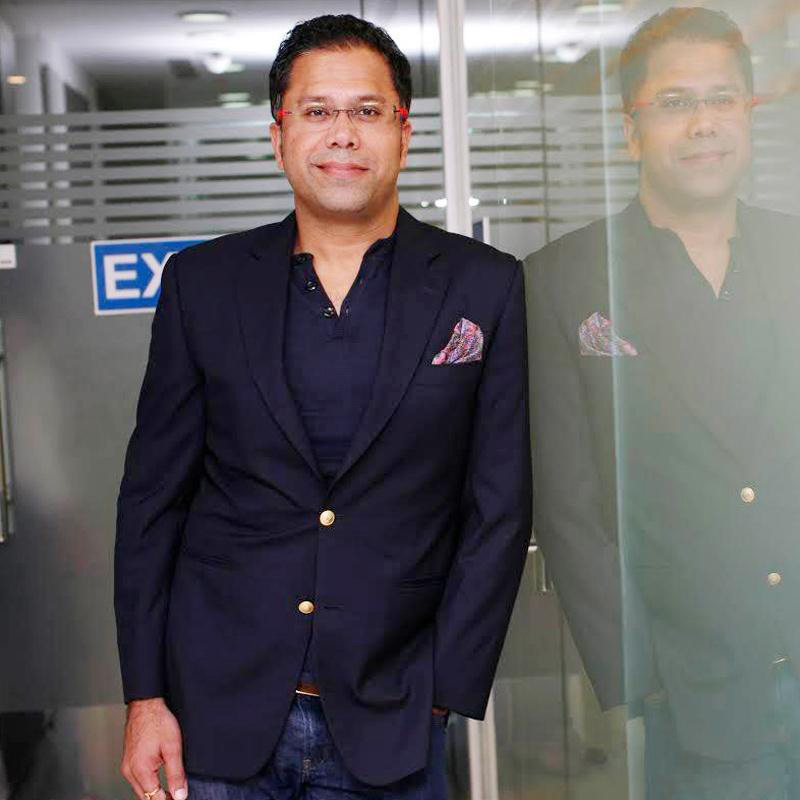
    aha CEO Ajit Thakur said, “There are very few players in the industry that offer you expertise at an industry level, in digital marketing, and have the knowledge and bandwidth to understand and help us scale, amongst the Tamil-speaking population both in India and abroad. We are glad to have found business partners in FoxyMoron and look forward to a successful collaboration.”

    aha was launched in 2020 in Telugu and aims to be a 100 per cent local entertainment platform. In 2022, it aims to replicate its success in Tamil.

  • HBO Max delivers a new mobile, desktop apps for an improved user experience globally

    HBO Max delivers a new mobile, desktop apps for an improved user experience globally

    Mumbai: Warner Bros. Discovery’s OTT service HBO Max has completed the rollout of a new user experience on desktop, iOS and Android mobile devices, and Amazon Fire tablets, where available globally. The replatformed app delivers highly requested new features from HBO Max fans and marks the conclusion of moving all HBO Max apps to a new, more performant tech stack. This was a process that started with replacing connected TV applications last year in September.

    The latest features available in the updated HBO Max mobile and desktop applications include:

    1.     Shuffle button functionality is expanded to mobile devices. Previously, only available on the desktop and CTV experiences, this feature gives users the ability to randomise the first episode that plays for select series on the platform.
    2.     SharePlay support for iPhone and iPad users (US only): Subscribers in the US with an ad-free plan and an iPhone or iPad can now use SharePlay to watch their favourite HBO Max programmes in sync with friends and family while on a FaceTime call.
    3.     A dedicated home for downloaded content with improved performance and stability.
    4.     Tablet support for both landscape and portrait orientations.
    5.     An enhanced screen reader experience with improved navigation elements and functionality.
    6.     The ability to split screens with other apps on any behaviour-supported mobile device.
    7.     The intuitive navigation has been updated.
    8.     A refined design and visual styling to let the content shine.
    9.     Chromecast’s stability has been improved.
    10.  

    According to the platform, these updates mark a significant improvement to the experience that will further connect audiences with the stories and storytellers.

    Warner Bros. Discovery Streaming senior VP of product design Kamyar Keshmiri said, “We are delighted to introduce the revamped HBO Max mobile and desktop apps. The changes give our users more of the features they care most about, along with improved navigation and a more immersive canvas for storytelling, helping them click play on their favourite content faster and with less friction.”

  • “We have penetrated globally, and that shows the strength of our content”: Travelxp’s co-founder & CEO Prashant Chothani

    “We have penetrated globally, and that shows the strength of our content”: Travelxp’s co-founder & CEO Prashant Chothani

    Mumbai: Having endured two difficult years due to Covid-19, travel channel Travelxp is now looking at strong growth. Travelxp co-founder & CEO Prashant Chothani said that the broadcaster, which recently launched in Portugal, will also expand its presence in 10 more countries in future. It will also triple the content output compared to pre-Covid. He mentioned that the broadcaster is profitable while noting that content costs have more than doubled, in part due to sharply rising airfares.

    In an interaction with Indiantelevision.com, he said, “We have just launched in Portugal, which is our 81st country and 21st language. We will launch in 10 more countries in the upcoming months. We will soon be introducing a dedicated feed for Latin America. The aim is to enter more markets. We will ramp up our content & production initiatives to make up for the time that we lost due to Covid-19. As you know, we are a travel channel and nobody could travel. So, producing travel content was impossible. That was the biggest drawback. Now we are ramping up content production like never before. The aim is to cater to the accelerated market growth and demand.” 

    Growing during Covid-19: In India, the channel is produced in English and then dubbed into Hindi, Bengali, and Tamil. More Indian languages will come by the end of the year or the beginning of next year. “We will launch at least three to four new languages in India.” He maintains that the channel is profitable. 

    He added, “Even during Covid-19, our subscription revenues almost doubled worldwide. 95 per cent of our revenues come from subscriptions. During Covid-19 we did several distribution deals. People were sitting at home and viewing the world. We have almost grown two times. India was stagnant. 95 per cent of our revenues come from subscriptions. We are largely a subscription-driven business globally. Advertising is something that we introduced recently.”

    “Audiences’ minds are open when they watch us, and they are in a great mood to receive advertiser messages. The communication impact is much higher. People are in a happy state of mind when they watch us. We have very high-end advertisers who value the kind of audience that we bring. The plan going forward is to ramp up marketing initiatives, affiliate marketing initiatives, and work with platforms around the world. Viewers will be updated on the content being produced,” Chothani said.

    Content costs: He noted that the content production costs have at least doubled and, in some cases, have tripled. The cost of travel has shot up. “The flight that earlier cost Rs 40,000 now costs Rs 1,20,000. Also, content production costs are at an all-time high. But at the same time, we will produce three times the amount of content compared to pre-Covid. We have to do justice to the platforms that we are present on. We have to showcase not only good but the best quality content.”

    Distribution: He maintains that not being part of a distribution network is not an issue. Today, he said, with the NTO (new tariff order), Trai wants to de-bundle. Success, he maintains, is about a channel’s USP and not being part of a network. “Nobody produces the kind of content that we do. We have penetrated globally, and that shows the strength of our content. We talk to mainstream audiences in various countries. In India too, there is an advantage. It all does not boil down to the network. That is irrelevant if the content is bad. If the content is good, anybody can sell it.” He added that NTO will keep on evolving. “People have different views on it. It is confusing. Where it will go, there is no clarity. It is caught between regulation and litigation. There is also no clarity between linear and non-linear as the latter is not regulated.”

    “The distribution platforms have been impacted more. People work around it, which means that you adjust your business plans. There is both a B2B2C and D2C business. It depends on where you are and how you are being impacted. I think that DD Freedish may be a bigger issue for some broadcasters and platforms than the NTO. With changing times, channels have to change. If viewership is falling for a channel, then the programming strategy for that channel may not be correct. Or in the case of a platform, maybe the platform does not have the channel that subscribers want. It is not that viewership per se is falling. It is just that viewers have gone elsewhere. For us, we are happy with the viewership.”

    At the same time, he also noted that distribution platforms have to make an effort to educate consumers about the content available on various channels. In a B2B2C, the B in the middle has to properly market to the C at the end. “There has to be the proper focus between both the Bs to reach out to the C.”

    Content strategy: In terms of shows on Travelxp, he said that they are about the destination, food, culture, history, and heritage. The aim is to have the travel experience percolate into the viewer’s mind. “It is about having travel content that is informative, well researched, and produced with the highest production quality. This makes the difference. It is not a fiction show where you have to think of new stories. We have to ideate new ways of experiential travel that can be introduced and what new destinations in the content line-up can be showcased. Till now, we have filmed in 65 odd countries. There are always new ways of presenting content and presenting a destination. Each piece of content is unique. It is completely different.”

    Shedding light on the amount of time it takes to produce a show, he said, “It takes nine to 10 months to create a show of two to three hours. Research takes two months at least. One month is spent on pre-production, getting the required permissions, etc. One to 1.5 months is spent on production. Then two months are devoted to post-production in terms of things like colouring, grading, etc. It is like making a movie. We will make a movie about that destination. You cannot go wrong when it comes to research. It is not like filming for a social media platform. You cannot take away from what they are doing, but the audience there consumes it for fun.”

    “People consume us for information, knowledge, entertainment, and infotainment. People come to us. On social media, travel content comes to you. It is content that comes by the way. People, on the other hand, watch Travelxp by appointment,” he explained.

    The travel scenario: He noted that right now there is a huge boom in travel and it is about revenge travel. But he also explains that things will be moderated in a few months. He does not think that Covid-19 and monkeypox will be a challenge. People, he noted today, do not care about it. “I don’t think people are even bothered about them. Nobody is withdrawing from travel due to any threat. Unless something dramatic happens, there will be no impact,” he said.

    The potential inflation impact: He does, however, concede that inflation is a challenge. The challenge will be seen months down the line. That is because people plan their travels slightly in advance. So the inflation impact on travel will come up pretty late. There is a time lag. He noted, “The cause and effect time lag will be there, and at the same time, revenge travel will settle down. Between 3-6 months, you will see revenge travel moderately. Things will become real.”

    “Inflationary pressures will add to the travel impact. There will be a scale down from the travel levels that are being seen now. This is a temporary travel boom being seen now. My hope, though, is that more and more people will want to travel now, which will be very good for us and other travel stakeholders. Earlier, travel was a luxury. Now people view travel as a necessity.”

    Travelxp, he added, also plays the role of a memory re-collector for viewers who have visited a destination that is being showcased. “It is also a great infotainment entertainer. You want informational content that gives you relief from the pressure of the inflationary times that we live in. Viewers get refreshed and inspired by our content. Viewers relive memories with us. People remember our content for a long, long time.”

    The challenge: Right now, the challenge for the travel industry is that the stakeholders, like airports, are struggling to cope with the huge demand. “Fares are exorbitantly high; airports and hotels are facing financial pressure. Revenge travel is happening. People just want to travel. We are exploring new destinations. We are also revisiting destinations that we have covered in the past, and we aim to show viewers how they can explore the same destination in a new way. Our job is to excite travellers,” he said.

    Being about the big screen: On digital, Travelxp has an app which was launched in the previous quarter. But he stressed that content created is meant to be watched on the television set, not on the mobile. That is why features like augmented reality will not play a role in Travelxp.

    “Travelxp is a big-screen television experience. We are not producing content for mobile phones. There you fight with the likes of Youtube and Instagram, where user-generated content comes into play. Television cannot work for augmented reality. Even on non-linear apps, everything has shifted to the television set.”

    He also noted that it is a false statement that content viewership is migrating from TV to OTT. People are also taking OTT and are also watching linear TV. It remains to be seen if OTT growth remains high. The base was low, he explains. In the long run, the current distribution platforms like Tata Play and Hathway will offer an aggregated offering of linear and non-linear. The aggregator model also has a role in Travelxp’s distribution plans, he explains. “The future will see everything available. You can buy an app on a standalone basis and also through the aggregator route, where both TV channels and OTT apps are available in one place.”

  • Warner Bros. Discovery posts Q2 net loss of $3.4 mn

    Warner Bros. Discovery posts Q2 net loss of $3.4 mn

    Mumbai: Media conglomerate Warner Bros. Discovery has announced that second quarter revenues were $9.8 million, a one per cent decrease compared to the prior year quarter. Net loss was $3.4 million and included $2oo4 million of amortisation of intangibles, $1033 million of restructuring and other charges, and $983 million of transaction and integration expenses.

    Adjusted Ebitda was $1.6 million. Cash provided by operating activities increased to $1 million and reported free cash flow increased to $789 million. The company ended the quarter with $3.8 million of cash on hand, gross debt of $53 billion and net leverage of 5x. It ended the quarter with 92.1 million global DTC subscribers, an increase of 1.7 million versus 90.4 million subscribers at the end of the first quarter, as adjusted for the company’s new DTC subscriber definition. The new definition resulted in the exclusion of 10 million legacy Discovery non-core subscribers and unactivated AT&T mobility subscribers from the Q1 subscriber count.

    “We’ve had a busy, productive four months since launching Warner Bros. Discovery and have more conviction than ever in the massive opportunity ahead. We have the most powerful creative engine and bouquet of owned content in the world, as highlighted by our industry-leading 193 Emmy nominations, and we intend to maximise the value of that content through a broad distribution model that includes theatrical, streaming, linear cable, free-to-air, gaming, consumer products and experiences and more, everywhere in the world. We’re confident we’re on the right path to meet our strategic goals and really excel, both creatively and financially, and couldn’t be more excited about the future of our company” said WBD president, CEO David Zaslav.

    Networks reported revenues were $5.7 million an increase of one per cent. Ad revenue increased by two per cent, primarily driven by strong demand for sports advertising, partially offset by lower news, kids, and general entertainment performance in the US International networks were impacted by modest declines in EMEA, offset by growth in Latin America, excluding the impact of Chilevisión, which was sold in September 2021.

    Distribution revenue decreased by one per cent, as increases in US contractual affiliate rates were more than offset by a decline in linear subscribers in the US and lower contractual affiliate rates in some European markets. Networks reported operating expenses were $3.4 million.  Adjusted Ebitda was $2.62 million.

    Studios reported revenues were $2.7 million a growth of four per cent. Games were a strong contributor behind the release of “Lego Star Wars – The Skywalker Saga.” TV licensing revenues declined due to lower TV production revenue, partially offset by the timing of new series availabilities for distribution. Theatrical performance was unfavourably impacted by the timing of releases. Home entertainment across theatrical and television products was down due to strong Covid-induced demand in the prior year quarter. Studios reported operating expenses were $2.5 million. Adjusted Ebitda was $239 million.

    DTC revenues were $2.2 million. Revenues increased by four per cent. Ad revenue increased to $98 million, primarily driven by the launch of the HBO Max ad-supported tier in June 2021 and subscriber growth on the discovery+ ad-lite tier. Distribution revenue increased by one per cent. Global retail subscriber gains at discovery+ and HBO Max compared to the prior year quarter were largely offset by lower domestic wholesale subscribers resulting from the Amazon Channels expiration in September 2021 for HBO Max. DTC’s operating expenses were $2.7 million.  Adjusted Ebitda was a loss of – $518 million.

  • Reliance Jio launched its streaming platform ‘JioGamesWatch’

    Reliance Jio launched its streaming platform ‘JioGamesWatch’

    Mumbai: Mukesh-Ambani-led Reliance Jio has launched its new streaming platform called ‘JioGamesWatch’ recently. It is the one-stop solution for all types of gaming content that the users will enjoy watching. The streaming service will be available on Android, iOS and even Set Top Boxes.

    Similar to Twitch, JioGamesWatch will offer game-streaming to the users in a convenient way. “The platform has set its sights on empowering and enabling creators to go live, with any device, under low Latency, and showcase the best of their content to millions of viewers,” Jio said in a press release.

    Its viewer engagement tools help to stay ahead of competition, such as emotes & audience polls. The app is fruitful for casual gaming enthusiasts, developers and game publishers. It also has amazing online games, esports and tournaments.

  • aha announces “Highway” starring Anand Devarakonda & Abhishek Banerjee

    aha announces “Highway” starring Anand Devarakonda & Abhishek Banerjee

    Mumbai: The local entertainment platform, aha, has announced ‘Highway’, a psychological thriller starring Anand Devarakonda and Abhishek Banerjee in a never-before-seen avatar. 

    Directed and written by K.V. Guhan, and produced by Venkat Talari, the film will hit aha screens very soon. aha, has launched the poster of the original movie on 6 August.

    “Highway” is a psychological thriller about a photographer Vishnu (Anand Devarakonda), falling in love with Tulasi (Manasa), who was sheltered all her life. When everything is going great, his life turns upside down when a serial killer named D kidnaps his lady love. Will the hero be able to save her in time? 

    aha has a solid vision to bring audiences engaging content, and recently aha original ‘Color Photo’ also won the Best Regional Award – Telugu at 68th National Awards. With another original titled ‘Highway’ coming soon, aha again is set to showcase the commitment to audiences by providing 100 percent local entertainment.

  • Netflix, Dark Horse Entertainment extend its partnership

    Netflix, Dark Horse Entertainment extend its partnership

    Mumbai: OTT platform Netflix and Dark Horse Entertainment have extended their partnership. Under this multi-year deal, Dark Horse will continue to give Netflix a first look at its IP for both film and TV.

    Netflix and Dark Horse recently collaborated on the third season of The Umbrella Academy, which in its first four weeks reached the Netflix Global Top 10 in TV in 91 countries with 283.55 million hours viewed (as of July 17, 2022).

    New projects in active development under the Dark Horse Entertainment banner include:

    Bang! will star Idris Elba (The Harder They Fall, Concrete Cowboy, Luther) and will be directed by David Leitch (Bullet Train, Atomic Blonde, Deadpool 2).

    Based on the comic series by Matt Kindt and Wilfredo Torres, the feature film adaptation of the spy thriller will be written by Kindt (Ninjak vs. the Valiant Universe) and Zak Olkewicz (Bullet Train, Fear Street Part 2: 1978).

    When a terrorist cult sets out to start the apocalypse with a series of novels meant to brainwash their readers, the world’s most celebrated spy is sent to track down and kill the author responsible.

    Mind MGMT will see Curtis Gwinn (Stranger Things) executive produce this series adaptation of the comic book series by Matt Kindt. A young woman stumbles onto the top-secret Mind Management program. Her ensuing journey involves weaponised psychics, hypnotic advertising, talking dolphins, and seemingly immortal pursuers, as she attempts to find the man who was Mind MGMT’s greatest success—and its most devastating failure. But in a world where people can rewrite reality itself, can she trust anything she sees?

    Additional Dark Horse projects in development with Netflix include Revenge Inc., a drama series focused on a secret, underground company that specialises in revenge with Matthew Arnold as showrunner/executive producer and executive producers Mike Richardson, Keith Goldberg and Chris Tongue, as well as Lady Killer, an action thriller film about a 1950s housewife leading a secret life as a highly-trained killer for hire, with Blake Lively starring and producing, based on the comic series by Joelle Jones and Jamie S. Rich.

    Previous Dark Horse Entertainment releases include the Netflix film Polar, starring Mads Mikkelsen; the Netflix animated series Samurai Rabbit: The Usagi Chronicles, returning later this year with a second season; and the animated film Chickenhare and the Hamster of Darkness, which recently spent four weeks in the Netflix Film (English) Top 10.

  • Content investment in India, Korea, and Southeast Asia to rise in 2022: MPA Report

    Content investment in India, Korea, and Southeast Asia to rise in 2022: MPA Report

    Mumbai: The video content budget in India, Korea, and Southeast Asia will grow by 15 per cent and reach $12 billion in 2022, according to the latest edition of Asia Video Content Dynamics, published by Media Partners Asia (MPA).

    In 2022, India and Korea will drive the bulk of the increase, but all markets and all verticals are expected to grow. The film industry will be the fastest, growing by nearly 140 per cent as theatres screen fresh movies. Online video will grow the most, by nearly $700 million.

    It increased by 21 per cent last year to $10.4 billion. Except for theatrical, all content verticals saw significant growth. OTT content was the fastest growing vertical, increasing 83 per cent year on year to become the second largest vertical, accounting for 26 per cent of industry investment. Korea & India saw particularly strong OTT investment growth, while Thailand and Indonesia made significant contributions.

    This report examined video content consumption, investment in video content, and production costs in seven key Asian markets: India, Indonesia, South Korea, Malaysia, Philippines, Thailand, and Vietnam. Free-to-air (FTA), pay-TV, online video, and film are among the verticals examined, along with key players and the production value chain.

    Also read: India’s OTT video market to reach $3 bn in 2022; estimated to double by 2027: Report

    Commenting on the findings of the report, MPA vice president Stephen Laslocky said, “Inflation, particularly with online originals, is a factor driving up content costs.”

    He went on to say that online video operators, broadcasters, and producers must see that higher budgets translate into more premium viewing experiences, or the cost increases will be unsustainable.

    According to this report, Pay-TV was the largest vertical, accounting for 46 per cent of total industry content investment, reflecting well-developed pay-TV markets in India and Korea. FTA ranked third with 25 per cent of the total.

    “Internationally successful programmes remain the content licensing holy grail, which thus far, only Korean dramas and some anime, as well as US and UK content, have sustainably achieved. Some Thai content has succeeded outside of Thailand. Quality production values and strong storylines with a focus on younger online demographics will be the building blocks of future investment strategies,” Laslocky added.

    While talking about the expanding online video sector, he expressed that it has been a boon to independent producers. He said, “Profit margins have stabilised at 10 per cent or more across much of the region. More can be done to bolster independent producers, including additional compensation for original concepts, commensurate rewards for breakout successes, and expanded use of pipeline deals (which allows producers to more reliably recoup overheads).”

    “In exchange, producers need to be transparent with production costs. Commissioners need to be willing and able to audit costs,” he added.

    Declining TV ratings 

    TV ratings continue to decline in measured markets. User-generated content (UGC) platforms continue to dominate video consumption, with their share of total video consumption ranging from 82 per cent in Korea to 95 per cent in Vietnam. While YouTube remains the leader, TikTok is driving growth in Southeast Asia. Premium video, both AVOD and SVOD, captures the majority of the balance.

    The consumption of television and online video is diverging. On TV, drama is generally the most watched genre, while variety, including reality, often ranks #2. Movies, kids, and news can be significant drivers of viewership, and sports can over-index with top-rating TV programs. Viewership of some key TV genres is transitioning to YouTube, where they generate significant classified consumption.

    Meanwhile, with premium online video, series account for approximately 90 per cent of consumption, with dramas accounting for the majority of viewership, while movies account for approximately 10 per cent. Dramas account for nearly all of the top titles. Except for India, variety consumption is largely driven by acquired Korean programming.

    Box office revenues 

    In 2021, box office revenues, admissions, and releases all performed poorly. Film costs fell by two per cent as pandemic restrictions delayed release dates in many markets, but delayed tentpoles performed well in 2022.

    Some markets, including India and Indonesia, are expected to recover completely. In other markets, a return to pre-covid may take until 2023. Returning to pre-covid levels in other markets may take until 2023. Elsewhere, prospects may be marginally better but permanently harmed.