Tag: OTT

  • India’s M&E industry needs to focus on incredible creative endeavours: Disney+ Hotstar’s Gaurav Banerjee

    India’s M&E industry needs to focus on incredible creative endeavours: Disney+ Hotstar’s Gaurav Banerjee

    MUMBAI: Delivering an address at a session of Ficci Frames Fasttrack 2022 called ‘The Magic of Online Curated Content (OCC)’, Disney+ Hotstar head content Gaurav Banerjee said that the time is now for India’s media and entertainment industry to focus on incredible creative endeavours. 

    “We need to do better when it comes to incredible creative endeavours. The time for us to crack the code of creating incredible stories that travel all over the world is now. It is up to all of us to do better, to equip ourselves better. We must note that this is what our potential is. That is when massive success for all of us will follow,” Banerjee added.

    He gave an example of Korean content. The movie “Parasite” won multiple Oscars including best picture, director and screenplay. Recently, a Korean actor won an Emmy. It was a Korean show on Netflix that got incredible followership all over the world.

    He also said that the entertainment industry choosing to do things for profit or a larger social cause is a false choice. “We must do both.” 

    He gave the example of Satyamev Jayate, a show that Star did. When the show returned, he took the decision not to market other shows. Only this show was marketed. Interestingly, nobody complained. Instead, the fact that the show took a position against female infanticide was greatly appreciated. His company always wanted to be part of a large cause. That was when greater success followed. He added that there were two components in the media and entertainment industry – artists and fans. “They want us to do more and do the right thing.” This, he said, had massive business benefits. And even if doing the right thing does not always produce big benefits one must still do it.

    In his address, he mentioned the media and entertainment are accountable to society. “Creativity works in the service of society.” Disney, he said, believes in this contract. When it has followed the reward has happened. But equally, when it didn’t follow there were punishments. In terms of Disney Star’s curated content journey, he said it is notable for how women have been treated over the years. 

    This was never the case earlier even though cinema had existed for decades. The first phase for him was the early 2000s with the K serials and other shows like Sanjivani. The decision was taken to put women at the centre of storytelling. It was not just about entertaining people. This was a big massive change happening at scale. “The impact was massive and significant.” He pointed to a study done by two American scholars from the University of Chicago. They went to homes before they got satellite TV and went back to the same homes three years later after they got exposed to those shows from Star India and other companies. As a result, women’s preference for male children fell by 20 per cent. Women’s tolerance for abuse decreased by 10 per cent. 8 per cent of girls between the ages of 6-10 went to school. “There was a lot of power in this room. Sometimes, we lost sight of it.”

    The Chicago study was phase one. This second phase came around 10-11 years later. The broadcaster decided that it was not enough to just put women at the centre. They need to work and become successful professionals. They were backed by their husbands and in-laws. Star did a show. 

    On TV, people were told that there is no job that a woman cannot do. However, at that time some things were sacred like marriage. This changed with the third phase in 2020. The show Anupama questioned marriage. The storyline, he noted, was powerful. If a woman was taken for granted, was that worth it? At 45, she could start a new life cheered by India.

    When asked a question on TV versus OTT he noted that the creativity paths were similar. All content on Star’s TV channel is put first on OTT. So for example new episodes of Anupama come first to Disney+Hotstar at 6 a.m. Creativity answers are the same. A good show is a good show. The same logic applies to movies. But he also acknowledged that distribution channels make a difference in digital because people use mobile content to watch solo. So edgier themes and shorter stories are more convenient. He added that his team watches a lot of content. They watch Youtube, OTT and TV. Often they call creative people like filmmakers about the possibility of working together. The best way to get a yes in terms of working with Disney+Hotstar is if he calls.

    The keynote address was delivered by the Ministry of Information & Broadcasting (MIB) joint secretary (P&A) Vikram Sahay. He was in favour of the government keeping itself away from the area. Online content curation must have self-discipline and grow. There is self-certification. He noted that people are taking advantage of the low Internet costs. “Today online, curated content is the big thing in terms of reach, popularity. OTT is here to stay. We have been producing some very good original, value-based content.” He added that actors, screenwriters, etc., who were not getting a chance in films now got a space. More people can showcase their talent. He noted that six months back the MIB ministry had developed a mobile game on India’s freedom struggle and this was done with Zynga. It is in English and Hindi. There are prizes to incentivise children. For promotion, a 30-second rap song was created. 

    “Now the game has been launched globally.” While the government around a year and a half back introduced a three-tier system, a grievance mechanism where people can voice their complaints about digital content, he said that this has not inconvenienced any of the OTT platforms. That is because most people are happy when their grievance is heard and they get a response. “We have not heard a single OTT platform complain about the grievance system. Nobody will be inconvenienced or be burdened.”

    During a panel discussion on being asked how the journey of The Viral Fever (TVF) started, Head- TVF Originals Shreyansh Pandey said, “TVF came into existence because a unique set of audience who were not getting entertained from the television or let’s say the shows which were being run at that time – they wanted something fresh, they wanted something new.”

    The actor Divya Dutta, on being asked how it has been for an actor when OTT is booming, said, “It’s a good time for actors. It is the layer of characters now. You get that time when it comes to a series vis-à-vis a short film or a feature film.”

    The filmmaker Nikhil Advani talked about the lack of pressure in creating content and the freedom which follows. He said, “On OTT, the shelf life is longer. The word of mouth stays for a longer time. The pressure to get stars the numbers vis-à-vis a story…this is easy when you have OTT.”

    The actor Sohum Shah also talked about the reach of OTT and its rising popularity. “Films like Tumbbad have reached more audiences because of OTT. As an actor, it also allows you not to get typecast and work like a chameleon. It is also good, especially for female actors. Talent is flourishing because of OTT,” he added.

  • “India is amongst the largest content hub”: Ficci DG Arun Chawla

    “India is amongst the largest content hub”: Ficci DG Arun Chawla

    Mumbai: Ficci Frames is back in 2022. The two-day convention kicked off on 27 September at the Westin in Mumbai. The event focused on creating content and its consumption by eminent media and entertainment industry leaders.

    Ficci Frames Fast Track had plenary and parallel sessions along with workshops and master-classes on issues and topics covering the entire gamut of media and entertainment like films, broadcast (TV & radio), digital entertainment, animation, gaming, visual effects, etc. over a period of two days.

    While giving a welcome address, Ficci director general Arun Chawla remarked that the media has shown resilience and will continue to grow. He said, “According to the Ficci report, India’s M&E industry will grow 17 per cent this year (to $25.2 billion) and try to recover its level from the 2019 pre-pandemic level and maintain a CAGR of 11 per cent. The industry is trying to reach $30.9 billion. This indicates a strong growth rate. India is amongst the largest content producers. Approximately 1,50, 000 hours of TV content, 2,500 hours of premium OTT content, and 2,000 hours of filmed content will be produced in 2021.”

    In his opening remarks, Chawla discussed how the media and entertainment industries not only survived but also kept the country’s morale high by providing entertainment while the rest of the world was suffering from the pandemic.

    He said, “India’s media and entertainment market is one of the most vibrant and diverse groups. Media and entertainment industries have come a long way and are contributing to the GDP of this country. We have over 900 TV channels, more than 1,44,000 print publications, and more than 385 private radio stations. Showing immense resilience, the industry is back on its feet but still must overcome its pre-pandemic level.”

    Chawla further added, “We are all aware of India’s digital transformation. It has caused the number and importance of online media platforms to rise dramatically. The government has actively supported the M&E industry, particularly through several initiatives to increase digitization and the creation of digital communication infrastructure.

    The ministry of information & broadcasting secretary Apurva Chandra, said that the media and entertainment industry in India is about $23 billion. He also talked about setting up a film facilitation office and working with Invest India to build a single-window portal for opening theatres. We were also informed about proposed amends to the Cinematograph Act.

    Also Read : We should aim for the M&E industry to grow more than $100 bn by 2030: I&B secretary at Ficci Frames Fast Track’ 22

    Actor Ranveer Singh, who enthralled the audience with his infectious energy, was awarded the ‘Frames Achiever of the Year’ at the event.

    On receiving the award, Singh stated, “Collectively coming out of a very difficult time, I hope that we crack great ideas at Ficci Fast Track in the rapidly changing hyper-dynamic world. I deliberately say the hyper-dynamic landscape of Indian entertainment that we are going to see because it is so.”

    Speaking at the event, West Yorkshire mayor Tracy Brabin said, “We want to work with the talented and creative people to champion sustainability in the creative industries and the film industry, through investment and support. We are open for business. We would like to invite you to get involved in our cultural festivals; to attend, but also to partner in the exciting programmes of activity.”

    “With the strength of the sector in the region, there are huge opportunities for companies from India to partner with our leading companies and invest in the region. The rewards are there for the taking, and we will support you every step of the way. We want to deepen our relationship with creative India, attracting more investment from production companies, studios, post-production houses, and VFX companies,” added Brabin.

    Film director Ramesh Sippy reflected upon the changes that happened during the pandemic. He said, “As much as the pandemic has affected us, it has also brought in some changes. OTT is certainly getting a big boom. Both cinema and small platforms will perform jointly as they used to, but in a much bigger way.”

    The session on the topic “M&E Consumption: Evolving Trends Across Segments” received a good response from the audience where panellists from various TV and OTT platforms explored trends such as short vs. long vs episodic video, the resilience of radio, the rise of regional and vernacular media, etc.

    A parliamentary representative participated in an engaging discussion on the “Role of M&E in Building the Social Fabric of the Nation” and spoke on the importance of the media in fostering critical and proper public awareness of planners’ goals and limitations.

    On the first day, the event saw actor Ranveer Singh, director Ramesh Sippy, MIB secretary Apurva Chandra, West Yorkshire (UK) mayor Tracy Brabin, and members of parliament (MP) like Sumalatha Ambareesh, Priyanka Chaturvedi & Sanjay Seth.

    The two-day convention saw sessions with renowned names of the industry like Nikhil Advani, Divya Dutta, Madhur Bhandarkar, Paresh Rawal, Tannishtha Chatterjee, Adil Hussain, Revathy, Tamanna Bhatia, Raj Nidimoru, Krishna DK, Sohum Shah, Karan Johar, Ayan Mukherjee, Imtiaz Ali, Anees Bazmi, Abhishek Sharma, Nitesh Tiwary, Ashutosh Gowarikar, to name a few, along with studio heads. They talked about the gamut of media & entertainment like films, television, digital entertainment, radio, animation, gaming, visual effects, film tourism, IP rights, and film incentives.

  • Trai has to play a balancing role: advisor of broadcasting & TCSR DG Anil Bhardwaj

    Trai has to play a balancing role: advisor of broadcasting & TCSR DG Anil Bhardwaj

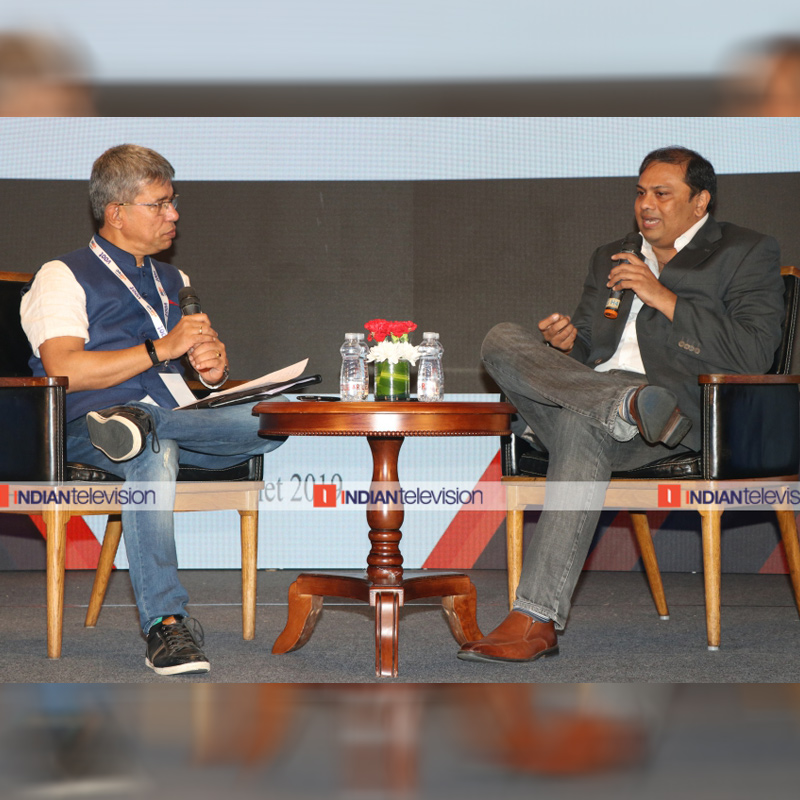
    Mumbai: In an interaction with independent consultant Anuj Gandhi at Ficci Frames Fasttrack 2022, Trai advisor (broadcasting) and TCSR DG Anil Bhardwaj said that the regulator has to play a balancing role. He compared it to making a decision about what to do with a screw. One either loosens or tightens it, he said.

    In addition, he also mentions that a consultation process is going on regarding NTO 2.0. One side wants everything controlled, while the other does not want the regulator to control anything at all. The industry, he said, needs a regulator because they cannot sort out their issues. The aim is to have as light a touch of regulation as possible. That is Trai’s ethos.

    While saying that Trai has done some good things, he admitted that some bad things may have been done. But Trai is willing to review, consult, and come back. He also noted that while content is king, distribution remains extremely important. For the linear TV ecosystem to sustain, the stakeholders have to nurture and support each other. There are 1,00,000 LCOs in the country. Each has two to three people on the ground. That is the kind of distribution power available. “Ignore them at your own peril. Everybody is at a crossroads with everybody else. A linear TV channel needs a content creator, an aggregator, or a broadcaster. You need an integrator and then the last mile operators. If someone is dying and someone else is making money as a result, ultimately, who will suffer? Linear will be dead if one arm starts killing the other. Linear TV will grow if people are willing to nurture and sustain each other,” he noted.

    He said that regulation does not put a cap on pricing. One can charge Rs 100 for a channel. What he is against is the mirage of pricing that happens with bundling. That results in consumers being misled, which is what Trai is completely against. Certain channels, he said, are sold at Rs 6 through reverse deals and have fixed the MRP (maximum retail price) at Rs 19. Privately, he has asked them why this is being done. As a regulator, data is obtained and almost everything comes to Trai. The reason given is that the channel level will go down if it is not priced at that rate. “This is the mentality of the distribution head of one of the largest broadcasters in our country. In that situation, you need a regulator. We have not asked a niche English channel not to price themselves at Rs 50 or Rs 100. They have shut down because they could not sustain their model. They were showing ads and they also wanted to charge a certain fee. Previously, this was being driven through deals done with the distributor, which today is not possible because there is transparency in the system. For bundling, we said a mirage of price was created. So we will have some semblance. We tried Rs 19. We thought of Rs 12. The purpose is not to tell the industry what to fix. It is to avoid misleading the consumer. We are again reviewing that in the consultation. We have kept postponing the implementation of NTO 2.0 till we are through with this consultation process. We want to know if the price of Rs 12 is okay or not.”

    He further said, “We have done certain good things. Maybe we have done some bad things. That is why nothing is cast in stone. We are willing to come back and consult. We are willing to forego regulation provided the market matures. If we reduce or remove regulation, we will find that the market is not functioning as it should.” He noted that in the current consultation, one side says control everything and the other side says do not control anything. One side desires a minimum level of assurance regarding distribution effort. So a balancing role has to be played by Trai. The market is not mature. There are issues, he noted, with broadcasting, with channels shutting down. He also noted that channels are sometimes shut down by distribution as a certain show or content might cause a problem for some people. “This is the kind of country that we live in.”

    He said that as a regulator, Trai has to act strongly, but it cannot be done tomorrow or people will complain of high-handedness. The market has to mature to a level where certain things are known and numbers and facts are known. He gave the example of hundreds of MSOs getting audits done themselves by one of the 52 auditors chosen by Trai. That is, until you reach a certain place. “Without distribution, no ecosystem can survive.” On the content front, he said that Arpu is Rs 273. The ecosystem decides this, not the regulator. “If the industry is dying, please raise prices. Content is king, which is why digital media is paying five times more for content production compared to linear broadcast. So, if broadcasters need more revenue for content investment, then please review your models. Trai has never said not to invest in content. Broadcasters should make models in such a way that the money invested comes back. We will not stop you. Please make good content.”

    He added that numbers for the broadcasting industry are coming down, which could be due to a combination of factors, including OTT, DD Freedish, and Covid. Today, there are 900 or so TV channels. There are 1,000 odd MSOs. DTH is 70 million homes, and cable is not at 70 million. The balance is DD Freedish, which is growing. “Linear TV is finding its own new paradigm, new place. The punch is with OTT. It is important to understand why. Content is king, but distribution remains extremely important,” he said.

    He stated that some consumers believe that content is better on digital or OTT apps. That is why some have cut the cord. A broadcaster should allow a user to have five screens at the same cost or at a much lower cost than what is charged for linear TV. Then users will not go elsewhere. There are millions of smart connected TVs today.

    He also noted that India is unique in many ways. He gave the example of the mandatory content sharing bill for events of national importance. That applies to some sports events, even if the acquisition price is high. The aim is to have the events seen by the masses, and it goes beyond the ambit of commercial deals done. This is something that the Supreme Court has agreed with. “We are a very different country. It is an evolution. I am not saying that we are 100 per cent correct or that the US is correct,” he concluded.

  • Prasar Bharti collaborates with IIT Kanpur for direct-to-mobile broadcasting project

    Prasar Bharti collaborates with IIT Kanpur for direct-to-mobile broadcasting project

    Mumbai: Today, there is a shift in viewing habits from linear television to OTT and from theatres to OTT. The rise in content creation is leading to more and more jobs for people. With the arrival of 5G, there is the possibility of direct-to-mobile broadcasting. In a collaboration, Prasar Bharti and IIT Kanpur have come up with a proof of concept whereby, with a small attachment, there can be a direct-to-mobile broadcast. So, without purchasing data, there can be 100-200 channels streamed direct to mobile.

    Speaking at Ficci Frames Fasttrack 2022, I&B secretary Apurva Chandra said, “Without data and high-quality internet, users will be able to see high-resolution movies and listen to digital radio on their mobile phones. This change is coming. It will happen.”

    He also announced that a report on the creation of an AVGC task force will be submitted soon. He noted that there were reports on skills, gaming, education, incentives, and other policy aspects within the task force. They are all being combined and will be submitted to the authorities. He added that the report will be adopted during the course of the year.

    “AVGC is the future of this country. The best Hollywood films are being created in Bangalore and other places. AVGC will be the next great revolution like IT was 30 years ago,” he stated. Furthermore, he mentioned changing the cinematography act to include anti-piracy provisions. Also, there will be an age classification within the U/A category. The aim is to bring in amendments to the Act and put it before Parliament during the winter session.

    He further added that the AVGC centre of excellence, which has not seen the light of day over the past six years, aims to do this only in collaboration with the private sector. An in-principle decision has been taken in this regard. A total of 26 per cent of the task force will be owned by the Confederation of Indian Industry (CII), 48 per cent by the ministry of information and broadcasting (I&B), and 26 per cent by the Federation of Indian Chambers of Commerce & Industry (Ficci).

    He also said that the media and entertainment industries should target a combined size of $100 billion by 2030. He noted that during National Cinema Day, theatres were full even in the morning. That, he said, shows that you can get people to view movies in theatres as long as the ticket pricing is right. National Film Development Corporation of India (NFDC) will be the cinematic arm of the I&B ministry. The four film units will be merged into one. The film facilitation office will be revamped, he concluded.

  • OTT streaming services are most popular entertainment than traditional TV: Magnite Asia MD Gavin Buxton

    OTT streaming services are most popular entertainment than traditional TV: Magnite Asia MD Gavin Buxton

    Mumbai: Creating a great ad experience and monetising all ad formats is the biggest challenge for media owners and brands today. Major global streaming platforms like Netflix and Disney+ are planning to roll out exclusive advertising solutions in 2023. With this, in-the-right-place-at-the-right-time, Magnite Asia MD Gavin Buxton stepped in to provide his input on strengthening such ad solutions for media owners and brands.

    By joining Magnite Asia in August 2021, Gavin and his firm are working with over 60 OTT clients looking to activate AVOD (advertising-based video-on-demand).

    Named as ‘one of the top people to look out for’ by the Digerati Asia Pacific in 2018, Gavin currently leads the growth of Magnite in the APAC region. His working knowledge stretches across television, digital, search, programmatic, mobile, content marketing, and social media.

    Gavin brings with him over 20 years of global experience in digital advertising. Previously, he held leadership positions at tech and publishing companies such as Microsoft, Turner Broadcasting System, and LinkedIn, spending the last ten years in Asia building businesses.

    He is an active participant within the advertising industry with multiple thought leadership publications, speaker slots, and contributions to industry bodies, including past board member of The Interactive Advertising Bureau of Southeast Asia and India (IAB SG), and participation in several committees.

    Magnite, an independent omnichannel sell-side advertising platform is helping publishers use their technology to monetise their content across all screens and formats—including desktop, mobile, audio, and connected TV (CTV).

    This is a one-of-its-kind platform that is built specifically to handle the complexities of over-the-top (OTT) video supply with real-time reporting and performance insights, automated ad pod functionality to manage frequency capping, competitive separation, and audio level detection to enhance the viewer experience.

    In an interaction with Indiantelevision.com, Gavin shared all things from monetisation, the CTV platform, the APAC market, and programmatic advertising to programmatic guaranteed deals. 

    Edited Excerpts:

    On his journey with SpotX- Magnite 

    Gavin: I have had work experience in the APAC region for 11 years now, five of which have been focused on the OTT digital advertising sector, originally with SpotX and onwards into Magnite.

    It has been a challenging, exciting, and rewarding experience to collaborate with some of the first OTT AVOD publishers in the region and assist them in being best positioned and embracing programmatic activations and collectively grow the ecosystem together.

    Today, Magnite is the leading OTT supply-side platform (SSP) in APAC. Brands are now embracing such AVOD activations due to their ability to reach and engage with scaled audiences in premium viewing environments.

    On collaboration with Samsung Ads

    Gavin: Our relationship with Samsung Ads is not exclusive. However, we work with them across major markets, including the US, EMEA, LATAM, South Korea, Australia, and India. Our technology helped them to monetise their inventory on their ad-supported streaming service, Samsung TV Plus, and deliver a better advertising experience for the end user.

    As Samsung scales up its Samsung TV Plus inventory, working with us has accelerated its expansion plans by making it programmatically available to brands and agencies in India.

    In India specifically, we have been excited to see how Samsung’s team, audience, and offers have grown. It is also exciting to watch their continued growth in advertising activation.

    On emerging CTV markets in APAC and the level of adoption 

    Gavin: Apart from India, APAC’s major CTV markets include Australia and New Zealand, Indonesia, the Philippines, Singapore, Thailand, and Vietnam.

    The OTT market in India is the fourth largest globally and one of the most competitively growing markets. Advertisers have unprecedented opportunities to reach audiences increasingly shifting to OTT streaming.

    According to Magnite research in Southeast Asia, OTT is now watched more regularly than traditional TV among audiences aged 16–34 who prefer ad-supported over ad-free content. While mobiles continue to be the dominant device for accessing streaming content, CTV is on the rise, especially among affluent OTT audiences, 20 per cent of whom watch CTV.

    In addition, GroupM’s “This Year Next Year” research found that OTT investment in APAC will grow from $4.3 billion in 2020 to $7.2 billion in 2026, increasing by around 67 per cent in six years.

    On adoption of programmatic

    Gavin: For several reasons, the adoption of programmatic has been slower in some markets in APAC. Magnite provides education and information about the opportunities and benefits that are on offer for buyers and sellers. There has been a marked increase in activation.

    While programmatic trading simplifies the supply chain, continued education and case study examples will assist in educating clients on the benefits and value it can bring to publishers and brands.

    On the OTT/CTV front, unless there’s transparency and an understanding of the different roles linear TV and OTT play, clients won’t just buy based on the availability of existing tech, but on their understanding of the benefits of such technology.

    For programmatic to develop further, it needs to be pushed forward from both the buy and sell side. For publishers, programmatic enables them to maximise revenue through technology and provides greater efficiencies.

    On major players’ rollout of advertising solutions 

    Gavin: The upcoming ad solutions provided by major streaming players are clear evidence that the publishers are now ready to embrace the AVOD model.

    This shift will increase available CTV inventory in the market and its demand by pushing more supply out of walled gardens and into the open programmatic ecosystem.

    Magnite, thus, expects the continued expansion of biddable inventory as a progressive step toward true utilisation of premium streaming services. Since publishers are now realising the actual potential of programmatic demand activations competing with direct deals, they’ll continue leaning into this real-time biddable inventory to take advantage of the increased yield opportunities it generates as the value of premium addressable video from brands grows.

    On duplication of audiences in an omnichannel environment 

    Gavin: Identity fragmentation across the ecosystem is limiting the brand’s ability to effectively communicate parameters, such as ad frequency. The sell-side is uniquely positioned to help brands curb ad quality issues such as repetition and improvisation in delivery. In today’s identity space, the publisher increasingly controls the interaction with content viewers and has access to personal information about them.

    By leveraging frequency capping in the SSP, buyers can lower ad frequency even across publishers’ wishes to protect their user data from being used outside their chosen sell-side platforms.

    The SSP’s close relationship with the publishers has resulted in the most accurate user identifiers in every bid request. Because they are only one or two “hops” away from the publisher, SSPs can reach audiences more effectively than traditional publishers. To gain insight into user IDs and campaign reach, sell-side technology evaluates all bid requests, including those that demand-side platforms (DSPs) reject due to queries per second (QPS) limits and other restrictions.

    With more users ingesting media across platforms, addressing fragmentation to improve ad experiences has never been more critical. To help improve the performance of campaigns, buyers can be proactive by talking to their SSP about frequency capping and other identity-related ad delivery criteria. By reaching audiences across touchpoints in a controlled, planned way, brands can drive efficient impact and ROI.

    On the major areas of investment

    Gavin: CTV is the fastest-growing digital medium, and advertising in this space is poised to be largely traded programmatically in the future. 42 per cent of Magnite’s business is now CTV. However, the company is now focused on continuing its investment in a diverse omnichannel strategy to build upon and scale CTV capabilities to better serve new and existing clients.

    The acquisitions of SpotX and SpringServe by Magnite in 2021 created the largest independent CTV and video advertising platforms, and thus advanced Magnite’s programmatic OTT and CTV innovations. In early 2022, the company acquired Carbon and Nth Party to strengthen its audience and identity capabilities. This collaboration helped Magnite accelerate the integration of audience and identity solutions across its omni-channel offerings. Magnite strived to give retailers all the tools necessary to maximise their audiences across all channels.

    On the programmatic guaranteed (PG) deals preference

    Gavin: With programmatic guaranteed, the publisher commits to their video inventory in exchange for a “guarantee” of a certain rate and impression goal. While a buyer bids 90-100 per cent of the time on PG, they bid as the market demands and the audience layers they apply on a private marketplace (PMP). PG is essentially a high-fill PMP.

    Depending on campaign goals, PG may effectively suit a marketer’s KPIs. However, by solely “checking the box” of PG instead of bidding on inventory across PMPs, brands may be missing opportunities for cross-publisher and omnichannel flexibility.

    If publishers restrict their inventory to just PG activations (even for a guaranteed fill rate), they risk making less money than they might in a higher bid-density auction. For sellers, the upside of PG is that it enables them to forecast their inventory fill with a set volume and price, as committed upfront to the buyer. However, this doesn’t necessarily guarantee a greater yield.

    An area that created concern for publishers in activating PMP is the lower fill rates achieved per campaign, which could result in ad server timeouts and slow decisioning where the publisher is using a suboptimal waterfall ad server. However, with a modern ad server built with programmatic in mind or header bidding tools, activating PMP results in higher fills and less timeout, leading to potentially higher yields and better viewing experiences. This is a growing area of interest and education in India and across the APAC region.

    On key trends in the programmatic advertising space in APAC

    Gavin: Firstly, OTT/CTV will continue to be one of the largest growth areas in programmatic activation in the region and secondly, advertisers will further see the value of an omnichannel open internet approach to deliver scale, addressability, performance, and return on investment (ROI).

    Furthermore, header bidding/holistic ad decisioning adoption across all digital formats will prove to be the best direction for the supply and demand side in enabling scaled audience activation, programmatic and direct campaign synergy, improved yield management, more opportunities for inventory monetization, and collective ROI.

  • Rampant cord cutting on cable continues: Chrome Data Study

    Rampant cord cutting on cable continues: Chrome Data Study

    Mumbai: The new findings from Chrome Data Analytics and Media’s July Subscriber Establishment Survey (SES) reported a significant drop in cable and satellite (C&S) homes, where the subscriber base has dropped from 201.2 million to 165.1 million households since 2019.

    This is based on a pan India ground survey that was done between January and July 2022; the sample included one out of every 175 households and included over 219 million TV households across the nation.

    Chrome DM surveys regularly, and it plays an important role in shaping our understanding of the changing TV landscape.

    Speaking on these findings, Chrome DM CEO and founder Pankaj Krishna said, “The reason for the decline is that the medium is changing. In television, in terms of content, it will keep booming, but the modes of consumption are changing so it is affecting Cable and Satellite (C&S) homes.”

    He further added, “This is the great race to entertainment, and OTT looks to be the reigning champion. I believe this trend will continue till ‘streaming’ is cemented as the new alternative in this turn of transition.”

    Pankaj believes with 5G coming in, we will witness a lot of disruption as well on how people consume content. “So the reason for the decline in cable and satellite homes is that the homes are wired through a cable and satellite connection but the overall consumption is increasing through the broadband internet (Connected TV) consumption. TV shows are increasing as well,” he added.

    Pay DTH and digital cable

    According to the Chrome Data Analytics and Media July report, pay DTH has a market share of nearly 38 per cent and digital cable is close to over 37 per cent.

    Digital cable experienced a significant decline of 18.5 per cent, whilst Pay DTH experienced a more restrained decline of 5.1 percent in the same findings. Pay DTH continues to have a significant presence in southern markets, where Andhra Pradesh reigned supreme with considerable share growth of 11.9 per cent.

     In terms of its total subscriber base, Tamizhaga Cable TV Communication (TCCL) was the leading gainer by a sizable margin of 33.2 per cent.

    Covid Impact

    The report stated that it would be an understatement to say that Covid-19 disturbed the market economy. The pandemic ushered in a new period of hesitation and unpredictability when any fleeting sense of assurance was purchased on the cheap.

    The markets fell, and the major players warned that the economy was on the verge of a devastating downturn.

    According to the report, the commercial sector was completely destroyed by the Covid-19 outbreak, and the cable and satellite industries were just one of the numerous victims.
     
    Before the first economic downturn, the profits appeared to be guaranteed, but after Covid, it served as a foreshadowing of what was to come. The numbers foretold the end of this once-dominant sector.

    The pandemic caused changes in social and cultural dynamics, which quickly followed as the economy began to slow down in the backdrop. The lockdowns forced a lot of migratory workers to return to their small rural villages, which caused a huge flood of subscribers to leave urban marketplaces, the report mentioned.

    The report found that to combat rising inflation and the economic slump, many people unsubscribed to curtail domestic expenditure, which includes keeping a TV set and paying for cable subscriptions.

    Freedish

    Freedish was the only one to experience a positive increase of 5.4 per cent while continuing to ascend north in rural areas.

    The other transmissions were impacted by the pandemic’s dwindling market share, but Freedish managed to hold onto its lead while the others did not.

    Again, this was largely the result of it being provided for free and having a substantial market share in rural India, which was untouched by the migrant issue. Odisha continued to be a top gainer, with its rural market growing by only about 16.8 per cent throughout this time.

    OTT impact

    Similar to this, urban residents were losing interest in cable TV and rapidly shifting their viewing preferences online. Many people have joined the growing number of cord-cutters and are now satisfying their watching needs online. Thus, the cord-cutting epidemic has ushered in a streaming-era digital revolution.

    The report stated that cable and satellite subscriptions have consistently decreased as viewers’ interest in traditional linear TV has declined, but a further rise in streaming usage is increasing.

    According to the survey, many cord-cutters still find this to be an appealing alternative because they don’t want to pay extra for the cable or digital subscriptions that are usually included with standard TV equipment.

  • MX Player joins Tata Play Binge as its 17th OTT platform

    MX Player joins Tata Play Binge as its 17th OTT platform

    Mumbai: Tata Play Binge and MX Player have collaborated to entertain India and Bharat together. Following this partnership, MX Player will join the band of the 16 existing popular OTT platforms on Binge like Disney+ Hotstar, ZEE5, SonyLIV, Voot Select, hoichoi, Planet Marathi, NammaFlix, Chaupal, SunNxt, Hungama Play, Eros Now, ShemarooMe, Voot Kids, CuriosityStream, EPIC ON, and DocuBay. Content from all these platforms is available to the viewers of Tata Play Binge through a single subscription and a single user interface. Viewers can also enjoy free content on Tata Play Binge.

    With the latest addition, viewers will have access to an additional 5000+ films and 800+ shows in Hindi, Tamil, Telugu, and other languages from MX Player, further strengthening its commitment to offer viewers the best of entertainment. 

    MX Player will unlock a differentiated content library on Tata Play Binge consisting of MX Originals, Bollywood and Hollywood movies, South Indian dubbed movies, Korean dramas and more.

    Subscribers of Tata Play Binge who have MX Player as part of their package will get to enjoy an ad-free content viewing experience without any interruptions. Tata Play Binge can be accessed through large-screen connected devices—Tata Play Binge+, an Android set-top box, and the Tata Play edition of the Amazon FireTV stick, along with the Tata Play Binge mobile app and the website.

    Commenting on the addition of a new partner app, Tata Play chief commercial and content officer Pallavi Puri said, “We now proudly host 17 coveted OTT apps under one roof and aim to create a unique and robust platform for all things entertainment through Tata Play Binge. Teaming up with MX Player and adding its rich content library to our OTT aggregation platform will bring great value to our viewers; and together, we hope to expand the viewership base of each other.”

    Speaking of this collaboration, MX Player business head-SVoD Abhishek Joshi said, “At MX Player we are committed to creating an immersive digital entertainment ecosystem that provides our users with content that is universally appealing and engaging. Our partnership with Tata Play Binge gives us an opportunity to make our content widely accessible and available, further strengthening our existing user base. We are delighted to partner with them in their endeavour to bring the best of entertainment and unleash the power of an enriching content viewing experience for all viewers.”

  • Times Network appoints Rohit Chadda as president and COO of its digital business

    Times Network appoints Rohit Chadda as president and COO of its digital business

    Mumbai: Times Network has announced the appointments of Rohit Chadda as president and COO-digital business and Vinay Sarawagi as senior vice president of digital content.

    Rohit Chadda will lead the network’s digital operations and oversee product strategy, audience development, and operations planning for the digital businesses in his new role. In addition, he will collaborate closely with the network’s leadership team to drive the company’s overall digital transformation efforts and scale the business.

    Rohit is an award-winning entrepreneur and a seasoned and versatile professional with nearly two decades of experience in e-commerce, technology, fintech, media & entertainment, and OTT.

    Vinay Sarawagi will spearhead the overall content segment of the network’s digital business across platforms, playing a critical role in leading an innovative content strategy for the network’s digital arm, Timesnownews.com, and further boosting the network’s digital assets.

    Vinay is a seasoned professional with over 15 years of experience in traditional and digital media. Vinay was previously responsible for developing a broadcast brand’s brand and audience, business strategy, and operations.

    Times Network MD & CEO MK Anand said, “We have been making concerted efforts in building our digital prowess to cater to an expanding user base across platforms. I am pleased to welcome Rohit and Vinay to the team, who bring expertise in driving successful digital strategy across business development and content innovation. I am confident they will be valuable additions in supporting our ambitious growth plans and help us scale new heights.”

    Speaking on his appointment, Rohit Chadda said, “I’m delighted to join Times Network to helm their digital mandate. My efforts will be to create new opportunities, capitalise on emerging trends and strengthen the network’s digital assets to facilitate its transformation to a digital-first organisation.”

    Speaking on his appointment, Vinay Sarawagi said, “I’m excited to join India’s most influential news network. At Times Network, audiences are at the heart of everything, and the unmatched brand connection with the viewers will continue to differentiate the network brands from the noise. I look forward to taking on this new role and synchronising my efforts to ensure that our audiences across mediums, formats and languages are served with unputdownable content, all day, every day.”

  • GUEST COLUMN: Online gaming is India’s fastest growing digital entertainment

    GUEST COLUMN: Online gaming is India’s fastest growing digital entertainment

    Mumbai: Entertainment has become democratised and accessible as a necessity for all walks of life in India. In today’s ‘Digital India,’ the average Indian has found solace in some form of online gaming at some point in time during the day. There are various types of gamers, ranging from hyper-casual to strategic games to real-money gaming. The surge in the online gaming ecosystem in India has validated that Indians have definitely selected online gaming as a medium of entertainment. The common motivation to entertain across OTT and gaming remains constant across all media, old and new: it is a temporary escape from reality.

    The pandemic saw an unprecedented increase in gaming activity, especially on old favourites like ludo, carrom or any other classic board game on their mobile to enjoy playing with friends and family. The soon-to-be multi-billion dollar online gaming industry has a lot to offer in terms of the diversity of products, services, technological developments, job opportunities, and more.

    Although it still faces perspective biases in India from key sections of society on issues ranging from addiction to taboo, the behavioural shift of the consumer is here to stay. There are valid concerns surrounding the stigma of gaming being harmful or dangerous owing to investments of time or money, depending on the segment of the users, and the ecosystem will need to work with key government stakeholders to address that.

    Needless to say, anything in excess has adverse effects, be it binge eating, shopping or gaming. This brings in the need for higher levels of self-control from a user, which can happen if more power is shifted to the user’s hands. Spain has recently mooted the idea of making it mandatory for all real-money gaming businesses to ensure that players select options on time and money limits at the beginning of every week so that they stick to their limits. Since it is hard to unilaterally shift power back to the players owing to a conflict of business interests, there is a need for regulations and policies to force operators to do so.

    These issues don’t necessarily stem only from real money gaming, as there have been numerous reported unfortunate incidents of young children and families being impacted by other forms of online gaming, such as first person shooter games. India will need to come up with some kind of framework to address various segments of the gaming ecosystem to ensure that these businesses remain a mode of entertainment and not an unaccounted escape from reality. Having said that, there are some self-regulatory bodies that are proactively trying to keep operators in check by adhering to certain standards of integrity, transparency, and responsible play for users. While these are the right steps in the right direction, there needs to be more to follow.

    With significant financial integration in online gaming, cyber fraud, foreign capital flow, the nature of advertisements, etc., have been major pain points to solve. Industry players have been on their toes and have put these issues much ahead of anyone on their radar. Like every growing industry, there is a need for incubation and support rather than rejection. In terms of annual mobile game app downloads, India leads the global charts behind China. The sector is a significant contributor to the economy and is set to create more than 12,000 new job opportunities by 2023. While the industry is mature and has put self-regulatory measures in place, it is important to build and develop a robust framework in collaboration with the government, not only to sustain, boost, and track growth but also to check irregularities and unfair practices that are detrimental to the Indian gamer.

    The author of this article is Head Digital Works vice president – business strategy Siddharth Sharma.

  • Aha partners with O4 Media to stream exclusive Korean content

    Aha partners with O4 Media to stream exclusive Korean content

    Mumbai: Good news for Korean drama (K Drama) fans! OTT platform aha has partnered with a Hong Kong-based global content distributor O4 media to stream Korean content from Korean Broadcasting System( KBS), including premium crime, drama, and comedy, onto the platform.

    aha’s CEO Ajit Thakur said, “We are among the fastest-growing OTTs in India, with a presence in Telugu and Tamil. Our diverse and differentiated local content has built a strong core fan base with a wide variety our content ranging from fiction, nonfiction, game shows, music, and talent shows original films, live news, kids’ content, and so on. Keeping in mind the evolving preferences of viewers and the popularity of Korean content amongst our audiences, we are now bringing some of the top Korean shows in local languages, enabling our viewers to watch their favourite programs from across the world.”

    Starting the last quarter of this year, 100 hours of Korean content will go live for Telugu consumers adding further value to aha’s exhaustive content library.

     O4 Media founder & managing director Gary Pudney said, “The south is a dynamic part of India, and working with Aha, such a new and fast-growing player in the market, illustrates that they have an acute eye for the content which is highly appealing and engaging for their audience. We see this as just the beginning of a long-lasting relationship.”