Tag: OTT

  • Viacom18  looking at regional play and more channel launches: Bob Bakish

    Viacom18 looking at regional play and more channel launches: Bob Bakish

    MUMBAI: Viacom18, the equal joint venture company between Viacom and TV18, is looking at launching more channels, expanding into regional markets and creating content for new media.

    Viacom is conducting a due diligence on the ETV general entertainment channels (GECs), Viacom International Media Networks President, CEO and Viacom18 board member Robert Bakish said today. "The regional markets are seeing fast growth," he added.

    Indiantelevision.com was the first to report that TV18 had offered Viacom the option to buy 50 per cent stake in five ETV GECs and 24.5 per cent equity interest in ETV Telugu. If Viacom decides to buy stake, the ETV GECs would move to Viacom18.

    When asked about what kept the joint venture alive (the only surviving one in the M&E space between a global media giant and a local company), Bakish said that it is not enough to have a shared vision. “The success of a JV is all about having a cultural fit. Our venture has had challenges and we have been forced to evolve. We decided to get into film production. We launched more channels like Sonic. Then we created IndiaCast to take advantage of digitisation. We see an opportunity to export content from India. We created a channel in the UK, Rishtey, using content from Colors and MTV.”

    The aim of Viacom partnering with Network18 was to make a local cultural connection. “In 2006 we realised that India offered opportunities we could not ignore. Viacom has resources but we felt the need for a local partner. JVs are a tradeoff. You don’t have complete control. Therefore it is important to have productive dialogue. In Korea, we have a JV with SBS which started a year ago,” said Bakish.

    In India, the company realised that brand positioning would be key. Therefore the decision was taken to make Colors edgier and more of a risk taker. “The good news for India is that more local production money is coming in. Out of this will come quality content.” He also noted that a hit television format is the most valuable IP. “After all, a local version of ’Fear Factor’ played a key role in Colors’ launch and success.”

    Network18 Group CEO Sai Kumar said the joint venture had been helped by the alignment between the two companies in terms of the scale of ambition and challenges that would have to be met. He noted that IndiaCast has allowed for reverse migration. Colors is now in 70 countries. “It is not just about the channel going abroad. Even shows like Ballika Vadhu have been being picked up abroad,” he said.

    Talking about new media, Sai Kumar said while platforms like OTT and VoD represent a risk and an opportunity, Viacom18 prefers to focus on the latter. Kumar noted that 13 years ago distribution became king as there was a lack of platforms to showcase content. Today the good news is that content is once again king. "The challenge today is that while consumption of content is at its highest it has gone multi device. The different platform windows are each a kingdom. With these platforms the possibility of milking content for revenue has gone up. The long tail will stand a better chance in the future,” he averred.

    Kumar called IndiaCast the second phase of the JV partnership.

    “Indiacast has a global multiplatform mandate.” Bakish said. “Star and Zee surprised people by coming together. We responded by creating one entity and partnered with Disney UTV to unlock the value of digitisation. While Nickelodeon and Disney compete fiercely with each other globally, the fact is that you have to look at each country differently."

    Referring to film business in India, Kumar noted that it is a great adjunct for Viacom18’s other businesses. “There are opportunities for synergies in our film business with Colors and other channels. At the same time, our exposure to film will be strategically limited. Having two films that are hits does not mean that the next three will also work. With each film you start from ground zero.”

    Bakish noted that film production business is not for the faint at heart. “We had long conversations about why we were in the film production business. We have had hits and misses but that is the nature of the game. Not everything will work.”

    In terms of the challenges facing the media and entertainment industry, Bakish spoke about the lack of reliability in measurement globally due to multiple platforms. “India is great to do business in but it isn’t perfect. Could digitisation have happened sooner? Sure. Could Phase one of DAS have been a solid four cities? Sure! Phase two is now happening and the industry needs to keep up the pressure to see that things work”, he noted.

    Kumar noted that advertising is now at its softest. Things will not change unless the measurement system improves. More homes for SEC A could help the niche genre, he added.


  • Boxee co-founder Avner Ronen to keynote Nab

    Boxee co-founder Avner Ronen to keynote Nab

    MUMBAI: Boxee CEO, co-founder Avner Ronen, will speak at the upcoming 2013 National Association of Broadcasters (Nab) Show, the annual conference and expo for professionals who create, manage and distribute entertainment across all platforms.

    Ronen will deliver the keynote address to the Disruptive Media Conference on 10 April in Las Vegas.

    The idea for Boxee was born in 2004 when Ronen and four friends began using Xbox Media Center, open source software for the original Xbox that allowed people to play digital media on their TVs. They became members of XBMC‘s open source community and in 2007 imagined a way to take the platform even further, founding Boxee.

    Ronen and a team of 11 others worked to extend the base code for XBMC with online sources like Netflix and YouTube as well as incorporate social networking into Boxee, which became available as a free software for users to download and run on a home theater PC. Since then, Boxee has released two branded consumer electronic devices dedicated to running the Boxee software. Currently, with Boxee‘s newest device, Boxee TV, the company has introduced the world‘s first unlimited cloud DVR, blending live TV integration with over-the-top streaming services.

    Named one of Rolling Stone‘s Top Agents of Change, Ronen is “the Internet generation‘s everyman”, striving to make personalised, Internet-delivered TV a reality and bringing video from everywhere, to any device, at any time.

    Prior to co-founding Boxee, Ronen was the head of Corporate Development and M&A for Comverse, a provider of software and service to telecom service providers. Ronen was responsible for acquisitions valued at $450 million, which were key to the company‘s evolution from a voicemail company to a billing and VAS provider.

    The Disruptive Media Conference, produced in partnership with Digital Media Wire, gathers professionals who oversee the digital and interactive divisions within their companies to explore developments in online video, mobile and branded entertainment. The two half-day programs, April 10-11, cover disruptive media as well as more traditional OTT technologies and how these are impacting business models for distribution and consumer engagement. The conference is sponsored by Adobe Primetime, Cypress and Telx.

  • Netflix makes first episode of ‘House of Cards’ available to non-members for one month

    Netflix makes first episode of ‘House of Cards’ available to non-members for one month

    MUMBAI: OTT service provider Netflix has made available to everyone in its territories the first episode of the drama series ‘House of Cards‘ to enjoy for one month.

    Netflix chief content officer Ted Sarandos said, “The creative team in front of and behind the camera have delivered a riveting 13-chapter narrative that we‘re proud to present to Netflix members today. By offering the first episode for free, including to non-members, we are opening up this fascinating world for everyone to see and are confident they‘ll want more.”

    Current Netflix members are now able to watch the entire 13-episode first season of the drama series, in territories where Netflix is available – U.S., Canada, U.K., Ireland, Latin America, Brazil and the Nordics.

    From director David Fincher ‘The Social Network‘, who directed the first two episode ‘House of Cards‘ is based on the BBC miniseries of the same name. This political drama starring Kevin Spacey Robin Wright and Kate Mara slithers beneath the curtain and through the back halls of greed, sex, love and corruption in modern Washington D.C.

    The show explores power, ambition and the American way. Francis Underwood (Spacey) is the House Majority Whip. Underwood is the politician‘s politician – masterful, beguiling, charismatic and ruthless. He and his equally ambitious wife Claire (Wright) stop at nothing to ensure their ascendancy.

  • OTT opportunities emerge in South Asia as 2Mbps+ broadband subs set to double by 2017

    OTT opportunities emerge in South Asia as 2Mbps+ broadband subs set to double by 2017

    MUMBAI: Apple finally opened its iTunes Store in India in December, joining services such as BigFlix, NyooTV, Eros Now, hungama and DittoTV from Zee New Media. In Malaysia, pay-TV provider Astro has launched Astro-on-the-Go to compete with TonTon, Maaduu, DETV and Fine TV.

    But will flagging broadband speeds prove an insurmountable barrier for the development of OTT in the region? To answer this question, Farncombe undertook a study of the broadband markets in five key SEA developing countries: India, Indonesia, Malaysia, Philippines, Thailand and Vietnam. Farncombe analysed fixed and mobile broadband service offers, technologies, nominal and actual bitrates and pricing plans.

    The company is a professional services firm offering technical and strategic support across all digital media sectors, with a focus on TV. Farncombe‘s study shows that around 30 per cent of the existing fixed broadband residential subscriptions offer speeds that are equal to or higher than 2Mbps – the threshold required by many OTT service providers for delivering video content to connected devices, including TVs.

    The company forecasts that this percentage will reach almost 50 per cent by the end of 2017 – with more than 25m fixed broadband connections ? 2Mbps across the six countries by then. India will lead, accounting for 28 per cent of the households in this segment, followed by Vietnam and Thailand.

    Farncombe‘s research shows that ADSL technology will remain the dominant fixed broadband technology in the region, but its share will drop from 84 per cent in 2012 to 65 per cent in 2017.

    Cable (especially in India) and FTTx will gradually increase their presence in the main cities and will increase with CAGR 2013-17 of 31 per cent and 36 per cent respectively. Wireless Broadband Access (mostly WiMax) and other technologies (e.g. Satellite, Ethernet, etc. ) will remain niche alternatives with limited market shares.

    Malaysia emerges in top position in terms of FTTx connections across the six SEA territories, with the average download bitrates increasing at a CAGR of 25 per cent in the final three years to 2017. However, the average bitrates in India, Indonesia and Vietnam are increasing at a CAGR of less than 10 per cent , bringing the average regional speed up to just 1.5Mbps by the end of last year.

    Most fixed broadband plans now include unlimited usage, unlike mobile packages, which are typically ‘capped‘ – an issue that still inhibits OTT usage over mobile broadband. Farncombe compared fixed and mobile broadband costs by looking at how much each charged ‘per Mbps‘, taking into account actual bitrates and mobile usage caps. The company found that on average mobile broadband users would have to cap their monthly use at 1-3Gb to obtain the same ‘per Mbps‘ price-performance as a fixed plan.

    Similar results were derived across all six markets, demonstrating that despite the significant increase in mobile broadband users – which we expect to reach nearly 0.5 billion subscribers by 2017 with a CAGR of 37% across the six countries – fixed broadband remains a much more cost-effective choice for video use.

    As competing two-way platforms will require substantial up-front investment, especially for countries with challenging landscapes like India, Indonesia and the Philippines, OTT platforms can offer significant opportunities for players in these regions to reach audiences and capture market share more cost-effectively and with tighter launch-schedules.

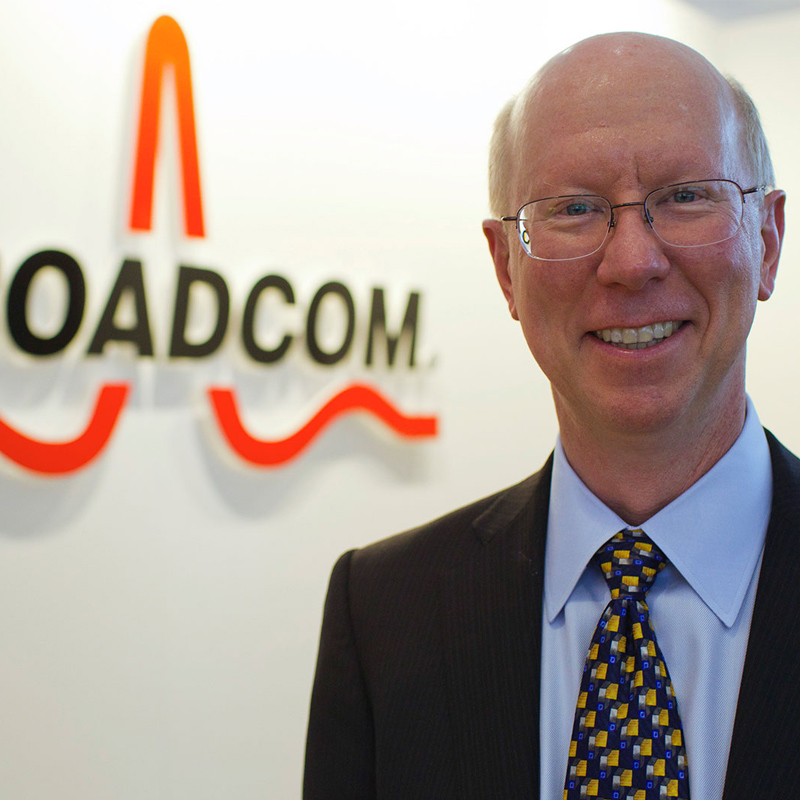
  • Broadcom launches products, innovations at 2013 CES

    Broadcom launches products, innovations at 2013 CES

    MUMBAI: At the on-going 2013 International Consumer Electronics Show (CES) in Las Vegas, Broadcom, which offers semiconductor solutions for wired and wireless communications, unveiled a range of products in digital and web television, home gateway technology, 5G WiFi ecosystem expansion, automotive Ethernet momentum, new offerings for emerging markets and customer design wins showcasing its leadership in driving connected consumer experiences in the home, hand and across the network.

    Broadcom president, CEO Scott McGregor SAID, "Broadcom‘s extensive product portfolio, relentless focus on innovation and relationships with industry leaders highlights how the company is leading the most exciting connectivity trends in motion today.

    The breakthroughs we show at CES will connect people to everything and everyone in 2013 and beyond."

    At CES, Broadcom is showcasing how people and devices are connecting anytime, anywhere and in ways that are smarter and simpler. The company is having demos of its advances in Bluetooth, voice activation, near field communications (NFC), 5G WiFi/802.11ac connectivity, ubiquitous location technology, automotive connectivity and content sharing. In addition, Broadcom will highlight how its support for key industry standards such as Miracast, MoCA, HomePlug and DLNA improve consumer experience on a range of devices. All these offerings, technologies and demos highlight how Broadcom innovations are shaping a new connected lifestyle.

    One of its new products is an Ultra High Definition Television (UltraHD TV) video decoder solution.

    The company says that this is the first step to delivering UltraHD TV into the home with the performance and picture quality needed for the evolution in multi-screen connected home entertainment. Broadcom‘s 28 nanometer (nm) ARM-based BCM7445 UltraHD video decoder solution, serving as the primary gateway to the home, delivers more transcoding, CPU processing performance and home networking throughput to support a greater range of applications such as video-on-demand (VoD), gaming, social media and web store applications.

    UltraHD TV technology, formerly known as 4K, marks an innovation in HD resolution. UltraHD TV screens display four times the resolution of today‘s 1080p60 displays. The delivery of UltraHD TV requires a more efficient compression codec made possible by the use of the new High Efficiency Video Coding (HEVC) standard. HEVC speeds Internet video downloads giving operators and users the ability to download content such as movies in half the time and with higher quality video at 50 per cent of the bit rate previously required.

    The company also launched a 5G WiFi Connected IPTV Set-top Box (STB) platform. Supporting the latest IEEE 802.11.ac standard, Broadcom‘s 5G WiFi technology is now available paired with its IP STB system-on-a-chip (SoC) technology, enabling operators to wirelessly deliver high-quality HD content and services to more locations and with more reliability throughout the home.

    By combining the Broadcom® BCM7241 IPTV STB SoC with the BCM43526 5G WiFi solution, Broadcom enables carriers to provide reliable whole-home, carrier-grade coverage for multi-room DVR, browsing, gaming, over-the-top (OTT) and other services.

    The company also announced the successful integration of Google Mobile Services with Android ICS on the Samsung Electronics SMT-E5015 Smart TV set-top box (STB), based on the Broadcom BCM7356 satellite STB system-on-a-chip (SoC).

    To enhance the functionality of standard Android devices, Samsung Electronics‘ Smart TV STB met the additional stringent Compatibility and GMS Test Suites (CTS/GTS) for support of Google Mobile Service (GMS) on KT‘s Olleh TV Skylife (OTS) service. Now, KT can offer subscribers new Android-based applications including Google Services (Play Store, Play Video, Play Music and Search).

  • Pay-TV operators in Europe and Asia bet big on OTT

    Pay-TV operators in Europe and Asia bet big on OTT

    MUMBAI: Low ARPUs, growing competitive threats, and rival multi-screen services are driving many pay-TV providers in Europe and Asia to explore new business strategies in video services, according to international research firm Parks Associates.

    TV Everywhere: Growth, Solutions, and Strategies – Europe and Asia/Pacific, a new report from Parks Associates, indicates multi-screen services now reach 66 per cent of pay-TV subscribers in Western Europe, 21 per cent in Eastern Europe, and 9 per cent in Asia, compared to 90 per cent in North America.

    Many pay-TV providers are now leveraging their multi-screen services to offer over-the-top (OTT) services to non-pay-TV subscribers. The UK satellite provider Sky is offering Sky Go, which features live TV and on-demand content, to non-Sky TV customers via PCs, smartphones, and tablets, with monthly subscriptions at ?15-40.

    Italian pay-TV providers Telecom Italia, Mediaset, and FastWEB, Romanian incumbent Romtelecom, UAE-based Etisalat, and South Korean cable operator CJ Hellovision have all launched video services that are available to anyone with a broadband connection.
    Operators with niche content, such as Telecom Serbia, have also launched new, local-language services to reach segments of consumers outside their home market.

    In India, Zeel made its foray into OTT with Ditto TV which will also be available in UK, UAE, New Zealand and Australia. The OTT platform currently offers 35 channels across genres.

    "Now that Netflix has entered Europe and large players have acquired OTT services such as Lovefilm and Acetrax, the video services market will be increasingly competitive, forcing pay-TV providers to test new services and business models," said Parks Associates Director-Research Brett Sappington.

    "Operators in Europe and Asia have dramatically increased their multiscreen offerings, and some are expanding into pure-play OTT services, with offerings available outside their network footprint."

    These efforts will increase as new OTT offerings throughout Europe, including Netflix and HBO, threaten operators‘ premium TV revenues. Parks Associates‘ report examines the development of TV Everywhere/multiscreen services in Western Europe, Eastern Europe, and the Asia/Pacific region.

  • Filmmakers ready to emperiment with other platforms for release of films

    Filmmakers ready to emperiment with other platforms for release of films

    MUMBAI: Fox Star Studios CEO Vijay Singh said today that compared to the film scenario some years earlier, the situation had changed considerably. ‘In recent years we have been seeing a double digit growth from around 40 to 50 per cent. In 2009, there was only one film that crossed the Rs one billion mark and last year we saw as many as 11 films crossed that barrier.”

    Taking part in the discussion on the marketing of film distribution of theatrical and non-theatrical films at the ongoing Ficci Frames, UTV Motion Pictures CEO Siddharth Roy Kapur agreed. “It is because the content in our film has undergone a paradigm shift. While last year, we had remakes like Bodyguard, Ready and Singham, we also had films like Delhi Belly, Zindagi Na Milegi Dobara and Dirty Picture to name a few that did good business and earned a lot of acclaim”.

    In films, 50 per cent revenue comes from theatrical collections while the rest is divided between the satellite rights and to a little extent the home video rights. But the overall scene is that from around 1250 films released every year, only a few films work while the others fail badly with some going off the screen in a day’s time.

    All participants were however of the opinion that it was piracy that was eating away 20 to 30 per cent of the revenue of films.

    “That is why I am of the feeling that on the overall, films not only in India but overseas too don’t do good business at all,” commented Specialtreats CEO Colin Burrows who was moderating the discussion.

    This led to the speakers move to the topic of alternate platforms of distributing films and monetizing from the same. Currently there are several platforms like IPTV, OTT, STB, internet portals and mobiles catering to Hindi films. “We are open to different platforms but right now they are at a nascent stage and people should be sure that there would be enough returns monetarily” Singh observed.

    But Shemaroo Entertainment Director Jai Maroo said: “Some time earlier, we had put our film Super K 1 1 on Yahoo. We weren’t sure about its run but recently when we checked, the amount of viewers had grown.”

    Real Image Media Technologies Directories Senthil Kumar, and Enlighten Film Society founder chairman Pranav Asher also took part.

    Meanwhile, in a discussion on From Theatre to Home to the Handheld: Superior entertainment experience all the way”, a majority of the speakers were of the view that new media devices were unlikely to replace cinema halls.

    Most speakers felt this was unlikely, even as mobile phones become more sophisticated and allow users to watch movies in good video and audio and despite the growth of broadband penetration.

    That is because films need a huge investment which only cinema halls justify. Also going to the theatre is a community experience which Indians are not likely to forego. What will happen though is that there will be more distribution avenues after a film has been released theatrically, was the general view.

    Participants at the session included filmmaker Karan Johar, film producer Bobby Bedi, Dolby Executive VP, Sales and Marketing Ramzi Haidamus, Nokia India Marketing Director Viral Oza, and Star India VP and Head digital Lalit Bhagia. The session was moderated by NDTV managing editor – Technology Rajiv Makhni who presented demonstrations to show how sound is great not just in a cinema hall but also in a mobile phone.

    Bhagia noted that the technology eco system is not completely ready for new media devices. For instance, Star produces content using Dolby surround sound. However new media devices do not support it. Johar noted that being a traditionalist, he would rather see people view films in cinema halls. But in some places, cinema halls may not be accessible and some people may not be passionate about the movie going experience. Watch films on the mobile was fine for such people as long as it can be monetized. At the same time he noted that people go to the cinema for a community outing. That will not change. Johar added that he was not keen on making content for the small screen including television. That is why he has only participated in a talk show.

    Haidamus noted that offering superior audio quality on new media devices like the mobile is a way to fight piracy. “If you offer high quality then consumers will see that paying a little extra makes a big difference. We are talking about quality whether on the big or the small screen. Consumers want convenience when they access content and we put quality in their hands whether it is on the tablet, PC or the phone.”

    Dolby offers headphones that give superior experience on the mobile. At the same time he noted that cinema halls are not going anywhere as films need huge investments. A film like ‘Avatar’ will never be released first on the mobile. But it would be interesting to see the sequence of platforms that a film releases on after its theatrical run.

    He said consumers own an increasing number of devices. This offers companies the chance to give consumers high quality experiences on the go. “But the ultimate entertainment device for film is always the cinema hall. A home theatre cannot be replaced by a phone.”

    Oza said consumers want to take their entertainment with them. This is why Nokia has launched things like Nokia Store and Nokia Music Unlimited. “Nokia is about connecting people with their passions. Our DRM free store which we launched a couple of months ago gets two song downloads a second.”

  • SnagFilms secures $7 mn financing deal

    SnagFilms secures $7 mn financing deal

    MUMBAI: Washington DC-based digital film distributor SnagFilms has closed a $7 million equity and debt financing deal as part of its ambitious plans to accelerate the company‘s growth.
     
    In addition to new equity, the company has arranged its first debt facility with Silicon Valley Bank. The deal will see veteran media and Internet executive Terry Semel and David Fialkow, co-founder and managing director of General Catalyst Partners joining the company as new investors.
     
    Semel, who is also the former chairman of Former Yahoo Inc. and Warner Bros, will also join the company‘s board.
     
    The new funding will be used by SnagFilms to extend a library of high-quality independent films that now numbers over 3000 titles and includes fictional films in addition to documentaries; to continue its technology development to provide films across all digital platforms and devices; and to market its films in all channels.
     
    SnagFilms had expanded its library last besides increasing its presence on over 100 devices, including 95 per cent of all tablets, all Android smartphones, OTT devices and connected TVs, and throughout the web world on its website and extensive digital network of affiliated sites and blogs.
     
    The company also significantly expanded its transactional platform distribution with Comcast and FiOS video on demand and with digital pay-on-demand platforms iTunes, Hulu, Amazon, YouTube Movies, and will soon launch on DirecTV and digital streaming providers Vudu, Samsung Media Hub and XBOX Live.
     
    "After a phenomenal year of growth in 2011, SnagFilms is poised for even greater success in 2012," stated Ted Leonsis, SnagFilms‘ founder and chairman. "This new investment by all our current investors, along with new funding from two tech and media-savvy newcomers, are true testaments to our strong belief in SnagFilms‘ tremendous potential for long term success. Digital delivery isn‘t just the wave of the future — it is the driving force now for filmmakers to reach large audiences and spread their passion, and to create new revenue streams that make their next film possible."
     
    "I have spent a long time at the intersection of films and new media," said Terry Semel, former Co-CEO and Co-Chair of Warner Bros and CEO and Chairman of Yahoo. "Movie studios don‘t have a monopoly on great stories, yet small distribution companies struggle to assemble the footprint necessary to reach a scale audience. SnagFilms has that base — the necessary contracts and relationships to distribute thousands of great stories, with the capital required to lead its field."