Tag: OTT

  • Bonnier Broadcasting & Ericsson collaborate for OTT & SVOD services

    Bonnier Broadcasting & Ericsson collaborate for OTT & SVOD services

    NEW DELHI: Telecom network Ericsson will supply online video platform to the over-the-top (OTT) and live TV subscription video-on-demand (SVOD) service of Bonnier Broadcasting.


    The multi-year deal will see Ericsson provide a number of managed services including content management and preparation, digital rights management, subscriber management and billing and advertising insertion for multiple devices and platforms.


    The Nordic next-generation online TV services will launch later this year. From launch, Bonnier Group content – including a mix of sports, local and international drama series, sitcoms and Swedish and international feature films – will be available both on-demand and live. Multiple platforms will be supported, including the web, iOS and Android devices.


    Ericsson Broadcasting and Media Services Head Thorsten Sauer said, “Our long-running relationship with TV4 for their linear channels has now been extended to a business transformation that encompasses on-demand and live services across platforms. Consumers want access to content anytime, anywhere and on any device, which is something TV4 is providing through its platform agnostic strategy. Ericsson is the partner in this transformation and our Ericsson Managed Player is designed to help our clients meet the needs of their audiences in this ever-changing landscape.”


    Ericsson’s Managed Player masters the combination of OTT delivery and playout to deliver content to consumers. Ericsson Mediaroom Reach, a scalable adaptive bitrate-based technology platform for intelligent OTT video delivery to cross-platform connected devices, powers it.


    Bonnier Group’s TV4 selected Ericsson in 2009 to manage their technical operations end-to-end as part of a 10-year contract. In addition, Ericsson and TV4 established a joint technology and business development forum, where the two companies evaluate new business opportunities.

  • OTT video service HOOQ to launch in India soon

    OTT video service HOOQ to launch in India soon

    MUMBAI: Digital platforms are making giant strides across the globe and its ripples are being felt across India too. Even as Star India’s recently launched all-encompassing over-the-top (OTT) video service Hotstar takes a steady lead in India, a new player is soon slated to enter the market.


    HOOQ – the new over-the-top (OTT) service in Asia from Singtel, Sony Pictures Television and Warner Bros. Television will soon launch in India.


    HOOQ, now launched in the Philippines, delivers Hollywood blockbusters and television series, as well as popular local movies and programmes, to customers anytime, anywhere by enabling viewers to stream and download their favourite shows on their device of choice.


    Apart from India, HOOQ will start off by rolling out progressively in the Singtel Group’s Asian footprint, including the Philippines, Indonesia and Thailand.


    Additionally, HOOQ has joined hands with Quickplay’s managed video platform to power its services. Quickplay is providing HOOQ with a comprehensive multi-partner turn-key solution that enables service and content providers to deliver a superior unified viewing experience in the home and on the go.


    HOOQ has selected Quickplay’s managed services to operate the largest subscription based OTT service in Asia, leveraging Quickplay’s advanced virtual head-end, cloud economics and decade of experience in providing complex, multiscreen services for leading providers such as AT&T, Bell, and Verizon.


    HOOQ viewers across Asia will enjoy personalized experiences across all devices, platforms, mobile and WI-FI networks. 


    Quickplay will deliver the fully hosted premium OTT video solution, providing the largest library of multi-language content in Asia. The solution initially includes the secure streaming of over 10,000 movies and TV series of encoded and optimized Video-on-Demand (VOD) content and adaptive streaming.


    In addition, Quickplay’s managed services include DRM solutions by Microsoft PlayReady and Verimatrix, managed user entitlements by Evergent Technologies, and enriched content from premium content providers from North America (Hollywood) and Asia. QuickPlay, in partnership with Evergent, is providing a distinct feature that enables HOOQ to leverage Singtel Group’s extensive telco billing relationships across Asia, enabling consumers to employ a range of payments including mobile post-pay contracts and pre-paid credits. In emerging markets where credit card ownership is limited, this feature is a critical enabler to overall adoption and accessibility.


    “We are proud to enable this ground-breaking premium OTT video service for HOOQ. This is the largest OTT deployment of its kind in Asia – this level of scale and complexity is unmatched and is a service that Quickplay is uniquely positioned to deliver on. The HOOQ vision of securely bringing premium global and local content to Asian viewers – in the home or on the go – is truly disruptive and well aligned to Quickplay’s goal of enabling superior viewing experiences and providing the greatest choice of premium content to the most viewers, anytime, anywhere,” said Quickplay CEO and founder Wayne Purboo.


    “Quickplay was a clear choice for HOOQ when you are building a business that needs to scale up to a footprint covering over a billion people. Their proven market leadership and experience in powering premium video allows us to provide quality viewing experiences and seamless integration especially when working across emerging markets and multiple partners,” added HOOQ CEO Peter G. Bithos.

  • OTT, video apps can work progressively with cable & satellite platforms

    OTT, video apps can work progressively with cable & satellite platforms

    MUMBAI: The market for Over The Top (OTT) services has been rapidly growing in the United States. However, can the same model be adopted for the Indian market? That was the key question asked at a discussion at FICCI Frames 2015 on the topic – ‘Clash of the Walled Gardens: OTT and Video apps versus cable and satellite.’


    Joining the panel were Zenga TV founder and CEO Shabbir Momin, DGive director and CEO GD Singh, IndiaCast group COO Gaurav Gandhi, Videocon d2h CEO Anil Khera, Eros Digital COO Karan Bedi, Hungama.com CEO and Hungama Digital COO Siddhartha Roy and Hinduja Ventures whole time director Ashok Mansukhani. The session was moderated by Whats ON chief executive officer Atul Phadnis.


    Sharing some insights from the US market, Gracenote general manager – video Richard Cusick said that according to a study conducted by the company, nearly 50 per cent of the US broadband households used OTT video services. Young viewers were particularly driving the change as 18 to 24 year olds watched less than half as much traditional TV as 50 to 64 year olds. “Netflix for example has 57 million subscribers worldwide and is a top OTT service provider,” he said.


    Cusick said the study increasingly found that networks and studios were resorting to unbundling to single channels as well as live TV bundles. “In such a scenario, consumers benefit the most as great content is served to them,” he said.


    The question posed to panelists was whether the US implications were similar to that of India and if cable and DTH operators were changing the landscape? Gandhi felt that the implications were not similar to the Indian market because channel specific models like HBO were not available in India. “As a content broadcaster or distributor, the US markets are very clear that they will follow a proper pay model. Here it is still very disruptive,” he opined.


    Moving to the experience of launching an OTT in India, DGive’s Singh said that while they still struggled to generate the right revenues, they did in fact receive 25 million downloads. He said when his company approached someone from the US for guidance for the company’s growth charter in India, the executive told him, “If you’re buying content, you cannot give it for free to audiences.” That was a major learning from the US market.


    On the content front, Singh said that currently the company had 30 per cent of its content set under the pay wall, which was premium content. “We sell our service for $1 per month per subscriber. We have a million users paying us since we are screen, operator and consumer agnostic. We are looking at breaking even in the next seven to 10 months.”


    Sharing his experience, Momin said that Zenga TV had started in 2009 and he was happy with the response from users. “What was surprising in the initial stages was that we saw response patterns coming in from Tier II cities. We now have 20 to 22 million active users per month and have been profitable for the last three years,” he informed. The company also launched a show called India’s Digital Super Star on its platform, which sold sponsorship slots.


    Bedi opined that Eros Digital had 14 million active users, wherein the company followed a transactional as well free model that catered to Indian audiences as well as NRIs. “Some key points for our industry is that we will take a leap; a steroid growth will be seen. Two, revenue models like ad dependent, subscription based, free as well as paid will have to work in tandem,” he said.


    The true value of the customer in the coming years will move towards mobile screen consumption, informed Roy.


    Speaking from the perspective of a direct to home (DTH) operator, Khera was of the opinion that while OTT players may have a million plus subscribers, the content from OTT was for second screen consumption. Technology like 4K is only for television. On a lighter note, he added, “India gets entertained heads up and not heads down.”


    Mansukhani too had a similar opinion. According to him, being an old cable company didn’t mean being out of date. He said that they too provided pay channels on a pre-paid model. “Most Indian homes today use multiple screens. It doesn’t matter who wins. There is space for all as content is being consumed via tablets, mobiles as well as television.”


    Mansukhani went on to compliment Star India’s Hotstar app saying that it was a fantastic proposition.


    “As a businessman, I am interested in exploring various opportunities but I’m worried about providing free content as high content cost is not justified in providing the content without a price tag. I am against giving free content on OTT,” Khera opined. He also hinted at Videocon d2h entering the OTT space but refused to give any details.


    Speaking on the challenges of the OTT space, Roy said that for them to benefit from the digital advertising pie, the pie itself should grow in order for profits to trickle in.


    The notion that OTT platforms are for free should be broken. “OTT is about the bundle and there is no choice if one has to pay or not. Cable companies are our allies as they provide us pipes for distribution,” Bedi said.


    Having the last word, Mansukhani said that all stakeholders should come together and ask customers on the kind of content and pricing for platforms. The profits could then be shared, he suggested.


    In conclusion, the panelists agreed that the three key challenges were cash flow, content windowing and specific business models.

  • WPP to acquire minority stake in OTT TV service FlowNetwork

    WPP to acquire minority stake in OTT TV service FlowNetwork

    MUMBAI: WPP has agreed to acquire a minority stake in FlowNetwork. FlowNetwork is a new, Swedish, over-the-top television service, delivering its programmes via the internet, which supplies Sweden’s regional newspapers with technology and content.


    Newspapers served by FlowNetwork include Norrköpings tidningar, Folkbladet, Motala Vadstena Tidning, Norrländska Socialdemokraten, Östgöta Correspondenten, Norrbottens-Kuriren, Västervik-Tidningen, Hela Gotland and UNT. FlowNetwork is co-producer of the new Swedish drama series G?smamman.


    This investment continues WPP’s strategy of developing its integrated services in fast-growing and important markets and sectors and strengthening its capabilities including digital media. WPP’s digital revenues (including associates) were $6.9 billion in 2014, representing 36 per cent of the Group’s total revenues of nearly $19 billion. WPP has set a target of 40-45 per cent of revenue to be derived from digital in the next five years.


    In Scandinavia, WPP companies (including associates) generate revenues of over US$500 million and employ over 2,500 people. In Sweden alone, WPP businesses generate revenues of over $180 million and employ over 800 people.

  • MPA report values Asia Pacific online video revenue opportunity at $12 billion by 2020

    MPA report values Asia Pacific online video revenue opportunity at $12 billion by 2020

    MUMBAI: A research report published by Media Partners Asia (MPA) indicates that the total market for online video services across 13 countries in Asia Pacific will grow from $3.5 billion in net revenues in 2014 to reach $12.4 billion by 2020, representing an average annual growth of 23.5 per cent. Advertising will contribute more than 80 per cent to the online video pie by 2020 with the subscription revenue opportunity, largely driven by subscription video-on-demand (SVOD) platforms, growing from less than $700 million in 2014 to more than $2.3 billion by 2020.

    The report, entitled ‘Asia Pacific Online Video Distribution 2015’, evaluates  the commercial distribution of legal over-the-top (OTT) video services in 13 markets with historical data and forecasts plus profiles of key OTT platforms.

    Commenting on the report, MPA executive director Vivek Couto said, “The market for the legal consumption of OTT services in Asia Pacific is at an early stage with monetisation models nascent in most countries. As barriers to entry reduce and broadband penetration increases, more disruptors are emerging and host of new platforms are proliferating, though business models are not always scalable and issues such as piracy; content; and platform operation remain problematic. This is especially true in a number of Asian markets where piracy is significant and the limited scale of OTT video revenues are not commensurate with content costs.”

    “Meanwhile, large scale global digital brands (from YouTube to Netflix) are expanding rapidly in a number of Asian markets or readying to launch in key territories over 2015 and 2016. Major local and regional television companies are also in the early stages of launching a number of large scale advertising and subscription based OTT platforms, anchored to local, Asian and Hollywood content while telecom operators are either moving upstream into content and OTT services or providing a crucial link for the ecosystem,” he added.

    Key takeouts from the report include:

    •    Infrastructure. Fixed broadband subscribers reached 325.3 million in 2014 across Asia Pacific, equivalent to an average household penetration rate of 36 per cent. By 2020, MPA projections indicate that this penetration level will reach 40 per cent as fixed broadband subs grow to 403.5 million mobile broadband will grow rapidly, expanding at CAGR of 15 per cent over 2014 and 2020 to reach almost 2 billion subs by 2020 (58 per cent penetration of population) versus 866 million (26 per cent penetration) in 2014.


    •    OTT Video Consumption. Active Asia Pacific OTT video subscribers reached 594 million in 2014, according to MPA. China accounted for more 85 per cent of the market size in 2014 and will represent 80 per cent by 2020. Ex-China, the largest markets in 2014 were Korea; India; Japan; and Hong Kong. By 2020, MPA projections indicate that active OTT video customers will reach 977 million. By 2020, in Asia ex-China, India will emerge as the second largest market, followed by Korea, Japan and Hong Kong. In Southeast Asia, Malaysia will be joined by Indonesia and the Philippines as market leaders.  

    The market for subscription-based OTT video reached 75.3 million active subscribers in 2014 and is expected to reach 225 million by 2020. China will be the largest contributor, driven by internet-enabled TV and set-top box platforms and online video companies offering premium services. Japan, Korea, India and Australia will emerge as material opportunities, powered by SVOD but India will trend towards more a freemium-oriented model.

    •    Industry economics. MPA divides industry monetization models into distinct segments:

    o    SVOD.  In terms of SVOD revenue across OTT platforms, the largest markets in Asia Pacific by 2020 will be Japan; China; Korea; and Australia. New Zealand and India will lead the next best placed group of geographies. MPA projections indicate that total SVOD-based OTT revenues in Asia Pacific will grow at a CAGR of 16 per cent between 2014 and 2020, growing from $953 million in 2014 to more than $2.3 billion by 2020.

    o    Online video and OTT advertising. Asia Pacific online video advertising exceeded US$3.7 billion in net terms in 2014, up 35 per cent year-on-year. The largest markets for online video advertising in 2014 were, by far, China and Japan, followed by Australia, India and Korea. By 2020, the total Asia Pacific online vide advertising pie is expected to grow to $10 billion, a CAGR of 18 per cent from 2014, with China dominant, followed by Japan and Australia. India will gain increasing scale and overtake Korea while Indonesia will be the clear leader in Southeast Asia.

    OTT video advertising revenue, a subset of the online video advertising pie, reached $2.1 billion in 2014, up 43 per cent year-on-year from a low base, and almost entirely driven by China. This pie, is projected by MPA to expand to $5.5 billion by 2020 at a CAGR of ~18 per cent. China will be the largest contributor with India, Korea and Indonesia starting to become gradually significant over time.

  • Cesar Diaz launches 7A Media

    Cesar Diaz launches 7A Media

    MUMBAI: Cesar Diaz has announced the launch of 7A Media, a company based in Miami, Florida that is dedicated to developing content, international sales and consulting. Its operations are split into two main areas: Latin America, where Diaz has a very broad knowledge and recognition, and the rest of the world.


    Diaz, who recently left his position as VP of sales at Cisneros Media Distribution (formerly Venevision International), has over 40 years of experience in various TV companies in Latin America. “In my career I have had precious moments to share with many customers around the world and some of these clients have become friends and will help make this transition very special to me,” Diaz said of his new endeavour.


    7A Media will engage in three specific areas: The first is consulting for international entities with an interest in entering the Latin American market, and for Latin producers wanting to have a greater presence outside LATAM. For the former, 7A Media has signed an agreement with a Canadian company looking to enter the LATAM TV market.


    Second is building a solid content catalog for all platforms: broadcast, pay-TV, Internet, OTT, VoD, etc.


    Third is a content “developer,” establishing itself as a “facilitator” or “broker” between the TV outlet, producer and financier, with the intent of forging co-productions for the international market.


  • Broadcom India eyes huge growth potential in cable broadband & OTT services

    Broadcom India eyes huge growth potential in cable broadband & OTT services

    KOLKATA: With digital television (DTV) and digitisation, household penetration is increasing in the country. “There exists tremendous opportunities for cable broadband and over-the-top (OTT) services”, opines Broadcom India managing director Rajiv Kapur.
     
     “The over-the-top television market may still be in its infancy in India, but it holds much promise for the future. The demand for OTT is going up. There are progressive operators who have been talking about value-added services. Internet entertainment on TV is on the rise,” says Kapur.
     
    Looking ahead, “one can see existing television sets transformed into smart TVs, enabling internet applications everywhere in the home,” adds Kapur. “We are expanding the options for entertainment in the home.  We are revolutionizing television by providing a full-range of platform solutions for content-sharing and video streaming throughout the home,” he further informs.
     
    Broadcom’s video and broadband solutions enables service providers offer a high-quality, TV-watching experience to its subscribers along with high-speed internet browsing.
     
    He went on to explain Broadcom’s role in OTT and broadband services through Set Top Boxes (STBs). Kapur says that the company constantly educates and trains various operators on the OTT services.
     
    India is currently witnessing the digitisation of analog cable TV signals as mandated by the Ministry of Information and Broadcasting (I&B). With digitisation, analog cable subscribers have been also migrating largely to digital cable, which has gained about 10 million subscribers in 2013, while net DTH subscribers increased by approximately three million.
     
    Post digitisation, while the viewing experience and expectations of the subscribers are soaring, it has also increased the demand for high-speed broadband.
     
    As per the Cisco Visual Networking Index 2014, in India, mobile data traffic will grow by a colossal 24-fold from 2013 to 2018, a Compound Annual Growth Rate (CAGR) of 88 per cent and Internet-Video-to-TV traffic will increase 8-fold between 2013 and 2018 (50.9 per cent CAGR).
     
    “Consumers are now more acutely aware about the content on their portable devices and the TV”, he further adds.
     
    As the users evolve with digital content streamed to them, the demand for OTT services increases.
     
    It should also be noted that in a report borne out by PricewaterhouseCoopers (PwC) survey, it forecasts 176 million OTT viewers by 2015 generating revenues of $552 million.


    Moreover, Morgan Stanley, a multinational financial services company, projects in its report that mobile data subscribers in India are likely to grow on an average by 25 per cent every year to reach 519 million by fiscal 2018, driven by falling handset prices and rise in smart phone usage and penetration.


    ‘With Wi-Fi internet access, end-users are looking for enhanced ways to communicate with large format screens too,” S Rajagopalan, a media analyst opines.


    “With this, users can also use Smart TV, though the interface is not user-friendly. The manufacturer, therefore, has to innovate with the interface, such as Flex Smartphone or Bluetooth / Wi-Fi-enabled keyboard to be integrated, which will grab the attention of the end-user. Maybe over a period of time, Smart TV will be preferred by the end-user to laptops, which will lead to more speed and bandwidth in the broadband segment,” concludes Rajagopalan.

  • 2014: An astonishing year for regional cinema

    2014: An astonishing year for regional cinema

    2014 was an interesting year. It started with a great deal of promise but at the end there is a feeling of unfulfillment too.

    What started with new films of different and interesting genres doing well at the box office ended slightly unsatisfied with some big film with a lot of expectation underperforming slightly.

    English content though continued to perform well with a lot of Hollywood’s big films doing really well at our BO. There is an increasing anticipation for these films and every year we are seeing more dubbed languages adding to the size of the release.

    Regional cinema, especially Marathi, has had an astonishing year. Audiences have clearly chosen to enjoy these films because they are telling intimate stories close to their heart. Still lessons were learnt and I think 2015 again holds great promise.

    There were also various trends in content in 2014; perhaps these trends didn’t follow through that well in the second half of the year. Content is certainly king right now and audiences are becoming very selective of the films they see. This is something that will continue, I think as prices for the content rise, people will become more and more elastic, choosing only films that they really want to see.

    I think next year has a lot of terrific looking films lined up and I expect films to build on this expectation to push audiences to the cinemas.

    Social media and the connected mediums will continue to drive a lot of reaction and indeed influence content. This trend will continue to get stronger as more and more people join the medium. Content viewing online is something that will also grow strongly. Without doubt this is an area where mobile internet will help greatly and the promise of 4G will fuel the need for content and the desire to consume it.

    I also think the trend of over-marketing films will also continue. Maybe for a short term but at the moment I truly feel marketing budgets are out of sync with the feasibility of a lot of the films they are being spent on and this is a slightly worrying trend. Sadly, there are no trends this year that have died out! I think there are always trends that die out and then slowly re-emerge as a ‘new’ trend again a few years later but I don’t think trends die out completely.

    Old wine in a new bottle is what our films are based on and I don’t think our audience will tire of that anytime soon.

    (These are purely personal views of Mukta Arts MD Rahul Puri and indiantelevision.com does not necessarily subscribe to these views.)

  • “Traditional STBs can no longer handle complex requirements of innovative operators”: Matthias Greve

    “Traditional STBs can no longer handle complex requirements of innovative operators”: Matthias Greve


    IPTV is moving from a pure linear product to a complete TV experience with live TV, on demand services and third party content. This new world of connecting the TV to the Internet means both, opportunities and challenges for operators, developers and integrators.


    ABOX42, is one of the leading provider of hybrid, IPTV and OTT DVB smart set top boxes (STBs), with five years expertise and knowledge in end-user mass-market products and a deployment of over 120 OTT applications. ABOX42 developed a new generation of smart STBs for the global market. The ABOX42 smart STB platform is the ideal solution for any IPTV and OTT content providers, cable-operators and ISPs, who are aiming to provide an own STB for its services to its customers. The platform was designed for fast moving OTT providers, cable operators, IPTV providers and internet service companies. With its powerful smart SDK, the Smart SaaS Services and additional Smart Solutions, the ABOX42 platform offers its customers a short project cycle, short lead times in production and includes lifecycle management for ongoing software maintenance and service updates.


    ABOX42 is taking a new approach with the ABOX42 Smart Platform and its advanced customised IPTV, OTT and Hybrid Smart STBs to solve the most important key challenges by providing the solid hardware foundation and the software features for a unique TV proposition with least cost and low development effort. In an interview, ABOX42 founder and CEO Matthias Greve answers essential questions about the rapidly changing market.


    Excerpts:


    What role do STBs play now and in future, considering Smart TVs and cloud based services?


    Modern STBs like the ABOX42 M-series are designed for local TV applications as well as for emerging cloud based TV services. Since on one hand the operators need to control the user experience and on the other hand need to be ahead of competition with the introduction of new TV features, it will be more than ever mandatory to have a modern, flexible and scalable Set Top Box platform for the first screen TV experience of paying end-users. Smart TVs offer a certain range of OTT applications, but will not replace the main Set Top Box device in end-users home, which provide a unified, rich TV experience on the first and second screen.


    Do you see a “SetTopBox-less” future for operators?


    There is currently some talk from operators about virtual STBs as SmartTV apps or STBs as CI+ modules. Since there is today no standard for the virtual STB applications and the vast majority of the installed flat screen TV in the household do not support these new applications, the operator still needs to focus on its core STB. This is the device, which can be shipped to all subscribers regardless of the type or age of the TV set.


    What view should an operator take on the virtual STB?


    The best way to view these issues is to treat the virtual STB like the operator would treat an App on iPad, XBOX or PlayStation. It is an add-on but not the core of the operators TV solution.


    What are the challenges of virtual STBs as apps?


    With the virtual STB apps within SmartTV, the operator does not have the same freedom on the user interface side. Also the quality of service cannot be guaranteed over the live time of the app. It is out of the operators´ control, how for example future software updates of the SmartTV manufacture might affect the compatibility and proper functioning of the operators TV service.


    Also Virtual STB apps are not free of charge and need costly maintenance. If you support different manufactures and different version of TV sets it quickly sums up to 5 to 10 new platforms which have to be supported each year.


    What is the major shift in the STB market?


    Traditional closed STB platforms are not any longer able to handle the complex requirements of innovative operators. The market will move from old integrated, proprietary STB products to modern SmartSTB platforms where the focus has moved to the software layer. This is a similar shift like we experienced in the last few years with the move from traditional feature phones to modern Smart phones. The same trend we see in the TV middleware segment, where operators want to move from closed propriety systems to open solutions based on modern internet technologies and open standards.


    What are the specific operator challenges solely advanced STBs are able to match?


    The biggest challenge for operators today is to understand what the difference of new IPTV & OTT solutions is and how the operator can in an effective way get to the target solution in least time.


    Basically almost all Cable and Satellite Pay TV operators want to deliver new services like network PVR, VOD and want to add OTT delivery of specific channels to free up bandwidth in their traditional DVB networks. IPTV operators who started several years ago need to upgrade their user experiences from inflexible first and second-generation STB platforms to latest (third) generation. This new generation STB platforms allow the fast development of modern user interfaces, compelling services and the integration of third party services based on HTML5. In addition these new Smart STB platforms are upgradable and much more future proof than legacy STBs.


    Do SmartSTBs already match operators´ current and future demands?


    SmartSTBs have arrived and delivery of HD live TV channels over the internet with OTT technologies is a market proven technology deployed in the mass market already. A new concept of OTT DVB, allows not only live TV signal delivery over the internet, but to also include multiple audio tracks, classical TeleText, DVB Subtitle as well as modern HbbTV application via HLS streaming.


    Will future trends in the operator area be in favour of STBs?


    There are two major trends increasing the demand for STBs. Operators who already run an older generation IPTV service plan to upgrade to a latest generation IPTV & OTT solution which is modern and scalable, which can be integrated seamlessly and offers new compelling features (additional OTT services, HbbTV, nPVR, Smart TV applications) and multi-screen capabilities.


    Operators without an existing installation who want to move into the TV space with a modern IPTV (or even more often OTT) solution which is easy to role out, does not require long integration work and offers a great first screen experience combined with multi-screen capabilities.


    What are the unique possibilities given with OTT solutions and STBs?


    OTT is a great opportunity for new players to enter the TV market, or for existing operators and internet service providers to reach new customers and add new features. ABOX42 has been an innovator in the advanced Set Top Box platform field for quite a while and we recognise that our solution is picked by both traditional operators who want to move to a future proof, modern and complete solution, as well we are serving new OTT operators who are entering the TV field with compelling new product offerings and disruptive business models. We see a major increase of our business and getting more and more request from traditional operators.


    What distinguishes the new STB generation from the preceding models?


    The new SmartSTBs will be able to handle many different standards side by side, such as streaming protocols, DRM and CAS systems. This new SmartSTB generation is HTML5 browser based and much more easier for development. A new focus will become the management of the software lifecycle and cloud services to manage the SmartSTB during the entire lifecycle, like we are all used nowadays with e.g. the iPhone.


    What are characteristic innovations in the area of OTT and IPTV technologies?


    ABOX42 as innovator in the IPTV & OTT segment is already delivering products, which offer all the latest innovations. This includes support of all major DVB features in both IPTV & OTT, supporting HbbTV services, other OTT services and third party applications with different streaming formats, different DRM systems side by side on the platform. More efficient streaming with H.265 will for sure boost the video quality especially for OTT and will allow more efficient content delivery for operators.


    Do SmartSTBs and especially ABOX42 solutions meet the customers´ demands?


    ABOX42 is supporting all demanded new features with its Smart SDK and Smart mobile Toolkit for the advanced ABOX42 STB platform. We see this as one of our competitive advantages to provide a broad compatibility to OTT services, streaming formats, DRM systems as well as the support of various TV Middleware solutions.

    This way a network operator can flexibly and easily upgrade all existing customers (digital and analog TV watchers) with new OTT and interactive services such as Catch-Up TV, Video on Demand and many more. ABOX42 offers short project cycles, short production lead times and includes lifecycle management, ongoing software maintenance and service updates.


    What are currently the typical demands of ABOX42´s customers?


    Depending on legal requirements in a certain country, cloud based recording (network PVR & network timeshift) is the most compelling feature. But also HbbTV offers a great set of additional features and on demand content which is supported by more and more countries / operators. Last but not least ‘Multi-Screen’ applications are getting more and more popular since it is not only about ‘on demand’, but about ‘any place, any time’ nowadays. In general it is all about high quality content and an intuitive user interface. This is what end-users like on the new TV experience.


    What are the prospects for a retail market as a channel for multiple services and devices?


    We believe the operators including new OTT operators are in the driver’s seat to deploy compelling multi screen solutions to their customers. Most markets are dominated by pay TV offerings by operators. Looking into the hardware devices, already today lots of retail devices (iOS or Android based) can be enabled as a second screen device, where the operator controls the application for these devices (for OTT services). For the main screen (e.g. IPTV), the operator will control and provide as well the hardware device (STB).

  • Lukup launches on-demand television service in India

    Lukup launches on-demand television service in India

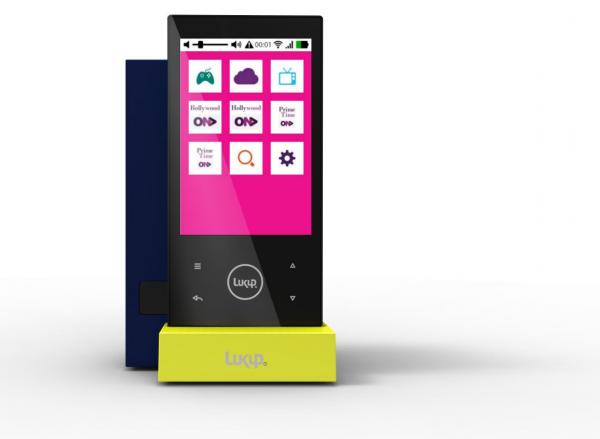
    BENGALURU: Indian company Lukup Media has announced the launch of an on-demand TV service powered by a connected device- the Lukup Player. The device is similar to Apple TV or Google TV, but can also deliver content across multiple screens using WiFi.

    Lukup CEO Kallol Borah said, ““Our TV service is designed to meet the requirements of changing lifestyles and consumer behaviour where more and more people want their entertainment when they have time, on a device of their choice and even when they are travelling and away from home. We also want to bring content and channels not available to viewers in India currently and broaden their choice of content substantially.”

    The Lukup TV service aims to deliver a large number of TV channels in addition to those available on cable and DTH platforms. These additional TV channels will have content from multiple genres including movies, shows, lifestyle and sports. Using the Lukup Player, users will also be able to stream content on more than one screen or device – TV screens, tablets, mobile phones, wireless speakers – at any one time. The service includes unlimited recording capacity starting from 500 GB which can be upgraded without limit. Users can also download content on their mobile devices which they can access offline. With no minimum monthly subscription charges, users can pay per view.

    Lukup CFO Harsha Mutt said,” “The television and broadcast industry in India needs an overhaul since customers’ desire experiential content on a device of their choice, at a time of their liking. To cater to this demand, we are meticulously putting together an elaborate network for delivering content to our customers through an over the top (OTT) TV service. With exclusive content, movies and TV shows available on our video-on-demand platform, we aim to make life easier for our customers, inspiring them to celebrate their joie-de-vivre. Our association with various content providers is a significant step forward in this direction.”

    The Lukup TV service is currently available in Bengaluru and will be available across India in phases. The Lukup Player will be online and in retail stores from October 2014.