Tag: OTT

  • Videocon d2h launches mobile TV app; strengthens OTT commitment

    Videocon d2h launches mobile TV app; strengthens OTT commitment

    MUMBAI: In order to strengthen its over the top (OTT) service, direct to home (DTH) operator Videocon d2h has launched a mobile TV app. The new app – Direct to Mobile TV will make it possible for Videocon d2h subscribers to watch television anytime, anywhere on their mobile phones.


    Available on both iOS and Android, the Direct to Mobile TV app will give viewers instant access to a wide range of news, entertainment, sports and movie channels. The platform currently boasts of more than 70 select live TV channels and more than 3,000 movies and videos.


    Priced at Rs 60 per month, the offering includes channels, such as Sony Entertainment Television, Sony Max, Sony Music, Sab, Aaj Tak and many regional language channels. The service also features a programme guide, show reminders and social media integration, besides the What’s Hot section.


    Videocon d2h executive chairman Saurabh Dhoot said, “We are happy to be on the leading edge of India’s OTT revolution with the launch of our Direct to Mobile TV app. This is an important move for Videocon d2h, as we strengthen our commitment to introducing new technologies to our subscribers, allowing them to have a robust and enhanced experience while viewing our contents. We are confident that an increasing number of consumers will enjoy this offering in the days to come.”


    The Direct to Mobile TV service targets an increasing number of working professionals, shoppers and students spending time outside their homes with round-the-clock access to TV, films and other desired programmes regardless of location.


    Videocon d2h CEO Anil Khera added, “With our new Direct to Mobile TV app, Videocon d2h’s subscribers will never have to miss their favourite shows while on the move. We believe it affirms our continuous focus on innovation and our ability to deliver high quality solutions and services. We are sure that this mobile TV app will be of great interest to our viewers and will ensure our prominent presence in the OTT space.”

  • AIDCF asks b’casters to create level playing field for OTT & cable TV

    AIDCF asks b’casters to create level playing field for OTT & cable TV

    MUMBAI: The All India Digital Cable Federation (AIDCF) is on a roll. The multi system operator (MSO) association, which first submitted its recommendations to the Information & Broadcasting (I&B) Ministry and then to the GST Committee, has now written to broadcasters with Over the Top (OTT) platforms.


    The Association has written a letter to Star India, Multi Screen Media and IndiaCast Media Distribution. In the letter, AIDCF has stressed on how the broadcaster is giving content free of cost to its OTT platforms, while charging MSOs for the same content.


    Giving an example of Star India’s OTT platform hotstar, a source close to the development tells Indiantelevision.com, “Star India, on one hand offers simulcast or immediate transmission of fresh popular content completely free of cost to its OTT subscribers on hotstar and on the flip-side, it charges the MSOs huge sum for the same set of content.”


    AIDCF’s letter to broadcasters, a copy of which is with this website, reads:


    1) The cable industry is contributing huge subscription revenue to 

    broadcasters for the same set of content and programme.


    2) It contributes to a large viewership for the channels the network has.


    3) Also helps the broadcaster in gaining higher TRPs, which in turn leads to a better ad rate for the portfolio of channels thus increasing the advertisement revenue.


    The letter points out that this scenario of offering simulcast/immediate transmission of fresh content completely free of cost to OTT subscribers is not favourable for the Cable TV industry and its relationship with broadcasters, considering the growth in the subscriber base for the broadcasters’ OTT application.


    According to AIDCF, this is a threat to the pay TV cable business model, which defeats the purpose of paying huge license fees to broadcasters. “Some of our subscribers have started complaining saying, ‘Why should we pay you for the content, which is available free of cost via say hotstar or Sony Liv,’” informs the source.


    Giving free of cost content to OTT platforms is affecting the average revenue per user (ARPU) of the cable TV industry, subsequently hampering the growth of business at large.


    AIDCF in its letter has asked broadcasters to create a level playing field amongst respective distribution platforms. “We have requested the broadcaster to make content available on their OTT platform a paid service with a subscription fees. Alternatively, the same content should also be made available free of cost to other distribution platform,” the source reaffirms.

  • Eros Now to launch three original shows; ties up with Anil Kapoor Film Company

    Eros Now to launch three original shows; ties up with Anil Kapoor Film Company

    MUMBAI: As India’s digital landscape is poised to undergo a renaissance, Eros International’s over-the-top (OTT) platform Eros Now is gearing up to  produce multiple in-house flagship original programmes. Additionally, the platform will also showcase premieres of recently released Bollywood films. 


    The Eros Now mobile app for Android and iOS platforms, which will be free for download as of now, has also tied up with Anil Kapoor Film Company to co-produce the Indian adaptation of a popular international sitcom, the name of which will be revealed at a later date.


    Eros’ OTT platform will roll out its original content strategy with three ad-free shows namely KhelThe Client and Ponniyin Selvan. These shows will have film-like production values targeted at young Indians, which is the largest demographic of the Indian population. 


    Khel is a wicked dark drama featuring an insider’s perspective on the twisted characters that populate the world of cricket and the Indian Premier League. It is directed by Karan Anshuman. On the other hand, Rohan Sippy will helm The Client, which is a thriller based show starring Bipasha Basu as the main character. Ponniyin Selvan is an epic period drama based on a popular Tamil historical novel by Kalki Krishnamurthy, which is an in-house production by Eros South. 


    Moreover, in a bid to create hype for internet users, Eros Now will also be premiering the latest Bollywood movie Tanu Weds Manu Returns on 19 July even prior to its television release. The other Bollywood movies that are scheduled to stream on the platform are Badlapur, NH10Shamitabhand Happy Ending amongst others.


    Eros Now COO Karan Bedi said, “Eros Now is a premier online application for Android and IOS users, which will feature different genre of movies, TV serials, music albums and releases, that too free of cost. Eros Now’s library has over 1.5 lakh movies, which will be showcased only for the online app users. The app will also feature TV shows of different channels like Colors, Sab, Sony and Pakistani TV channel Hum TV.


    While the Eros Now app will be free for now, the company will be building an in-app payment mechanism, wherein users will have to pay for some content that they want to watch exclusively in the near future. These may be movies sans ads or movies in HD quality. The price point will range from Rs 50 – 150, which might include daily, weekly or monthly chargers.


    Eros International Plc Group CEO and managing director Jyoti Deshpande said, “Eros Now app has over 19 million users across the country in its pre-launch phase and Eros has done their market survey in which there are 500 million internet users out of which 382 million people are active smart phone users, so as consumption patterns has change globally, Internet entertainment networks have begun to rapidly replace traditional, linear television. It’s our turn now. And I believe that Eros will have the first mover advantage in this space with the strength of its vast content library and dominant market share to further consolidate its leadership position as it reinvents itself from a film studio to a more consumer facing content and digital company in the next phase of growth.”


    It may be recalled that recently Asian OTT player HOOQ entered the Indian market and also has plans to introduce original content. On the other hand, Indian broadcasters like Star India, Zee Entertainment Enterprises and Sony Entertainment Television are also upping their digital strategy by putting their might behind their OTT platforms namely Hotstar, Ditto TV and Sony Liv respectively. With more and more players entering the digital fray, premium content and competitive price points will play a major role in acquiring subscribers as well as raking in the moolah.

  • Saavn raises $100 mn; to move into video

    Saavn raises $100 mn; to move into video

    MUMBAI: Move over hotstar.com. Competition is coming your way. Earlier, this year, the Neeraj Roy led music streamer Hungama.com raised around $100 million to expand its service into video delivery to its subscribers. Then Hooq.com announced its foray into the over the top (OTT) market. Now it’s the turn of New York headquartered Saavn to announce that it is going to move into delivering video content to its subscribers. The company late last night confirmed that it had managed to raise $100 million in a Series C round led by Tiger Global.


    Among investors who also took part in the round figure: existing investors Bertelsmann India Investments, Steadview Capital, Liberty Media, and Mousse Partners, and new ones such as Qulvest, hedge funds from Hong Kong and a number of strategic individuals. Avendus Capital in Mumbai and LionTree Advisors advised on the deal. The $100 million fund raise values Saavn.com which started in 2007 at $300-400 million.


    Saavn CEO Rishi Malhotra revealed that the service is adding a million monthly average users (MAU), with a total of around 14 million MAU currently and hopes to cross 20 million MAUs by end this year.


    The company is banking on the mobile users to take up its music and video streaming service in a bigger way.  Malhotra told techcrunch.com that almost 90 per cent of its subscribers are on mobile and have been averse to paying and hence Saavn has been focusing on an ad-supported model for its music streaming service so far.


    A part of the $100 million it raised will be used to scale up its music streaming service which has a catalogue of 2 million plus songs, mostly from Bollywood. It wants to expand its sales force.


    “The real purpose of this raise is to continue developing our product, acquiring a larger user base, and investing in the right components that make a healthy media company,” Malhotra told techcrunch.


    “We want to become an entertainment ecosystem for mobile,” he continued. “That means new audio products and also video, absolutely. The exciting thing about the [Indian] market that we can be part Spotify, part Pandora, and part Netflix.”


    The company has signed on Bollywood heart throb Ranbir Kapoor to promote Saavn in prime time commercials on mainline Hindi general entertainment channels in India.


  • Zee beefs up OTT strategy; launches original digital content

    Zee beefs up OTT strategy; launches original digital content

    MUMBAI: At a time when multiple companies are putting their might behind pumping up their over-the-top (OTT) offerings like Hotstar, ErosNow, Sony Liv and HOOQ amongst others, Zee Entertainment Enterprises Ltd (Zeel) is not one to sit back. Putting the money where their mouth is, Zee is upping the ante in by launching original digital content for its OTT and digital platforms.


    In order to offer content anywhere and at any time, Zeel has got its entire digital ecosystem – Zee Digital Convergence (ZDC) – and its content studio – Essel Vision Productions – to design and introduce an instrumental musical show -#LifeIsMusic.


    Starting 15 June, the seven-week series will be available on its OTT platform DittoTV and digital platform www.lifeismusic.in.


    Original content (both long and short) has emerged as a new form of storytelling in the digital space as millennials continue to alter their entertainment consumption habits. Banking on this very same learning, Zeel has now got into producing original content for its digital platform. #LifeIsMusic celebrates world music and highlights the true value of musicians who are experts in the instrumental genre.


    The multi-platform instrumental reality series will be available for audiences all over the globe and will showcase the value of instrumental music in a holistic manner – across a variety of popular and melodious music genres.


    #LifeIsMusic will feature regular upload of unplugged original music compositions every Monday and Friday for a duration of seven weeks. The show has three renowned maestros on its panel – Louiz Banks (the Godfather of Indian Jazz and Grammy Award nominee), Taufiq Qureshi (ace percussionist) and Purbayan Chaterjee (one of the leading young Sitar players of India) mentoring budding professional musicians. Each maestro will form a band of four musicians each of whom specialize in different instruments – like percussions, rhythm guitars, bass guitar, sitar, sarod, flute etc.


    The show will be promoted across all the major websites including zeetv.comzeenews.comindia.comdnaindia.combollywoodlife.comdittotv.com amongst others.


    Over the past few months, the video on demand (VoD) industry has been witnessing major activity as these platforms have become an extra content delivery arm for major entertainment business houses. While earlier the VoD platforms were used as a source for archival content, the new players are bending the rules. In order to gain eyeballs, the players are not only making original content, but also premiering movies and songs.


    Zee Digital Convergence CEO Debashish Ghosh said, “#LifeIsMusic is a clutter-breaking original concept with a goal to inspire passion, unleash creativity and realize dreams in a digital era of free downloads. We are confident that the series will soon become a favourite destination for all music lovers – especially when you want to experience quality music never heard before. This exclusive series aims to engage, educate and entertain the youth about the variety and possibilities that exist with instrumental music. It will reach out to around 50 million viewers, making it a truly global multi-screen phenomenon! The platform also seeks to encourage aspiring musicians to showcase their talent to global audiences – and demonstrate their skill and creativity transparently to global music talent scouts.”


    Essel Vision business head Akash Chawla added, “Zee has always set new benchmarks with innovative content across platforms and as its content studio, With today’s evolving online world, producing #LifeIsMusic series is in sync with our aim to design content that empowers talent to achieve their creative visions across all mediums.”    

  • OTT player HOOQ makes India debut; prices subscription at Rs 199

    OTT player HOOQ makes India debut; prices subscription at Rs 199

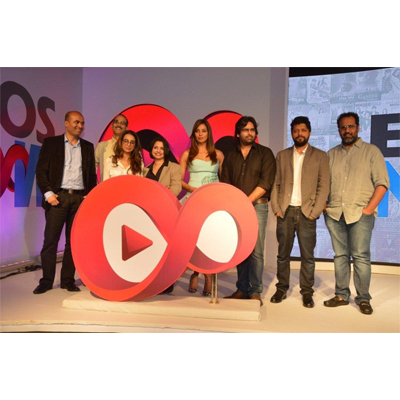
    MUMBAI: Competing with over the top (OTT) players such as Star India’s Hotstar, BoxTV and Big Flix, Asian video-streaming service Hooq has made its Indian debut.


    As reported by last month by Indiantelevision.com, the OTT video service from Singtel, Sony Pictures Television and Warner Bros. Television was looking at expanding in the Asian region by launching in countries like India, Philippines, Indonesia and Thailand.


    While Hooq will officially go live in India in June, beta access will be available to select users beginning 27 May.


    Hooq’s one-month subscription will cost Rs 199 and consumers will be able to pay using credit card, debit card, cash card, internet banking as well as PayTM.


    “We are very excited to bring to Indian consumers the ultimate ad-free video-on-demand service at an amazingly low price.  HOOQ will offer India the largest and best catalogue of Hollywood and Indian content of any service available today,” said Hooq CEO Peter Bithos.


    Hooq will offer over 15,000 international and local titles to consumers in the country including the likes of Harry Potter, Spider-Man, Iron Man, Pulp Fiction, Nikita, Shield, Friends, Lost, Grey’s Anatomy, Chennai Express, Vishwaroopam, and Andaz Apna Apna.


    For the local content, the company has partnered with movie studios like Yash raj Films, Sun TV, UTV Disney, Rajshri, Reliance, Shemaroo, and Sri Balaji AP International amongst others. At launch, Hooq plans to offer over 10,000 videos including Bollywood, Tollywood and Kollywood movies along with TV shows.


    Hooq users will be able to access their account on five devices at any given point of time and stream content on two devices simultaneously. The ad free Hooq also offers download support for offline viewing. Movies can be streamed for an unlimited amount of time anytime and anywhere.


    Hooq is accessible over the web at hooq.tv as well as via official Android and iOS applications.

  • TRAI Chairmanship: An onerous responsibility fraught with delicate diplomacy & balancing acts

    TRAI Chairmanship: An onerous responsibility fraught with delicate diplomacy & balancing acts

    NEW DELHI: For any bureaucrat assigned to an autonomous organization under any Ministry, the biggest problem is to ensure smooth functioning between the Ministry and the organization.


    Even as Ram Sewak Sharma, a 1978-batch IAS officer of Jharkhand cadre who is currently serving as secretary in the Department of Electronics and Information Technology appears to be the favourite for the hotseat of chairman of the Telecom Regulatory Authority of India (TRAI), he is one of over seventy-five contenders who reportedly include Information and Broadcasting secretary Bimal Julka.


    Erstwhile chairman Rahul Khullar had taken charge of the regulatory body on 14 May 2012, and demitted office earlier this month on 13 May.


    TRAI had been established under an Act of Parliament to deal with telecom issues, but was given additional charge of broadcasting just over a decade earlier. Even though it appears to have handled broadcasting issues with fair competence, the bent of mind of the officials in the regulator is still towards telecom.


    Convergence: A delicate balancing act


    The task for the seventh chairman of TRAI becomes even more onerous: he has to ensure smooth coordination with two Ministries. Even though TRAI technically falls under the Communication and Information Technology Ministry, it has to also work at tandem with the Information and Broadcasting Ministry. 


    This balance between the two Ministries becomes crucial, considering that the National Democratic Alliance (NDA) Government is again talking about convergence at a time when two of the primary players who were involved on this issue a decade earlier when the matter had come up – to utter failure – are still in the cabinet. Arun Jaitley then headed Law and now heads the Finance and I&B Ministries, whereas Sushma Swaraj, who was then in charge of I&B Minister is now in External Affairs. In that round, the late Pramod Mahajan as Communications Minister was also part of the Group of Ministers headed by then Finance Minister Yashwant Sinha.


    The fact remains that convergence is bound to become a hotly debated subject during the tenure of the new chairman, and a lot of diplomacy will be required to balance the demands of the two ministries.


    Digital India and Broadband


    Even as a lot has been heard about programmes on Digital India and Make in India with little tangible showing so far in telecom and broadcasting, one of the greatest challenges the new incumbent will have to face is ensuring the growth of broadband.


    At present, India is at the 89th position in Network Readiness Index with countries like Singapore, Finland and Sweden having become leaders and by TRAI’s own admission the broadband connectivity is abysmally low with just 99.2 million subscribers by March this year. 


    In view of this, the government’s ambitious national broadband plan to connect as many as 2.5 lakh villages through optic fibre appears to be too far-fetched and even came in for sharp criticism from outgoing chairman Khullar, who termed the move as “impossible” to implement and something that is bound to “fail.” In fact, he said a plan to connect the entire country at one go is not the right way of providing broadband connectivity to all.


    Broadcasting Sector


    Expectedly, TRAI will need to not only strengthen its broadcasting team but also ensure greater coordination among officers in both broadcasting and telecom. This is also obvious from the number of policy decisions with regard to broadcasting, which have been taken to the Telecom Disputes Settlement and Addressable System and the Courts.


    The primary challenge that TRAI faces in broadcasting is to establish its credibility of being impartial and not playing into the hands of the broadcasting lobby. The cable operators and independent multi-system operators have been crying hoarse over this issue, often leading to litigation.


    In fact, the regulator has had to backtrack several times in the recent past, either on its own or because of Telecom Disputes Settlement and Appellate Tribunal (TDSAT) and court decisions and hopes the Supreme Court will come to its aid.


    A day after Khullar laid down office, TRAI on 13 May announced that amendments to its tariff orders issued on 1 October, 2004 and 21 July, 2010, which had been set aside by TDSAT earlier this month would be subject to the outcome of the appeal filed by the regulator before the Supreme Court.


    The two amendments made by the TRAI to its tariff orders that aimed at preventing broadcasters from giving their channels directly to the subscribers and putting commercial subscriber at par with ordinary subscribers were struck down by TDSAT on 9 March.


    TDSAT said TRAI must now undertake a fresh exercise ‘on a completely clean slate. It must put aside the earlier debates on the basis of which it has been making amendments in the three principal tariff orders none of which has so far passed judicial scrutiny. It must consider afresh the question whether commercial subscribers should be treated equally as home viewers for the purpose of broadcasting services tariff or there needs to be a different and separate tariff system for commercial subscribers or some parts of that larger body. It is hoped and expected that TRAI will issue fresh tariff orders within six months from to-day.’


    On 16 May, TRAI failed to get a stay from the Supreme Court of the order of TDSAT setting aside the amendments in two tariff orders, which had sought to put an inflation-linked hike of 27.5 per cent on addressable and non-addressable systems.


    The regulator also failed to get permission to take action against television channels violating its diktat of a total of 12 minutes of commercial and promotional advertisements every hour, though all broadcasters were asked to keep records of this by the Delhi High Court.


    Despite announcements, there has been little progress in the Make in India campaign as far as indigenous set top boxes for digital addressable systems go and most consumers have to put up with Chinese or other boxes.


    Similarly, analogue transmission continues in many parts of the cities and towns that have gone digital and the Government failed to get the stay of Digital Addressable Systems (DAS) in Chennai vacated.


    The subscription charges for the average consumer under DAS still continues to create confusion as far as free to air and pay channels go and that is the primary reason for the LCO’s inability to do proper billing – giving a reason for the broadcaster to complain.


    The Direct-to-Home (DTH) sector also complains about the fee charged by the Ministry, which they say makes it difficult for them to continue or earn profits.


    Both Internet Protocol TV (IPTV) and headend-in-the-sky (HITS) are still considered nascent technologies despite having been around for some years, and TRAI will have to find ways to encourage their growth, particularly in the face of smartphones which can receive live TV signals for which they often pay nothing.


    While the nation is talking about digital technology, Prasar Bharati feels that Frequency Modulation, which is an analogue technology, should be promoted until the nation is read for digital radio sets. This seems to militate against the crores of rupees spent by All India Radio (AIR) in Digital Radio Mondiale technology. Though TRAI has not interfered as it is a matter between the I&B Ministry and the public service broadcaster, it may have to do so if digitization has to succeed.


    Both the Government and TRAI have been announcing that e-auctions of the first batch of Phase III FM would begin in May but the month is almost at an end and no date has been fixed yet.


    Telecom Sector


    The new chairman would be taking charge at a time when the telecom sector is facing major turmoil with the emergence of over-the-top (OTT) operators. While the broadcasting community appears to be happy as the communication OTT will help popularize its programmes, the cellular operators feel OTT will affect their revenues adversely. The TRAI consultation paper also touched upon net neutrality, which is bound to gain controversy in the era of convergence.


    If the successor is Sharma, then his task will become even more challenging as it is bound to militate against the post he has been holding until now and where he had in fact set up a committee on the same subject even as a Parliamentary Committee is also considering this issue.


    Spectrum and the inability of the government to auction the entire spectrum available in the last e-auction – with 12 per cent remaining unsold – is bound to trouble the regulator. Added to that is the fact that despite the fact that the last e-auction was held in the tenure of the present government, Minister Prasad recently assuring the industry that the auction of spectrum in the future too would be conducted in a timely, fair and transparent way.


    Even as 3G is still to become a success, the regulator has been asked to look at 4G at a time when many telecom service providers are facing problems.


    Other challenges in telecom include extending the mobile network to rural India, and a debate whether India is ready for Virtual Network Operators.


    Clearly, the new chairman has to burn the midnight oil and at the same time avoid heartburn as he goes about his task of resolving the multifarious tasks before him.
  • Telcos support net neutrality but root for checks on OTT platforms

    Telcos support net neutrality but root for checks on OTT platforms

    NEW DELHI: While supporting net neutrality and firmly holding that access should be made available to all on a non-discriminatory manner, the Cellular Operators Association of India (COAI) has said that there is a need to evolve the regulatory framework for Over The Top (OTT) communication services to prevent various regulatory imbalances between the Telecom Service Providers (TSPs) and the OTT communication players.


    It is response to the Telecom Regulatory Authority of India’s (TRAI) consultation paper on OTT, COAI has said a “common regulatory framework for businesses providing the same services is the need of the hour and will benefit all players as it will reduce legal ambiguity and prevent unnecessary litigations.”


    At the outset, COAI said it welcomed the entry of OTT players and believes that they play an important role and offer many new services. However, the body added that, “it is pertinent to note that some of the services that are offered by the OTT players such as messaging/instant messaging and VOIP telephony are perfect substitutes of the services that can be offered by the telcos. These OTT players have rightly been classified by the Authority as “OTT Communication Services” players and their services are in direct competition with the licensed communication services offered by the TSPs.”


     The COAI wants not only net neutrality, but also net equality – the need to connect the one billion citizens of India, who are still not connected to the internet, by facilitating an open, inclusive and affordable access to the Internet, and with the same rules being made applicable to the same services.


    There is a need to review the regulatory framework and “we submit that the time is ripe for a comprehensive review to build a regulatory neutral, forward looking and transparent framework that ensures that the principles of “net equality” and “same service, same rules” are implemented.”


     “The need of the hour is to connect the 80 per cent of India’s population, which is still unconnected; and our campaign “Sabka Internet, Sabka Vikas” reaffirms our commitment to the Government’s vision for “Broadband for All” and Digital India, for socio-economic inclusion of all strata of the society. We believe a customer should be free to choose the device, technology and access platform – paid or subsidized, as long as the Internet is always open in terms of access in a non-discriminatory manner. Also, we offer choice and do not block or provide preferential access to any website or application, thereby safeguarding Net Neutrality,” COAI said.


    Some stakeholders have suggested that there are already adequate laws controlling the operations of OTT players such as Information Technology Act, Indian Penal Code, the Criminal Procedure Code etc. It is pertinent to point out here that such laws are general laws, which in its terms and effect apply to the entire country irrespective of the sector and framework in which they operate. While these laws are important and useful in a general context, they cannot be said to be a substitute of a common regulatory framework, which would govern and regulate similarly placed service providers and give them a common platform for the provision of services on common terms, which would ensure a level playing field.


    The telecom industry has already invested over Rs 7,50,000 crore in setting up world class mobile networks over the last 20 years and is looking at investing another Rs 5,00,000 crore in the next five years to roll-out into rural areas and also upgrade existing networks to connect one billion Indians to the internet. Moreover, going by the Government’s commitments, the Digital India Programme itself will require investments to the tune of Rs 113,000 crore. Additionally, the Planning Commission’s 12th Five Year Plan requires an investment of Rs 943,899 crore with 93 per cent of the total investment expected to come from the private sector.


    The Indian mobile telephony industry today, is in dire financial straits with a cumulative debt of over Rs 300,000 crore, and a one per cent return on investments, with many operators even making negative returns on their investments. This situation puts at risk the nation’s agenda of “Broadband for All”, as private operators will be unable to attract additional investments in the sector, required to support the ambitions of the government.


    COAI said there were various regulatory imbalances that existed between the telecom operators and OTT communication players. “We would like to submit that the TSPs bear the cost of infrastructure, spectrum, and payment of license fees and spectrum usage charges, which are not applicable to the OTT communication players. The TSPs also have the obligations related to roll-out, meeting quality of service parameters and security related obligations. Many of these do not apply to OTT communication players, which result in an arbitrage opportunity. The National Security and consumer security, safety and privacy are of paramount importance, and should not be compromised at any cost. The security framework has evolved over the years along with the growth and proliferation of telecom services and all the telecom operators provide these services under a strict licensing framework, including compliances with the security conditions and service standards. The extensive and stringent security conditions laid down and required to be met by the licensed TSPs are not applicable to the OTT Communication players. Most of the OTT players do not meet the encryption and decryption requirements of the Law Enforcement Agencies (LEA).”


    In response to a Parliamentary question on security threats from OTT applications, COAI said that the Telecom Ministry has acknowledged the fact that security/LEAs are facing difficulty while dealing with encrypted communication services provided by OTT service providers and the same may also be used by anti-national and criminal elements, posing a security threat. Lack of regulation on communication related application services could lead to serious national security and data privacy implications because they bypass the regulatory regime enforced on licensed service providers. Therefore, it is essential to ensure that the principles of “Same service, Same rules” are implemented.


    Referring to claims by some stakeholders that Internet Based Services (IBS) players should not pay for use of the TSPs network over and above data charges paid by customers, COAI highlighted that increased data usage fails to compensate for loss of revenues to TSPs arising due to OTT services. Further, these services demand high-speed networks that require substantial investment in infrastructure, particularly for the development of the broadband infrastructure both from the fixed and mobile perspective. “We hereby advocate for the Open and Pro-innovation Environment wherein pricing flexibility is provided to the operators and the choice is provided to the customers.”


    On traffic management for different OTT services, COAI said traffic management allows operators to secure their networks, prioritize time-critical services and match scarce network resources to service requirements. It is an essential function of networks to meet the performance expectations of different types of traffic to ensure better customer experience. Traffic management is a tool for consumer benefit not consumer harm as it provides a number of clear benefits to end users in terms of improved performance, innovation, consumer protection and efficiency.


    On the contention that TSPs should not be allowed to implement non ­ price based differentiation as it would be grossly uncompetitive and would kill competition leading to all traffic being cornered by a few, the Association said there is a need to look at the internet as a two sided market, which involves the consumer and the content app provider. The TSP is the platform that market together and needs to be given the flexibility of implementing based differentiation.

  • Verizon acquires AOL for $4.4 billion

    Verizon acquires AOL for $4.4 billion

    MUMBAI: Taking another significant step in building digital and video platforms to drive future growth, Verizon Communications Inc. has acquired AOL Inc. for an estimated total value of approximately $4.4 billion.


    AOL chairman and CEO Tim Armstrong will continue to lead AOL operations after closing.


    Verizon’s acquisition further drives its LTE wireless video and OTT (over-the-top video) strategy. The agreement will also support and connect to Verizon’s IoT (Internet of Things) platforms, creating a growth platform from wireless to IoT for consumers and businesses.


    The combination of Verizon and AOL creates a scaled, mobile-first platform offering directly targeted at what eMarketer estimates is a nearly $600 billion global advertising industry. AOL’s key assets include its subscription business; its premium portfolio of global content brands, including The Huffington Post, Tech Crunch, Engadget, MAKERS and AOL.com, as well as its millennial-focused OTT, Emmy-nominated original video content; and its programmatic advertising platforms.


    Verizon chairman and CEO Lowell McAdam said, “Verizon’s vision is to provide customers with a premium digital experience based on a global multiscreen network platform. This acquisition supports our strategy to provide a cross-screen connection for consumers, creators and advertisers to deliver that premium customer experience.”


    “AOL has once again become a digital trailblazer, and we are excited at the prospect of charting a new course together in the digitally connected world. At Verizon, we’ve been strategically investing in emerging technology, including Verizon Digital Media Services and OTT, that taps into the market shift to digital content and advertising. AOL’s advertising model aligns with this approach, and the advertising platform provides a key tool for us to develop future revenue streams,” he added.


    Armstrong said, “Verizon is a leader in mobile and OTT connected platforms, and the combination of Verizon and AOL creates a unique and scaled mobile and OTT media platform for creators, consumers and advertisers. The visions of Verizon and AOL are shared; the companies have existing successful partnerships, and we are excited to work with the team at Verizon to create the next generation of media through mobile and video.”


    The transaction will take the form of a tender offer followed by a merger, with AOL becoming a wholly owned subsidiary of Verizon upon completion.


    The transaction is subject to customary regulatory approvals and closing conditions and is expected to close this summer.


    Verizon expects to fund the transaction from cash on hand and commercial paper. The company also continues to expect to return to pre-Vodafone transaction credit ratings in the 2018-2019 timeframe.


    Transaction advisers for Verizon were Lion Tree Advisors; Guggenheim Partners; and Weil, Gotshal&Manges. AOL advisers were Allen & Company LLC and Wachtell, Lipton, Rosen & Katz.

  • TRAI chairman wants debate to settle net neutrality not spars between companies

    TRAI chairman wants debate to settle net neutrality not spars between companies

    MUMBAI: The Telecom Regulatory Authority of India (TRAI) chairman Rahul Khullar has said that there is a need for a democratic debate on net neutrality, especially against the backdrop of a big corporate war between a media house and a telecom operator.


    “There are passionate voices on both sides of the debate. And if that was not enough, there’s a corporate war going on between a media house and a telecom operator, which is confounding already difficult matters,” Khullar told The Indian Express.


    The authority has received over 800,000 mails since it floated a consultation paper on regulatory framework for over-the-top (OTT) services and applications on 27 March. TRAI requested stakeholders to comment on its paper by 24 April and offer counter comments by 8 May. It is also likely to hold an open house discussion on the issue soon. Stand up comedy group All India Bakchod (AIB) and other net neutrality activists were the prime reason behind so many mails sent to the Authority. 


    According to Khullar, there are people who are passionately concerned about net neutrality. “They have a moral anchor… Equally, there are others on the opposite side. But there are many others in between that one should not ignore despite the passionate nature of the debate between the two extremes. We need a democratic debate on the issue, not shrill voices,” he said.


    The regulator has heard arguments on both sides. For instance, telecom service providers have pointed out the contradiction in the government’s digital inclusion agenda, which may not be achieved if they strictly adhere to the net neutrality principle, because they will be unable to raise any additional resources for rolling out networks and infrastructure. On the other hand, OTTs argue that if telecom operators are allowed to pick and chose, they might build alliances with the big OTTs at the cost of the nascent ones.