Tag: OTT

  • Crime Patrol maker looks forward to more online content

    Crime Patrol maker looks forward to more online content

    MUMBAI: Shlok Entertainment, headed by the makers of Crime Patrol, Subbu and Neeraj Naik, had launched an intense suspense thriller titled The Razor’s Edge on Youtube some time back.

    Talking about the film, Shlok Entertainment director and producer Subbu said, “With the evolution of the internet, we broke the norms with this film and released it on the internet as we feel that it is the right medium for our target audience. A digital release will allow the viewers to enjoy this film in their own space.”

    He further added, “Now twitter gives you an option to watch a one minute snippets whether it’s news or anything else. A majority of the audience watch television episodes on YouTube. A few years ago, Tata Sky started the trend where, with the help of a DTH recorder one could record and watch a favourite show at a convenient time. Now YouTube has taken it to the next level. Most of the channels have started their own web platforms and are uploading their content to tap into online audience.”

    The Razor’s Edge was released on 23 October, 2015, and received 5,342 views so far. “The response has been decent. I would not say that the response was very good but we are happy with it. It will take time to get the eyeballs but soon will meet our target,” Subbu said.

    The film attempts to expose the trials and tribulations of the film industry while keeping the audience at the edge of their seats. It follows the journey of the protagonist, Sameer played by Pankaj Singh, who like any newcomer, finds no takers for his script. Moreover he lacks backing. His fortune takes a turn when he befriends Tanya played by Shweta Gulati. All doors mysteriously open up for him.

    Suddenly Sameer has a line of producers knocking on his door to work with him. Things looksbright for Sameer until Tanya becomes the prime suspect of all the gruesome murders of the producers who refused to work with him.

    When asked why he chose to go digital with the film Subbu said, “The idea was to make a suspense thriller because we have been doing shows in that genre for a long time now. With a shorter thriller film it was a good opportunity to foray into digital. Digital is the next big thing with growing viewership and advertising revenue therefore we wanted to explore the platform with this film.”

    The production house is looking forward to create more content for online platform. The plan is to come up with new films with an interval of two to three months for online viewership. The team is already working on the couple of ideas.

    Speaking about the revenue model he explained, “Currently the concept is not the revenue generating because the digital platform still commands lesser share of advertisement as compared to television. Moreover we lack sponsorship. From a revenue perspective, it looks difficult right now as lots of people are a part of it and many big companies have been associated with a huge library of content with them.  So the subscription model works for them. But for smaller entities like us, it may be revenue generating when sponsors come in, because at the end of the day advertising works on viewership. We are hoping more for sponsors to come in as we garner more views on the videos.”

    Recently we have seen many OTT players bringing back the discontinued shows on their digital platform. “I see a lot of that happening right now. Netflix has pioneered this trend of moving content from television and putting it on digital. There are a lot of companies that wanted to make content for digital. Today’s younger generation doesn’t watch television which is why the digital space is growing. They prefer to watch series online and some of them don’t have television sets at home. Social media’s growth has also promoted the online content,” he said.

  • Mobile Video Monetization: The Way Forward

    Mobile Video Monetization: The Way Forward

    Players in the delivery ecosystem must start collaborating to increase the size of the market; Simplified regulatory framework that facilitates content-sharing needed.


    Digivive’ flagship, award-winning application nexGTv offers users entertainment across multi-screen devices, be it mobile, tablets or laptop/PCs. The choice of entertainment is a suite of movies, Live TV, TV shows and videos. Besides ranking among the top 10 entertainment applications in App Stores, nexGTv has also won ‘The Best Digital Experience’ award at the prestigious World Communication Awards 2014, at London. It runs seamlessly across 2G/EDGE/3G/4G and Wi-Fi networks across platforms such as Android, iOS, BlackBerry and Tizen, enabling consumers to remain entertained irrespective of bandwidth limitations and operating platform. Digivive’s General Manager of Marketing Gaurav Sahni shares his perspective about monetizing one of the most exciting mediums  today – mobile video.


    Rise of OTT and Mobile Video


    Wikipedia defines ‘entertainment’ as ‘a form of activity that holds the attention and interest of an audience, or gives pleasure and delight’.That definition is so very apt, but nowadays, another keyword is rapidly becoming part of this definition – i.e. mobile. It’s increasingly becoming the new mass media for information, supplanting traditional media channels, even the internet, which is starting to bring about an inevitable transformation into our social, demographic, and psychological work environment, impacting usage and consumption in varied ways.


    Going forward, mobiles and more especially smartphones are expected to become the main drivers or carriers of all kinds of information including entertainment. Like in the rest of the world, the ongoing digital transformations in India including access to mobile internet are progressively catalysing the move towards rapid penetration of mobile entertainment including audio and video (includes Live TV, Video on Demand, TV Shows, Movies, etc.). However, growth in mobile video is expected to far outstrip the growth in mobile audio. In fact, reports indicate that mobile video is expected to form nearly three quarters of all mobile data traffic by 2019. A recent Ericsson Mobility report highlighted that India showed the fastest growth in net additions to mobile subscriber base followed by China. Current IAMAI and KPMG reports indicate that India will have around 236 million mobile internet users by 2016, and 314 million by 2017 which echoes reports from other sources.


    The explosive growth of smartphones in India over the past couple of years indicates the keenness of Indian audience to stay abreast and embrace the latest digital trends. Social media,  content sharing, e-shopping and permeation of 3G networks together with steps undertaken by  telcos to launch 4G have created an undisputable case for mobile entertainment, fuelling enthusiasm of content players and consumers alike. In fact, a lot of industry experts expect 4G to be an inflection point for mobile video in the coming years. Rising incomes, including a proportionately higher spend on entertainment is expected to be supplemented by an increase in internet-enabled devices, cheaper handsets and availability of affordable data plans.


    According to industry reports, mobile video traffic exceeded 50 percent of traffic for the first time in 2012 globally. With data consumption outstripping voice traffic on networks and growing in an unprecedented manner, demand for content availability over multiple platforms such as mobile, tablets and laptops, is creating new opportunities for content owners, providers, publishers, communication service providers as well as technology providers, all of which are now working to not only understand, but also leverage these radical changes for business growth and consumer benefit.


    With service provider owned data pipelines stabilizing, internet access has revolutionized the entire Over-the-Top (OTT) business ecosystem, not only creating new businesses but also newer ways of working that have opened  up innovative revenue streams even for existing ventures. OTT video – a prime example is growing in leaps and bounds, aided by a growing consumers push to consume video anywhere, at any time and on any device.


    These developments are not just affecting existing industry dynamics and setups but throwing up new challenges that have the power to format entire media, mobile, entertainment, regulatory and content ecosystems. While the Indian OTT market is comparatively nascent, it nevertheless holds substantial promise for both free (ad-supported) and paid (subscription-led) services, given the rising smartphone penetration in most cities, citizen and subscriber mobility, complimented by enhanced data usage on the networks.


    Monetizing Mobile Video: The Way Forward


    Industry participants including providers of services, content, publishers and broadcasters alike have started to realize the potential of mobile TV and video. For content owners and broadcasters, OTT means new distribution opportunities, opening avenues to expand viewership and revenue both via paid and advertising models. For service providers, OTT creates a new revenue generation opportunity by ensuring delivery of entertainment at the last mile, using their data pipes.


    With mobile emerging as one of the most effective and truly personal advertising platforms, companies are devising ever newer strategies to target and engage audiences via innovative and programmatic formats which are increasingly becoming self-learning or intuitive. Aside from social networking, mobile are the ‘media of choice’ for online bookings, financial transactions, shopping, essential services, entertainment and even employee communications. Tech companies are increasingly using such platforms for targeted communication while promoting their apps.


    However, like all industries, the rapidly evolving mobile video domain in India is also facing its own set of emerging challenges. As competition over viewers, advertisers, eyeballs, content, pipelines, hits, and subscriber lifecycles intensifies, lack of consensus over reporting metrics, pricing, formats, network quality of service (QoS) and likely revenue share serve to dampen an otherwise spirited and expanding market. There is also uncertainty over choosing mobile web or in-app channels for meeting advertisement targets.


    In spite of the above concerns, mobile video has proven to be highly successful in several markets, delivering higher user engagement on mobile devices. Of late, advertisers have also started to embrace video advertisements on the mobile as part of their cross-channel strategy.


    The question about having an ideal monetization framework that splits available revenue evenly between all players however, remains. In order to monetize the opportunity, content owners, broadcasters, aggregators, publishers and service providers need to start collaborating to first define and increase the size of the addressable market. With television and cable transmission going digital, there exists tremendous scope of expansion under the framework of the Government’s digital inclusion program especially in Tier 2 and 3 cities and beyond for an entertainment-starved populace.


    Much like the Cable and TV industry, creation of a progressive and simplified regulatory framework that facilitates content-sharing, boosts access to mobile entertainment, and ensures a level playing field for all is also a critical need of the hour. While ‘content’ is increasingly regarded as King, the industry is rapidly realising the role and importance of every other player including aggregators, advertisers as well as bandwidth owners or service providers to ensure the creation, curation and delivery of a complete and immersive mobile entertainment experience.


    Additionally, while advertising has been and remains a proven mechanism to earn revenue or recover cost, players in the digital and mobile ecosystem as well as end-consumers, are increasingly realizing that creation and distribution of quality content is costly. ‘Subscription’ therefore, appears to be a viable mechanism being slowly embraced by industry players.


    To each his own seems to be the short-term mantra and while one can see the entire category being rife with innovative business models, an ideal or near perfect monetization structure seems to be sometime away, given the proliferation and abundance of not just content, but also mobile TV apps, together with a consumer base that is highly fragmented and keen on ‘digital snacking’.


    The information shared, views and opinions expressed in this article are those of the author and do not necessarily reflect the scope of knowledge and views of The Indian Television Group, its affiliates, or its employees.


  • Iss Pyaar Ko Kya Naam Doon comes back on Hotstar

    Iss Pyaar Ko Kya Naam Doon comes back on Hotstar

    MUMBAI: #IPKKND is once again flying high amongst the netizen as popular Star Plus show Iss Pyaar Ko Kya Naam Doon is returning in full glory, this time on Hotstar.

    Renamed as Iss Pyaar Ko Kya Naam Doon Ek Jashn, this eight episode long special original series on Hotstar will take the lead characters’ ‘Arnav’ and ‘Khushi’s’ story forward since the serial went off air 3 years ago. The show will hit the web on 24 November under the OTT’s Originals band.

    Star India head of digital Ajit Mohan, says, “Iss Pyaar Ko Kya Naam Doon Ek Jashn is yet another significant example of breakthrough content produced under the hotstar Originals brand. It is in line with our continuing endeavor to create great stories for the hotstar audience.”

    Under the production house Entertainment Mafia, they plan to reinvent the show’s magic once again Iss Pyaar Ko Kya Naam Doon Ek Jashn will return with eight 10-minute episodes, showing a day in the life of Arnav and Khushi, set three years into their marriage.

    Iss Pyaar Ko Kya Naam Doon was a top rated show in 2011-12, turning its lead actors Barun Sobti and Sanaya Irani into superstars. The show was extremely popular especially amongst the international viewers across the world. The show went off air in November 2012, disappointing millions. Hotstar since its launch, has offered curated episodes of the show in its library and the fans have flocked to it.

    Some other hotstar Originals titles include the popular series On Air With AIB- a news satire hosted by AIB, the edgiest comedy group and M Bole Toh, a talk show featuring the most compelling celebrities from Bollywood.

  • What Indian OTT players can learn from the US market

    What Indian OTT players can learn from the US market

    India’s consumers are just about beginning to experiment with video on demand content delivered over the internet. And a flood of OTT platforms and content creators has suddenly flowed onto the digital highway. Whether it is YouTube or Hotstar or DittoTV or Zenga TV or Hooq or Voot or Arre or nexGTv they have taken their first few steps to understand what consumers want, how they want to consume their content, and how much are they are willing to transact to view that content. 


    More evolved OTT markets like the US have already got a headstart and have got immense learning thanks to the availability of fat pipes of bandwidth making OTT almost ubiquitous. Can Indian OTT players learn from those experiences? Some tend to disagree, because the Indian consumer is unique and as different from the American subscriber as chalk is rom cheese. 


    But nonetheless for those who want to still find out how the US OTT market is performing and have not managed to get their hands on this study we are encapsulating it for you. Clearleap is a company that works with the likes of HBO, Scripps, and A+E Networks to deliver viewing experiences across screens. It has conducted a survey to learn more about which streaming services US consumers use, what their viewing habits are, and what they value most in an OTT offering. The results offer a look at how average users perceive streaming services, and how they engage with them.


    The Key Takeaways from the report are:


    Going OTT isn’t an option anymore – it’s a mandate. To stay relevant, reach audiences and grow revenue, content providers need to not only provide a streaming option to consumers, but also address the unique behaviours of today’s younger television viewers. In order to be successful in today’s television market, prospective OTT providers should follow the best practices below:


    (a) Ensure a good value. Consumers are willing to pay slightly more (up to $25 per month) if the service has the content they want. Balancing great content and a fair price is the key to attracting viewers and minimising churn.


    (b) Make it easy to browse, discover new content, and channel surf. While younger viewers may be more knowledgeable about what they want to watch after they log in, older viewers may not be as familiar with the content available on each service. Improve your user experience by including simple features that encourage discoverability and surface relevant content proactively.


    (c) Optimise for screens of all sizes, as tablet and smartphone viewing is significant. Mobile video will only grow in popularity. Get ahead of your viewers’ evolving habits by optimising your service for all screens at launch, and offering apps on key devices such as streaming boxes, mobile phones, and gaming consoles.


    (d) Offer tiered pricing solutions to match login-sharing habits. Especially since younger streaming service users are prone to sharing, new services should offer tiered subscription packages that prompt users to pay slightly more to watch content on multiple devices at the same time.


    (e) Consider the gaps in the market. While movies and TV series are widely available on Netflix, Amazon, and Hulu, live television is missing from the streaming market. Many current streaming service users wanted broadcast channels (41.26 per cent) in their ideal offering, with sports (28.15 per cent), local (20.28 per cent), and news (15.91 per cent) also highly rated by respondents. Content owners should capitalise on the white space by investing in live content that isn’t already easily accessible online.


    To Read the full report, click here

  • “There is a market for “failed” and low-budget films on OTT”

    “There is a market for “failed” and low-budget films on OTT”

    Netflix shook up the cinema establishment in the US when it had the temerity to release Beast of No Nation simultaneously in theaters and on its streaming platform. The movie, acquired at a cost of Rs 78 crore, did not do well at the theatrical box office (less than $100,000 gross), but it got more than 3 million views on the Netflix app.


    However, CEO Reed Hastings are going ahead with their strategy of doing simultaneous releases of future projects like The Ridiculous Six, Crouching Tiger Hidden Dragon II in the coming months.


    Indiantelevision.com got in touch with Essel group OTT player ditto TV CEO Debashish Ghosh on what he thought about Netflix ‘s bold gambit, whether it would be tried in India, and whether it would work with Indian viewers.  Read on to hear his views in one of the more entertaining interviews we have had in some time.


    Excerpts:


    Q: Were you stunned by Netflix’s move to do an OTT release for Beast of  no Nation simultaneous with the theatres like the mainline exhibition community in the US was- so much so that they refused to release the film and it got a limited release?

    “Stunned” may well be too sharp a rhetoric – since its not unnatural for subscription OTT platforms to find ways to showcase content PRIOR to standard and accepted platforms. Otherwise why would a consumer pay?

    That’s one of the reasons we at DittoTV are also looking at driving “content before TV / Anywhere” as a proposition as well. Significantly before!

    But please don’t ask for more details as of now – give me 15 days and then we shall give you an exclusive if you want it.


    India is in the nascent phase of OTT. But it has a strong heritage of filmmaking and is probably the largest producer of films worldwide.

    No doubt about that. But the mindset of film producers understandably is different here – especially the mainline ones – as they prefer making money upfront rather than later.  While we understand why, it is still a limiting factor as well – for most OTT platforms – which are not also producers of films as well.


    How large is your film catalogue for OTT both Bollywood and  international?

    We do not yet have a significant International Catalogue of movies but there are some imminent actions on that soon.  As far as Bollywood is concerned – we can only put up content on our platform – for which we have rights. And we have a library of around 3000 movies – which are already up and running.


    Does films get views? How much of your audience watches catalog films on OTT? How much time? And how often?

    Not really – if you ask me. Especially Bollywood – most of those movies are already available in myriad other platforms – and there is no REAL Uniqueness here. And thanks to Pirates and Torrents there will never really be.  So playing the game with the strengths of Movies alone – is not a viable proposition – at least today. And even platforms like YRF or Eros are struggling on account of that fact.

    Having said that – it’s not as though people don’t watch movies on OTT platforms – but it’s few and infrequent and essentially driven by some sort of unique demand – on the part of the consumer (note: NOT the platform). For example : “ I am having a debate about a particular dialogue with my friend and I want to prove a point about a move when I am outside at a bar!” Such scenarios are so infrequent that they don’t drive business case – frankly.


    OTT players have just begun their run in the space with original content for television shows. Is acquiring films exclusively for premieres the logical next step? How far are the Indian players from doing something like Netflix did?

    This question you have to ask Netflix actually. Are THEY making money for the movies that they are acquiring at huge costs and efforts? Or are they doing it because they today have money to spare? And can using it for drumming up PR mileage like your article will serve to do?

    Though that’s strictly not a bad strategy – if you ask me. But then you need to have international valuation and dollars to burn. Most OTT platforms cannot afford it. So it won’t be commonplace. And Business case will NOT let even Netflix sustain the movie strategy for too long.


    Will there be sufficient views for a movie released on an OTT platform? Will there be enough ROI on big-ticket movies on OTT?

    Well not really. But someone like Netflix can surely show the way and experiment – (Thanks to their success and surplus funds) – so that all other platforms can learn at their expense 😉


    Will the exhibition industry accept film premieres on OTT? Or will they revolt like they did in Kamal Hassan’s case?

    Ask the industry – they are the rich folk! OTT people are poor and struggling anyways – don’t rub salt on their wounds.


    Will premiering films on OTT affect the revenue flows from theaters?

    Not at all – to my mind. Theatres and OTT are not just about content – it’s about their respective experiences – and there is nothing overlapping about those distinct experiences.  I won’t say that the audiences are different – because that’s too passe 🙂

    How can Bollywood use OTT platforms better?

    By synergising and using OTT for its advantages. Theatrical and Satellite releases are all about the movie in itself. So instead of treading that trodden path – OTT platforms and Producers can synergise and think together to bring greater value to the consumer. Like releasing unseen footage, shooting goof-ups, candid reactions of stars (post doing a tough shot for instance) etc. – on OTT platforms – over and above the film – or contextual to the film. Digital OTT platforms have many intrinsic advantages that need to be leveraged – which unfortunately neither the Film Industry understands nor do the OTT platforms innovate sufficiently enough – mostly since they are so fund strapped – thanks to paying huge content rights monies to producers.


    There are 800 films released each year. Many don’t make it to the theaters. Some disappear after day 1. Do you think there is a market for such films on OTT? Would it make sense for smaller budget films to take this route? Will you premiere such niche content on your platform? What would the deals look like: revenue shares, or minimum guarantees (MGs) or outright purchases?

    Too many questions in one!  But yes – there is surely a market (even if that’s not a big one) for theatrically “failed” or smaller budget films on OTT. And yes OTT platforms should premiere such content – but as I said producers (big or small) are looking at quick upfront returns. And if their need can be logically channelised – all of this is possible and even more. But mindsets need to change (for the better) for that – and change is always very difficult.

    Such deals should be revenue share and not MG / outright – as the risk is equal on both sides.


    Will films work in SVOD or T-VOD? Or AVOD?

    TVOD or AVOD is where it works for the consumer as of now. But AVOD does not really pay for its costs.  SVOD for movies has not really worked – even for Netflix (remember Game of Thrones?).

  • Rajiv Kapur’s views on India scenario

    Rajiv Kapur’s views on India scenario

    MUMBAI: When it comes to content consumption, India is no different from the rest of the world. The Indian consumers’ appetite for content, for when to watch, for where to watch, and for how to watch, along with customisation is growing. With the internet, content consumers are becoming device agnostic, moving from one media to another and enlarging contact points to access content and information. Media consumption habits are changing. People in such a scenario will not be happy with just the basic offerings. In terms of phones which were primarily made for voice calls, people look for additional facilities like video, whereas for television which is meant for video, people want a wide variety of features.


    Keeping the emerging scenario in mind, Broadcom has devised a number of technological innovations.  These offerings can only be utilized  fully if there is supporting broadband infrastructure and connectivity.


    Broadcom MD Rajiv Kapur believes that Reliance Jio can emerge as disruptor in India. He says, “Reliance Jio, with whatever they are doing is going to be a game changer, and the competition should be worried. Its foresight and deep pockets make the future look extremely interesting.”


    The cable industry is at a cusp. To start making money from avenues besides just carriage of television, the industry has to make the right technological upgradations. Internet data services must ride on the back of its existing infrastructure. Though all the players might not immediately realize the need for the right kind of upgradation, a few progressive minded ones can be the torch bearers, and their success will draw the rest in. Cable television or video ARPUs’ are not rising in India at the same rate as in the US or other geographies, where true high speed data ARPUs are a fraction, albeit quite a large fraction of Video ARPUs’. In India, it is the other way around- internet ARPUs’ are anything from twice to five plus times of cable television ARPUs’.


    Kapur says, “In every country there are a set of progressive minded operators and there are a few who reactively catch up. All that is needed is a few operators adapting hybrid technology with a goal of providing enhanced satisfaction to the consumer and in return getting more returns in terms of higher ARPU.”


    Broadcom now has devices based on DOCSIS 3.1 specifications, which obviously is an upgradation of the DOCSIS 3.0 version. DOCSIS 3.1 specifications hardware offer speeds of 1 gbps (Giga byte per second) as compared to the 100 mbps (Megabytes per second) or less that most DOCSIS 3 specification hardware is capable of. Kapur thinks “there is no real need of DOCSIS 3.1 in India at this stage” and he recommends that new innovators in the broadband space could start with DOCSIS 3.0.


    He says, “Let’s be realistic about India as a country. 100 mbps to 1 gbps!  There is no reason why India cannot talk about it, but as a country India still does not have the need for 1 gbps. But to begin with Docsis 2 today certainly makes no sense. It is like setting the ceiling lower than your own height.”


    “Data consumption for video is still the heaviest usage of internet by Indian consumers. For quality 1080 p viewing experience consistent 15 to 20 mbps speed is more than enough. So DOCSIS 3.1 is yet not a necessity in India,” avers Broadcom fellow and vice president Sherman Chen


    Kapur feels OTT will play a pivotal role in driving the need of broadband in India. Referring to the scenario five years back he says, “Today every hotel, coffee shop has Wi-Fi. Go back just five years and this was a rarity, so the evolution is happening. We are seeing taxi services offering Wi-Fi in their cabs during cab rides. OTT, telemedicine services will drive the need and the pipe will subsequently grow to meet the demand.”


    Kapur believes that the default HD box should be a hybrid ready and rest can be customer defined. The DAS phase III deadline is knocking at the door, Kapur opines that the boxes placed should be in a position to serve the needs of consumers for at least five years. “If we place 100 million boxes and in a year we land up in a situation where we have to change the boxes that will be sad. So depending on the need we must deploy the best we can. I don’t want to see them replaced even in 5 to 7 years. Quality is my biggest concern as we do not have a situation of testing arrivals” he concludes.

  • Dish files reply with FCC on proposed Time Warner Cable, Merger, says not in public interest

    Dish files reply with FCC on proposed Time Warner Cable, Merger, says not in public interest

    MUMBAI: Dish Network Corporation has filed a reply with the Federal Communications Commission (FCC) countering arguments made by Charter Communications, Inc. (Charter), Time Warner Cable, Inc. (TWC) and Bright House Net works (BHN) defending t he proposed merger between t he companies. In t he reply, DISH out lines how t he applicant s have f ailed t o prove t hat t his proposed merger is in t he public interest and reiterates its call for t he FCC t o deny the merger.


    “If the proposed merger is approved, 90 percent of the nation’s high speed broadband homes would be cont rolled by two companies, and t he combined ‘New Charter’ would have every incentive t o sabot age OTT services like Sling TV that compete with the old school cable bundle,” said Jeffrey Blum, Dish senior vice president and deputy general counsel. “The proposed merger is harmful for consumers, competition and innovation, and should be denied.”


    Following are key point s DISH makes in today’s filing. The complete filing can be found here.


    Merger Will Not Serve the Public Interest:


    New Charter will have an increased incentive and ability to Harm OVDs:  New Charter would have a particularly heightened incentive t o discriminate against competing OVD services, especially live streaming services like Sling TV – which is a total substitute for linear pay television.


    New Charter is Likely t o Increase Broadband Prices, Further Prejudicing Rival OVDs:  New Charter will be able t o deploy another win- win strategy t o make it s broadband business more profitable, while still protecting its linear video business: raise t he price of broadband accesses it her directly or indirectly.


     

    T he Merger Will Create a Dominant Duo poly wit h t he Incentive t o Engage in Anti-Competitive Parallel Conduct:  As Dish explained in it s Pet it ion t o Deny, t his transact ion will create a broadband duopoly, with Comcast and New Charter cont rolling about 90 percent of the high- speed broadband homes in t he country. Parallel action, with one of the two following the other, will be enough to foreclose an OVD from almost all high- speed homes in t he country.


    T he Merger “Benefits” are Nothing More than Repackaged Plans and Conjecture: Charter also f ails t o provide any evidence t hat t he combination of Charter wit h TWC and BHN is necessary t o achieve many, if not all, of the benefit s it  t out s. From infrastructure through jobs and cost savings, Charter has offered lit t le more than recycled (non- merger- specific) business plans and conjecture. 

  • Will foreigners buy into easing of FDI in cable TV, DTH?

    Will foreigners buy into easing of FDI in cable TV, DTH?

    MUMBAI: The government has earlier this week announced the lifting of Foreign Direct Investment (FDI) barriers for 15 sectors as a Diwali bonus to industry.


    Hereon, the limit for uplinking of news and current affairs for television channels has been increased from 26 per cent to 49 per cent. Foreign majors wanting to look at a long term play in the broadcast distribution space can now pump in 100 per cent in cable TV networks (multi-system operators and local cable operators), DTH, teleport, headend-in-the-sky (HITS) and mobile TV ventures as against the 74 per cent earlier Distribution platforms can raise as much as 49 per cent FDI through the automatic route. If companies want to go beyond that, they will need government approval. The radio sector has got some welcome breathing space in that investment limits have been hoicked to 49 per cent from 26 per cent earlier.


    What does this all mean for the television ecosystem? Will there be a flood of money flowing into cable TV, DTH, teleport, HITS and mobile TV ventures from overseas? Will news channels attract foreign investment by the sackful?


    We, at indiantelevision.com, believe that none of this likely to happen in a hurry in all the segments that have been prised open.


    Distribution is a tough play in India as history has shown. It is relatively unorganized, with low ARPUs, it lacks transparency, is small in scale, and is short on capital, which makes it an unappealing asset to invest in. Digitisation of cable TV has led to some improvement, but it is still a halfway house. The lack of last mile customer ownership, paucity of subscriber information, lack of two way addressability, and business norms and ethics make it a relatively high risk investment.


    Things may change if Reliance Jio makes inroads into cable TV and brings some order into it. However, its management may well discover that distribution is like a slippery soap in a shower, that  it is more complicated than distributing electricity or exploring and drilling for oil.


    It is the MSOs’ broadband businesses that are a lot more transparent,  that have in any case been spun off into separate companies keeping in mind government regulations and restrictions.  And this is what may catch the interest of investors.

     
    In the nineties, Rupert Murdoch partnered with Subhash Chandra in Siticable – only to exit a little later with his knuckles bruised. A few years later he once again took a shot at it when Star India invested in the Rajan Raheja promoted Hathway Cable & Datacom. Once again, he had to exit yelping in pain. Since then, Star has been extremely averse to investing in cable TV.

     Most of the major distribution ventures are listed: Siticable, Hathway Cable & Datacom, Ortel, Hinduja, Den Cable, SunTV, DishTV, Airtel, Reliance Big (the management is currently getting it delisted),  and some even have attracted private equity investments. But the stock market has not really bought into pure play distribution initiatives and the shares have been depressed as compared to the prices they could command. The PEs which have parked funds in them are still waiting for a nice fat return on their investments.

     Where FDI has worked is in the DTH space and the sole exception is DTH operator Tata Sky in which Twenty First Century Corp holds a 30 per cent stake.  Then there is Videocon d2h, which is listed on Nasdaq, following to the support of its lead investment partner Harry Sloan of Silver Eagle. The Essel group owned Dish TV has got the thumbs up from the market and has got a buy recommendation from many research firms.


    DTH operators, unlike their cousins on the ground, are more organized, professional, have transparency of operations and have recently started getting some payback from their upfront and cumulative investments over the past decade or so building scale in their customer base.

     
    Hence, it is quite possible that Dish TV, Airtel, Videocon, and Tata Sky might see some activity following the loosening of FDI.  But even prior to the announcement, not many investor suitors had lined up looking to partner with them.

    At the time of writing this report, the stock markets had reacted positively to the news about the easing of FDI in media, and had pushed up the share prices of Dish, Siticable, DEN Networks by 10 per cent plus before Diwali.

     Sun TV, has so far been happy being a lone player with a stranglehold on its markets, and has desisted from partnerships with local players. One does not know if promoters Kalanithi and Kaveri Maran will change their thinking now.

     As far as news is concerned, major news organisations worldwide have enough on their hands. They are grappling with the changing paradigm of news gathering and dissemination, courtesy the explosion in social media and their live streaming apps which threaten to make individuals  – whether journalists or online stars – with huge followings, a rival to large news networks. For the new millennials, online is the preferred source of news, which they consume on their twitter or facebook timelines.

     India has a surfeit of news channels or ‘views channels’; many of them are run for purposes of influence, and not as commercial initiatives. For the relatively more professional ones, the key question is whether foreign investors – especially those in the news business would be happy with a less- than majority equity position in a news television channel. For that to appear attractive they will look for dividends or a northward movement in the stock price.


    News organizations normally are obsessive about keeping control over the content on a news channel. But you there have had been licensing deals – like in the case of CNN-IBN.  Others have come in on their own, after getting downlinking and uplinking clearances.


    It’s not as if news television in India is a very scalable business opportunity.  At least, so far. The largest news network does revenues of around Rs 500 crore.  This could go up to Rs 1000 crore with the expansion in regional news and distribution internationally. The limited scalability despite, amongst the news players some of whom look alluring figure: NDTV, Times Now, Zee Media, TV9, TV Today, ITV group, and  India TV. Of course some smaller players like BAG Films E24 group might attract FDI.


     What should come as a relief is the allowing of 100 per cent FDI through the automatic route in non-news and current affairs channels. Many new channels and broadcast networks which are looking  to expand their global footprint to include the Indian audience may now do so, either through mass and/or niche channels. Full ownership means they can control their destinies in India.
     
    Now that the government has opened its house on FDI in media, it would do well by making the procedures simpler and faster. TV broadcast players managements have to perforce get ministry of home affairs, ministry of information and broadcasting’s  and RBI’s clearances. The  bureaucrats,  directors and officers in these bodies need to be trained to reflect the Modi government’s approach in being industry enabling, rather than being obstructionist. Maybe a single window clearance approach could help. Otherwise, even this FDI liberalization may end up being another well-intended-but-misplaced initiative.


  • What’s exciting Times Now’s Arnab Goswami these days

    What’s exciting Times Now’s Arnab Goswami these days

    MUMBAI: With the explosion in social media such as Twitter and Facebook, the very nature of news is being redefined. New news icons have emerged, whether personalities or organisations, in the digital ecosystem having as many followers  – if not more – as a TV channel. One tweet or update – on most occasions sent out even before traditional print and TV news – is enough to send shockwaves running through the globe.


    The digital shift has resulted in cord cutting with many subscribers preferring the cheaper OTT services in many other parts of the world. India is going through its digitization pangs. Internet penetration complemented by aggressive growth of smartphone has grabbed the attention of many wealthy investors to invest in digital assets and Mukesh Ambani’s visionary weapon to overcome bandwidth issue Reliance Jio looks set to rejuvenate the entire ecosystem.        


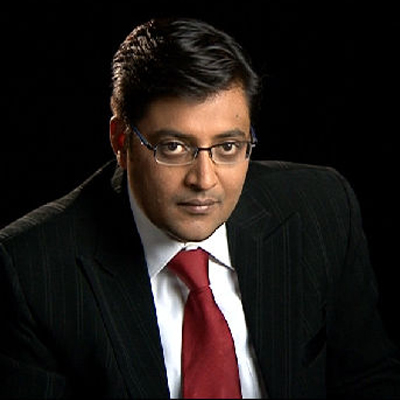
    But all this does not faze Times Network (Times Now, ET Now and Magic Bricks Now) news president and editor-in-chief Arnab Goswami at all. He believes that television is “super young in India” and he is hedging his bets on it being the first medium of choice at least for the foreseeable future.


     “As a medium TV will continue to be dominant,” he says. “I think for the next 10 years TV will lead and digital will follow. In the coming six to seven years TV and Digital will co-exist, which it does now days also.”


    To shore up his argument he points towards the viewership his prime time show Newshour notches up. “While the digital interaction counts between 10000 to 20000, through television we reach out to millions,” he explains.


    According to the flamboyant journalist there is a huge room for innovation in news television – something which existing players are hardly exploring. “If you ask me what are the innovations that we are doing in the television news space, I don’t think there are any. Innovations are key to prosperity. Newshour was an innovation, and we keep innovating with it. We open up phone calls, use social media to make it interactive. Emergence of digital will bring in way more innovations,” asserts Goswami.


    Sharing his assessment on demographic segmentation Goswami says, “I believe the people who are over 25 will consume TV and ones below 20 will prefer digital.”


    Despite being upbeat about television Goswami is not ready to leave any stone unturned to establish his news network as the leader in the digital space. The Times Now app which at this stage has approximately 700,000 downloads (as per Times Now) is what he has trained his eyes on.


    A specialist team of 25 people has been put in place to expand The Times Now digital presence. “If there is an audience between 10-20 years which is a digital-only audience, I don’t want to lose them. That’s why we are aggressively innovating in the digital space,” informs Goswami.


    The most successful part in the mobile app as per Goswami’s observations is the Newshour Shorts, a section where small clips consisting key moments of a debate are uploaded.


    And it’s not just video, Goswami and his team have enabled an audio only feed of Newshour to cater to the bandwidth impoverished. Says he:  “The story of our country is we have poor bandwidth even in cities, so what about the guys in the rural area who don’t have the bandwidth to buffer the audio visual feed. They are taking the audio feed and enjoying Newshour as a radio series. We find that at 9 o’clock, a huge number of people tune in to the app to enjoy the audio only version of Newshour.” 


    What’s engaging him these days is the quickly evolving consumer, he confesses. “People now want to watch content when they want and how they want. We service providers cannot be arrogant and say we will only be on TV if you want to watch us tune in at 9. It is important to be appealing to each and every segment.”


    Marking one of the moments of 2015 television audience measurement body Broadcast Audience Research Council (BARC) India started rolling out its rural data from week 41. Even as advertisers and media planners are waiting for the viewer panels and data reportage to settle down, still every one expects air time pricing to enter a new dynamic.


    Times Now has had a tendency to attract urban advertisers, mainly because it is an English news channel and is perceived to have premium audiences. So the fact that the rural monitoring would start coughing out viewership numbers needn’t have perturbed Arnab.


    But the TV scribe says he spent sleepless nights before week 41 data. He reveals: “People from the fraternity told me to relax as the advertisements and revenues come from the urban areas. But my question was: What is the point of being relevant at urban areas if nobody watches in rural areas? I am a journalist, advertising can come from urban areas but if people don’t watch in small towns I will feel that I don’t have the impact in those areas. If I am doing a story on Lalitgate I want people from Bongaigaon as well as Bombay to watch it. I was very nervous but next day I was thrilled that in terms of viewership, rural is higher than urban. I thank BARC (India) for doing us a great service by breaking the myth that English news is consumed only in metros by males.”


    Despite not being on social media, Arnab Goswami often turns out to be the trending topic amongst Indian netizens across platforms. And he points out that he promotes every hashtag with optimum zest.


    “The hashtags are important to us,” he says. “For me conversation is important. I feel like involving the audience up to the time where they feel like sharing their opinion. Even if you agree or disagree I want to involve you in it and that’s where the hastags play a vital role.”


    But it’s not as if only positive hastags relating to Arnab go viral on social media. Often irked netizens, have expressed their angst in a flood against the channel’s and Arnab’s views. One such scenario was #ShameonTimesNow which trended for four days after the news broadcaster aired a Newshour debate #ShameinSydney describing the performance of Team India in Cricket World Cup semifinal.


    “The performance of Team India was shameful and I had no fear in calling it so, I will not change my opinion even now. But people talked about the episode because they watched it and I am happy that they watched it. I want to have that conversation and I want to track the conversation, and go back and read the tweets. I may not change my point of view, but I am aware of what other people are thinking. I do follow lot of conversations so it gives me sense of how it works and what is going on” Goswami asserts.


    The English News genre as per the Ficci-KPMG 2015 report has 0.1 per cent of total television viewership. As against that, five per cent of the entire TV adspend of Rs 155 billion is spent on the genre.


    And even in this space Times Now is setting the pace. “In terms of revenue through advertising Times Now is a clear number one in the English News genre,” informs a senior media planner. He further adds, “The primetime show Newshour charges approximately double when compared to the other competitors.”


    The rate for a 10 second slot during Newshour is over Rs 45,000, and there are close to 12 advertisers on board, “We have more advertisers than we can accommodate and I am grateful to the advertisers for helping us do what we do,” says Goswami.


    Looking back at 2015 Goswami terms it as one of the best years in recent times. And that’s broadly because of four reasons, he states, pausing for a few seconds.


    “Four things make me term this as one of the best years. Firstly Times Now has got 90 per cent channel share multiple times in terms of viewership. Secondly Times Now has over 50 per cent channel share despite some channels trying to change their names in the market where there is no number two. Thirdly, the new innovation The National Debate, got over 91 per cent of viewership share. And lastly we were able to increase the viewership of ET Now by 15-20 per cent after taking over. So now I have three shows Newshour, Frankly Speaking, and The National Debate. I am excited about them,” he says, signing off with a confident smile on his bespectacled face.

  • Shift to broadband in US cable industry will mitigate TV subscriber loss: Moody’s

    Shift to broadband in US cable industry will mitigate TV subscriber loss: Moody’s

    BENGALURU: Rising demand for broadband services will compensate for the loss in TV video subscribers and help sustain industry growth through 2016, says Moody’s Investors Service. As a result, the rating agency maintains its stable outlook on the US cable industry.


    Broadband gaining ground, video slides, voice stable


    Key takeaway:

    The key takeaway is that the broadband offset is substantial, and much higher than in the past couple of years. In 2013, for every video subscriber lost, cable signed up 1.4 broadband customers. In 2016, Moody’s are projecting a 2.4x multiple.


    Broadband subscribers outnumbered total video subscribers in Moody’s rated universe for the first time at the end of 2014, and the agency forecasts that this spread will widen to seven per cent by the end of 2016 as demand for broadband continues to grow.


    “This change in subscriber demand represents a fundamental shift in consumer appetite and the economics of the cable business model,” said Moody’s vice president and senior analyst Jason Cuomo. “The loss of video subscribers is a fundamental weakness, but broadband demand and pricing actions are more than fully offsetting the negative video trends.”


    The report says that broadband demand continues to grow faster than pay-TV subscriber losses. Companies in Moody’s rated universe had a little more than 126 million (12.6 crore) Revenue Generating Units (RGU – equal to the number of subscriptions at a service level) at the end of last year. Moody’s project that RGUs will grow to over 130 million (13 crore) by the end of 2016, representing a CAGR of approximately 1.7 per cent. Broadband is now the leading product, as video continues to slide and the number of phone customers holds steady.


    Moody’s says that the number of pay-TV subscribers in its universe has gone done from 50 million (5 crore) in 2013 at the rate of about 1 million (10 lakh) per year and its predicts that by 2016, the number will reduce to 46 million (4.6 crore). During the same period, broadband subscribers would increase from 49 million (4.9 crore) in 2013 to 57 million (5.7 crore) by 2016. Voice subscribers in 2013 at 25 million (2.5 crore) would increase to 27 million (2.7 crore) by 2016.


    Phone subscribers have also been growing between three – four per cent, but the report says that the pace is trending down and could moderate to below two per cent by 2016.


    Lower revenues, better margins


    This mix shift has changed the economics of the business, with the top line suffering from the loss in video revenues, while creating opportunities to grow EBITDA and margins that are better in broadband.


    The industry continues to raise prices for broadband services, driving average revenue per unit higher. Demand is being largely driven by video consumption, which requires more and faster bandwidth, positioning cable companies to further monetize their high-speed distribution system. At the centre of this transformation is streaming content “over-the-top” to deliver video-on-demand services, which is growing quickly, according to the report “Pricing, Broadband Demand Ease Pressure from TV Subscriber Losses.”


    The report says that Broadband generates much lower revenues than residential TV, (roughly half, on average) but much higher margins and EBITDA per customer. In addition, the business is growing much faster than the rate of loss in video subscribers (more than 2:1,) which supports both revenue and profits.


    Pay-TV produces the highest revenue per customer among the three main service offerings, significantly exposing the top line when subscribers defect. To put the risk in context, Charter’s annual video revenue per residential subscriber was $1,068 in 2014, much higher than the $540 for residential broadband and $235 for residential phone service. However, programming costs are high, and rising despite the loss of revenue, squeezing EBITDA and margins.


    The net effect of the mix shift is revenue growth of nearly four per cent, a rise in EBITDA of approximately three – four per cent, and relatively stable EBITDA margins of 38-39 per cent.


    “Despite the concerns that the cable industry is about to lose its competitive footing, it still maintains a steady share of the triple-play bundle — offering a package of video, broadband and phone services,” said Cuomo.


    Growth drivers are new subscribers, SMEs


    The large majority of growth is coming from new residential customers. Commercial is only a small contribution but growing quickly. Small to medium-sized business demand for broadband is growing and cable is attracting their business with competitive speeds. Time Warner Cable and Charter, for example, have reported growth rates over the last four years that average 15 per cent and 22 per cent, respectively.


    Although their commercial businesses are less than five per cent of total revenues, for both companies, new commercial broadband subscribers represented approximately eight per cent of all new broadband subscribers in 2014.


    Video going over-the-top, but on cable’s terms


    In video, the big story continues to be consumer demand for viewing content ‘Over-the-Top’ (OTT) on multiple devices — arguably the number one threat facing cable. OTT is the epicentre of risk in an industry at the very early stages of a rapid transformation. The speed of broadband, proliferation of devices, and emergence of content streamers such as Netflix Inc. have made this type of “non-linear” alternate possible. The pace is accelerating (Netflix now has over 40 million subscribers, starting from zero in 2007 when it was first introduced in the US) as the awareness of alternate viewing options grows. This may also be at least partially responsible for driving subscriber losses — although Moody’s believes the great majority of users are also pay-TV subscribers that migrated OTT as a complimentary service.


    Content companies facing huge challenge


    Rapid development of new content, more widely distributed through new media channels, over a larger number of devices, and at lower cost, is a huge challenge for content owners struggling to maintain market leverage by controlling content rights. Extracting value from every property they own is easier when it’s all sold in a bundle. This neat and simple packaging model is beginning to break down, however, as content is offered in skinnier bundles and a la carte. In this model, the value shifts to the highest-quality content assets, exposing those with lower viewer ratings and therefore lesser value.


    As the industry transforms, the friction of change could temporarily slow video-subscriber defections. The move to OTT can be stalled by a rise in broadband price or recognition that stacking OTT content is more costly than expected, especially when buying sports and other high-value content. Content unbundling and programming offered via apps may also create confusion and inconvenience for the customer. Issues including new bills to manage, more frequent ID authentications, and the need to search, find, and switch between apps may end up being more cumbersome than simply switching channels on a cable remote. Until addressed, these issues will help cable buy time.


    Cable’s pricing power is driving ARPU higher


    The industry has consistently raised prices as they continue to pass through most of the rising programming costs and charge higher rates for more services. This pricing power could rise further once pending acquisitions are completed. Based on Moody’s forecast for ARPU of $837 by the end of 2016, the CAGR will be approximately 2.5 per cent from 2013 with a slope in ARPU that has been essentially linear, despite the rise in competitive threats. This has been largely driven by the rise in content costs, but can also occur as owners attempt to reprice OTT programming on the same, or similar, terms as current pay-TV economics.


    Moody’s expect this trend to continue given cable’s strong market position. In particular, we think the cable industry is positioning itself to charge higher prices for broadband to offset the loss in video ARPU. This could come in the form of higher prices for more data consumption, faster speeds, data limits that force customers to pay for higher speeds, or a fee for the use of Wi-Fi hot spots, which so far has been free. Given the high cost of mobile broadband and limited coverage of mobile Wi-Fi, viewing streaming video in-home, on cable Wi-Fi is currently one of the lowest-cost/highest-quality experiences available — and ripe for price increases.


    While there is healthy growth in prices, competition will keep growth rational. Another major constraint to higher broadband pricing is regulation, now that broadband is subject to Title II of the Communications Act of 1934. Price hikes are likely to be tolerated by regulators, but only as long as they are reasonable and customary. The government has stated that they are disinterested in pricing regulation, but their position would likely change if prices rose aggressively and consumer complaints mount. Moody’s outlook assumes no regulatory intervention.


    Industry Consolidation


    Moody’s notes that industry consolidation resulted in a number of transformative deals over the past year, but further consolidation is unlikely through 2016 given the size and concentration of the largest and smaller players.