Tag: OTT

  • Net Neutrality: Reactions from the consumers provide deep insights

    Net Neutrality: Reactions from the consumers provide deep insights

    NEW DELHI: Issues relating to OTT and net neutrality have been in the news for almost two years now and the Telecom Regulatory Authority of India (TRAI), which had earlier issued a paper on Over-the-top (OTT) apps, came out with a paper on Net Neutrality on 30 May 2016.

    TRAI’s frequent revisiting of the Net Neutrality issue highlights the fact that the regulator is under immense pressure from various stakeholders with diverse interests. TRAI had first issued a consultation paper over 18 months back and had also passed an order — hotly contested by telecom companies— banning differential pricing floated by some telcos recently, which had sounded the death gong for Facebook’s FreeBasic in India.

    However as the TRAI website is seen generally only by those in the broadcasting or telecom sectors, a brief summary of TRAI’s pre-consultation paper has been placed on the mygov.in so that the general public can react and send in their feedbacks.

    As a result, over 73,000 posts have already come on this site from the general public who have unanimously supported net neutrality. Some have gone to the extent of asking why TRAI or the government should ask this question.

    Though indiantelevision.com firmly believes that at times the debate in India over Net Neutrality has been shrill and has clouded real and serious aspects of neutrality, there are some interesting feedbacks as well that indicate how general Indians view Net Neutrality.

    public://image 1_0.JPG

    For example, one writer says: “TRAI focus should be broadband speed minimum 50MBps Download/ 25MBps Upload. There should be no pollution, so focus on fiber/copper with speeds of up to 10GBps (ten GBps) and ensure that latency is very low, connectivity is much better (speed and latency are different).”

    The same respondent points out that companies are offering 5GB on 4Mbps for high prices up to Rs 900 and data caps should be removed or have minimum of 1TBps. He has said that lease lines should be made affordable with customer support.

    Says another respondent: “I cannot imagine an India as net partial with a discriminatory telecom structure not letting me call my kin freely, surf net with discrimination. The Governments needs to recall and emulate Dr Ambedkar’s ideas, the esteemed voice of freedom and non-discrimination of free India.”

    Yet another individual says: “In the name of neutrality. Let us not stop access of net to one billion Indians. Many pay phone/net data bills (simply by transferring data) higher than electricity bills (which is consuming energy, which is costlier to produce). Let the government ensure that data service is affordable to all.”

    Another consumer says, “We want freedom to choose and not Internet Service Provider choosing for us. There is also stress on removing corruption which can be done by removing interest on security deposit, seven days extra charge after disconnection refund, towers on house and low heights.”

    Yet another respondent commented: “Without net neutrality, internet would go into the hands of people who can pay the ISPs to give their websites for cheaper price. This will hamper start-ups and other small players who cannot afford to pay the ISPs. For a thriving economy, it is important to have competing players in market. In the absence of net neutrality, this competition will be disrupted and monopoly will be established — which is not good for the consumers.”

    public://img2.jpg

    But the responses are not confined to just plain feedbacks, and some people have also tried to support their theories and assertions.

    A respondent has attached a presentation with diagrams to say,  “Internet traffic and congestion on network problem can be sorted out by dividing the network into logistic small segments. These small logic segments can have their unique set of protocols, which when connected with the large network enable it to tackle with security and cyber issues as well as enable the large network to tackle the Internet traffic and congestion issues.

    “The logical small segments should be designed and implemented in way so that they can be extended with the increase of customers as well as data demand on that network. The core of the large network can be designed/assembled in a way that its data limitations can be extended with demand (Same technique can be apply on the logistic small networks).”

    The person, who seems to have some understanding of technology and its functioning, adds that designing/assembling and implementation of smart networking system will lead to a major step for providing a standard Internet facility to the individuals, having fixed rate data plan with standard accessibility and speed of the Internet facility. The diagrams show one of a road where the light poles have small boxes to pass the Internet signal from one to the next.

    Incidentally, the original pre-consultation paper on net neutrality issued by TRAI on 30 May 2016 is available at http://www.trai.gov.in/Content/ConDis/20775_0.aspx  on the regulator’s website does not still have any comments uploaded on the issue.  The last date for submission of comments is 21 June 2016.
  • Net Neutrality: Reactions from the consumers provide deep insights

    Net Neutrality: Reactions from the consumers provide deep insights

    NEW DELHI: Issues relating to OTT and net neutrality have been in the news for almost two years now and the Telecom Regulatory Authority of India (TRAI), which had earlier issued a paper on Over-the-top (OTT) apps, came out with a paper on Net Neutrality on 30 May 2016.

    TRAI’s frequent revisiting of the Net Neutrality issue highlights the fact that the regulator is under immense pressure from various stakeholders with diverse interests. TRAI had first issued a consultation paper over 18 months back and had also passed an order — hotly contested by telecom companies— banning differential pricing floated by some telcos recently, which had sounded the death gong for Facebook’s FreeBasic in India.

    However as the TRAI website is seen generally only by those in the broadcasting or telecom sectors, a brief summary of TRAI’s pre-consultation paper has been placed on the mygov.in so that the general public can react and send in their feedbacks.

    As a result, over 73,000 posts have already come on this site from the general public who have unanimously supported net neutrality. Some have gone to the extent of asking why TRAI or the government should ask this question.

    Though indiantelevision.com firmly believes that at times the debate in India over Net Neutrality has been shrill and has clouded real and serious aspects of neutrality, there are some interesting feedbacks as well that indicate how general Indians view Net Neutrality.

    public://image 1_0.JPG

    For example, one writer says: “TRAI focus should be broadband speed minimum 50MBps Download/ 25MBps Upload. There should be no pollution, so focus on fiber/copper with speeds of up to 10GBps (ten GBps) and ensure that latency is very low, connectivity is much better (speed and latency are different).”

    The same respondent points out that companies are offering 5GB on 4Mbps for high prices up to Rs 900 and data caps should be removed or have minimum of 1TBps. He has said that lease lines should be made affordable with customer support.

    Says another respondent: “I cannot imagine an India as net partial with a discriminatory telecom structure not letting me call my kin freely, surf net with discrimination. The Governments needs to recall and emulate Dr Ambedkar’s ideas, the esteemed voice of freedom and non-discrimination of free India.”

    Yet another individual says: “In the name of neutrality. Let us not stop access of net to one billion Indians. Many pay phone/net data bills (simply by transferring data) higher than electricity bills (which is consuming energy, which is costlier to produce). Let the government ensure that data service is affordable to all.”

    Another consumer says, “We want freedom to choose and not Internet Service Provider choosing for us. There is also stress on removing corruption which can be done by removing interest on security deposit, seven days extra charge after disconnection refund, towers on house and low heights.”

    Yet another respondent commented: “Without net neutrality, internet would go into the hands of people who can pay the ISPs to give their websites for cheaper price. This will hamper start-ups and other small players who cannot afford to pay the ISPs. For a thriving economy, it is important to have competing players in market. In the absence of net neutrality, this competition will be disrupted and monopoly will be established — which is not good for the consumers.”

    public://img2.jpg

    But the responses are not confined to just plain feedbacks, and some people have also tried to support their theories and assertions.

    A respondent has attached a presentation with diagrams to say,  “Internet traffic and congestion on network problem can be sorted out by dividing the network into logistic small segments. These small logic segments can have their unique set of protocols, which when connected with the large network enable it to tackle with security and cyber issues as well as enable the large network to tackle the Internet traffic and congestion issues.

    “The logical small segments should be designed and implemented in way so that they can be extended with the increase of customers as well as data demand on that network. The core of the large network can be designed/assembled in a way that its data limitations can be extended with demand (Same technique can be apply on the logistic small networks).”

    The person, who seems to have some understanding of technology and its functioning, adds that designing/assembling and implementation of smart networking system will lead to a major step for providing a standard Internet facility to the individuals, having fixed rate data plan with standard accessibility and speed of the Internet facility. The diagrams show one of a road where the light poles have small boxes to pass the Internet signal from one to the next.

    Incidentally, the original pre-consultation paper on net neutrality issued by TRAI on 30 May 2016 is available at http://www.trai.gov.in/Content/ConDis/20775_0.aspx  on the regulator’s website does not still have any comments uploaded on the issue.  The last date for submission of comments is 21 June 2016.
  • LeEco stores in two months, targets 500 stores over one year

    LeEco stores in two months, targets 500 stores over one year

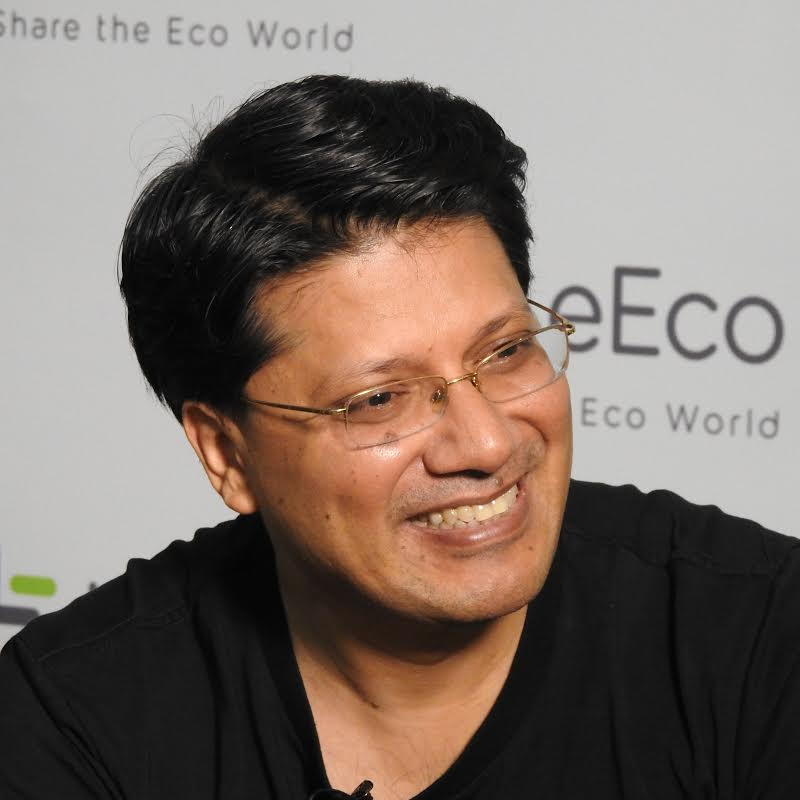
    BENGALURU: Chinese technology player LeEco which has had a number of launches of  smartphones since it ventured into India in late January this year plans to have about 500 brick and mortar stores in India once it receives FIPB (Foreign Investment  Promotion Board). Excerpts of a two minute interaction with LeEco COO of Smart Electronics –India Atul Jain on the side lines of a press conference for the launch of LeEco’s Le 2, Le Max2 smartphones and Le Mall in New Delhi yesterday:

    When is LeEco likely to launch brick and mortar stores?

    We are looking at FIPB approvals to come. As soon as we get the approvals from the government, we’ll start. It’s been two months since we have applied, normally the approval process takes around 3 to 4 months, so in a month or two we should get the approvals after which we’ll need some setup time.

    How many stores are you looking at in the first phase?

    We are looking at about 500 stores including franchise stores over the next one year from the date of our first store. Just to give you an update, we have started our brick and mortar distribution which is selling through brick and mortar stores yesterday. So now our Le 1s is available in brick and mortar, mom and pops stores, independent stores, multi-brand stores, besides online.

    Do you have the supply chain to these outlets in place?

    Yes, we have our supply chain in place for that.

    What about your OTT platform? How long do you plan to continue giving it along with the cost of a phone, given that most cell phones now have a usage life of a year or less? Are you going to continue offering the Rs 4,999 Supertainment package included in the cost of the phone?

    As of now, that’s what we are announcing. Even for the two new phones that we have launched today – Le 2 and Le Max2, the Supertainment package for a year is included in the cost of the phone. Eventually in the long term, there will be a payment mechanism. It will be on a monthly basis

    What about LeEco’s own production facilities in India?

    That’s also coming up. It’s difficult to say exactly when. It’s likely to happen in the next six months or so.

    Do you plan to bring the four brands on your OTT platform under a single brand? Do you plan to offer these options separately?

    We might. As of now we will offer the subscribers everything. Maybe eventually we will offer subscribers’ a choice. As of now we are just trying to get our content to move.

  • LeEco stores in two months, targets 500 stores over one year

    LeEco stores in two months, targets 500 stores over one year

    BENGALURU: Chinese technology player LeEco which has had a number of launches of  smartphones since it ventured into India in late January this year plans to have about 500 brick and mortar stores in India once it receives FIPB (Foreign Investment  Promotion Board). Excerpts of a two minute interaction with LeEco COO of Smart Electronics –India Atul Jain on the side lines of a press conference for the launch of LeEco’s Le 2, Le Max2 smartphones and Le Mall in New Delhi yesterday:

    When is LeEco likely to launch brick and mortar stores?

    We are looking at FIPB approvals to come. As soon as we get the approvals from the government, we’ll start. It’s been two months since we have applied, normally the approval process takes around 3 to 4 months, so in a month or two we should get the approvals after which we’ll need some setup time.

    How many stores are you looking at in the first phase?

    We are looking at about 500 stores including franchise stores over the next one year from the date of our first store. Just to give you an update, we have started our brick and mortar distribution which is selling through brick and mortar stores yesterday. So now our Le 1s is available in brick and mortar, mom and pops stores, independent stores, multi-brand stores, besides online.

    Do you have the supply chain to these outlets in place?

    Yes, we have our supply chain in place for that.

    What about your OTT platform? How long do you plan to continue giving it along with the cost of a phone, given that most cell phones now have a usage life of a year or less? Are you going to continue offering the Rs 4,999 Supertainment package included in the cost of the phone?

    As of now, that’s what we are announcing. Even for the two new phones that we have launched today – Le 2 and Le Max2, the Supertainment package for a year is included in the cost of the phone. Eventually in the long term, there will be a payment mechanism. It will be on a monthly basis

    What about LeEco’s own production facilities in India?

    That’s also coming up. It’s difficult to say exactly when. It’s likely to happen in the next six months or so.

    Do you plan to bring the four brands on your OTT platform under a single brand? Do you plan to offer these options separately?

    We might. As of now we will offer the subscribers everything. Maybe eventually we will offer subscribers’ a choice. As of now we are just trying to get our content to move.

  • What Hotstar’s high score on IPL-9 means for television

    What Hotstar’s high score on IPL-9 means for television

    MUMBAI: It is a generally accepted fact that cricket is a religion in India. This country of 1.2 billion (120 crore) people that is further divided between different communities, states, and languages has one of the few things very much in common – cricket consumption. A case in point for this has been the repeated successful seasons of the Indian Premiere League or IPL. While different cities and its people swear loyalty for different teams, the love for the sport outshines all. Given its mass appeal it’s only natural that television is the most preferred medium to consume the sport. Advertisers and sponsors too bank on this and pour thousands of crores of rupees in sponsorship deals into the league to make the most of the promised eyeballs.

    While this was true even for the league’s 8th leg that aired in parallel on Star India’s over-the-top digital video arm Hotstar for the first time in 2015, there has been a sea change in the digital consumption of the sport in season 9 that just concluded. In a recent statement, Star India has shared some jaw dropping numbers on the overall consumption of the sport on Hotstar.

    According to data aggregated by Star India, “overall followership of IPL crossed the 100 million (10 crore) mark on Hotstar, and its associated properties, over the months of April and May. This was a dramatic increase from the 41 million (4.1 crore) users who watched IPL on Hotstar in 2015.” What’s more, the report shared by Star also cites over 4.5 billion (450 crore) interactions with fans or viewers IPL through Hotstar.

    According to several media reports, earlier in 2015, Star India bid Rs.302.2 crore to win the global Internet and mobile rights for IPL for a three-year period, beating Times Internet and Multi Screen Media (now Sony Pictures Networks). Though not profitable by itself even after doubling its viewership reach, to say that the digital rights to the tournament have been useful to Hotstar is an understatement.

    When asked to comment on these statistics, Hotstar CEO Ajit Mohan shared, “These numbers indicate a big shift in consumer behaviour. Cricket fans have firmly moved beyond just following scores and text commentary on the web to watching video on the mobile and deeply engaging with video services.”

    The dramatic growth in viewership could be attributed to a surge in cricket fans from the top metros and cities where access to mobile broadband on WiFi, 3G and 4G has seen a rapid growth over the last 2 years.

    It is but natural for the industry to wonder if digital is gaining ground and possibly on its way to establishing an upper hand over television as a preferred medium to watch sports. Currently limited to affluent metro youth – cricket fans over the age of 15 in the SEC A, B segments who live in the largest 6 cities in the country – digital , currently led by Hostar, has emerged as a primary screen with more viewers watching the tournament on the OTT platform than on television. “The first 59 matches saw 49 million (4.9 crore) fans on Hotstar while the television reach for the same period and audience was 29 million (2.9 crore),” the statement issued by Hotstar further read. While cord cutting isn’t a new thing in the more mature digital markets of North America and Europe, digital exceeding television reach is an entirely new phenomenon in India, even though for now, it is limited to the more affluent cricket fans.

    When asked if television as a medium has any reason to fear losing its loyal cricket loving viewers to digital platforms, Havas Media Group, India and South Asia CEO and veteran media planner Anita Nayyar reassured that there was a long way to go before one even needs to be concerned. “The statistics show that the significance of digital has gone up, that doesn’t mean the relevance of television as medium will go down. Television’s significance as a medium in our country will stay the way it is during many more years to come for the simple reason that is its reach. Digital as a medium by itself is growing and as we see from the stats that Hotstar is growing in popularity, but that won’t affect television.”

    Nayyar also pointed out that it is important to consider a medium’s reach throughout the country before making assumptions from these numbers. “India is a large country. When we speak of how well digital is doing as opposed to television, we forget that 50 percent of the viewership still is rural, which is not infrastructurally ready for Hotstar or other similar services. Once the entire country is taped up with a proper internet connection, maybe after Reliance Jio comes into the picture, we can think about whether digital will have any impact on television’s pie.”

    “Today, in fact, if anything, online video is complimenting television consumption,” Nayyar added.

    As far as advertisers are concerned, the growing traction for digital consumption of sports is a bit of welcome news, given the targeting of consumers that the medium allows. In fact, Hotstar had a total of seven sponsors – Flipkart, Raymond, Axe Deo, Airtel, Nestle, Amity University and Volini for the season that just went by.

    Commenting on how his company views digital as a destination for advertising Sun Pharma – Consumer Healthcare VP and global head Subodh Marwah said, “With millennial’s accounting for 65 percent of India’s population, digital as a medium is fast growing and the alternate screen penetration is far greater than TV sets. Hence, a digital led strategy was an obvious choice for Volini spray to reach its ‘sports enthusiast’ target audiences. Volini associated with Vivo IPL 2016 as the official pain relief partner on Hotstar. To our advantage Hotstar became the primary screen for this season and crossed 100 million. We are happy with our association with Hotstar for Vivo IPL 2016.”

    But not all advertisers are quick to jump the gun as yet. Some have a long term strategy. As Nayyar puts it, it is important for current advertisers to think screen agnostic. Acknowledging that the figures shared by Star India definitely are humongous enough for advertisers to turn and take notice, as a planner Nayyar pointed out that the entire audio visual picture of the landscape needs to be taken into account. “Planning can’t be done in silo for individual media, one has to do a plan for a communication on television plus digital. Because after a point when wanting to get additional reach on television becomes very expensive, that’s when the presence of online videos gives you that incremental reach at a far efficient cost. Therefore being screen agnostic and planning for both is the way forward,” Nayyar shared.

    Albeit it is too early for digital to go head to head against television, when looking at the broader picture, Hotstar’s growing popularity amongst sports fans would definitely boost prospects for the sporting fraternity in general and place far more significance to the digital rights of each of the tournaments. With several new OTT platforms mushrooming, some specifically eyeing the sports genre, the business around sports in India is to become far more interesting, given the fact that there are new leagues awaiting to be launched within this financial year.

  • What Hotstar’s high score on IPL-9 means for television

    What Hotstar’s high score on IPL-9 means for television

    MUMBAI: It is a generally accepted fact that cricket is a religion in India. This country of 1.2 billion (120 crore) people that is further divided between different communities, states, and languages has one of the few things very much in common – cricket consumption. A case in point for this has been the repeated successful seasons of the Indian Premiere League or IPL. While different cities and its people swear loyalty for different teams, the love for the sport outshines all. Given its mass appeal it’s only natural that television is the most preferred medium to consume the sport. Advertisers and sponsors too bank on this and pour thousands of crores of rupees in sponsorship deals into the league to make the most of the promised eyeballs.

    While this was true even for the league’s 8th leg that aired in parallel on Star India’s over-the-top digital video arm Hotstar for the first time in 2015, there has been a sea change in the digital consumption of the sport in season 9 that just concluded. In a recent statement, Star India has shared some jaw dropping numbers on the overall consumption of the sport on Hotstar.

    According to data aggregated by Star India, “overall followership of IPL crossed the 100 million (10 crore) mark on Hotstar, and its associated properties, over the months of April and May. This was a dramatic increase from the 41 million (4.1 crore) users who watched IPL on Hotstar in 2015.” What’s more, the report shared by Star also cites over 4.5 billion (450 crore) interactions with fans or viewers IPL through Hotstar.

    According to several media reports, earlier in 2015, Star India bid Rs.302.2 crore to win the global Internet and mobile rights for IPL for a three-year period, beating Times Internet and Multi Screen Media (now Sony Pictures Networks). Though not profitable by itself even after doubling its viewership reach, to say that the digital rights to the tournament have been useful to Hotstar is an understatement.

    When asked to comment on these statistics, Hotstar CEO Ajit Mohan shared, “These numbers indicate a big shift in consumer behaviour. Cricket fans have firmly moved beyond just following scores and text commentary on the web to watching video on the mobile and deeply engaging with video services.”

    The dramatic growth in viewership could be attributed to a surge in cricket fans from the top metros and cities where access to mobile broadband on WiFi, 3G and 4G has seen a rapid growth over the last 2 years.

    It is but natural for the industry to wonder if digital is gaining ground and possibly on its way to establishing an upper hand over television as a preferred medium to watch sports. Currently limited to affluent metro youth – cricket fans over the age of 15 in the SEC A, B segments who live in the largest 6 cities in the country – digital , currently led by Hostar, has emerged as a primary screen with more viewers watching the tournament on the OTT platform than on television. “The first 59 matches saw 49 million (4.9 crore) fans on Hotstar while the television reach for the same period and audience was 29 million (2.9 crore),” the statement issued by Hotstar further read. While cord cutting isn’t a new thing in the more mature digital markets of North America and Europe, digital exceeding television reach is an entirely new phenomenon in India, even though for now, it is limited to the more affluent cricket fans.

    When asked if television as a medium has any reason to fear losing its loyal cricket loving viewers to digital platforms, Havas Media Group, India and South Asia CEO and veteran media planner Anita Nayyar reassured that there was a long way to go before one even needs to be concerned. “The statistics show that the significance of digital has gone up, that doesn’t mean the relevance of television as medium will go down. Television’s significance as a medium in our country will stay the way it is during many more years to come for the simple reason that is its reach. Digital as a medium by itself is growing and as we see from the stats that Hotstar is growing in popularity, but that won’t affect television.”

    Nayyar also pointed out that it is important to consider a medium’s reach throughout the country before making assumptions from these numbers. “India is a large country. When we speak of how well digital is doing as opposed to television, we forget that 50 percent of the viewership still is rural, which is not infrastructurally ready for Hotstar or other similar services. Once the entire country is taped up with a proper internet connection, maybe after Reliance Jio comes into the picture, we can think about whether digital will have any impact on television’s pie.”

    “Today, in fact, if anything, online video is complimenting television consumption,” Nayyar added.

    As far as advertisers are concerned, the growing traction for digital consumption of sports is a bit of welcome news, given the targeting of consumers that the medium allows. In fact, Hotstar had a total of seven sponsors – Flipkart, Raymond, Axe Deo, Airtel, Nestle, Amity University and Volini for the season that just went by.

    Commenting on how his company views digital as a destination for advertising Sun Pharma – Consumer Healthcare VP and global head Subodh Marwah said, “With millennial’s accounting for 65 percent of India’s population, digital as a medium is fast growing and the alternate screen penetration is far greater than TV sets. Hence, a digital led strategy was an obvious choice for Volini spray to reach its ‘sports enthusiast’ target audiences. Volini associated with Vivo IPL 2016 as the official pain relief partner on Hotstar. To our advantage Hotstar became the primary screen for this season and crossed 100 million. We are happy with our association with Hotstar for Vivo IPL 2016.”

    But not all advertisers are quick to jump the gun as yet. Some have a long term strategy. As Nayyar puts it, it is important for current advertisers to think screen agnostic. Acknowledging that the figures shared by Star India definitely are humongous enough for advertisers to turn and take notice, as a planner Nayyar pointed out that the entire audio visual picture of the landscape needs to be taken into account. “Planning can’t be done in silo for individual media, one has to do a plan for a communication on television plus digital. Because after a point when wanting to get additional reach on television becomes very expensive, that’s when the presence of online videos gives you that incremental reach at a far efficient cost. Therefore being screen agnostic and planning for both is the way forward,” Nayyar shared.

    Albeit it is too early for digital to go head to head against television, when looking at the broader picture, Hotstar’s growing popularity amongst sports fans would definitely boost prospects for the sporting fraternity in general and place far more significance to the digital rights of each of the tournaments. With several new OTT platforms mushrooming, some specifically eyeing the sports genre, the business around sports in India is to become far more interesting, given the fact that there are new leagues awaiting to be launched within this financial year.

  • ZEEL’s legal head Anil Lale quits

    ZEEL’s legal head Anil Lale quits

    MUMBAI: Zee Entertainment Enterprises Ltd (ZEEL)’s Anil Lale has put in his papers and is stepping down from his position as head of legal and group general counsel.

    A source close to the broadcaster informed, “ Anil Lale has officially put down his papers and is currently serving his notice period. He will stay in office till mid July.”

    Lale joined ZEEL on 26 August 2014, where he lead a growing legal team that enabled Zee’s media businesses across the world and managed all related litigation. This included the broadcast business of entertainment and news with a portfolio of 36 channels, international distribution and carriage of television channels across platforms throughout the world and content licensing of television programs, movies and formats across the world.

    Lale’s duties also included legal matters related to content production of television programs and Bollywood films, music label under the brand Zee Music Company where music is produced, acquired and licensed across platforms. Apart from this he was looking after the digital businesses including one of the largest OTT platforms (Ditto TV), commercial web portals and upcoming ventures in the digital space and news print business under the brand DNA.

    Prior joining ZEEL, Lale worked with Viacom 18 as a legal associate vice president.

  • ZEEL’s legal head Anil Lale quits

    ZEEL’s legal head Anil Lale quits

    MUMBAI: Zee Entertainment Enterprises Ltd (ZEEL)’s Anil Lale has put in his papers and is stepping down from his position as head of legal and group general counsel.

    A source close to the broadcaster informed, “ Anil Lale has officially put down his papers and is currently serving his notice period. He will stay in office till mid July.”

    Lale joined ZEEL on 26 August 2014, where he lead a growing legal team that enabled Zee’s media businesses across the world and managed all related litigation. This included the broadcast business of entertainment and news with a portfolio of 36 channels, international distribution and carriage of television channels across platforms throughout the world and content licensing of television programs, movies and formats across the world.

    Lale’s duties also included legal matters related to content production of television programs and Bollywood films, music label under the brand Zee Music Company where music is produced, acquired and licensed across platforms. Apart from this he was looking after the digital businesses including one of the largest OTT platforms (Ditto TV), commercial web portals and upcoming ventures in the digital space and news print business under the brand DNA.

    Prior joining ZEEL, Lale worked with Viacom 18 as a legal associate vice president.

  • Zee’s Sharlton Menezes joined LeEco’s new Content Business as head of strategy; Debashish Ghosh to be the COO

    Zee’s Sharlton Menezes joined LeEco’s new Content Business as head of strategy; Debashish Ghosh to be the COO

    MUMBAI: Former biz head of Original Digital Content at Zee Digital Convergence has joined chinese technology giant LeEco as head of strategy of Content Business effective since May 23 2016. He will be responsible for overall strategy of Le Eco’s soon to be announced content business in India that will include an Over-The-Top video service. In addition to that he will also oversee the new marketing and membership initiatives put forth by the company.

    Menezes is expected to directly report to the newly christened COO of the content business. As reported earlier by Indiantelevision.com, Menezes’ former senior and ZMCL CEO Debashish Ghosh is set to take over as the COO at LeEco’s new content outfit by June 1. In what industry called ‘a major reshuffle’, both Menezes and Ghosh left their former portfolios at ZMCL earlier in May.

    As per a source close to the development the new content business, details of which is expected to be announced by June 8, will run separate but parallelly with the company’s already established technology business in India. It is to be noted that LeEco is well known for its content business in the home country, often referred to as the ‘Netflix of China’ and word has it that the technology giant is taking a similar route with its business strategy in Indian market.

  • Zee’s Sharlton Menezes joined LeEco’s new Content Business as head of strategy; Debashish Ghosh to be the COO

    Zee’s Sharlton Menezes joined LeEco’s new Content Business as head of strategy; Debashish Ghosh to be the COO

    MUMBAI: Former biz head of Original Digital Content at Zee Digital Convergence has joined chinese technology giant LeEco as head of strategy of Content Business effective since May 23 2016. He will be responsible for overall strategy of Le Eco’s soon to be announced content business in India that will include an Over-The-Top video service. In addition to that he will also oversee the new marketing and membership initiatives put forth by the company.

    Menezes is expected to directly report to the newly christened COO of the content business. As reported earlier by Indiantelevision.com, Menezes’ former senior and ZMCL CEO Debashish Ghosh is set to take over as the COO at LeEco’s new content outfit by June 1. In what industry called ‘a major reshuffle’, both Menezes and Ghosh left their former portfolios at ZMCL earlier in May.

    As per a source close to the development the new content business, details of which is expected to be announced by June 8, will run separate but parallelly with the company’s already established technology business in India. It is to be noted that LeEco is well known for its content business in the home country, often referred to as the ‘Netflix of China’ and word has it that the technology giant is taking a similar route with its business strategy in Indian market.