Tag: OTT

  • Videocon d2h enhances video expereince with Cisco Virtual DCM

    Videocon d2h enhances video expereince with Cisco Virtual DCM

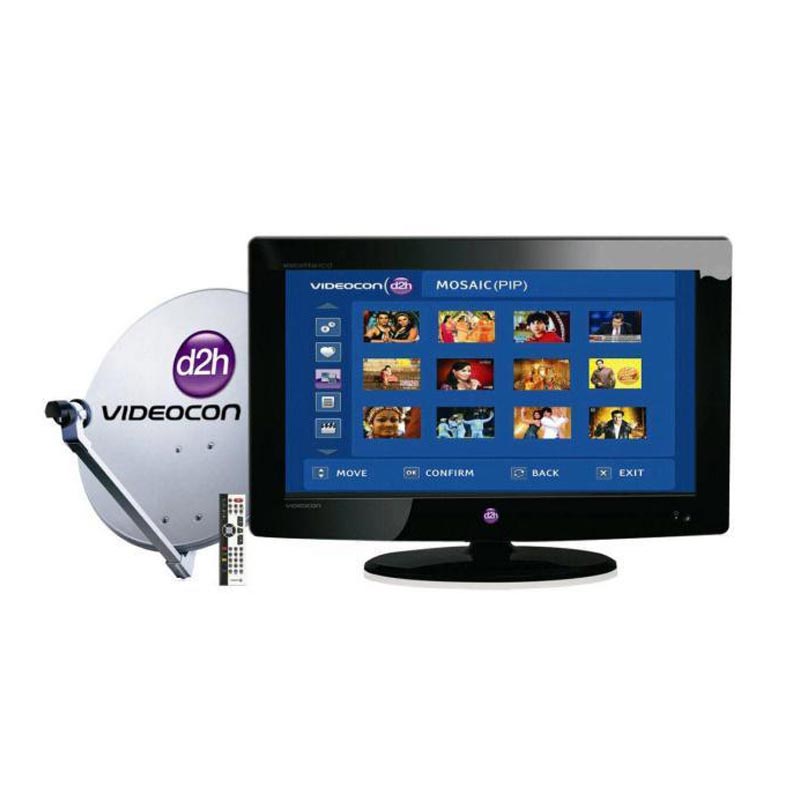
    MUMBAI: Cisco today announced that Videocon d2h India’s leading DTH platform has selected the Cisco Virtual DCM® to provide its subscribers with superior video experiences. The deployment provides Videocon d2h with a flexible infrastructure and simplified operations for advanced video processing functionality taking advantage of virtualization and orchestration from Cisco’s Virtualized Video Processing (V2P) platform. The Virtual DCM provides Videocon d2h the bandwidth efficiencies to deploy new services and meet ever-increasing consumer demands for 4K, multiscreen, OTT and Cloud DVR. The Cisco Visual Networking Index Forecast 2015-2020 predicts that by 2020, 82% of IP traffic by will be video, and 50% of IP video traffic will be HD/UHD, and mobile devices will drive most of the growth, making 43% of IP traffic. With availability of more content for an ever ­­­­­increasing number of video-enabled devices, it is critical to maximize video delivery over available bandwidth and multiple networks.

    Videocon d2h executive director Saurabh Dhoot said, “Our association with V2P platform of Cisco provides us the ability to enhance, extend and enrich video offerings so that today’s consumers receive more immersive and personalized viewing experience. Our focus is on innovating and extending the service offerings like 4K UHD, OTT as per the changing preference thus enriching viewing pleasure.”

    “The time is right to capitalize on the unprecedented opportunities presented by the wave of digitization in the country. When it comes to customer service, digitization empowers us to better understand our customers.” said Videocon d2h CEO Anil Khera. “We are committed to creating the highest-quality consumer experience. 4K content is the future and with this development we are completely geared up and future-ready to embark on the cloud journey. We look forward to working closely with Cisco on the implementation of the solution to provide better consumer experience.” he added

    “Today digital platforms are changing the way people experience television. Cisco’s V2P solutions help our customers meet the ever-changing demands of the video industry. Cisco is providing Videocon d2h with a platform to transform its business in India to develop and deliver dynamic, secure new services with the agility and speed necessary to stay ahead of competition. Our association with Videocon reflects our continued commitment to deliver the right IT platform to enhance their customer service and loyalty” said Cisco India & SAARC service provider business MD Sanjay Kaul.

  • Videocon d2h enhances video expereince with Cisco Virtual DCM

    Videocon d2h enhances video expereince with Cisco Virtual DCM

    MUMBAI: Cisco today announced that Videocon d2h India’s leading DTH platform has selected the Cisco Virtual DCM® to provide its subscribers with superior video experiences. The deployment provides Videocon d2h with a flexible infrastructure and simplified operations for advanced video processing functionality taking advantage of virtualization and orchestration from Cisco’s Virtualized Video Processing (V2P) platform. The Virtual DCM provides Videocon d2h the bandwidth efficiencies to deploy new services and meet ever-increasing consumer demands for 4K, multiscreen, OTT and Cloud DVR. The Cisco Visual Networking Index Forecast 2015-2020 predicts that by 2020, 82% of IP traffic by will be video, and 50% of IP video traffic will be HD/UHD, and mobile devices will drive most of the growth, making 43% of IP traffic. With availability of more content for an ever ­­­­­increasing number of video-enabled devices, it is critical to maximize video delivery over available bandwidth and multiple networks.

    Videocon d2h executive director Saurabh Dhoot said, “Our association with V2P platform of Cisco provides us the ability to enhance, extend and enrich video offerings so that today’s consumers receive more immersive and personalized viewing experience. Our focus is on innovating and extending the service offerings like 4K UHD, OTT as per the changing preference thus enriching viewing pleasure.”

    “The time is right to capitalize on the unprecedented opportunities presented by the wave of digitization in the country. When it comes to customer service, digitization empowers us to better understand our customers.” said Videocon d2h CEO Anil Khera. “We are committed to creating the highest-quality consumer experience. 4K content is the future and with this development we are completely geared up and future-ready to embark on the cloud journey. We look forward to working closely with Cisco on the implementation of the solution to provide better consumer experience.” he added

    “Today digital platforms are changing the way people experience television. Cisco’s V2P solutions help our customers meet the ever-changing demands of the video industry. Cisco is providing Videocon d2h with a platform to transform its business in India to develop and deliver dynamic, secure new services with the agility and speed necessary to stay ahead of competition. Our association with Videocon reflects our continued commitment to deliver the right IT platform to enhance their customer service and loyalty” said Cisco India & SAARC service provider business MD Sanjay Kaul.
  • TRAI extends date on exercise on common mobile banking for all sectors

    TRAI extends date on exercise on common mobile banking for all sectors

    NEW DELHI: The Telecom Regulatory Authority of India has decided to receive comments on a Consultation paper on regulatory framework for the use of USSD for mobile financial services by 14 September 2016.

    In an extension notice to the paper issued early this month, it said counter-comments can be given by 28 September 2917. Stakeholders had been set of ten questions and the earlier dates were 31 August with counter-comments by 14 September 2016.

    With consumers gradually getting attuned to it and the growth of Mobile Apps and OTT requiring mobile banking, the Telecom Regulatory Authority of India has started an exercise to find the best way of making or receiving payments through the mobile.

    Keeping in view the success achieved by many countries in delivering financial servicesthrough mobile telephone, the Government of India, in November, 2009, constituted an Inter-Ministerial Group (IMG) to submit a report and recommendations on the framework fordelivery of basic financial services using mobile phones. The framework proposed in the IMGreport has been accepted as the basis for delivery of basic financial services using mobile technology by a Committee of Secretaries under the chairmanship of the Cabinet Secretary in April 2010. The IMG framework envisages opening of mobile linked ‘no- frills’accounts, which would be operated using mobile phones.

    In the IMG framework, TRAI was expected to provide the required regulatory framework governing the quality of service, provisioning and pricing of mobile services for delivery of basicfinancial

    Also see

    http://www.indiantelevision.com/regulators/trai/trai-begins-exercise-on-common-mobile-banking-for-all-sectors-160805


  • TRAI extends date on exercise on common mobile banking for all sectors

    TRAI extends date on exercise on common mobile banking for all sectors

    NEW DELHI: The Telecom Regulatory Authority of India has decided to receive comments on a Consultation paper on regulatory framework for the use of USSD for mobile financial services by 14 September 2016.

    In an extension notice to the paper issued early this month, it said counter-comments can be given by 28 September 2917. Stakeholders had been set of ten questions and the earlier dates were 31 August with counter-comments by 14 September 2016.

    With consumers gradually getting attuned to it and the growth of Mobile Apps and OTT requiring mobile banking, the Telecom Regulatory Authority of India has started an exercise to find the best way of making or receiving payments through the mobile.

    Keeping in view the success achieved by many countries in delivering financial servicesthrough mobile telephone, the Government of India, in November, 2009, constituted an Inter-Ministerial Group (IMG) to submit a report and recommendations on the framework fordelivery of basic financial services using mobile phones. The framework proposed in the IMGreport has been accepted as the basis for delivery of basic financial services using mobile technology by a Committee of Secretaries under the chairmanship of the Cabinet Secretary in April 2010. The IMG framework envisages opening of mobile linked ‘no- frills’accounts, which would be operated using mobile phones.

    In the IMG framework, TRAI was expected to provide the required regulatory framework governing the quality of service, provisioning and pricing of mobile services for delivery of basicfinancial

    Also see

    http://www.indiantelevision.com/regulators/trai/trai-begins-exercise-on-common-mobile-banking-for-all-sectors-160805


  • Hooq plans to invest $2 million on original Indian content

    Hooq plans to invest $2 million on original Indian content

    MUMBAI: Hooq plans to invest $ 2 million in Indian original content in India. This is part of its APAC strategy to start sourcing local original content in Asian countries.

    A joint venture of SingTel, Sony Pictures TV and Warner Bros., Hooq entered the Indian market back in May this year with a catalogue of over 10,000 movies and TV series.

    “We are in talks with a few other (production) studios in India but nothing finalised yet. As we are still in an observation phase, we are seeing a gap in local language content available on broadcasters’ apps. Such content or programming is not available on other neutral platforms too. That is the gap we are looking (at filling),” said Hooq India managing director Salil Kapoor.

    Though Kapoor refused to comment on investment plans, entertainment industry sources indicated that in the first phase Hooq is likely to spend up to $ 2 million in Indian original content, a plan that’s similar to what the company proposes to do in some other Asian countries too.

    Apart from Hollywood content, Hooq has presently sourced Indian films and shows from studios like Rajshri Productions, Reliance Entertainment, Shemaroo Entertainment, Balaji Telefilms and Whacked Out Studios. With the cost of making original English language shows high, the platform is considering Hindi and other Indian language content.

    For the OTT platform, consumption of its service in the four south Indian states of Kerala, Andhra Pradesh, Tamil Nadu and Karnataka is high and an area of focus in terms of content and expanding subscriber base.

    Though the Indian OTT market is still in an early stage in terms of revenue generation and subscriber base, Hooq has priced its monthly subscription at Rs 199 in a price sensitive market where high data charges and indifferent bandwidth are also major challenges for an OTT player. New subscribers are offered a seven-day trial package for free.

    Interestingly, all the investors of Hooq have other investments too in India. SingTel is a major investor in telco Bharti Airtel, while both Sony Pictures TV and Warner Bros. have separate businesses running in India. Hooq presently operates in the Philippines, Thailand and India with a population footprint of over 1.4 billion people.

    India, which as per a Media Partners Asia report could gain in APAC online video segment owing to China’s restrictive policies, has seen some global digital players setting up shop with significant initial investments in the OTT/VOD eco-system.

    Netflix, for example, has earmarked $5 billion for content creation and acquisition for 2016 calendar period. Chinese Internet conglomerate LeEco is likely to invest nearly $1.5 billion in media-entertainment industry for content aggregation. Amazon Prime, according to media reports, plans to invest $300 million in funding movies and television series in India and is in talks with Bollywood studios.

    Apart from global players, local players too have lined up significant investments in content for online video services. This includes Star India, Viacom18, Sony India, Savvn, Zee, Times of India group and Arre. Mukesh Ambani-controlled Reliance Industries has plans to pump in $17 billion in the Reliance Jio eco-system to build a platform that is aimed at taking Indians to live the digital life with cutting-edge services and quality content.

  • Hooq plans to invest $2 million on original Indian content

    Hooq plans to invest $2 million on original Indian content

    MUMBAI: Hooq plans to invest $ 2 million in Indian original content in India. This is part of its APAC strategy to start sourcing local original content in Asian countries.

    A joint venture of SingTel, Sony Pictures TV and Warner Bros., Hooq entered the Indian market back in May this year with a catalogue of over 10,000 movies and TV series.

    “We are in talks with a few other (production) studios in India but nothing finalised yet. As we are still in an observation phase, we are seeing a gap in local language content available on broadcasters’ apps. Such content or programming is not available on other neutral platforms too. That is the gap we are looking (at filling),” said Hooq India managing director Salil Kapoor.

    Though Kapoor refused to comment on investment plans, entertainment industry sources indicated that in the first phase Hooq is likely to spend up to $ 2 million in Indian original content, a plan that’s similar to what the company proposes to do in some other Asian countries too.

    Apart from Hollywood content, Hooq has presently sourced Indian films and shows from studios like Rajshri Productions, Reliance Entertainment, Shemaroo Entertainment, Balaji Telefilms and Whacked Out Studios. With the cost of making original English language shows high, the platform is considering Hindi and other Indian language content.

    For the OTT platform, consumption of its service in the four south Indian states of Kerala, Andhra Pradesh, Tamil Nadu and Karnataka is high and an area of focus in terms of content and expanding subscriber base.

    Though the Indian OTT market is still in an early stage in terms of revenue generation and subscriber base, Hooq has priced its monthly subscription at Rs 199 in a price sensitive market where high data charges and indifferent bandwidth are also major challenges for an OTT player. New subscribers are offered a seven-day trial package for free.

    Interestingly, all the investors of Hooq have other investments too in India. SingTel is a major investor in telco Bharti Airtel, while both Sony Pictures TV and Warner Bros. have separate businesses running in India. Hooq presently operates in the Philippines, Thailand and India with a population footprint of over 1.4 billion people.

    India, which as per a Media Partners Asia report could gain in APAC online video segment owing to China’s restrictive policies, has seen some global digital players setting up shop with significant initial investments in the OTT/VOD eco-system.

    Netflix, for example, has earmarked $5 billion for content creation and acquisition for 2016 calendar period. Chinese Internet conglomerate LeEco is likely to invest nearly $1.5 billion in media-entertainment industry for content aggregation. Amazon Prime, according to media reports, plans to invest $300 million in funding movies and television series in India and is in talks with Bollywood studios.

    Apart from global players, local players too have lined up significant investments in content for online video services. This includes Star India, Viacom18, Sony India, Savvn, Zee, Times of India group and Arre. Mukesh Ambani-controlled Reliance Industries has plans to pump in $17 billion in the Reliance Jio eco-system to build a platform that is aimed at taking Indians to live the digital life with cutting-edge services and quality content.

  • Govt defers mega spectrum auction to Oct 1

    Govt defers mega spectrum auction to Oct 1

    NEW DELHI: The Indian government has deferred to Oct 1, 2016 mega sale of mobile frequencies that are aimed at ushering in quality telecoms services, including 4G services capable of delivering hi-speed broadband speed for easy video delivery.

    “For start of the auction 29th September READ start of the auction 1st October,” PTI quoted a revised government communication inviting application for spectrum auction as saying.

    As per an earlier schedule, bids for airwaves was scheduled to start from September 29 that fell during the ‘shradh’ period considered inauspicious to start new ventures as Indians pay homage to departed souls during this period.

    Telecom operators had demanded that the spectrum sale, which is the biggest ever auction, should begin with the start of Navratra festival, considered auspicious, the PTI report states.

    Department of Telecoms (DoT) has put on the block a total of 2,354.55 megahertz of mobile frequencies for auction in bandwidths of 700 Mhz, 800 Mhz, 900 Mhz, 1800 Mhz, 2100 Mhz and 2300 Mhz.

    All the radiowaves being put for auction can be used for high speed 4G services.

    Recently during Vidnet2016, an OTT-specific conference organised by Indiantelevision, Star India’s chief of digital initiative (Hotstar) Ajit Mohan had opined that for platforms like Hotstar high data cost and low quality bandwidth were major challenges.

    At base price, the sale of all spectrum would fetch bids worth Rs 5.63 lakh crore. Of this, spectrum in premium 700 Mhz band alone has potential to attract bids of Rs 4 lakh crore.

    Industry experts, however, have cast doubts over success of the spectrum auction due to high base price of mobile airwaves, but DoT has expressed confidence saying buyers of airwaves in the most expensive frequency band 700 Mhz would be able to save 70 per cent of the cost they will spend on rolling out infrastructure, the PTI reports states.

  • Govt defers mega spectrum auction to Oct 1

    Govt defers mega spectrum auction to Oct 1

    NEW DELHI: The Indian government has deferred to Oct 1, 2016 mega sale of mobile frequencies that are aimed at ushering in quality telecoms services, including 4G services capable of delivering hi-speed broadband speed for easy video delivery.

    “For start of the auction 29th September READ start of the auction 1st October,” PTI quoted a revised government communication inviting application for spectrum auction as saying.

    As per an earlier schedule, bids for airwaves was scheduled to start from September 29 that fell during the ‘shradh’ period considered inauspicious to start new ventures as Indians pay homage to departed souls during this period.

    Telecom operators had demanded that the spectrum sale, which is the biggest ever auction, should begin with the start of Navratra festival, considered auspicious, the PTI report states.

    Department of Telecoms (DoT) has put on the block a total of 2,354.55 megahertz of mobile frequencies for auction in bandwidths of 700 Mhz, 800 Mhz, 900 Mhz, 1800 Mhz, 2100 Mhz and 2300 Mhz.

    All the radiowaves being put for auction can be used for high speed 4G services.

    Recently during Vidnet2016, an OTT-specific conference organised by Indiantelevision, Star India’s chief of digital initiative (Hotstar) Ajit Mohan had opined that for platforms like Hotstar high data cost and low quality bandwidth were major challenges.

    At base price, the sale of all spectrum would fetch bids worth Rs 5.63 lakh crore. Of this, spectrum in premium 700 Mhz band alone has potential to attract bids of Rs 4 lakh crore.

    Industry experts, however, have cast doubts over success of the spectrum auction due to high base price of mobile airwaves, but DoT has expressed confidence saying buyers of airwaves in the most expensive frequency band 700 Mhz would be able to save 70 per cent of the cost they will spend on rolling out infrastructure, the PTI reports states.

  • BSE seeks & gets clarification on Eros Now-RelianceJio deal

    BSE seeks & gets clarification on Eros Now-RelianceJio deal

    MUMBAI: The Bombay Stock Exchange (BSE), which had sought clarification from Eros International Media Ltd on a partnership with Reliance Jio, has been told that the deal pertains to US-based parent Eros International Plc and not the India-listed entity.

    On 25 August, Eros International had announced a deal between its over-the -top (OTT) platform Eros Now and Mukesh Ambani-led Reliance Jio, which is slated to launch its telecom services soon offering subscribers high- speed broadband and other related services.

    The Eros Now service with its huge library of Bollywood movies, including recent blockbusters such asBajrangi Bhaijaan, Bajirao Mastaani, Tanu Weds Manu Returns, Prem Ratan Dhan Payo, will power Jio’s on-demand entertainment offering.

    The company in its announcement yesterday claimed the “game changing partnership” with Reliance Jio will allow consumers to access high quality Eros Now service within the Jio ecosystem. Jio will provide Eros Now with an opportunity to acquire new subscribers throughout urban and rural India, the company had stated.

    Eros International group CEO and MD Jyoti Deshpande was quoted in an official statement as saying , “As a market leader in the film business, Eros has always strived to bring our users the best of Indian entertainment, offering them the same unified experience across screens and networks. Eros Now’s philosophy is to be platform agnostic and embrace the very best in technology as we continuously enhance our content offering. With the broadband and 4G stage set to explode, our alliance with Jio is part of our philosophy to provide consumers entertainment whenever and wherever they want it.”

    Eros Now has over 44 million registered users across Web, WAP and APP globally and is available across 135 countries with a vast majority of users from India. Currently it’s focused on monetization and achieving a target of one million paying subscribers by the end of fiscal year 2017.

    With a pricing of Rs. 49 ($0.73) per month for a streaming service and Rs. 99 ($1.47) per month, which has additional features such as offline viewing, high definition, subtitles and progressive viewing, the Eros Now service is competitively priced in India compared to other OTT services offering Indian language and international content, the company had claimed.

  • BSE seeks & gets clarification on Eros Now-RelianceJio deal

    BSE seeks & gets clarification on Eros Now-RelianceJio deal

    MUMBAI: The Bombay Stock Exchange (BSE), which had sought clarification from Eros International Media Ltd on a partnership with Reliance Jio, has been told that the deal pertains to US-based parent Eros International Plc and not the India-listed entity.

    On 25 August, Eros International had announced a deal between its over-the -top (OTT) platform Eros Now and Mukesh Ambani-led Reliance Jio, which is slated to launch its telecom services soon offering subscribers high- speed broadband and other related services.

    The Eros Now service with its huge library of Bollywood movies, including recent blockbusters such asBajrangi Bhaijaan, Bajirao Mastaani, Tanu Weds Manu Returns, Prem Ratan Dhan Payo, will power Jio’s on-demand entertainment offering.

    The company in its announcement yesterday claimed the “game changing partnership” with Reliance Jio will allow consumers to access high quality Eros Now service within the Jio ecosystem. Jio will provide Eros Now with an opportunity to acquire new subscribers throughout urban and rural India, the company had stated.

    Eros International group CEO and MD Jyoti Deshpande was quoted in an official statement as saying , “As a market leader in the film business, Eros has always strived to bring our users the best of Indian entertainment, offering them the same unified experience across screens and networks. Eros Now’s philosophy is to be platform agnostic and embrace the very best in technology as we continuously enhance our content offering. With the broadband and 4G stage set to explode, our alliance with Jio is part of our philosophy to provide consumers entertainment whenever and wherever they want it.”

    Eros Now has over 44 million registered users across Web, WAP and APP globally and is available across 135 countries with a vast majority of users from India. Currently it’s focused on monetization and achieving a target of one million paying subscribers by the end of fiscal year 2017.

    With a pricing of Rs. 49 ($0.73) per month for a streaming service and Rs. 99 ($1.47) per month, which has additional features such as offline viewing, high definition, subtitles and progressive viewing, the Eros Now service is competitively priced in India compared to other OTT services offering Indian language and international content, the company had claimed.