Tag: OTT

  • Voot turns kids ‘goody goody’ with unique TVC

    Voot turns kids ‘goody goody’ with unique TVC

    MUMBAI: Kids are the ready and excited end-consumers of Voot Kids but parents often scale down their enthusiasm by being gatekeepers. The journey of any marketer to promote a product like this and growing from zero to 50+ advertisers is not easy.

    Encouraging the kids to access such a platform as well as making parents comfortable with handing over their phones to them remains crucial. And, how better can this gap be bridged with lucid storytelling and a catchy musical anthem that grabs the attention of kids and parents alike.

    Banking on three things- television content, kids and originals- this OTT platform observes 15 per cent share of the overall traffic coming from kids. Riding high on kids content behind it’s viewership and user growth, Voot has launched a new TVC capturing how kids from across India have taken to the new way of life and turned ‘goody goody’ in their ultimate quest to earn Voot time.

    “The loyalty factor from kids is very high. They are obsessive about characters. So, everything has to revolve around the character that they like. The amount of money parents spent on these characters is huge. We looked at the top 10 characters that the kids like and we built on that,” said Viacom18 Digital Ventures COO Gaurav Gandhi.

    The special anthem Bachche Hum Goody Goody Banenge, Voot Kids Ke Liye Kuch Bhi Karenge! will roll out across all major kids channels and digital  platforms on 30 September.

    With 10 characters to be added to its 100+ character library, the platform will focus more on originals in 2017.

    The time spent by kids on Voot is approximately 30 minutes on an average while they spend close to 45 minutes on weekends and 25 minutes on weekdays. Unlike the traditional, linear from of content consumption wherein the peak viewing of kids content happens during the early evening; Voot Kids in contrast witnesses a peak that coincides with the prime time on national GECs wherein the mobile gets passed onto the kids as the parents take control over the remote. “The primetime for kids on our platform is 9 pm. Adding to that, Sundays are huge for us wherein the consumption just jumps upto 40 per cent compared to any other day,” added Gandhi.

    “Kids are the masters of negotiations. They know what they want and how to get it. But the catch is that the parents know these antics and are willing to evolve the kids if they see a good behaviour being displaced by them. The communication that we have created was to showcase this varied but interesting dynamics between the parents and their kids. You will see the kids doing ‘goody goody’ things in this film. The music and anthem of the campaign is something each one of us can relate to as we have grown up listening to this popular song,” adds Viacom18 head marketing and partnerships Akash Banerji.

    The advertisers too are lapping up this opportunity on Voot Kids with open arms as they seek to connect and engage with this mobile-first generation who are the influencers of today and the decision makers of tomorrow. It has close to 50+ advertisers on board out of which 10 are especially for Voot Kids. Targeted at an age group of 1-12, Voot plans to launch a tablet app in a week’s time followed by a campaign on the same.

    “We feel that this segment is only set to grow, both in size and influence, and we want to be the default digital platform of choice for kids entertainment. Our endeavour is to build a parent-approved kids-favourite brand, and we will continue to develop exciting campaigns and dial up engagement with this community even further,” added Gandhi.

    The campaigns will be promoted across Viacom18 network and will be heavily leveraged on social media.

    About the campaigns: The campaign comprises multiple TVCs featuring lots of kids. The films depict kids’ heroics as they happily embrace the very tasks that kids are usually known for not doing willingly.

    The films showcase a range of situations where the kids turn to their ‘goody goody’ best – a boy getting out of the bed in the night to brush his teeth unprompted, another young boy with spiky hair combing it vigorously to turn it into a good-boy hairstyle, a cute little girl goes onto finishing the very last drop of milk from a glass, a young girl wiping clean the wall that once was her canvas, another boy is seen tidying up his bed and surprisingly a boy denying potato chips being offered while sitting on a park bench. What follows is a happy smiley parent handing over their mobile phone to their kid for a well-deserved Voot time. In the background of each of the two films you hear the chorus of kids singing this catchy Voot Kids anthem and reciting their favourite characters for whom they’re turning to this new way of life. The closing line captures the core thought very aptly – Bachche Hum Goody Goody Banenge, Voot Kids Ke Liye Kuch Bhi Karenge!

    TVC:

    Link1: https://youtu.be/55AVLumuWEY

    Link2: https://youtu.be/vrcDmXDnRxM

  • Voot turns kids ‘goody goody’ with unique TVC

    Voot turns kids ‘goody goody’ with unique TVC

    MUMBAI: Kids are the ready and excited end-consumers of Voot Kids but parents often scale down their enthusiasm by being gatekeepers. The journey of any marketer to promote a product like this and growing from zero to 50+ advertisers is not easy.

    Encouraging the kids to access such a platform as well as making parents comfortable with handing over their phones to them remains crucial. And, how better can this gap be bridged with lucid storytelling and a catchy musical anthem that grabs the attention of kids and parents alike.

    Banking on three things- television content, kids and originals- this OTT platform observes 15 per cent share of the overall traffic coming from kids. Riding high on kids content behind it’s viewership and user growth, Voot has launched a new TVC capturing how kids from across India have taken to the new way of life and turned ‘goody goody’ in their ultimate quest to earn Voot time.

    “The loyalty factor from kids is very high. They are obsessive about characters. So, everything has to revolve around the character that they like. The amount of money parents spent on these characters is huge. We looked at the top 10 characters that the kids like and we built on that,” said Viacom18 Digital Ventures COO Gaurav Gandhi.

    The special anthem Bachche Hum Goody Goody Banenge, Voot Kids Ke Liye Kuch Bhi Karenge! will roll out across all major kids channels and digital  platforms on 30 September.

    With 10 characters to be added to its 100+ character library, the platform will focus more on originals in 2017.

    The time spent by kids on Voot is approximately 30 minutes on an average while they spend close to 45 minutes on weekends and 25 minutes on weekdays. Unlike the traditional, linear from of content consumption wherein the peak viewing of kids content happens during the early evening; Voot Kids in contrast witnesses a peak that coincides with the prime time on national GECs wherein the mobile gets passed onto the kids as the parents take control over the remote. “The primetime for kids on our platform is 9 pm. Adding to that, Sundays are huge for us wherein the consumption just jumps upto 40 per cent compared to any other day,” added Gandhi.

    “Kids are the masters of negotiations. They know what they want and how to get it. But the catch is that the parents know these antics and are willing to evolve the kids if they see a good behaviour being displaced by them. The communication that we have created was to showcase this varied but interesting dynamics between the parents and their kids. You will see the kids doing ‘goody goody’ things in this film. The music and anthem of the campaign is something each one of us can relate to as we have grown up listening to this popular song,” adds Viacom18 head marketing and partnerships Akash Banerji.

    The advertisers too are lapping up this opportunity on Voot Kids with open arms as they seek to connect and engage with this mobile-first generation who are the influencers of today and the decision makers of tomorrow. It has close to 50+ advertisers on board out of which 10 are especially for Voot Kids. Targeted at an age group of 1-12, Voot plans to launch a tablet app in a week’s time followed by a campaign on the same.

    “We feel that this segment is only set to grow, both in size and influence, and we want to be the default digital platform of choice for kids entertainment. Our endeavour is to build a parent-approved kids-favourite brand, and we will continue to develop exciting campaigns and dial up engagement with this community even further,” added Gandhi.

    The campaigns will be promoted across Viacom18 network and will be heavily leveraged on social media.

    About the campaigns: The campaign comprises multiple TVCs featuring lots of kids. The films depict kids’ heroics as they happily embrace the very tasks that kids are usually known for not doing willingly.

    The films showcase a range of situations where the kids turn to their ‘goody goody’ best – a boy getting out of the bed in the night to brush his teeth unprompted, another young boy with spiky hair combing it vigorously to turn it into a good-boy hairstyle, a cute little girl goes onto finishing the very last drop of milk from a glass, a young girl wiping clean the wall that once was her canvas, another boy is seen tidying up his bed and surprisingly a boy denying potato chips being offered while sitting on a park bench. What follows is a happy smiley parent handing over their mobile phone to their kid for a well-deserved Voot time. In the background of each of the two films you hear the chorus of kids singing this catchy Voot Kids anthem and reciting their favourite characters for whom they’re turning to this new way of life. The closing line captures the core thought very aptly – Bachche Hum Goody Goody Banenge, Voot Kids Ke Liye Kuch Bhi Karenge!

    TVC:

    Link1: https://youtu.be/55AVLumuWEY

    Link2: https://youtu.be/vrcDmXDnRxM
  • Eleventh IDOS to commence in Goa today

    Eleventh IDOS to commence in Goa today

    GOA: The 11th Indian Digital Operators Summit (IDOS 2016) is slated to be flagged off today evening – 30 September — at south Goa’s prestigious Hotel Leela. India’s largest gathering of India’s broadcast, distribution, investment, technology players and the regulators is happening at a time when the industry is grappling with issues related to the government mandated digital addressable system (DAS) which seeks to digitize India’s 100-million viewer strong cable TV ecosystem.

    While two phases of DAS have been progressing gradually, the third phase has been stalled awaiting a decision from the Delhi high court. The logjam despite, the countdown to the fourth phase deadline of 31 December 2016, has commenced.

    It’s challenging times for the whole video distribution ecosystem. OTT live streaming and VOD platforms, telco companies are all marching into what was traditionally a broadcaster, cable TV operator’s or DTH or HITS operator’s turf. And, though they are yet to come up with robust business models, some of them have deep pockets. DTH players, on the other hand, are beginning to bear the fruits of their early investments in delivering quality, transparent services across India.

    Churn rates are stable, and, in fact, the subscriber numbers for many of these players are rising.

    A large part of the smaller cable TV community — especially in phase III and phase IV – is fragmented, undercapitalised and is fearful for its future and, in some areas, is resisting digitisation. Larger MSOs have brought in some organization to the ground in phase I and phase II over the past few years and will continue doing so as the years pass by, even in the interiors. Niggling issues such as interconnection and tariff agreements, carriage fees with broadcasters continue to seek resolution.

    Free to air DTH services such as DD FreeDish serve the needs of some of the viewers in the heartlands. And HITs platforms are waiting on the sidelines and are hoping to plug the infrastructure gap for delivering video signals to the undercapitalized cable operators in the phase III and phase IV areas.

    The regulators, the Telecom Regulatory Authority of India and the ministry of information and broadcasting, are seeking to put in place a regulatory framework which would fuel DAS nationally, keeping everyone’s interests in mind.

    “It is against this backdrop that IDOS 2016 is being held,” says Indiantelevision.com founder, CEO & editor in chief Anil Wanvari.

    “Over the years it has proved to be a fertile ground for moving the needle on distribution further. We hope this year’s DAS will also help in supporting the progress.”

    Among the major speakers at IDOS are: DEN Networks CEO SN Sharma, Prasar Bharati CEO Jawahar Sircar, Hathway Cable CEO Jagdish Kumar, Times Television Network CEO M.K. Anand, Sony Pictures Networks India executive vice president and head – digital business, Uday Sodhi, Indusind Media CEO Tony D’Silva, Walt Disney Co India vice president Nikhil Gandhi, Asianet Satellite Communications president & COO G.

    Sankaranarayana, India Cast EVP Amit Arora, Ortel Communication CEO Bhibhu Rath, CastleMedia executive director Vynsley Fernandes, Reliance BIG TV business head Vivek Garg, GTPL COO Shaji Matthews, Akamai head of mobile strategy Vijay Kolli and regional vice president, media sales Sid Pisharoti, Chrome Data CEO Pankaj Krishna, and TRAI adviser Sunil Kumar Gupta.

    The conference will end on 1 October late evening.

    Among the partners who have come forward to support IDOS 2016 are:
    Walt Disney Co India (Title Partner); Discovery India (Summit Partner), Elemental and Hathway (Associate Partner), Akamai Technologies (CDN Partner), Friends MTS, Sony Pictures Network and Zee Distribution Networks (Support Partners), SES (Name Badge Partner), and IndiaCast (LanYard Partner).

  • Eleventh IDOS to commence in Goa today

    Eleventh IDOS to commence in Goa today

    GOA: The 11th Indian Digital Operators Summit (IDOS 2016) is slated to be flagged off today evening – 30 September — at south Goa’s prestigious Hotel Leela. India’s largest gathering of India’s broadcast, distribution, investment, technology players and the regulators is happening at a time when the industry is grappling with issues related to the government mandated digital addressable system (DAS) which seeks to digitize India’s 100-million viewer strong cable TV ecosystem.

    While two phases of DAS have been progressing gradually, the third phase has been stalled awaiting a decision from the Delhi high court. The logjam despite, the countdown to the fourth phase deadline of 31 December 2016, has commenced.

    It’s challenging times for the whole video distribution ecosystem. OTT live streaming and VOD platforms, telco companies are all marching into what was traditionally a broadcaster, cable TV operator’s or DTH or HITS operator’s turf. And, though they are yet to come up with robust business models, some of them have deep pockets. DTH players, on the other hand, are beginning to bear the fruits of their early investments in delivering quality, transparent services across India.

    Churn rates are stable, and, in fact, the subscriber numbers for many of these players are rising.

    A large part of the smaller cable TV community — especially in phase III and phase IV – is fragmented, undercapitalised and is fearful for its future and, in some areas, is resisting digitisation. Larger MSOs have brought in some organization to the ground in phase I and phase II over the past few years and will continue doing so as the years pass by, even in the interiors. Niggling issues such as interconnection and tariff agreements, carriage fees with broadcasters continue to seek resolution.

    Free to air DTH services such as DD FreeDish serve the needs of some of the viewers in the heartlands. And HITs platforms are waiting on the sidelines and are hoping to plug the infrastructure gap for delivering video signals to the undercapitalized cable operators in the phase III and phase IV areas.

    The regulators, the Telecom Regulatory Authority of India and the ministry of information and broadcasting, are seeking to put in place a regulatory framework which would fuel DAS nationally, keeping everyone’s interests in mind.

    “It is against this backdrop that IDOS 2016 is being held,” says Indiantelevision.com founder, CEO & editor in chief Anil Wanvari.

    “Over the years it has proved to be a fertile ground for moving the needle on distribution further. We hope this year’s DAS will also help in supporting the progress.”

    Among the major speakers at IDOS are: DEN Networks CEO SN Sharma, Prasar Bharati CEO Jawahar Sircar, Hathway Cable CEO Jagdish Kumar, Times Television Network CEO M.K. Anand, Sony Pictures Networks India executive vice president and head – digital business, Uday Sodhi, Indusind Media CEO Tony D’Silva, Walt Disney Co India vice president Nikhil Gandhi, Asianet Satellite Communications president & COO G.

    Sankaranarayana, India Cast EVP Amit Arora, Ortel Communication CEO Bhibhu Rath, CastleMedia executive director Vynsley Fernandes, Reliance BIG TV business head Vivek Garg, GTPL COO Shaji Matthews, Akamai head of mobile strategy Vijay Kolli and regional vice president, media sales Sid Pisharoti, Chrome Data CEO Pankaj Krishna, and TRAI adviser Sunil Kumar Gupta.

    The conference will end on 1 October late evening.

    Among the partners who have come forward to support IDOS 2016 are:
    Walt Disney Co India (Title Partner); Discovery India (Summit Partner), Elemental and Hathway (Associate Partner), Akamai Technologies (CDN Partner), Friends MTS, Sony Pictures Network and Zee Distribution Networks (Support Partners), SES (Name Badge Partner), and IndiaCast (LanYard Partner).

  • Vibrant Indian policy-making will ensure non-discrimination: Netflix APAC MD

    Vibrant Indian policy-making will ensure non-discrimination: Netflix APAC MD

    NEW DELHI: Netflix is not only upbeat on the Indian market, but feels the vibrancy in policy-making process here will ensure non-discriminatory access to the Internet for all.

    Pointing out that India is a place where many innovations are being witnessed, Netflix APAC managing director Yu-Chuang Kuek said that regulatory organisations (like TRAI) should take a wholistic view on issues like net neutrality and nuance the policies in such a way so as “not to stifle innovations.”

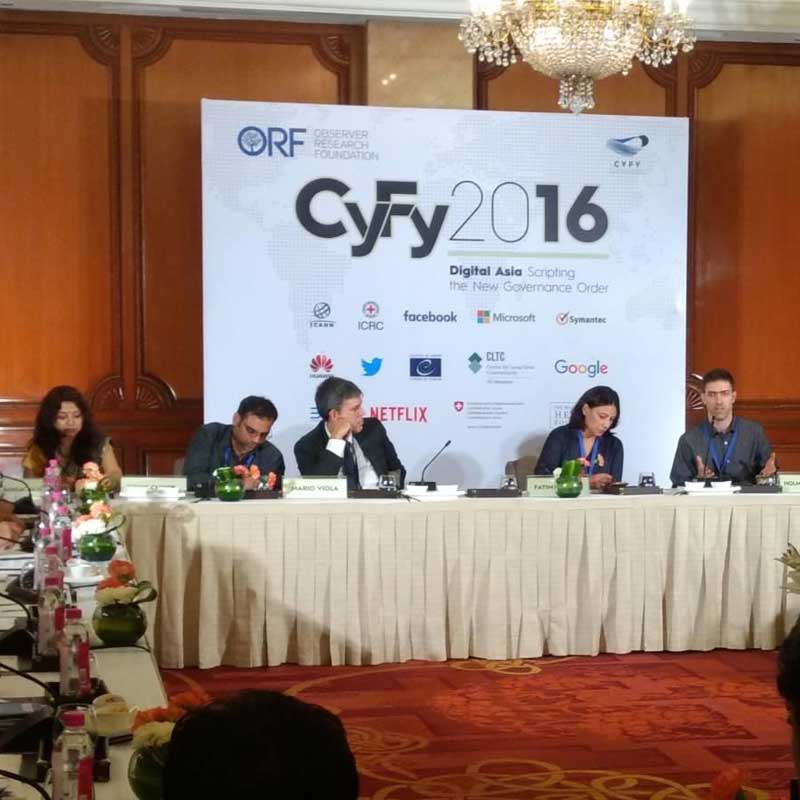
    Speaking as a panellist at a session on `The Future of Entertainment’ at ORF-organised `CyFy 2016: Digital Asia Scripting the New Governance Order’ here on Thursday, Kuek suggested Indian policy-makers should flesh out a policy after looking at all issues.

    Telecom Regulatory Authority of India (TRAI), the broadcast and telecoms regulator, is in the process of coming out with a set of guidelines for OTT services and net neutrality issue after lengthy debates with stakeholders. A section of the entertainment and telecoms industry in India has been lobbying hard to regulate mushrooming OTT services that have been claiming a growing subscriber base despite challenges of inadequate bandwidth and high cost of data.

    As to whether challenges of possible over-regulation (by TRAI), slow internet speed and high cost of data could pose a problem for the growth of OTT services like Netflix in India, Kuek emphasised that he’s much “heartened” by the ongoing “vibrant discussion” on net neutrality.

    He, along with another panellists, went on to clarify that regulations need to be “principled and technology-based” without “overreaching” as restrictive regulations were not good for the industry as a whole.

    Holding forth on Asian and global trends, the Singapore-based Kuek said that “entertainment and video consumption online is irreversible” and it becomes the “first point of contact for Internet adoption.” He added: “There has been an annual growth of 22 per cent in data consumption in Asia.”

    According to another panellist, Santa Clara University Associate Professor of Communication Rohit Chopra, the lines between entertainment and news have blurred (in the US) and the second wave of Internet has caused India to “jumpstart” to this trend.

  • Vibrant Indian policy-making will ensure non-discrimination: Netflix APAC MD

    Vibrant Indian policy-making will ensure non-discrimination: Netflix APAC MD

    NEW DELHI: Netflix is not only upbeat on the Indian market, but feels the vibrancy in policy-making process here will ensure non-discriminatory access to the Internet for all.

    Pointing out that India is a place where many innovations are being witnessed, Netflix APAC managing director Yu-Chuang Kuek said that regulatory organisations (like TRAI) should take a wholistic view on issues like net neutrality and nuance the policies in such a way so as “not to stifle innovations.”

    Speaking as a panellist at a session on `The Future of Entertainment’ at ORF-organised `CyFy 2016: Digital Asia Scripting the New Governance Order’ here on Thursday, Kuek suggested Indian policy-makers should flesh out a policy after looking at all issues.

    Telecom Regulatory Authority of India (TRAI), the broadcast and telecoms regulator, is in the process of coming out with a set of guidelines for OTT services and net neutrality issue after lengthy debates with stakeholders. A section of the entertainment and telecoms industry in India has been lobbying hard to regulate mushrooming OTT services that have been claiming a growing subscriber base despite challenges of inadequate bandwidth and high cost of data.

    As to whether challenges of possible over-regulation (by TRAI), slow internet speed and high cost of data could pose a problem for the growth of OTT services like Netflix in India, Kuek emphasised that he’s much “heartened” by the ongoing “vibrant discussion” on net neutrality.

    He, along with another panellists, went on to clarify that regulations need to be “principled and technology-based” without “overreaching” as restrictive regulations were not good for the industry as a whole.

    Holding forth on Asian and global trends, the Singapore-based Kuek said that “entertainment and video consumption online is irreversible” and it becomes the “first point of contact for Internet adoption.” He added: “There has been an annual growth of 22 per cent in data consumption in Asia.”

    According to another panellist, Santa Clara University Associate Professor of Communication Rohit Chopra, the lines between entertainment and news have blurred (in the US) and the second wave of Internet has caused India to “jumpstart” to this trend.

  • Eros International raises $30 million for Eros Now

    Eros International raises $30 million for Eros Now

    MUMBAI: Indian Bollywood major Eros International is getting hotter on OTT. It announced this morning that two of its existing top 10 institutional shareholders have increased their holdings in the company through a private placement and are pumping in approximately $30 million. The proceeds of the allotment will be primarily used to fund the further expansion of Eros Now, its OTT platform.

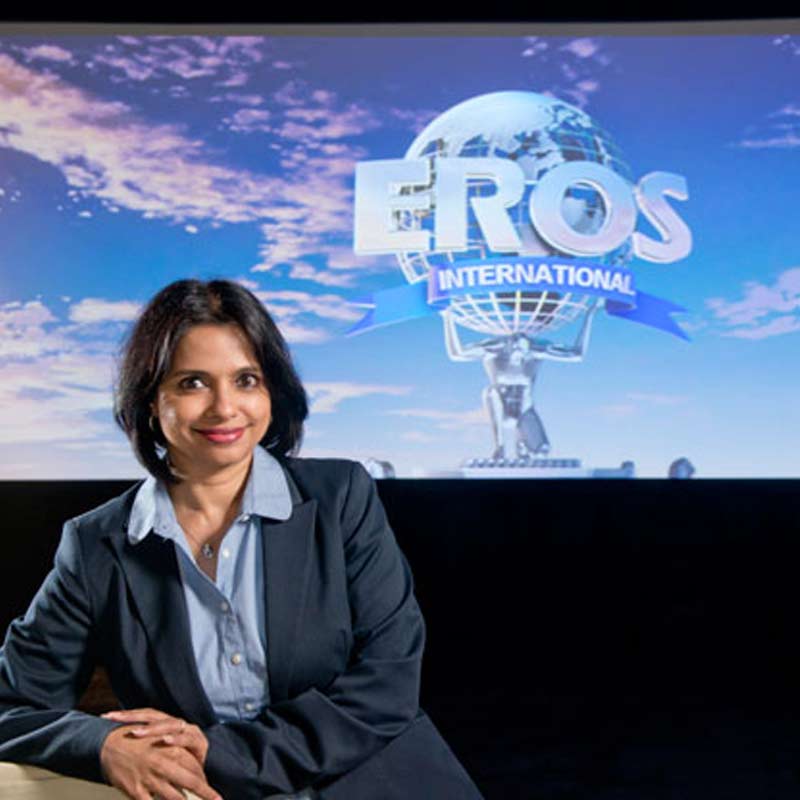
    Eros International group CEO & MD Jyoti Deshpande commented: “Our vision to transform Eros from a leading film studio to a leading digital company with a global footprint is well underway with Eros Now, our OTT platform crossing one million paid subscribers as of 30 June 2016. Our ownership of content and our strong balance sheet should provide tailwinds to grow the Eros Now subscriber base from one million to ten million and eventually hundred million within the next decade.”

    Eros Now is Eros International Plc’s leading on-demand Bollywood entertainment network accessible anytime, anywhere, on nearly any Internet-connected screen. Eros Now offers users across 135 countries a large library of films (Eros Now has rights to over 5,000 films), as well as premium television shows, music videos and audio tracks.

    Eros Now is also working on launching compelling original drama series for its viewers. It also has compelling product features such as offline viewing where premium subscribers can download the content and view it when not connected to the Internet make Eros Now a unique offering with focus on user experience.

    Available on Apple and Android platforms, Eros Now has integration deals with Airtel, Idea and Reliance Jio and several other operators internationally. A crucial deal was struck with Reliance Jio, the 4G player that has rolled out the most aggressive plan for digital India. In its platform-agnostic strategy, Eros has struck deals with OEMs and telecom operators such as Micromax, Airtel, Idea, LeEco, and Maxis.

    Through the Eros-Jio partnership, new and old movies including Bajirao Mastaani, Bajrangi Bhaijaan, Prem Ratan Dhan Payo and Tanu Weds Manu Returns, will be available on the JioOnDemand app. With 30 HD channels, Jio is offering live streaming of over 300 TV channels 10 genres and 15 languages.

    Available on Amazon Fire TV, Apple TV, and pre-installed in Android TV, Eros Now crossed over 50 million registered users worldwide across WAP, APP, and Web, as of 30 June 2016. It has already crossed over 1.1 million active unique paying subscribers who have paid for at least one month.

    Eros released 14 films in Q1 FY17 of which three were high, two were medium and nine were low-budget films. Sardaar Gabbar Singh (Telugu),Housefull 3 (Hindi), 24 (Tamil), Marudhu (Tamil) and Ki and Ka (Hindi) were the main revenue earning films during the quarter. Eros Now is planning to acquire 10,000 additional films to add to its strong library.

    Eros Now, in October 2015, partnered with Ortel, an MSO (multi system operator) and ISP, to offer a subscription-based movie streaming service. Eros had, in August last year, also negotiated a partnership with Airtel to offer video and movie content on Wynk. Eros Now tied up with WeChat in June 2015 so as to allow users to watch videos, listen to music, and get Bollywood gossip and news. Eros Now, in the same month, inked a content acquisition deal with Hum TV of Pakistan.

    Eros Now has a five-year worldwide target of at least 15-20 million subscribers with a blended annual ARPU of $30 internationally and $5 from India. Trinity Pictures, owned by Eros International is building its franchises with two Sino-Indian co-productions, with a scheduled FY 2018 release.

    Eros Now hopes to achieve at least two million paying subscribers by the end of FY 2017 and five million paying subscribers by the end of FY-18.

  • Eros International raises $30 million for Eros Now

    Eros International raises $30 million for Eros Now

    MUMBAI: Indian Bollywood major Eros International is getting hotter on OTT. It announced this morning that two of its existing top 10 institutional shareholders have increased their holdings in the company through a private placement and are pumping in approximately $30 million. The proceeds of the allotment will be primarily used to fund the further expansion of Eros Now, its OTT platform.

    Eros International group CEO & MD Jyoti Deshpande commented: “Our vision to transform Eros from a leading film studio to a leading digital company with a global footprint is well underway with Eros Now, our OTT platform crossing one million paid subscribers as of 30 June 2016. Our ownership of content and our strong balance sheet should provide tailwinds to grow the Eros Now subscriber base from one million to ten million and eventually hundred million within the next decade.”

    Eros Now is Eros International Plc’s leading on-demand Bollywood entertainment network accessible anytime, anywhere, on nearly any Internet-connected screen. Eros Now offers users across 135 countries a large library of films (Eros Now has rights to over 5,000 films), as well as premium television shows, music videos and audio tracks.

    Eros Now is also working on launching compelling original drama series for its viewers. It also has compelling product features such as offline viewing where premium subscribers can download the content and view it when not connected to the Internet make Eros Now a unique offering with focus on user experience.

    Available on Apple and Android platforms, Eros Now has integration deals with Airtel, Idea and Reliance Jio and several other operators internationally. A crucial deal was struck with Reliance Jio, the 4G player that has rolled out the most aggressive plan for digital India. In its platform-agnostic strategy, Eros has struck deals with OEMs and telecom operators such as Micromax, Airtel, Idea, LeEco, and Maxis.

    Through the Eros-Jio partnership, new and old movies including Bajirao Mastaani, Bajrangi Bhaijaan, Prem Ratan Dhan Payo and Tanu Weds Manu Returns, will be available on the JioOnDemand app. With 30 HD channels, Jio is offering live streaming of over 300 TV channels 10 genres and 15 languages.

    Available on Amazon Fire TV, Apple TV, and pre-installed in Android TV, Eros Now crossed over 50 million registered users worldwide across WAP, APP, and Web, as of 30 June 2016. It has already crossed over 1.1 million active unique paying subscribers who have paid for at least one month.

    Eros released 14 films in Q1 FY17 of which three were high, two were medium and nine were low-budget films. Sardaar Gabbar Singh (Telugu),Housefull 3 (Hindi), 24 (Tamil), Marudhu (Tamil) and Ki and Ka (Hindi) were the main revenue earning films during the quarter. Eros Now is planning to acquire 10,000 additional films to add to its strong library.

    Eros Now, in October 2015, partnered with Ortel, an MSO (multi system operator) and ISP, to offer a subscription-based movie streaming service. Eros had, in August last year, also negotiated a partnership with Airtel to offer video and movie content on Wynk. Eros Now tied up with WeChat in June 2015 so as to allow users to watch videos, listen to music, and get Bollywood gossip and news. Eros Now, in the same month, inked a content acquisition deal with Hum TV of Pakistan.

    Eros Now has a five-year worldwide target of at least 15-20 million subscribers with a blended annual ARPU of $30 internationally and $5 from India. Trinity Pictures, owned by Eros International is building its franchises with two Sino-Indian co-productions, with a scheduled FY 2018 release.

    Eros Now hopes to achieve at least two million paying subscribers by the end of FY 2017 and five million paying subscribers by the end of FY-18.

  • Hotstar targets billion minutes watch time daily

    Hotstar targets billion minutes watch time daily

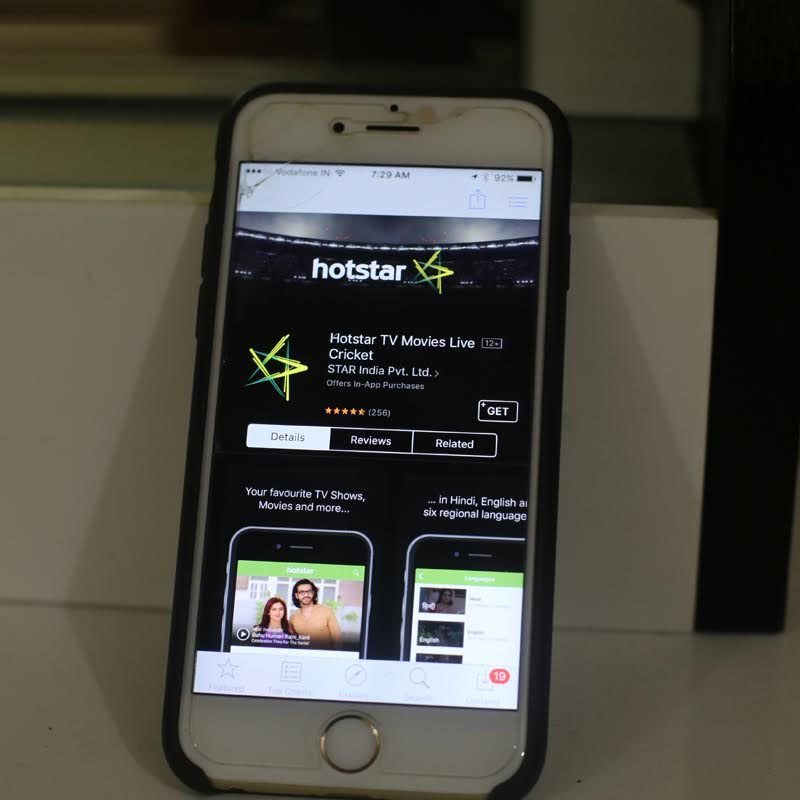
    MUMBAI: The new mantra at the Twenty First Century Fox-owned Star India subsidiary Novi Digital’s Hotstar is the figure of a billion. Yes, a billion. Not a billion subscribers, but a billion minutes. Speaking at a conference in China yesterday, its senior vice-president and head of product Varun Narang stated that the OTT service’s target is to get to a billion minutes of watch time daily.

    “Once you get to a billion minutes a day, you’re talking about a real, real business,” stated Narang at the conference.

    Narang was roped in to Hotstar from Whipclip last year and has had more than half a decade’s product experience with top-notch services such as Hulu and Amazon in the US. He was recruited to lead the team which is helping build mobile solutions for the app and help innovate content discovery, quality of video playbacks as well as build native advertising platforms for the app.

    Speaking at the Bank of America Merrill Lynch Media and entertainment conference earlier this month Twenty First Century Fox executive chairman Lachlan Murdoch had stated that Hotstar had gone from streaming 750 million minutes to 2.5 billion minutes between July and August 2016. That means it has some distance to travel before it gets to that billion minutes a day figure.

    Responding to a question from ace analyst Jessica Jean Reif Cohen on the media powerhouse’s plans for India, Lachlan had elaborated that Hotstar is expected “to grow significantly with the launch of Reliance Jio’s mobile 4G service, which Hotstar is the exclusive (sic) program provider for. So, on the Reliance Jio phones — the biggest launch of consumer product in many many years – Hotstar is the exclusive television provider on the platform. And so we think where every single single consumer will have access to Hotstar premium which is a $3 service. And, they’ll have it provided by Reliance for free. So, it’s a very exciting time in India for us. Just to have this in perspective, those streaming numbers for Hotstar is about, if you compare with Netflix in India, Netflix is about six per cent the size of Hotstar”.

    Among the initiatives, Hotstar is looking to scale up the product quickly is rolling it out globally in the near future, targeting the south Asian diaspora, Narang revealed at the conference. This was something that even Star India chairman Uday Shankar had stated at the Ficci Frames conference in Mumbai earlier this year.

    Narang admitted that what was helping Hotstar is the fact that “content rights are a lot easier for us in India than they are in the US.”

    Other things that could aid it get there is its catalogue of around 35,000 hours of entertainment content. At its investor call conference during the announcement of its annual results Twenty First Century Fox CFO John Nallen had pointed out that “in the beginning, we saw pretty severe sort of volatility and spike, largely around sports viewership on the Hotstar platform to when there was a big cricket tournament or something like that. But, gradually over the last year, what’s really built and gotten much more momentum is scripted programming, it’s Indian-scripted programming in multiple languages, and that’s really driving, that’s been the most gratifying and to see more consistent viewership of that and that’s really a big, big part of the volume now, and it’s the fastest way growing part of the volume on a consistent basis, local Indian-scripted programming at very high volumes.”

    Currently, Hotstar has an estimated 72 million downloads with around 50 million active users.

  • Hotstar targets billion minutes watch time daily

    Hotstar targets billion minutes watch time daily

    MUMBAI: The new mantra at the Twenty First Century Fox-owned Star India subsidiary Novi Digital’s Hotstar is the figure of a billion. Yes, a billion. Not a billion subscribers, but a billion minutes. Speaking at a conference in China yesterday, its senior vice-president and head of product Varun Narang stated that the OTT service’s target is to get to a billion minutes of watch time daily.

    “Once you get to a billion minutes a day, you’re talking about a real, real business,” stated Narang at the conference.

    Narang was roped in to Hotstar from Whipclip last year and has had more than half a decade’s product experience with top-notch services such as Hulu and Amazon in the US. He was recruited to lead the team which is helping build mobile solutions for the app and help innovate content discovery, quality of video playbacks as well as build native advertising platforms for the app.

    Speaking at the Bank of America Merrill Lynch Media and entertainment conference earlier this month Twenty First Century Fox executive chairman Lachlan Murdoch had stated that Hotstar had gone from streaming 750 million minutes to 2.5 billion minutes between July and August 2016. That means it has some distance to travel before it gets to that billion minutes a day figure.

    Responding to a question from ace analyst Jessica Jean Reif Cohen on the media powerhouse’s plans for India, Lachlan had elaborated that Hotstar is expected “to grow significantly with the launch of Reliance Jio’s mobile 4G service, which Hotstar is the exclusive (sic) program provider for. So, on the Reliance Jio phones — the biggest launch of consumer product in many many years – Hotstar is the exclusive television provider on the platform. And so we think where every single single consumer will have access to Hotstar premium which is a $3 service. And, they’ll have it provided by Reliance for free. So, it’s a very exciting time in India for us. Just to have this in perspective, those streaming numbers for Hotstar is about, if you compare with Netflix in India, Netflix is about six per cent the size of Hotstar”.

    Among the initiatives, Hotstar is looking to scale up the product quickly is rolling it out globally in the near future, targeting the south Asian diaspora, Narang revealed at the conference. This was something that even Star India chairman Uday Shankar had stated at the Ficci Frames conference in Mumbai earlier this year.

    Narang admitted that what was helping Hotstar is the fact that “content rights are a lot easier for us in India than they are in the US.”

    Other things that could aid it get there is its catalogue of around 35,000 hours of entertainment content. At its investor call conference during the announcement of its annual results Twenty First Century Fox CFO John Nallen had pointed out that “in the beginning, we saw pretty severe sort of volatility and spike, largely around sports viewership on the Hotstar platform to when there was a big cricket tournament or something like that. But, gradually over the last year, what’s really built and gotten much more momentum is scripted programming, it’s Indian-scripted programming in multiple languages, and that’s really driving, that’s been the most gratifying and to see more consistent viewership of that and that’s really a big, big part of the volume now, and it’s the fastest way growing part of the volume on a consistent basis, local Indian-scripted programming at very high volumes.”

    Currently, Hotstar has an estimated 72 million downloads with around 50 million active users.