Tag: OTT

  • Exploring Indian kids’ content opportunities at MIPJunior

    Exploring Indian kids’ content opportunities at MIPJunior

    CANNES: The world’s kids programming screenings and conference MIPJunior is slated to commence today 15 October at the prestigious Hotel Martinez in Cannes. The little French Riviera village was under heavy black cloud cover the whole of 14 October and a constant drizzle through the day forced everyone to bring out their brollies and their rain jackets.

    But that won’t be necessary today and the next three to four days. Reason: the weatherman has forecast that the weekend is going to be mostly sunny through to Monday.

    The sunny weather is expected to encourage some brisk meetings, conferences, workshops, keynotes, panel discussions, networking through the day at the famed Hotel. And of course champagne, wine is expected to overflow through the day at the lunches and in the restaurants as the world’s top animation and kids content executives huddle together to figure out what the world and their distribution platforms are going to look like in the coming few months.

    One session that is being watched with increasing curiosity is in the MIPJunior Lab at 17:15 pm on 16 October Titled Passage to India: Working in this dynamic space, it is being moderated by Animationxpress.com and Indiantelevision.com founder, CEO and editor in chief Anil Wanvari.

    India’s top animation studio heads – Rajiv Chilaka of Chhota Bheem and Green Gold Fame, Anish Mehta of Motu Patlu and Cosmos Maya renown, Munjal Shroff of Graphiti Multimedia – and India’s only kids OTT platform Voot CEO Gaurav Gandhi – will be throwing light on how why it makes sense to look at the growing Indian kids market, and how international studios can make head room for themselves in India in the area of co-productions.

    “Indian animation is just waiting to explode on to the world stage,” says Wanvari – who also represents Reed Midem’s MipCom, MipTV, MIPJunior, MipCancun, and Mipim events for India, Pakistan, Sri Lanka, Bangladesh and Nepal. “We have the talent, the right stories, and even now the focus to make in India for the world with the Narendra Modi government laying an emphasis on it. An animation requires many partnerships for it to achieve global success. Through this workshop we want to demystify many notions or perceptions that the world community has about Indian studios and the kids content marketplace. Reed Midem and MIPJunior have been very supportive of India’s efforts to build a global IP in kids’ animation. If we succeed in enabling even one partnership or co-production or spark one such opportunity, we will have been successful.”

    Shall we say amen to that?
  • Exploring Indian kids’ content opportunities at MIPJunior

    Exploring Indian kids’ content opportunities at MIPJunior

    CANNES: The world’s kids programming screenings and conference MIPJunior is slated to commence today 15 October at the prestigious Hotel Martinez in Cannes. The little French Riviera village was under heavy black cloud cover the whole of 14 October and a constant drizzle through the day forced everyone to bring out their brollies and their rain jackets.

    But that won’t be necessary today and the next three to four days. Reason: the weatherman has forecast that the weekend is going to be mostly sunny through to Monday.

    The sunny weather is expected to encourage some brisk meetings, conferences, workshops, keynotes, panel discussions, networking through the day at the famed Hotel. And of course champagne, wine is expected to overflow through the day at the lunches and in the restaurants as the world’s top animation and kids content executives huddle together to figure out what the world and their distribution platforms are going to look like in the coming few months.

    One session that is being watched with increasing curiosity is in the MIPJunior Lab at 17:15 pm on 16 October Titled Passage to India: Working in this dynamic space, it is being moderated by Animationxpress.com and Indiantelevision.com founder, CEO and editor in chief Anil Wanvari.

    India’s top animation studio heads – Rajiv Chilaka of Chhota Bheem and Green Gold Fame, Anish Mehta of Motu Patlu and Cosmos Maya renown, Munjal Shroff of Graphiti Multimedia – and India’s only kids OTT platform Voot CEO Gaurav Gandhi – will be throwing light on how why it makes sense to look at the growing Indian kids market, and how international studios can make head room for themselves in India in the area of co-productions.

    “Indian animation is just waiting to explode on to the world stage,” says Wanvari – who also represents Reed Midem’s MipCom, MipTV, MIPJunior, MipCancun, and Mipim events for India, Pakistan, Sri Lanka, Bangladesh and Nepal. “We have the talent, the right stories, and even now the focus to make in India for the world with the Narendra Modi government laying an emphasis on it. An animation requires many partnerships for it to achieve global success. Through this workshop we want to demystify many notions or perceptions that the world community has about Indian studios and the kids content marketplace. Reed Midem and MIPJunior have been very supportive of India’s efforts to build a global IP in kids’ animation. If we succeed in enabling even one partnership or co-production or spark one such opportunity, we will have been successful.”

    Shall we say amen to that?
  • Indian Media Review: Shashi Sinha addresses the elephant in the room — common measurement

    Indian Media Review: Shashi Sinha addresses the elephant in the room — common measurement

    MUMBAI: All eyes were trained on this year’s media review by The Advertising Club, what with the stalwarts of the industry repeatedly endorsing it on the social media weeks before the event took place. And indeed, the topic that the session addressed hit close to to every stakeholder in the industry alike — be it publishers from across media, advertisers or media agencies. It was on having a common currency of measuring the effectiveness of media for advertising across platforms.

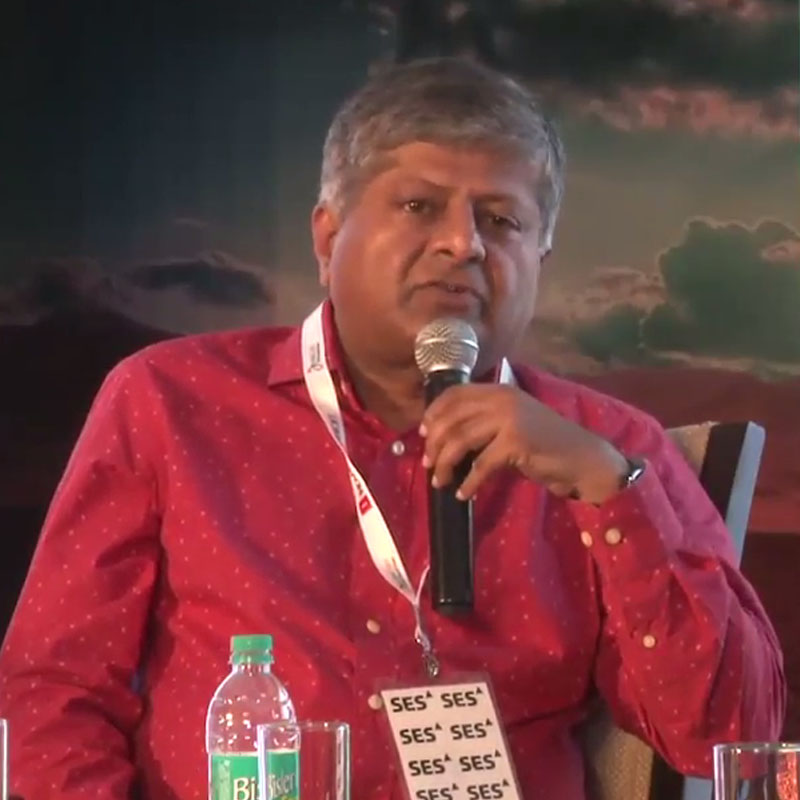
    IPG Mediabrands CEO was one of the key speakers at the review. Shashi Sinha started off on a more comfortable note of how agencies can help businesses grow with an effective measurement.

    According to him, “Instead of complaining that clients are demanding more accountability from the media they bought, agencies need to understand that better measurement gives CMOs better rationale for justifying better budgets.”

    This ‘better measurability’, as per Sinha, is being achieved in several ways at present, primarily — introduction of BARC’s measurement system for broadcasters, revival of the Indian Readership Survey (IRS) by next year, and digital.

    The issue, Sinha emphasised, came down to whether the fraternity wanted to take a few more steps further to improve the system of measurement across media after understanding the need of the hour or whether they wanted to stall the progress and delay the combined measurement system.

    Speaking specifically of the digital measurement system, Sinha shared that it was wrong to expect a panel of digital platforms or ‘OTT’ players to be self regulators of their measurement systems, given that the category is extremely fragmented. Therefore, he openly asked if “digital publishers are willing to be measured by third parties and be transparent with their numbers?”

    Highlighting how the IRS, which Sinha expects to be fully functional in eight months, will increase the sample size of print publishers by 40 per cent, he added that multimedia evaluation was also being considered by the board.

    Sinha expressed his welcome surprise at the Audit Bureau of Circulation (ABC) testing the measurement possibilities in the publishing side of digital (as BARC only caters to video consumption measurements). “Unlike video measurement, it is relatively cheap and is actually already functional for the last three to four months. We just need the heavyweights in the medium to come to a consensus for it to be fully rolled out,” Sinha added.

    After addressing and updating the audience about the different scopes of measurements in each media, Sinha quickly moved on to emphasise the need to have a common source of truth or ‘a single view of truth’

    This brings him to suggest the ambitious idea of Media Research Users Council (MRUC), the IRS, BARC and ABC to come together to contribute to a common pool of data that can be further sliced and diced in accordance with each media based on the clients requirement, although Sinha agreed that currently major challenges were in making that thought become a reality.

    Instead, one could start with thinking along the lines of a measurement currency that each media can be compared in, and according to Sinha, it is CPT,

    “Television measurement needs to move from CPRP to CPT format, and that’s a good starting point of having some commonality of currency between mediums. Publishers need to understand that moving from one currency system to the other doesn’t bring any difference in the buying and selling equation with clients. That will always be based on the demand-supply ratio,” assured Sinha, adding that the current CPT of channels is actually an opportunity to drive growth.

    CPT or Cost Per Thousand is basically the advertising cost of reaching a certain number of viewers in a defined target group on television, while CPRP or Cost Per Rating Point is the cost of advertising time on television based on the price of time for a single rating point generated by the channel.

    More mature markets such as the US, the UK and Germany have already switched to CPT as a currency when buying and selling television media.

  • Indian Media Review: Shashi Sinha addresses the elephant in the room — common measurement

    Indian Media Review: Shashi Sinha addresses the elephant in the room — common measurement

    MUMBAI: All eyes were trained on this year’s media review by The Advertising Club, what with the stalwarts of the industry repeatedly endorsing it on the social media weeks before the event took place. And indeed, the topic that the session addressed hit close to to every stakeholder in the industry alike — be it publishers from across media, advertisers or media agencies. It was on having a common currency of measuring the effectiveness of media for advertising across platforms.

    IPG Mediabrands CEO was one of the key speakers at the review. Shashi Sinha started off on a more comfortable note of how agencies can help businesses grow with an effective measurement.

    According to him, “Instead of complaining that clients are demanding more accountability from the media they bought, agencies need to understand that better measurement gives CMOs better rationale for justifying better budgets.”

    This ‘better measurability’, as per Sinha, is being achieved in several ways at present, primarily — introduction of BARC’s measurement system for broadcasters, revival of the Indian Readership Survey (IRS) by next year, and digital.

    The issue, Sinha emphasised, came down to whether the fraternity wanted to take a few more steps further to improve the system of measurement across media after understanding the need of the hour or whether they wanted to stall the progress and delay the combined measurement system.

    Speaking specifically of the digital measurement system, Sinha shared that it was wrong to expect a panel of digital platforms or ‘OTT’ players to be self regulators of their measurement systems, given that the category is extremely fragmented. Therefore, he openly asked if “digital publishers are willing to be measured by third parties and be transparent with their numbers?”

    Highlighting how the IRS, which Sinha expects to be fully functional in eight months, will increase the sample size of print publishers by 40 per cent, he added that multimedia evaluation was also being considered by the board.

    Sinha expressed his welcome surprise at the Audit Bureau of Circulation (ABC) testing the measurement possibilities in the publishing side of digital (as BARC only caters to video consumption measurements). “Unlike video measurement, it is relatively cheap and is actually already functional for the last three to four months. We just need the heavyweights in the medium to come to a consensus for it to be fully rolled out,” Sinha added.

    After addressing and updating the audience about the different scopes of measurements in each media, Sinha quickly moved on to emphasise the need to have a common source of truth or ‘a single view of truth’

    This brings him to suggest the ambitious idea of Media Research Users Council (MRUC), the IRS, BARC and ABC to come together to contribute to a common pool of data that can be further sliced and diced in accordance with each media based on the clients requirement, although Sinha agreed that currently major challenges were in making that thought become a reality.

    Instead, one could start with thinking along the lines of a measurement currency that each media can be compared in, and according to Sinha, it is CPT,

    “Television measurement needs to move from CPRP to CPT format, and that’s a good starting point of having some commonality of currency between mediums. Publishers need to understand that moving from one currency system to the other doesn’t bring any difference in the buying and selling equation with clients. That will always be based on the demand-supply ratio,” assured Sinha, adding that the current CPT of channels is actually an opportunity to drive growth.

    CPT or Cost Per Thousand is basically the advertising cost of reaching a certain number of viewers in a defined target group on television, while CPRP or Cost Per Rating Point is the cost of advertising time on television based on the price of time for a single rating point generated by the channel.

    More mature markets such as the US, the UK and Germany have already switched to CPT as a currency when buying and selling television media.

  • Yupp TV gets $50 mn funding from KKR-backed Emerald Media

    Yupp TV gets $50 mn funding from KKR-backed Emerald Media

    MUMBAI: It’s a sign of the confidence international private equity firms have in India’s one-billion plus mobile user base, the over the top (OTT) ecosystem and the appeal south Asian content can have worldwide.

    The Chernin-KKR-Ailleo-Kamath backed Emerald Media yesterday announced that it was investing $50 million (Rs 334 crore) in the Uday Reddy-run internet pay TV platform Yupp TV and gaining a significant minority stake in the firm. The purpose of the fund-raising: expand the OTT service’s footprint globally, its content library through originals and acquisitions, and in the process ramp up its subscriber base.

    Headquartered in Atlanta, Yupp TV offers a mix of live TV (more than 250 channels in 14 languages), TV shows, movies and videos with a focus on the US, UK, Middle East, Canada, Singapore, Malaysia, Australia, New Zealand and the Caribbean.  It has been making inroads in India too with an initial focus on the south Indian market, but has since been spreading nationally. The platform has more than 25,000 hours of entertainment content catalogued in its library, with nearly 5,000 hours of new on-demand content being added to it daily. It recently launched YuppFlix, its on-demand movie streaming service on the back of its 5,000 strong movie catalogue.

    More than five million monthly visitors – peaking at 20 million – log on to the Yupp  TV service using 27 integrated devices. The YuppTV app has had 10 million mobile downloads, 50 million Samsug TV  and 300,000 LG Smart TV pre-installs globally.  The app is also available for PS3 and PS4s.

    Said YuppTV promoter & CEO Uday Reddy:  “We couldn’t ask for a stronger partner than Emerald Media. YuppTV is a content distribution platform with a strong consumer connection, and Emerald Media has global media relationships. We hope to leverage their relationships and existing assets Endemol, OML, Fluence and Graphic India to create original programming and make this platform a next generation distribution and content powerhouse.”

    Added Emerald Media managing director Rajesh Kamat:  “Emerald Media believes in driving change and value-creation by providing a distinctive combination of capital, domain knowledge and management bandwidth. The world is moving from traditional consumption to multiscreen delivery mediums. YuppTV provides a unique combination of technology, strong content relationships and revenues of scale and will be an anchor to our vision of building a new age media company.”

    Said Emerald Media managing director Paul Aiello: “Uday and his team have created an exceptional online video platform with a loyal subscriber base that realizes the huge potential of the global Indian diaspora. Our investment and relationship will enable YuppTV to further their strong leadership position in the rapidly growing OTT space.”

    YuppTV will need all the financial muscle it can get. The Indian OTT and VOD space is just about beginning to warm up with the likes of Amazon keeping aside a war chest of around $300 million for its Prime Video service. Additionally, Netflix, Hotstar, SonyLiv, Ditto TV, Voot, Hooq, Viu, Spuul, and the soon to be launched Alt Balaji are all nurturing ambitious investments and plans to capture a piece of the Indian mobile consumer’s wallet.

    Also read:

    Hooq plans to invest $2 million on original Indian content

    Challenges faced by the OTT players in India; the way ahead

  • Yupp TV gets $50 mn funding from KKR-backed Emerald Media

    Yupp TV gets $50 mn funding from KKR-backed Emerald Media

    MUMBAI: It’s a sign of the confidence international private equity firms have in India’s one-billion plus mobile user base, the over the top (OTT) ecosystem and the appeal south Asian content can have worldwide.

    The Chernin-KKR-Ailleo-Kamath backed Emerald Media yesterday announced that it was investing $50 million (Rs 334 crore) in the Uday Reddy-run internet pay TV platform Yupp TV and gaining a significant minority stake in the firm. The purpose of the fund-raising: expand the OTT service’s footprint globally, its content library through originals and acquisitions, and in the process ramp up its subscriber base.

    Headquartered in Atlanta, Yupp TV offers a mix of live TV (more than 250 channels in 14 languages), TV shows, movies and videos with a focus on the US, UK, Middle East, Canada, Singapore, Malaysia, Australia, New Zealand and the Caribbean.  It has been making inroads in India too with an initial focus on the south Indian market, but has since been spreading nationally. The platform has more than 25,000 hours of entertainment content catalogued in its library, with nearly 5,000 hours of new on-demand content being added to it daily. It recently launched YuppFlix, its on-demand movie streaming service on the back of its 5,000 strong movie catalogue.

    More than five million monthly visitors – peaking at 20 million – log on to the Yupp  TV service using 27 integrated devices. The YuppTV app has had 10 million mobile downloads, 50 million Samsug TV  and 300,000 LG Smart TV pre-installs globally.  The app is also available for PS3 and PS4s.

    Said YuppTV promoter & CEO Uday Reddy:  “We couldn’t ask for a stronger partner than Emerald Media. YuppTV is a content distribution platform with a strong consumer connection, and Emerald Media has global media relationships. We hope to leverage their relationships and existing assets Endemol, OML, Fluence and Graphic India to create original programming and make this platform a next generation distribution and content powerhouse.”

    Added Emerald Media managing director Rajesh Kamat:  “Emerald Media believes in driving change and value-creation by providing a distinctive combination of capital, domain knowledge and management bandwidth. The world is moving from traditional consumption to multiscreen delivery mediums. YuppTV provides a unique combination of technology, strong content relationships and revenues of scale and will be an anchor to our vision of building a new age media company.”

    Said Emerald Media managing director Paul Aiello: “Uday and his team have created an exceptional online video platform with a loyal subscriber base that realizes the huge potential of the global Indian diaspora. Our investment and relationship will enable YuppTV to further their strong leadership position in the rapidly growing OTT space.”

    YuppTV will need all the financial muscle it can get. The Indian OTT and VOD space is just about beginning to warm up with the likes of Amazon keeping aside a war chest of around $300 million for its Prime Video service. Additionally, Netflix, Hotstar, SonyLiv, Ditto TV, Voot, Hooq, Viu, Spuul, and the soon to be launched Alt Balaji are all nurturing ambitious investments and plans to capture a piece of the Indian mobile consumer’s wallet.

    Also read:

    Hooq plans to invest $2 million on original Indian content

    Challenges faced by the OTT players in India; the way ahead

  • ATF 2016 conference to tackle pragmatic concerns across digital business

    ATF 2016 conference to tackle pragmatic concerns across digital business

    MUMBAI: The Asia TV Forum & Market (ATF) 2016 has announced a new approach to its annual conference, taking place from 6 to 9 December 2016. Significant emphasis on strategy and investment is set as the milieu, where tactical financing and ventures into new domains are presented.

    C-Level Summit

    ATF’s C-Level Summit, focused on the digital space, will allow decision makers to discuss the very real issues of business today, as the industry is compelled to steer into the online world, a realm set to continue in its disruption of traditional content consumption and monetization.

    “ATF aims to provide a platform where attendees can tap on the brightest minds internationally, with topics tailored on the region. Each year, we place emphasis on gathering the most relevant and current industry leaders, so that delegates can obtain the keys to navigating today’s dynamic Asia content market, as they discover the latest trends and opportunities to leverage,” said Yeow Hui Leng, Senior Project Director of ATF and ScreenSingapore.

    The roster of significant speakers hold successes in their own right and represent the various pillars of the digital world, coupled with conventional giants who have made weighty partnerships in line with necessary pre-emptive adjustments, and natural aggregators who are looking at their own advantage to innovate and expand.

    C-suites from Southeast Asia’s noteworthy telcos, including Winston Damarillo, Chief Strategy Officer of PLDT Group and Prashant Gokarn, Chief New Business & Innovation Officer at PT Indosat Tbk, alongside other top management, will sit to have a discourse on their own OTT offerings, as they hold the combination lock to infrastructure and mobile partnerships.

    Chief Content Officers of digital native businesses, including Krishnan Rajagopalan, co-Founder of the Hooq Group and Kazufumi Nagasawa of Hulu Japan, along with Chris Erwin, Chief Operating Officer of Big Frame and Joanne Waage, Senior Vice President of Partnerships & Programming of Viki, Inc, will address ROI issues against a somewhat bearish landscape. CEOs, including Clifton Dawson, Founder and CEO of Greenlight VR, deliberate as content being king, will have to take on the daunting responsibility across various screens.

    The C-Level Summit will also highlight brand expansion opportunities in technology and new markets. Involving veterans in virtual reality and new digital studios (Multi-Channel Networks), the Summit will harness new facets of the digital business unseen at ATF in the past.

    Immerse in a new reality

    Continuing the mark from conference to market floor, virtual reality is played out as a new but vital piece that the industry is attempting to incorporate into individual manoeuvres. In the virtual realm, creativity will abound on the market floor like never before, as transmedia is presented at the VR Zone in the only worthwhile way it should; via an experiential method.

    The zone will be developed into a seminar-cum-workshop session, where some of the most avant-garde players in the VR space chat on exceptionally progressive productions within the cybernetic sphere. This is backed by an undeniable inroad of the content industry’s symbiotic relationship with the technology domain. The blending of creativity and technology has never been more pertinent, as ATF presents the likes of Okio Studio, Honkytonk, Innerspace VR, Silex Films, Dailymotion and AGAT Films, among other revolutionary ventures.

    More information about the conference and speakers is available at www.asiatvforum.com/en/programme.

    ATF is co-located with ScreenSingapore, and is part of the Singapore Media Festival (SMF).

  • ATF 2016 conference to tackle pragmatic concerns across digital business

    ATF 2016 conference to tackle pragmatic concerns across digital business

    MUMBAI: The Asia TV Forum & Market (ATF) 2016 has announced a new approach to its annual conference, taking place from 6 to 9 December 2016. Significant emphasis on strategy and investment is set as the milieu, where tactical financing and ventures into new domains are presented.

    C-Level Summit

    ATF’s C-Level Summit, focused on the digital space, will allow decision makers to discuss the very real issues of business today, as the industry is compelled to steer into the online world, a realm set to continue in its disruption of traditional content consumption and monetization.

    “ATF aims to provide a platform where attendees can tap on the brightest minds internationally, with topics tailored on the region. Each year, we place emphasis on gathering the most relevant and current industry leaders, so that delegates can obtain the keys to navigating today’s dynamic Asia content market, as they discover the latest trends and opportunities to leverage,” said Yeow Hui Leng, Senior Project Director of ATF and ScreenSingapore.

    The roster of significant speakers hold successes in their own right and represent the various pillars of the digital world, coupled with conventional giants who have made weighty partnerships in line with necessary pre-emptive adjustments, and natural aggregators who are looking at their own advantage to innovate and expand.

    C-suites from Southeast Asia’s noteworthy telcos, including Winston Damarillo, Chief Strategy Officer of PLDT Group and Prashant Gokarn, Chief New Business & Innovation Officer at PT Indosat Tbk, alongside other top management, will sit to have a discourse on their own OTT offerings, as they hold the combination lock to infrastructure and mobile partnerships.

    Chief Content Officers of digital native businesses, including Krishnan Rajagopalan, co-Founder of the Hooq Group and Kazufumi Nagasawa of Hulu Japan, along with Chris Erwin, Chief Operating Officer of Big Frame and Joanne Waage, Senior Vice President of Partnerships & Programming of Viki, Inc, will address ROI issues against a somewhat bearish landscape. CEOs, including Clifton Dawson, Founder and CEO of Greenlight VR, deliberate as content being king, will have to take on the daunting responsibility across various screens.

    The C-Level Summit will also highlight brand expansion opportunities in technology and new markets. Involving veterans in virtual reality and new digital studios (Multi-Channel Networks), the Summit will harness new facets of the digital business unseen at ATF in the past.

    Immerse in a new reality

    Continuing the mark from conference to market floor, virtual reality is played out as a new but vital piece that the industry is attempting to incorporate into individual manoeuvres. In the virtual realm, creativity will abound on the market floor like never before, as transmedia is presented at the VR Zone in the only worthwhile way it should; via an experiential method.

    The zone will be developed into a seminar-cum-workshop session, where some of the most avant-garde players in the VR space chat on exceptionally progressive productions within the cybernetic sphere. This is backed by an undeniable inroad of the content industry’s symbiotic relationship with the technology domain. The blending of creativity and technology has never been more pertinent, as ATF presents the likes of Okio Studio, Honkytonk, Innerspace VR, Silex Films, Dailymotion and AGAT Films, among other revolutionary ventures.

    More information about the conference and speakers is available at www.asiatvforum.com/en/programme.

    ATF is co-located with ScreenSingapore, and is part of the Singapore Media Festival (SMF).

  • India ready for data revolution with 350 million plus Net users: Minister

    India ready for data revolution with 350 million plus Net users: Minister

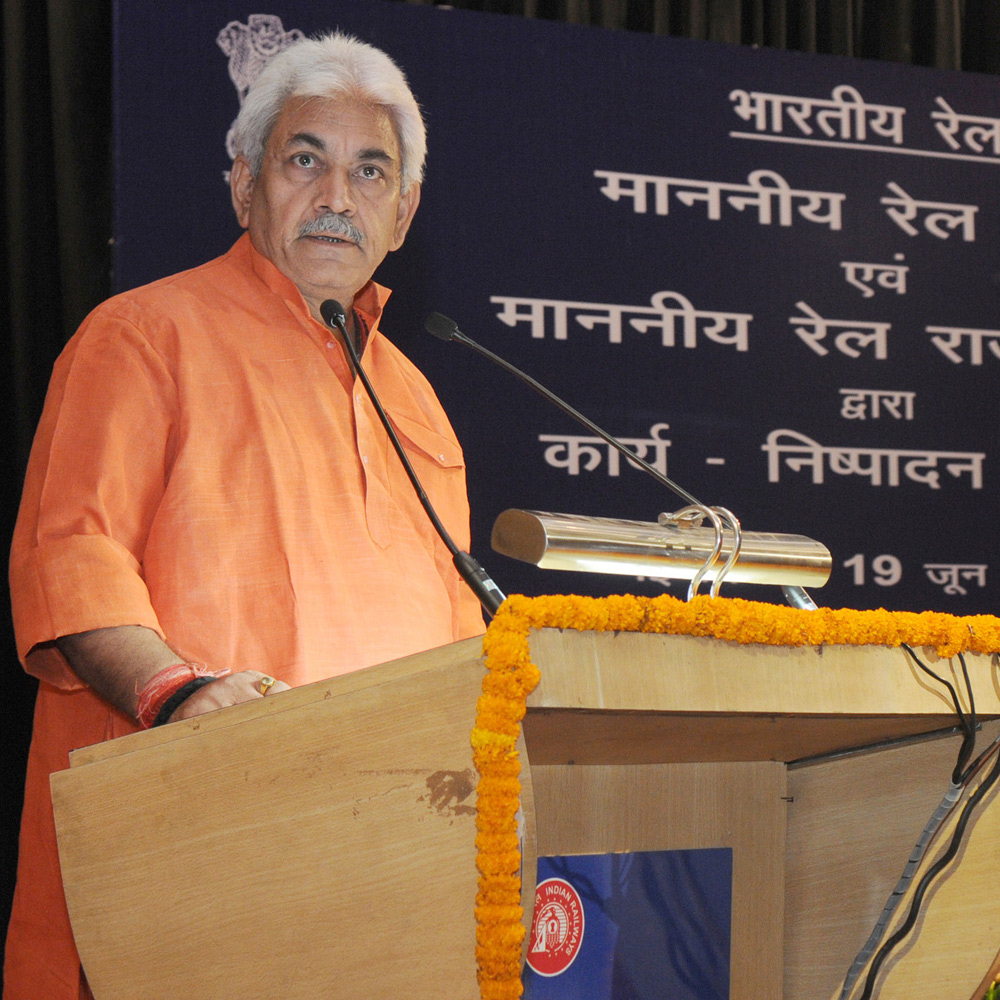
    NEW DELHI: India’s Telecoms minister Manoj Sinha has said the sector had been growing at a phenomenal pace and was considered as the fastest growing telecom market in the world with the second largest subscriber base with more than 1060 million connectivity, 160 million broadband connections and 350 million plus internet users.

    India is ready for another digital and data revolution, the minister said while inaugurating the 8th Telecom Export Promotion Council’s Buyer-Seller meet earlier this week here.

    (India’s mobile phone revolution has been spurring many media players, global and domestic, to enter the OTT space despite challenges. It is also expected that, with the introduction of 4G technology, the market for streaming video will grow in India.)

    Sinha said the rapid growth of the telecoms sector has fuelled the demand for telecom equipment, including mobile phones, which was worth about $ 20 billion in 2015-16 and is estimated to exceed $ 30 billion by 2020.

    Sinha added that India has all the ingredients of a globally competitive telecom industry like a large domestic market, world class talent, focus on R&D and IPR creation, beside a robust framework for electronic manufacturing, including set-top boxes used in a variety of telecoms and broadcast services.

    According to the Minister, Indian manufacturers have already made significant strides in exports of IT and telecom products to several countries and established that Indian IT and telecom products are of world-class quality and globally competitive on technology and price.

    The massive thrust on ‘Make in India’ and ‘Digital India’ initiatives offers a large opportunity for creation of innovative products and services and India is poised for another digital and data revolution.

    Sinha told the representatives from 28 participating countries from South Asia, South-East Asia, the Caribbean, Latin America and Africa that India holds the distinction of being the fastest growing telecom network, especially with advent of increased broadband penetration.

    Meanwhile, joining issue with his colleague, Electronics and IT minister Ravi Shankar Prasad said that, during the last fiscal ending March 2016, the sector recorded an export of $ 108 billion, which is around 45 per cent of services export from India. The sector gave direct employment to 3.7 million people and around 200,000 additional employment was created in just the past year.

    Prasad said the prime minister Narendra Modi’s government was determined to create a knowledge-based society to “improve effeciency and reach of the services.”

    He said unlike industrial revolution (that India missed), the country was all set to take lead in the ongoing digital revolution.

  • India ready for data revolution with 350 million plus Net users: Minister

    India ready for data revolution with 350 million plus Net users: Minister

    NEW DELHI: India’s Telecoms minister Manoj Sinha has said the sector had been growing at a phenomenal pace and was considered as the fastest growing telecom market in the world with the second largest subscriber base with more than 1060 million connectivity, 160 million broadband connections and 350 million plus internet users.

    India is ready for another digital and data revolution, the minister said while inaugurating the 8th Telecom Export Promotion Council’s Buyer-Seller meet earlier this week here.

    (India’s mobile phone revolution has been spurring many media players, global and domestic, to enter the OTT space despite challenges. It is also expected that, with the introduction of 4G technology, the market for streaming video will grow in India.)

    Sinha said the rapid growth of the telecoms sector has fuelled the demand for telecom equipment, including mobile phones, which was worth about $ 20 billion in 2015-16 and is estimated to exceed $ 30 billion by 2020.

    Sinha added that India has all the ingredients of a globally competitive telecom industry like a large domestic market, world class talent, focus on R&D and IPR creation, beside a robust framework for electronic manufacturing, including set-top boxes used in a variety of telecoms and broadcast services.

    According to the Minister, Indian manufacturers have already made significant strides in exports of IT and telecom products to several countries and established that Indian IT and telecom products are of world-class quality and globally competitive on technology and price.

    The massive thrust on ‘Make in India’ and ‘Digital India’ initiatives offers a large opportunity for creation of innovative products and services and India is poised for another digital and data revolution.

    Sinha told the representatives from 28 participating countries from South Asia, South-East Asia, the Caribbean, Latin America and Africa that India holds the distinction of being the fastest growing telecom network, especially with advent of increased broadband penetration.

    Meanwhile, joining issue with his colleague, Electronics and IT minister Ravi Shankar Prasad said that, during the last fiscal ending March 2016, the sector recorded an export of $ 108 billion, which is around 45 per cent of services export from India. The sector gave direct employment to 3.7 million people and around 200,000 additional employment was created in just the past year.

    Prasad said the prime minister Narendra Modi’s government was determined to create a knowledge-based society to “improve effeciency and reach of the services.”

    He said unlike industrial revolution (that India missed), the country was all set to take lead in the ongoing digital revolution.