Tag: OTT

  • Mittal wants self-regulation for new media, Rathore says IT Act adequate

    Mittal wants self-regulation for new media, Rathore says IT Act adequate

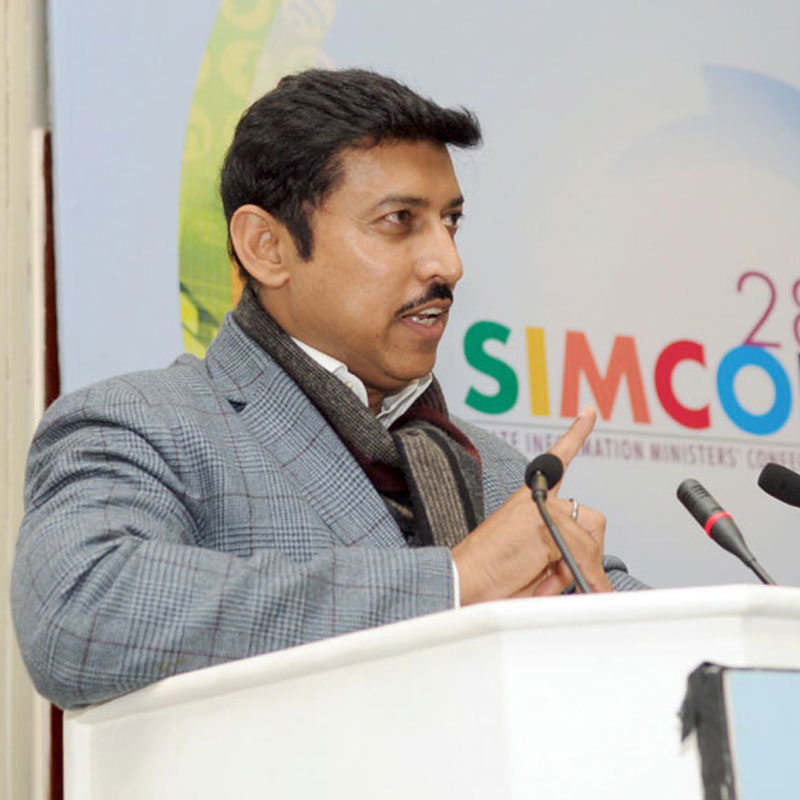
    NEW DELHI: Even as Minister of State for Information and Broadcasting Rajyavardhan Rathore categorically told Parliament earlier this month that his Ministry was not contemplating any regulatory framework for censorship of content appearing on the internet, Secretary Ajay Mittal has said the Centre is concerned about new media in the absence of a regulatory framework.

    Speaking in Kolkata at the Merchants’ Chamber of Commerce and Industries (MCCI), Mittal said

    “An important area of challenge in the new media is that there is unfortunately no regulatory framework. What you cannot see on TV or hear on your radio, it is all possibly up there in open access.”

    Mittal said much more was needed to be done to prepare the government and its officers to deal with the “completely new paradigm of digital media”.

    He said the Ministry was discussing with the state governments and “we are now going to train their people in the information sector so that they can deal with the challenges created by new media that is causing a whole lot of concern.”

    Mittal said questions have also been raised in Parliament on “this issue of digital media without any boundaries. We are very clear that in the media space the best form of regulation is self regulation and the government would like to keep away as far as possible.”

    Rathore had said in reply to a question about censoring new platforms for publication and broadcasting of media content like social networks and online video services that Section 69A of the Information Technology Act 2000 provides for blocking access to information under specific conditions. He said the Act has provisions for removal of objectionable online content.

    The Information Technology (Intermediary Guidelines) rules 2011 require that the Intermediaries shall observe due diligence while discharging their duties and shall inform the users of computer resources not to host, display, upload, modify, publish, transmit, update or share any information that is harmful, objectionable, affects minors and is unlawful in any way.

    As far as OTT was concerned, sources in the ministry told indiantelevision.com that this was still a new subject, and the government would take action in the event of any complaints from viewers and subscribers.

    The Ministry, sources said, has no control over films appearing online as this falls in the ambit of the IT Act which is administered by IT Ministry.
  • Mittal wants self-regulation for new media, Rathore says IT Act adequate

    Mittal wants self-regulation for new media, Rathore says IT Act adequate

    NEW DELHI: Even as Minister of State for Information and Broadcasting Rajyavardhan Rathore categorically told Parliament earlier this month that his Ministry was not contemplating any regulatory framework for censorship of content appearing on the internet, Secretary Ajay Mittal has said the Centre is concerned about new media in the absence of a regulatory framework.

    Speaking in Kolkata at the Merchants’ Chamber of Commerce and Industries (MCCI), Mittal said

    “An important area of challenge in the new media is that there is unfortunately no regulatory framework. What you cannot see on TV or hear on your radio, it is all possibly up there in open access.”

    Mittal said much more was needed to be done to prepare the government and its officers to deal with the “completely new paradigm of digital media”.

    He said the Ministry was discussing with the state governments and “we are now going to train their people in the information sector so that they can deal with the challenges created by new media that is causing a whole lot of concern.”

    Mittal said questions have also been raised in Parliament on “this issue of digital media without any boundaries. We are very clear that in the media space the best form of regulation is self regulation and the government would like to keep away as far as possible.”

    Rathore had said in reply to a question about censoring new platforms for publication and broadcasting of media content like social networks and online video services that Section 69A of the Information Technology Act 2000 provides for blocking access to information under specific conditions. He said the Act has provisions for removal of objectionable online content.

    The Information Technology (Intermediary Guidelines) rules 2011 require that the Intermediaries shall observe due diligence while discharging their duties and shall inform the users of computer resources not to host, display, upload, modify, publish, transmit, update or share any information that is harmful, objectionable, affects minors and is unlawful in any way.

    As far as OTT was concerned, sources in the ministry told indiantelevision.com that this was still a new subject, and the government would take action in the event of any complaints from viewers and subscribers.

    The Ministry, sources said, has no control over films appearing online as this falls in the ambit of the IT Act which is administered by IT Ministry.
  • OTT spreading in India, but 50% still prefer TV as first screen: Chrome

    OTT spreading in India, but 50% still prefer TV as first screen: Chrome

    MUMBAI: Six per cent of urban India accesses OTT services on a daily basis and 24 per cent of the population do so on weekly basis. However, what is more interesting is that more than 50 per cent of the viewers still prefer TV as the first screen for viewing, according to a latest study done by Chrome Data Analytics and Media.

    The study, titled ‘Now Streaming: OTT’, examines the rise and penetration of OTT players in India and covers key aspects of the tech’s evolution, which primarily gives broadcasters, advertisers and the industry, in general, an insight into key target markets. The report further captures profiling nuances of an OTT content consumer.

    Some of the highlights of the report are the following:

    # Exclusivity of content helps increase awareness and eyeballs for an OTT platform.

    # User experience on smart phones plays a vital role in driving penetration. Currently, smart phones account for 29 per cent penetration.

    # More than 75 per cent of the audience prefers free services with ads as they are already paying for Internet services.

    # If the above is taken into account, rest of the population is ready to pay for the services with subscription amount varying on the basis of gender, age group and geography.

    # The potential of ‘Offline’ mode in India is quite high because of inadequate infrastructure and high cost of unlimited Internet.

    # The potential of ‘Offline’ mode varies with gender, age group and geography of the consumer.

    # The same viewer behaves differently over television and OTT. Solo viewing is not the only reason for pushing viewers to an OTT platform.

    # OTT players should focus on regional content as inclination or demand for (Indian) regional content is increasing.

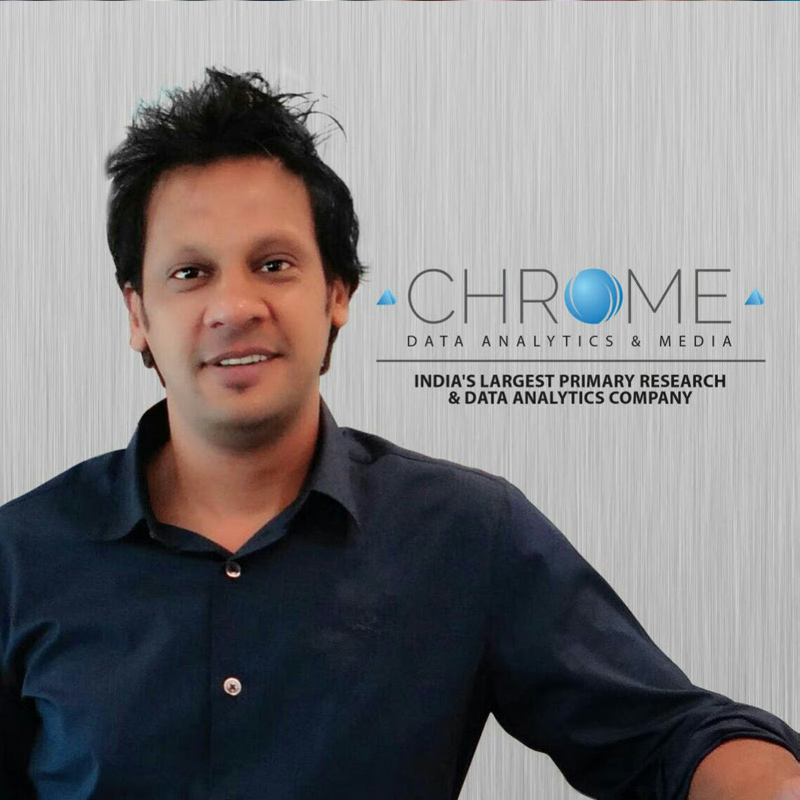
    Talking about the growth potential of OTT, Chrome DM founder and CEO Pankaj Krishna said, “The entire Internet base, which is 464 million today, qualifies for OTT’s growth potential. However, infrastructure enhancement and low cost unlimited internet plans are the key drivers that will exponentially help in reaching and further increasing the potential base itself.”

    The OTT study also outlines the consumer profiles in detail by classifying them into broad segments. The characteristics defined for each of them gives consumer insights.

  • OTT spreading in India, but 50% still prefer TV as first screen: Chrome

    OTT spreading in India, but 50% still prefer TV as first screen: Chrome

    MUMBAI: Six per cent of urban India accesses OTT services on a daily basis and 24 per cent of the population do so on weekly basis. However, what is more interesting is that more than 50 per cent of the viewers still prefer TV as the first screen for viewing, according to a latest study done by Chrome Data Analytics and Media.

    The study, titled ‘Now Streaming: OTT’, examines the rise and penetration of OTT players in India and covers key aspects of the tech’s evolution, which primarily gives broadcasters, advertisers and the industry, in general, an insight into key target markets. The report further captures profiling nuances of an OTT content consumer.

    Some of the highlights of the report are the following:

    # Exclusivity of content helps increase awareness and eyeballs for an OTT platform.

    # User experience on smart phones plays a vital role in driving penetration. Currently, smart phones account for 29 per cent penetration.

    # More than 75 per cent of the audience prefers free services with ads as they are already paying for Internet services.

    # If the above is taken into account, rest of the population is ready to pay for the services with subscription amount varying on the basis of gender, age group and geography.

    # The potential of ‘Offline’ mode in India is quite high because of inadequate infrastructure and high cost of unlimited Internet.

    # The potential of ‘Offline’ mode varies with gender, age group and geography of the consumer.

    # The same viewer behaves differently over television and OTT. Solo viewing is not the only reason for pushing viewers to an OTT platform.

    # OTT players should focus on regional content as inclination or demand for (Indian) regional content is increasing.

    Talking about the growth potential of OTT, Chrome DM founder and CEO Pankaj Krishna said, “The entire Internet base, which is 464 million today, qualifies for OTT’s growth potential. However, infrastructure enhancement and low cost unlimited internet plans are the key drivers that will exponentially help in reaching and further increasing the potential base itself.”

    The OTT study also outlines the consumer profiles in detail by classifying them into broad segments. The characteristics defined for each of them gives consumer insights.

  • Indian OTT/VOD  will not impact cable TV and DTH: Edelweiss Capital

    Indian OTT/VOD will not impact cable TV and DTH: Edelweiss Capital

    MUMBAI: Financial services firm Edelweiss Capital’s research division’s latest report on the impact of OTT on television in India is surely going to delight the cockles of executives in broadcasting companies and probably raise the hackles of those in the video on demand space. The report says that, even as consumers are bound to increase their spends and time spent on video – either on handheld devices or on their smart TVs or their laptops, this will have a negligible impact on traditional linear TV’s fortunes.

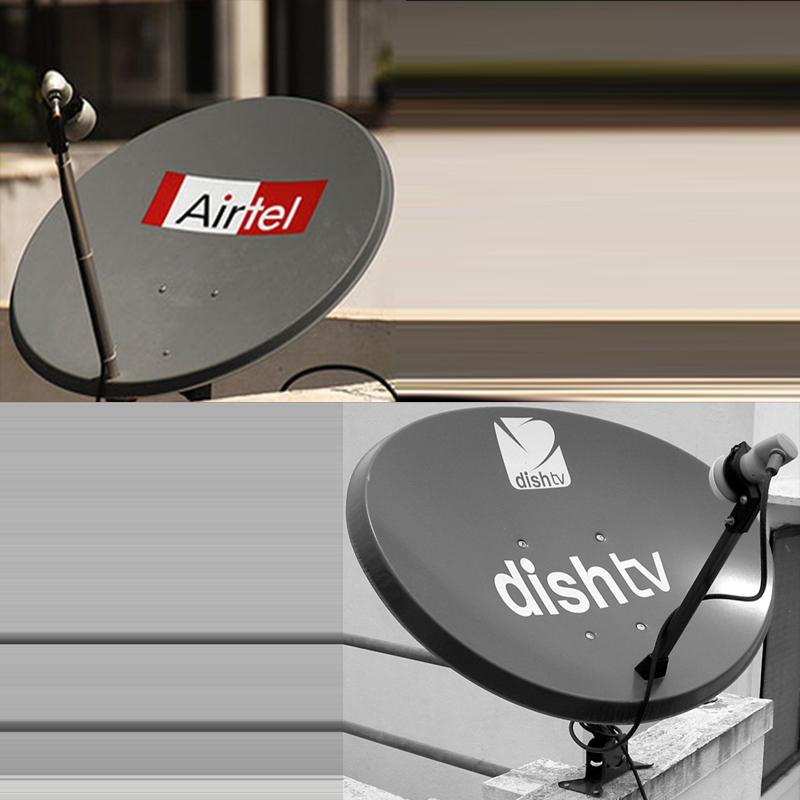
    Cord cutting or cord shaving which has been rampant in the US as cable TV and DTH viewers shift from their expensive services to cheaper VOD options or to cheaper TV packages is not something that is going to pop up in a hurry in India, says the Edelweiss report. The Indian cable TV and DTH segments are marked by low monthly rentals of Rs 300-450 as compared to the US where DTH and cable TV fees have soared.

    “The Indian OTT market is at a nascent stage and is quite like the US was seven years ago,” it points out.

    However, it is optimistic about the growth of the OTT sector. Currently, the challenge is broadband speed, the report points out, with the average home clocking 3.5 mbps, which is not enough to offer lag-free HD video streaming. It reveals that this will change with cheaper data and broadband options fueling VOD and OTT taking consumption of video content up from 3.5 hours to five hours daily.

    Consumers are going to open their wallets and spend Rs 600-700 per month from the current Rs 300-450 per month to view video content across various platforms in the next five years, the report says. “In the case of India, it is largely a single-TV home market where not everyone in the family gets to watch what they want during prime time which will aid the OTT space,” the report adds.

    But, VOD and OTT is only going to complement traditional television and not erode it is the report’s guidance.

    The brokerage house is quite clear that TV advertising is also going to hold its ground because its viewership is going to continue to be steady. And, there is going to be no loss in revenues on account of VOD/OTT and the heady growths in digital video consumption and digital advertising.

  • Indian OTT/VOD  will not impact cable TV and DTH: Edelweiss Capital

    Indian OTT/VOD will not impact cable TV and DTH: Edelweiss Capital

    MUMBAI: Financial services firm Edelweiss Capital’s research division’s latest report on the impact of OTT on television in India is surely going to delight the cockles of executives in broadcasting companies and probably raise the hackles of those in the video on demand space. The report says that, even as consumers are bound to increase their spends and time spent on video – either on handheld devices or on their smart TVs or their laptops, this will have a negligible impact on traditional linear TV’s fortunes.

    Cord cutting or cord shaving which has been rampant in the US as cable TV and DTH viewers shift from their expensive services to cheaper VOD options or to cheaper TV packages is not something that is going to pop up in a hurry in India, says the Edelweiss report. The Indian cable TV and DTH segments are marked by low monthly rentals of Rs 300-450 as compared to the US where DTH and cable TV fees have soared.

    “The Indian OTT market is at a nascent stage and is quite like the US was seven years ago,” it points out.

    However, it is optimistic about the growth of the OTT sector. Currently, the challenge is broadband speed, the report points out, with the average home clocking 3.5 mbps, which is not enough to offer lag-free HD video streaming. It reveals that this will change with cheaper data and broadband options fueling VOD and OTT taking consumption of video content up from 3.5 hours to five hours daily.

    Consumers are going to open their wallets and spend Rs 600-700 per month from the current Rs 300-450 per month to view video content across various platforms in the next five years, the report says. “In the case of India, it is largely a single-TV home market where not everyone in the family gets to watch what they want during prime time which will aid the OTT space,” the report adds.

    But, VOD and OTT is only going to complement traditional television and not erode it is the report’s guidance.

    The brokerage house is quite clear that TV advertising is also going to hold its ground because its viewership is going to continue to be steady. And, there is going to be no loss in revenues on account of VOD/OTT and the heady growths in digital video consumption and digital advertising.

  • Why Ajit Mohan allowed Amazon Prime to advertise on Hotstar

    Why Ajit Mohan allowed Amazon Prime to advertise on Hotstar

    MUMBAI: Hotstar subscribers were a little taken aback when they logged into their accounts to see Amazon Prime being promoted on the masthead during its launch week.

    Some media observers even questioned whether Novi Digital (which runs Hotstar) CEO Ajit Mohan had lost it as he was allowing competitors to use India’s leading OTT/VOD platform to gain traction. Would the Times of India allow a fit and hungry rival to advertise its launch in the newspaper?

    However, Ajit Mohan explained in an internal email to his team why he chose to allow Amazon Prime to advertise on it.

    Indiantelevision.com has got access to this internal communication. Says Ajit in the email:

    “Team:

    Many of you have asked me over the last couple of days why we chose to allow Amazon Prime Video to advertise on Hotstar earlier this week, as part of their India launch. Here is why:

    We are now an indispensable platform for any advertiser that is looking to target users on digital who actually have money to spend. And, nowhere else on digital, whether on social or on news or video, can they find audiences as engaged as they are on Hotstar. It is, therefore, not surprising that Prime Video was keen to launch their service on our platform.

    Equally, we have always assumed that when users are given a choice, they will choose a service that offers a better experience and a more diverse content range. That’s the reason why we are the leading premium video service today. And we will continue to be the leader so long as we focus on retaining our extensive advantage on the above two. And, therefore, there is no reason for us to put artificial barriers vis-à-vis potential competitors. We are not planning to win by blocking others, we will win by continuing to do what we are doing well today.

    Lastly, on Monday, the day Prime Video was on our masthead, we hit the highest watch time ever on Hotstar. Looks like we are adding value to our advertisers even as consumers are showing more and more loyalty to our service.”

    We reached out to Hotstar to get more details on how much Amazon Prime paid for the prime position but came up against a wall. However, observers estimate that it is probably the highest that it has earned for that slot. Stay tuned in for more!

  • Why Ajit Mohan allowed Amazon Prime to advertise on Hotstar

    Why Ajit Mohan allowed Amazon Prime to advertise on Hotstar

    MUMBAI: Hotstar subscribers were a little taken aback when they logged into their accounts to see Amazon Prime being promoted on the masthead during its launch week.

    Some media observers even questioned whether Novi Digital (which runs Hotstar) CEO Ajit Mohan had lost it as he was allowing competitors to use India’s leading OTT/VOD platform to gain traction. Would the Times of India allow a fit and hungry rival to advertise its launch in the newspaper?

    However, Ajit Mohan explained in an internal email to his team why he chose to allow Amazon Prime to advertise on it.

    Indiantelevision.com has got access to this internal communication. Says Ajit in the email:

    “Team:

    Many of you have asked me over the last couple of days why we chose to allow Amazon Prime Video to advertise on Hotstar earlier this week, as part of their India launch. Here is why:

    We are now an indispensable platform for any advertiser that is looking to target users on digital who actually have money to spend. And, nowhere else on digital, whether on social or on news or video, can they find audiences as engaged as they are on Hotstar. It is, therefore, not surprising that Prime Video was keen to launch their service on our platform.

    Equally, we have always assumed that when users are given a choice, they will choose a service that offers a better experience and a more diverse content range. That’s the reason why we are the leading premium video service today. And we will continue to be the leader so long as we focus on retaining our extensive advantage on the above two. And, therefore, there is no reason for us to put artificial barriers vis-à-vis potential competitors. We are not planning to win by blocking others, we will win by continuing to do what we are doing well today.

    Lastly, on Monday, the day Prime Video was on our masthead, we hit the highest watch time ever on Hotstar. Looks like we are adding value to our advertisers even as consumers are showing more and more loyalty to our service.”

    We reached out to Hotstar to get more details on how much Amazon Prime paid for the prime position but came up against a wall. However, observers estimate that it is probably the highest that it has earned for that slot. Stay tuned in for more!

  • Pritish Nandy Communications to produce series for Amazon Prime

    Pritish Nandy Communications to produce series for Amazon Prime

    MUMBAI: Last week saw the high profile launch of Amazon’s Prime Video service in Mumbai. The video on demand OTT platform announced a slew of tieups with different production houses which would be rolling out original content for it.

    Now Pritish Nandy Communications has informed the Bombay stock exchange that it is partnering with Amazon Prime Video. The company said that it would be developing a 10-12 part series for Amazon Prime titled 4 More Shots Please. The series is being penned by Meenakshi Reddy Madhavan while it has been created by Rangita Pritish Nandy. Its digital wing is headed by Ishita Pritish Nandy.

    This could come as a shot in the arm for the company which earlier this year reported a loss of Rs 70 lakh on an income of Rs 24 lakh in the quarter ended 30 September 2016.

  • Pritish Nandy Communications to produce series for Amazon Prime

    Pritish Nandy Communications to produce series for Amazon Prime

    MUMBAI: Last week saw the high profile launch of Amazon’s Prime Video service in Mumbai. The video on demand OTT platform announced a slew of tieups with different production houses which would be rolling out original content for it.

    Now Pritish Nandy Communications has informed the Bombay stock exchange that it is partnering with Amazon Prime Video. The company said that it would be developing a 10-12 part series for Amazon Prime titled 4 More Shots Please. The series is being penned by Meenakshi Reddy Madhavan while it has been created by Rangita Pritish Nandy. Its digital wing is headed by Ishita Pritish Nandy.

    This could come as a shot in the arm for the company which earlier this year reported a loss of Rs 70 lakh on an income of Rs 24 lakh in the quarter ended 30 September 2016.