Tag: OTT

  • Indian digital industry to be worth Rs 20k cr by ’20: EY report

    Indian digital industry to be worth Rs 20k cr by ’20: EY report

    MUMBAI: The Indian digital sector is anticipated to cross Rs 20,000 crore by 2020 which includes OTT and digital advertising. The industry at present is worth Rs 8, 490 crore.

    The industry includes four key areas of digital revenues — OTT and digital advertising, music OTT subscription, video OTT subscription, and gaming (in-app and paid).

    Indian digital media market offers a unique opportunity as mobile penetration TV subscription services and traditional internet is much below the world average, according to an EY report.

    The digital industry at present contributes around 14 per cent of the ad spend in India. However, by 2019, it is anticipated to be around a quarter of the total ad expenditure.

    According to the report which states that the sector is prepared to see the entrance of new internet users and the net-using population likely to reach around 746 million by 2020, a large number of consumers are expected to start using digital platforms.

    According to EY estimates, smartphone penetration is likely to be up to 59 per cent by 2020 from 31 per cent in 2015 and digital ad spend is scheduled to be Rs 185 billion by 2020.

  • Indian digital industry to be worth Rs 20k cr by ’20: EY report

    Indian digital industry to be worth Rs 20k cr by ’20: EY report

    MUMBAI: The Indian digital sector is anticipated to cross Rs 20,000 crore by 2020 which includes OTT and digital advertising. The industry at present is worth Rs 8, 490 crore.

    The industry includes four key areas of digital revenues — OTT and digital advertising, music OTT subscription, video OTT subscription, and gaming (in-app and paid).

    Indian digital media market offers a unique opportunity as mobile penetration TV subscription services and traditional internet is much below the world average, according to an EY report.

    The digital industry at present contributes around 14 per cent of the ad spend in India. However, by 2019, it is anticipated to be around a quarter of the total ad expenditure.

    According to the report which states that the sector is prepared to see the entrance of new internet users and the net-using population likely to reach around 746 million by 2020, a large number of consumers are expected to start using digital platforms.

    According to EY estimates, smartphone penetration is likely to be up to 59 per cent by 2020 from 31 per cent in 2015 and digital ad spend is scheduled to be Rs 185 billion by 2020.

  • ‘India needs 80 lakh hotspots; metros’ spectrum 1/10th of U.S’

    ‘India needs 80 lakh hotspots; metros’ spectrum 1/10th of U.S’

    MUMBAI: India needs over 80 lakhs hotspots as against the availability of about 31,000 hotspots with a view to reach the global level of one Wi-Fi hotspot penetration for every 150 people, according to ASSOCHAM-Deloitte joint study.

    There are currently over 31,000 public Wi-Fi hotspots installed in India. However, for India to match the current global average of one public Wi-Fi hotspot per 150 people, an additional 80 lakhs hotspots need to be deployed, noted the study titled ‘Digital India: Unlocking the Trillion Dollar opportunity,’ jointly conducted by ASSOCHAM and research firm Deloitte.

    The biggest challenge faced by the Digital India programme is the slow/delayed infrastructure development. Spectrum availability in Indian metros is about a tenth of the same in cities in developed countries (such as the U.S, U.K, Russia, etc). This has put a major roadblock in providing high speed data services (such as OTT and VOD).

    For Digital India to have a large scale impact on citizens across the nation, the digital divide needs to be addressed through last mile connectivity in remote rural areas. Currently, over 55,000 villages remain deprived of mobile connectivity. This is largely due to the fact that providing mobile connectivity in such locations is not commercially viable for service providers, adds the joint study.

    “For digital technology to be accessible to every citizen significant efforts are needed to customise apps and services to cater to local needs. Finding vendors who can provide such applications has become a challenge”.

    Policy framework for Digital India: Challenges in policy, such as taxation, right of way, restrictive regulations etc. are major roadblocks in realizing the vision of Digital India.

    Some of the common policy hurdles includes lack of clarity in FDI policies, for instance, have impacted the growth of e-commerce. Transport services like Uber have had frequent run-ins with the local government due to legacy policy frameworks which have not become attuned to the changing business landscape.

    Implementation of the Digital India programme has been hampered by contracting challenges such as several projects assigned to PSUs are delayed given challenges related to skills, experience and technical capabilities. Several RFPs issued by the government are not picked up by competent private sector organizations since they are not commercially feasible.

    The reports suggest that, as recently as 2014, nearly 70 per cent of Indian consumers indicated that lack of awareness was the main reason for not using internet services. Non-availability of digital services in local languages is also a major concern, noted the study.

    With the proliferation of cloud-based services like DigiLocker, data security has emerged as a major challenge. The recent data breach in August 2016, in which debit card data for more than 3.2 million subscribers was stolen highlights the importance of implementing foolproof security systems, adds the study.

    Development of digital infrastructure is a critical component of Digital India. To further enable development of digital infrastructure, the following measures should be considered as uniform policies for deploying telecom and optic fibre infrastructure.

    A uniform RoW policy across all states with a reasonable cost structure is required along with a single window mechanism for granting RoW permissions. PPP models need to be explored for sustainable development of digital infrastructure, as has been the case for civic infrastructure projects like roads and metro project. In addition, the government should make efforts to make additional spectrum available to telecom service providers for deployment of high speed data networks.

    Encourage collaboration with the private sector; Effective collaboration with the private sector is critical to the development of the digital infrastructure. Innovative engagement models that ensure commercial viability needs to developed jointly through consultation with industry bodies. This will encourage private sector participation and ensure a better response to infrastructure RFPs. In addition, startups need to be incentivised for the development of the last mile infrastructure and localized services and applications.

    Existing government infrastructure assets (e.g., post offices, government buildings, CSCs) should be further leveraged for provision of digital services. In rural and remote areas, private sector players should be incentivised to provide last mile connectivity. USOF can be effectively used to incentivise and create a viable business model. The deployment of funds so far has been erratic and not been used to effectively to fund the cost of infrastructure creation in rural areas. Currently, the fund has over Rs 451 billion in reserves which can be used to finance rural digital infrastructure growth in India through direct investment or subsidies.

    Satellite communication solutions could be used to speed up broadband access in rural and remote areas. For instance, banks can use VSAT technology to connect remote ATMs, remote branches that need instant access to customer data. It could be used as a last mile connectivity solution in rural areas which lack telecom networks. Another example could be of the navigational system NAVIC (Navigation with Indian Constellation), which can have applications in terrestrial, aerial and marine navigation, disaster management, vehicle tracking and fleet management, integration with mobile phones, precise timing, mapping and geodetic data capture, terrestrial navigation aid for hikers and travellers and visual/ voice navigation for drivers.


  • ‘India needs 80 lakh hotspots; metros’ spectrum 1/10th of U.S’

    ‘India needs 80 lakh hotspots; metros’ spectrum 1/10th of U.S’

    MUMBAI: India needs over 80 lakhs hotspots as against the availability of about 31,000 hotspots with a view to reach the global level of one Wi-Fi hotspot penetration for every 150 people, according to ASSOCHAM-Deloitte joint study.

    There are currently over 31,000 public Wi-Fi hotspots installed in India. However, for India to match the current global average of one public Wi-Fi hotspot per 150 people, an additional 80 lakhs hotspots need to be deployed, noted the study titled ‘Digital India: Unlocking the Trillion Dollar opportunity,’ jointly conducted by ASSOCHAM and research firm Deloitte.

    The biggest challenge faced by the Digital India programme is the slow/delayed infrastructure development. Spectrum availability in Indian metros is about a tenth of the same in cities in developed countries (such as the U.S, U.K, Russia, etc). This has put a major roadblock in providing high speed data services (such as OTT and VOD).

    For Digital India to have a large scale impact on citizens across the nation, the digital divide needs to be addressed through last mile connectivity in remote rural areas. Currently, over 55,000 villages remain deprived of mobile connectivity. This is largely due to the fact that providing mobile connectivity in such locations is not commercially viable for service providers, adds the joint study.

    “For digital technology to be accessible to every citizen significant efforts are needed to customise apps and services to cater to local needs. Finding vendors who can provide such applications has become a challenge”.

    Policy framework for Digital India: Challenges in policy, such as taxation, right of way, restrictive regulations etc. are major roadblocks in realizing the vision of Digital India.

    Some of the common policy hurdles includes lack of clarity in FDI policies, for instance, have impacted the growth of e-commerce. Transport services like Uber have had frequent run-ins with the local government due to legacy policy frameworks which have not become attuned to the changing business landscape.

    Implementation of the Digital India programme has been hampered by contracting challenges such as several projects assigned to PSUs are delayed given challenges related to skills, experience and technical capabilities. Several RFPs issued by the government are not picked up by competent private sector organizations since they are not commercially feasible.

    The reports suggest that, as recently as 2014, nearly 70 per cent of Indian consumers indicated that lack of awareness was the main reason for not using internet services. Non-availability of digital services in local languages is also a major concern, noted the study.

    With the proliferation of cloud-based services like DigiLocker, data security has emerged as a major challenge. The recent data breach in August 2016, in which debit card data for more than 3.2 million subscribers was stolen highlights the importance of implementing foolproof security systems, adds the study.

    Development of digital infrastructure is a critical component of Digital India. To further enable development of digital infrastructure, the following measures should be considered as uniform policies for deploying telecom and optic fibre infrastructure.

    A uniform RoW policy across all states with a reasonable cost structure is required along with a single window mechanism for granting RoW permissions. PPP models need to be explored for sustainable development of digital infrastructure, as has been the case for civic infrastructure projects like roads and metro project. In addition, the government should make efforts to make additional spectrum available to telecom service providers for deployment of high speed data networks.

    Encourage collaboration with the private sector; Effective collaboration with the private sector is critical to the development of the digital infrastructure. Innovative engagement models that ensure commercial viability needs to developed jointly through consultation with industry bodies. This will encourage private sector participation and ensure a better response to infrastructure RFPs. In addition, startups need to be incentivised for the development of the last mile infrastructure and localized services and applications.

    Existing government infrastructure assets (e.g., post offices, government buildings, CSCs) should be further leveraged for provision of digital services. In rural and remote areas, private sector players should be incentivised to provide last mile connectivity. USOF can be effectively used to incentivise and create a viable business model. The deployment of funds so far has been erratic and not been used to effectively to fund the cost of infrastructure creation in rural areas. Currently, the fund has over Rs 451 billion in reserves which can be used to finance rural digital infrastructure growth in India through direct investment or subsidies.

    Satellite communication solutions could be used to speed up broadband access in rural and remote areas. For instance, banks can use VSAT technology to connect remote ATMs, remote branches that need instant access to customer data. It could be used as a last mile connectivity solution in rural areas which lack telecom networks. Another example could be of the navigational system NAVIC (Navigation with Indian Constellation), which can have applications in terrestrial, aerial and marine navigation, disaster management, vehicle tracking and fleet management, integration with mobile phones, precise timing, mapping and geodetic data capture, terrestrial navigation aid for hikers and travellers and visual/ voice navigation for drivers.
  • Tata Sky offers top channels & services

    Tata Sky offers top channels & services

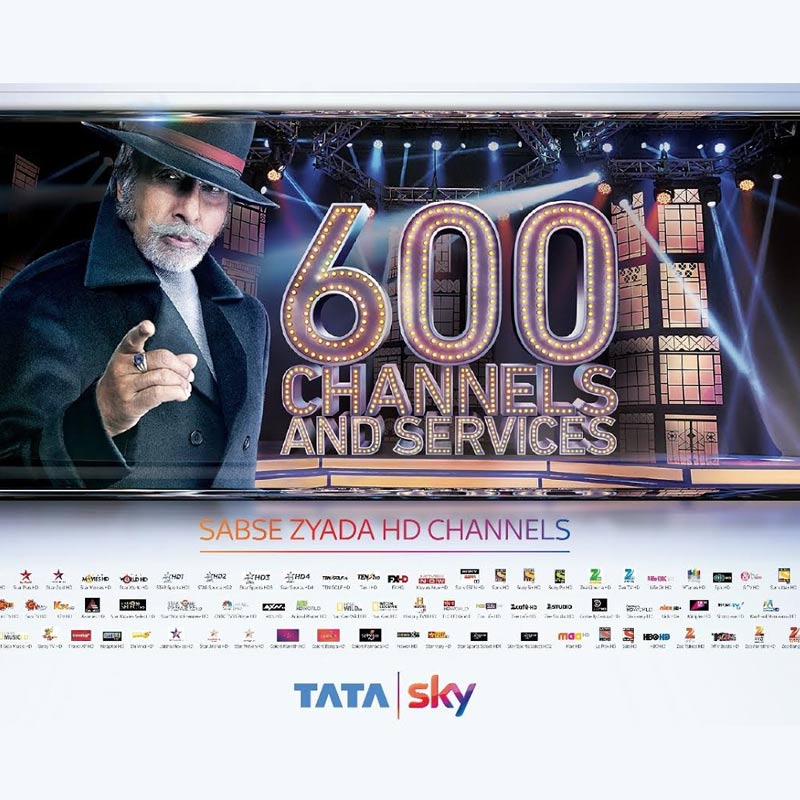
    MUMBAI: Tata Sky, one of India’s leading content distribution platform providing Pay TV and OTT services, has announced its offerings #MaxJingalala of 600 channels and services, which is the highest ever in the DTH sector.

    Tata Sky today is a market leader in HD channels along with maximum number of Tamil, Telugu, Kannada, Malayalam, Marathi, Bengali, Oriya, Punjabi and Assamese channels on offer.

    As of December 2016, Tata Sky is offering an unprecedented 76 HD (highest in the industry) and 483 SD channels. The bouquet of 31 value added services, 15 SD and HD movie platforms specials, 9 exclusive +1 channel feeds, have been a clear differentiator and a key focus area for the brand.

    “Consumers in India consider the number of channels provided by an entertainment platform to be amongst the second biggest reason to make their purchase decisions. Tata Sky is leaving no stone unturned to offer the maximum number of channels and services to its subscribers. Hence offering Sabse Zyada Manoranjan catering to every member of the family is key to the Tata Sky offering,” said Tata Sky chief communications officer Malay Dikshit.

    Throughout 2016, Tata Sky has pioneered in the Pay TV sector with offerings ranging from enabling internet browser application on the Set Top Box, introducing Kids Showcase, Bengali and Punjabi movies MAMI films, m-Visa payment option to first of its kind interactive services such as Comedy, Devotion, Music + and Gurus. The year also saw popular campaigns from Tata Sky; such as Pyaar Jingalala (13 series ad films), Das Saal Jingalala and Family Jingalala (starring Amitabh Bachchan).

    Some of the other first-ever in the sector that Tata Sky has under its hat are the launch of 4k Set Top Box in India, Karaoke service on STB, unique interactive services Classroom and Smart manager and the World’s first Daily Recharge option.

  • Tata Sky offers top channels & services

    Tata Sky offers top channels & services

    MUMBAI: Tata Sky, one of India’s leading content distribution platform providing Pay TV and OTT services, has announced its offerings #MaxJingalala of 600 channels and services, which is the highest ever in the DTH sector.

    Tata Sky today is a market leader in HD channels along with maximum number of Tamil, Telugu, Kannada, Malayalam, Marathi, Bengali, Oriya, Punjabi and Assamese channels on offer.

    As of December 2016, Tata Sky is offering an unprecedented 76 HD (highest in the industry) and 483 SD channels. The bouquet of 31 value added services, 15 SD and HD movie platforms specials, 9 exclusive +1 channel feeds, have been a clear differentiator and a key focus area for the brand.

    “Consumers in India consider the number of channels provided by an entertainment platform to be amongst the second biggest reason to make their purchase decisions. Tata Sky is leaving no stone unturned to offer the maximum number of channels and services to its subscribers. Hence offering Sabse Zyada Manoranjan catering to every member of the family is key to the Tata Sky offering,” said Tata Sky chief communications officer Malay Dikshit.

    Throughout 2016, Tata Sky has pioneered in the Pay TV sector with offerings ranging from enabling internet browser application on the Set Top Box, introducing Kids Showcase, Bengali and Punjabi movies MAMI films, m-Visa payment option to first of its kind interactive services such as Comedy, Devotion, Music + and Gurus. The year also saw popular campaigns from Tata Sky; such as Pyaar Jingalala (13 series ad films), Das Saal Jingalala and Family Jingalala (starring Amitabh Bachchan).

    Some of the other first-ever in the sector that Tata Sky has under its hat are the launch of 4k Set Top Box in India, Karaoke service on STB, unique interactive services Classroom and Smart manager and the World’s first Daily Recharge option.

  • Guest Column: Regulating video in Internet age: Pressing challenges, slow movement

    Guest Column: Regulating video in Internet age: Pressing challenges, slow movement

    Video markets in Asia, as in other parts of the world, are being swept by a wave of commercial and technological adjustment to the rise of internet-delivered video, frequently referred to as “OTT” television.  Unfortunately, in most countries adjustment of regulatory policies by governments is way behind.

    Asia’s cities, in particular, are rapidly being wired for broadband connectivity.  In developing countries like Thailand, the Philippines, Indonesia and India a broad digital divide has opened, with major urban areas enjoying improving connectivity and the countryside still reliant on more traditional modes of video delivery to consumers. 

    That divide is a problem needing attention, but in the meantime urban populations, at least, are enjoying a “sweet spot” of improving broadband and adequate disposable income to pay for services consumers want.  As a result, they have become the object of a “race to serve” on the part of video providers on every scale:

    • Traditional pay-TV operators are upgrading their VOD offerings and broadening device access to include smartphones and tablets. 

    • At the same time, new entrants are seeking to construct the right content offerings at the right price to win over consumers.  Major global providers (Netflix and Amazon Prime) entered Asia during 2016, and immediately were confronted with the need to adapt a global approach to Asian realities (including lower price points).

    • A raft of regional Asian OTT platforms have expanded their offerings (including Viu TV, Hooq, IFlix, and Catchplay), alongside a plethora of locally-oriented offerings (like Hotstar, Dittotv and Voot in India, plus Toggle, Monomaxx, Doonee, USeeTV, MyK+, etc., in Southeast Asia.)

    These market developments have significantly ratcheted up the pressure on governments, who are seeing more and more consumers migrate to lightly-regulated (or totally unregulated) online content supply, and away from the heavily-regulated traditional TV sectors.   Governments are in a quandary – most do not wish to impede their citizens’ access to global information sources, but at the same time they see evident challenges to long-established policies for content acceptability, broadcaster licensing, taxation, advertising etc.   At the extreme, “pirate” OTT services happily locate offshore, respect no rules and meet no obligations of any kind (not limited to copyright authorization), all the while reaping millions in subscription and/or advertising revenues.  Local content industries are crying foul. 
    This very unbalanced competitive landscape causes deep damage to network operators, content creators at home and abroad, and investors in local economies.  In general, it isn’t possible to subject online content supply to outdated “legacy” broadcasting rules, so alternative solutions have to be considered, including self-regulatory approaches (which can gain acceptance from legitimate OTT suppliers, if not the pirate scofflaws) and lightening the burdens on existing players.

    So far, despite various governments in our region trumpeting a desire to update regulations to suit the digital age, only piecemeal measures have been adopted.  Several “major policy reviews” in places like Australia, New Zealand and Singapore have produced thin gruel in the way of concrete adjustments.  That said, to policymakers’ credit, there are now a few examples showing how existing rules can be lightened to allow licensed video providers to give consumers more of what they expect, in the internet age.  South Korea relaxed rate regulation on cable TV operators so they could compete more fairly; Singapore eased its content censorship on VOD over pay-TV networks, to more closely match the approach used for online content suppliers; Vietnam allowed pay-TV providers to construct their own content offerings with different foreign channels instead of hewing to a single national content list.

    So a start has been made, but there remains a huge work to be done; a vast thicket of taxes, licensing rules and interventionist regulation constrains licensed pay-TV providers throughout Asia and these burdens will have to be reduced to attract investments for modernizing network infrastructure and developing local content offerings.   Even governments for whom this is not much of a current issue can see the future coming:  more and better broadband is on the way for Asian consumers, and like viewers everywhere they will be looking to view their content online.  

    Unfortunately, ingrained habits die hard.  Hong Kong’s regulators are wasting energy in a fight with major broadcasters over whether product placement in programming is too prominent; TRAI is going the wrong way – actually seeking to extend and tighten rate regulation on digital content when supplied by traditional cable operators; Thailand – eager to justify the high bids for digital terrestrial licenses – levies burdensome “must carry” rules on cable and satellite operators; Indonesia’s content regulators are pushing protectionist “made in Indonesia” rules for ads on traditional TV platforms.   (Who looks at prices charged, products touted, or ad origins for online content?)

    A better approach is reliance on self-regulatory systems wherever possible.  Many issues (e.g. product placement, ad origination, content guidelines) should be the object of clear rules negotiated by industry bodies which can be applied by the respective players to online and offline networks.   The ad industry is very accomplished at doing this; in the UK, for example, advertising self-regulation is being extended to online platforms as well as traditional ones.
    In another corner of the industry, India’s own BARC is showing well how self-regulatory bodies can wield substantial influence, as it seeks to stem malpractices in audience measurement.
    Rarely is the scope of future challenges so clear, as it is for Asian governments looking at the video industry.  It is time to move to meet those challenges in a pragmatic and realistic way.

    http://www.indiantelevision.com/sites/drupal7.indiantelevision.co.in/files/styles/large/public/jhon_0.jpg?itok=TsRQkaOVThe writer is Chief Policy officer of Hong Kong based media industry group CASBAA. The views expressed are personal and Indiantelevision.com need not necessarily subscribe to them

  • Guest Column: Regulating video in Internet age: Pressing challenges, slow movement

    Guest Column: Regulating video in Internet age: Pressing challenges, slow movement

    Video markets in Asia, as in other parts of the world, are being swept by a wave of commercial and technological adjustment to the rise of internet-delivered video, frequently referred to as “OTT” television.  Unfortunately, in most countries adjustment of regulatory policies by governments is way behind.

    Asia’s cities, in particular, are rapidly being wired for broadband connectivity.  In developing countries like Thailand, the Philippines, Indonesia and India a broad digital divide has opened, with major urban areas enjoying improving connectivity and the countryside still reliant on more traditional modes of video delivery to consumers. 

    That divide is a problem needing attention, but in the meantime urban populations, at least, are enjoying a “sweet spot” of improving broadband and adequate disposable income to pay for services consumers want.  As a result, they have become the object of a “race to serve” on the part of video providers on every scale:

    • Traditional pay-TV operators are upgrading their VOD offerings and broadening device access to include smartphones and tablets. 

    • At the same time, new entrants are seeking to construct the right content offerings at the right price to win over consumers.  Major global providers (Netflix and Amazon Prime) entered Asia during 2016, and immediately were confronted with the need to adapt a global approach to Asian realities (including lower price points).

    • A raft of regional Asian OTT platforms have expanded their offerings (including Viu TV, Hooq, IFlix, and Catchplay), alongside a plethora of locally-oriented offerings (like Hotstar, Dittotv and Voot in India, plus Toggle, Monomaxx, Doonee, USeeTV, MyK+, etc., in Southeast Asia.)

    These market developments have significantly ratcheted up the pressure on governments, who are seeing more and more consumers migrate to lightly-regulated (or totally unregulated) online content supply, and away from the heavily-regulated traditional TV sectors.   Governments are in a quandary – most do not wish to impede their citizens’ access to global information sources, but at the same time they see evident challenges to long-established policies for content acceptability, broadcaster licensing, taxation, advertising etc.   At the extreme, “pirate” OTT services happily locate offshore, respect no rules and meet no obligations of any kind (not limited to copyright authorization), all the while reaping millions in subscription and/or advertising revenues.  Local content industries are crying foul. 
    This very unbalanced competitive landscape causes deep damage to network operators, content creators at home and abroad, and investors in local economies.  In general, it isn’t possible to subject online content supply to outdated “legacy” broadcasting rules, so alternative solutions have to be considered, including self-regulatory approaches (which can gain acceptance from legitimate OTT suppliers, if not the pirate scofflaws) and lightening the burdens on existing players.

    So far, despite various governments in our region trumpeting a desire to update regulations to suit the digital age, only piecemeal measures have been adopted.  Several “major policy reviews” in places like Australia, New Zealand and Singapore have produced thin gruel in the way of concrete adjustments.  That said, to policymakers’ credit, there are now a few examples showing how existing rules can be lightened to allow licensed video providers to give consumers more of what they expect, in the internet age.  South Korea relaxed rate regulation on cable TV operators so they could compete more fairly; Singapore eased its content censorship on VOD over pay-TV networks, to more closely match the approach used for online content suppliers; Vietnam allowed pay-TV providers to construct their own content offerings with different foreign channels instead of hewing to a single national content list.

    So a start has been made, but there remains a huge work to be done; a vast thicket of taxes, licensing rules and interventionist regulation constrains licensed pay-TV providers throughout Asia and these burdens will have to be reduced to attract investments for modernizing network infrastructure and developing local content offerings.   Even governments for whom this is not much of a current issue can see the future coming:  more and better broadband is on the way for Asian consumers, and like viewers everywhere they will be looking to view their content online.  

    Unfortunately, ingrained habits die hard.  Hong Kong’s regulators are wasting energy in a fight with major broadcasters over whether product placement in programming is too prominent; TRAI is going the wrong way – actually seeking to extend and tighten rate regulation on digital content when supplied by traditional cable operators; Thailand – eager to justify the high bids for digital terrestrial licenses – levies burdensome “must carry” rules on cable and satellite operators; Indonesia’s content regulators are pushing protectionist “made in Indonesia” rules for ads on traditional TV platforms.   (Who looks at prices charged, products touted, or ad origins for online content?)

    A better approach is reliance on self-regulatory systems wherever possible.  Many issues (e.g. product placement, ad origination, content guidelines) should be the object of clear rules negotiated by industry bodies which can be applied by the respective players to online and offline networks.   The ad industry is very accomplished at doing this; in the UK, for example, advertising self-regulation is being extended to online platforms as well as traditional ones.
    In another corner of the industry, India’s own BARC is showing well how self-regulatory bodies can wield substantial influence, as it seeks to stem malpractices in audience measurement.
    Rarely is the scope of future challenges so clear, as it is for Asian governments looking at the video industry.  It is time to move to meet those challenges in a pragmatic and realistic way.

    http://www.indiantelevision.com/sites/drupal7.indiantelevision.co.in/files/styles/large/public/jhon_0.jpg?itok=TsRQkaOVThe writer is Chief Policy officer of Hong Kong based media industry group CASBAA. The views expressed are personal and Indiantelevision.com need not necessarily subscribe to them

  • Irdeto joins Frog by Wyplay community to offer integrated security solutions

    Irdeto joins Frog by Wyplay community to offer integrated security solutions

    LAS VEGAS: Irdeto, the world leader in digital platform security, today announced a new licensing agreement with Wyplay to join more than 140 companies in the Frog by Wyplay community, which offers software to operators to provide an innovative TV experience. Through the new partnership, Irdeto and Wyplay will offer an integrated advanced middleware and security solution for broadcast, hybrid and OTT deployments.

    The partnership is part of an ongoing relationship between Irdeto and Wyplay, and introduces Irdeto Rights and Irdeto Cloaked CA to the existing Frog community. Through the integrated solution for STBs, Irdeto and Wyplay will enable operators to benefit from shorter time to market for secure services and from the ability to address a wider range of manufacturers and devices, when it comes to new deployments. In addition, as a part of this partnership, Irdeto and Wyplay will join forces to offer a leading-edge turn-key Android solution. This includes Irdeto’s dynamic security solutions required to withstand security in a hostile environment and Wyplay’s Frog for Android to enable a best-in-class pay TV user experience and feature set.

    “Irdeto is committed to enabling successful new broadcast, hybrid and OTT deployments through solutions that are highly customizable, available across all platforms and support advanced use cases,” said Steeve Huin, Vice President of Strategic Partnerships, Irdeto. “Time to market for new deployments is a key consideration for operators in an increasingly competitive market and this partnership will offer an advanced middleware and security solution that will enable fast, secure deployment across networks.”

    “Frog by Wyplay is the first independent open source software solution for pay TV operators, bringing together a growing ecosystem of more than 140 companies across the entire digital TV technology value chain,” said Dominique Feral, CMO at Wyplay. “The addition of Irdeto as the latest licensee will further strengthen the solutions offered by the community which includes everyone from chipset vendors and device manufacturers to ISPs and operators.”

    Irdeto Rights and Irdeto Cloaked CA provide fully robust and effective security for both broadcast networks, and connected IP environments. The solutions offer excellent flexibility and the ability to rapidly respond to changing threats, meaning Irdeto can ensure that operators looking to roll-out new services are fully protected well into the future. The partnership with Wyplay is the newest in Irdeto’s ongoing partner program encapsulating middleware and a variety of other technology solutions.

  • Irdeto joins Frog by Wyplay community to offer integrated security solutions

    Irdeto joins Frog by Wyplay community to offer integrated security solutions

    LAS VEGAS: Irdeto, the world leader in digital platform security, today announced a new licensing agreement with Wyplay to join more than 140 companies in the Frog by Wyplay community, which offers software to operators to provide an innovative TV experience. Through the new partnership, Irdeto and Wyplay will offer an integrated advanced middleware and security solution for broadcast, hybrid and OTT deployments.

    The partnership is part of an ongoing relationship between Irdeto and Wyplay, and introduces Irdeto Rights and Irdeto Cloaked CA to the existing Frog community. Through the integrated solution for STBs, Irdeto and Wyplay will enable operators to benefit from shorter time to market for secure services and from the ability to address a wider range of manufacturers and devices, when it comes to new deployments. In addition, as a part of this partnership, Irdeto and Wyplay will join forces to offer a leading-edge turn-key Android solution. This includes Irdeto’s dynamic security solutions required to withstand security in a hostile environment and Wyplay’s Frog for Android to enable a best-in-class pay TV user experience and feature set.

    “Irdeto is committed to enabling successful new broadcast, hybrid and OTT deployments through solutions that are highly customizable, available across all platforms and support advanced use cases,” said Steeve Huin, Vice President of Strategic Partnerships, Irdeto. “Time to market for new deployments is a key consideration for operators in an increasingly competitive market and this partnership will offer an advanced middleware and security solution that will enable fast, secure deployment across networks.”

    “Frog by Wyplay is the first independent open source software solution for pay TV operators, bringing together a growing ecosystem of more than 140 companies across the entire digital TV technology value chain,” said Dominique Feral, CMO at Wyplay. “The addition of Irdeto as the latest licensee will further strengthen the solutions offered by the community which includes everyone from chipset vendors and device manufacturers to ISPs and operators.”

    Irdeto Rights and Irdeto Cloaked CA provide fully robust and effective security for both broadcast networks, and connected IP environments. The solutions offer excellent flexibility and the ability to rapidly respond to changing threats, meaning Irdeto can ensure that operators looking to roll-out new services are fully protected well into the future. The partnership with Wyplay is the newest in Irdeto’s ongoing partner program encapsulating middleware and a variety of other technology solutions.