Tag: OTT

  • MatrixCloud OTT enables IPTV operators roll out OTT services in 60 days

    MatrixCloud OTT enables IPTV operators roll out OTT services in 60 days

    MUMBAI: MatrixStream has introduced the MatrixCloud OTT solution for IPTV operators enabling end-to-end IPTV and OTT platform rollout in less than 60 days. Operators can utilize MatrixCloud OTT to launch skinny channel bundles and subscription VOD to complement existing IPTV offerings or to release a standalone video package to bundle with high-margin broadband and wireless services.

    MatrixCloud OTT dramatically reduces time-to-market, even for the largest IPTV operators, enabling service providers to deploy next generation TV services as quickly as possible to increase sales from existing customers and to protect user-base from competitors choosing other IPTV and OTT platforms.

    In-house OTT solution rollout can add up to tens of millions of dollars or more and thousands of hours of integration across multiple hardware and software providers. The MatrixCloud OTT platform and SaaS- based pricing is specifically designed avoid CAPEX and OPEX nightmares through a one-vendor, end-to- end IPTV and OTT solution.

    Tier one operators with millions of customers on many continents are already capitalizing upon Matrixstream’s years of successful IPTV and OTT solution experience to increase average revenue user (ARPU) MatrixStream and to overcome slower-moving competitors.

    In 2017 alone, Matrixstream is launching and expanding services with many of the world’s top multichannel video programming distributors (MVPDs). Take advantage of our easy, incredibly-customizable ITPV and OTT solution to generate far higher profits from existing users and reach new users with next generation TV offerings.

    The MatrixCloud OTT platform for IPTV and OTT operators includes the following:

    1. Operator-branded apps and clients for Android and iOS mobile phones and tablets, PCs, Macs, Apple TV boxes, Android TV boxes, Roku, Chromecast and Amazon Fire.

    2. Support for up 100 live linear channels in each 42u rack with full MatrixCloud DVR support.

    3. SaaS capacity-based pricing that delivering savings of up to 80% over typical per-user pricing and hardware service agreements.

    4. Highly-customizable, targeted advertising across all user devices.

    5. Cloud-based operator BSS and OSS with integrated voucher payment, multiple currencies and third-party mobile money support.

    6. End-to-end MatrixStream OTT IPTV solution can be deployed live in less than 60 days.

  • MatrixCloud OTT enables IPTV operators roll out OTT services in 60 days

    MatrixCloud OTT enables IPTV operators roll out OTT services in 60 days

    MUMBAI: MatrixStream has introduced the MatrixCloud OTT solution for IPTV operators enabling end-to-end IPTV and OTT platform rollout in less than 60 days. Operators can utilize MatrixCloud OTT to launch skinny channel bundles and subscription VOD to complement existing IPTV offerings or to release a standalone video package to bundle with high-margin broadband and wireless services.

    MatrixCloud OTT dramatically reduces time-to-market, even for the largest IPTV operators, enabling service providers to deploy next generation TV services as quickly as possible to increase sales from existing customers and to protect user-base from competitors choosing other IPTV and OTT platforms.

    In-house OTT solution rollout can add up to tens of millions of dollars or more and thousands of hours of integration across multiple hardware and software providers. The MatrixCloud OTT platform and SaaS- based pricing is specifically designed avoid CAPEX and OPEX nightmares through a one-vendor, end-to- end IPTV and OTT solution.

    Tier one operators with millions of customers on many continents are already capitalizing upon Matrixstream’s years of successful IPTV and OTT solution experience to increase average revenue user (ARPU) MatrixStream and to overcome slower-moving competitors.

    In 2017 alone, Matrixstream is launching and expanding services with many of the world’s top multichannel video programming distributors (MVPDs). Take advantage of our easy, incredibly-customizable ITPV and OTT solution to generate far higher profits from existing users and reach new users with next generation TV offerings.

    The MatrixCloud OTT platform for IPTV and OTT operators includes the following:

    1. Operator-branded apps and clients for Android and iOS mobile phones and tablets, PCs, Macs, Apple TV boxes, Android TV boxes, Roku, Chromecast and Amazon Fire.

    2. Support for up 100 live linear channels in each 42u rack with full MatrixCloud DVR support.

    3. SaaS capacity-based pricing that delivering savings of up to 80% over typical per-user pricing and hardware service agreements.

    4. Highly-customizable, targeted advertising across all user devices.

    5. Cloud-based operator BSS and OSS with integrated voucher payment, multiple currencies and third-party mobile money support.

    6. End-to-end MatrixStream OTT IPTV solution can be deployed live in less than 60 days.
  • Budget ’17: OTT players hoping for tax rationalisation to boost growth

    Budget ’17: OTT players hoping for tax rationalisation to boost growth

    MUMBAI: 2016 was indeed a critical year for the over-the-top (OTT) services in India. In an emerging market like India, the potential of more content consumption is certainly a reality. Increasing availability of smart phones, internet penetration, affordable data rates, 4G rollout, availability of good quality content and new entrants have led the OTT industry to bloom in 2016 and the trend is likely to continue. But the segment players are also looking up to the government for a clearer economic roadmap after the shockwaves of demonestisation.

    “The entertainment industry has always been on the forefront of economic contribution. Though it is expected that GST rollout (as and when it happens later this year) would bring about more uniformity in the system of paying multiple taxes, it is also expected that finance minister Arun Jaitley will announce reforms, which will help control piracy issues in the country and help boost video on demand market in India,” said Muvizz.com COO and co-founder Abhayanand Singh.

    Zee’s business head of digital for India Archana Anand opined that 2016 will go down as the year in which the wheels were set in motion for the growth of OTT. According to her, OTT platforms likely to become the go-to source of entertainment in the coming years, particularly for the millennials, who do not have easy access to a TV set and for whom it’s really about the content and not the size of the screen. But for that economic incentives are also needed from the government.

    Echoing similar views, Web Talkies chairman and managing director Virendra Shahaney asserted the government needs to beef up digital infrastructure like Internet and faster implementation of free wi-fi projects. “A relaxed taxation policy for start-ups would be welcome and tax breaks for start-ups should increase to five years with a significant improvement in ease of doing business,” he added.

    Pointing out that India downloaded six billion apps in 2016 making service usage the highest globally, Dekkho co-founder Tanay Desai said ,”The BHIM app has been downloaded 10 million times already indicating a healthy potential payment pipeline. GST will aid online payments for users as well as brands by reducing tax barriers across states in India and the industry looks forward to additional (tax) relaxation measures in the upcoming Budget.”

    Also Read:

    Budget ’17: Media segments seek succour, digital direction from govt

  • Budget ’17: OTT players hoping for tax rationalisation to boost growth

    Budget ’17: OTT players hoping for tax rationalisation to boost growth

    MUMBAI: 2016 was indeed a critical year for the over-the-top (OTT) services in India. In an emerging market like India, the potential of more content consumption is certainly a reality. Increasing availability of smart phones, internet penetration, affordable data rates, 4G rollout, availability of good quality content and new entrants have led the OTT industry to bloom in 2016 and the trend is likely to continue. But the segment players are also looking up to the government for a clearer economic roadmap after the shockwaves of demonestisation.

    “The entertainment industry has always been on the forefront of economic contribution. Though it is expected that GST rollout (as and when it happens later this year) would bring about more uniformity in the system of paying multiple taxes, it is also expected that finance minister Arun Jaitley will announce reforms, which will help control piracy issues in the country and help boost video on demand market in India,” said Muvizz.com COO and co-founder Abhayanand Singh.

    Zee’s business head of digital for India Archana Anand opined that 2016 will go down as the year in which the wheels were set in motion for the growth of OTT. According to her, OTT platforms likely to become the go-to source of entertainment in the coming years, particularly for the millennials, who do not have easy access to a TV set and for whom it’s really about the content and not the size of the screen. But for that economic incentives are also needed from the government.

    Echoing similar views, Web Talkies chairman and managing director Virendra Shahaney asserted the government needs to beef up digital infrastructure like Internet and faster implementation of free wi-fi projects. “A relaxed taxation policy for start-ups would be welcome and tax breaks for start-ups should increase to five years with a significant improvement in ease of doing business,” he added.

    Pointing out that India downloaded six billion apps in 2016 making service usage the highest globally, Dekkho co-founder Tanay Desai said ,”The BHIM app has been downloaded 10 million times already indicating a healthy potential payment pipeline. GST will aid online payments for users as well as brands by reducing tax barriers across states in India and the industry looks forward to additional (tax) relaxation measures in the upcoming Budget.”

    Also Read:

    Budget ’17: Media segments seek succour, digital direction from govt

  • 70 companies, 1200 traders attend Global Content Bazar

    70 companies, 1200 traders attend Global Content Bazar

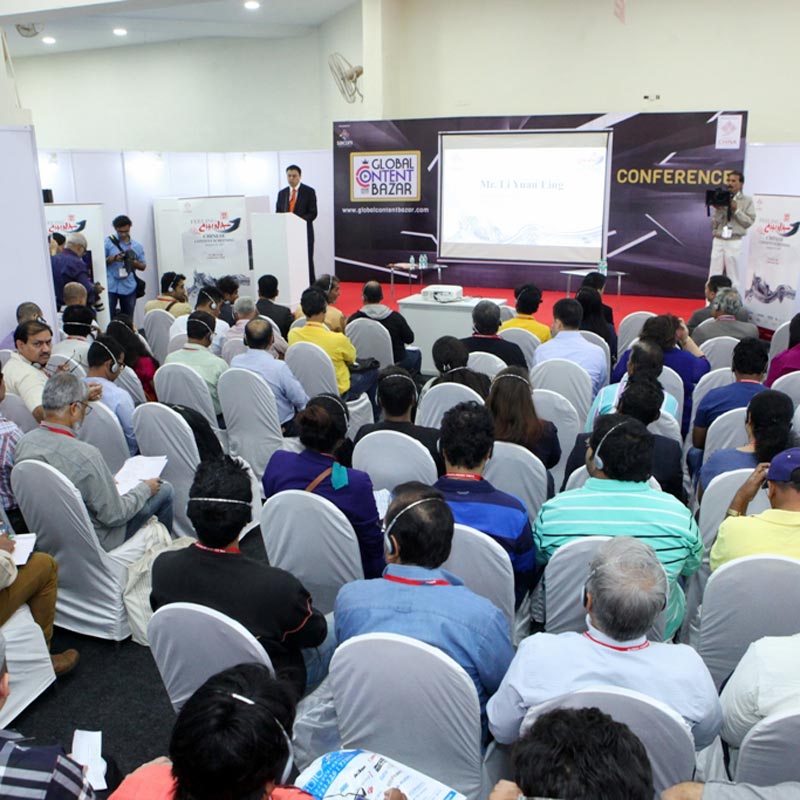
    MUMBAI: Around 70 companies and 1200 trade visitors from Asia, Europe and the Middle-East participated in Global Content Bazar 2018 which concluded here recently.

    High-quality trade and other visitors witnessed echoed a sentiment of highly beneficial exchanges with exhibitors and buyers at the bazaar which delivered on its assurance of showcasing the latest in content. India’s first-ever content market — Global Content Bazar 2017 — concluded in Mumbai recently. The show witnessed many eager visitors who echoed a sentiment of highly beneficial interactions with exhibitors, buyers, sellers and participants.

    As a professional trade show focused on content that powers India’s vast entertainment and infotainment industry, the content bazaar delivered on its promise of showcasing newest happenings in content for film, television, animation, docs & shorts, virtual reality, OTT-IPTV-VOD, 3D, music, radio, interactive gaming, mobile and more.

    The ‘Content Monetising Avenues Conference’ held on the show’s first day proved to be the highlight of the three-day event; with over 20 speakers presenting papers on the latest trends in the content industry and related subjects.

    Leading content providers, buyers and sellers such as Shanghai WingsMedia from China (with 10 prominent Chinese companies), Zee TV, Viacom 18, Sony Pictures Network, Doordarshan, DTV Turkey, ATV Turkey, Fight Globe, NH Studioz, Ultra Media & Entertainment, Creative Eye Ltd., WebTVAsia, Pocket Films, Green Gold Animation, Global One Enterprise, Qube Cinema and Fashion TV among others made their presence felt at the show and in the Indian content industry.

    Apart from India, companies from China, Malaysia, Thailand, Singapore, the Netherlands, the UAE, Turkey, France, Austria and Russia participated in the show this year.

    The Global Content Bazar 2018 is scheduled to be held at the World Trade Centre in mid-January.

  • 70 companies, 1200 traders attend Global Content Bazar

    70 companies, 1200 traders attend Global Content Bazar

    MUMBAI: Around 70 companies and 1200 trade visitors from Asia, Europe and the Middle-East participated in Global Content Bazar 2018 which concluded here recently.

    High-quality trade and other visitors witnessed echoed a sentiment of highly beneficial exchanges with exhibitors and buyers at the bazaar which delivered on its assurance of showcasing the latest in content. India’s first-ever content market — Global Content Bazar 2017 — concluded in Mumbai recently. The show witnessed many eager visitors who echoed a sentiment of highly beneficial interactions with exhibitors, buyers, sellers and participants.

    As a professional trade show focused on content that powers India’s vast entertainment and infotainment industry, the content bazaar delivered on its promise of showcasing newest happenings in content for film, television, animation, docs & shorts, virtual reality, OTT-IPTV-VOD, 3D, music, radio, interactive gaming, mobile and more.

    The ‘Content Monetising Avenues Conference’ held on the show’s first day proved to be the highlight of the three-day event; with over 20 speakers presenting papers on the latest trends in the content industry and related subjects.

    Leading content providers, buyers and sellers such as Shanghai WingsMedia from China (with 10 prominent Chinese companies), Zee TV, Viacom 18, Sony Pictures Network, Doordarshan, DTV Turkey, ATV Turkey, Fight Globe, NH Studioz, Ultra Media & Entertainment, Creative Eye Ltd., WebTVAsia, Pocket Films, Green Gold Animation, Global One Enterprise, Qube Cinema and Fashion TV among others made their presence felt at the show and in the Indian content industry.

    Apart from India, companies from China, Malaysia, Thailand, Singapore, the Netherlands, the UAE, Turkey, France, Austria and Russia participated in the show this year.

    The Global Content Bazar 2018 is scheduled to be held at the World Trade Centre in mid-January.

  • Netflix facilitates downloads on Android memory cards

    Netflix facilitates downloads on Android memory cards

    MUMBAI: OTT and VOD services have been adding a variety of content and myriad features to attract more and more consumers to their service in India. India is one of the fastest growing smartphone-owning countries as hinted by Ericsson recently.

    Launched last year in India, Netflix, the entertainment streaming company, recently added the ability to download its dynamic entertainment content on memory card or expandable storage on Android operating system.

    Users can now download content on Android smartphones and tablets. Earlier, the company had opened up the ‘watch offline’ feature as a response to the growing business race from players such as Amazon Prime and Hotstar.

    The feature however is restricted to inbuilt storage. Players such as YouTube also have a similar limitation. But, the new feather in its cap could Netflix hike its user base in densely populated nations such as India.

    But, the new feature does not surprise Nougat or Android Marshmallow users as they could already avoid limitations by using the adoptable storage option.

    However, for those who can’t do this, they make use of Netflix app and move to the option of ‘download location’ and select from the storage options — SD card or internal storage.

    Also Read:

    Netflix confirms seven million subs; picks up Amazon gauntlet

    OTT/VOD disrupted traditional ‘appointment viewing’ in India: Spuul’s Subin Subaiah

  • Netflix facilitates downloads on Android memory cards

    Netflix facilitates downloads on Android memory cards

    MUMBAI: OTT and VOD services have been adding a variety of content and myriad features to attract more and more consumers to their service in India. India is one of the fastest growing smartphone-owning countries as hinted by Ericsson recently.

    Launched last year in India, Netflix, the entertainment streaming company, recently added the ability to download its dynamic entertainment content on memory card or expandable storage on Android operating system.

    Users can now download content on Android smartphones and tablets. Earlier, the company had opened up the ‘watch offline’ feature as a response to the growing business race from players such as Amazon Prime and Hotstar.

    The feature however is restricted to inbuilt storage. Players such as YouTube also have a similar limitation. But, the new feather in its cap could Netflix hike its user base in densely populated nations such as India.

    But, the new feature does not surprise Nougat or Android Marshmallow users as they could already avoid limitations by using the adoptable storage option.

    However, for those who can’t do this, they make use of Netflix app and move to the option of ‘download location’ and select from the storage options — SD card or internal storage.

    Also Read:

    Netflix confirms seven million subs; picks up Amazon gauntlet

    OTT/VOD disrupted traditional ‘appointment viewing’ in India: Spuul’s Subin Subaiah

  • TRAI regulations threaten investment, warns CASBAA

    TRAI regulations threaten investment, warns CASBAA

    MUMBAI: CASBAA, the Association of Asia’s pay-TV Industry, today warmly applauded the judicial review now under way in India of proposed extension and tightening of India’s pay-TV rate regulations.

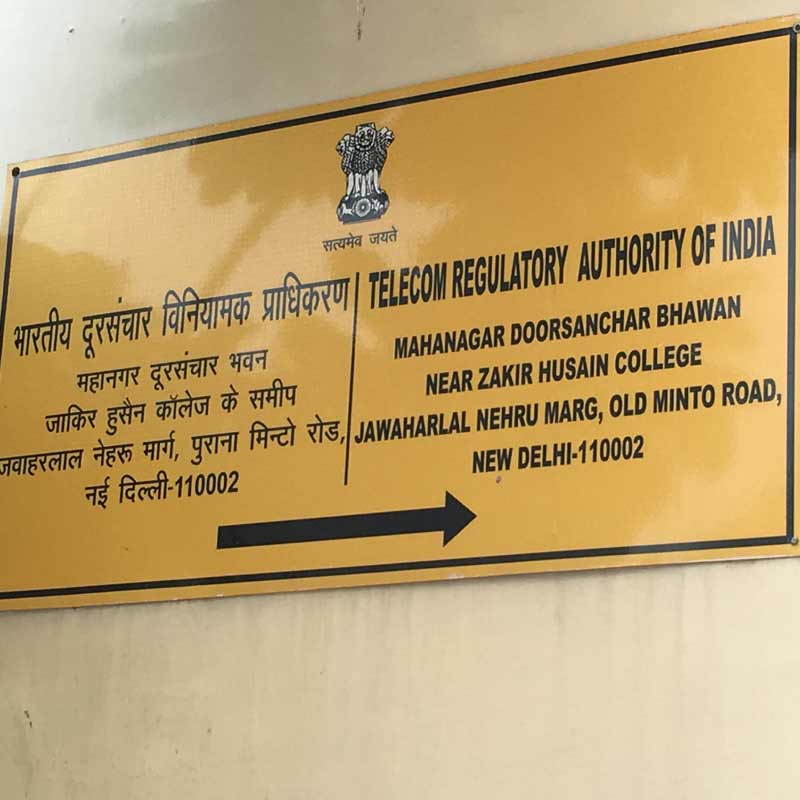
    The Madras High Court is currently reviewing the clash between the rights of copyright owners around the world and new tariff regulations proposed by the Telecom Regulatory Authority of India (TRAI). The court has ordered the TRAI not to give effect to the rules until the underlying issues are considered, with a hearing now set for January 19th.

    CASBAA CEO Christopher Slaughter observed that the new rules would be a major negative factor for the business environment in the $17 billion Indian media industry. “India’s pay-TV regulations have long been among the strictest in the world”, he said. “The proposed new rules are highly intrusive and would make the environment much worse. Such a heavy-handed regulatory regime will inevitably hit foreign companies’ interest in investing in India.”

    Indian law gives copyright owners the ability to price and sell their creative works. In filing the Madras suit, the petitioner broadcasting organizations denounced the TRAI regulation as contrary to these principles as enshrined in the law, and in international treaties to which India is a signatory. (The TRAI rules would establish a controlled price regime by mandating a la carte channel supply, setting the ceiling, by specific genres, that broadcasting organizations can charge to multichannel program distributors, limiting discounts, prescribing carriage fees, and stipulating a compulsory distribution fee to be paid by Broadcasting Organizations to multichannel program distributors.

    CASBAA has long expressed concern about India’s previous rate regulations, which included a cable retail price freeze imposed in 2004 “until the market became more competitive” and never revoked.

    “Today, India’s television content market is among the most competitive in the world,” said Slaughter. “Modern cable MSOs, six different DTH platforms and now online OTT television are all giving Indian consumers a wide range of viewing options.”

    CASBAA’s Chief Policy Officer John Medeiros observed that “As convergence and greater competition sweep the TV economy, other governments around the world are eliminating rate controls, to give more scope to competition among traditional and new online providers. In the last few years, Korea and Taiwan have both undertaken to liberalize their pay-TV price controls, leaving India as the last market economy in Asia with a hyper-regulatory regime. The proposed new rules would take India in the opposite direction from the rest of the world.

  • TRAI regulations threaten investment, warns CASBAA

    TRAI regulations threaten investment, warns CASBAA

    MUMBAI: CASBAA, the Association of Asia’s pay-TV Industry, today warmly applauded the judicial review now under way in India of proposed extension and tightening of India’s pay-TV rate regulations.

    The Madras High Court is currently reviewing the clash between the rights of copyright owners around the world and new tariff regulations proposed by the Telecom Regulatory Authority of India (TRAI). The court has ordered the TRAI not to give effect to the rules until the underlying issues are considered, with a hearing now set for January 19th.

    CASBAA CEO Christopher Slaughter observed that the new rules would be a major negative factor for the business environment in the $17 billion Indian media industry. “India’s pay-TV regulations have long been among the strictest in the world”, he said. “The proposed new rules are highly intrusive and would make the environment much worse. Such a heavy-handed regulatory regime will inevitably hit foreign companies’ interest in investing in India.”

    Indian law gives copyright owners the ability to price and sell their creative works. In filing the Madras suit, the petitioner broadcasting organizations denounced the TRAI regulation as contrary to these principles as enshrined in the law, and in international treaties to which India is a signatory. (The TRAI rules would establish a controlled price regime by mandating a la carte channel supply, setting the ceiling, by specific genres, that broadcasting organizations can charge to multichannel program distributors, limiting discounts, prescribing carriage fees, and stipulating a compulsory distribution fee to be paid by Broadcasting Organizations to multichannel program distributors.

    CASBAA has long expressed concern about India’s previous rate regulations, which included a cable retail price freeze imposed in 2004 “until the market became more competitive” and never revoked.

    “Today, India’s television content market is among the most competitive in the world,” said Slaughter. “Modern cable MSOs, six different DTH platforms and now online OTT television are all giving Indian consumers a wide range of viewing options.”

    CASBAA’s Chief Policy Officer John Medeiros observed that “As convergence and greater competition sweep the TV economy, other governments around the world are eliminating rate controls, to give more scope to competition among traditional and new online providers. In the last few years, Korea and Taiwan have both undertaken to liberalize their pay-TV price controls, leaving India as the last market economy in Asia with a hyper-regulatory regime. The proposed new rules would take India in the opposite direction from the rest of the world.