Tag: OTT

  • Guest column: Net neutrality – ensuring an open internet

    Guest column: Net neutrality – ensuring an open internet

    At a time when the US Federal Communications Commission is to vote on a rollback on the Net Neutrality Rules notified during the Obama administration, the Telecom Regulatory Authority of India (TRAI) has published its recommendations on the subject. Making headlines during the days of Zero Rating and products of the kind, and coming after nearly three years of setting up of a committee by the TRAI to make recommendations in this regard (January 2015), the document attempts to balance the interest of the general public by including ‘internet access services’ within the regulation of net neutrality and excluding “specialised services” that are “optimised for specific content, protocols or user equipment where optimisation is necessary in order to meet specific quality requirements.’’

    Net neutrality, in theory, is a laudable concept. It also finds mention in the UL, VNO and ISP licensing terms notified by the Department of Telecom. The specific mention is absent from the UASL and CMTS licenses. However, this principle can nevertheless be read into the obligation to provide non-discriminatory access even by the telecom service providers. In this background, what is to be considered is whether net neutrality, with its basic principle already enshrined in the law and some contours such as specialised services yet to be clearly defined, is even required to be separately regulated.

    First, net neutrality is, as stated in the recommendations, primarily to address and ensure “public internet access”. Importantly, what has not been considered is how much of this “public” of the country actually has access to broadband. The answer would be in the vicinity of 15 per cent. Of this “preferred public population,” many would be multiple connection/access holders and, hence, the effective penetration of broadband would be less than 12 per cent. With this background, the debate, rather than focusing on net neutrality, should focus on access to broadband for all. It is only when such a objective is achieved that the issue of whether or not we have a neutral internet would really need to be studied.

    Second, OTT, which is one of the aspects central to the debate on net neutrality, has been currently left out for separate consideration. It is unclear, therefore, as to what position is taken vis-à-vis this very important piece of the net neutrality puzzle.

    Third, it is strange that the document should pluck out internet of things, a concept and technology so nascent in India that even its mention in this document makes it conspicuous by its presence. Why is there a need for identification of such detail of a technology still under development, not only in India but in most parts of the world?

    Having said the above, all the right words have been used in the recommendations–non-discriminatory access, non-provision of fast lanes, etc. All or most of these recommendations are great in theory. However, and especially with the carving out for specialised services, the workability of these recommendations, if they are to be accepted and converted into regulations, is suspect. We need to have enough cars (population access to broadband) before we can deride the provision of fast lanes.

    (Abhishek Malhotra is a partner at Bharucha & Partners)
  • Indian OTTs to be in focus on day 2 of ATF

    Indian OTTs to be in focus on day 2 of ATF

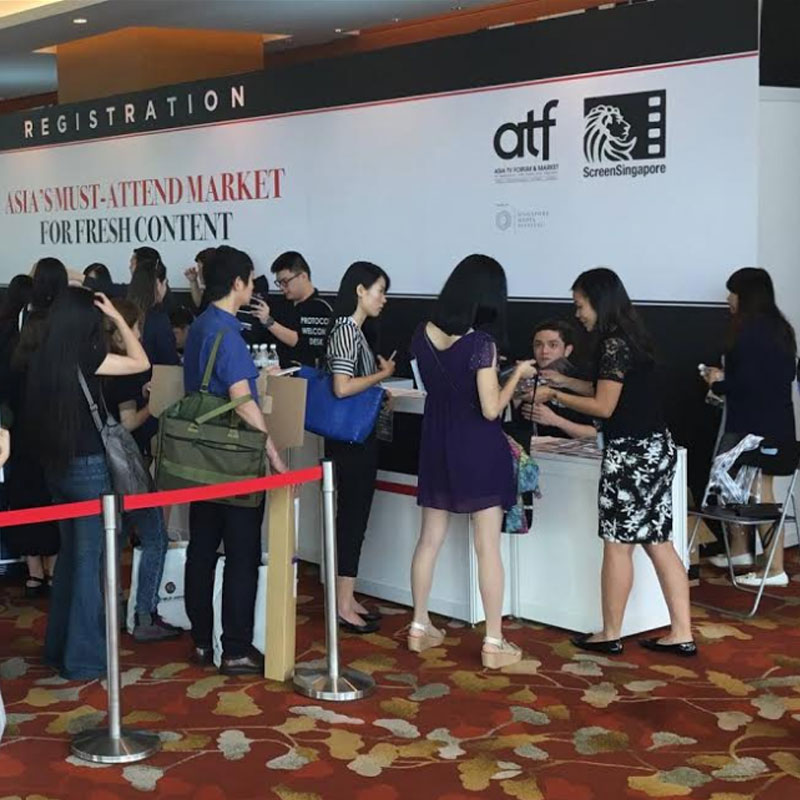
    MUMBAI: Singapore-based Reed Exhibitions’ Asia TV Forum (ATF) will commence today with 60 countries taking part. The first day will see sessions based on content, advertising and the evolution of storytelling and digital traditions and innovation Ninety thought leaders will deliver fresh insights in over 24 sessions from 28 November to 1 December 2017, discussing present-day issues such as big data, movement in the over-the-top (OTT) scene, new monetisation strategies, unscripted entertainment formats and kids’ content.

    The Indian sessions will start from the second day. The first one will be ‘Bollywood & Beyond: Fresh content from India’. The speakers present for the session will be Epic TV network head content syndication Adita Jain, Greengold Animation VP content sales Bharath Laxmipati, One Life Studios founder Siddharth Kumar Tewary, Rajshri Entertainment MD Neha Barjatya, and Toonz Animation India senior manager- content syndication and distribution Viju Thomas. The session will be moderated by Indiantelevision.com group founder, CEO and editor-in-chief Anil Wanvari.

    Wanvari has been working on developing opportunities for India’s animation and live action sector – whether for TV or OTT – over the past three years at ATF as its representative for India, Pakistan, Sri Lanka and Bangladesh.

    India’s OTT ecosystem has been exploding with newer apps popping up ever so quickly. At last count, close to 42 OTT services were operational in India. The second Indian session will be about the needs and wants of Indian OTT buyers. The panellists for the discussion will be Pittie Group/Epic TV CEO and MD Aditya Pittie, Viacom18 Digital ventures COO Gaurav Gandhi, producer, entrepreneur and storyteller Sidharth Jain, Spuul founder and global CEO Subin Subaiah, and GoQuest Media Ventures MD Vivek Lath. This panel discussion will also be moderated by Wanvari.

    ATF will also focus on virtual reality (VR) sessions, which will delve into the discourse that takes place among ecosystem partners, from content concept, creation and circulation. Real Vision VR filmmaker, speaker and published author Clyde Desouza will moderate the panel. Desouza is working with Times Now for its VR immersive journalism.

    On day three, listen to GreenGold Animation founder and CEO Rajiv Chilaka talk about how to provide 360-degree experience to kids. Chilaka has created and built one of the India’s largest animation brands Chhota Bheem, which currently has a viewership of over 40 million across platforms. He will also talk about nurturing localised IPs and stories and priming them to go global.

    The major Indian satellite TV networks Sony Pictures Networks India, Star India, Indiacast-Viacom18, and Zee Telefilms have their syndication and licensing teams exhibiting at the Marina Bay Sands venue. Other noteworthy exhibitors include: format and content syndication company GoQuest, Swastik Productions’ One Life Studios that is hawking its mega-budget Porus and homegrown formats, One Take Media, which is selling its kids animation and cookery shows, film and digital content creator and distributor Rajshri Entertainment, infotainment channel Epic TV, and kids’ content pioneer GreenGold.

  • ATF 2017 attracts Indian  content studios, both big and small

    ATF 2017 attracts Indian content studios, both big and small

    MUMBAI: Singapore-based Reed Exhibitions’ Asia TV Forum (ATF) is round the corner and the buzz around the event only seems to be ramping up. This year, the forum will see around 60 countries from all over the globe. From 28 November to 1 December 2017, more than 90 thought leaders will deliver fresh insights at over 24 ATF conference sessions, discussing present-day issues such as big data, movement in the over-the-top (OTT) scene, new monetisation strategies, unscripted entertainment formats and kids content.

    Indiantelevision.com founder Anil Wanvari has been working on developing opportunities for India’s animation and live action sector – whether for TV or OTT – over the past three years at ATF as its representative for the regions of India, Pakistan, Sri Lanka and Bangladesh.

    “We have seen the presence from south Asia grow from a small 20-30 to around 140 this year since I was given the task of working closely with the region’s content creators, buyers and distributors,” says Wanvari. “I and the team which works with me have been happy to help catalyse their presence on Asian and global stages. ATF has a strong presence of smaller buyers, producers, distributors from the region apart from the big name players from Europe and the US. It has become a must visit event for the content executive.”

    The major Indian satellite TV networks Sony Pictures Networks India, Star India, Indiacast-Viacom18, and Zee Telefilms have their syndication and licensing teams exhibiting in the Marina Bay Sands venue. Other noteworthy exhibitors include: format and content syndication company GoQuest, Swastik Productions’ One Life Studios which is hawking its mega budget Porus and homegrown formats, One Take Media which is selling its kids animation and cookery shows, film and digital content creator and distributor Rajshri Entertainment, infotainment channel EPIC TV, kids content pioneer Green Gold.

    “This is probably the highest exhibitor strength India has managed at ATF ever,” says Wanvari. “The country’s content selling industry has come a long way despite the oft repeated statement that our TV shows are not good enough to cut the international grade.”

    Among the initiatives that Wanvari and Reed Exhibitions have supported is the building up of delegations from India and south Asia. The first of these has been the one which has been growing under the umbrella of the Media & Entertainment Association of India (MEAI). The association’s secretary Ankur Bhasin has cobbled together a delegation of 11 small and medium enterprises (SMEs) consisting of 13 delegates in the content creation and distribution spaces.

    Says Bhasin, “Fueled by improved connectivity and mobile explosion, Asia-Pacific is experiencing the fastest growth worldwide in terms of growth of time spent consuming media online – about 6.7 per cent consistently year on year compared to global average of 2.9 per cent. Although the average consumption of three plus hours per day for the Indian audience and about six hours per day for Chinese viewers is still relatively low compared to western countries, with over 60 per cent of the world population concentrated here, that is a substantial change on how media is being consumed. It is no surprise that this explosion is resulting in a growing demand for content in the APAC market.”

    Wanvari points out there are many commonalities in culture that India shares with east Asian countries like Singapore, Malaysia, Indonesia, Vietnam, Japan, south Korea, Sri Lanka, Pakistan and Bangladesh. “We all share Asian sensibilities and values,” he says. “Hence, we can relate to each other’s content.”

    Bhasin believes ATF is a very important market to target Asian buyers as well as to look for co-production opportunities. “Increasingly, there has been demand from MEAI members to focus on markets in the east and this has resulted in a growing delegation to ATF from MEAI. MEAI hopes this will materialize into a pavilion next year to give a fixed presence to the delegation being put together by the association with the support of Anil and his team,” Bhasin adds.

  • Falcon Media to help MSOs gain ground against OTTs

    Falcon Media to help MSOs gain ground against OTTs

    MUMBAI: The dynamics of the over-the-top (OTT) segment in India are about to change. Even as OTT content is replacing people’s desire for TV, Falcon Media House (Falcon) and Media Nucleus are working towards ensuring that cable channels effectively compete with OTT players.

    Falcon is looking to join hands with multi-system operators (MSOs) in the country to enable cable channels to stream on a new OTT service. The idea of this collaboration is to empower MSOs to gain a stronghold into the current digital market.

    Media Nucleus, with which Falcon has partnered in India, has enabled more than 5 million subscribers in India on the digitisation front working with top MSOs. It plans to extend the value proposition to existing Indian clients in the portfolio by offering a buffer free, seamless video experience using solutions from Falcon’s recent acquisition, Quiptel Technology (Quiptel). Media Nucleus will handle the market while Falcon will provide the live mega platform for cable operators.

    Falcon CEO Gert Rieder and Quiptel CEO Sandip Sarda were in India to scope out the market. As things stand, Asia, Africa, and North America are the main geographies of focus for them.

    In an interaction with Indiantelevision.com, Sarda discussed their venture and the benefits to MSOs. He says, “I think we are bringing a disruptive technology. We are going to make things easier for content providers, even the small operators, to reach the market. Our concern is how will cable operators survive as they are challenged by OTT and how can we give them a parallel system to provide services to their existing customers so that they can watch cable on the go. We want to empower small content providers.”

    Rieder believes that as the traffic is moving to mobile devices, they are not only helping cable operators but also broadcasters who want to see themselves in the digital space. They will get a bigger footprint and advertising revenue from that.

    Earlier in the year, Falcon acquired Quiptel for 9.5 million pounds. Talking about the acquisition, Rieder says, “We have acquired Quiptel because it has unique technology and unique software, which allows the use of public internet for video streaming. Quiptel has multiple patents that we own and we enable distribution of video on public internet by giving a certain level of quality and low cost of production. We are working on how to create an independent platform that enables people to reach out to the audience.”

    The surge in video on demand (VOD) in India is pegged at 78 per cent, according to Accenture 2017 Digital Consumer Survey, which reports this as the growth in the number of consumers of VOD services in India. Due to high cost of entry, however, the market has largely seen the arrival of large players and broadcasters such as Star India, Colors, Balaji Telefilms in addition to Netflix and Amazon Prime.

    According to estimates, by 2020, more than 50 per cent of internet traffic will be from mobile devices and more than 80 per cent of all internet-related traffic will be video related.

    Looking at the current scenario, Rieder and Sarda believe that audience is moving away from linear TV. Says Rieder, “The most advanced markets in the world such as the US and Europe have seen a drop of 10 to 15 per cent per year in cable subscription because nobody wants to pay 100 dollars a month for 60 channels when you only watch two of them. The same trend is coming to India in spite of relatively cheap cable connection services. India will see 100 million unique users daily on streaming services by 2020.”

    The impending resurgence of cable operators vis-à-vis OTT players is what led to them to enter India, a priority market. Sarda says, “We see huge content consumption but also barriers to entry because of the cost and existing big players with deep pockets. We are working on enabling the niche classes to tie-up not just for the Indian market but for Africa, the Middle East and the UK, where Bollywood is popular.”

    Sarda believes that the challenge is to sustain people’s interest when videos start to buffer leading to lower time spent. “We are eradicating the buffering issue and lowering the cost for MSOs. So that in future, every dollar they make, they don’t need to pay 80 cents to the technology provider.”

    When a new internet user joins the queue to watch the same video, the video starts to buffer. If buffering builds up, Quiptel’s technology takes users to a different streaming route for a seamless experience. There are up to 16 routes to divert the traffic.

    Sarda says that OTTs will end up usurping cable TV players’ market share if they don’t broaden their horizons. For cable providers, hooking up new users is a big cost. “We will provide cable operators with our software and apps that will enable them to reach out to anybody and anywhere as long as they have rights. So, a consumer from Delhi travelling out of the city can watch his local cable channel through any hand-held device.” The glass-to-glass latency for streaming TV channels live would not be more than 45 seconds.

    He points out that if existing OTT players reduce their distribution costs, they can stop bleeding and rake in the moolah. Moreover, the drifting viewership doesn’t allow advertisers to confidently place their bets.

    Rieder and Sarda are not shy about discussing the competition. They say that a content delivery network such as Akamai could be their competitor as well as a customer. Clearing the confusion, Sarda says, “An OTT service provider would need Akamai. A lot of our people don’t use a content delivery network (CDN) because of our special routine mechanism to distribute video packages. The only reason when people might need a CDN is when they get a heavy load and can’t offload it. Akamai could buy our platform to send its stream from wherever its network ends to users’ mobiles.”

    As MSOs and OTTs go toe to toe once again, it will be interesting to see how MSOs, armed with new technology, fare against the surge of OTTs in round two.

  • OTT leads over TV on brand discussions among viewers: Study

    OTT leads over TV on brand discussions among viewers: Study

    MUMBAI: A study by the Interactive Advertising Bureau (IAB), a US-based not-for-profit research company, has found that 56 per cent of people who co-view OTT talk about the brands they see while viewing content on TV screens. Co-viewing is the act of watching with others. On TV it is 50 per cent. The survey was conducted on viewers aged 13-64 in the US.

    According to the study titled The OTT Co-Viewing Experience: 2017, 93 per cent of people co-view on TV through platforms such as OTT, linear TV, VOD, and DVR. This if followed by computer at 55 per cent, smartphones at 49 per cent and tablet at 39 per cent.

    OTT has a higher impact than TV when it comes to brand-related awareness. Whether its discussion about brands they see, changing their own or someone else’s mind about a brand, discuss it on social media, make a note to purchase it later, search information online or actually buy it, OTT leads over TV.

    Moreover, 64 per cent feel it is fun to watch with others while 69 per cent engage in talks about the video with their partners. 36 per cent of OTT videos are live programmes and the platform also gets people to watch longer format content (more than 30 minutes).

    Co-viewing on OTT has younger demographics aged 18-34 years compared to TV co-viewing of 13 to 64. These are the two top mediums for co-viewing in the US. Co-viewing content for OTT is picked collaboratively and the motive is to unwind themselves. It is also most prevalent among spouses (59 per cent on OTT) followed by children (41 per cent on OTT).

    Furthermore, 92 per cent of co-viewers pay moderate to full attention to the content while 69 per cent are focused on the ads. The study also found that OTT viewers tend to watch double the amount of ad-supported content than subscription services without ads.

    IAB research and impact senior VP Chris Kuist said, “Watching TV has always had an important social component and this has absolutely continued as OTT platforms become ever-more important parts of people’s viewing rituals. This social aspect of biggest screen in the house is powerful and is being amplified on OTT platforms in ways that can greatly benefit marketers.”


  • MIPCOM 2017 – Content Really is King!

    MIPCOM 2017 – Content Really is King!

    Eye-opening, international, new content for multi-platform that fully embraced digital and VR were my key takeaways from MIPCOM 2017. The world may be going digital but content will always be king!

    MIPCOM is an education and has the power to reinforce your own strategies as a business as well as support and network you to grow the future. As an individual, I was pleased to see how broadcasters and the industry are defining 360 degrees digital strategies as well as traditional TV protocol. With keynotes and sessions on how to stand out in the over the top (OTT) and mobile space as well as defining strategies for new digital commissions e.g., ViaPlay (Nordics), Vivendi’s STUDIO+ (France) and others, it was great to see how they are attracting new audiences.

    New partnerships are flourishing too as Sky Original programming and Amazon launched their co-production of Britannia, a TV series to rival Game of Thrones. Even Sean Mills, senior director of content programming, Snap INC and NBC Universal announced their JV to produce content for a digital audience. Facebook head of global creative strategy Ricky Van Veen director of video product Daniel Danker announced the launch of their video product, Facebook Watch as well as the launch and remake of a Norwegian teen video drama SKAM.

    The Palais, La Croissette and Riveria were basking in the sun as meetings, conversations and networking were taking place over lunch, crepes, bagettes, champagne and canopes. It was mind blowing to see the number of exhibitors and new content within the Palais from Zee Entertainment, BBC Worldwide, Discovery and new platforms and services like One Life Studios and Jukin Studios. I could be in a queue for lunch and meet Russian content distributors one minute and then sit outside in between sessions and openly chat with African distributors after which they invited us to parties on the Croisette. Every hour there, I gained a new learning or a new contact or a new view on the content marketplace.

    Spanish and Russian content were celebrated magnificently this year. TV Azteca CEO Benjamin Salinas Sada launched ‘Dopamine’ at the 25th anniversary celebrations and confirmed their international and new programming formats (https://www.rapidtvnews.com/2017101849301/mipcom-2017-grupo-salinas-aims-for-international-production.html#axzz4x5WNBzyd). In addition, there truly was a Russian content revolution where the spotlight was on the world premiere of Trotsky, an epic biopic of Marxist revolutionary Leon Trotsky, with his famously complicated romantic life featured as well as his political beliefs. NTV broadcasting and other Russian studios also showcased a wide array of high quality products. (http://pressroom.mipcom.com/press-release-en-2017/russian-content-revolution-set-to-shake-up-mipcom-2017-1004-5793).

    Diversity also was a huge theme this year. Sir Lenny Henry launched Diversify TV and the Diversify TV Excellence Awards evening celebrated those that had achieved brilliance in these groups (https://mipblog.com/2017/10/diversify-tv-excellence-awards-winners-mipcom-report/). The sponsors were A+E Networks, Viacom and Ebony TV and the evening paid tribute to international programming that provides a fair, accurate representation of ethnic groups, LGBTQ (lesbian, gay, bisexual, transgender and queer) and disabled communities.

    In all of this, my own question as a British-born, international Indian was…where are you India? The traditional studios and broadcasters from Star India, Zee Entertainment, Eros and more were, of course, well represented and as humble as ever and welcomed meetings and future opportunities for content buyers and sellers. However, Baahubali, Dangal…the world was asking me where were you at MIPCOM! I know you very well and your content is beyond outstanding on many levels. I want to see more of the Indian industry there, coming to showcase, use and learn from MIPCOM and to then come back with more and more blockbusters. Although India has been the country of honour before at MIP, I look forward to hearing what you do next especially in the animation space (http://www.animationxpress.com/index.php/mipcom-2017/mipcom-2017-sees-signing-of-big-deals-in-india-and-asian-market) and I also look forward to producing the future with you (http://www.artsforindia.org/areas/cinema/)
    Baaaaaahhhuuuubbbhhhaaaaallllliiiii   !!!

    public://Sonal_Patel.jpgSonal Patel,  Digital Queen by Day; Charity Committee, Arts for India & Producing the Future.The views expressed are personal and Indiantelevision.com need not necessarily subscribe to them. 
     

  • Viacom18’s Sudhanshu Vats: Indian media’s growth will be similar to China

    Viacom18’s Sudhanshu Vats: Indian media’s growth will be similar to China

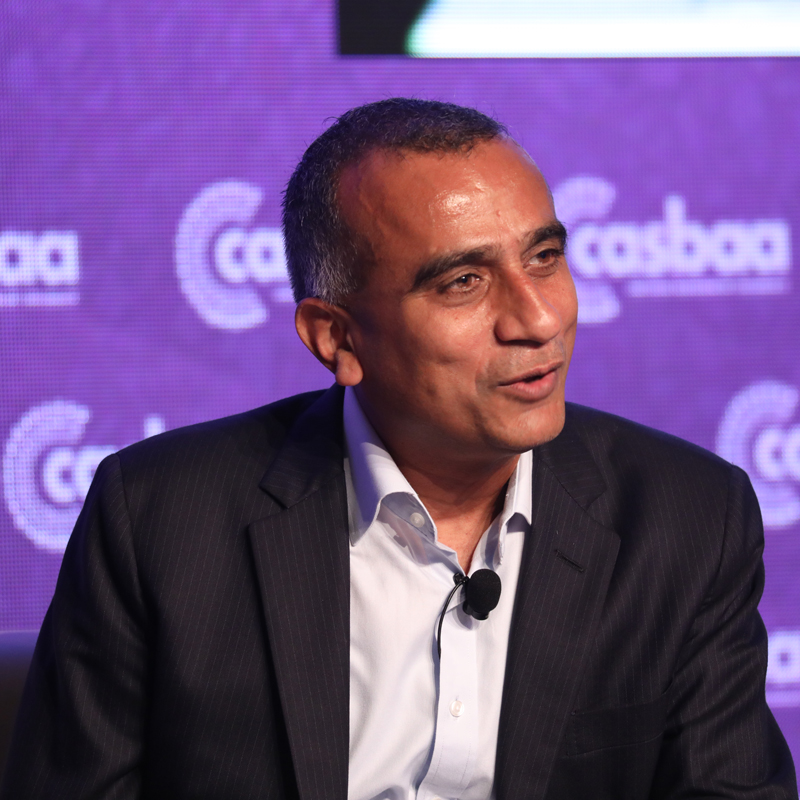
    MACAU: Even as he said that the growth trajectory of the Indian media space will be similar to that of China, Mumbai-headquartered Viacom 18 Media group CEO Sudhanshu Vats made it clear that both television and digital spaces were complementary to each other having a great future in India.

    “Indian media market’s evolution will be very similar to that of China. Where we (India) are today in 2017 is where China was in 2011,” Vats said on Wednesday during the opening keynote on the third and last day of the CASBAA Convention 2017 here in a conversation with media industry veteran Marcel Fenez of Fenez Media.

    “In India, the future of television is television and also digital. If you are a content provider or a story teller, you have an advantage,” Vats said, adding that he expected a significant growth surge on the AVoD and SVoD sides of the media business.

    Vats went on to highlight the reasons for pushing the company’s digital venture VOOT, stating that not only has the app downloads run into double digit millions, but that about 15-18 per cent of the content on the platform was exclusive even as the Viacom18 team learns from the digital evolutionary processes in the US and China markets. Launched in early 2016, VOOT engages kids as well as adults with 17,000 hours of network content.

    “We do a lot of content around digital, which is called VOOT exclusive. India has a big appetite for reality shows and there is a huge amount of curiosity about what happens behind the scenes,” Vats explained. Viacom18 hosts some of India’s biggest reality shows – ‘Fear Factor’ and `Bigg Boss’. He also thinks that India will skip credit cards to e-payment, which can help aim for VOOT SVoD with a paywall.

    According to Vats, a Unilever India veteran marketer-turned-media professional (he jokingly mentioned that in his previous company he was famously referred to as the `Laundry Man’ for driving Unilever’s home washing products in India), “Essentially we are storytellers. The big business we are in is content and we need a robust pipeline of content and creative talent. But the challenge is getting talent, and retaining them.”

    In this context, he explained later, Viacom18 has started a start-up initiative, encouraging young talent to express themselves in a creative manner as new disruptive ideas in Indian media will not come from within an organisation, but from outside.

    (Another reality show running on MTV India is Dropout, a nationwide hunt to find hidden creative talent in ‘dropouts’ to be groomed by industry leaders into entrepreneurs, to solve real-world business problems in a short span of time.)

    Terming Viacom18’s 10-year eventful existence as “fantastic” when it had grown 40x, Vats, whose many passions include running marathons world over, said the company’s journey had “now just begun” in India’s media landscape that has been changing dramatically over the years pushed by content, delivery mechanism and technological evolutions. (Incidentally, he completed his daily quota of an hour’s running before getting ready for the morning keynote.)

    As part of innovations being undertaken by Viacom18, Vats pointed out that the company plans to set up an engineering hub in India’s Silicon Valley, Bangalore, to help various in-house products.

    “The big media companies are consolidating and coming together with telecom companies,” Vats said highlighting the disruptions and convergence happening in the Indian media landscape, “If you had asked me before, I wouldn’t have thought that would happen.”

    Batting on the front foot for a digital India, Vats said the country was an “exciting” market. “It’s at the cusp…ready to take off. If you have a five-year horizon, it (India) is where you should be,” he aptly summed.

    ALSO READ:


  • Vice strengthens foothold in APAC, Hosi Simon made CEO

    Vice strengthens foothold in APAC, Hosi Simon made CEO

    MACAU: Vice Media has announced a major expansion of its offerings across the Asia Pacific region, with a plethora of new deals that will allow it to reach hundreds of millions of additional viewers.

    Vice India will launch in early 2018 through a partnership with the Times of India Group, allowing it to produce and distribute local programming for online, mobile and linear platforms. New offices in Mumbai and Delhi will host full-scale Vice operations, including a local offering of virtue worldwide and a full-service content production studio producing scripted, film, news and culture content from India for television, SVOD, OTT and digital platforms.

    With an online video market that is expected to hit $ 46 billion over the next five years, the APAC region is home to 60 percent of the world’s young people, according to the United Nations, demonstrating a significant opportunity for the youth-focused media brand.

    Vice global general manager Hosi Simon will relocate to Singapore, the new headquarters of Vice APAC, to become chief executive officer for the region. Simon announced the new role and the series of partnerships today at the CASBAA Convention 2017 in Macau.

    In addition to opening a full-service content and commercial hub in Singapore, which will offer a studio for local documentary, scripted and film content production, and provide creative services through Virtue Worldwide, Vice announced new offices and partnerships that will allow the youth brand to expand its reach and library of intellectual property.

    Vice is building on its partnership with Docomo Digital in Japan across several territories in Asia. It has also entered into partnerships with leading global and local brands in the region, with more territory launches, partnerships and employee appointments to be announced in the coming weeks.

    “We believe there is a huge opportunity for Vice to build out a deeply relevant, highly local, youth media company across the Asia Pacific region,” said Simon. “With the growing importance of local culture to young people, along with a surging youth population and increased connectivity, some of the most dominant forms of global youth culture across technology, music, fashion, consumer brands, food and identity will come from this part of the world. We hope to play a significant role in creating and giving a voice to these movements, and helping to bring them to the rest of the world.”

    The full slate of announcements to expand in the APAC region include:

    Vice Singapore – Under the direction of new Vice Asia Pacific CEO Hosi Simon, the Vice Singapore regional headquarters will serve as the nucleus for Asia Pacific activity, becoming a content hub offering the full scale of Vice services, including complete production capabilities, locally staffed editorial content, and creative services through Virtue Worldwide. Vice Singapore will be fully operational by January 2018.

    Vice Indonesia – Vice remains in close partnership with JawaPos TV, which will air branded Viceland blocks and Vice news tonight episodes, and digital content in primetime slots beginning this month. Young people aged 18-34 comprise 50 percent of Indonesia’s overall population,opening the door for it to reach the young audience on whatever platform they consume content.

    Expansion of Vice + Docomo Digital partnership: Based on the success of Vice Japan’s partnership with Docomo Digital, Vice and Docomo have significantly expanded their partnership to bring Vice+, Vice’s subscription video on demand (SVOD) service, into Singapore, India, Hong Kong, Taiwan, Thailand, and other territories to be announced. This will allow Vice content to reach millions of new young people in a region with a fast growing youth population.

    Virtue worldwide brand partnerships: Virtue worldwide has entered into major brand partnerships that will see the creative agency that was born out of Vice provide creative services throughout the Asia Pacific region.  Launch partnerships in the region include Unilever in Indonesia, National Basketball Association in China, Budweiser in Australia, Nike in Thailand and the Philippines, and a BMW/Alexander Wang collaboration around a new vehicle launch in China.

    Vice has operated in the Asia Pacific region since 2003 and currently has offices in Australia, New Zealand, Japan, China and Indonesia. This vast expansion in the region follows the series of deals Vice announced earlier this year, providing major inroads into the nascent mobile content market in the APAC region, and furthers Vice’s ability to bring content directly to young people on whatever screen they are watching. The series of deals will allow Vice to further cultivate the growing young audiences across the APAC region, growing its presence across multiple screens and reaching millions of new viewers across the region.

    Simon assumes the role of CEO, Vice Asia Pacific after serving as global general manager of Vice Media for over a decade, where he oversaw the strategy, growth and operations of Vice digital assets around the world, including Vice’s owned and operated channels, publishing and large-scale brand partnerships, and mobile and OTT platforms, and launched many of the newer offices around the world.

    Vice has developed an outstanding global reputation for producing the gold standard of video content for young people, forging innovative distribution partnerships across mobile, digital and linear platforms with A+E Networks, HBO, YouTube, Snapchat, Sky, 20th Century Fox, Verizon, Canal+, and more to take its programming to young people everywhere.

    These deals significantly increase Vice’s vast international footprint, ushering in new audiences, revenue streams, and content production.  With these deals, Vice’s award-winning multi-platform programming across lifestyle, culture, news, sports, food and more, will be delivered to over 80 territories by Q1 2018.

  • Amazon to tickle your bones with Funny or Die films

    Amazon to tickle your bones with Funny or Die films

    MUMBAI: From only streaming to now producing, Amazon has taken a leap. One of the top OTT video content providers, Amazon, is financing the production of three Funny Or Die (FOD) comedy shorts to be available exclusively worldwide on Prime Video. This is happening for the first time that it is investing in the development of original, exclusive partner content.

    The deal has given creators, studios and distributors different options for distributing content on Amazon’s video platforms.

    Under the partnership, Prime Video will debut three new original FOD shorts on Nov. 10:

    Lovebirds

    Written and directed by Ahamed Weinberg (“Comedy Bang! Bang!”, “Quincy Jones: Burning the Light”), the short film tells the story of a lonely young man who buys a bird feeder to attract birds to the window of his studio apartment. When that doesn’t work, he’s compelled to fall in love with a woman in his apartment complex.

    The Jury

    Written and directed by Anna Kerrigan (“Hot Seat,” web series “The Impossibilities”), it brings viewers into a roomful of bored strangers called for jury duty awaiting their assignments, when a mysterious, foul odour unites — and then threatens to divide — them in a quest to find the source.

    Soojung Dreams of Fiji

    Documentary satire written by SJ Son and directed by Hye Yun Park about first-generation Korean-American Soojung Yoon, a renowned nail salon owner, who elevates her craft to an art form — an unexpected profession that puts her into conflict with her immigrant mother.

    According to the source Variety, Funny Or Die VP partner content Brian Toombs said, “We have had great success with showcasing our content on Prime Video through Amazon Video Direct.” Our comedy has really resonated with the Amazon audience and we look forward to showcasing these original shorts on the service.”

    Amazon Video Direct, launched in 2016, provides four options to content owners. They can make their content available: in Prime Video at no additional charge to Prime members; as an add-on subscription to Prime Video; for a one-time rental or a one-time purchase price; or available to all Amazon customers on an ad-supported basis. The new FOD shorts will be distributed on Prime Video globally.

    Funny Or Die was founded 10 years ago by Will Ferrell, Adam McKay, and Chris Henchy as a comedy website destination. The company, whose investors include CAA and AMC Networks, has increasingly branched into TV and film projects.

    ALSO READ :

    Amazon Prime offers deals to subscribers

    Amazon India head Nitesh Kripalani’s amazing growth recipe

    Cartoon Networks with Amazon Prime Video

  • Broadcasters, DPOs to crack down on piracy, analogue transmission

    Broadcasters, DPOs to crack down on piracy, analogue transmission

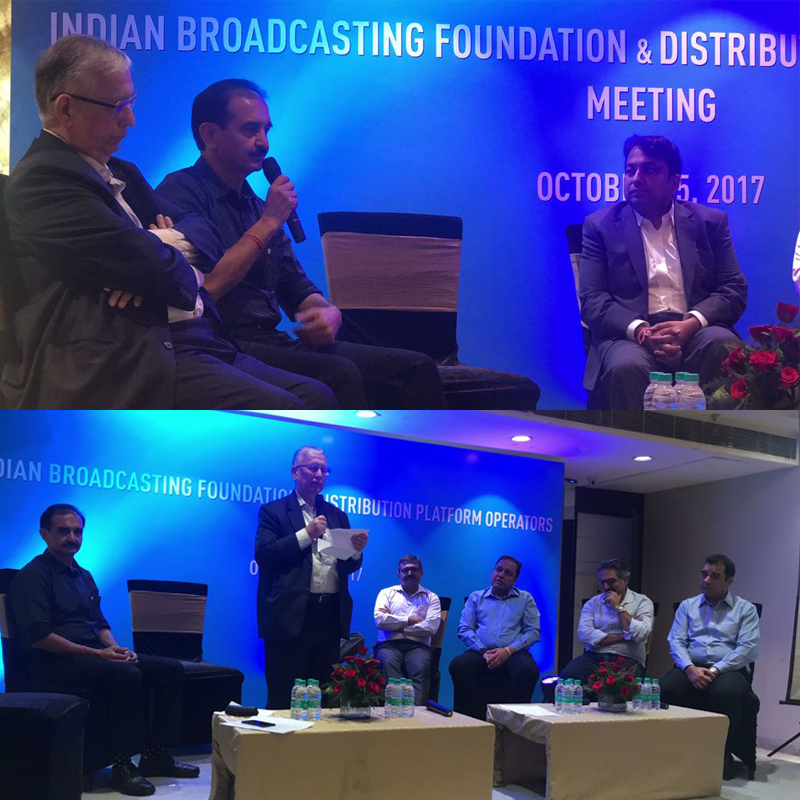
    NEW DELHI: There is general agreement among broadcasters and delivery platform operators including direct to home (DTH) as well as digital cable operators that a joint industry task force should be set up to check and report cases of piracy in the third and fourth phases of digital addressable system (DAS).

    There was general consensus that certain states – particularly Andhra Pradesh and Telengana – had high levels of pirated material on local television channels.

    Such were the thorny issues being discussed in a meeting held between the All India Digital Cable Operators Federation and the DTH Operators with the Indian Broadcasting Foundation (IBF) on Wednesday.

    As senior AIDCF member Ashok Mansukhani said that it was more appropriate for the stakeholders to meet in this manner than in courts of law.

    Among others, the meeting was addressed by IBF President Punit Goenka, Jawahar Goel of Dish TV, AIDCF President Rajan Gupta and senior office-bearer S N Sharma.

    Goel said there was an attempt by Punjab and other states to bring back what he termed as the ‘inspector raj’ by imposition of local taxes. Furthermore, he said broadcasters were free to give content to OTT or YouTube, but this should not be live as it would directly hit the DPOs like the DTH players and digital cable operators.

    The larger multi-system operators (MSO) said the inefficient handling of piracy by broadcasters was the cause of their suffering. Broadcasters neglect to take actiom against operators carrying analogue signal. There are small MSOs who do not have CAS & SMS system and do not follow TRAI QoS guidelines so broadcasters should refrain from giving content to them. Hence a joint industry task force should be made to raid such operators / MSOs and initiate legal action against those operators. The News Broadcasters Association should also be made part of this.

    Issues were also raised relating to OTT, Doordarshan’s FreeDish, and Reliance Jio and the DPOs alleged that providing signals to these entities led to huge losses to the digital cable and DPOs.

    Answering various question in a presentation, Goenka said OTT rights and digital cable rights were two different issues and should not be confused. OTT was an interactive and on-demand platform and in any case was never free being part of a subscription bandwidth. Thus this should not be compared with other platforms.

    YouTube content are only the ones that have already been broadcast and therefore, there was no conflict of interest. He denied any concessions to Reliance Jio and said it was in fact paying more than digital cable.

    He expressed concern by the Jio announcement that its mobile phone could receive the signals of not only new LCD/LED television sets but also the old sets. AIDCF said that this would bring Jio under TRAI’s regulations.

    Goenka said he will advise IBF members to take up the issue with OTT providers, especially Reliance Jio. In any case, he said the present contracts forbid such activity.

    He said broadcasters are not offering OTT content on television screen by connecting Reliance Jio phone through a cable and they prohibit such an activity. But agreeing with the concern of the AIDCF, he said this would be rigorously monitored and action will be taken in case there is any violation.

    Referring to the AIDCF charge that pay channels were being given as Free to Air (FTA) to Doordarshan’s FreeDish after paying huge carriage fees, Goenka said that broadcasters like Star and Sony are offering paid live content free on Freedish but with a time lag of one year. He agreed that this should be implemented across all genres and it should be completely free to all platforms.

    He said that in any case digital cable had more channels than FreeDish which primarily comprised FTA channels and so it was unreasonable to compare the two especially as the content was also being provided to digital cable operators.

    The speakers from AIDCF said MSOs have invested around Rs 200 billion in digitisation and are yet to get the return on their investment. This is primarily on account of the growth in rates that the broadcasters demand every year. Hence it was now the question of viability and survival of the MSOs that broadcasters should come out with their MRP based pricing.