Tag: OTT

  • Vernacular content consumers to be 2.5 times English by 2021: Deloitte

    Vernacular content consumers to be 2.5 times English by 2021: Deloitte

    MUMBAI: Deloitte India has launched the eighth edition of its report on technology, media and telecommunications which predicts major advances in machine learning, voice over LTE (VoLTE) technology services and over-the-top (OTT) platforms, apart from other trends.

    According to the report, VoLTE is expected to be the most prevalent voice technology in the future. It is also estimated that more than 90 per cent of all mobile subscribers will comprise of broadband subscribers by 2023. OTT platforms are witnessing an explosion in original content due to increase in consumption and viewership, the report says, adding that they will gradually become a preferred medium over television, with the consumers of vernacular content likely to be over 2.5 times that of English language content by 2021.

    The publication highlights the fact that machine learning will intensify among medium and large-sized enterprises. Compared to 2017, the number of implementations and pilot projects using machine learning technology is likely to double in 2018 and then double again in 2020.

    As enterprises in India embrace technology to bring transparency and efficiency in business operations, data assumes centre stage in decision-making, setting the stage for tools such as advanced analytics and machine learning to usher value-chain efficiencies, a Deloitte India spokesperson said. Organisations will take steps to realise the potential of the internet of things (IoT) for their businesses, predictive analytics and intelligent data mining technologies are set to become mainstream in India.

    Deloitte India Partner PN Sudarshan, said, “India is one of the fastest growing technology markets in APAC, with the ongoing digital transformation of public sector and private sector enterprises enabled by changing market dynamics and policy interventions. Enterprises across industries are increasingly adopting technology driven solutions to improve customer experience, optimise business operations, and compete effectively in the market. Catalysed by the availability of cost effective computing infrastructure and flexible business models through cloud computing, and the adoption of exponential technologies such as AI, ML, AR, IoT etc., technology sector in India is truly at an inflection point.”

    He further added, “Trends such as IoT will catalyse the emergence of analytics at the edge. Digital revolution, also known as ‘The Internet Economy’ is creating a new market for digital-first services, which has the potential to optimise value chains, bring transparency, and improve overall productivity in the economy.”

    Newer technologies like LTE, LTE-A, LTE-A pro and 5G will make wireless internet commercially more viable for home internet users. The smartphone riding on new innovation will consolidate its position as the primary access to digital services and content, and live streaming and OTT video content are likely to gain popularity.

    IoT-driven point solutions will be adopted to solve a specific business issue. IoT-driven enterprise solutions would help organisations redefine their business models and provide innovative services for their customers; investments will not only be assessed on KPIs, but also will involve new product launches, new supply chains and a new operating model that enables organisations to monetise their services across value chains, leveraging IoT.

    Analytics will finally travel beyond the back office as enterprises will combine external perspectives, social inputs (surveys, social media comments, response to a feedback questionnaire) to the internal data sources to improve customer service. Device data will be integrated faster and on-demand to answer immediate field needs; information dissemination for decision-making will be faster and simpler using digital delivery; paying for results and provisioning on demand is the new normal (on cloud).

    Deloitte also predicts that more than 60 per cent of all broadband subscribers would be utilising VoLTE technology for voice services by 2023 surpassing five billion subscribers globally. IoT appliances can be enhanced with VoLTE improving the productivity and efficiency of applications and especially effectiveness in emergency situations. One example is a smartwatch with a feature to automatically dial an emergency contact in case of abnormal heart rate. Wi-Fi would be an essential part of service provider network strategy to enhance access and extend coverage. With VoLTE supporting VoWi-Fi (Wi-Fi calling), it would be an opportunity to monetise hot-spots especially relevant in the Asia-Pacific region which would constitute 45 per cent of global hotspots.

    Sports media in India is set to unlock new horizons as Indian sports business will continue to attract global investments. With broadcasters paying as much attention to rural segment, these geographies will continue to lead the way for sports sector in India, especially with tier II leagues beginning to receive widespread attention. Data analytics will increasingly play a significant role in managing all aspects of sports, especially on initiatives such as fan engagement and viewership on digital platforms. Governance-related matters will continue to be in focus in Indian sports ecosystem, and topics such as legalising betting will be discussed more than before.

    Wireless home internet is bigger than imagined but due to challenges in deployment of fixed broadband networks, current rural internet penetration stands at a negative 17 per cent. In future, demand for fixed broadband would be limited to consumers with higher bandwidth/QoS requirements, with majority of home internet requirements catered through wireless network.

    Augmented reality (AR) is on the cusp of reality as the Indian market is witnessing the emergence of AR service providers helping enterprises embrace it as part of their digital experience strategy. India’s $150 billion technology services industry has the potential to play a key role in increasing the adoption of AR for global businesses by building a robust supply of talent, business models, and frameworks to accelerate deployments. The public sector also has the opportunity to leverage the product and talent ecosystem in the country and adopt AR for improving the quality of experience in areas such as education and healthcare.

    Also Read :

    Media and marketing professionals most vacation deprived: Expedia Report 2017

    55% marketers make better decisions with machine learning: iProspect report

    India ad spend to grow by 12.5% in 2018: DAN report

    M&E industry to hit Rs8 trillion revenue by 2022: report


  • Guest Column: The comeback of full-service agencies in India

    Guest Column: The comeback of full-service agencies in India

    By 2020, we will be close to a billion digitised screens. With the advent of cheaper data and smartphones and by virtue of tech giants such as Google, Facebook and Amazon entering the grassroots of India, digitisation has become inevitable. And it’s going to be mobile plus digitised television (OTT) that’s going to drive most of the scale.

    If digital is where maximum content is going to be consumed, surpassing Dish/Cable TV in most geographies, then brands will slowly and steadily move towards exploring digital in a much-evolved fashion and at a large scale. This means media and creative agencies will have to rethink their game plan, which has not changed much in the past two to three decades. Many questions arise, such as will mainline agencies reverse integrate their creative and media thinking to digital? Will digital agencies be able to manage the scale and responsibilities of managing multi-million-dollar campaigns? Will there be a need of creative and media standardisation? How many agencies will a client want to deal with to achieve the end objective? Who will win the rat race? And the list goes on, as we start thinking about how agency life will be when digitisation takes over completely.

    In my view, consolidation to make a full-service agency that gives solutions across screens plus creative and media is going to be the future. To date, most agencies are not fully prepared to manage this new world of ‘non-line,’ that is not just online or only offline but both together, as the lines are starting to fade. Mainline and digital agencies are poles apart in creative as well as media thinking but both are eventually chasing one goal. And that’s where the need of a full-service agency is, which creates and advertises one campaign with one objective across multiple platforms and formats. Not to ignore the fact that advertising bodies will also play an equal role in the entire standardisation process. And, sooner or later, it’s a self-evolving cycle that we will all get into, like the one mentioned below-

    1)  Consumers will become more and more digitised; thus, brands will want to get them through digital mediums across mobiles, TVs, PCs, tablets, and even hoardings

    2)   One master creative created in various sizes and formats will start to be the new norm with a fair bit of shoulder content for digital

    3)   And then planning will get more standardised across various mediums and consolidate into one form

    4)   KPIs will become more standardised as well to judge campaign effectiveness against various brand objectives

    5)   Possibly, there will be one tool that agency networks will create and connect to plan and buy across in a truly ‘non-line’ fashion

    This model of a full-service agency exists in mature markets such as the US, Japan, Singapore and will soon be a reality in India as well. Such a model increases planning and operational efficiencies and also ensures standardisation, right from planning to execution to industry benchmarking.

    It’s about time large agency networks wake up to the reality of a full-service model or soon a challenger start-up that is nimble to take such decisions will start changing the name of the game!

    The author is VP operations & media – West & South, WATConsult. The views expressed are personal and Indiantelevision.com may not subscribe to them.

  • Eros Now Available on Amazon Channels

    Eros Now Available on Amazon Channels

    MUMBAI: Eros International PLC (NYSE: EROS) (“Eros”), a leading global company in the Indian film entertainment industry, announced today that Eros Now, its cutting edge digital over-the-top (OTT) South Asian entertainment platform, is now available to Amazon Prime members on Amazon Channels across the US and UK with subscription fee of 7.99 USD and 5.99 GBP per month. Access to Eros Now’s entertainment services through the program will include a 7-day free trial.

    Amazon Prime members can sign up for Eros Now through Amazon Channels to get access to Eros Now’s unparalleled movie library of thousands of films offering a wide range of Bollywood and regional language films, music videos and originals.

    Commenting on the relationship, Eros Digital, CEO, Rishika Lulla Singh says, “Eros Now’s integration with Amazon Channels in the US and UK further empowers us to reach out to millions of subscribers and provide them with rich and compelling content, from movies to music to TV content. Having crossed over 3.7 million paid subscribers and over 75 million registered users, this association enhances our customer acquisition strategy and further pushes the envelope in our endeavor to reach out globally to those seeking the best in entertainment on the go.”

    To learn more about Eros Now on Amazon Channels and to sign up visit: www.amazon.com/amazonchannels in the US and www.amazon.co.uk/amazonchannels in the UK.

  • MIB has no data on OTTs; not under regulation: Minister

    MIB has no data on OTTs; not under regulation: Minister

    NEW DELHI: The government on Thursday while admitting it has no official data relating to OTT industry, including number of players and subscribers, said the Ministry of Information and Broadcasting (MIB) doesn’t regulate internet-based video services.

    “MIB does not regulate paid streaming and video-on-demand services provided over the internet. However, there are enough safeguards available under the Information Technology Act, 2000, which is administered by Ministry of Electronics and Information Technology (MEITY), for content appearing on paid streaming and video-on-demand services,” MIB junior minister Rajyavardhan Rathore informed Indian Parliament’s Lower House or Lok Sabha. 

    The government stand is significant because increasingly voices of criticism were being heard from the conservative section of society questioning edgy content on OTT platforms that technically don’t have to follow any content code like done by linear TV, which also broadly follows guidelines on content as enumerated in the Cable TV Act 1997, apart from imposing self-regulations administered by industry bodies like NBA and IBF.

    With original shows and serials on OTT platforms operating in India increasing by the day — egged on by global and domestic players like Netflix, Amazon, Hotstar, VOOT and Arre  — the fledgling industry segment has given content producers a platform where out-of-the-box themes are being tested and tried.

    According to Rathore, who was answering a series of questions on the country’s OTT services, there were no official figures available with the ministry.

    However, MIB quoted Frost & Sullivan to state it is estimated there were around 70 million unique connected viewers of which 1.3 million were paid video subscribers.

    While not directly stating whether the government proposed any content regulations for OTT platforms, Rathore clarified that IT Ministry was empowered to block and/or censure content and its distributors on several grounds, including those relating to security of the country, foreign relations and pornography.

    As of now OTT platforms in India could breathe easy as regulator TRAI, too, has not issued any guideline relating to OTT content preferring to restrict its diktat on the telecoms side of net neutrality. Still, many OTT platforms, some of which are digital extensions of traditional TV services owned by big broadcasting companies, prefer to do self-censorship on edgy content in shows like the Game of Thrones.

    ALSO READ:

    TRAI releases recommendations on net neutrality 

    Regional OTT content more than just catch-up TV    

    Can OTT players leverage market opportunities & rationalize rising content costs?

  • Guest column: Taking Indian content to the global market

    Guest column: Taking Indian content to the global market

    The year 2017 has been a year of paradigm shifts in the wake of Digital India. Over the last couple of years, international OTT and VOD players such as Netflix, Amazon Prime Video, etc, have been making inroads in the Indian market to unlock the true potential that our increasing digital-first audience provide. Telecom, print, broadcasting, FMCG, and virtually every industry has ventured into the digital space. India’s journey on the digital path saw a rise in the number of homegrown content streaming platforms, with some creating original content and some taking and distributing content from external creators. While it came as a boon to India’s digitally driven audience, there was still a paucity of locally relevant content creators and platforms. On the other hand, short length format shows/series soon began to launch in regional markets as well. Additionally, region specific OTT platforms took shape. These developments assured that not just millennials, but family audiences as well were fed entertaining content on digital that matched their tastes and preferences.

    Internet penetration and adoption in India has been at an all-time high. As per the KPMG India – Indian M&E report 2017, currently there are 462 million internet users in the country out of which 82 per cent of them access the web through mobile devices. Competitive mobile data pricing and the overwhelming mass adoption of 4G led to a revolution of gigantic proportions for content creators in the digital space. It positively aided the growth of OTT/VOD platforms and thereby, short format content. However, while we continue to open windows for international players and brands to get more and more access to Indian audiences, either by placing our shows on their platforms or striking partnerships to deliver their content here, the most significant question for me is how far are we actually taking ourselves beyond India and Hollywood?

    While India’s vision of digital continues to get served, how is that making a difference to the country’s economy? How far are we expanding our digital footprints beyond existing geographies by leveraging both homegrown and international OTT platforms? The year 2018 might well be a step in this direction which in turn would begin to provide the answers to us. A SWOT analysis for the possibility of this happening in the near future would give some key insights on the plan of action.

    Focus on the strength – Content, the driving force

    While we speak about the generalisation of Indian content across territories through OTT platforms, a similar example was already set this year. Dangal’s staggering success numbers in other countries and approx Rs 200 crore (fifth-highest earning non-English film in global box office history) in China speaks for itself. A similar fate followed for Secret Superstar. These examples prove the potential that lies for Indian content creators to venture into untapped regions beyond India. These mega movies clearly state that strategy plays a vital role in accomplishing the desired results. India is another key selling factor is the original content curated by every media and entertainment entity which brings a fresh perspective. With such great pool of data that lies with us, only selling it won’t serve the purpose. Where do you sell it and how is what will decide its best outcome.

    Understand weaknesses

    The major roadblock in venturing into other regions is the language barrier. Upon deciding the target regions, next thing to consider is the national language of the country and whether its audience prefers the global language. Analysing this would mean additions or modifications for dubbing or sub-titles in the content, such that it match the sensibilities of the audience across different languages and sensibilities.

    Tap into the right opportunities

    India’s rich content resonates well with the masses. We are fed with entertainment from across the world, likewise, there also exists a majority of Indian diaspora in regions where we haven’t made in-roads yet. Evaluating such regions helps tapping onto a ready audience base. In order to expand the reach further, it is very crucial to research about the consumption pattern of the region, the inclination towards short-format content, internet usage statistics, number of mobile device users in that region. The digitally savvy audience looks for great content, be it from any source. A populous region having an audience base with varied tastes automatically ensures effective penetration of content into a newer market.

    Evaluate the threats –  adapt a differentiated approach and have an evolving nature

    The digital world in itself is quite vast with various existing and upcoming mediums that provide access to entertaining content making it widely available. A stark comparison would be between Asia’s first premium VOD service Hooq and the homegrown platform Voot. Hooq’s strong strategy reflects in its distinguished offering. It serves its customer with varied options to choose from Hollywood, local and regional shows across multiple platforms. On the other hand, Voot has tactfully planned its expansion across geographies in a short span of time. There is this agnostic nature of the players from other territories looking at a similar expansion plan that would increase the competition for Indian content creators to gain visibility overseas. Building a differentiated plan of action and being flexible is the key in such a scenario.

    While we analyse the various means by which we can best cater to the potential markets across territories, the digital platforms and content creators should continue to maintain a strong foothold within India itself. Having a catalogue of rich content and effective reach pan-India will attract more international brands that look at reaching out to their TG in the country. This in turn will bring in more international buyers which will eventually pave way for homegrown content to have a global presence few years down the line without having to actually root for the expansion, the other way round. This indeed will be a game changer in taking Indian content to global markets.

    The author is the CEO of Worldwide Media.The views expressed are personal and Indiatelevision.com may not subscribe to them.

  • Eros Now announces ‘Lakhpati’ contest

    Eros Now announces ‘Lakhpati’ contest

    MUMBAI: Celebrating the holiday season, Eros Now, the cutting edge digital over-the-top (OTT) platform from Eros International plc, a leading global company in the Indian film entertainment industry, has announced the launch of Lakhpati Contest. Lucky winners stand a chance to win Rs. 1 Lakh everyday for a period of 30 days as part of the promotions which begin today.

    In a very easy to participate format where the lucky winners literally get paid to enjoy watching the platform’s entertainment content, viewers can download the Eros Now app or register on the website and update their profiles while they watch their favourite movies and shows. The contest is open for free registered users as well as premium subscribers. Post accepting the terms and conditions on daily basis, registered users will have to watch atleast 60 mins of movies and shows from Eros Now’s vast content library while the Plus/Premium users need to watch atleast 30 mins to qualify for the Lakhpati contest.

    To ensure there is no bias or human intervention in the entire process, the winners will be selected by a computerised draw and  the process shall be overseen by third party auditors appointed by the Company.

    Registered users can enter the contest once every calendar week (Mon-Sun) ) and Plus/Premium subscribers can play every day. 

    Commenting on the initiative, Eros Digital, CEO, Rishika Lulla Singh said, “At Eros Now, its a constant endeavor to engage our customers in a wholesome experience and what better initiative than the Lakhpati contest to double the entertainment quotient and bring in more cheer for our subscribers this festive season.”

    The contest is open to viewers in India. For rules and regulations log on to www.erosnow.com

  • Sudhanshu Vats on Viacom18’s growth strategy and why data analytics is key

    Sudhanshu Vats on Viacom18’s growth strategy and why data analytics is key

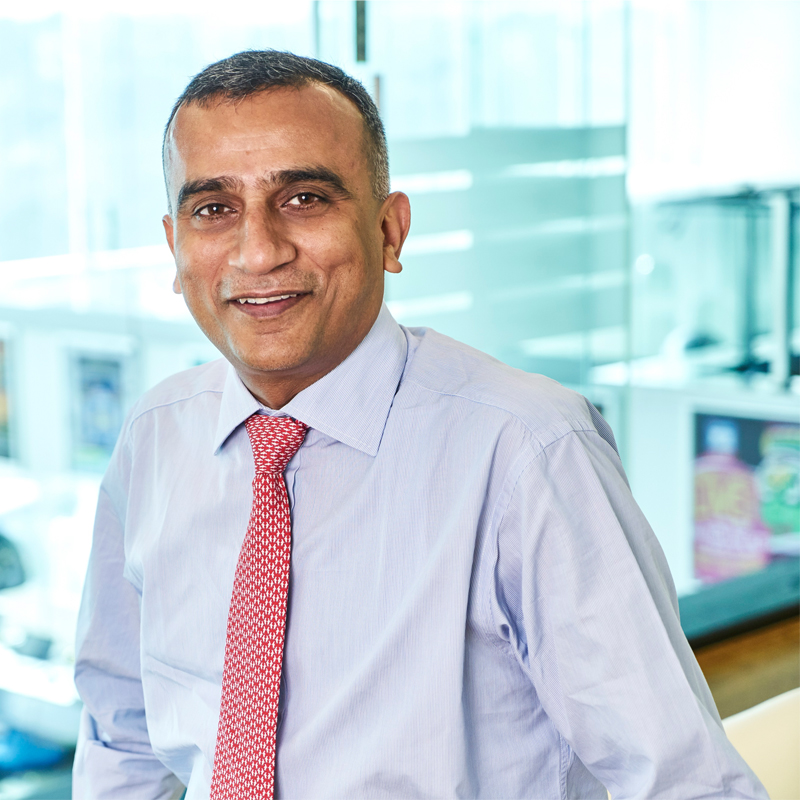
    He goes by many names. The Laundry Man and The Marathon Man being two of the more popular monikers. The second one is self-explanatory given his passion for running, especially marathons of many hues all over the globe. It’s the former one that makes people, sometimes, stop and give a quizzical look. Its origins, according to Unilever folklore, can be traced back to his days at the global FMCG company where he was at the helm of the laundry division in South Asia. But Sudhanshu Vats, group CEO of Viacom18, doesn’t mind the aliases; rather, he refers to them himself, at times—like he did in November at CASBAA Convention 2017 in Macau,where he was featured as a keynote speaker. At the time,Vats explained that running a marathon and running a company had lots in common as they taught one about the importance of planning and breaking down longer plans or goals into shorter milestones.

    Five and a half years into his new role in one of the top media companies of India that is an equal JV between US’ Viacom and Reliance Industries-controlled Network18, Vats is considered a thought-leader within the complex maze of the Indian media and entertainment industryand in government circles. His social media savviness makes him articulate on a range of subjects from media to women empowerment to an individual’s role in the Clean India campaignto the importance of health and fitness.

    In a free-wheeling chat with Indiantelevision.com’s consulting editor AnjanMitra and deputy managing editor Satyam Nagwekar, Vats speaks on a number of issues related to the M&E sector, including the necessity of regulation in India (he sometimes holds contrarian views to the general sectoral outlook of his peers) and why it’s important for a media company to be equally alive to data analytics to derivestrategies.

    Edited excerpts from an interview that took place when he was few days away from completing hisannual tenure as the chairman of BARC India, a joint industry body entrusted with collating audience data in a highly fragmented and, at times, quirky Indian broadcast sector, wherein competition is cut-throat:

    Q: What would be the three major changes in the industry that you have witnessed over the years in the complex M&E industry of India after your switch to the media sector from FMCG?

    A: The first significant development is the entire digitisation of the cable. While digitisation of the signal has happened, allowing (the pipe) to carry more content, addressability needs to improve. Overall cable digitisation has enabled the pipe to carry more content and to improve the viewer experience. The second development is the rise of OTT services; delivering content on demand in addition to the existing linear delivery of content. The third development would be the increasing importance of live and experiential entertainment. The advent of quality multiplexes has certainly made a difference in viewing experience in cinemas. Similarly, in the sphere of live entertainment, experimentation with modern technology has dialed up consumer experience. We have also experimented with theatricals. What happens is that as kids develop a relationship with characters, it allows you to bring those characters alive in different forms outside of television. One can take them outside of television into theatricals, into experiential zones and merchandising.

    I would add a fourth important development and that is the evolution of BARC India. I think the joint industry body that we formed to measure ‘what India watches’ is a significant development. It’s a unique feature that industry bodies have come together for audience measurement in India.

    Q:Are Hindi general entertainment channels (GECs) the largest contributors to the Viacom18 revenue pie?

    A: Yes, they are.

    “About 59-60 per cent of India communicates in regional languages, about 39-40 percent in Hindi, and the balance one per cent in English. This 59 per cent is still under-indexed in viewership. As the viewership catches up with actual consumption, so would monetisation opportunities.

    Q: Keeping in mind what you said, how do you see the market for Viacom18 going forward over the next couple of years?

    A: The GECs will remain an important block (from the point of view of revenues), but I am very bullish on the regional piece, too. I personally feel that regional businesses are gaining traction and will continue to get dialed up significantly in the future. The reason for that is that in television, and arguably in all mediums of television, digital and films, the regional languages have been under-indexed from the point of viewership and monetisation.

    In my opinion,the genesis of this lies in the fact that the erstwhile measurement system was a bit skewed towards the Hindi-speaking urban audiences; perhaps as it too developed along with the cable movement in India in the 1990s, which started with the Hindi-speaking regions. However, in the last decade, language programming in other parts of India, especially South India, has developed considerably. With BARC’s arrival, these markets are being better represented. As we go deeper into India, the regional language play will keep getting dialed up. About 59-60 per cent of India communicates in regional languages, about 39-40 percent in Hindi, and the balance one per cent in English. This 59 per cent is still under-indexed in viewership. As the viewership catches up with actual consumption, so would monetisation opportunities.

    Why do I say this? There is an intuitive understanding — not entirely always incorrect — that the English consuming audience has a higher propensity to spend and that amongst the other language markets, Hindi-speaking markets (HSM), perhaps, have the highest propensity to spend. Equally importantly, regional markets like Tamil Nadu, Karnataka, Andhra Pradesh/ Telengana, Kerala, Maharashtra and Gujarat have higher per capita income (compared to India average) and would therefore have a higher propensity to consume advertising and brands. My hypothesis is that the affinity to one’s mother tongue will remain and India will continue to remain a multi lingual country (most Indians speak at least two languages and in some cases three or more). All three clusters of English, Hindi and regional will grow with regional leading the rate of growth for viewership and monetisation.

    At Viacom18, we will continue to build our portfolio of services in all the three language-clusters mentioned above, while significantly dialing up our regional language clusters. To illustrate this, let me share how our dependence on our flagship Hindi channel Colors is systematically coming down. When I joined Viacom18, we used to get 80 per cent of our ad sales from Colors standard definition channel. That number now is 50 per cent or may be a little lower.

    About 59-60 per cent of India communicates in regional languages, about 39-40 percent in Hindi, and the balance one per cent in English. This 59 per cent is still under-indexed in viewership. As the viewership catches up with actual consumption, so would monetisation opportunities.

    Q: As Colors is the biggest revenue earner, a lot of strategising must be done forprogramming. How do you slice and dice programming for appointment viewing for different parts of India and the HSM?

    A: Not just Colors, but for all our content engines we marry insight to gut in the way we strategise and develop content. At Viacom18, we started an ambitious data science project called Project Pi with the objective to provide information and insights to the users and establish one single version of truth in the company.

    The second leg to this is a free-flowing discussion that we have recently started`Content PeCharcha’ (discussion over content), inspired by PM Modi’s now famous `Chai PeCharcha’ (discussion over tea), primarily with Raj (Nayak, COO, Viacom18), Manisha (Sharma, content head, Colors) and some more team members. These are open sessions where we have a qualitative and free-flowing discussion on both macro content trends and specific current and future programme story arcs.

    Let me give you a couple of examples of how this works. When I joined people said mythologicals/historical dramas don’t work on Colors. But our research suggested that competitors were successfully running them and it was a white space that hadn’t been explored properly at our end. We came up with Ashoka and proved the naysayers wrong. In one of our early meetings, we figured comedy was a white space for us and we should actively explore it. While our first attempt didn’t work, the next one (Comedy Nights with Kapil) created history as it was based on our learning. We then experimented with the crime genre with shows like Code Red and Dev. A Hindi GEC is like a `thali’ (an Indian plate with a variety of food offerings): it needs to have a spread of flavor and taste. Balance, however, is the key to how your audiences perceive the spread to be.

    Q: Has the rise of mythological and historical shows on Viacom18 channels, as well as on other TV channels, increased after 2014 or are we reading too much into it?

    A: I am a firm believer—and I am keep saying it often—that the richness of the Indian culture is reflected a lot in some of our mythological and historical stories. Brilliant evergreen tales like `Ramayan’ and `Mahabharat’ can be told over and over again but there are so many other stories that need to be taken to the audiences. If you look at some of our mythological stories, India has long been telling superhero stories—both of superwomen and supermen. But to answer your question, yes there has been a definite rise in these stories (on TV channels) post 2014.

    “My assumption is that over the next five years, India will follow China’s example and 10 per cent of all internet video consumers will move behind a pay wall. Once this happens, it will create both advertising and subscription economies at scale.

    Q: Hanuman probably was the first super hero and remains till day one. Agree?

    A: Precisely. I personally feel that these are stories that lend themselves well to a variety of interpretations. Moving forward, production quality can make our stories richer and give the consumers a better experience.

    Q. Is the digital venture VOOT making money?

    A: If you are asking if we are monetising VOOT, then yes we do have a fair number of advertising brands on VOOT. But having said that, I’d say we, like most consumer digital businesses, have substantial distance to cover in our monetisation journey. 

    The digital VoD space is one that requires an extended gestation period for investment. Today there are300 million Indians consuming video on the internet. That number is poised to touch 600-700 million in the next three to five years time.Further, my assumption is that over the next five years, India will follow China’s example and 10 per cent of all internet video consumers will move behind a pay wall. Once this happens, it will create both advertising and subscription economies at scale.

    Q: So, is VOOT targeting 10 per cent of subs behind a pay wall in, say, three years’ time?

    A: Absolutely. Maybe, even more. We are planning to launch the subscription service of VOOT early next fiscal.

    India is a price sensitive market and, unlike the West, we do not have the price arbitrage advantage between cable and VoD. In the US, Netflix disrupted the market with its offering at USD8-10 versus a monthly cable bill of USD80-100. In India, we still get 300 channels at Rs 200-250 making linear television the economical entertainment option. But having said that, I believe the right pricing for data and content will continue to drive VoD in India. I think, it is fair to assume that the range of pricing for subscription VoDin India lies between USD 1-3 to begin with.

    Q: So you are working on a price model that is between USD 1-3/sub/month in India?

    A: Yes. If you want to look at large numbers, you need to keep prices competitive in India.USD 3 is approximately Rs 200, but it will also depend on how many people you want at what price and that will be determined on the price volume elasticity study underway.

    public://Sudhanshu V1.jpg

    Q: Does it help for a content owner and producer like Viacom18 to also have a group company like Reliance Jio, which is a platform that is practically giving data free to consumers?

    A: There are clear synergies and we complement each other.

    Q: Have you ruled out sports altogether?

    A: The business of sports,particularly cricket,is a high-investment and long-gestation game. In our current scheme of things,such an investment can be better utilised in a host of other opportunities and, hence, we are not looking at sports as of now.

    Q: What are your views on the evolution of BARC India and that some of the audience data and methodology has been questioned by some industry players?

    A: BARC has made a promising start. The measurement is clearly more robust, transparent and objective. The sample size has already been dialed up to 32k (almost four times the size of the erstwhile measurement system). We plan to further grow the sample size to 40k by next year and even further in the years to come.

    The sample has also become broader,holistic and reflects more accurately what India watches. Even rural consumption and regional languages are getting represented in a better way. The fidelity of data has improved considerably and tent-pole events on television — from a big TV channel launch to a new program introduction and all the way to an important news break event in an hour — are captured and show up with a very prominent spike. The areas where more work needs to be done by all stakeholders are the measurement of niche channels by BARC and management of volatility as high fidelity brings high volatility.

    The initiatives like return path data and premium panel will help improve the measurement of niche channels.

    Q: When is BARC likely to rollout digital measurement?

    A: BARC is in the process of getting all stakeholders aligned for rollout of digital measurement. There are debates around all digital players being a part of the measurement, equitable methods/process used for data capturing from all players and the more holistic India stack/dmp for representation and publishing of the data. All the stakeholders at BARC are debating these issues and the timeframe of publishing digital data will depend on the speed of alignment and approach taken by the stakeholders. Until these issues are resolved, it would be premature to commit to a timeline.

    Q: What is your take on net neutrality?

    A: It is quite a nuanced subject. My broad take is that NN is essential and net should be as neutral as possible because that’s in the best interest of a functional democracy. Essential services, depending upon the evolution of our society, will need to be looked at differently. In years to come, the internet would be a basic requirement for day to day life and therefore net neutrality is an imperative to offer equal opportunity to everybody.

    Q: What about legal and illegal content as the latter results in revenue losses for content owners like Viacom18?

    A: The issue of piracy is entirely different, and another elaborate subject on its own. Illegal content is a big challenge for any content owner. Piracy is a complex topic where different stakeholders need to play a part. My view is clear: illegal content should not be made available, but then enforcement is not always that easy. Having said that, consumers too are not clear on legal and illegal content when it comes to the digital world, at times. In my view piracy should be tackled through a three-pronged approach of legislation, enforcement and consumer awareness. In addition, if content is made available to consumers at competitive price points, it would be a big deterrent to piracy and, business models permitting, arguably the most effective way to tackle this menace.

    “Technology is causing disruptions almost daily and resultantly the very definition of a media company is changing. For any regulator anywhere in the world or any government, it is a challenge to keep abreast or even keep pace with such changes. As we move forward, we will need to evolve a mechanism where there is greater participation from all stakeholders.

    Q. Do you think powerful lobbies like global video-streaming services can have a bearing on legislations relating to NN? How do you see that playing out?

    A: I would not like to specifically comment on this. But there are two fundamental considerations here. The first is that every player will have its point of view and arguments on the subject. Second is that considering the width and complexity of these arguments, the government is best placed to examine in detail and take an overarching view after wide-ranging discussions with every stakeholder.

    Q: You are head of the CII entertainment committee, part of the IBF board, associated with BARC and also head one of the largest media networks in the country. What are your views on the regulatory regime in India as it’s considered a challenging market?

    A: I think the tricky piece, or rather the interesting piece, is that media and entertainment as an industry, both in India and globally, is evolving at a rapid pace. Technology is causing disruptions almost daily and resultantly the very definition of a media company is changing. For any regulator anywhere in the world or any government, it is a challenge to keep abreast or even keep pace with such changes. As we move forward, we will need to evolve a mechanism where there is greater participation from all stakeholders. As one cannot operate in isolation, there is a need for some regulatory framework that is akin to the ground rules of a game, if one wishes the industry to flourish. So, yes, in my opinion, light touch regulation always works well.

    What are your views on FTA vs pay TV considering many popular TV channels are on DD’s free-to-air DTH service FreeDish, taking advantage of DD’s reach and making money on advertising?

    A: I am a firm believer that India is an ‘and’ market. So, I don’t think it’s an `and’ ‘or’ equation between FTA and pay TV. Both will continue to flourish as there is significant headroom for growth for both. Now, coming to DD FreeDish, you’re right in identifying it as a platform as it is a means to carry content to the consumer and represents a very affordable option. Admittedly, it is a rapidly growing platform where many private channels are also present. However, all other platforms are cognizant of the opportunity that a low priced FTA channel bouquet provides. It is quite likely that alternate platform options will emerge if DD FreeDish decides to bar privately owned channels.

    ALSO READ:

    Viacom18 celebrations: Mukesh Ambani sets the roadmap for next 10 years

    Viacom18’s Sudhanshu Vats: Indian media’s growth will be similar to China

    Viacom18 showcases strong women characters content: Ajit Andhare, buys Mithali biopic rights

    Viacom18 & govt announce anti-piracy partnership

  • SPN India acquires TV, OTT rights for T10 Cricket League

    SPN India acquires TV, OTT rights for T10 Cricket League

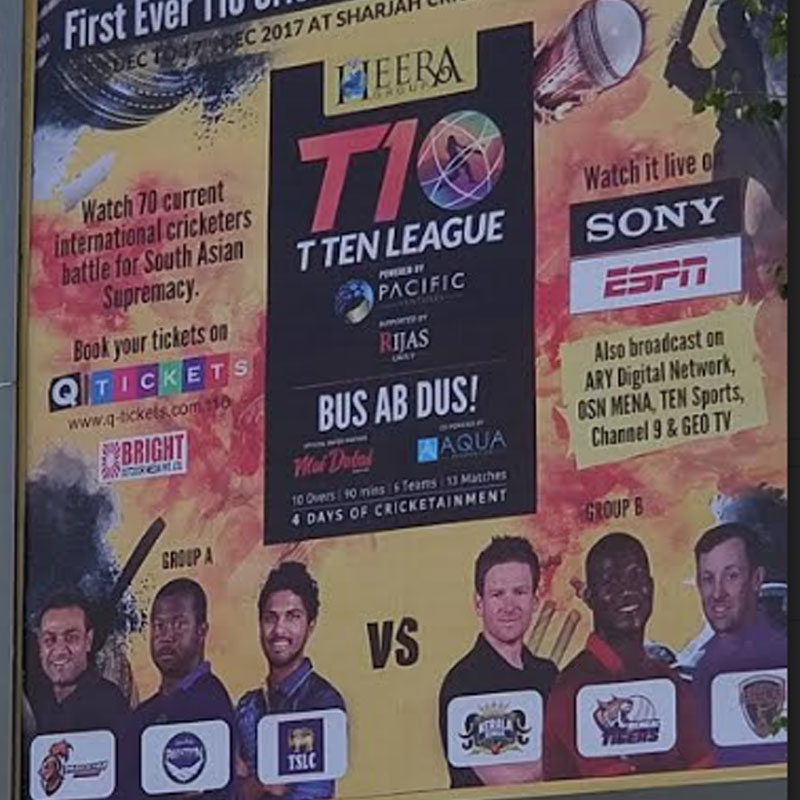
    MUMBAI: The newly introduced T10 Cricket league (TCL), which will be played at the UAE’s Sharjah Cricket Stadium, will be telecast live on Sony ESPN. The league is a four-day event running from the 14th to the 17th of December 2017.

    TCL chairman Shaji-ul-Mulk told Indiantelevision.com that Sony Pictures Network (SPN) India has the digital rights as well. “The history is being made with the first ever 10-over-a-side match being played in the world with the approval of the ICC (International Cricket Council). Seventy international cricketers from different countries will participate in the league,” Mulk added.

    The league will be live on ARY digital network for the US and UK markets, Channels 9 in Bangladesh, Ten Sports and Geo TV in Pakistan, and Orbit Showtime Network (OSN) in the Middle East and North Africa.

    Virender Sehwag is the only Indian cricketer participating the league apart from current and former international players from Sri Lanka, England, West Indies, South Africa, among other countries.

    The league will have six franchises—Punjabi Legends, Pakhtoons, Bengal Tigers, Team Sri Lanka Cricket, Maratha Arabians, and Kerala Kings. The inaugural edition of the league will have 13 matches, 10 overs a side, and 90 minutes of play in a single match.

    The Heera Group from Hyderabad is the title sponsor for the tournament. The partnership was unveiled at the Ramoji Film City in Hyderabad as part of the Indywood Film Festival at the film city on 2 December 2017. The league is powered by the UAE’s Pacific Ventures and supported by the Rijas Group from Pakistan.

    Speaking at the event, Heera Group founder and CEO Nowhera Shaik said, “As a business group, we have always backed innovative ideas. That has been a hallmark of our approach to business. So, when this concept came along, I was keen that we get associated with it as we ourselves come from the land where cricket is followed passionately.”

    The brains behind the concept, Shaji-ul-Mulk, who is the chairman of TCL and a member of the Emirates Cricket Board, was also present at the event in India. He said, “Since the advent of T20 cricket, I always felt that there could be something else that our sport could offer the world. It was then that I sat down to discuss with my team. We came up with the thought that cricket needs to match the best sporting action in the world. Most of these sports last no more than 90 minutes.

    “We need to evolve with times and nothing should signify this better than giving a product to the fans that they can relate to. So, here we are after months of planning to finally unveil to the world our dream.”

  • Comment: The rise and rise of Uday Shankar

    Comment: The rise and rise of Uday Shankar

    MUMBAI: From not having enough money to afford even a TV set in Delhi in 1991 when he was a newspaper reporter to heading Star India, one of the most admired Indian media and entertainment companies, for a decade to now being appointed as 21st Century Fox Asia president, it has been quite a journey for Uday Shankar. A well-deserved and rewarding one at that.

    Today, Shankar is one of the few professionals from India to get region-wide responsibility for a global media powerhouse. Executives such as Man Jit Singh, who heads Sony Pictures Home Entertainment globally, and Bedi A Singh, who was News Corp CFO for a long time, have preceded him but both are Indians who rose up the ranks in the US.

    Shankar has, however, earned his stripes growing the Star India business, which in the first quarter had an EBDITA of $100 million and is on course to hit $500 million in 2017-2018 (in the words of 21st Century Fox (21CF) chairman James Murdoch). The 2020 EBDITA target, as spelt out by 21CF, is twice that, and the Murdochs say it is well on course to be achieved.

    When he was handpicked by the then News Corp COO Peter Chernin to take over Star in October 2007 (some say on the advice of the then outgoing company head in India), Shankar knew very little about the entertainment business. All his experience had been in news–whether print or television. He had had stints with several print media publications (his first was The Times of India around 1990) as a political correspondent and last was as one of the founders of environment magazine Down To Earth before the TV news bug bit him.

    Shankar took to the TV medium with ferocity—doing stints at Zee TV’s news channel as a news producer, the Hindustan Times promoted Home TV (it shut down quickly), production house Sri Adhikari Brothers, Sahara TV, and then India Today group’s Aaj Tak and Headlines Today, two channels he helped stabilise and grow over the next six seven years. His talent for being a journalist who got things done did not go unnoticed and he was asked to lead Star News, a joint venture with Kolkata-based ABP group, after CEO Ravina Raj Kohli departed.

    It was at Star News that he blossomed as an executive—a TV exec to be precise—and caught the attention of Chernin and the Murdochs. The rest, as they say, is history.

    Today, under his leadership, the Star network has expanded into regional language channels and produces close to 17,000 hours of content each year in eight languages. The route it has taken to get there: acquisition of the South India-based Maa network, Asianet and via launch of channels such as the Bengali-language Star Jalsa.

    A journalist with little entertainment content creation experience when he was appointed, Shankar has steered Star into creating TV content that has been path breaking over the past 10 years, dealing with social issues, apart from helping position it as a network that produces classy shows but with a social purpose. So much so that Star India shows command an advertising premium even if the channel is not topping viewership ratings. Even on the affiliate revenues front, Shankar has played hardball.

    But one of the boldest moves taken by Star under him—some critics may choose to describe it as foolhardy—was to take on broadcast and telecom regulator TRAI late 2016 when Star India and its affiliate Vijay TV challenged in court the regulator’s jurisdiction over matters relating to copyrights, which effectively has stalled implementation of a new tariff and inter-connect regime announced by TRAI in October 2016. The case is still pending a final verdict in Madras High Court till the time of writing this piece.

    Amongst the early movers in the OTT space, Shankar has made Star invest big in customer acquisition and pushed its digital platform Hotstar CEO Ajit Mohan to go out and not only acquire new business, but also devise a distribution strategy that could be sliced and diced as per needs of the geographical markets. So, Hotstar’s distribution and subscription strategy for the US and Canada market, heavily subscription revenue-led, could be quite different from that pushed in India, where making available content practically free to subscriber initially is aimed at hooking the viewer before he’s seduced to the pay model.

    Though Shankar is not known to be a great fan of gambling—even during Diwali when in India playing cards with cash is considered auspicious or for good `shagun’—he gambled big on the Indian Premier League’s (IPL) global rights for five years. Star not only played smart, outbidding incumbent rights holder SPN India and some global digital players sniffing at commercially viable Indian cricket rights, but also raised the bar to clinch the hand with a bet of $ 2.55 billion. Raising the stakes flattened competition.

    Under Shankar, Star has also ploughed huge investments into creating and acquiring sports properties such as the Pro Kabaddi League, the BCCI national cricket domestic rights, the domestic soccer league ISL in collaboration with Reliance Industries, table tennis, badminton, and many others sports.

    The recent promotion of Shankar means he has won the confidence of the Murdochs and the boards of News Corp and 21CF to replicate in Asia what he has done in India, long referred to as a jewel in the crown of the Murdoch media empire. While 21CF has done well in markets such as Taiwan, Japan, Hong Kong, Singapore, Malaysia, and South Korea, scale has been something that’s been missing. Shankar is expected now start building that.

    By promoting him to head Asia, 21 CF has also ensured that if a deal with Disney does happen (media reports emanating from all parts of globe say the approx USD 60 billion deal could happen sooner rather than later), it will be—very well could be—Shankar who will be scripting the new Asian story. Currently, Disney has two Asian heads: one for south east and south Asia and the other for north Asia. With him being designated as the boss, the reporting lines too could change with Mahesh Samat reporting to Shankar.

    How has Shankar managed this rags-to-riches story in the cut-throat corporate world of global media? Shankar himself gives a hint. Casually leaning against the main exit to the executive floor at level 37 in the South Parel office of Star, housing the leadership team, while escorting out a couple of senior editors of Indiantelevision.com after an interview in September, he was asked what made him tick. The recorder was off and the interview had ended, but what he said was revealing.

    According to Shankar, though he considers he has miles yet to travel (wherein he’d continue reading thought-provoking books like Yuval Noah Harari’s Sapiens: A Brief History of Humankind), his satisfaction comes from the fact that he has managed to assemble a string of high-calibre professionals as heads of various Star businesses who at least specialise in or know better one thing extra about the business than the chief. “This gives me great satisfaction as I know the business is in safe hands,” he said with a poker face.

    In the end, one of his mentors, Siddhartha Ray (Delhiwallahs say he’s one of the few friend-philosopher-guides of Shankar), who also happens to be the first GM of Star TV in India in the early 1990s, aptly summed up the X factor: “What makes Uday so successful? He’s a quick learner, good man-manager and an adept environment manager.”

    At Indiantelevision.com, we would wish Uday Shankar more wind beneath his wings so that he can soar higher.

    ALSO READ:

    Uday Shankar becomes president of 21st Century Fox Asia

    Star’s Uday Shankar on distribution challenges, IPL, FTA vs. pay TV…and much more

  • YuppTV appoints Rajesh Iyer as COO for APAC, Middle East

    YuppTV appoints Rajesh Iyer as COO for APAC, Middle East

    MUMBAI: YuppTV has roped in Rajesh Iyer as the chief operating officer for Asia Pacific (APAC) and Middle East. A seasoned executive, Iyer has more than 16 years of experience leading functions and business with leading names in the broadcast media domain, including ZEEL, Viacom 18 and Star India. He will take charge of the new role from January 2018 onwards.

    A part of the broadcast leadership team at ZEEL, Iyer spearheaded the launch of its second GEC, & TV, in 2015. Under his leadership, & TV was successful in creating a niche for itself in the market within the first three years of the launch. Prior to this, Iyer was also a part of the launch of Colors, a GEC from Viacom 18, in 2008. Now, taking up the position of YuppTV’s COO, Rajesh’s responsibilities will include overlooking the operations in APAC and the Middle East, along with leading the task of content acquisition and spearheading the growth and expansion of YuppTV Originals.

    YuppTV founder and CEO of Uday Reddy said, “It gives me immense pleasure to welcome Rajesh to YuppTV. He comes with an excellent understanding of the entertainment ecosystem, having previously worked with some of the most renowned names in the industry. With Rajesh joining us and dedicated teams in each of the territory, we are affirmative for a multi-fold growth in the coming years especially in the new markets of APAC and ME.”

    YuppTV is a global OTT platform of live, on-demand and catch-up video content for South Asian audience. It offers upwards of 300 live channels, 5000 movies and is widely distributed through multiple devices across US, UK/Europe, APAC, ME and India. More recently, YuppTV has been associating with the veterans from the South Indian film industry to host concepts beyond cinema with cinematic brilliance for YuppTV Originals such as Edulika and Manna Mugguru Love Story.