Tag: OTT

  • Traditional pay TV under pressure from OTT services: Horowitz report

    MUMBAI: A recent report from Horowitz Research’s State of Pay TV, OTT and SVOD reveals that three-quarters (76 per cent) of TV content viewers report subscribing to a traditional pay-TV—cable, satellite, or telco—service, down from 86 per cent in 2014.

    According to the study, just 71 per cent of 18-34 year-olds subscribe to a traditional pay-TV service, compared to 75 per cent of 35-49 year-olds and 81 per cent of TV viewers 50+. Although TV viewers are watching more TV content than ever before—the study reveals that TV content viewers report watching an average of 6.5 hours of TV a day—the fact that there are many lower cost services competing for consumers’ video budgets is impacting the perceived cost-benefit ratio of traditional pay-TV.

    74 per cent of cable TV subscribers, 78 per cent of satellite TV subscribers, and 80 per cent of fibre TV subscribers say that they are satisfied with their TV service overall. However, when asked how “worth it” the TV services they subscribe to are cable, satellite, and fibre TV subscribers are less likely to say that their TV service is worth it compared to most over-the-top services, reveals the study.

    public://+.png

    Seventy percent of satellite and fibre subscribers and 62 per cent of cable subscribers say that their service is worth it; between 8-13 per cent say their pay-TV is not worth it. On the other hand, 91 per cent of Netflix subscribers say that Netflix is worth the money, and 83 per cent say that Hulu is worth it. Digital pay-TV providers Sling TV and Hulu with Live TV also fare better than traditional pay-TV, with 79 per cent of Sling TV subscribers and 77 per cent of Hulu with Live TV subscribers saying their service is worth it.

    In addition to exploring the value of TV and video services, the study also asked how interested TV viewers would be in either switching to a service such as this from their cable/satellite/fibre service (if they currently had pay-TV service) or subscribing to one (if they did not currently have pay-TV service). Nearly half (48 per cent) of pay-TV subscribers express interest in a dMVPD (digital MVPD); this rises to 58 per cent among 18-34 year-olds.

    Horowitz SVP of insights and strategy Adriana Waterston says, “The majority of subscribers to over-the-top services like Netflix, Hulu, and Amazon Prime are also multichannel subscribers; a smaller percent of them are cord-cutters and cord-nevers. Those services are essentially VoD ‘on steroids,’ and they have tended to supplement, rather than cannibalise, the services offered by traditional providers.”

    While these data are based on a broad, general description of dMVPDs and may not translate into actual cord-cutting, they do indicate a willingness among consumers to explore these services, and cost plays a major role. Nearly all of those interested in dMVPDs cite the lower cost as a key factor why they are interested in a dMVPD. Beyond cost, the viewing and technology experience that consumers have come to expect from over-the-top services is highly valued and, in many cases, more user-friendly than many traditional MVPDs’ set-top box guides.

    Waterson concludes, “The new dMVPDs do compete directly with traditional providers by offering linear television, including sports and local channels in many markets, DVR service, and other elements of traditional multichannel, but for a lower price and with the app-driven, consumer-friendly OTT experience that has transformed consumers’ expectations about how and where they can access their content. It is incumbent on traditional players to continue to assert their value proposition at the same time as they pivot their businesses to serve consumers’ evolving expectations.”


  • PwC predicts global emergence of ‘Convergence 3.0′ as services’ distinctions blur

    PwC predicts global emergence of ‘Convergence 3.0′ as services’ distinctions blur

    MUMBAI: PwC’s Global Entertainment and Media Outlook 2018-22 has predicted global revenues are expected to grow with a CAGR of 4.4 per cent from 2017-22 to $ 2.4 trillion in a digitally-driven world where the distinction between print and digital, video games and sports, wireless and fixed internet access, pay TV and over-the-top (OTT), social and traditional media will blur in what has been described as `Convergence 3.0’.

    Explaining the new concept, PwC said that `Convergence 3.0’ is redefining the competitive playing field. Differing from earlier waves of convergence, it’s creating an ever-expanding group of “supercompetitors” and specialized, niche brands that are striving to “secure the engagement and spending of increasingly demanding consumers”.

    The fastest growth will be in digitally driven segments, with virtual reality leading the way, followed by over-the-top content (OTT). Esports will be the second fastest-growing segment if it were separated from the overall video games and e-sports segment. By contrast, newspapers and magazines will see declines in revenues to 2022.

    public://pc1.jpg

    While the sector is largely dominated by Netflix, Amazon, and Hulu, PwC said SVOD revenue accounted for 79.6 per cent of OTT revenue in 2017 as niche players increasingly make a dent in the overall business. 

    The potential power of artificial intelligence or AI in E&M is further increased by the opportunity to combine it with other emerging technologies, especially virtual reality and augmented reality. Revenues from VR apps, gaming and video, which were US$3.9bn in 2017, are expected to soar more than fivefold by 2022.

    The VR revenue is expected to grow at 40.4 per cent CAGR till 2022 in the 10 key markets including US, Japan, China, South Korea, UK, France, Germany, Russia, Italy, Spain. The revenue will be close to $ 170 million.

    Even among the most dynamic segments, there are sharp differences among sub-segments. Although the video games and e-sports segment will grow at an overall CAGR of 7.2 per cent, the e-sports component will leap by 20.6 per cent compounded annually. Conversely, global recorded music is projected to rise at a robust 6.1 per cent CAGR, but three of its sub-components – physical, downloads and ringtones/ringbacks – will see significant declines. 

    According to Ennèl van Eeden, Global Entertainment & Media Leader, PwC Netherlands: “The story behind the Outlook’s global figures is a near-infinite accumulation of micro-stories, and a dizzying array of different trends, at a territory and segment level. For almost every trend, there’s a counter-trend somewhere among the 15 segments and 53 territories. Also, the pace of change isn’t going to let up: technologies such as artificial intelligence and augmented reality will continue to redefine the battleground. Across all segments, technology is enabling content delivery to become progressively cheaper and more personalised. This heightens the urgency for companies to invest in technologies that will enable them to compete more effectively.”

    public://pc2.jpg

    The global internet advertising revenue is expected to grow with a CAGR of 8.7 per cent from 2017-22 and will be around $ 345 billion, whereas the broadcast TV advertising revenue will grow by CAGR of 2.3 per cent and reach till $180-200 billion.

    public://pc3.jpg

    Smartphone data consumption will see a huge spike and will overtake fixed broadband by 2020, according to the PwC report. Smartphone data consumption will reach around 650,000 billion megabytes with a CAGR of 33.3 per cent from 2017-22. Whereas the fixed broadband data consumption will grow at a CAGR of 18.8 per cent in the same time span and will reach till 500,000 billion MB. 

    public://pc4.jpg

    As people continue to change the way they access content across increasingly sophisticated devices, more robust data is required to build a deeper understanding of consumer habits.

    Christopher Vollmer, Global Advisory Leader for Entertainment and Media, PwC US, in a statement said: “To succeed in the future that’s taking shape, companies must revisit every aspect of what they do and how they do it. This means going ‘above and beyond’ in how they envision their business, generate revenues, create and organise their capabilities and build and retain trust. And given the pace and scale of change under way, speed is vital. For many companies, the models, assets, practices and capabilities that support their businesses today will simply not be enough in the future. Standing still is not an option.”

    Also Read :

    India to enter top 10 OTT video markets in 2022: PwC

  • After acquiring 2.5mn subscribers, ALTBalaji to go international

    After acquiring 2.5mn subscribers, ALTBalaji to go international

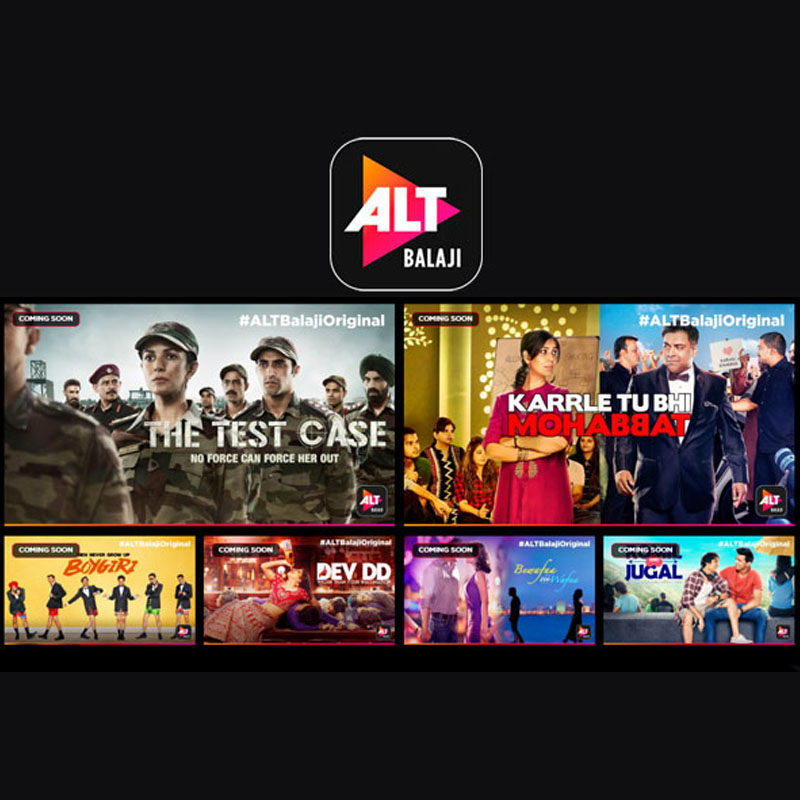
    MUMBAI: ALTBalaji, the OTT platform of Balaji Telefilms, has made all the right noises since its inception in April 16, 2017. With 2.5 million subscribers on the ALTBalaji platform, the company now wants to scale up its investments in the digital domain with two major plans – double the original shows in the next 10 months and enter into international markets.

    In an astute move, the company has collaborated with Sony Entertainment to procure IP rights of the show Dil Hi Toh Hai. As per industry norms, channels tend to get the IP rights when such deals are struck. On this occasion, however, Balaji Telefilms has managed to retain the rights of the show. The episodes will be available on ALTBalaji 24 hours after they are aired on Sony.

     “As far as we go, we feel we are investing a lot in our digital future as a company and that’s why it’s important for us to slowly also be invested in all the digital rights of the content that we create and therefore it is a first step in that direction,” ALTBalaji CEO and group COO Nachiket Pantvaidya told Indiantelevision.com.

    Pantvaidya claims no revenue was sacrificed to acquire these rights.

    “I am trying to say it is just not about retaining rights. You have a ready avenue to exploit that. We have done this strategically so it’s not just we retain the right and do nothing with it,” he added.

    Since its launch, ALTBalaji has been very aggressive with its original shows. From Bose: Dead or Alive to Kehneko Humsafar Hain and Ragini MMS, the brand has made an attempt to appeal to a wide segment of the Indian society. Not narrowing down its target audience has enabled the brand to build an audience in Tier II and Tier III cities.

    ALTBalaji’s success in India has given the company confidence to spread its wings overseas.

    “Our next target is to launch our service internationally by dubbing it in two languages Bahasa, Sinhala. We have also a Bangla dub plan which will target countries like Malaysia, Indonesia and Bangladesh. In addition, we will also try to get the higher ARPU nations like US and UK to consume our content,” said Pantvaidya of his company’s next moves.

    While some platforms are planning to stream more digital first movies, ALTBalaji is banking on episodic content. Future episodes and seasons keep the user constantly engaged with the platform, the Balaji team believes.  And if the numbers are anything to go by, they might as well stick to their current formula of programming.

    When it comes to subscriptions, the quarterly package contributes to 65% of the traffic. The company’s partnerships with Jio, Vodafone, Airtel, contributes 60-70% of its revenue. Moreover, 90% of its traction comes from mobile devices.

    With a plan to have a library of 42 original shows including 6-7 kids show by next March, the platform wants to stick to the SVOD model at least for the next ten months.

     While we often refer to OTT platforms as catch-up TV, ALTBalaji wants to increase its subscriber base by relying on original shows rather than being dependent on commissioned content.

  • India to enter top 10 OTT video markets in 2022: PwC

    India to enter top 10 OTT video markets in 2022: PwC

    MUMBAI: With a steadily increasing demand for online video consumption, India is set to occupy a spot in the top ten (over-the-top) video markets in the world in four years, reported the Times of India quoting a study from global accounting firm PricewaterhouseCoopers (PwC).

    The report titled Global Entertainment & Media Outlook 2018-2022 (Outlook) adds that the OTT video market in India is growing at a compound annual growth rate (CAGR) of around 23 per cent.

    According to the report, OTT video revenue in India reached Rs 2,019 crore in 2017 and is likely to hit Rs 5,595 crore by 2022.

    The report also notes that Indian entertainment and media industry is likely to reach Rs3.5 trillion (Rs353,609 crore) by 2022.

    ” India is expected to post an impressive growth in the entertainment and media Sector at a CAGR of around 11 percent, over the next five years. This is not only on the back of traditional media, such as TV subscription and advertising, cinema and advertising, expected to post robust growth, but also non-linear media such as OTT, gaming and  Internet advertising expected to  significantly high growth rates,” PwC India, partner & leader — entertainment & media, Frank D’Souza told Indiantelevision.com

    The findings of the PwC study do not come as a surprise given the flurry of activity in the Indian OTT space in the last two years. Global giants Netflix and Amazon Prime Video, local brands like ALTBalaji, and those owned by broadcasters like Star India’s Hotstar, Sony Entertainment Television’s SonyLIV and Zee Entertainment Enterprises Limited’s ZEE5 are all locked in a fierce battle for India’s OTT pie.

    Viu India country head Vishal Maheshwari said, “This report shines a great light on the OTT market. Original content will play a major role in the growth of the SVOD segment which projected to reach 81.6% of the total in 2022. If OTT players in India produce high quality content, consumers will likely end up with a handful of different subscriptions. Also, with one of the largest populations of millennials who are looking for quality and relatable alternative entertainment avenues, we believe India will surpass other nations to become the largest contributor to the growth of digital entertainment.”

    This intense competition among the Video on Demand(SVoD) platforms was the primary reason behind subscription services generating over 70 per cent of the revenue in 2017. This trend, according to the report, is bound to grow further with SvoD contributing to 79.4% of the total market revenue by 2022.

    India, however, did not find place in the top 10 global SVOD countries by revenue last year. However, for countries with the highest SVOD CAGR in 2017, India was on the number three spot after Indonesia and Philippines.

    Also Read :

    Star India mulls adding VR to PKL 6

    Star unveils Re.Imagine Awards for IPL ad campaigns

  • Govt. mulls norms tweak on women’s portrayal in digital media

    Govt. mulls norms tweak on women’s portrayal in digital media

    NEW DELHI: The Indian government is proposing to amend relevant laws relating to representation of women in mass media with a view to make the law contemporary and keep pace with changing technologies like OTT and other digital services.

    The India government had enacted the Indecent Representation of Women (Prohibition) Act (IRWA), 1986 to prohibit indecent representation of women through advertisements, publications, writings, paintings, figures or in any other manner. Since the enactment of the Act, technological evolution has resulted in the development of new forms of communication, such as internet, multi-media messaging, cable television, over-the-top (OTT) services and applications like Skype, Viber, WhatsApp, Chat On, Snapchat and Instagram.

    According to a statement put out by the government, technological advancements has necessitated widening the scope of the law so as to cover all forms of media. The proposal to amend the Act was introduced in Parliament in 2012, which referred the issue to a Parliamentary Standing Committee.

    The Ministry of Women and Child Development (WCD) has proposed amendments to widen the scope of Indecent Representation of Women (Prohibition) Act (IRWA), 1986 keeping in mind the recent technological advancement in the field of communications.

    Based on the observations made by the Parliamentary Standing Committee and recommendation made by the National Commission for Women and wide consultations with civil society groups, the following amendments have been recommended, amongst other things, by the ministry:

    Amendment in definition of term advertisement to include digital form or electronic form or hoardings, or through SMS and MMS.

    Amendment in definition of distribution to include publication, license or uploading using computer resource or communication device.

    Penalty similar to that provided under the Information Technology Act, 2000.

    Creation of a centralized authority under the National Commission of Women (NCW). This body will have representatives from Advertising Standards Council of India, Press Council of India, Ministry of Information and Broadcasting and one member having experience of working on women issues.

    This centralized body will be authorized to receive complaints or grievances regarding any programme or advertisement broadcast or published and investigate/examine all matters relating to the indecent representation of women.

    Also Read :

    Women portrayal: Better days are emerging

    Women employment in film and television industry drops: Study

  • Broadcasters aiming at quality content on both TV, digital

    Broadcasters aiming at quality content on both TV, digital

    MUMBAI: The impending death of the television is something people have been talking about but that future is yet to arrive. However, one can’t ignore the fact that today’s audiences do consume content anywhere and from any platform.

    Zee Melt 2018 saw a session on ‘The Next Seismic Shifts in Television’ with panellists Zeel domestic broadcast business CEO Punit Misra, Mediabrands IPG CEO Shashi Sinha and BARC CEO Partho Dasgupta. Provocateur Advisory principal Paritosh Joshi moderated the panel.

    When asked about the move to launch Zee5 as being a defensive strategy or a move to be at the front foot in the industry, Misra said, “Advertisers look for ROI. ROI on TV is significantly higher than any other. But it is a business of content and there is huge consumption happening on digital. However, if you do just digital, ROI can go horribly wrong.”

    He added that consumers would find ways and means to consume content as long as it is great content. “I see the synergistic benefits of having an OTT platform which will benefit from the content that is being made for the consumers as they want and equally we will create content which is tailor made for the audiences. In fact, I am thinking of how to bring digital to television again,” he said.

    Sharing his views on the path proposed by BARC to tackle non-TV screens, Dasgupta said, “It is all about how you measure content. Unfortunately, it needs to be discreet in this digital space. Although there is a convergence at every level, which makes it important to measure what India watches today now more than ever.”

    Dasgupta further explained that TV ratings body BARC is moving towards convergence, where telecom operators are moving towards distributions and distributions are moving towards telecoms. “You’ll see convergence at every turn,” he said.

    Sinha said that cost per thousand (CPT) as a currency for buying commercial time on TV has its own advantages. “I believe for a variety of reasons that CPT is a way of life. A lot of advertisers in the country use CPT and so too do agencies. CPT has multiple advantages. I presented a tool to a client that makes cross-media comparison much easier. For planning, CPT is there. But don’t mistake that for negotiations that happen. By and large, as markets evolve and as digital gets more share it is a matter of time where the agency and clients move towards gross impressions. It is happening.,” he said.

    The panellists agreed to one point that it is too soon to say whose future is brighter –TV or digital. But content will be the winner as people will consume content by any means and ways.

    Also Read :


  • BTVI to leverage digital mediums for growth

    BTVI to leverage digital mediums for growth

    MUMBAI: English business news channel BTVI is completing two years in August this year. The company was transformed from Bloomberg TV India after Bloomberg decided not to renew its deal with Business Broadcast News. BTVI got its COO Megha Tata in 2016 at the same time it got its new name. 

    English Business News (EBN) genre is still a very niche market with only five channels in the race – CNBC TV18, ET Now, BTVI, NDTV Profit and CNBC TV18 Prime HD. The genre contributes to less than one per cent of the total TV pie where BTVI is still struggling to compete with the genre leaders, CNBC TV18 and ET Now.

    It was around the same time that BTVI decided to bring in ex HBO MD Megha Tata on board as the channel’s new COO. Tata’s journey ever since has been a roller-coaster ride and she believes that refurbishing the leadership at BTVI has been a positive step. “Bringing back revenue function in-house which was outsourced before was another move that has worked for us,” she says. 

    One of the crucial decisions that paid off for BTVI was refurbishing the leadership. “Besides having a strong editorial leadership, in people like Anuj Katiyar to lead marketing, research and branded content, Shilpa Shetty to head revenue, Ashim Chakraborty as HR head and Deepa George to head our legal, I think we found an absolutely perfect leadership team. Bringing back revenue function in-house which was outsourced before was another move that has worked for us,” she adds.

    The hard work in the last one year has helped in boosting the channel’s market share from two per cent to a stable 15 per cent (touching as high as 24 per cent at times). This growth was riding on the back of very strong consumer insights being translated into on air content, programming changes, promo planning, FPC planning and brand building. 

    Tata believes that the business news genre is consumed not only on linear TV but also on OTT platforms. The channel is already present on Hotstar, Jio TV, Yupp TV, Airtel TV and Tata Sky TV. The key trend this year, according to Tata, will be the further penetration of TV in rural areas.

    Tata says that the future is for broadcasters to create specialised content for their social media as well as OTT platforms to retain subscribers and their loyalty. “More TV viewers from rural India will also mean an increase in advertiser base and hence advertising revenue. This year will also see exponential growth in the viewership of non-linear OTT platforms. Now that these OTT platforms have garnered critical subscriber base, it will be interesting to see what are the different revenue models that will emerge to monetise this critical subscriber mass. BARC is expected to launch EKAM – the integrated viewership measurement module – later this year. This will certainly help in rationalisation of investments in these OTT platforms,” she adds.

    With eight states gearing up for elections, news channels are sure to have a ball. Tata thinks that with addressable TV, broadcasters will get an option of customising ad breaks and play different ads targeted at different markets/TG. This will make TV lucrative for regional and small advertisers thus increasing advertiser base and revenues of broadcast TV media.

    BTVI, in the last financial year, had focussed on improving the OTS levels to 100 per cent in its key markets. In this financial year, the channel’s aim is to achieve this 100 per cent OTS in all the P1 markets.

    The growth in digital hasn’t had a deteriorating impact on traditional news viewing. Instead, Tata believes they complement each other and it is the content that will be the winner. Advertising on digital medium is growing rapidly, though not at the expense of TV revenues. 

    Urban India is ahead when it comes to consuming news on digital mediums but it is mainly headlines. When it comes to analysis, views or opinions, the option is always a news channel or newspaper.

    Tata reveals that increasingly audiences are consuming English business news on their mobiles and non-linear platforms like OTT and m-sites of trading apps. It’s an opportunity not to be missed. “Hence, we at BTVI have increased our focus on building a strong digital ecosystem for brand BTVI. We are already available on trading apps of Kotak, Axis Direct and IIFL. We are also working on our mobile app as well as revamping our website. To support the app and website, we plan to build a robust digital content plan,” she says.

    Though the regional market is important, BTVI will first look at focussing its energy and resources in establishing itself in its core metro market first. The regional market will come in at a later time.

    Speaking on the issue of taking up dual local channel number (LCN) she says that though it is advantageous to the channel, it can even hamper the brand since people can’t remember more than one number for a channel. Though it may get additional reach, it won’t get enough TSV to justify the cost.

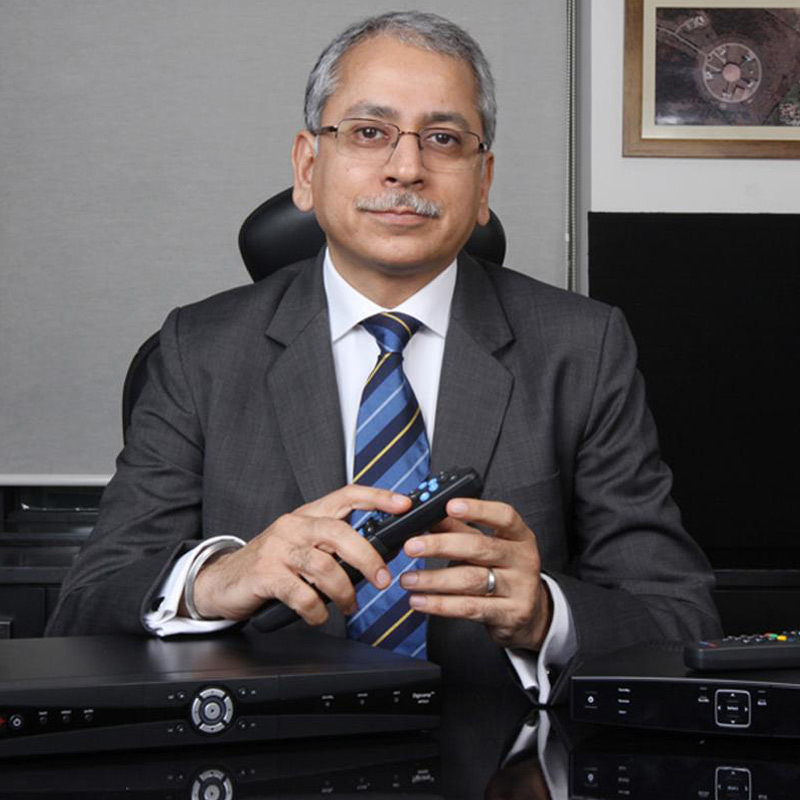
  • How Harit Nagpal plans to keep Tata Sky ahead

    How Harit Nagpal plans to keep Tata Sky ahead

    MUMBAI: The DTH sector. What once seemed a lucrative arena has now seen companies getting acquired and merging, the competition being intense . Today, India is the largest DTH market in the world by number of subscribers. As on 30 September 2017, there were 66.99 million active pay DTH subscribers in the country. This does not include subscribers of free DTH services.

    A recent report published in Livemint sees Tata Sky CEO and MD Harit Nagpal stating that DTH has become a completely commoditised industry, like selling coal or steel, as everyone has access to everything today. He said, “If I drop prices, everybody will drop prices. So, there is really no differentiation. The only sustainable differentiation is process-centred, which is largely service. So, your boxes should fail less often, your picture quality should be good, your user interface should be better than anyone else’s, wherever there’s a failure, your response time should be the fastest.”

    Nagpal also revealed that Tata Sky’s current revenue is in the region of Rs 6000 crore where the current run rate (everyday recharge) is worth Rs 20 crore per day. Its revenue and profitability are increasing by 15-20 per cent y-o-y. The DTH player is witnessing subscribers mushrooming by 15-20 per cent every year. 

    Dismissing the general perception that Tata Sky is a premium service, he says that it isn’t so. However, the company has a higher proportion of high definition subscribers who pay Rs 500-600 every month. In the past five years, Tata Sky recorded 60 per cent new subscribers coming in from smaller towns and villages who pay Rs 200-220 per month, which is also a huge amount for them. For a business to be successful there has to be a balance of low, medium and high paying subs, Nagpal told Mint. Too many low-end customers will hamper profit and too many high-end ones will curb growth.

    The merger of Dish TV and Videocon to become India’s number one DTH entity has been of the key highlights of 2018 but Nagpal does not view the situation as a challenge and rather thinks Tata Sky’s numbers are equal to theirs or higher. 

    Cord cutting is a rage in the US with subscriber after subscriber giving up traditional TV services for OTT platforms like Amazon Video, Hulu, Netflix and Youtube. The internet content is either free or significantly cheaper than the same content provided via cable.

    In the US, cable costs $100 per month whereas in India it’s a mere $5. So, when Netflix or other OTT platforms are available at $10 each, a consumer would rather prefer watching the latter. But this won’t be the case in India due to the low pricing. Nagpal is of the opinion that India will never give up on TV even if people get on to watching OTT.

    Tata Sky recently tied up with OTT platforms Netflix, Hotstar, Youtube and Amazon Prime Videos in order to make them available to its subscribers. The DPO  says simply changing the customer premise equipment will allow Tata Sky subs to  receive both the signals—from the satellite and from  broadband, enabling viewers to watch on TV screen, live TV via satellite whenever they want to, and OTT via broadband whenever they want to.

    Nagpal concluded by saying that he does not feel pressure from OTTs since he is in the content business. “My life depends on the customer. I was buying content from broadcasters earlier and supplying it to the customer via satellite. The customer sometimes wants to watch the content of his choice, my job is to fetch that content for him. I am not wedded to the satellite,” he stated.

  • Star spending up to Rs 2 cr on production per IPL match

    Star spending up to Rs 2 cr on production per IPL match

    MUMBAI: After having bought rights for almost all important sporting properties in India, Star India had the massive task to ensure that it sets a new benchmark for cricket. In February, it won the audio-visual production rights for IPL 2018, making it the first time that a broadcaster is producing IPL as till last year, the production rights was with the BCCI.

    Star hired ‘Why Project’ a management company based in London. About 28-32 cameras are being used for every match include drones swooping around all stadiums but Kolkata (where it didn’t get the permission) for the first time. A total of 16 DSNG OB vans are used for the live telecast of a match. Eight vans work on the world feed, four on the Hindi feed and rest on the regional feeds. The English feeds are being transmitted to other countries like the US and New Zealand. Two levels of quality check are done on the feeds, firstly the ground check then comes the Star India’s office and then goes on to uplink.

    Star has added Marathi and Malayalam feeds for the IPL finale as well. On the decision to do so, a Star India spokesperson said, “On social media there was a lot of demand for the Marathi commentary. The attempt is to make the broadcast of the finals available to the widest possible audience. Any region that we felt was potentially underserved by our current offering, we decided to add it to the mix which is Marathi and Malayalam.” Star Pravah and Asianet will be the channels to host the respective languages.

    It also provides tailor-made content for core cricket followers contextualised with a deep and passionate understanding from expert commentators and panellists through Select Dugout on Star Sports Select. It is an experience that extends beyond traditional ball-by-ball commentary, providing fans with a richer analytical experience, interactive demos with experts, before, after as well as during the matches. Star even added new arenas like a gaming experience WatchN’Play as well as virtual reality feeds.

    “We want the IPL finals to be a landmark event in Indian television, 17 channels will be airing it in eight different languages. The production cost of a match in IPL ranges from Rs 60 lakh to Rs 2 crore depending on the match. 700-800 people together are working hard towards the production of IPL 2018 including the regional feeds,” the spokesperson added.

    Being practical, Star doesn’t hope to sell much inventory on the newly added feeds. 

    The IPL finals will be telecast on 17 different feeds across the Star network – Star Sports 1 English, Star Sports 1 HD English, Star Sports 1 Hindi, Star Sports 1 HD Hindi, Star Sports 1 Tamil, Star Sports 1 Select SD English, Star Sports 1 Select HD English, Star Plus SD, Star Plus HD, Star Pravah SD, Star Pravah HD, Star Gold SD, Star Gold HD, Star Suvarna Plus, Star Maa Movies, Star Jalsha Movies and Asianet Movies.

    According to the numbers provided by the broadcaster, its OTT platform, Hotstar was viewed by 5.5 million viewers in virtual reality (VR) in week six. 30-35 per cent of the viewers watched it live and the remaining watched it in highlights.

    The same team is ensuring that content is being churned out on both TV and digital. Reports suggest that Star may also want to rein in homemakers by airing playoffs and finals on Star Plus.

    It introduced several regional feeds to hook new viewers but sources say that the incremental from there will not be more than 10 per cent. On Hotstar, it found that the highest concurrency in a match was around seven million and it has increased the bandwidth to 10 million. The highest concurrency which Star India has witnessed apart from IPL was in the ICC Champions Trophy 2017 of around 5.5 million.

    Nevertheless, any technical work is bound to have some glitches and Star isn’t immune to them. Viewers have mentioned about screens freezing and the DRS review replay being that of a different match. But the agility that Star is known for will ensure it resolves these as they crop up.

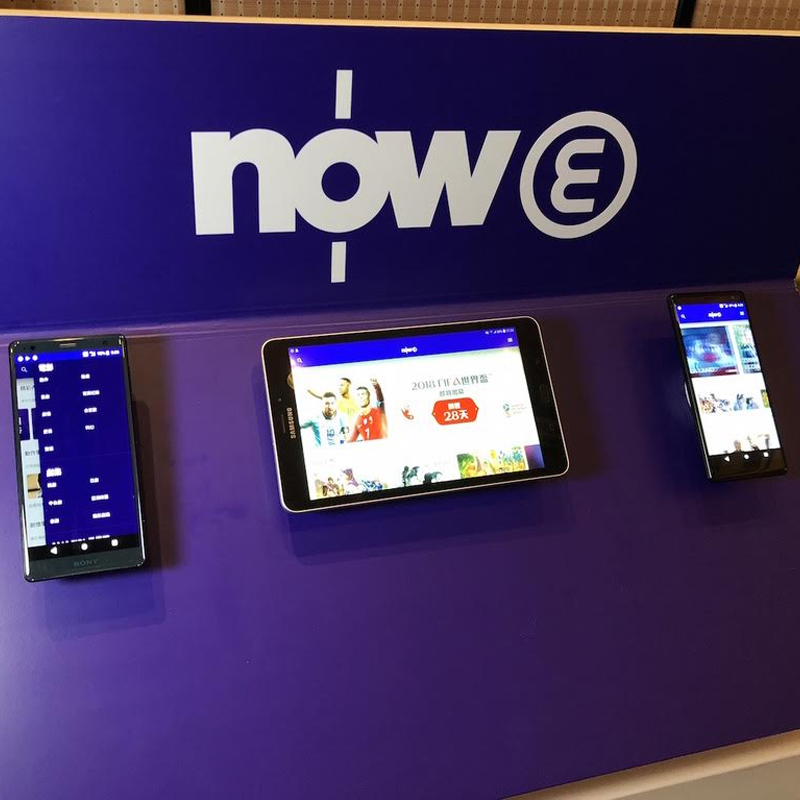
  • PCCW Media launches Now E OTT platform

    PCCW Media launches Now E OTT platform

    MUMBAI: Hong Kong-based media company PCCW Media has launched an over the top (OTT) platform Now E that will have several Asian dramas, movies, sports and Hollywood content to offer.

    It has partnered with several companies such as HBO, MOViE MOViE, Now  Baogu, Viu, etc. The upcoming FIFA World Cup 2018 will also be available for watching.  From July, all Hollywood and Asian content would be available on a pay per rent basis.

    Users can start downloading later this month from the Google Play Store or Apple App Store. Each user can add up to five devices and watch two streams concurrently.    The content can also be viewed on TV via Airplay or Chromcast.

    PCCW Media Group managing director Janice Lee said, “PCCW Media is very excited to add a new member to our media service family. Now E means ‘Easy, Entertainment, Everywhere’ which will be a perfect fit for the individual with millennial lifestyle. Today, modern viewers consume more online video than other audiences. They prefer watching online for greater flexibility and demand for personalised content. We are confident that Now E will stand out from the rest as the most preferred OTT service as Now E is a single OTT platform which provides exclusive Asian and international movies, dramas and world-class sports events.”

    Also Read :

    OTT players see subscription revenue as India’s future

    OTT experts discuss future of India’s hybrid market

    OTT platforms discuss need for regulation