Tag: OTT services

  • Brightcove OTT Flow to democratize OTT services

    Brightcove OTT Flow to democratize OTT services

    MUMBAI – Brightcove Inc.  has launched Brightcove OTT Flow, a turnkey OTT solution for media companies and content owners everywhere to rapidly deploy high-quality, direct-to-consumer, live and on-demand video services across platforms. Developed in partnership with Accedo, OTT Flow offers an end-to-end technology solution via a simple, cost effective commercial model. With OTT Flow, Brightcove and Accedo dramatically lower the barrier to entry to starting a multi-platform OTT service, allowing organizations to take their content over-the-top in weeks rather than months.

    OTT solutions to date have often required multiple vendors and bespoke solution development for each platform, resulting in high upfront development costs, time-consuming implementations, and challenges maintaining and upgrading applications and platforms.

    “There is seemingly insatiable demand around the world for new video programming choices and the industry is rushing to meet that demand with new service launches. IHS is actively tracking well over 2,000 different OTT video and multi-screen deployments in 70-plus countries. With new players entering the market on almost a weekly basis, the timing has never been better for solutions that accelerate these service introductions,” said IHS Technology Consumer, Media, Telecoms & Displays, chief analyst and VP, Ben Keen.

    At its core, OTT Flow   will allow video content delivery with a consistent UX across multiple platforms, including desktop, iOS (smartphone & tablet), Android (smartphone & tablet) and Google Cast.  It will also provide support for ad-supported (AVOD) and subscription (SVOD) video on demand models with ecommerce, CRM, and billing engine interfaces.  Subtitle and caption support would be other added advantages. When it comes to pricing, companies setting up an ad-supported OTT video service can get started with OTT Flow at $0,000 per month. Organizations seeking to launch a subscription-based OTT service can begin at $15,000 per month.

    “Brightcove OTT Flow dramatically changes the dynamics of launching new OTT services, making OTT accessible to nearly any content owner. Combining Accedo’s multi-platform application expertise with our video platform and solutions capabilities, we are bringing to market  a turnkey solution that eliminates technical barriers  and simplifies the OTT cost structure for anyone seeking to take their content over-the-top. As media companies around the world seek to engage their audiences  and drive revenue, they can take advantage of OTT Flow as an easy and affordable path to quickly launch beautiful OTT services,” Brightcove medoia SVP and GM Anil Jain said.

    Brightcove Video Cloud integrated with Accedo App Grid® and VIA® GO with a  subscription management and payment processing for SVOD. It comes with   pre-integrated ad-serving support from Google DFP.

    “Consumer demand for great content available across multiple devices has been increasing dramatically over recent years. With that demand set to rise even further, media companies are looking for solutions to launch new OTT services easily and effectively while providing an attractive user experience. This joint solution enables them to meet that consumer demand and launch compelling services in a much shorter timeframe than ever before,” Accedo CEO Michael Lantz had commented.

    OTT Flow is priced to make setting up and operating OTT services an economic proposition that any serious content owner can embrace. By eliminating the need to invest significant capital in upfront development and platform costs, OTT Flow’s pricing model is designed to fit a customer’s operating model.

  • Brightcove OTT Flow to democratize OTT services

    Brightcove OTT Flow to democratize OTT services

    MUMBAI – Brightcove Inc.  has launched Brightcove OTT Flow, a turnkey OTT solution for media companies and content owners everywhere to rapidly deploy high-quality, direct-to-consumer, live and on-demand video services across platforms. Developed in partnership with Accedo, OTT Flow offers an end-to-end technology solution via a simple, cost effective commercial model. With OTT Flow, Brightcove and Accedo dramatically lower the barrier to entry to starting a multi-platform OTT service, allowing organizations to take their content over-the-top in weeks rather than months.

    OTT solutions to date have often required multiple vendors and bespoke solution development for each platform, resulting in high upfront development costs, time-consuming implementations, and challenges maintaining and upgrading applications and platforms.

    “There is seemingly insatiable demand around the world for new video programming choices and the industry is rushing to meet that demand with new service launches. IHS is actively tracking well over 2,000 different OTT video and multi-screen deployments in 70-plus countries. With new players entering the market on almost a weekly basis, the timing has never been better for solutions that accelerate these service introductions,” said IHS Technology Consumer, Media, Telecoms & Displays, chief analyst and VP, Ben Keen.

    At its core, OTT Flow   will allow video content delivery with a consistent UX across multiple platforms, including desktop, iOS (smartphone & tablet), Android (smartphone & tablet) and Google Cast.  It will also provide support for ad-supported (AVOD) and subscription (SVOD) video on demand models with ecommerce, CRM, and billing engine interfaces.  Subtitle and caption support would be other added advantages. When it comes to pricing, companies setting up an ad-supported OTT video service can get started with OTT Flow at $0,000 per month. Organizations seeking to launch a subscription-based OTT service can begin at $15,000 per month.

    “Brightcove OTT Flow dramatically changes the dynamics of launching new OTT services, making OTT accessible to nearly any content owner. Combining Accedo’s multi-platform application expertise with our video platform and solutions capabilities, we are bringing to market  a turnkey solution that eliminates technical barriers  and simplifies the OTT cost structure for anyone seeking to take their content over-the-top. As media companies around the world seek to engage their audiences  and drive revenue, they can take advantage of OTT Flow as an easy and affordable path to quickly launch beautiful OTT services,” Brightcove medoia SVP and GM Anil Jain said.

    Brightcove Video Cloud integrated with Accedo App Grid® and VIA® GO with a  subscription management and payment processing for SVOD. It comes with   pre-integrated ad-serving support from Google DFP.

    “Consumer demand for great content available across multiple devices has been increasing dramatically over recent years. With that demand set to rise even further, media companies are looking for solutions to launch new OTT services easily and effectively while providing an attractive user experience. This joint solution enables them to meet that consumer demand and launch compelling services in a much shorter timeframe than ever before,” Accedo CEO Michael Lantz had commented.

    OTT Flow is priced to make setting up and operating OTT services an economic proposition that any serious content owner can embrace. By eliminating the need to invest significant capital in upfront development and platform costs, OTT Flow’s pricing model is designed to fit a customer’s operating model.

  • How ready is India for the digital disruption?

    How ready is India for the digital disruption?

    MUMBAI: The Indian media and entertainment industry is enamoured by the possibilities that the digital world poses for it. Within digital, ‘video’ and ‘mobile’ seem to be most used and often abused words. To tap in and make the most of this ‘digital video’ revolution that  the country is set to see in 2016, several small and big players have rolled out or planned VOD or OTT services..

    But is India ready for this digital disruption? Have those who are betting high on the success of the video business really taken into consideration the groundwork and infrastructure needed to actually make profit?  Moderator and Bloomberg TV India consulting editor Vikram Oza raised these questions at FICCI Frames 2016 during a panel discussion – ‘And the walls came tumbling down : Digital disruption.’ In front of him on the panel were  – SPN digital business EVP Uday Sodhi, Viacom18 Digital Ventures COO Gaurav Gandhi, HOOQ cofounder and content head Krishnan Rajagopalan, Arre COO Ajay Chacko and Elemental Tecnologies SVP Daniel Marshal  – each a pioneer of digital world in his own right.

    Within the first fifteen minutes into the discussion, the audience had a good idea of where things stood in the digital video business. “While a fair bit of 3G and 4G is taking off, the industry is still at a nascent stage to make assumptions. Monetization, bandwidth and content needed to fall in place to set the groundwork going,” said Sodhi summing it up.

    When posed a query on bandwidth costs and subscription issues, Gandhi gave an optimistic perspective. “Currently the data prices are very high. So much of the consumption behaviour we are seeing will drastically change as the bandwidth opens up and becomes cheaper. We need to aim for a setting when data prices become part of everyone’s utility bill. That is when no one will hesitate from paying for an OTT service.”

    Marshal added his take from his experience of the international market and how it played out there. “What I have observed in the US is that there are more users with multiple subscriptions since the combined cost is still less than what people used to pay for their cable subscriptions. If India has to really see the end of this convergence, adaptability and bandwidth needs to be worked on heavily,” he suggested.

    Another variable that is a hindrance for digital convergence is the complicated and poor payment gateways. “It is true that in India the present payment gateway options are a major challenge to both the service provider and the consumers. From my experience, a huge part of willing consumers put off payments because of the payment method. It is indeed a big challenge and a part of it is that people are still hesitant to trust their money with online payments. Thus the adoption is lower. TRAI tried to deal with the issue by strengthening the security process in the transaction and sort of got overzealous with it, which is costing the industry in a different way. I would say it will take another 5 years for the payment options to be easy and secure and ready to handle the digital disruption,” Sodhi opined.

    With everyone jumping on the mobile video bandwagon and promising an on demand video service, was there a need for the players to differentiate their offerings? After all, according to Google research, the current range of smartphones in the market allowed users to have only few apps before their devices slowed down. While the industry remained a free market, this clearly meant that only few services would survive this tough competition and make their way to the users’ handsets.

    To put matters into perspective, Gandhi said, “Currently 85 per cent of the content is owned between the five major TV networks and the two TV studios. The content offered by their OTT players may look homogenous because our first natural instinct is to put forth the existing content from our TV and movie library. But newer original content for the web is also being produced currently.”

    Rajagopalan shared that his OTT service HOOQ, which already has a large presence in the international market, is banking on its large Hollywood movie library as the differentiating factor. “Apart from that we have also identified regional and smaller studios that don’t have a contract with major broadcasters’ networks in India to provide us with fresh content. So ours is an international and regional approach.”

    Acknowledging the need to create web only content, instead of banking on existing libraries, Chacko added, “What an audience individually consumes is different social viewing. The content itself needs to be disruptive if it were to survive these initial years of just investment and to break even eventually. Each player will work on its strengths and try everything and anything between micropayments (or pay per view revenue model) to ad-funded content.”

    It is obvious from the discussions that there is a long way to go for India to reach a point when these OTT players can reap the optimum benefits of what they are sowing as investment today. Will they be able to make it through the dry years ahead until the infrastructure and country is ready? Is it worth the time and money that they are putting in?

    Chacko addressed this with a simple comparison to the eCommerce markets. “Compared to the eCommerce business there is almost no customer acquisition cost when it comes to digital media. What we gain organically is what these eCommerce brands pay millions of dollars for. Therefore, with an almost zero marketing budget one can sustain oneself in the industry as long as one has strong content,” Chacko said.

    The panel also pointed out that digital video business paves way for an exponential growth. With better devices and network, the business will grow not just by tens but thousands so it made sense to invest in it.  

    The moderator then rolled the ball in the panellists court by asking them if their advertisers were buying these arguments that they gave in favour of the OTT/ digital business. The panellists unanimously agreed that media planners and buyers were excited about this newly evolving media. They were happy about giving an alternative to their clients and so were the advertisers, given the measurability and reach the media gave them.

  • How ready is India for the digital disruption?

    How ready is India for the digital disruption?

    MUMBAI: The Indian media and entertainment industry is enamoured by the possibilities that the digital world poses for it. Within digital, ‘video’ and ‘mobile’ seem to be most used and often abused words. To tap in and make the most of this ‘digital video’ revolution that  the country is set to see in 2016, several small and big players have rolled out or planned VOD or OTT services..

    But is India ready for this digital disruption? Have those who are betting high on the success of the video business really taken into consideration the groundwork and infrastructure needed to actually make profit?  Moderator and Bloomberg TV India consulting editor Vikram Oza raised these questions at FICCI Frames 2016 during a panel discussion – ‘And the walls came tumbling down : Digital disruption.’ In front of him on the panel were  – SPN digital business EVP Uday Sodhi, Viacom18 Digital Ventures COO Gaurav Gandhi, HOOQ cofounder and content head Krishnan Rajagopalan, Arre COO Ajay Chacko and Elemental Tecnologies SVP Daniel Marshal  – each a pioneer of digital world in his own right.

    Within the first fifteen minutes into the discussion, the audience had a good idea of where things stood in the digital video business. “While a fair bit of 3G and 4G is taking off, the industry is still at a nascent stage to make assumptions. Monetization, bandwidth and content needed to fall in place to set the groundwork going,” said Sodhi summing it up.

    When posed a query on bandwidth costs and subscription issues, Gandhi gave an optimistic perspective. “Currently the data prices are very high. So much of the consumption behaviour we are seeing will drastically change as the bandwidth opens up and becomes cheaper. We need to aim for a setting when data prices become part of everyone’s utility bill. That is when no one will hesitate from paying for an OTT service.”

    Marshal added his take from his experience of the international market and how it played out there. “What I have observed in the US is that there are more users with multiple subscriptions since the combined cost is still less than what people used to pay for their cable subscriptions. If India has to really see the end of this convergence, adaptability and bandwidth needs to be worked on heavily,” he suggested.

    Another variable that is a hindrance for digital convergence is the complicated and poor payment gateways. “It is true that in India the present payment gateway options are a major challenge to both the service provider and the consumers. From my experience, a huge part of willing consumers put off payments because of the payment method. It is indeed a big challenge and a part of it is that people are still hesitant to trust their money with online payments. Thus the adoption is lower. TRAI tried to deal with the issue by strengthening the security process in the transaction and sort of got overzealous with it, which is costing the industry in a different way. I would say it will take another 5 years for the payment options to be easy and secure and ready to handle the digital disruption,” Sodhi opined.

    With everyone jumping on the mobile video bandwagon and promising an on demand video service, was there a need for the players to differentiate their offerings? After all, according to Google research, the current range of smartphones in the market allowed users to have only few apps before their devices slowed down. While the industry remained a free market, this clearly meant that only few services would survive this tough competition and make their way to the users’ handsets.

    To put matters into perspective, Gandhi said, “Currently 85 per cent of the content is owned between the five major TV networks and the two TV studios. The content offered by their OTT players may look homogenous because our first natural instinct is to put forth the existing content from our TV and movie library. But newer original content for the web is also being produced currently.”

    Rajagopalan shared that his OTT service HOOQ, which already has a large presence in the international market, is banking on its large Hollywood movie library as the differentiating factor. “Apart from that we have also identified regional and smaller studios that don’t have a contract with major broadcasters’ networks in India to provide us with fresh content. So ours is an international and regional approach.”

    Acknowledging the need to create web only content, instead of banking on existing libraries, Chacko added, “What an audience individually consumes is different social viewing. The content itself needs to be disruptive if it were to survive these initial years of just investment and to break even eventually. Each player will work on its strengths and try everything and anything between micropayments (or pay per view revenue model) to ad-funded content.”

    It is obvious from the discussions that there is a long way to go for India to reach a point when these OTT players can reap the optimum benefits of what they are sowing as investment today. Will they be able to make it through the dry years ahead until the infrastructure and country is ready? Is it worth the time and money that they are putting in?

    Chacko addressed this with a simple comparison to the eCommerce markets. “Compared to the eCommerce business there is almost no customer acquisition cost when it comes to digital media. What we gain organically is what these eCommerce brands pay millions of dollars for. Therefore, with an almost zero marketing budget one can sustain oneself in the industry as long as one has strong content,” Chacko said.

    The panel also pointed out that digital video business paves way for an exponential growth. With better devices and network, the business will grow not just by tens but thousands so it made sense to invest in it.  

    The moderator then rolled the ball in the panellists court by asking them if their advertisers were buying these arguments that they gave in favour of the OTT/ digital business. The panellists unanimously agreed that media planners and buyers were excited about this newly evolving media. They were happy about giving an alternative to their clients and so were the advertisers, given the measurability and reach the media gave them.

  • Net Neutrality: DoT Committee suggests plan of action, roots for expansion of OTT services

    Net Neutrality: DoT Committee suggests plan of action, roots for expansion of OTT services

    NEW DELHI: User rights on the Internet need to be ensured so that Telecom Service Providers (TSPs) and Internet Service Providers (ISPs) do not restrict the ability of the user to send, receive, display, use, post any legal content, application or service on the Internet, or restrict any kind of lawful Internet activity.


    However only the Government can decide what constitutes legality in relation to the content, application or service, with scope for judicial adjudication in case of any dispute.


    This has been stated by a Committee constituted by the Department of Telecom (DoT) and headed by member (Technology) A K Bhargava on 19 January this year to study Net Neutrality and its implications. 


    Other members were A K Mittal who is senior DDG TEC; Shashi Ranjan Kumar joint secretary (A); V Umashankar joint secretary (T); Narendra Nath – DDG (Security); and R M Agarwal – DDG (NT) who was also convenor of the committee.


    The Telecom Regulatory Authority of India (TRAI) issued a consultation paper in March this year titled “Regulatory Framework for Over-the-Top (OTT) Services” where the issue of Net Neutrality in the backdrop of OTT services came to the fore.


    The TRAI consultation paper sharply intensified the debate on Net Neutrality with broadcasters and telecom operators giving radically opposite views.


    At the outset, the DOT Committee said India has 997 million telecom subscribers and 99.20 million broadband subscribers with an access to internet at speeds higher than 512 kbps. Out of about 300 million subscribers accessing the internet, around 93 per cent subscribers are on wireless media, whereas seven per cent are on fixed wire line media. Currently, both broadband and internet penetration in India is comparatively low in the global context.


    In India, Internet traffic is likely to increase manifold in the next few years. There is a constant pressure for investment in network infrastructure and to expand capacities and increase penetration. Telecom infrastructure, being a capital intensive industry, will require significant investments by operators to meet the network capacity demands brought about by increasing broadband penetration, increasing speeds and increasing data usage.


    Telecom service providers have also started facing competition from unlicensed application platforms, termed Over-the-Top (OTT) players, in their traditional voice communication field.


    With an objective of enhancing revenue streams and to face competition from OTT players, telecom service providers have been exploring new opportunities for generating revenues from users and the content providers. Some of the models attempted by TSPs, such as charging higher.


    The Committee said content and application providers cannot be permitted to act as gatekeepers and use network operations to extract value in violation of core principles of Net Neutrality, even if it is for an ostensible public purpose.


    The Committee refrained from making any specific recommendation on search-neutrality, however, flags this issue as a concern for public policy. 


    In the report that runs into more than 100 pages, the Committee unhesitatingly recommends that “the core principles of Net Neutrality must be adhered to.”


    The Committee suggested an enforcement process where the core principles of Net Neutrality may be made part of license conditions and the licensor may issue guidelines from time to time as learning process matures. Since Net Neutrality related cases would require specialized expertise, a cell in the DoT HQ may be set up to deal with such cases. In case of violations, the existing prescribed procedure may be followed. This would involve two stage process of review and appeal to ensure that decisions are objective, transparent and just. 


    The tariff shall be regulated by TRAI as at present. Whenever a new tariff is introduced it should be tested against the principles of Net Neutrality. Post implementation, complaint regarding a tariff violating principle of Net Neutrality may be dealt with by DoT. Net Neutrality issues arising out of traffic management would have reporting and auditing requirements, which may be performed and enforced by DoT. QoS issues fall within the jurisdiction of TRAI. Similarly reporting related to transparency requirements will need to be dealt with by TRAI. TRAI may take steps as deemed fit.


    National security is paramount, regardless of treatment of Net Neutrality. The measures to ensure compliance of security related requirements from OTT service providers need to be worked out through inter-ministerial consultations.


    India should take a rational approach and initiate action in making an objective policy, specific to the needs of our country. It says both innovation and infrastructure have to be promoted simultaneously and neither can spread without the other. 


    The primary goals of public policy in the context of Net Neutrality should be directed towards achievement of developmental aims of the country by facilitating “Affordable Broadband”, “Quality Broadband” and “Universal Broadband” for its citizens.


    OTT application services have been traditionally available in the market for some time and such services enhance consumer welfare and increase productivity. Therefore, such services should be actively encouraged and any impediments in expansion and growth of OTT application services should be removed.


    There should be a separation of “application layer” from “network layer” as application services are delivered over a licensed network. 


    Specific OTT communication services dealing with messaging should not be interfered with through regulatory instruments.


    In case of VoIP OTT communication services, there exists a regulatory arbitrage wherein such services also bypass the existing licensing and regulatory regime creating a non-level playing field between TSPs and OTT providers both competing for the same service provision. Public policy response requires that regulatory arbitrage does not dictate winners and losers in a competitive market for service provision. 


    The existence of a pricing arbitrage in VoIP OTT communication services requires a graduated and calibrated public policy response. 


    In case of OTT VoIP international calling services, a liberal approach may be adopted. However, in case of domestic calls (local and national), communication services by TSPs and OTT communication services may be treated similarly from a regulatory angle for the present. The nature of regulatory similarity, the calibration of regulatory response and its phasing can be appropriately determined after public consultations and TRAI’s recommendations to this effect.


    For OTT application services, there is no case for prescribing regulatory oversight similar to conventional communication services.


    Legitimate traffic management practices may be allowed but should be “tested” against the core principles of Net Neutrality. General criteria against which these practices can be tested are as follows:


    1.       TSPs/ISPs should make adequate disclosures to the users about their traffic management policies, tools and intervention practices to maintain transparency and allow users to make informed choices.

    2.       Unreasonable traffic management, exploitative or anti-competitive in nature may not be permitted.

    3.      Tariff plans offered by TSPs/ISPs must conform to the principles of Net Neutrality set forth in guidelines issued by the Government as Licensor and TRAI may examine the tariff filings made by TSPs/ISPs to determine whether the tariff plan conforms to the principles of Net Neutrality.


    New legislation, whenever planned for replacing the existing legal framework, must incorporate principles of Net Neutrality. Till such time as an appropriate legal framework is enacted, interim provisions enforceable through licensing conditions as suggested by the Committee may be the way forward.


    Since enforcing Net Neutrality principle is a new idea and may throw up many questions and problems in the days ahead, an oversight process may be set up by the government to advise on policies and processes, review guidelines, reporting and auditing procedures and enforcement of rules.


    Capacity building through training, institution building and active engagement with stakeholders is essential. In order to deal with the complexities of the new digital world, a think-tank with best talent may also be set up.


    Click here to read IAMAI welcomes DoT recommendations on Net Neutrality

  • Star India roots for OTT services; says premature to work on regulatory regime

    Star India roots for OTT services; says premature to work on regulatory regime

    NEW DELHI: With the burgeoning of Over The Top (OTT) services in the Indian ecosystem, the Telecom Regulatory Authority of India (TRAI) is looking at creating a regulatory framework to keep a check on them.


    However, media and entertainment major Star India is of the opinion that TRAI should not create ‘artificial distortions’ by creating regulatory frameworks for OTT services, as there is no any evidence of market failure, abuse of dominance, monopolistic practices, or anti-consumer and anti-competitive behavior.


    Responding to TRAI’s Consultation Paper on the subject, Star India said that no case has been made out in the Paper of anti-competitive practices. “No regulatory impact assessment has been done, there is no ‘consumer problem’ as such that has been defined, no cost benefit analysis has been conducted, no qualitative or quantitative aspects have been highlighted of the problem at hand, and so the Paper is actually deficient.”


    Star India also said that Internet based services are already covered by substantive legislative frameworks like the Copyright Act, the Information Technology Act 2008 combined with the Competition Act. These legislations not only set out the commercial and technical parameters for conducting business but also set the legal boundaries for conduct in a market based environment. “Hence, there appears to be no need for a separate regulatory framework or licensing regime, which seeks to erode or over ride the existing laws or create artificial regulatory constructs, which result in market distortions. In fact, this was the exact argument telecom operators had earlier made while stating their case for not regulating mobile value added services (MVAS), which in essence is quite similar to Internet-based services,” said News Corp’s Indian arm.


    Writing on behalf of the broadcaster, Star India vice chairman of legal and regulatory issues Pulak Bagchi said, “The very fact that OTT services have found technological solutions to increase efficiencies means that we should do everything in our ability to promote their growth, not curtail them. Licensing almost always tends to create a privileged club on the basis of restricting access, which is against the very ethos of this revolution.”


    Bagchi went on to add that lawful interception is a cost and technology issue. “The government only has to license these technologies from those who own or hold the IP for such technologies. Given that functions like lawful interception, ensuring privacy al are sovereign functions, costs towards the need to be shared by licensee telcos and the government. For this purpose, the AGR payments made by telcos should be deemed to include their contribution towards this end,” he said.


    The Indian government and law enforcement agencies access data stored by Internet platforms when deemed legally necessary. Any additional regulations carry grave risk of breaching user privacy and would also require constitutional review – especially since the Government is still working on a proposed Privacy Bill.


    Existing legal formulations can also be updated to incorporate necessary technology wherewithal for lawful interception and privacy. License conditions for telcos and ISPs can also be amended to provision for these issues.


    The government and courts also have the power to block access to websites on the grounds of national security and public order. It has taken similar steps in the past and has been widely reported by the media. The transparency reports periodically published by major Internet companies suggest that the Indian government routinely requests for user data and blocking of user accounts.Between July 2014 and December 2014, Indian authorities had 5,473 requests for data, covering 7,281 user accounts from Facebook and the company had a compliance rate of 44.69 per cent. Google had a compliance rate of 61 per cent with respect to the requests made by different government agencies across.


    The broadcaster further said there was multiple evidence to suggest that the so-called “communication OTT services” are capable of being lawfully intercepted with the right kind of technology being deployed for the purpose by law enforcement agencies.


    ThedramaticinnovationintheInternetspaceisprovidingenormousbenefitsto consumers through lower costs, multiple choices and universal access to information and this is sufficient evidence to put on hold any proposed regulatory intervention.


    Referring to a question about the growth of OTT impacting the traditional revenue stream of TSPs, Star India said, “There seems to be almost a suggestion that it is the duty of the regulator to guarantee the revenues of the TSPs. All that the OTTs have done is to remove inefficiencies in the value chain delivering better value to the consumers and instead of looking at it from the consumers’ point of view, there seems to be an inclination to try and protect incumbent and in many cases, outdated revenue streams of the TSPs. The only thing that OTTs have done is to create a level playing field for all and the incumbents are more than welcome to evolve their current business models to participate in this.However, we fail to recognize any obligation on the part of the regulator, society or the government to protect traditional revenue streams at the cost of burgeoning inefficiencies.”


    It further said that communicationOTT should be welcomed if it can serve the same purpose as that of traditional telecom services in a far less expensive and efficient manner, resulting in relative affordability, greater value and added ease to the consumers. If communication OTT services are less reliant on network capacity or capability because of their low data usage and higher tolerance for latency, it should be encouraged rather than be called in for questioning whether they are impacting traditional revenues of TSPs.


    The broadcaster said that TRAI should keep consumer interests in mind rather than being weighed down by perceived challenges to incumbent telcos or losses accruing to them because of so called decrease in messaging and voice services. Consumers have not been shown to be impacted so as to requiring OTTs to be licensed or registered.


    Furthermore, OTT services help in driving up data usage/consumption and resultant revenues for telcos/ISPs, and with greater broadband penetration there will be a rise in volumes and increased revenues from data usage shall more than set off any loss to telcos on account of traditional services like SMS and calls. Further, OTT services also pay at the back end for connectivity and hosting services to the ISP’s /TSP’s backbone.


    At the outset, Star India agrees that it was too early for a regulatory framework for OTT services. “It is correct that the Internet ecosystem is still in an embryonic stage of evolution with limited penetration in India (19.19 per cent of Indian population has access to Internet and India’s share of world Internet users is at an abysmal 8.33 per cent). High speed broadband continues to be a pipe dream. Consumer propositions and business models around the Internet in India are still in a state of flux.


    Summing up, Star India said that OTT services are at a nascent stage in India and any intervention is likely to throttle innovation or investments in this space with the biggest casualty being start-ups.OTT already has enough bottlenecks and barriers: In any event there are structural bottlenecks and barriers to OTT usage viz. poor networks, low penetration of plastic money, limited customisation etc. Intervention would result in creating further entry barriers thereby stifling competition, hence are best avoided; intervention shall skew level playing fields in negotiations between telcos/ISPs on one hand and OTT service providers on the other, telcos clearly have a higher hand in negotiations always.


    OTTservicesarenotinfrastructureproviders; OTT makes money from its content or service offering – owned or licensed (be it ads or subs) while telcos/ is monetize public property viz. spectrum licensed to it by the government.


    Star India said any intervention that adversely impacts OTT services could impinge on freedom of speech and expression and hence be deemed unconstitutional.


    OTT apps are not completely substitutable to communication services as they are not interoperable – i.e devices that communicate through such apps, require installations of the same, unlike communication services, which can talk across networks regardless of underpinning technologies (GSM, CDMA, 3G, 4G, etc), therefore TSPs cannot allege that they are losing out to OTT.


    Star India noted, “We have already seen how the VAS industry had an untimely demise owing to revenue sharing conflicts. Any regulatory intervention that mandates payments by OTTs to TSPs shall result in a similar destruction for the former.”


    In reply to one of the questions, Star India said that OTTs are paying for network usage, streaming and technology costs. Just the fact that they have found a more efficient way of utilizing the pipes does not mean that they should be penalized for the same.


    OTT players should not be asked to pay for use of the TSP’s network over and above data charges paid by consumers. “We are of the view that the real question that needs to be considered is whether the TSPs should pay the OTTs a share of data revenue for significantly driving data consumption, which is borne out by the manifold increase in telco data revenues. We believe that it is too early to have a regulatory framework around the relationship between TSPs and OTTs given the nascency of the ecosystem. Given the fact that numerous OTT services have created a strong consumer proposition for the Internet, thereby driving penetration, it is equally likely that TSPs incentivise / compensate OTT services that are responsible for driving u p data consumption by sharing a percentage of their data revenues. Given the rapidly evolving business practices, we believe overarching regulations would only stifle innovative partnership models and be detrimental to the consumer and the business community at this stage.”


    According to Star India, TSPs should not differentiate on the quality of service based on an economic arrangement with OTT players. However, it is too early to put constraints on any partnership arrangements between TSPs and OTT players that can result in tangible benefits to consumers.


    Internet-based services and apps do not pay for telecom operators for using the network, and it should remain the same going forward. Forcing Internet-based services to pay extra for using a particular network negatively impact consumers and harm the Indian digital ecosystem. As mentioned in the above answer, data revenues of Indian telecom operators is already on an upswing and is slated to increase rapidly over the next few years, hence the argument for creating a new revenue source is not justified.


    Charging users extra for specific apps or services will overburden them, which in turn will lead to them not using the services at all. It is also akin to breaking up the Internet into pieces, which is fundamentally against what Net Neutrality stands for. Also, the Internet depends on interconnectivity and the users being able to have seamless experience – differential pricing will destroy the very basic tenets of the Internet.


    In its covering note Star India said that it realised that the issue was of far reaching consequences and would have a huge impact in the industry going forward.


  • India to see fourfold increase in OTT services by 2019: Calvin Koh

    India to see fourfold increase in OTT services by 2019: Calvin Koh

    MUMBAI: According to the FICCI-KPMG Media and Entertainment 2014 report, with 168 million TV households, India is the second largest TV market after China. However, there is scope for further growth in India’s broadcast industry.


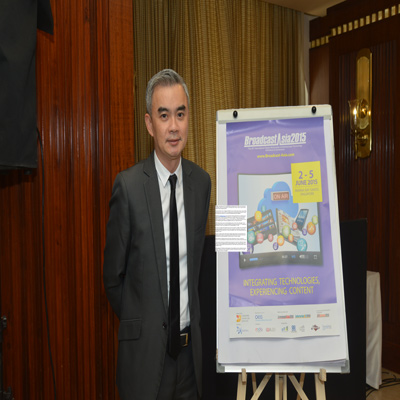
    Concurring with the same is Singapore Exhibition Services assistant project director (communication events) Calvin Koh, who was in the city to speak about the upcoming Broadcast Asia 2015 Summit. The Summit will be held from 2-5 June 2015 at the Marina Bay Sands, Singapore.


    Speaking to Indiantelevision.com, Koh says that the Indian broadcast industry is undergoing a big transformation. He informs that by 2019 India will see a fourfold increase in Over The Top (OTT) platforms as there will be major push for OTT service everywhere.  “Sports broadcasting will be another catalyst for this change. TV is going to be everywhere, not just limited to television sets,” he says. Broadcast Asia 2015 will have its spotlight this year on a TV Everywhere! Zone.


    With hurdles coming in way of a smooth digitisation process in India, Koh is still hopeful. “I don’t expect a sudden overhaul.  India has the potential for increasing consumption for TV. Regardless of the hurdles, we need to see trendsetters in the broadcasting space,” he says. 

    He went on to explain that broadcasters today need to be present on multiple screens. With regards to sports broadcasting, the executive with 18 years of experience in the industry, remarks sports broadcasting will be a strong driver for content consumption in India. “India is doing well and we are confident,” he says. 


    For Koh, TV serials and films still are largely untapped markets and have strong potential to drive growth and reach audiences. He equates the growth for Bollywood films in the same manner as it worked for the successful proliferation of Korean dramas in non Korean markets.


    When asked to list challenges faced by the Indian broadcast space, Koh says, “Content is of concern.” He says broadcasters and content creators need to come up with relevant stories that sell. 

    “Good content should also be materialized and repurposed to be consumed on tablets and mobile screens. With more broadband options, and faster upload times, there is variety and options of TV everywhere. Media analytics also help advertisers who views what where and at what time, which is essential,” he says. 

    With regards to OTT platforms and broadcasters, Koh says that they need to understand consumer behavior. “While there is no lack of potential, investments in infrastructure by the two and content should go hand in hand,” he concludes.