Tag: OTT players

  • “VisualDub has been built in India by NeuralGarage using its own original research”: Mandar Natekar

    “VisualDub has been built in India by NeuralGarage using its own original research”: Mandar Natekar

    Mumbai: NeuralGarage is a technology startup in GenAI & is the brainchild of IIT Kanpur alumni Subhabrata Debnath, Subhashish Saha, Anjan Banerjee, and media & entertainment veteran Mandar Natekar. It is one of the few startups from India that is building core tech with original research and developing its own models in the audio-visual domain. The startup’s flagship technology, VisualDub, addresses a significant challenge in dubbed content — the synchronization of visual and audio cues – ensuring a harmonious viewing experience across languages through visual dubbing and lipsync.

    Since its inception in July 2021, NeuralGarage has evolved strategically. After a year dedicated to research and development, and building the technology for commercial use, the company launched VisualDub in May 2023. A successful fundraising round in October 2022 paved the way for building a robust core engineering team, leading to collaborations with more than 10 large global clients.

    Building for the world, the company targets a diverse clients & partner base, including film studios, directors, production houses, advertising agencies, OTT players, broadcast networks, and media entertainment companies. Additionally, the company engages with media outlets covering the AI space, technology, and deep tech, establishing a comprehensive outreach and strategy.

    NeuralGarage has an ambition to take VisualDub to a global audience by refining its go-to-market strategy and securing further rounds of capital to fuel expansion and innovation. The company has received notable recognition, including being ranked No. 2 at ‘Pitch Fest’ during TechSparks’23 and was a part of YourStory’s Tech30 for 2023. Other accolades include NASSCOM Emerge50 (ranked No. 1 in the media category 2023), Amazon AWS ML Elevate 2023 cohort, and NASSCOM GenerativeAI Foundry. Currently, NeuralGarage has a dedicated team of 20 professionals driving its vision and mission forward.

    Indiantelevision.com had the pleasure of conversing with Neural Garage co-founder & CEO Mandar Natekar. In this interview, he offered plenty of valuable insights into the company’s operations and vision.

    Edited excerpts

    On identifying the need for VisualDub in the audio-visual domain

    Consider for a moment that you are watching a Korean film with English audio. Your audio input is English while your visual input remains Korean since the visual spoke expression does not match the audio. VisualDub solves for this visual discord, so now when you watch a Korean film with English audio, you feel as if you are actually watching a film shot in English itself. With localization content becoming the biggest currency for the content creation industry, this problem of Visual Discord is amplified exponentially. VisualDub was built to specifically solve this at scale and make content accessible seamlessly to every single person in the world in a language of their choice and which looks truly native and authentic visually in every language.

    On the technological innovations behind VisualDub that differentiate it from existing solutions in the market

    VisualDub has been built in India by NeuralGarage using its own original research and foundation models and without using third party wrappers. This tech is completely proprietary and is patent filed. It has been built specifically to cater to high impact industries like Films, Streaming, Broadcast Networks and Advertising where preservation of resolution and sync of the original is of paramount important across temporal and spatial movements including background and talent IP. The technology delivers at 2k resolution on pre shot footage without the need to create 3D models or avataars and works across screens of every size from theatrical to mobile phones. This differentiates it completely from any other tech available.

    On the role does original research play in the development of NeuralGarage’s models for VisualDub

    Original research ensures that you are building the tech from a top-down approach, and it’s built with a single focus of specifically meeting the high capability demands of the industries you are building for. Unlike horizontal tech that meets some requirements of many industries with generalized models, VisualDub has been built as vertical SaaS to meet all mandatory requirements of key industries like Films, Streaming Platforms and Advertising. We ensure that we are at the forefront at innovation by staying focused on original research that leads to differentiated tech innovations.

    On considering the diverse applications of VisualDub in the entertainment and content creation industry

    Currently we are offering it as a service to select large customers to ensure that technology is used correctly to deliver the right results and creates a playbook for the industry. Our ultimate goal is to create a desktop version of our VisualDub that can be licensed across both individual and enterprise level solutions depending on the size of the business and the annual contracts. We are currently raising capital to be able to move in the direction.

    On NeuralGarage anticipating VisualDub revolutionizing the content creation landscape and some potential impact you foresee it having on the overall quality of dubbed content across languages

    The biggest problem in dubbed content is the visual discord that makes it unrelatable and unauthentic. Content today is monetized across multiple revenue streams, and this is achieved through dubbing. This opens up massive global geographies for content monetization. With VisualDub, dubbed content as we know it ceases to exist. Now with technology it actually gives studios, streaming platforms to create content in every language without incurring additional production cost! VisualDub will allow you to shoot in one language and recreate it authentically in every language on earth without making it look like dubbed content.

    On your aspirations in terms of market penetration and becoming the go-to solution for audio-visual synchronization in dubbed content

    VisualDub has been made in Bharat for the globe. It solves a very pertinent problem for the entire Entertainment, Media & Content industries across the world and we intend to be the default technology for the post production pipeline across these industries. We are creating a new category “Visual Dubbing” in the post production workflow and VisualDub will define this through original innovation and globally scalable use cases.

  • GUEST COLUMN: OTT platforms are revamping the art of storytelling

    GUEST COLUMN: OTT platforms are revamping the art of storytelling

    Mumbai: The OTT space in India is exploding. There are a plethora of options available for people to watch online. Be it any genre, one will find something interesting to watch and enjoy. There are new titles dropping every week, all trying to catch the eye of viewers. The number of users that are warming up to the OTT bandwagon too is increasing. With the internet penetration getting better and smartphone adoption improving, more people now have access to OTT services.

    OTT players are also looking to expand their market share and vying to get the maximum time spent and visibility. All this is ensuring that viewers have a lot of options to binge. While that might be the case, the space is still getting warmed up to the idea of storytelling.

    OTT and the art of storytelling

    Storytelling is akin to painting a picture albeit with videos. It is an art that requires a lot of extensive observation and weaving into an etched story that viewers can connect and resonate with. The current explosion in the OTT space has enabled many to tap into this world and create beautiful, well-thought stories that are entertaining, educating and enlightening the audiences. However, the process is still at a very nascent stage. A very few OTT players have been able to crack this space and use storytelling to its full potential.

    As the competition in the space continues to heat up, storytelling will become even more important. Platforms that are able to master this art will be the ones that will be able to leave a lasting impression on the minds of the viewers.

    Growing popularity of regional content

    In the last couple of years, regional content has started gaining popularity amongst the masses. Earlier the regional content was only limited to the audience of that geographic area. However, with the advent of OTT platforms, this content is now widely available. Moreover, most OTT platforms are offering dubbed versions of the content that is enabling users to enjoy the same in the language of their preference. The recent success of titles such as Dark, Money Heist, Lupin, Squid Games, Crash Landing on You, “Pushpa”, “Beast”, and “KGF” are glowing examples of how content from any language and geography is able to connect with the audience.

    The content viewing behaviour has become more personalised and everyone wants to watch what they like best. Television was more about watching it with family and OTT has changed that drastically.  To cater to the evolving tastes and preferences, OTT players are revamping their strategy and getting regional and local flavours to reach out to a wider audience base. Content is truly the king and if they can come up with an interesting story then they will find suitable takers for the same.

    Data-backed decisions

    OTT platforms heavily rely on the data of consumers. There are two sides to data, the good and bad. On a positive note, the platforms have a complete picture of what content is getting consumed and the demographics of their users. They even get to know details such as which device the content is being consumed, how much time the viewers are spending on their app, at what hour of the day they are getting maximum traffic, and the drop-out point. It also provides information on what type of content keeps the users engrossed and what they are searching for. This is the bad side of the data as it impacts their social behaviour and how their personality is getting moulded. A lot of companies use this data to push their products and services.

    While data is helping OTT players in finding the most engaging content but it is also typecasting them into making the same things. Serving similar content over time may result in fatigue and viewers switching over to other platforms. Therefore, one needs to be mindful of how they are using the data and make intelligent decisions.

    Emergence of short video app

    The attention span of people is reducing. OTT players now have a very short time to hook the audience to the content. There is also increased competition that OTT content is facing from the new age short video format apps. Tik-Tok, Instagram Reels, Moj and Chingari have managed to create a space for themselves. These short video apps deliver a variety of content and have become immensely popular. These apps are now forcing the OTT players to rethink and rejig their strategy. Some OTT players are now thinking of reducing the time per episode to 25 mins from 45 minutes. Netflix is also planning to come out with a short video format to take on these apps head-on.

    In nutshell, there is no dearth of content available online. From different genres to platforms to video lengths, there is space for everyone. Viewers are also exposed to quality content from across the globe. While there are global titles and K-Dramas that are ruling the roost, even the regional content is making a big impact. In the end, it is powerful stories and engaging content that is gaining the maximum attention. There is also a wider segmentation. Not everyone will be open to consuming content about spirituality and religion. The older audiences are more likely to connect with bhakti and pravanchans but to connect with the younger lot, the platforms will need to have a fresh approach. In the past, mythology shows that are well presented and made keeping in mind the sensibilities of today’s audience have worked wonders for the OTT platform. Legend of Hanuman on Hotstar was one such show.

    Presentation is an important aspect in today’s time. Great presentation and storytelling can go a long way in winning over the audiences and garnering viewership from across age groups.

    The author is OMTV (India’s first sanatan storytelling platform) founder and MD Nitin Jai Shukla.

  • Inside India’s dubbing and subtitling industry

    Inside India’s dubbing and subtitling industry

    MUMBAI: The dubbing and subtitling industry in India was founded due to the television business’ need to leverage a variety of content from within different markets in the country. Indian viewers first tasted dubbed content thanks to Discovery World. In the early 90’s, dubbing was predominantly restricted to kids’ animation content by Disney. This was then picked up by private broadcasters as a fixed slot for kids that later evolved into a dedicated kids channel available in multiple languages. The first dub theatrical hit was Jurassic Park, which opened the Pandora’s box for cult South Indian films like Roja. Thus, a degree of variety and freshness was injected into Indian programming.

    Demand for localised content has grown

    Today, dubbing and subtitling is a flourishing business in India with Hollywood films, animation films and regional content at the heart of it. This wasn’t the case few years ago when only international content was dubbed for the Indian market. In India dubbing mostly happens in three Indian languages- Hindi, Tamil and Telugu. Spider-Man 3 was dubbed in Bhojpuri in addition to Hindi, Tamil and Telugu. A Good Day to Die Hard, the most recent instalment in the Die Hard franchise, was the first ever Hollywood film to receive a Punjabi language dub as well.

    In 1983, PA Krishnan founded the Dubbing Artistes Union of South India, an association for dubbing artistes. The union, which is now called South Indian Cine and Television Artistes and Dubbing Artistes Union, has over 2,000 artistes and more than 30 voice co-ordinators or dubbing agents (people who choose dubbing artistes) as its members. It is also affiliated to the Film Employees Federation of South India (FEFSI). 

    The surge and infusion of international content entering India and demand to watch it in native language has witnessed a steady rise. Serials and small-format shows from Tamil and Bengali are now being dubbed and subtitled in many Indian and foreign languages.

    Major dubbing companies have now given way to smaller players like BOL Media, Native Ninja, VSI Group, etc. UTV shut down five years back, while Crest Animation pulled the plug on its operations almost 10 years ago. In terms of corporate players only Prime Focus still exists. 

    Amazon Prime and Netflix are spending big on content localisation. They are also producing original Indian content that is being dubbed for international markets. Among the global OTT players, a major growth driver is Netflix, which launched its global video on demand (SVOD) service in January 2016. It has now 104 million paid subscribers in 190 countries and the service supports 24 languages.

    “ZEEL has a Bollywood movie pay television channel in Spanish language called ZEE Mundo. So, a lot of Indian content is travelling overseas now. Recently Aamir Khan’s movie also got dubbed in China and people over there loved it,” says BOL Media Founder and CEO Rahul Bhatia highlighting the evolution of India’s dubbing and subtitling industry.

    Economics of dubbing and subtitling industry

    The dubbing industry in India is valued anywhere between Rs 100-120 crore. Interestingly, the bigger companies are now giving way to smaller ones. The key reason behind this development has been the exodus of influential executives from major players setting up their own dubbing businesses.

    The mushrooming of smaller companies has greatly benefited broadcasters and production houses that now have access to more technical resources at pocket-friendly prices. For instance, it now costs Rs 15,000 to dub a television episode as compared to Rs 80,000 in the past. Today, a three-hour movie costs Rs. three lakh when dubbed for a television audience and around Rs. 15 lakh for the theatres.

    In the general entertainment space, dubbing and executing one episode takes four days while subtitling of one hour content takes two days. However, a movie for the television audience is dubbed in approximately 15 day while that for a theatre could need up to 30. While dubbing has become cheaper, content translation charges have witnessed a spike.

    Translators charge Rs. 1 per word for an Indian movie and Rs. 10 for a foreign film, while dubbing costs vary between Rs. 80 to Rs. 130 per minute for one movie.

    “There are very few corporate structures having an entire team of dubbing directors, sound engineers, quality controllers in house with defined SLA and workflows. Rest of the dubbing companies are owned and operated by studio owners, voice actors or dubbing producers with a niche clientele. Majority of the companies assemble the team and work on a project-to-project basis,” says Native Ninja founder Sanjeev Das.

    The road ahead

    Dubbing companies acquire customers organically. The major chunk of the business is comes from the television industry. But going forward, OTT platform could be the biggest source of business. Around 60 percent of the business comes from the television industry, 30 per cent from movies and remaining 10 per cent from OTT. In the future, OTT is likely to contribute 60 percent of the dubbing business.

    The business will be on a steady growth path due to the increased volume of content being created with a focus on localisation. Dubbing, subtitling, and closed captioning for English and major international languages could be taken over by technology such as artificial Intelligence, machine learning, automated captioning and auto-translation. However, precise and accurate translation, adaptation, interpretation and translation will always require a human touch. That’s where localisation companies need to be at the top of their game. With such advancements, the industry is bound to witness a shake up in the next five years, with only those prepared to adapt to the challenges likely to survive and thrive.
     

  • OTT players have many content, technical challenges to overcome: Akamai’s Dev Gupta

    OTT players have many content, technical challenges to overcome: Akamai’s Dev Gupta

    MUMBAI: More and more ‘OTT players’ are entering India’s fast churning online video ecosystem in a bid to make something out of the double digit growth rates in digital ads in India. If one were to go by industry estimates some thirty odd new digital video services will launch in this market by the next financial year. Those jumping the gun to make fast money in all this disruption fail to realise the challenges that this new media poses in the long run.

    How will all these players co exist and be self-sustaining without a well defined USP when there is only a limited space for apps in smart devices? Which ones will get loyal users and which one will be forgotten in a pile of uninstalled apps?

    The key to having an edge over the rest out there is to see the larger picture and build an ecosystem around content, network and technology — something that technology based companies such as LeEco have realised and already implementing through their massive web of CDNs or Content Delivery Networks. While big players have the financial and technological backbone to support CDNs, the emerging players thus turn to media solutions providers such as Akamai to build this ecosystem for them.

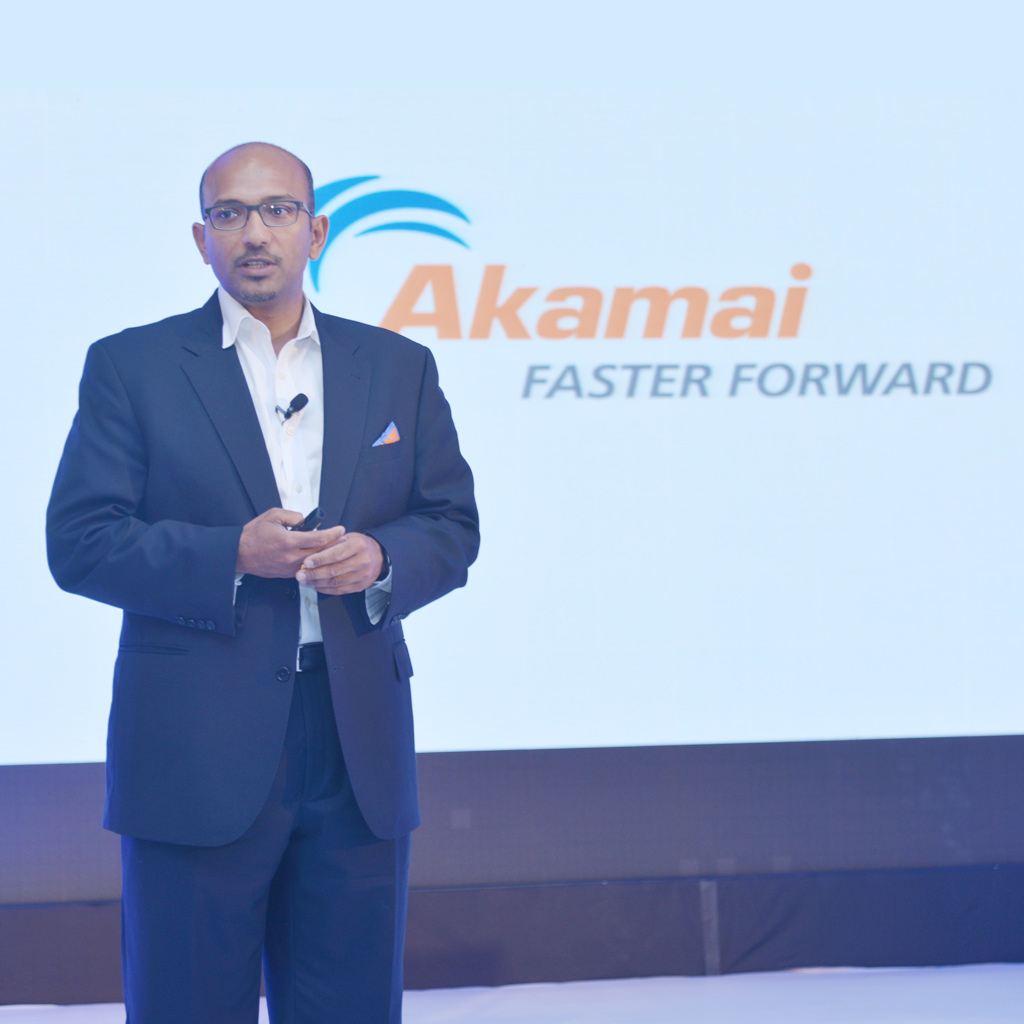
    Speaking at indiatelevision.com initiative ‘Vidnet 2016′, Akamai’s global VP for Media Solutions Services, Dev Gupta, laid down the fundamentals of what an aspiring or existing OTT player must heed to if it planned to survive in the market till when the space becomes revenue generating.

    Global trends such as growing audience size, longer watch hours spent on online videos, and preference for higher bit rate videos or inclination towards high quality streaming point towards the fact that the consumer is not only giving significant time to digital videos but also is picky about the content and how it is served to him or her, pointed out Gupta.

    “Add to that the growing number of connected devices options in the market, and the OTT player has already found itself challenged to deliver the right type of content for the right type of device and operating system, in the right format. Easier said than done,” Gupta reiterates.

    Gupta insisted it is essential for each player to get the basics right to ensure a seamless service for the end user. ‘It starts with securing the content for the consumers which includes getting the rights and licenses of the content in place, ensuring your distribution channels be it for offline or online viewing and theft proofing the entire content flow from content producer to the audience from end to end,” he stated.

    The next important step in ensuring a profitable future in this business is to position oneself as a trustworthy brand that includes protecting the audience’s privacy and their payment information. “If you have content sitting in your servers or clouds, without a doubt there will be people trying to hack into it. Similarly, if you have databases with credit card information of millions of customers, who have put faith in your service by sharing delicate information with you, it needs to be protected as dearly as the content,” Gupta advised.

    Having a clear brand strategy in communication is also a must, according to Gupta.

    Players with AVOD business model have to especially make sure the advertisement do not dilute the experience of the content. Gupta further added that every player must be ready to handle multiple fold challenges, including different operating systems, devices and formats.

    Gupta aptly concluded with a final advice: be nimble.

  • OTT players have many content, technical challenges to overcome: Akamai’s Dev Gupta

    OTT players have many content, technical challenges to overcome: Akamai’s Dev Gupta

    MUMBAI: More and more ‘OTT players’ are entering India’s fast churning online video ecosystem in a bid to make something out of the double digit growth rates in digital ads in India. If one were to go by industry estimates some thirty odd new digital video services will launch in this market by the next financial year. Those jumping the gun to make fast money in all this disruption fail to realise the challenges that this new media poses in the long run.

    How will all these players co exist and be self-sustaining without a well defined USP when there is only a limited space for apps in smart devices? Which ones will get loyal users and which one will be forgotten in a pile of uninstalled apps?

    The key to having an edge over the rest out there is to see the larger picture and build an ecosystem around content, network and technology — something that technology based companies such as LeEco have realised and already implementing through their massive web of CDNs or Content Delivery Networks. While big players have the financial and technological backbone to support CDNs, the emerging players thus turn to media solutions providers such as Akamai to build this ecosystem for them.

    Speaking at indiatelevision.com initiative ‘Vidnet 2016′, Akamai’s global VP for Media Solutions Services, Dev Gupta, laid down the fundamentals of what an aspiring or existing OTT player must heed to if it planned to survive in the market till when the space becomes revenue generating.

    Global trends such as growing audience size, longer watch hours spent on online videos, and preference for higher bit rate videos or inclination towards high quality streaming point towards the fact that the consumer is not only giving significant time to digital videos but also is picky about the content and how it is served to him or her, pointed out Gupta.

    “Add to that the growing number of connected devices options in the market, and the OTT player has already found itself challenged to deliver the right type of content for the right type of device and operating system, in the right format. Easier said than done,” Gupta reiterates.

    Gupta insisted it is essential for each player to get the basics right to ensure a seamless service for the end user. ‘It starts with securing the content for the consumers which includes getting the rights and licenses of the content in place, ensuring your distribution channels be it for offline or online viewing and theft proofing the entire content flow from content producer to the audience from end to end,” he stated.

    The next important step in ensuring a profitable future in this business is to position oneself as a trustworthy brand that includes protecting the audience’s privacy and their payment information. “If you have content sitting in your servers or clouds, without a doubt there will be people trying to hack into it. Similarly, if you have databases with credit card information of millions of customers, who have put faith in your service by sharing delicate information with you, it needs to be protected as dearly as the content,” Gupta advised.

    Having a clear brand strategy in communication is also a must, according to Gupta.

    Players with AVOD business model have to especially make sure the advertisement do not dilute the experience of the content. Gupta further added that every player must be ready to handle multiple fold challenges, including different operating systems, devices and formats.

    Gupta aptly concluded with a final advice: be nimble.

  • Challenges faced by the OTT players in India; the way ahead

    Challenges faced by the OTT players in India; the way ahead

    MUMBAI: With the majority of the OTT players operating on a freemium model, subscriptions are enjoying a new prominence as a revenue model for digital content and apps. While India saw Ditto TV working on the subscription revenue model, Balaji is all set enter the digital space with its digital platform Alt Digital Media.  

    The panel discussion on ‘Cracking the money code- Challenges and solutions for Digital Subscription models’ at FICCI FRAMES 2016 discussed the revenue models and the profit generation formula for this sector. Industry stalwarts included VUClip CEO Nickhil Jakatdar, Nazara Technologies CEO Manish Agarwal, ALT Entertainment chief strategy officer Eklavya Bhattacharya, Eros Digital COO Karan Bedi and Spuul India CEO Rajiv Vaidya. The session was moderated by BBC World News presenter Ros Atkins.

    After throwing light on the revenue models that each of the platforms followed, the panellists broadly discussed the revenue models that are followed in India with their positives and negatives and the various challenges that OTT was facing due to certain issues like infrastructure, piracy, etc.

    Initiating the discussion with how the ‘freemium’ model helped the OTT platforms, VUClip’s Jakatdar said, “The thing with such an emerging market is that if you don’t give content for free to the viewers, they will switch to some other place where they are getting it. You need to have content beyond the subscription pay wall. For example, in Malaysia, we found that Korean content works well there and is extremely popular. We got the simulcast content rights for Korea which they had to pay for, but the library content was for free.”

    He further added that, “We believe in micro payments which means that viewers can pay per content they view.  This means that they can buy data for a single day and don’t have to pay a monthly subscription. This is working well for us.”

    “Even as we use the freemium model, the free content for is important. If we look at the free content on the platforms as an ad-revenue driver, then we may find it difficult to sustain in this space ,” he further added.

    Differing with Jakatdar, ALT Entertainment’s Bhattacharya opined, “I don’t agree that the consumers will move to a different platform if you charge them. That’s going happen if you provide the same content on different platforms. It is definitely a challenge to provide exclusive quality. People don’t want to watch free content. They want to watch good content. The key for such platforms is to target the most loyal audiences and to provide them good quality and exclusive content which they can’t resist to buy. If you are creating content and hoping that you can break-even on advertising, it’s not going to work out. If you are confident about your content, people will definitely pay for it irrespective of the cost. If you create content that the consumers can’t get anywhere, they will come to you.”

  • Challenges faced by the OTT players in India; the way ahead

    Challenges faced by the OTT players in India; the way ahead

    MUMBAI: With the majority of the OTT players operating on a freemium model, subscriptions are enjoying a new prominence as a revenue model for digital content and apps. While India saw Ditto TV working on the subscription revenue model, Balaji is all set enter the digital space with its digital platform Alt Digital Media.  

    The panel discussion on ‘Cracking the money code- Challenges and solutions for Digital Subscription models’ at FICCI FRAMES 2016 discussed the revenue models and the profit generation formula for this sector. Industry stalwarts included VUClip CEO Nickhil Jakatdar, Nazara Technologies CEO Manish Agarwal, ALT Entertainment chief strategy officer Eklavya Bhattacharya, Eros Digital COO Karan Bedi and Spuul India CEO Rajiv Vaidya. The session was moderated by BBC World News presenter Ros Atkins.

    After throwing light on the revenue models that each of the platforms followed, the panellists broadly discussed the revenue models that are followed in India with their positives and negatives and the various challenges that OTT was facing due to certain issues like infrastructure, piracy, etc.

    Initiating the discussion with how the ‘freemium’ model helped the OTT platforms, VUClip’s Jakatdar said, “The thing with such an emerging market is that if you don’t give content for free to the viewers, they will switch to some other place where they are getting it. You need to have content beyond the subscription pay wall. For example, in Malaysia, we found that Korean content works well there and is extremely popular. We got the simulcast content rights for Korea which they had to pay for, but the library content was for free.”

    He further added that, “We believe in micro payments which means that viewers can pay per content they view.  This means that they can buy data for a single day and don’t have to pay a monthly subscription. This is working well for us.”

    “Even as we use the freemium model, the free content for is important. If we look at the free content on the platforms as an ad-revenue driver, then we may find it difficult to sustain in this space ,” he further added.

    Differing with Jakatdar, ALT Entertainment’s Bhattacharya opined, “I don’t agree that the consumers will move to a different platform if you charge them. That’s going happen if you provide the same content on different platforms. It is definitely a challenge to provide exclusive quality. People don’t want to watch free content. They want to watch good content. The key for such platforms is to target the most loyal audiences and to provide them good quality and exclusive content which they can’t resist to buy. If you are creating content and hoping that you can break-even on advertising, it’s not going to work out. If you are confident about your content, people will definitely pay for it irrespective of the cost. If you create content that the consumers can’t get anywhere, they will come to you.”