Tag: OTT

  • Applause’s Sameer Nair spills the secret sauce for hit storytelling

    Applause’s Sameer Nair spills the secret sauce for hit storytelling

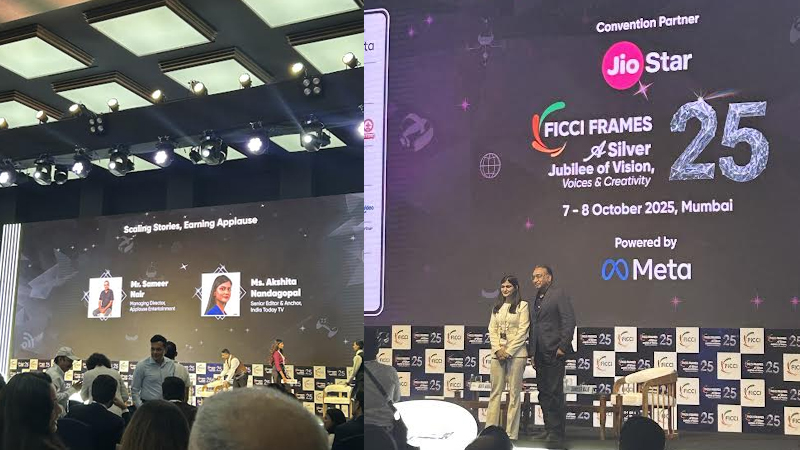
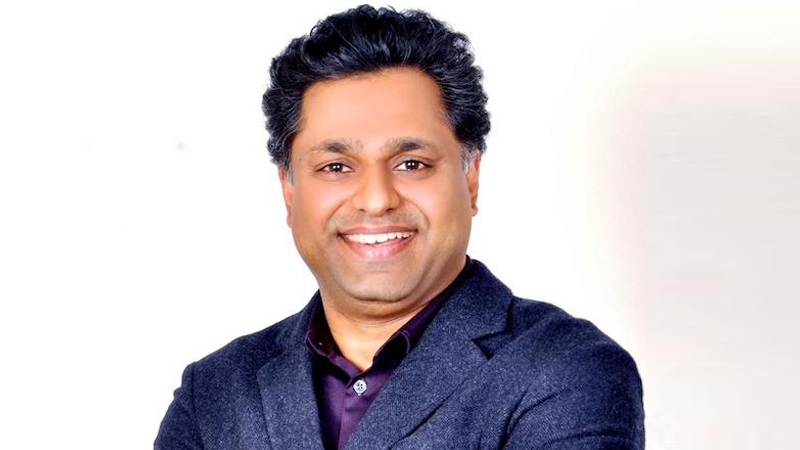
    MUMBAI: At Ficci Frames’ silver jubilee edition, a candid panel discussion between Applause Entertainment managing director Sameer Nair and India Today senior editor and anchor Akshita Nandagopal, brought the house down with humour, insight and a healthy dose of industry nostalgia.

    Moderating the fireside chat ‘Scaling stories, earning applause,’ Nandagopal kicked off by asking if Applause Entertainment had cracked the “OTT code,” given its slate of acclaimed shows like Criminal Justice (2019-present), The Hunt (2025) and Black Warrant (2025).

    Nair brushed off the idea of any secret formula. “Storytelling is a difficult enterprise,” he said. “You put in all the hard work and finally show it to an audience, sometimes they love it, sometimes they don’t. What we try to do is tell stories that feel real, even if they entertain first.”

    Citing his fondness for contemporary history, Nair explained how Applause often draws inspiration from real people and events, and banks on the entertainment factor. Black Warrant, he pointed out, isn’t about the dark underbelly of the Tihar Jail and the inmates as much as it is about “three young people on their first day at work; only, their workplace happens to be the Tihar Jail.” The company’s celebrated Criminal Justice series, meanwhile, has gone far beyond its British and American counterparts. “By the fourth season, we weren’t adapting anymore. We were living in the world of Madhav Mishra,” he said with a grin.

    Continuing the conversation on creativity in Indian storytelling, Nandagopal asked Nair, “Creativity is always a buzzword, but sometimes it feels boxed in a certain way. You can’t talk about uncomfortable topics; you have to be mindful of controversy and what entertains an Indian audience. Do you think creativity is constrained like that?”

    Amusedly, Nair interjected, noting that this isn’t unique to India. “In the eight years we’ve been doing this, we haven’t really got into much trouble, so we must be doing something right. We don’t have an agenda; we’re telling stories that make you think, but not what to think. We find compelling characters, research their worlds, and present their stories as balanced and entertaining as possible. They are people like you and me.”

    He brought up The Hunt as an example, which begins with the assassination of Rajiv Gandhi but quickly transitions into a police procedural. “It’s not about politics; it’s about crime and justice… In the process, you get to know the characters. There’s one scene where Sivarasan, the one-eyed LTTE mastermind, sits in a theater watching a Rajnikanth film. We loved putting that in, it humanises him without glorifying anything.”

    When Nandagopal brought up the theme of change, both broadly and through the lens of content, Nair noted how some formats have stood the test of time. “KBC is a classic because it has a great format and Mr. Bachchan,” he said, crediting both star power and familiarity for its relic appeal. “Audiences talk about change all the time, but they also love familiarity. Sometimes you don’t want a murder mystery; you just want to relax.” To which, Nandagopal nodded and said, ‘It’s a comfort watch. A lot of us do that. We’ve been watching a lot of the classics that we’ve seen before. Knowing that that’s something that’s predictable. We know what we’re expecting there. And yet we love to watch it.

    Looking back at the first Ficci Frames two decades ago, Nair painted a vivid picture of how dramatically the industry had evolved. “In 2005, television ruled everything. There was no Facebook, Twitter or Youtube, even the iphone didn’t exist. By 2015, digital platforms had become the barbarians at the gate. Now, in 2025, we’re minor players compared to Netflix, Youtube and social media. And just as we adjusted to that, AI arrived.”

    The conversation soon turned to the elephant in every creator’s room: will AI replace creativity or enhance it? Nair’s reply was measured. “AI will be a great tool if it can create that suspension of disbelief,” he said. “When you see a dinosaur chasing you in Jurassic Park, you believe it. If AI can make you believe without breaking the illusion, it’s magic. But if it looks fake, we might as well be watching animation.”

    He added that AI, much like earlier leaps in filmmaking, from special effects to computer graphics, would revolutionise the process but not erase human creativity. “Even an AI actor needs direction, a script and a story,” he said. “If machines create everything end to end, without human emotion, we’ll just be watching something intelligent but soulless. We must use it wisely.”

    As the conversation veered back to Applause’s future, Nair revealed that the company has recently acquired the rights to Jeffrey Archer’s books and has a robust slate of upcoming projects. Upcoming projects include new seasons of Criminal Justice and Black Warrant, the next installment of the Scam franchise, and a Tamil feature Bison directed by Tamil director and screenwriter Mari Selvaraj. He also teased Gandhi, a three-season epic inspired by Indian historian and author Ramachandra Guha’s books. “It’s not about Gandhi,” Nair chuckled and said, “it’s about Mohandas before he became the Mahatma: an 18-year-old who goes to college in London, and does all the standard things that rebellious teenagers do.”

    For Nair, storytelling remains deeply human: an approach that has shaped Applause Entertainment’s diverse slate, from thrillers rooted in true events to expansive biographical dramas.

    In a world where algorithms and art are learning to coexist, it’s a fitting reminder that great storytelling, no matter the medium, will always find its audience.

  • India orders streaming giants to make content accessible for disabled viewers

    India orders streaming giants to make content accessible for disabled viewers

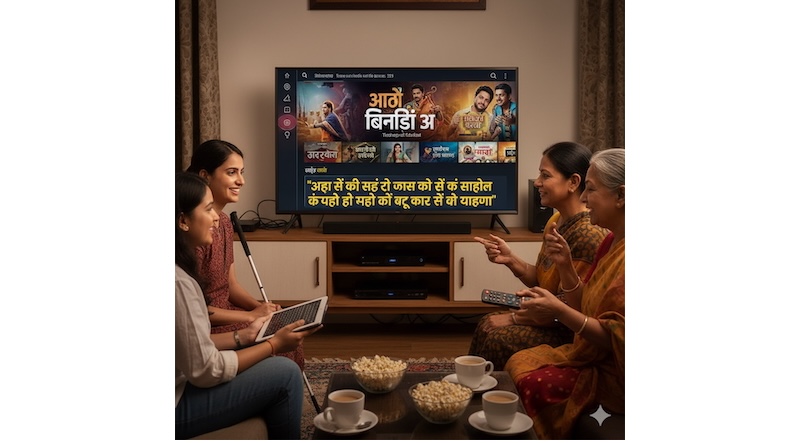
    NEW DELHI: India’s streaming platforms face a shake-up. The ministry of information and broadcasting has issued draft guidelines forcing OTT services to make their content accessible to people with hearing and visual impairments. The clock is ticking: platforms have six months to comply with the first phase, and two years to retrofit their entire libraries.

    The regulations, published on 7th October, mark the government’s most aggressive push yet to enforce disability rights in the digital sphere. Every new release must carry at least one accessibility feature—closed captioning for the deaf, audio descriptions for the blind, or Indian Sign Language interpretation. No exceptions for Bollywood blockbusters or binge-worthy series.

    The ministry is demanding 30 per cent of existing content be made accessible within a year, rising to 60 per cent after 18 months. The endgame? Full compliance across every title, from prestige dramas to reality shows, within 24 months. Platforms must also rewire their interfaces to work with assistive technologies and plaster accessibility indicators—(AD), (CC), (ISL)—on everything from trailers to thumbnails.

    The rules stem from the Rights of Persons with Disabilities Act, 2016, which the government has been nudging OTT platforms to follow since an advisory in April. India ratified the UN Convention on the Rights of Persons with Disabilities in 2008, but enforcement has lagged. Now the ministry wants quarterly reports tracking progress, with a joint secretary-led committee poised to police compliance.

    Live streams, podcasts and clips under ten minutes get a pass. But for everything else, the message is clear: subtitle it, describe it, sign it—or face scrutiny. The consultation period ends on 22 October.

    For India’s 26.8m disabled citizens—and the streamers courting them—the game just changed.

  • Cinema Halls to Smartphones: The Shift in Indian Entertainment Consumption

    Cinema Halls to Smartphones: The Shift in Indian Entertainment Consumption

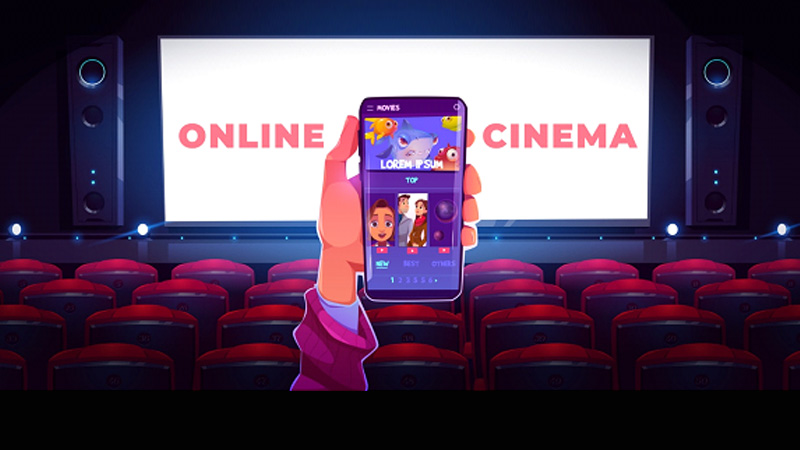
    India has long been among the world’s biggest film markets in terms of ticket sales, number of films produced, and theatre infrastructure. Over the past decade, the rise of digital streaming, cheaper data, and changing consumer behavior has pushed for a rebalancing.

    According to a recent EY research, the Indian media and entertainment (M&E) industry increased by 3.3% in 2024 and was valued at approximately INR 2.5 trillion (US$29.4 billion).

    Within that, digital media is the largest segment, and contributed around 32% of total revenues. In contrast, traditional media, like TV, print, and radio, saw drops in both advertising and subscription income.

    The Legacy of Cinema Halls

    For so long, the cinema has been the centrepiece of Indian entertainment. Big festivals, major star vehicles, and regional cinema in language hubs built the live-theatre experience. It was in the 2000s and 2010s when multiplexes in large cities boomed. Single screens remained relevant in smaller towns, and cinema halls generated major portions of film revenues.

    However, it can’t be denied that experiencing entertainment at the cinema can be a bit pricey. The cost of theatre tickets, travel, and supplementary expenses (food, parking) slows attendance for many films. Some mid-budget or smaller regional films struggle to recoup costs via theatrical alone. The impact of COVID-19 also forced many delayed releases or direct-to-OTT experiments, which in turn raised questions about the sustainability of cinema as the only route.

    Rise of OTT and Mobile-First Viewing

    India’s OTT universe in 2025 stands at 601.2 million people who watched at least one streamed or online video in the past month. That accounts for about 41.1% of the population.  
    Of those, 148.2 million are active paid OTT subscriptions (including through telecom bundles and OTT aggregators).

    Connected TV usage has surged: the number of Connected TV users is now 129.2 million, up 87% year-on-year.  This shift shows streaming is no longer confined to phones only, as viewers want larger screens and living room experiences as well.

    Data costs have fallen, smartphones have become ubiquitous, and broadband penetration has improved in urban and rural areas alike. Streaming platforms like Netflix, Amazon Prime Video, Disney+ Hotstar (now JioHotstar), Zee5, SonyLIV, and many regional players have scaled voice, subtitle, language localisation, and pricing to reach broader audiences.

    Sports-related platforms or communities, both legal streaming and fan engagement spaces, show another angle of audience shift. For instance, users who follow cricket or other live sports not only stream matches on OTT platforms but also use various digital forums and social media platforms.

    10CRIC and other similar websites are some of those online spaces where fans get access to the latest odds, team stats, and more. That reflects the way entertainment and live content spill over into related digital spaces, though the core viewing remains on OTT and smart devices.

    Regional Content and Language Diversity

    Regional language content is a key driver in this transformation. Ormax Media reports show that in 2024, the number of streaming originals in India dropped by about 18% compared to the previous year, after peaking in 2023. Still among originals, fiction series dominate (around 70% of OTT originals), and Hindi remains the dominant language with 65%share.

    Other languages, such as Bengali, Telugu, and Tamil, have growing representation. Platforms focused on regional content (e.g., those devoted to one language) are just really seeing stronger engagement in their markets.

    Viewers increasingly prefer content in local languages, with dubbed or subtitled versions helping content move across state borders. Films originally released in theatres are seeing extended life on OTT in regional markets.

    Economics: Theatrical vs OTT

    Releasing a film in theatres is expensive. Studios spend on distribution, digital or print delivery, big marketing campaigns, and then share a large cut with theatre owners. If a film doesn’t get a strong opening weekend, it often struggles to recover those costs.

    An OTT release works differently. Platforms can cut down distribution expenses, reach audiences across cities and smaller towns at once, and earn through subscriptions or ads. This makes it a safer option for mid-budget or niche films that may not draw big crowds in cinemas.

    Subscription Video On Demand (SVOD) and Advertising Video On Demand (AVOD) are also coexisting. Many platforms give both options. There is also bundling through telecom providers. Some films release theatrically and land on OTT after a window. Some would have direct-to-OTT release strategies, especially for smaller budgets or niche content.

    Technology, Platforms, and Interactivity

    Better mobile networks (4G, growing 5G), cheaper data, improved video compression, and smart TVs all push streaming quality up. Platform features like offline downloads, profiles, parental controls, and multi-device sync help retain users.

    Interactivity now matters. Live trivia, polls during shows, social features built into streaming apps, and second-screen experiences. Streaming of sports or live events gets further amplified by chat, fan forums, commentary, and behind-the-scenes clips.

    Hybrid content consumption (combining cinema and streaming) is becoming standard. Consumers may watch big action or festival films in theatres, but a large part of their weekly content diet comes from OTT. As streaming grows, the role of theatres adjusts.

    What the Future Looks Like

    Growth projections are strong, and the FICCI-EY report estimates the M&E sector will grow 7.2% in 2025. So, that’s about INR 2.7 trillion at a CAGR of about 7% to reach around INR 3.1 trillion by 2027.

    OTT audience and adoption are also expected to increase, though growth rates might moderate. Connected TV adoption will likely continue its sharp rise.

    However, platforms will still need to combine technology investment, pricing innovation, content localisation, and strong marketing to retain audience loyalty. Those who will are the ones likely to remain relevant for a long time. 

    Disclaimer:This article has been published without the journalistic or editorial involvement of Indiantelevision.com. IndianTelevision.com Group, or any of its affiliated websites. IndianTelevision.com Group does not endorse, subscribe to, or take responsibility for the content, opinions, or views expressed herein.

    Readers are further advised that Online Casino, Betting, Cryptocurrency products, Financial Investments/Engagements, NFTs, and products or calls-to-action related to Health, Booking, Wellness, and Food are largely unregulated and carry significant risk. There may be no regulatory protections or avenues for recourse in the event of financial losses or health-related risks arising from engagement with such products or services.

    IndianTelevision.com Group expressly disclaims any responsibility or liability for the information, views, announcements, declarations, or affirmations presented in this article. By choosing to proceed, the reader acknowledges and agrees that they do so at their own discretion and risk, and expressly absolve indiantelevision.com (IndianTelevision.com Group) from any potential legal claims, liabilities, or actions.

    The content provided is solely for informational and awareness purposes.
     

  • Atrangii hires veteran producer to spearhead content blitz

    Atrangii hires veteran producer to spearhead content blitz

    MUMBAI: Atrangii and Hari Om OTT have recruited  Vidyuth Bhandary as executive vice-president for content and studios, as the streaming platforms gear up for an aggressive expansion push.

    The appointment brings nearly three decades of media muscle to the homegrown platforms. Bhandary previously ran studios at Dice Media, where he masterminded OTT content development and production. His cv spans heavyweight roles at Times Internet/MX Media, FremantleMedia, Star India and Big FM, with credits including top-rated international format shows and blockbuster Indian streaming content.

    In his new perch, Bhandary will commandeer content teams across both platforms whilst heading up their newly-minted studio division. His brief includes turbo-charging Atrangii’s fiction and non-fiction pipeline and crafting devotional stories for Hari Om. The studio arm will churn out original intellectual property for third-party OTT services, television and films.

    “We’re in a phase of aggressive growth, expanding our footprint and cementing our leadership,” said Vibhu Agarwal, founder of both platforms. “Vidyuth’s appointment is a key step—his experience will help strengthen our in-house content engine and accelerate our plans to build a world-class studio ecosystem.”
    The hire signals Atrangii’s intent to muscle in on India’s crowded streaming battleground. Bhandary pledged to forge fresh content partnerships whilst building “a multi-year roadmap” for both domestic and international markets.

    “My goal is to help build a strong in-house content slate, while also developing a full-fledged studio setup,” he said. “I look forward to expanding into new markets, genres and achieving the vision set by the management.”
    The move underscores how Indian streaming services are doubling down on original content to differentiate themselves in an increasingly saturated market.

  • Young Indian western classical vocalist strikes gold in Tokyo classical competition

    Young Indian western classical vocalist strikes gold in Tokyo classical competition

    MUMBAI: The daughter of a streaming aggregator boss has just delivered a performance to remember. Vanshi Mudaliar, the 12-year-old daughter of Avinash Mudaliar, co-founder and chief executive of OTTPlay, claimed the gold prize at the Golden Classical Music Awards in Tokyo on 20 August, performing live at the world-renowned Tokyo Opera City Concert Hall.

    The victory follows her silver medal at Vienna’s International Arts Festival in 2024, making her one of the youngest Indian musicians to secure consecutive top honours across Europe and Asia in Western classical music competitions—a field historically dominated by European, American and Russian performers.

    “Her victory at Tokyo Opera City Concert Hall marks a breakthrough moment for Indian talent on the international classical music circuit,” says her father, clearly basking in paternal pride.

    The competition attracted global participants, with winners selected through online auditions before the most exceptional performers were invited to Tokyo for three days of live performances. Vanshi took the stage on the final day, 20 August.

    Her success stems from five years of intensive training under Rahel Shekatkar at Rahel Music Academy in Pune—a 150-kilometre journey from the family’s Mumbai base that has proved worthwhile. Despite the distance, this student-teacher partnership has now produced two major international victories.

    Shekatkar’s academy has established itself as a premier destination for western classical vocal training in India. Vanshi’s achievements demonstrate the quality of musical education available domestically, bridging Eastern and Western musical traditions.

    At just 12, Vanshi has carved out a unique position in India’s musical landscape through her dedication to Western classical music—a genre demanding exceptional technical precision, vocal control and interpretive skills. Her journey from Mumbai to Vienna to Tokyo illustrates the global recognition Indian artists can achieve in traditional western art forms.

    With two major international victories already secured, Vanshi represents a new generation of Indian classical musicians making their mark globally, opening doors for other young artists and highlighting the importance of nurturing musical talent early.

  • IAMAI hails piracy task force as shot in the arm for creative economy

    IAMAI hails piracy task force as shot in the arm for creative economy

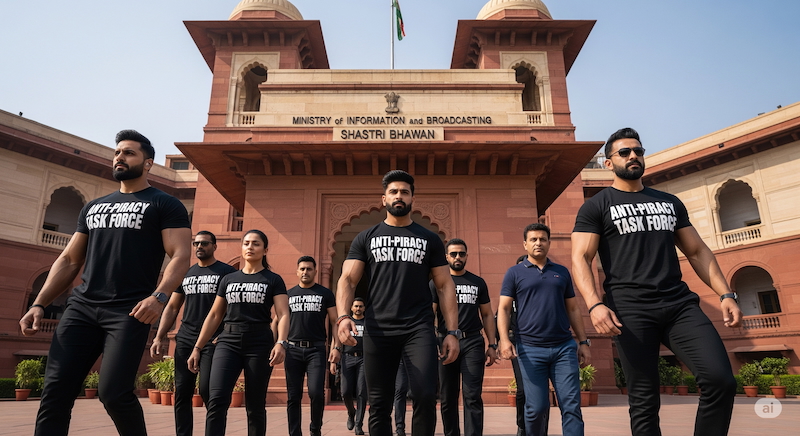
    MUMBAI: The Internet and Mobile Association of India (IAMAI) has cheered the ministry of information and broadcasting’s (MIB’s) decision to set up a dedicated task force to tackle the scourge of online piracy, calling it a long-overdue step to protect the country’s creative economy.

    IAMAI’s digital entertainment committee said the initiative would help turn the tough provisions of the Cinematograph Amendment Act 2023 into action on the ground. The law introduced steep penalties for piracy and empowered authorities to crack down on illegal recordings and transmissions.

    A 2024 “Rob Report”, published by EY and IAMAI, estimated that India’s entertainment sector—spanning OTT platforms and cinemas—loses Rs 224 bn annually to piracy, with 51 per cent of consumers admitting to watching pirated content. It urged stronger enforcement, fairer pricing and more innovative distribution models.

    JioStar chief executive and chair of the digital entertainment committe Kiran Mani said IAMAI’s role in the task force would channel industry expertise into “decisive measures that safeguard our creative economy and fuel long-term growth.”

    Inshorts a co-founder & chief executive and co-chair of the committee  Deepit Purkayastha called piracy “one of the biggest hurdles” for the industry, adding that the task force was a chance to “set the stage for a stronger and more trusted entertainment industry.”

    With a task force in place, the law tightened and industry voices aligned, India’s media and entertainment sector is finally poised to fight piracy with more than words.

    (The picture shown above is just a representation of the task force and does not purport to depict either Shastri Bhawan or the industry executives who are part of the task force)

  • Ormax launches sports tracker to measure marketing punch

    Ormax launches sports tracker to measure marketing punch

    MUMBAI: Ormax Media has unveiled Ormax Sports Track, a syndicated research tool that measures how well sports tournaments perform among India’s digital audience. The Mumbai-based media research firm already tracks theatrical films, streaming originals and television launches—now it is turning its attention to the lucrative world of sports content.

    The timing is shrewd. Streaming platforms are splashing serious cash on sports rights, treating them as tentpole content to drive subscriptions and advertising revenue. With 678.2m sports fans in India, the prize is substantial. At any given moment, 25-30 sports properties are either live or preparing to launch across various over-the-top (OTT) platforms, spanning cricket, football, kabaddi, tennis and wrestling.

    Ormax Sports Track measures four key parameters on a 0-100 scale. “Buzz” captures unaided recall—how many viewers spontaneously remember a tournament when asked about current or upcoming sports events. “Reach” tracks aided awareness—the percentage who recognise a tournament’s name when prompted. “Appeal” measures definite viewing intent among those aware of the property. “Potency” gauges how many would subscribe to a paid platform specifically to watch the tournament.

    The tool is powered by weekly online surveys of 600-plus regular OTT sports viewers. The sample mirrors demographics from Ormax’s Sports Audience Report 2024, split equally between metros (Mumbai, Delhi NCR, southern metros and Kolkata) and non-metros (west-central, north and south regions).

    Subscribers receive reports twice weekly: a mid-week update every Tuesday and an end-of-week summary every Friday, complete with target group trends for properties on their platforms. Each tournament is tracked from launch announcement through to the final whistle.

    For sports marketers and streaming executives, the service promises to decode which campaigns cut through the noise in India’s crowded digital sports arena. With millions riding on rights deals, knowing what resonates with audiences could prove invaluable.

  • Govt cracks down on ‘obscene’ OTTs, blocks 25 sites under IT Act

    Govt cracks down on ‘obscene’ OTTs, blocks 25 sites under IT Act

    MUMBAI: The Indian government has turned up the heat on shady OTT platforms. In a sweeping regulatory crackdown, the ministry of information & broadcasting (MIB) has ordered internet service providers (ISPs) to block access to 25 websites accused of hosting unlawful and “obscene” content, invoking multiple sections of the Information Technology Act, 2000 and allied rules.

    The directive, signed by the ministry’s joint secretary and authorised officer acting as nodal officer under digital media law, targets platforms such as Ullu, Altt, Big Shots, MoodX, Mojflix, Hulchul, and Desiflix — notorious for pushing the boundaries of online content. The move expands last year’s clampdown on what the government termed “indecent representation of women” and content harmful to public decency and morality.

    The notification reminds intermediaries that under Section 79(3)(b) of the IT Act, 2000, they lose their safe harbour protections if they fail to act swiftly on government orders. Rule 3(1)(d) of the IT Rules, 2021, further bars platforms from hosting anything that undermines India’s sovereignty, public order, or morality. Non-compliance, as per Rule 7, invites prosecution under prevailing laws.

    The list of banned apps and sites reads like a roll-call of India’s risqué OTT underbelly: Boomex, Navarasa Lite, Kangan App, Bull App, Feneo, ShowX, HotX VIP, NeonX VIP, Triflicks and more.

    The government cited violations of Section 67 and 67A of the IT Act (which deal with electronic transmission of obscene material), Section 294 of the Bharatiya Nyaya Sanhita, 2023 (obscene acts and songs), and Section 4 of the Indecent Representation of Women (Prohibition) Act, 1986.

    The MIB has also asked the department of telecommunications (DoT) to ensure ISPs comply. The move is being positioned as part of India’s broader push to clean up its digital content ecosystem and hold digital intermediaries accountable.

    (If you are an Anime fan and love Anime like Demon Slayer, Spy X Family, Hunter X Hunter, Tokyo Revengers, Dan Da Dan and Slime, Buy your favourite Anime merchandise on AnimeOriginals.com.)

  • Genre-bending tales are the reel deal for India’s content creators

    Genre-bending tales are the reel deal for India’s content creators

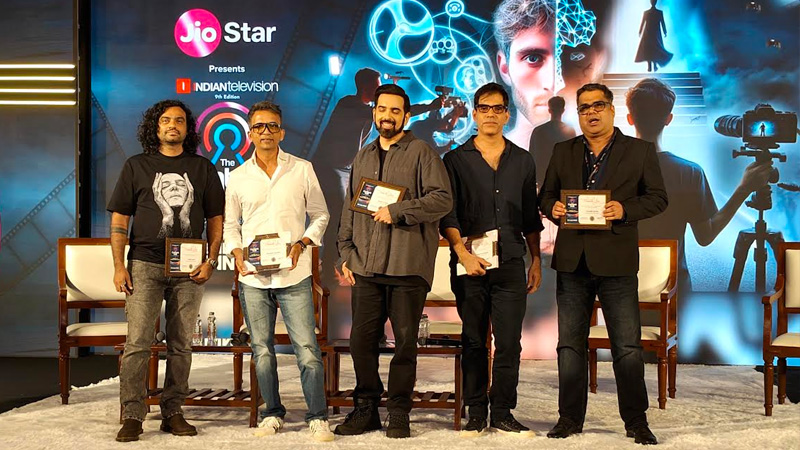
     MUMBAI: Jump scares, script flips and streaming hits, if there’s one thing Indian content creators agree on, it’s that the lines between genres are getting as blurred as a high-stakes thriller. At the 9th edition of The Content Hub Summit 2025, an insightful session titled “Genre Dynamics: Pushing Creative Boundaries in Indian Cinema, OTT and Television” brought together leading storytellers who are breaking the mould and mixing genres with flair. Chaired by filmmaker and trade analyst Saurabh Verma, the panel featured director Vishal Furia (Chhorii), writer-director Ravindra Gautam, Banijay Asia’s Mrinalini Jain, Applause Entertainment’s Rahul Ved Prakash, and filmmaker Kussh S Sinha (Nikita Roy).

    Horror director Vishal Furia kicked off the conversation by pointing out how genre films have matured. “We’re finally moving past jump scares. Indian horror is now about deeper themes like motherhood and social realities. Chhorii was scary, yes, but it also tackled female agency.” With Chhorii 2 on the way, he promised more genre-defying elements.

    Mrinalini Jain noted the surge in creators experimenting with “genre cocktails.” Think courtroom dramas that are also comedies, or thrillers laced with social commentary. “We’re seeing a healthy overlap between what entertains and what provokes thought. Audiences want content that works on multiple levels.”

    Ravindra Gautam emphasised that Indian television is slowly catching up with OTT and films in storytelling ambition. “We are moving away from just ‘kitchen politics’. There’s a demand now for fantasy, mystery, even dystopia, if told well and rooted in Indian ethos.”

    For Rahul Ved Prakash, whose work at Applause spans crime thrillers, political dramas and quirky comedies, the shift is evident in how stories are greenlit. “There’s a rise in shows that can’t be boxed into one genre and that’s a good thing. Viewers now want layered narratives.”

    Kussh Sinha, who’s working on genre-blending projects himself, argued that Indian creators shouldn’t just chase global formats. “We must create our own grammar rooted in Indian emotions, tropes and chaos. The global audience is already watching. Let’s show them our unique flavour.”

    The panellists highlighted a set of unmistakable shifts shaping India’s evolving content landscape. Genre fusion has firmly taken root, with historical thrillers, horror-romance hybrids, and docu-dramas gaining popularity across platforms. Writers now have more creative control, with writers’ rooms involved earlier in the process to help define genre direction and narrative tone. Regional content is leading much of this innovation, with Tamil, Telugu, and Marathi creators delivering some of the boldest and most genre-defying storytelling. And above all, audiences are choosing character over category they are drawn to emotionally resonant, layered protagonists, regardless of the genre label.  

    As the session wrapped, one thing was clear: the days of sticking to safe genre formulas are over. Whether it’s a horror film that makes you cry, a mythological show with sci-fi twists, or a soap opera with supernatural undertones, Indian creators are pushing past traditional formats and building new blueprints for storytelling.

    If 2024 was the year of experimentation, 2025 might just be the year of reinvention, one genre-bending frame at a time.

  • Prasar Bharati inks handball broadcast deal to boost sport’s reach

    Prasar Bharati inks handball broadcast deal to boost sport’s reach

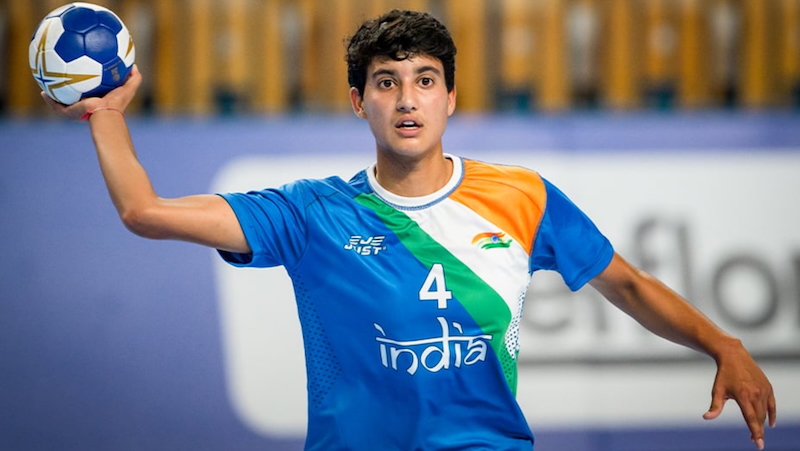
    NEW DELHI: India’s public broadcaster Prasar Bharati has signed a three-year memorandum of understanding with the Handball Association of India (HAI) to produce and beam all national and international handball events.
    The matches will be telecast on DD Sports, Waves OTT, and other Prasar Bharati platforms in a bid to expand the sport’s footprint and nurture emerging talent.

    The agreement was formally exchanged between Prasar Bharati chief executive officer Gaurav Dwivedi and HAI executive director Anandeshwar Pande. Prasar Bharati chairman Navneet Kumar Sehgal was also present at the signing.

    The move marks a major push to take the underdog sport mainstream and give Indian handball players a national stage.

    (If you are an Anime fan and love Anime like Demon Slayer, Spy X Family, Hunter X Hunter, Tokyo Revengers, Dan Da Dan and Slime, Buy your favourite Anime merchandise on AnimeOriginals.com.)