Tag: OTC

  • Digital will account for 49% of OTC advertising in 2023: Zenith report

    Digital will account for 49% of OTC advertising in 2023: Zenith report

    Mumbai: Advertising expenditure by over-the-counter (OTC) healthcare brands in 13 key markets, including India, will expand by 7.6 per cent in 2022 and five per cent in 2023, according to Zenith’s new Business Intelligence – OTC Healthcare report published on Monday. Digital will account for 49 per cent of OTC advertising in 2023, up from 46 per cent in 2021, said the report.

    By 2023, OTC adspend is expected to be 36 per cent higher than it was in pre-pandemic 2019. This growth will be driven by tailored digital brand advertising, as well as performance advertising driving traffic to OTC e-commerce platforms. The report forecasts that OTC healthcare adspend will grow from $20.1 billion in 2021 to $22.7 billion in 2023, exceeding by far the spending level of $16.7 billion in 2019. 

    OTC brands are expected to increase their digital adspend at an average rate of 11 per cent a year between 2021 and 2023, while radio grows by five per cent, television by three per cent, and magazines shrink by three per cent, as per the Zenith forecast. The 13 markets included in the report, apart from India, are Australia, Canada, China, France, Germany, Italy, Poland, Russia, Spain, Switzerland, UK and USA, which between them account for 74 per cent of total global adspend. The report covers medicines and remedies sold over the counter, including cold and allergy remedies, contraception, digestion care, eye care, oral care, pain relief, skin care, sleep aids, stop-smoking aids and wound care.

    “The pandemic has focused consumers’ attention on their health and disrupted their reliance on traditional OTC distribution channels,” said Zenith head of forecasting Jonathan Barnard. “Brands will continue to step up their investment in digital advertising as the rise of ecommerce gives it a greater role in driving OTC sales and brand growth.”

    OTC advertising grew throughout the pandemic. OTC adspend expanded by 6.8 per cent in 2020 while the market as a whole shrank by 3.5 per cent, as healthcare messages soared in relevance for consumers. Demand for cold and flu remedies sank sharply as social distancing cut their transmission, but most other sub-categories continued to grow, and sales of sleep aids spiked. When the pandemic hit, brands in many categories cut back or even ceased their communications, concerned that their messaging was no longer appropriate, or in some cases counterproductive in the new context. This gave OTC brands the opportunity to use plentiful cheap media to reinforce their contribution to consumers’ health and wellbeing.

    OTC advertising then rose a very healthy 12.8 per cent in 2021, though in this case its growth was slightly behind the overall market, which had lost ground to make up. Zenith forecasts growth in OTC advertising to remain healthy over the next two years, as brands defend their price premiums and ecommerce platforms compete to establish dominance.

    OTC has lagged some way behind the market as a whole in embracing ecommerce, but the lockdowns and other restrictions led to a leap in OTC e-commerce in 2020. Now that more consumers are aware of and comfortable with the option of shopping for OTC products online, it will become an ever more important sales channel over the next few years. This means traditional distributors such as pharmacies and supermarkets are facing new competition from digital ecommerce platforms, and brands have new opportunities to launch new partnerships or even direct-to-consumer ventures. The increased competition for traffic and sales will fuel continued growth in brand and performance advertising.

    Shift to digital helps brands tailor messaging to consumers’ specific needs

    When consumers first buy an OTC product, they often spend time researching the purchase and discussing it with family, friends and trusted advisors like pharmacists. However, after the first purchase, buying OTC products quickly becomes routine, part of the regular shop. The fundamental role of OTC advertising is therefore to maintain brand awareness at the point of purchase, much like FMCG advertising. Similarly, OTC healthcare makes heavy use of television for its high-impact mass reach. OTC advertisers spent 38 per cent of their budgets on television advertising in 2021, compared to 21 per cent for the average advertiser across all categories. OTC brands also spend more on radio and magazines – radio for its mass reach and magazines for their high impact.

    Until recently, it was difficult to use digital advertising to create emotional connections and lasting brand awareness. The rise of high-quality advertising environments, online video and retailer media – ads that appear on retail websites and e-commerce platforms – means brands can use digital to convey brand values effectively right through to the sale. Brands are also spending more on performance advertising as OTC ecommerce scales up.

    “The continued shift to digital allows OTC brands to use smart segmentation and dynamic creative to market the same products to different people with different needs, within the framework of regulations for digital advertising in this category,” said Zenith global chief digital officer Benoit Cacheux. “The gym-goer with muscle ache, the office worker with a headache and the parent whose child has growing pains all need pain relief, but brands need to talk to them in different ways to persuade them most effectively. This ability to tailor the creative to the needs of the audience gives digital advertising an advantage that traditional media never had.”

  • Glaxosmithkline Consumer promotion expenses 19% of Oct-Dec Op Income

    Glaxosmithkline Consumer promotion expenses 19% of Oct-Dec Op Income

    BENGALURU: Nutritional products and OTC drug major Glaxosmithkline Consumer Healthcare spent Rs 164.78 crore or 18.96 per cent of Income from operations in the quarter ended 31 December  towards advertisement and promotion. This was the highest amount spent on advertising and promotion by the company in terms of percentage of operating income as well as in value terms over seven consecutive quarters starting quarter ended 30 June, 2012.

    Note : (1) GCHL’s fiscal ends on December 31, however in keeping with standard conventions in India, the following periods have been used in this report:
    Q1-2013 is the Quarter ended June 30, 2012; Q2-2013 is the quarter ended September 30, 2012
    Q2-2013 is the quarter ended December 31, 2012 ; Q4-2013 is the quarter ended March 31, 2013
    Q1-2014 is the quarter ended June 30, 2013 ; Q2-2014 is the quarter ended September 30, 2013 and Q3-2014 is the quarter ended December 31, 2013.
    (2)Rs 1 Crore  = Rs 100,00,000 = Rs 100 lakhs = 10 million

    The company’s nutritional products brands include Horlicks, Boost, Foodles , while its OTC drugs brands include Crocin, Eno and Iodex.

    Let us look at the company’s results over the seven quarters under consideration:

    Figure A shows that Linear PAT as percentage of Op Inc is trending downwards. Ad Exp as both percentage of Op Inc and Total Expense (Total Exp) is trending upwards linearly. The company explains the lower PAT to high inflation in milk and milk powders and dilution in PAT growth due to higher tax rates. GHCL plans to partially offset this by renewed focus on various cost control initiatives.

    However, as per Figure B below, in value terms, PAT trend is almost flat linearly over the seven quarters, with GCHL reporting maximum PAT in quarter ended 31 March 2013 at Rs 156.41 crore, the lowest being Rs 69.65 crore in Q3-2013. The company reported PAT at Rs 79.79 crore in Q3-2014. Operating Income peaked in quarter ended 30 September, 2013 at Rs 1014.08 crore, with Rs 734.51 crore in quarter ended 31 December 2012 being the lowest operating income over the seven quarters under consideration. Operating income in the quarter ended 31 December, 2013 was Rs 869 crore.

    As mentioned above, the company’s Ad Exp in quarter ended 31 December, 2014 was the highest, both in terms of percentage of operating income and in rupee value. As figure C shows, the company’s q-o-q change in percentage terms for Op Inc as well as Ad Exp have been zigzag lines, however the linear rate of change tending downwards for both.

    GCHL says that it has had a good overall performance with Health Food Drinks (HFD) and Foods growing at 17 per cent and 29 per cent respectively in quarter ended 31 December, 2014. Its domestic volume growth has been 11 per cent, while exports grew by 36 per cent. It claims that GHCL continues to hold second position in Oats; Horlicks Kesar Badam launched during the quarter.

    The company claims that its HFD brands comprising Horlicks and Boost grew 17 per cent, while its packaged foods brands comprising of Horlicks biscuits, Horlicks Nutribics, Foodles (noodles), Horlicks Oats and Boost Biscuits grew 29 per cent during the period.

  • The Flying Sikh to endorse Emami’s chawyanprash

    The Flying Sikh to endorse Emami’s chawyanprash

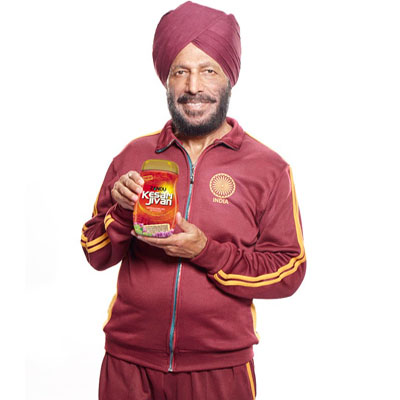
    MUMBAI: He has been the perfect symbol of youthfulness and vigour — on the race track and even in his life. And thus Emami has roped in former sprinter Milkha Singh to endorse its health supplement Zandu Kesari Jivan.

    This is the first endorsement deal that the “Flying Sikh” has signed almost after five decades of his last race for the country.

    The new television commercial of Zandu Kesari Jivan featuring Milkha Singh is scheduled to air this month. The TVC, created by Scarecrow Communications and directed by Shivendra Singh Dungarpur, reflects the core brand proposition of youthfulness and elaborates on the benefits of Kesar.

    Emami director Harsha V. Agarwal said, “We are honoured to have the great Milkha Singh as the brand ambassador for Zandu Kesari Jivan, one of our premium Zandu OTC products.  Our brand Zandu Kesari Jivan which promotes good health, youthful vigour and energy found a perfect fit in Milkha Singh, who even at the age of 84 is a symbol of youthfulness and vigour.”

    The health brand is positioned as a ‘saffron enriched revitaliser’ that promotes health, youthful vigour and energy through its unique composition of herbs coupled with benefits of Kesar.   Chyawanprash is a growing health supplement category in India worth Rs 400 crore which is spurred by the increasing interest in Ayurveda and ancient sciences.

    Speaking about his association, Milkha Singh said in a release, “Through my association with Zandu Kesari Jivan, I urge all people, young and old, to pay attention to their health and fitness. A healthy mind, body and spirit are the key to a youthful life.”

    The product is also endorsed by Pandit Shri Birju Maharaj, who epitomises youthful vigour and energy. Emami’s past and present brand endorsers include people like Mahendra Singh Dhoni, Sachin Tendulkar, Virendra Sehwag, Sushil Kumar, Mary Kom, Saina Nehwal, Gautam Gambhir, Amitabh Bachchan, Shahrukh Khan, Madhuri Dixit, Kareena Kapoor Khan and Bipasha Basu.

  • DDB Remedy launches in India through DDB Health & Lifestyle

    DDB Remedy launches in India through DDB Health & Lifestyle

    Mumbai: The healthcare practice of the DDB Network, DDB Remedy, has launched in India through DDB Mudra Group’s Health and Lifestyle practice, DDB Health & Lifestyle (DDB H&L).

    DDB H&L has aligned itself to the DDB Network and hence will be rechristened DDB Remedy India.

    The rechristening gives DDB Remedy India the ability to be an integral part of the global fraternity of the DDB Remedy Network and therefore allows it to leverage global experience in an increasingly connected healthcare world. The agency will continue to build on its spheres of excellence viz. Healthcare Services Communication, Diagnostic and Devices Brand Building, FMHG and OTC Strategising, Rx or Doctor Office Brand Campaigns and Development Communication.

    DDB Remedy in India will harness the inherent talents of digital, CRM, branding, experiential, media, retail, PR and production solutions within the DDB Mudra Group and DDB network overseas and provide ‘Total Branding & Communications Solutions’ to its clients in the healthcare and social change world.

    DDB Remedy was launched in 2010 by the New York offices of DDB Worldwide.

    DB Remedy India president Soumitra Sen said, “We are proud to be aligned with the global network and feel confident that we can now bring in best practices, knowledge and experience to work on healthcare brands here. Our vision of being the most passionate and versatile healthcare communication agency in India strengthens further with our membership to the DDB Remedy network.”