Tag: Ormax Media

  • Ormax Media launches tool to track performance of 16 OTT platforms

    Ormax Media launches tool to track performance of 16 OTT platforms

    Mumbai: Media consulting firm Ormax Media has announced the launch of an ott brand health tracking tool called Ormax Brand Monitor (OBM). The tool is based on syndicated research conducted every month among SVOD and AVOD audiences across India, to track the performance of OTT platforms on key brand measures.

    OBM is currently tracking the following 16 national platforms in India (in alphabetical order): ALT Balaji, Amazon Prime Video, Discovery+, Disney+ Hotstar, Eros Now, Hungama Play, Jio (TV/ Cinema), Lionsgate Play, MX Player, Netflix, ShemarooMe, Sony Liv, Ullu, Voot, YouTube, and Zee5. New platforms will be added when they are launched. Regional platforms can avail of a customised version of OBM for their respective markets.

    “The Indian OTT market has seen rapid growth over the last two years. An estimated 353 million Indians are watching digital videos every month, of which 110 million have access to paid content,” said Ormax Media founder and chief executive officer Shailesh Kapoor. “In a rapidly-evolving environment, keeping a check on the brand’s health carries immense value. Platforms that can build strong brands over the next 12-24 months will reap the benefits for many years to come. OBM is an industry-wide syndicated tool that allows brands to assess their brand’s equity, both positive and negative, every month, and take corrective action via marketing and content production and acquisition.”

    Every month, OBM will report the performance of each brand on key brand variables such as top-of-mind awareness, unaided awareness, total awareness, brand preference, and Ormax Brand Rating (a measure of brand satisfaction). Additionally, the track will cover two new parameters every month, such as quality of UX/UI, genre performance of brands, and social media visibility, among others. Subscribers will get access to the brand performance by key demographic segments, such as gender, age, markets, and audience type (SVOD vs. AVOD), said the statement.

    The first Ormax Brand Monitor report, based on audience research conducted in October, is now available for subscription.

  • Ormax Media launches audience analytics tool for TV channels

    Ormax Media launches audience analytics tool for TV channels

    Mumbai: Ormax Media has announced the launch of a new audience analytics tool, Ormax Televate. It is designed to help TV channels in achieving viewership growth by identifying a focused and consumer-centric strategy based on insightful data on parameters built through Ormax Media’s 13 years of work in the television industry in India, said the media consulting firm in a statement on Tuesday.

    “TV channels make various efforts in the areas of content, marketing, branding, distribution, acquisition, etc. to increase their viewership. However, these initiatives are often like hit-and-trial, and a lot of time and resources are spent on activities that may have incremental value at best,” stated Ormax Media founder & CEO Shailesh Kapoor. “Ormax Televate will use consumer data, advanced analytics, and our deep expertise in the television domain to help channels identify the most critical aspects of their business that must be fixed from a viewership perspective. These are the only things that the leadership team should spend their time on.”

    Ormax Televate has two stages and it currently covers the urban Indian market, addressing 157 channels in the industry in 36 genres across languages. The tool is available for GEC, films, news, kids, music, and infotainment genres across all major Indian languages.

    In the first stage, a TV channel commissioning a project will get access to syndicated data that maps their channel and its competition on strategic parameters related to awareness, brand performance, and category needs. Making use of its extensive body of work, Ormax Media has identified 172 viewership barriers that channels may potentially face. With the help of an algorithm up to 15 barriers that are most relevant to the channel in question will be identified.

    In the second stage, strategic analysis, content and brand analytics, and qualitative research will be used to identify three priority areas that the channel must focus on to increase its viewership. For each of these areas, Ormax Televate will recommend a specific and actionable plan.

    “TV channels conduct a lot of ongoing consumer research to build their consumer understanding, over and above the rating data available to them. However, this often leads to data overload where there’s too much information available but very little clarity on how to process and action it,” said Ormax Media – partner Keerat Grewal. “Ormax Televate is an audience analytics engine that cuts through this information clutter to identify three priority areas a TV channel must focus on to achieve sizable viewership growth while laying out a detailed strategic roadmap for each of them.”

  • OTTs to benefit from the availability of price-discovery platform as cinemas reopen

    OTTs to benefit from the availability of price-discovery platform as cinemas reopen

    Mumbai: As many as 15 Bollywood movie release dates were announced within 24 hours of the news of cinema theatres reopening in Maharashtra on 22 October. These include the much-awaited titles such as ‘Sooryavanshi’, ‘Bunty aur Babli 2’, ‘Satyamev Jayate 2’, ‘83’, ‘Jersey’, ‘Tadap’, ‘Chandigarh Kare Aashiqui’, ‘Pushpa’, ‘No Means No’, and ‘Bhavai’ in 2021 and more for the next year.

    The enthusiasm is palpable with many welcoming the decision as a ‘victory’ of sorts for Cinemas over OTT. Yet, just a week back, multiplex chains that refused to screen the Hindi version of ‘Thalaivii’ were staring at a similar struggle over the gap between theatrical and digital screening for new releases. Having been released on 10 September, the Hindi version of the Kangana Ranaut-starrer is now streaming on Netflix, challenging conventional windowing norms.


    Cinema experience is unparalleled and in a film-crazy nation like India, it is expected that movie viewing will eventually return to the old normal. However, some things will definitely change, perhaps for the better. The direct-to-digital wave which saw digital rights revenues double during 2020 to Rs 35 billion (EY-FICCI March 2021 report on Media and Entertainment Sector), and continuing, was after all, not all ineffectual.

    The Box-office Barometer

    A study by Ormax Media published in July revealed that the 26 films which were originally conceived for a theatrical release but were released on streaming platforms due to the pandemic, fetched the producer a net gain of Rs. 350 cr, which more than offset the Rs 120 cr loss at the box office. However, it added that the “numbers look what they are, because of the absence of big Rs 150-200+ cr grossers (‘Sooryavanshi’ and ‘83’) at the top and the price premium streaming platforms paid in 2020 which can be seen as a marketing cost to acquire new subscribers.”

    Based on the industry estimates, the total monetisation from streaming rights across the 26 films stood at a “staggering Rs 720cr” as against Rs 250 cr if the 26 films had been released theatrically, at pre-covid streaming acquisition prices, it said. According to the EY-FICCI March 2021 report on Media and Entertainment Sector, digital rights grew as much as 86 per cent in 2020 compensating producers (wholly or in part) for lost theatrical revenue. This approach is, however, not sustainable.

    Mukta Arts MD Rahul Puri points out that it’s natural for a Rs 20-25 cr medium budget film to do good business on OTT platforms that are paying upwards of Rs 30-35cr for it. “Not only is the production cost being recovered, but when you go directly to OTT there’s no distribution and marketing cost to be incurred. It’s a sizeable profit, therefore. But the issue is going to be with the kind of legacy that the film earns. The brand value of a film that hasn’t been released in the theatres obviously goes down, and when it comes to a subsequent rights sale, its IPR value will diminish much faster; more so if the movie didn’t do well releasing directly on digital.”

    Stressing on the importance of theatrical releases for movies, Mumbai Movie Studios CEO Naveen Chandra notes, “A film’s box office performance typically serves as a price discovery platform, in the absence of which everyone is grappling with various formulas. A lot of good and bad decisions have been taken in this process of experimentation.”

    While in order to grow their subscription on the back of increased digital consumption OTT platforms may have agreed to acquire films for a premium, Chandra believes “there needs to be rationalisation in prices going ahead. By now the OTT platforms must also be having an idea of what their viewers are seeking, and should therefore tailor the content in terms of language, formats, and genres,” he adds.

    As regards ‘Thalaivii’ both Puri and Chandra are of the opinion that the situation would have played out differently had the big markets which contribute 35-40 per cent to the box office been open. “It was mainly the large multiplex chains that boycotted ‘Thalaivii’; the single screens are unfortunately in no position financially to hold out, and so they allowed the film to go ahead. Realistically speaking, Tamil Nadu is a strong single-screen state. So, with Maharashtra being shut the producers didn’t have much to lose,” states Puri.

    Direct-to-digital, shorter release windows stay

    The digital medium has not only provided another platform for the audience to watch movies, but also to filmmakers and producers to tell more stories with diverse formats, characters, and narratives. The nuances of the medium are sure to provide it some sort of exclusivity in story-telling.

    Shemaroo Entertainment, COO, Kranti Gada says, “OTT audiences have now got a taste of watching new movies at home, and this new reality is expected to continue providing a feasible release option for smaller, lower-budget films. Movies that can be enjoyed on smaller screens are more feasible for OTT platforms in the long run and therefore, they are expected to commission more original movie content going forward. Earlier, we used to see smaller movies that were unable to get a theatrical release go direct to video or television. This has now been replaced by direct-to-OTT.”

    Sharing Shemaroo’s experience through the pandemic years, Gada states that the outlook of big production houses and producers about the digital medium has changed, and they are now more open to reaching a wider audience through digital platforms. “The balance between commercial feasibility and reach will decide the way forward. One thing is certain; the eight-week exclusive theatrical window will not be something that producers will be held to and the norm will be broken. From eight weeks to four weeks or even shorter, the OTT release window is bound to change,” she asserts.

    Eros STX, chief executive officer, Pradeep Dwivedi also believes that windowing opportunities for theatricals will significantly reduce even after the situation eases. “In pre- pandemic days, a movie would take anywhere between two-to-six months to premiere on television after its theatrical release. Now I see this reducing to two weeks even after the pandemic is over. Post which, the movie will premiere on OTT followed by broadcast or, in some cases, the other way around.”

    In an industry-first move, Eros International had opted for the same-day digital and satellite release for the Rana Daggubati and Pulkit Samrat starrer ‘Hathi Mere Saathi/ Kaadan/ Aranya’ on 18 September. The film’s release on ZEE Cinema was immediately followed by streaming on Eros Now, the OTT platform owned by Eros STX Global Corporation.

    “With limited windowing opportunities for theatres, launching on OTTs is a natural choice for large studios like Eros Motion Pictures.  Since we also own Eros Now, we prefer the straight-to-OTT route till the pandemic situation improves and markets open up. In fact, going straight to OTTs allows large studios like Eros to produce more content with a wider diversity of talent from across India in addition to working with top stars,” observes Dwivedi.

    Even though Mukta Arts’ Puri is convinced of a return to the (old) normal when the pandemic is over, he does agree that OTTs will continue to invest in the films they think will work on their platforms. “While small/medium budget movies will still look for theatrical releases, there are a number of producers who will go primarily to OTT without even having a conversation about cinema. Big, commercial movies that are going to make 250-300 cr at the box office have no reason to do so. OTTs will pay a substantial amount for these films because of their brand value.”

    Chandra hopes that among and between the 30-second ad films, 100 hrs TV shows, 15-20 hrs web series, and two-hour films, the experimentative and edgy medium of OTT will find its place even as movie lovers return to the theatres.


  • English GECs eye greater ad share with mass appeal formats

    English GECs eye greater ad share with mass appeal formats

    Mumbai: The English GEC genre accounted for less than one per cent of TV viewership and ad volumes in 2020, according to Broadcast Audience Research Council (BARC) India. TV broadcasters hoped that the genre might grow subscription revenues post the implementation of the new tariff order (NTO). However, the pandemic struck before the TV viewership stabilised. With OTT platforms luring away their core audience with original content, some channels are now looking at massy shows to attract new audiences.

    In 2020, popular English movie channels HBO and WB, GECs AXN and AXN HD, and infotainment FYI TV18 were shuttered. The viewership and advertiser support for the English GECs dwindled as global content pipelines were disrupted, stalling fresh programming. Most English GECs acquire pre-produced content which includes international sitcoms, reality TV, and even movies that are packaged for TV viewers in India.  

    “English general entertainment category has been impacted severely post NTO implementation which has resulted in multiple channels within the genre going off-air. All these factors, along with the regulatory changes, have been a double whammy for the English GEC in India, severely challenging its growth potential,” said Ormax Media, partner, Keerat Grewal.

    The content cost for English GECs was lower than other language GECs, as they did not have any original programming. However, that turned out to be an Achilles heel post-pandemic. When the production of English content resumed, much of it was distributed via OTT platforms that reached a global audience. These platforms paid a premium to acquire English content and thus producers were able to recoup their investment.

    “Competition for English GECs is mounting with the growing demand for OTT that makes premium English content more accessible to viewers in India. Consequently, English GECs have to dig deeper down the funnel to attract and interest viewers,” said Merren, chief operating officer, Monalisa Saxena.

    Experts also highlight that the audience for English GECs is primarily metro skewed, and that overlaps with the paid SVOD audience. Metro audiences are migrating to video on-demand platforms, following the lure of original content. Many of these audiences are unlikely to return to TV screens once they’ve formed a habit of on-demand content.

    Since subscription revenues were being claimed by OTTs, TV broadcasters looked at growing the advertising revenues for English GECs.

    Zee Café has launched massy show formats like “Chef vs. Fridge” and “Dance With Me” to grow viewership and advertising revenues. While these properties were launched on Zee Café they were also aired on other network channels to make it more attractive to advertisers.

    “English audience growth is linked to curation and creation of content that explores interest areas of the audience. Dance and cooking-based content are interest areas that Zee Cafe has explored. Across these formats, Zee Cafe has been able to drive sampling across more than 35 million audiences across the network,” said Zee Entertainment Enterprises Ltd, business head – premium channels, Karthik Mahadev.

    The strategy worked as the broadcaster was able to rope sponsors for both the shows. Brands like Haier, Lifebouy, Parle Platina Hide & Seek, Prestige, Catch Salt & Spices, The Gift Studio partnered with “Chef vs. Fridge” while Cetaphil Bright Healthy Radiance Range, Lifebuoy, L’Oreal Paris Total Repair 5, Jeevansaathi, Prestige and Yamaha Fascino 125Fi Hybrid partnered with “Dance With Me”.

    It is a win for the brands, Mahadev noted, “On English GEC SD, between 8 p.m to 9 p.m Sunday time band, 83 per cent viewership contribution comes from reality genre followed by sitcom at 8 per cent (BARC, Period Wk 1’21- Wk32’21 – Jan 2021 to YTD).”

    While these shows aired on an English GEC and were made for a premium audience, the hosts converse with the audience in Hindi or Hinglish increasing their mass appeal. This has also contributed to the popularity and reach of these shows.

    “In the longer run, regional markets undoubtedly will be the driver for growth for English entertainment. There is a whole set of audience moving from regional to English content as they become more comfortable with English as a professional, conversational language” remarked Mahadev.

  • India has 96 mn SVOD subscriptions, 40.7 mn subscribers: Ormax report

    India has 96 mn SVOD subscriptions, 40.7 mn subscribers: Ormax report

    Mumbai: India has 353 million OTT users and 96 active paid subscriptions, according to Ormax OTT Audience Report 2021.

    The research is based on a sample size of 12,000 across urban and rural India, was conducted from May to July 2021. The report breaks the universe by gender, age, NCCS, pop strata, states, and cities.

    The findings revealed that one in four Indians watched online videos at least once in the last one month. Apart from 96 million active paid OTT subscriptions, there are 40.7 million paying (SVOD) audiences, that is, an average of 2.4 subscriptions per paying audience member. 66 per cent of these paid subscriptions are with the male audience. The top six metros contribute only 11 per cent to India’s OTT universe but 35 per cent of total paid subscriptions. Bengaluru, Delhi and Mumbai are the top three cities in this regard, with more than eight million active paid subscriptions each.

    “India’s OTT audience universe is rapidly growing, and an accurate estimation of market size is a crucial strategic component in a growing category,” said Ormax Media, founder and chief executive officer, Shailesh Kapoor. “While streaming companies have data on usage and subscription of their own platforms, there is no industry-level audience research available to size and profile the Indian OTT market at large. This research, which will be conducted in the same period every year, aims to plug this significant data gap in the streaming industry in India.”

    Kapoor further said OTT is no longer a niche category, but at 25 per cent penetration, there is still a huge potential to grow the market, especially outside the top cities. “We have seen a rise in regional OTT platforms in India over the last year. This report provides market and demographic level data for platforms to take sound investment decisions on regional products, be it a stand-alone app or regional content within a national app,” he added.

  • Concerns about fake news on the rise in India: Ormax report

    Concerns about fake news on the rise in India: Ormax report

    Mumbai: Two out of three news consumers consider fake news a major challenge facing the country’s news organisations, showed the latest report released by media consulting firm Ormax Media.

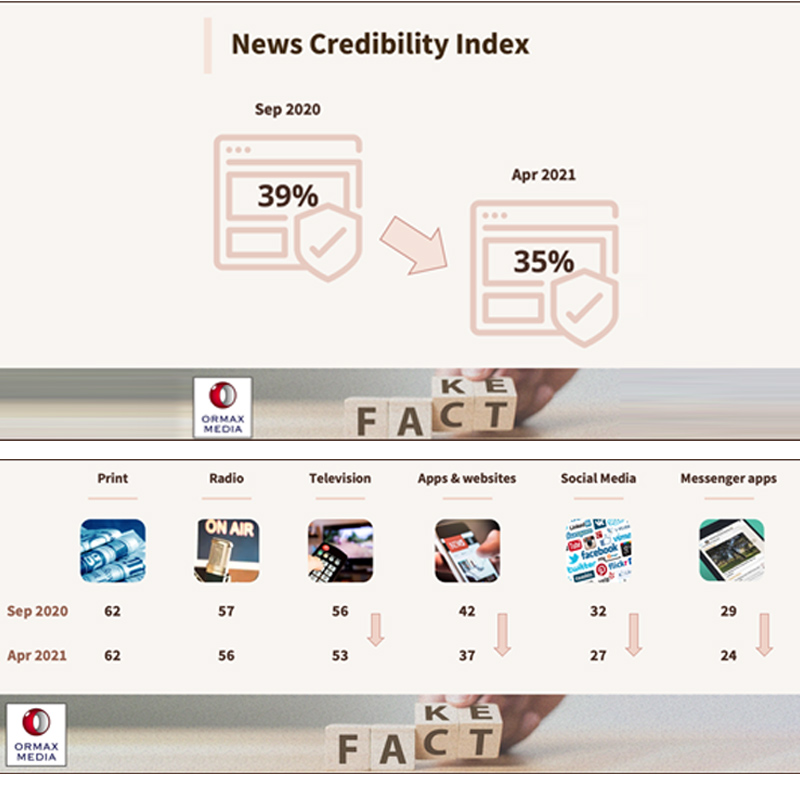
    According to the report Fact or Fake?, at least 65 per cent of the news consumers surveyed highlighted fake news as a major concern. The share of such individuals rose by four percentage points from last year, when the agency released the first edition of the report. Only 35 per cent news consumers feel that the news category in India doesn’t have any major fake news concerns, down from 39 per cent in September 2020.

    The findings are based on a survey of news consumers, which was conducted to measure the credibility of various news media, as well as their overall perception towards ‘fake news’. The survey covered around 1,000 urban news consumers (15+ years) from as many as 17 states and Union Territories in India. The questions were asked through computer-assisted telephonic interview.

    This is the second edition of the report, based on data collected in April 2021. The first edition was released on September 2020.

    According to the report, print media continued to lead in terms of credibility, as 62 per cent of news consumers generally considered the medium to be credible. Radio held on to the second position with 56 per cent consumers considering it as credible compared to 57 per cent in 2020. However, all other media platforms showed significant decline in credibility – television’s credibility index dropped from 56 per cent to 53 per cent and digital news apps and websites from 42 per cent to 37 per cent.

    The number of consumers (from the sample) who consider social media platforms to be credible also dropped from 32 per cent to 27 per cent and messenger apps from 29 per cent to 24 per cent. 

    Within social media, despite a drop since the last track, Twitter continues to rank on top with a news credibility Index of 47 per cent. No other social media or messenger app platform manages to touch even the 30 per cent mark, showed the survey.
     
    Ormax Media, founder and CEO Shailesh Kapoor said, “Concerns around fake news have been escalating worldwide over the last few years. But a drop from an already-low score of 39 per cent to 35 per cent within just seven months, does not augur well for the Indian news industry. In the midst of a pandemic, credibility of news becomes even more important. We hope to see television news and digital platforms address this concern more proactively, before it becomes a brand safety issue for advertisers using these media, and a cause for rejection for subscribers of paid news services”. 

    The report defines Media Credibility Index as a percentage of news consumers who find the news in a particular medium generally credible, respectively.

  • Ormax Media relaunches film campaign tracking and box office forecasting tool Ormax Cinematix

    Ormax Media relaunches film campaign tracking and box office forecasting tool Ormax Cinematix

    MUMBAI: With the audience slowly returning to movie theatres post the Covid2019 pandemic, media consulting firm Ormax Media has announced the relaunch and expansion of its film campaign tracking and box office forecasting tool Ormax Cinematix (OCX). OCX was launched in 2010 for the Hindi film industry, and expanded to cover the Hollywood sector in India in 2014. In its new avatar, OCX will track theatrical films in nine language, namely Hindi, English, Tamil, Telugu, Malayalam, Kannada, Marathi, Punjabi and Bengali.

    OCX uses consumer research across India to measure the performance of upcoming film releases on three parameters: Buzz, Reach & Appeal. A statistical model uses these parameters to estimate the First-Day Box Office (FBO), a forecast of the opening day collections of all the films being tracked by the tool. Over the last few years, FBO has established itself as a highly credible currency in the film industry, with 83% accuracy since 2018.

    With the expansion to regional languages, Ormax Media has reiterated its focus on regional content. Earlier this year, the company had extended its television character popularity tracking tool Ormax Characters India Loves to Tamil, Telugu, Marathi and Bengali GEC categories.

    Ormax Media founder & CEO Shailesh Kapoor said, “Ormax Cinematix has been an industry benchmark for the Hindi film industry for more than a decade, and is used by studios to take key business decisions related to marketing, distribution and acquisition of films. With an expansion into nine languages, the tool will now be available for producers across India. This expansion reiterates our commitment towards increasing our focus on language markets in India in 2021”.

    OCX has been the film industry’s go-to tool for first-day box office forecasts over the last decade. At the time the tool hit the pause button in March 2020 when theatres were closed due to the lockdown, more than 30 studios and producers were subscribers of the tool, including Yash Raj Films, Dharma Productions, Disney, Viacom 18, Sony Pictures, T-Series, Zee Studios, Balaji Telefilms and Excel Entertainment, among others.

    Ormax Media partner Gautam Jain added,  “Pan-India films, which cut across languages, are an emerging trend. This year itself will see several films that will travel across languages, such as KGF Chapter 2, Radhe Shyam and RRR. Ormax Cinematix needed a multi-language expansion to keep up with this trend. With nine languages being covered now, we are confident that our first-day box office (FBO) forecast numbers will be as looked forwarded to by producers, directors and actors in the regional markets, as they have been by those in Bollywood”.

  • Only 8% HOD positions in Indian films in 2019-20 were held by women: Ormax Media Report

    Only 8% HOD positions in Indian films in 2019-20 were held by women: Ormax Media Report

    MUMBAI: On the occasion of International Women’s Day (8 March ) this year, media consulting firm Ormax Media and entertainment platform Film Companion have released a report on representation of women in Indian films, titled O Womaniya! 2021. This first-of-its-kind report will be an annual initiative that aims to start necessary conversation about the need for gender parity in Indian cinema. 

    The report is based on analysis of 129 Indian films released in 2019 & 2020 across five languages, i.e., Hindi, Tamil, Telugu, Malayalam & Kannada. The list includes the top 100 theatrical films based on their footfalls in India, and 29 direct-to-OTT films that were promoted prominently in this period. The report looks at three aspects of representation: Talent, Content & Marketing. 

    In the Talent section of the report, five key HOD positions for the chosen films were analysed, namely direction, writing, cinematography, editing and production design. Only 8 per cent HOD positions were held by women. Direction and Cinematography are particularly lopsided, at just 6 percent and 2 percent female representation respectively. 

    While female HOD representation in Hindi cinema is low at 16 per cent, it is almost non-existent in South cinema, at just 1 per cent 

    The Content section of the report uses the Bechdel Test. The Bechdel Test is an Internationally-accepted measure of female representation in film stories. For a film to pass the Bechdel Test, it needs to meet a basic requirement: It should have at least one scene in which two female characters are talking, and the conversation is about a topic other than a man/men. As many as 59% films, including some of the biggest Hindi and South blockbusters, failed the Bechdel Test. 

    In the Marketing section, trailers of the 129 were analysed, and the speaking time allotted to male and female characters in these trailers was measured. The report reveals that with 81% speaking time, male characters ‘outspeak’ female characters by more than four times in film trailers, thus concluding that most films are being marketed via male actors and characters. Only 10 out of 129 films had trailers where women spoke more than men. 

    Film Companion founder & editorbAnupama Chopra said: “We all know that the playing field is skewed in favour of men, but the numbers reveal how stark the difference is. I’m thrilled that we could partner with Ormax Media on this report, and I hope that the O Womaniya! report will ignite a conversation and hopefully, change."

    Ormax Media founder & CEO Shailesh Kapoor said: “The extremity of the numbers in the report should serve as an eye-opener for all stakeholders. Single-digit percentage representation in key HOD positions is a sign that there’s a deep-seated cultural issue to address. By tracking these factual metrics year-on-year, we will be able to conclude whether the shift in views related to gender equality in cinema are real or merely perceptual”. 

  • Sincerely yours: Key to longevity in the Hindi GEC category

    Sincerely yours: Key to longevity in the Hindi GEC category

    MUMBAI: From the start of daily soaps in 2000, Hindi GEC fiction has witnessed multiple ‘eras’: From the now-notorious saas-bahu dramas in the first decade, to shows addressing societal evils and women empowerment,to family-based love stories that brought in the younger viewers. With each passing era, characters in the Hindi GEC category have become smarter, more fashionable and more progressive in their outlook. What’s interesting, however, is that characters who have managed to retain long-term popularity among the audience have one aspect common to their personalities: they are generally over-indexed on the personality dimension ‘sincerity’.

    In her brand personality framework, psychologist Jennifer Aaker identifies five dimensions to a personality –sincerity, excitement, competence, sophistication and ruggedness. Most brands will have some image associations with these dimensions, but the more enduring brands largely have one emphasised primary dimension, and optionally a secondary one.

    While originally designed for brands, the framework works equally well for celebrities and characters. In the Hindi GEC category, the one emphasised dimensionacross most long-standing popular fiction characters is the sincerity dimension. Five of the seven popular Hindi GEC characters between 2016-19 (based on Ormax Characters India Loves)had sincerity as their strongest, or a strong number two, dimension. These five characters span a width of age, profession and content genres. There’s themiddle-aged shop keeper and familyman Jethalalin a sitcom; young dentist Ishita engulfed in across-cultural family drama where she falls in love with a divorced father;the quintessential girl-to-bahu journey of Akshara; the young and quirky Pragya who marries a rock star accidentally; and the talentedvillage singing prodigy Kullfi,who moves to the city in search of her father.

    The trend continues in 2020. The undisputed success story of this year has been Star Plus’July launch Anupamaa. The show has achieved record ratingsin a challenging and disruptive Covid2019 period. The lead character of the show raced to number two on Ormax Characters India Loves within a month of the show’s launch, a new record in character popularity tracking in the last decade.

    Anupamaa’s rapid growth is a combination of various factors, such as a unique yet relevant concept (it addresses the ‘anti-family’ topic of extra-marital relationship in a very family-palatable way), strong writing and direction, and the performance by thelead actor herself. It is no surprise, however, that Anupamaa’s character too is heavily loaded on the sincerity dimension, even more than the five characters listed above.

    So why do ‘sincere’ characters strikesuch adeep chord with the audience?

    Storytelling on Indian televisionis different from films and web-series, because in serials, audience look for ideas that are important to them. They connect with characters that are ‘avatars’ of themselves. They feel their feeling, live their emotions. As a collectivistic society, most Indians value family cohesion and cooperation as a non-negotiable aspect of their identity. They take great pride, and seek comfort, in the strong emotional bonds they share with their family members. Watching stories driven by characters who reinforce family values give these shows a higher purpose beyond entertainment. 

    In this context, characters like Jethalal and Anupamaa are the quintessential Indianfamily man and Indian family woman respectively, who value their families and relationships above everything else. While the former is in a sitcom and the latter leads a family drama, it is their fundamentally earnest personalities thatendear them to the Indian value system. Coupled with good storytelling, such characters build long-term equity, engaging the audience with their journeys that fundamentally revolve around their large families in a manner that’s truly Indian at heart, i.e.,sincere!

    Story and storytelling will continue to get more progressive with time. But the cherished place characters high on sincerity have in the hearts of Indian TV audience is unlikely toweaken anytime soon.

    (The author is Ormax Media partner. Indiantelevision.com may not subscribe to their views.)
     

  • IPL has 86 million fans in India: Ormax Media study

    IPL has 86 million fans in India: Ormax Media study

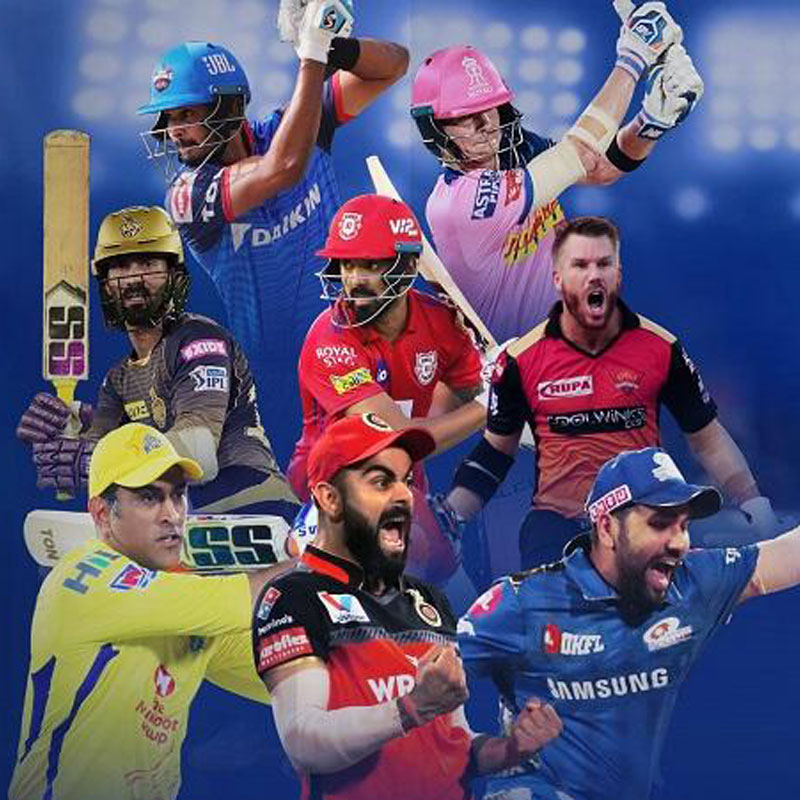
    MUMBAI: Chennai Super Kings (CSK) is the IPL team with the biggest and most hardcore fanbase, a study by Ormax Media has revealed. With 26.8 million fans, the MS Dhoni-led CSK has emerged as the strongest franchise, as per the findings of the IPL Franchise Fans report, based on a research conducted among 3,200 urban respondents across 23 states in India. 

    The data was collected over the course of the eight weeks of IPL 2020. The study pegs the number of fans across the eight IPL franchises at 86 million (8.6 crore). The study defines a franchise fan as someone who has a clear favourite team, is emotionally connected with it, watches its matches from start to finish, and discusses the team and its players online or offline.

    Following in the wake of CSK is this season’s champion Mumbai Indians (MI) at 24.8 million devotees. Royal Challengers Bangalore (RCB) ranks third, with 13.3 million enthusiasts. Between them, these three franchises account for 75 per cent of the total fan base, while the remaining five contribute to the balance 25 per cent.

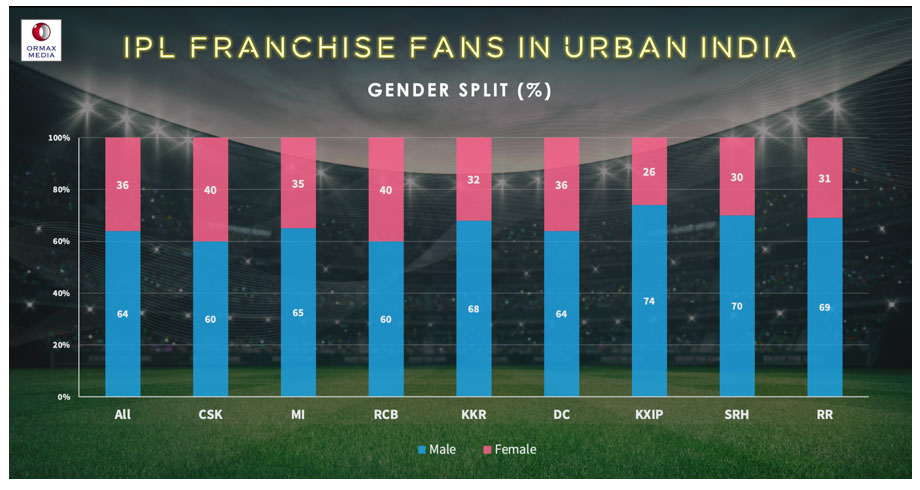
    64 per cent (55 million) of the total franchise fans are males, while the balance 36 per cent (31 million) are females.

    CSK and RCB have the most gender-balanced fan base, with the proportion of female fans being the highest at 40 per cent each. Nationwide popularity of their star players (MS Dhoni and Virat Kohli respectively) contributes to their stronger female fan base. Mumbai Indians leads Chennai Super Kings by a slender margin when it comes to the male fan base, but the latter takes the overall number one position because of its stronger female following.

    Ormax Media founder & CEO Shailesh Kapoor said: “Apart from viewership, a definitive measure of the success of a sports league is whether the teams playing in it manage to build a sizeable fan base over the years. A strong fan base is eventually the key for a profitable franchise, because it offers higher monetisation opportunities through sponsorships, ticket sales, merchandising, licensing and other such avenues. Over the last 13 years, IPL has done very well, and the fan base estimates of the top two franchises suggest that they are now two of the strongest sports teams across the world. It’s for the other franchises to learn from the success story of CSK and MI and develop a strategy to widen their fan base in the coming years.”