Tag: orbit

  • India’s weather satellite INSAT-3DR launched successfully

    India’s weather satellite INSAT-3DR launched successfully

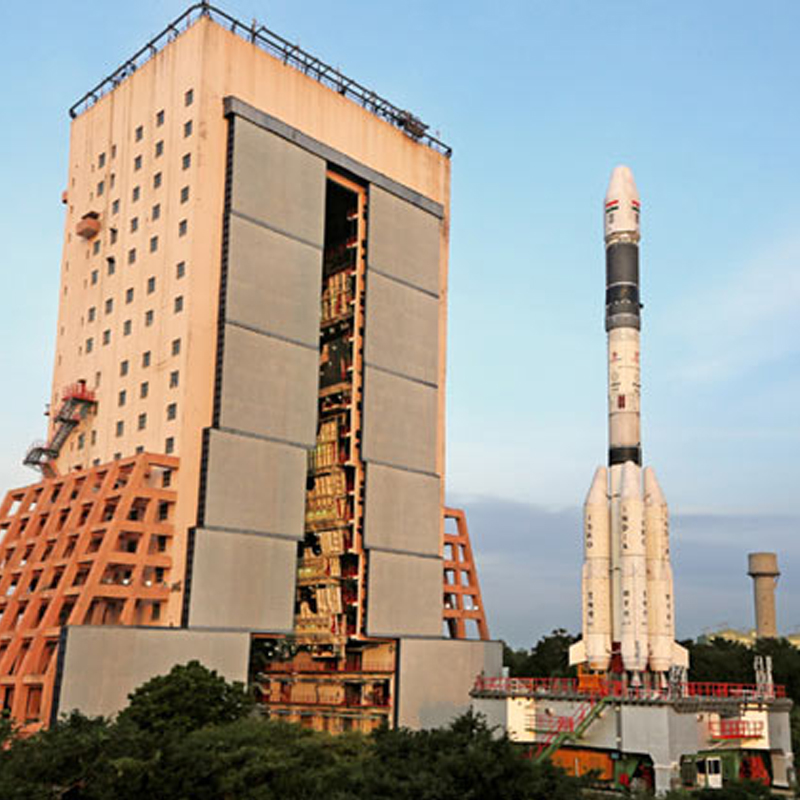
    MUMBAI: India’s Geosynchronous Satellite Launch Vehicle, equipped with the indigenous Cryogenic Upper Stage (CUS), on Thursday, successfully launched the country’s weather satellite INSAT-3DR, into a Geosynchronous Transfer Orbit (GTO) in its tenth flight (GSLV-F05). The achieved orbit is very close to the intended one.

    This flight of GSLV highlights the success of ISRO in mastering the highly complex cryogenic rocket propulsion technology

    The launch took place from the Second Launch Pad at the Satish Dhawan Space Centre SHAR (SDSC SHAR), Sriharikota, the spaceport of India. This was the first operational flight of GSLV equipped with CUS and the fourth to carry the indigenous CUS.

    This GSLV flight was the third consecutive success achieved by GSLV carrying indigenous CUS. The 2211-kg INSAT-3DR is the heaviest satellite to be launched from India.

    In its oval shaped GTO, the INSAT-3DR satellite is now orbiting the earth with a perigee (nearest point to the earth) of 169.76 km and an apogee (farthest point) of 36,080.5 km with an orbital inclination of 20.62 deg with respect to the equator.

    After a 29 hour 40 minutes countdown, the 415 tonne, 49 metre tall GSLV-F05 carrying INSAT-3DR, lifted off at the rescheduled time of 16:50 hrs IST. The 40-minute delay in the launch was due to an anomaly observed in the functioning of a pressure release valve in the liquid Oxygen filling ground segment which was resolved later.

    At 4.8 seconds before the countdown reached zero, the four liquid propellant strap-on stages of GSLV-F05, each carrying 42 tonne of liquid propellants, were ignited. At count zero, and after confirming the normal performance of all the four strap-on motors, the 139-tonne solid propellant first-stage core motor was ignited and GSLV lifted off. The major phases of the flight included the core motor burn-out, strap on burn-out, ignition of the second stage, separation of the core motor together with strap-ons, payload fairing separation, second stage separation, CUS ignition and its timely shut down after satisfactory performance.

    About 17 minutes after lift-off, INSAT-3DR was successfully placed in GTO.

    Soon after, the solar array of INSAT-3DR was automatically deployed and the Master Control Facility (MCF) at Hassan in Karnataka took control of the satellite.

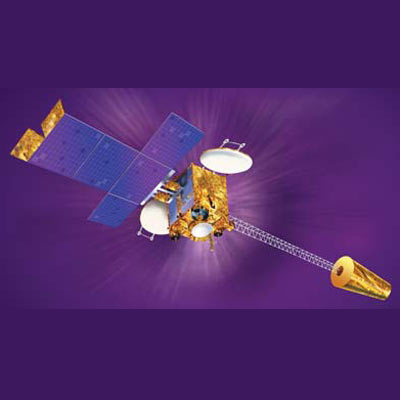
    Like its predecessor INSAT-3D which is providing service from orbit since 2013, INSAT-3DR is an advanced meteorological (weather observation) satellite built by India to provide a variety inputs essential for accurate weather forecasting. For this, it is equipped with three payloads (instruments), namely, a Multispectral Imager, Sounder and weather Data Relay Transponder.

    INSAT-3DR also carries a satellite aided Search and Rescue Transponder that picks up and relays alert signals originating from distress beacons of maritime, aviation and land based users.

    In the coming days, INSAT-3DR’s orbit will be raised from its present GTO to the final circular Geostationary Orbit (GSO) by firing the satellite’s Liquid Apogee Motor (LAM) in stages. The satellite will be commissioned into service after the completion of orbit raising operations and the satellite’s positioning in its designated orbital slot of 74 degree East longitude in the GSO and in-orbit testing of its payloads.

  • India’s weather satellite INSAT-3DR launched successfully

    India’s weather satellite INSAT-3DR launched successfully

    MUMBAI: India’s Geosynchronous Satellite Launch Vehicle, equipped with the indigenous Cryogenic Upper Stage (CUS), on Thursday, successfully launched the country’s weather satellite INSAT-3DR, into a Geosynchronous Transfer Orbit (GTO) in its tenth flight (GSLV-F05). The achieved orbit is very close to the intended one.

    This flight of GSLV highlights the success of ISRO in mastering the highly complex cryogenic rocket propulsion technology

    The launch took place from the Second Launch Pad at the Satish Dhawan Space Centre SHAR (SDSC SHAR), Sriharikota, the spaceport of India. This was the first operational flight of GSLV equipped with CUS and the fourth to carry the indigenous CUS.

    This GSLV flight was the third consecutive success achieved by GSLV carrying indigenous CUS. The 2211-kg INSAT-3DR is the heaviest satellite to be launched from India.

    In its oval shaped GTO, the INSAT-3DR satellite is now orbiting the earth with a perigee (nearest point to the earth) of 169.76 km and an apogee (farthest point) of 36,080.5 km with an orbital inclination of 20.62 deg with respect to the equator.

    After a 29 hour 40 minutes countdown, the 415 tonne, 49 metre tall GSLV-F05 carrying INSAT-3DR, lifted off at the rescheduled time of 16:50 hrs IST. The 40-minute delay in the launch was due to an anomaly observed in the functioning of a pressure release valve in the liquid Oxygen filling ground segment which was resolved later.

    At 4.8 seconds before the countdown reached zero, the four liquid propellant strap-on stages of GSLV-F05, each carrying 42 tonne of liquid propellants, were ignited. At count zero, and after confirming the normal performance of all the four strap-on motors, the 139-tonne solid propellant first-stage core motor was ignited and GSLV lifted off. The major phases of the flight included the core motor burn-out, strap on burn-out, ignition of the second stage, separation of the core motor together with strap-ons, payload fairing separation, second stage separation, CUS ignition and its timely shut down after satisfactory performance.

    About 17 minutes after lift-off, INSAT-3DR was successfully placed in GTO.

    Soon after, the solar array of INSAT-3DR was automatically deployed and the Master Control Facility (MCF) at Hassan in Karnataka took control of the satellite.

    Like its predecessor INSAT-3D which is providing service from orbit since 2013, INSAT-3DR is an advanced meteorological (weather observation) satellite built by India to provide a variety inputs essential for accurate weather forecasting. For this, it is equipped with three payloads (instruments), namely, a Multispectral Imager, Sounder and weather Data Relay Transponder.

    INSAT-3DR also carries a satellite aided Search and Rescue Transponder that picks up and relays alert signals originating from distress beacons of maritime, aviation and land based users.

    In the coming days, INSAT-3DR’s orbit will be raised from its present GTO to the final circular Geostationary Orbit (GSO) by firing the satellite’s Liquid Apogee Motor (LAM) in stages. The satellite will be commissioned into service after the completion of orbit raising operations and the satellite’s positioning in its designated orbital slot of 74 degree East longitude in the GSO and in-orbit testing of its payloads.

  • Eutelsat’s 70B satellite delivered into orbit

    Eutelsat’s 70B satellite delivered into orbit

    MUMBAI: Eutelsat Communications has said its Eutelsat 70B satellite has been successfully delivered into orbit by a Zenit-3SL rocket operated by Sea Launch AG from the ocean-based Odyssey Launch Platform in international waters of the Pacific Ocean.

    Lift-off of the rocket carrying the 5.2 tonne satellite took place on 3 December at 20.44 GMT/UTC, the company said.

    After a 1-hour 6-minute flight, the Zenit-3SL booster released Eutelsat 70B into geosynchronous transfer orbit. Partial deployment of the solar array was carried out successfully approximately two hours after spacecraft separation, it added.

    Following early orbit operations managed by Eutelsat and Astrium engineers and which include circularising the satellite‘s orbit, fully extending the solar arrays and deploying the antennas, Eutelsat 70B will undergo a full series of in-orbit tests.
    The latest satellite to Eutelsat‘s fleet is expected to enter full commercial service in mid-January 2013.

    Commenting after launch and the first manoeuvres, Eutelsat CEO, Michel de Rosen said: “We are delighted to announce that Eutelsat 70B is on its way to 70.5 degrees East and thank Sea Launch, Energia Logistics and RSC Energia for this flawless launch. With a footprint connecting Europe, Africa, Asia and Australia, Eutelsat 70B will be a powerful asset to our in-orbit resources. Its reach into Asia will also be a strong complement to the Eutelsat 172A satellite integrated into our fleet in September following the acquisition of this satellite from GE Capital.”

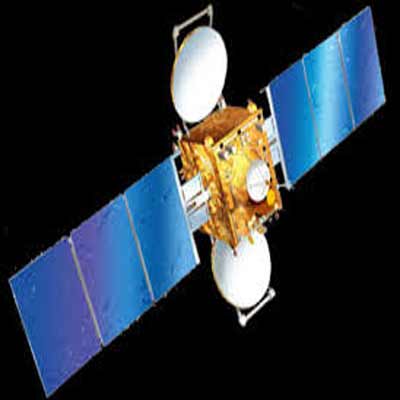
    Built for Eutelsat by Astrium using its E3000 platform, Eutelsat 70B is designed to optimise resources from the 70.5° East orbital slot. With high frequency reuse, four powerful regional beams connected to 48 Ku-band transponders are located on a single platform, more than doubling current capacity at 70.5° East for data and government services, broadband access, GSM backhauling and professional video exchanges.

    Eutelsat 70B will replace the Eutelsat 70A satellite which will subsequently be redeployed to another location for continued commercial service.

  • Eutelsat’s Hot Bird 8 broadcast satellite speeds into orbit

    Eutelsat’s Hot Bird 8 broadcast satellite speeds into orbit

    MUMBAI: The Hot Bird 8 broadcast satellite of Eutelsat Communications was successfully launched today by a Proton Breeze M launch vehicle from the Baikonur Cosmodrome at 03.48 am Baikonur time 5 August. Weighing 4.9 tonnes, Hot Bird 8 is the largest and most powerful European Ku-band broadcast satellite to go into geostationary orbit.

    In less than 10 minutes after lift-off, the three-stage Proton vehicle supplied by International Launch Services (ILS) finished its climb into space, leaving the Breeze M upper stage to continue its mission for the next nine hours. The Breeze M’s engine underwent five burns to place the EADS Space- built satellite into a transfer orbit.

    The satellite was separated this morning from the Proton launch vehicle at 06.59 GMT with signal acquisition established by Eutelsat from its Rambouillet teleport near Paris. Manoeuvres that will be conducted over the next days include full circularisation of the satellite’s orbit and deployment of the solar panels and antenna reflectors, which will be followed by a series of in-orbit tests.

    Eutelsat Communications CEO Giuliano Berretta said, “Equipped with a payload which spans the entire range of frequencies at our 13 degrees East position, Hot Bird 8 takes our inter-satellite back-up to a new level of security. We are looking forward to bringing our new broadcast satellite into commercial service in October, less than six months since Hot Bird 7A went live at 13 degrees East. My particular thanks also go to our industrial partners, EADS Space for completing this important satellite programme and ILS for executing a faultless launch for our company.”

    Hot Bird 8 will assume all broadcast traffic currently carried by the 20-transponder Hot Bird 3, which will subsequently continue commercial service at an alternative location. The new satellite’s additional capacity will contribute to raising in-orbit security at Eutelsat’s Hot Bird video neighbourhood which broadcasts 950 digital channels to over 110 million cable and satellite homes across Europe, North Africa and the Middle East.