Tag: operators

  • Disney star launches the #KhushiyonKePeeche campaign

    Disney star launches the #KhushiyonKePeeche campaign

    Mumbai: On the occasion of World Television Day, Disney Star Network launched a new campaign called “#KhushiyonKePeeche” to recognise India’s cable and DTH operators. The campaign highlights the operators’ consistent efforts to provide a seamless TV viewing experience for consumers, as well as the enormous value they add to a TV household across the country.

    “#KhushiyonKePeeche” is an extension of the previous “#DisneyStarKaNaman” campaign launched by Disney Star Network to highlight the role of cable and DTH operators.

    As a tribute, the campaign portrays cable operators as ‘caring and outstanding saathi’ and DTH operators as those who open the ‘door to happiness.’

    In a country where television is the primary source of entertainment, the film depicts the operators as the true source of joy, working behind the scenes to bring entertainment closer to every television home.

    Disney Star Distribution and International, India head Gurjeev Singh Kapoor said, “Every day the cable and DTH affiliates ensure that there is no disruption in content delivery to millions of TV households across the nation; they truly are the backbone of the distribution system. Their endeavour to go out of the way to ensure uninterrupted services to the consumers with an enhanced TV viewing experience is truly commendable.”

    “We at Disney Star Network can reach our audiences from every corner of the nation thanks to the persistent spirit of the 900+ cable and DTH affiliates we work with. We take pride in having forged strong relationships with each of them over the last three decades, which helps us work together as one team with the common goal of delivering high-quality entertainment to our TV viewers. This campaign is a token of our appreciation to recognise their relentless efforts in ensuring continuous service across the nation,” he added.

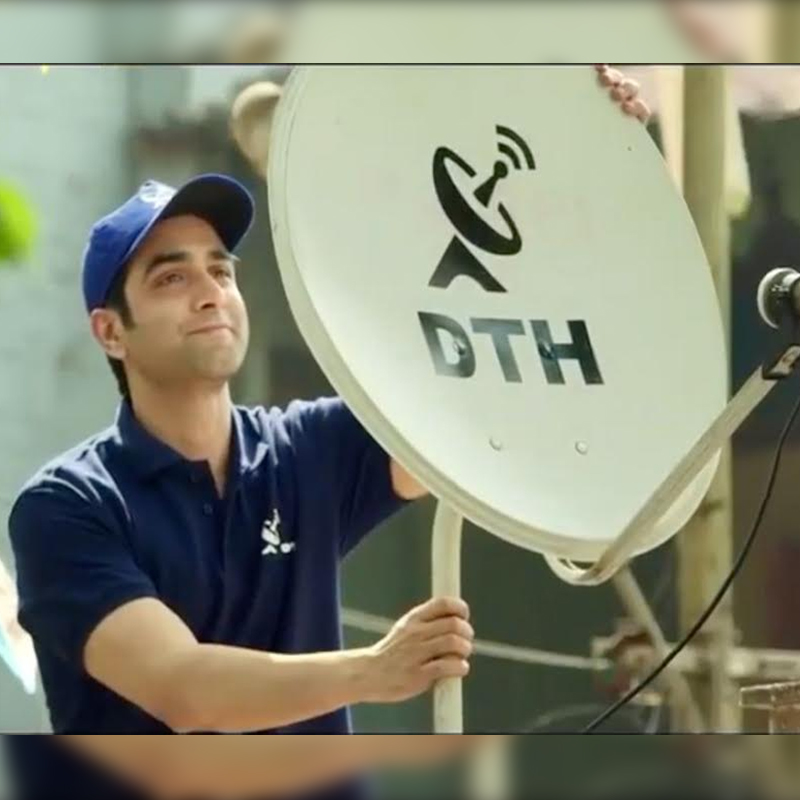
    The brand film is based on the life of a cable and DTH operator, ensuring that viewers have an uninterrupted viewing experience. It all starts with a cable operator getting on his bike to start the day and a DTH operator adjusting an antenna at home. They witness various emotions at various locations as they continue to do their jobs throughout the day.

    They see a child watching cartoons with her father, a family watching an emotional drama together, and a group of friends cheering on a cricket match. The film concludes with Disney Star Network’s top stars thanking each cable and DTH provider, emphasising “Aap hain toh hum hain.”

    The campaign will be aired across the Disney Star Network on entertainment, movies, sports, and regional channels on 20, 21 and 22 of November in Hindi and seven regional languages (Bengali, Kannada, Malayalam, Marathi, Odiya, Tamil, and Telugu).

  • The challenges & opportunities before incoming TRAI chairman PD Vaghela

    The challenges & opportunities before incoming TRAI chairman PD Vaghela

    KOLKATA: As the extended five-year term of Ram Sewak Sharma as chairman of the Telecom Regulatory Authority of India (TRAI) concludes today (30 September), industry will be looking closely at his replacement, PD Vaghela. The Gujarat cadre 1986 batch IAS officer is the outgoing  pharma department secretary who celebrated his sixtieth birthday on 22 September. Prior to that, he was the chief commissioner of commercial tax in Gujarat. He is also believed to have played an important role in the roll out of the goods and service tax in 2017. Also

    Vaghela is taking the chair at what can be termed a very crucial time for both the telecom and broadcasting sectors. While his predecessor has been widely criticised by stakeholders for over-regulating, Vaghela will have to bring more balance if he wants to narrow down the gap and sense of distrust between industry and the regulator.

    A task which could be challenging as he apparently has not had much to do with the broadcasting sector during his 34 years of being a civil servant. A B.Com graduate from Gujarat, he has masters degree from an institute in the The Hague, a post-graduation in business administration and finally a doctorate in sociology.

    Vaghela has held senior positions in the Kandla Port Trust, with Gujarat tourism, with the industries and mines department, the rural development department, as municipal commissioner (Bhavnagar), and in the home ministry.

    Read more news on TRAI

    One school of thought in the industry is that given his background and the circumstances during his appointment, Vaghela will mostly follow Sharma’s path during his tenure.

    At this moment, broadcasters are indulged in legal battles with the industry watchdog on many fronts including the ad cap and the amended new tariff order.

    A senior executive at one of the big four broadcasters says while the court’s verdict will have to be implemented by both broadcasters and the TRAI, Vaghela’s first challenge will be the direction TRAI will take once the litigation between industry and the regulator is adjudicated upon.  According to him, the new chairman has to also look after the viability of small cable operators who are worried about their future.

    The executive also adds that everyone is now perceiving broadband, not broadcasting, as the future of entertainment. Hence, he adds that the new chairperson can play an important role in carefully steering the future of the broadcasting industry.

    While there is a high chance that a number of consumers will shift to IP-based streaming content via OTT services, Vaghela will have to tread carefully, balancing digitisation and safeguarding traditional broadcasters’ interests.

     “The RS Sharma regime has failed broadcasters. He served an important role in UIDAI implementation. Hence, we had huge expectations from him but we have been disappointed at the end,” a senior industry source states. 

     Although the executive is not very optimistic about the new chairman being able to dilute this sentiment, he thinks the industry should at least observe him for the next few months, before pronouncing any judgements.

    However, another industry veteran claims Vaghela is quite likely going to continue to carry on in the same vein as Sharma. Like his peers in the industry, he acknowledges that there have been frequent changes in regulation which have been challenging, but he also credits Sharma for bringing in some semblance of order in to the TV distribution ecosystem.

    Read more news on NTO 2.0

    “There was so much of scrapping between MSOs, LCOs and broadcasters,” he says. “By pushing cable TV digitisation and mandating some sort of price standardisation through regulation, he forced the industry’s hand to try and work together, which they are doing currently. Yes, there is some irritation from time to time, but the value chain is working closer together, keeping rules modernisation, upgradation and customer service in mind.”

    The veteran also adds that Sharma played a large role in pushing ahead the Narendra Modi-led government’s digitisation agenda, by allowing new pricing models as far as mobility is concerned. “The Jio phenomenon of cheap data, free calls, has been a game changer for the spread of the internet where incumbents such as Airtel and Vodafone and Idea were working with legacy business and consumer models.”

    The CEO of a TV network points out that even though the court cases against NTO 2.0 continue in the courts, Vaghela will very much have to “balance value for consumers with the interest of broadcasters along with operators. He will also possibly play a significant role in OTT legislation as the government is gearing up its efforts to regulate this rapidly growing vertical.”

    “Along with working on major rollouts like 5G implementation, enhancing fibre-to-home broadband connectivity across the country on the telecom side, Vaghela can choose to leave his mark as far as cable TV amendments, a national broadcaster policy, DTH licensing are concerned. Additionally, he could things take a step further and start looking at drawing up a national video policy encompassing TV, streaming, and possibly mobile delivery of video,” says the CEO.

    On the telecom side, Vaghela has contentious issues like super high 5G pricing (at Rs 492 crore per MHz in the 3500 Mhz band) which could deter the ailing telecom service providers(TSPs)  from making a bid. The adjusted gross revenue ruling has gone against at least two of them who have been reeling courtesy the price war that Jio has waged for the past few years. The consultation paper on whether a floor price needs to be put in place for telecom services will also take up his attention. Then, he will have to decide on interconnect usage charges that TSPs charge each other for calls made by customers. They are due to be scrapped by early next year.

    Of course, he will have a bunch of old hands who have been at the regulator for a few years. There’s the TRAI secretary Sunil Gupta, and numerous other advisers who provided back end support for almost every decisive direction, recommendation, and regulation the watchdog has given over the years. How he takes their advice and inputs and formulate these into law for broadcasting and telecom will decide whether he will be blessed or vilified by the industry.

    (This piece has been penned following conversations with real executives from the business of television. Most of them requested that their identity be kept secret while using their quotes and views in this piece) 
  • Cable TV price may reduce as TRAI issues tariff, QofS, interconnect regulations after SC nod

    MUMBAI: Cable TV prices are now expected to reduce after Telecom Regulatory Authority of India yesterday issued a series of orders relating to digital addressable systems.

    Broadcast carriage regulator TRAI had lined up a slew of guidelines relating to tariff, quality of service and interconnections, including proposing maximum retail price (MRP) for channels being bundled in genre-wise bouquets, freeing unbundled premium channels of  price caps and reining in the last mile cable operator (LCO) from breaching revenue-gravy trail.

    Sources in TRAI had indicated the regulator had favoured introducing MRP for TV channels that broadcasters offer in a bouquet to MSOs so the prices could be conveyed to a consumer in a transparent manner for him to make an empowered choice. Though broadcasting companies do submit annually a-la-carte rates of their respective channels to TRAI, the regulator was of the opinion that a consumer doesn’t ultimately get to choose the channel of his choice transparently.

    Following the green signal from the Supreme Court yesterday morning, TRAI issued a series of orders relating to digital addressable systems.

    Apart from the Tariff order which had been issued on 10 October last year, the regulator also issued the DAS Interconnect Regulations which had been issued on 14 October last year, and the Standards of Quality of Service and Consumer Protection (Digital Addressable Systems) Regulations which had been issued on 10 October last year.

    In separate press releases, TRAI said the three documents issued in October last year were in draft form. Earlier, the regulator had issued consultation papers on the issues and finalized the regulations after receiving responses from stakeholders and open house discussions, the final regulations have been issued. The regulations had been issued after However, a cursory glance shows that the regulator has stuck to its draft with some incidental changes.

    The orders can be seen at:

    http://trai.gov.in/sites/default/files/Tariff_Order_English_3%20March_2017.pdf

    http://www.trai.gov.in/sites/default/files/QOS_Regulation_03_03_2017.pdf

    http://www.trai.gov.in/sites/default/files/Interconnection_Regulation_03_mar_2917.pdf

    Earlier, both Star India and Vijay TV had filed a petition in Madras High Court under the Copyright Act on the ground that TRAI could not issue orders that would affect content but could only issue regulations relating to distribution and other matters.

    After the High Court stayed all orders issued by it, TRAI appealed to the Supreme Court which this morning said that TRAI was free to issue its orders. However, it said the case in the High Court would continue and would have to be completed within sixty days.

    Both channels were also given leave to amend their petitions in the event of TRAI issuing any orders.

    Also read:

    TRAI tariff & quality of services regulations

    TRAI issues comprehensive interconnect draft guidelines

    Offer Premium channels as a la carte, don’t bundle: TRAI

  • AT&T, Comcast, Charter and Dish Network emerge among top cable, satellite and telco pay-TV operators

    AT&T, Comcast, Charter and Dish Network emerge among top cable, satellite and telco pay-TV operators

    MUMBAI:  AT&T (IPTV + Satellite), Comcast    (Cable), Charter (Cable), Dish Network  (Satellite), Verizon (IPTV), Cox (Cable), and Altice (Cable) have emerged as the top seven cable, satellite and telco pay-TV operators in the third quarter this year.

    FierceCable has tallied a look at the third-quarter earnings season, ranking the top satellite, cable, and telco pay-TV operators and studying their performance through key metrics, including average revenues per user (ARPU) and subscriber growth.

    Top US Pay TV Service Provider Metrics Q3 2016 (ranking by subscribers)
    Rank   Platform Subscribers (millions) Net Adds ARPU*
    1 AT&T IPTV + Satellite 25.292 -3,000 $118.09
    2 Comcast Cable 22.428 32,000 $148.47
    3 Charter Cable 16.887 -47,000 $80.81
    4 Dish Network Satellite 13.643 50,000 $89.44
    5 Verizon IPTV 4.673 36,000 n/a
    6 Cox Cable 4.146 3,000 n/a
    7 Altice Cable 3.598 -41,000 $117.80


    Source- Fierce Cable

    Meanwhile, satellite, cable, and telecommunications-based subscription video services lost 430,000 customers in the third quarter, according to SNL Kagan, giving the industry a loss of 1.3 million subscribers. The research firm’s count for the third quarter is lower than the 486,000 estimate given by MoffettNathanson analyst Craig Moffett last week. UBS experts sent analysis of the overall video industry in the United States, showing losses and gains in the past few years in this space. The firm said that it estimated that the pay TV subscribers base of U.S. multichannel including Sling TV,  dropped by 0.6 per cent year over year in the third quarter, similar to the drop in both the first quarter and the second quarter.

    MoffettNathanson experts said the overall subscriber declined in the pay-TV space in the last 10 years. Dish Network’s Sling TV service has affected the trend, the experts said. Experts said that Charter, Comcast, and other cable companies are scoring over telco providers such as Verizon and AT&T as also on satellite providers such as Dish Network. In the broadband internet space, UBS experts marked impressive performance of Comcast and Charter against Verizon and AT&T.

    According to Firece Cable, in the third quarter, around 94,000 pay-TV customers were lost by cable operators, SNL Kagan said. This was still the sector’s best performance in 10 years.  AT&T’s decision to give priority to the growth of DirecTV generated 323,000 new subs for the platform in the third quarter, offsetting huge losses for Dish Network in satellite. In the 12-month period ending 30 September, SNL Kagan calculated that Dish Network’s Sling TV added 925,000 customers.

  • AT&T, Comcast, Charter and Dish Network emerge among top cable, satellite and telco pay-TV operators

    AT&T, Comcast, Charter and Dish Network emerge among top cable, satellite and telco pay-TV operators

    MUMBAI:  AT&T (IPTV + Satellite), Comcast    (Cable), Charter (Cable), Dish Network  (Satellite), Verizon (IPTV), Cox (Cable), and Altice (Cable) have emerged as the top seven cable, satellite and telco pay-TV operators in the third quarter this year.

    FierceCable has tallied a look at the third-quarter earnings season, ranking the top satellite, cable, and telco pay-TV operators and studying their performance through key metrics, including average revenues per user (ARPU) and subscriber growth.

    Top US Pay TV Service Provider Metrics Q3 2016 (ranking by subscribers)
    Rank   Platform Subscribers (millions) Net Adds ARPU*
    1 AT&T IPTV + Satellite 25.292 -3,000 $118.09
    2 Comcast Cable 22.428 32,000 $148.47
    3 Charter Cable 16.887 -47,000 $80.81
    4 Dish Network Satellite 13.643 50,000 $89.44
    5 Verizon IPTV 4.673 36,000 n/a
    6 Cox Cable 4.146 3,000 n/a
    7 Altice Cable 3.598 -41,000 $117.80


    Source- Fierce Cable

    Meanwhile, satellite, cable, and telecommunications-based subscription video services lost 430,000 customers in the third quarter, according to SNL Kagan, giving the industry a loss of 1.3 million subscribers. The research firm’s count for the third quarter is lower than the 486,000 estimate given by MoffettNathanson analyst Craig Moffett last week. UBS experts sent analysis of the overall video industry in the United States, showing losses and gains in the past few years in this space. The firm said that it estimated that the pay TV subscribers base of U.S. multichannel including Sling TV,  dropped by 0.6 per cent year over year in the third quarter, similar to the drop in both the first quarter and the second quarter.

    MoffettNathanson experts said the overall subscriber declined in the pay-TV space in the last 10 years. Dish Network’s Sling TV service has affected the trend, the experts said. Experts said that Charter, Comcast, and other cable companies are scoring over telco providers such as Verizon and AT&T as also on satellite providers such as Dish Network. In the broadband internet space, UBS experts marked impressive performance of Comcast and Charter against Verizon and AT&T.

    According to Firece Cable, in the third quarter, around 94,000 pay-TV customers were lost by cable operators, SNL Kagan said. This was still the sector’s best performance in 10 years.  AT&T’s decision to give priority to the growth of DirecTV generated 323,000 new subs for the platform in the third quarter, offsetting huge losses for Dish Network in satellite. In the 12-month period ending 30 September, SNL Kagan calculated that Dish Network’s Sling TV added 925,000 customers.

  • Total number of MSO provisional licence holders rises to 522, taking total to over 750

    Total number of MSO provisional licence holders rises to 522, taking total to over 750

    NEW DELHI: Even as the Government got a fillip with the Supreme Court saying that Bombay High Court order did not imply a pan-India stay of digital addressable systems, 26 more multi-system operators got registration in the third week last month and took the total number to 753 including 231 which have permanent (ten-year licences) by 26 February.

    The last list issued on 17 February had put the total at 727 including the 231 which have permanent (ten-year) licences. The Ministry of Information and Broadcasting (MIB) had by 12 January cancelled the licences of 26 MSOs and closed their cases. According to the list issued today, the areas of operation of some of the MSOs have been revised or amended.

    The new licencees have all got state-wise licences and none has got a pan-India licence. These are from Gujarat, Assam, Madhya Pradesh, Karnataka, Rajasthan, Uttarakhand, Maharashtra, Utar Pradesh, Chhatisgarh, Telangana, Odisha, Andhra Pradesh, and West Bengal.

    With the Home Ministry directive about doing away with security clearances for MSOs not being communicated in writing to the MIB, the pace remains slow.

    The permanent licence issued to Kal Cable of Chennai had been cancelled on 20 August, 2014 but this cancellation was set aside by Madras High Court on 5 September the same year. However, Kal Cable’s name continues to be in the cancelled list – presumably because the cases are still pending.

    Sources said many MSOs holding provisional licences had not completed certain formalities relating to shareholders and so on.


  • Total number of MSO provisional licence holders rises to 522, taking total to over 750

    Total number of MSO provisional licence holders rises to 522, taking total to over 750

    NEW DELHI: Even as the Government got a fillip with the Supreme Court saying that Bombay High Court order did not imply a pan-India stay of digital addressable systems, 26 more multi-system operators got registration in the third week last month and took the total number to 753 including 231 which have permanent (ten-year licences) by 26 February.

    The last list issued on 17 February had put the total at 727 including the 231 which have permanent (ten-year) licences. The Ministry of Information and Broadcasting (MIB) had by 12 January cancelled the licences of 26 MSOs and closed their cases. According to the list issued today, the areas of operation of some of the MSOs have been revised or amended.

    The new licencees have all got state-wise licences and none has got a pan-India licence. These are from Gujarat, Assam, Madhya Pradesh, Karnataka, Rajasthan, Uttarakhand, Maharashtra, Utar Pradesh, Chhatisgarh, Telangana, Odisha, Andhra Pradesh, and West Bengal.

    With the Home Ministry directive about doing away with security clearances for MSOs not being communicated in writing to the MIB, the pace remains slow.

    The permanent licence issued to Kal Cable of Chennai had been cancelled on 20 August, 2014 but this cancellation was set aside by Madras High Court on 5 September the same year. However, Kal Cable’s name continues to be in the cancelled list – presumably because the cases are still pending.

    Sources said many MSOs holding provisional licences had not completed certain formalities relating to shareholders and so on.


  • Financial books of some Kolkata MSOs should be audited: Analysts

    Financial books of some Kolkata MSOs should be audited: Analysts

    KOLKATA: At a time when some multi-system operators (MSOs) in Kolkata are stuck in a legal battle with the government authorities over non-payment of taxes, city-based analysts feel that the financial books of some MSOs should be duly audited.

    “Some MSOs should be audited by the authorities as non-payment of taxes is causing loss to the state as well as central exchequer,” says a cable TV analyst Mrinal Chatterjee.

    Last year, in August 2013, Kolkata-based MSO Kolkata Cable & Broadband Pariseva Ltd (KCBPL) managing director Bijoy Kumar Agarwal was arrested for evading service tax payment to the tune of Rs 5.52 crore. Agarwal was arrested during a raid conducted by the service tax officials probing the alleged financial irregularities of the MSO.

    Says a local cable operator (LCO), “All these years, it was the LCOs who were held responsible for all the deeds and misdeeds. Now digitisation has helped in unfolding the truth that even the MSOs are resorting to unfair means to do their business. The government authorities must look into the matter seriously.”

    Trouble for operators in Kolkata seems to be intensifying. Before it was the Telecom Regulatory Authority of India (TRAI) and now they are being closely monitored by the tax inspectors, police authorities and even the judiciary.

  • Netflix said to negotiate with US cable companies for set-top box app

    Netflix said to negotiate with US cable companies for set-top box app

    MUMBAI: Netflix is in talks with several US cable companies with the aim of making its video streaming app available on set-top boxes, according to various reports. The reports say that Netflix’s discussions with US operators, including Comcast and Suddenlink, are at an early stage with no deal expected soon. Last month the UK’s Virgin Media became the first cable operator to offer Netflix to its customers; companies in the US have so far been reluctant to embrace streaming services, seeing the technology as broadly competitive with their traditional content offerings.

    One reported sticking point in the negotiations is that Netflix is pushing for the cable companies to adopt its Open Connect content delivery network, which it argues will provide the best streaming quality. Previously Netflix had restricted 3D and what it calls “Super HD” content, which requires a higher bitrate, to internet service providers that participated in the Open Connect initiative, but Time Warner Cable argued that its network was “more than capable of delivering this content to Netflix subscribers.” Netflix later opened up Super HD streaming to all ISPs.

  • Supreme court gives entertainment tax relief to DTH operators

    Supreme court gives entertainment tax relief to DTH operators

    NEW DELHI: In a major relief to direct-to-home operators in the state, the Supreme Court last week held that the Madhya Pradesh government cannot demand entertainment tax on DTH services under the Madhya Pradesh Entertainment Duty and Advertisements Tax Act, 1936.

    Justice Aftab Alam and Justice R M Lodha said in a judgment that Act ‘cannot be extended to cover DTH operations.’

    Accepting appeals by Tata Sky against a judgment of the Madhya Pradesh High Court of August 2010, the apex court said: ‘Neither the provision of section 4(1) nor any of the modes provided under section 4(2) of the Act can be made applicable for collection of duty on DTH operations. Further, it is noted above that section 8 provides rule making powers. In exercise of the powers under that provision, the Madhya Pradesh Entertainment Duty and Advertisement Tax Rules 1942 were framed. A perusal of the Rules makes it absolutely clear that the collection mechanism under the 1936 Act is based on revenue stamps stuck to the tickets issued by the proprietor for entry to the specified place where entertainment is held.’

    The Court added: ‘Under section 3 read with section 2(d) and section 2(a), the charge or levy of tax is attracted only if an entertainment takes place in a specified place or locations and persons are admitted to the place on payment of a charge to the proprietor providing the entertainment. In the present case, as DTH operation is not a place-related entertainment, it is not covered by the charging section 3 read with section 2(a) and 2(b) of the 1936 Act. Consequently, the question of going to section 2(d)(iv) does not arise.’

    The revenue department had demanded 20 per cent entertainment duty on subscription payment from the DTH operator, which had commenced services in August 2006 all over the country including Madhya Pradesh.

    Tata Sky in their appeals had contended that DTH broadcast is a notified service under the Finance Act and it is chargeable to service tax. For the purpose of levy of service tax, “broadcasting” has been defined specifically under section 65(15) of the Finance Act. The broadcasting services were brought within the purview of the service tax under section 65(105)(zk) of the Finance Act 1994 as amended with effect from 16 July 2001. Later on, DTH service was brought within the purview of the service tax with effect from 16 June 2006.

    Tata Sky contended that it does not use any infrastructure from the State for its DTH broadcasts.

    On 5 May 2008, the State Government issued a gazette notification fixing 20 per cent entertainment duty in respect of every payment made for admission to an entertainment other than cinemas, videos cassette recorders and cable service.

    The State on 1 August 2009 passed the Madhya Pradesh Entertainment Duty and Advertisements Tax (Amendment) Act, 2009. By the Amendment Act, the failure to produce accounts and documents as required by the Excise Commissioner or any officer authorized by the State Government was made a penal offence.

    However, the apex court noted that this amendment ‘did not introduce any provision in the Parent Act with respect to levy of entertainment duty on DTH broadcasting.’

    Referring to the notification of 5 May 2008, the apex court said ‘it is elementary that a notification issued in exercise of powers under the Act cannot amend the Act. Moreover, the notification merely prescribes the rate of entertainment duty at 20 per cent in respect of every payment for admission to an entertainment other than cinema, video cassette recorder and cable service. The notification cannot enlarge either the charging section or amend the provision of collection under section 4 of the Act read with the 1942 Rules. It is therefore clear that the notification in no way improves the case of the State.’

    The Court also said that the controversy in all the three appeals relates to the demand and realization of entertainment tax under the 1936 Act, which means for the period between the commencement of operation by the appellant in the year 2006 and 31 March 2011, the day prior to the coming into force of the new Act, called the Madhya Pradesh Vilasita, Manoranjan, Amod Evam Vigyapan Kar Adiniyam 2011.