Tag: OpenAI

  • OpenAI tunes in Vasundhara Mudgil for India role

    OpenAI tunes in Vasundhara Mudgil for India role

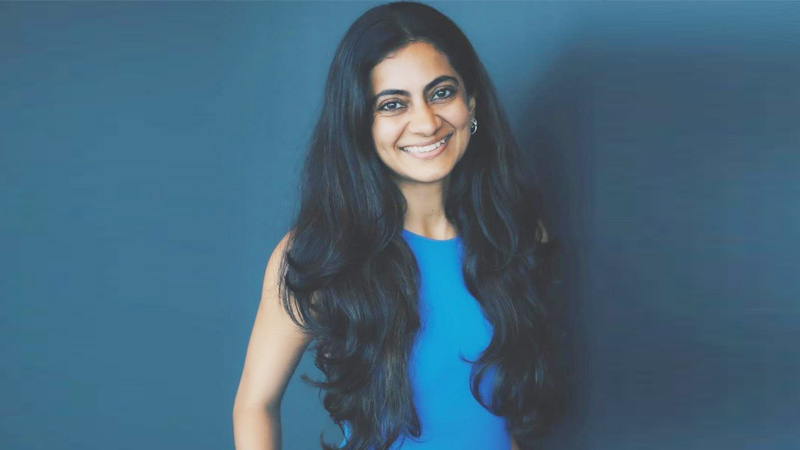
    MUMBAI: From playlists to prompt lists, Vasundhara Mudgil is tuning into a whole new frequency. The former head of communications at Spotify India has joined OpenAI as India communications lead, marking a major career shift from music streaming to machine learning.

    Based in Mumbai, Mudgil will now lead OpenAI’s communications strategy in one of the company’s fastest-growing markets. Her role will focus on shaping the brand’s local voice, driving engagement, and aligning India’s narrative with OpenAI’s global mission.

    At Spotify, Mudgil was instrumental in crafting the brand’s story during its India launch and steering its communications for over seven years. She built a distinct local identity for the platform while ensuring its messaging struck the right chord with both listeners and media.

    Before her streaming stint, she headed communications at Intel India, where she drove brand messaging, managed external engagement, and navigated crisis communications. Her early career at Genesis Burson-Marsteller saw her managing high-profile clients across tech, telecom and media, steadily rising to associate partner.

    With nearly two decades of experience in reputation management and strategic storytelling, Mudgil brings both tech fluency and creative finesse to OpenAI’s expanding India team. Looks like OpenAI’s next big story in India is ready to be well-communicated, and perfectly composed.


  • OpenAI names Sheeladitya Mohanty as India marketing lead

    OpenAI names Sheeladitya Mohanty as India marketing lead

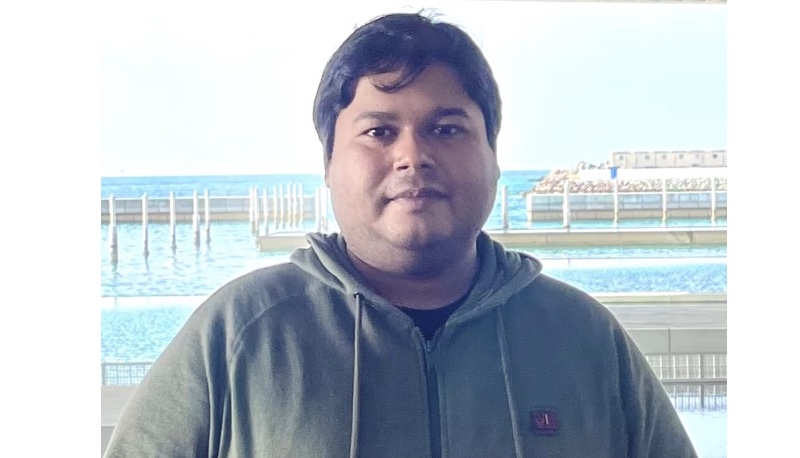
    MUMBAI;OpenAI has appointed Sheeladitya Mohanty as its marketing lead for India, tasking him with driving awareness, adoption and responsible use of the firm’s products across the subcontinent.

    An XLRI Jamshedpur alumnus, Mohanty began his career at Nokia in 2009 and later worked at Microsoft as a business evangelist before joining Facebook (now Meta) in 2016. Over nine years at the social-media giant, he handled platform, public affairs and brand marketing roles, most recently serving as marketing lead for Meta AI and Facebook across Asia-Pacific.

    Mohanty says his strength lies in “systems thinking”—connecting workstreams across silos to deliver scale. His expertise spans consumer marketing, go-to-market launches, platform partnerships and large-scale campaign execution.

    At OpenAI, he will lead education and outreach in India, a market critical to the firm’s global ambitions of making artificial intelligence “accessible and impactful”.

  • Adobe sets Firefly free with mobile app and AI-first moodboarding tools

    Adobe sets Firefly free with mobile app and AI-first moodboarding tools

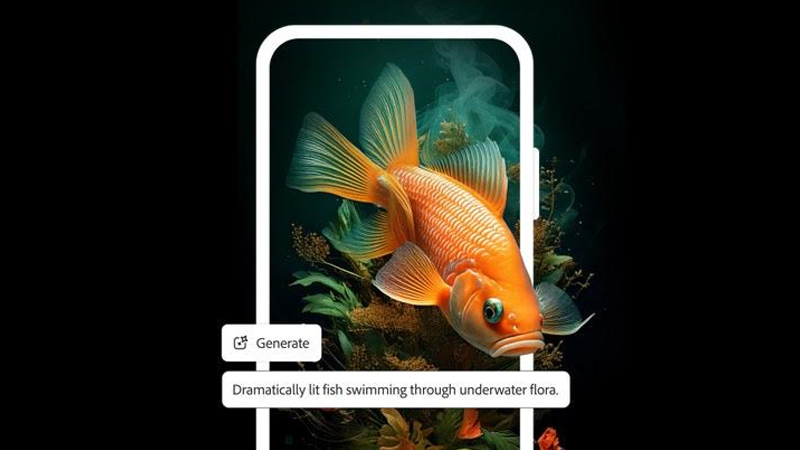
     MUMBAI: Your next masterpiece might just start on your phone with a text prompt. Adobe has just turbocharged its generative AI game with a major upgrade to Firefly, unveiling a new mobile app and an AI-powered moodboarding feature called Firefly Boards. The expansion, announced today, makes the creative playground more portable, collaborative, and multimodal than ever before bringing AI-assisted image and video generation to IOS and Android, while letting teams co-create across media in real time.

    With over 24 billion AI-generated assets and traffic up 30 per cent quarter-over-quarter, Firefly is fast becoming Adobe’s flagship for idea-to-execution creativity. The mobile app allows users to generate and edit high-quality images and videos on the fly, with tools like Text to Image, Text to Video, Generative Fill, and Generative Expand. Users can mix and match AI models from Adobe’s own to those by OpenAi, Google, Luma Ai, Pika, Ideogram, Runway, and Black Forest Labs directly within the app or Firefly Boards.

    The Firefly Boards feature, now in public beta, is a slick new workspace for creative teams to develop concepts at scale. Think moodboards that breathe, creators can remix video clips, generate new visuals, or use conversational prompts to fine-tune visuals collaboratively.

    More than just eye candy, Firefly also embeds Content Credentials into AI-generated assets, helping creators track origins and safeguard their rights. Adobe’s ecosystem-first approach now lets assets flow seamlessly from mobile to web to desktop, syncing with Creative Cloud apps like Photoshop and Premiere Pro.

    Adobe says the new capabilities support everything from text-to-vector logo design to soon-to-launch features like text-to-avatar and AI-generated sound effects all from a single, intuitive interface.

    Adobe CTO Ely Greenfield put it, “Our goal with Firefly is to give creators a one-stop shop for generative tools across mobile and web.”

    With first-time Firefly subscribers up 30 per cent, and paid subscriptions nearly doubling, the platform isn’t just growing, it’s blazing ahead. The Firefly app is now live on App Store and Google Play, while Firefly Boards can be accessed via the web for Creative Cloud users.

    In a world where creativity rarely waits for a desk, Firefly’s new wings let ideas take off from anywhere and turn sparks of inspiration into full-blown visuals in minutes.

  • Google’s AI arm gets new marketing muscle in Anuj Gulati

    Google’s AI arm gets new marketing muscle in Anuj Gulati

    MUMBAI: Google has appointed a new ringmaster to its artificial intelligence circus. Anuj Gulati, a 12-year veteran of the search giant’s marketing ranks, has been tapped as head of global growth marketing for Gemini, the company’s conversational AI platform that aims to give ChatGPT a run for its money.

    Gulati announced his promotion on LinkedIn with the customary corporate humility: “I’m happy to share that I’m starting a new position as head of global growth marketing, Gemini at Google!” The exclamation mark suggests genuine enthusiasm—a commodity as rare in Silicon Valley these days as profitable startups.

    The appointment comes at a crucial moment for Google’s AI ambitions. As the chatbot wars heat up faster than a neural processor under load, Gemini represents Google’s best hope of maintaining relevance in a world where users might soon bypass traditional search entirely.

    Gulati brings a developer-focused pedigree to the role. He previously served as group marketing manager for developer growth and performance, where he led global growth, lifecycle and paid media marketing for Google’s developer products across mobile, web and the increasingly crowded AI landscape.

    His career trajectory reads like a textbook case of corporate ladder-climbing done right. Prior to his developer marketing stint, Gulati spent nearly six years as senior product marketing manager for developer platforms based in Singapore, where he helped developers in India and southeast Asia “build great products and successful businesses” on Google’s ubiquitous platforms.

    Before joining the Google mothership, Gulati cut his teeth at The Times of India, where as head of mobile products he claims to have increased mobile traffic sixfold in just 12 months—a performance that likely caught Mountain View’s acquisitive eye.

    His CV also features a brief philanthropic interlude as head of marketing at Save the Children, sandwiched between stints at The Times of India, where he began his career as a brand manager after a short consultancy role at Tata Technologies.

    As Google continues its desperate sprint to catch up with OpenAI’s head start, Gulati will need to draw on every marketing trick in his considerable playbook. For while Google may have invented much of the technology underpinning today’s AI boom, it finds itself in the unfamiliar position of underdog in the race to commercialise it.

    Whether Gulati can help Gemini outshine its competitors remains to be seen. But one thing is certain: in the increasingly cutthroat world of AI, Google is gemini-ly serious about winning.

  • Financial Times names Jon Slade as new CEO after two-decade leadership run

    Financial Times names Jon Slade as new CEO after two-decade leadership run

    MUMBAI:  The Financial Times has tapped its commercial whizz Jon Slade as the new chief executive, ending John Ridding’s mammoth 18-year stint at the helm of the prestigious pink paper.

    Slade, who’s been flexing his muscles as chief commercial officer since 2014, will take the reins this summer after overseeing a whopping three-quarters -including global advertising, print circulation, consultancy and subscriptions – of the FT group’s annual revenue streams. 

    The 51-year-old commercial hotshot has pulled off the seemingly impossible – steering the FT’s advertising business back into growth while rival media outlets watched their numbers plummet faster than a lead balloon. Additionally, he has recently overseen the expansion of the group’s consulting business, FT Strategies.

    “Jon has both the leadership skills and commercial acumen to take the FT Group to new heights,” gushed Japanese parent company Nikkei chairman & CEO Naotoshi Okada. The venerable paper is now one of the flashy titles under the Japanese media and financial information  powerhouse. 

    Under Slade’s commercial stewardship, the FT has been raking in the cash, with revenue and readership figures climbing steadily over the past decade. The media powerhouse now boasts a global paying audience of 2.9 million, including 1.5 million subscribers who fork out for online and print content.

    With AI sending shockwaves through the media landscape, Slade will be tasked with navigating the digital revolution’s next chapter. The savvy operator has already orchestrated a licensing deal with OpenAI, getting ahead of the game while other publishers were still scratching their heads.

    “There has rarely been a more consequential period for professional news media,” Slade declared, clearly relishing the challenge of his promotion. 

    The London-based group reported a tidy £540 million in revenues last year, up from just over £500 million in 2023 – proof that quality journalism can still bring home the bacon even as the industry weathers seismic technological shifts.

  • ANI lawsuit against OpenAI for copyright infringement

    ANI lawsuit against OpenAI for copyright infringement

    MUMBAI: Cheating may seem harmless until the consequences come crashing down—a classic case of “play stupid games, win stupid prizes”.

    Imagine the titan of artificial intelligence, the very force reshaping our understanding of innovation, now standing accused of stepping over the ethical boundaries it once sought to redefine.

    With a jaw-dropping market cap of $157 billion as of October 2024, OpenAI—the so-called savior of human progress—is now grappling with a high-stakes copyright infringement lawsuit filed by Asian News International (ANI) in India.

    This legal clash, steeped in complexity and a touch of irony, pits the ambitions of cutting-edge AI against the enduring principles of intellectual property rights. Could this be a case of progress overstepping its bounds? Or a necessary infringement in the name of human advancement?

    ANI has taken OpenAI to court, accusing the tech giant of unauthorised use of its copyrighted content to train its large language model (LLM). The case not only raises pressing questions about copyright infringement and fair use but also dives deep into the murky waters of territoriality and intellectual property in the age of artificial intelligence. The stakes? Nothing less than the future of AI innovation and creators’ rights in one of the world’s fastest-growing digital economies.

    ANI accused OpenAI of using its copyrighted material without permission and highlighted the inadequacy of OpenAI’s opt-out policy, which ANI claims fails to prevent its content from being scraped through third-party websites. ANI also alleged that OpenAI’s models produced outputs either verbatim or substantially similar to its copyrighted content, further compounding the copyright violation. Additionally, ANI flagged fabricated responses generated by ChatGPT that falsely attributed interviews or news stories to the news agency.

    OpenAI defended its practices by citing fair use, which permits limited use of copyrighted material under specific conditions. It argued that its models do not reproduce content verbatim and that it sufficiently transforms language to comply with copyright exceptions. On fabricated responses, OpenAI stated it resolved issues flagged by ANI and committed to addressing such problems promptly in the future.

    ANI is seeking an interim injunction to prevent OpenAI from storing, publishing, or reproducing its content and has requested a prohibition on accessing ANI’s material through any channel, including subscribers. OpenAI countered by asserting that no legal action could apply within India, as its data processing and model training occur outside the country, with no offices or servers in India.

    The lawsuit brings two critical issues to the forefront: the balance between copyright infringement and fair use, and the challenges of territoriality in data storage. India’s existing copyright law lacks explicit provisions regarding AI training, making the applicability of fair use a grey area. Moreover, the absence of text and data mining (TDM) provisions complicates the country’s approach to fostering innovation while safeguarding content creators’ rights.

    The territoriality argument further underscores complexities in applying local laws to global AI platforms. Data sovereignty issues arise as distributed AI models utilise data generated in India but processed across international cloud environments, challenging traditional legal frameworks.

    Globally, AI platforms and news publishers have clashed over the use of copyrighted material. While some publishers have entered licensing agreements with AI firms, others, such as The New York Times, have pursued legal action. ANI’s lawsuit reflects a broader struggle over how GenAI platforms interact with intellectual property.

    India’s policymakers face the task of balancing innovation in AI with content creators’ rights. A permissionless innovation approach, which allows experimentation with new technologies while addressing harms retrospectively, may provide a pathway for advancing AI while protecting intellectual property.

    This lawsuit will likely serve as a landmark case in determining the accountability of AI developers for content generated by their platforms. As the first legal action of its kind in India, the outcome will influence how AI platforms navigate copyright, fair use, and territorial regulations in the country.

  • OpenAI joins C2PA steering committee

    OpenAI joins C2PA steering committee

    Mumbai: The Coalition for Content Provenance and Authenticity (C2PA) announced that OpenAI, a leader in artificial intelligence research and deployment, has joined the C2PA as a steering committee member. This marks a significant milestone for the C2PA and will help advance the coalition’s mission to increase transparency around digital media as AI-generated content becomes more prevalent.

    Joining other steering committee members that include Adobe, BBC, Intel, Microsoft, Google, Publicis Groupe, Sony and Truepic — OpenAI will collaborate to further develop and promote the adoption of Content Credentials, an implementation of the C2PA’s open technical standard for tamper-resident metadata that can be attached to digital content, showing how and when the content was created or modified.

    The announcement today builds on OpenAI’s previously shared initiatives to improve transparency around digital provenance. Earlier this year, OpenAI began attaching Content Credentials to images created and edited by DALL•E 3, the company’s latest image model, in ChatGPT and the OpenAI API. In addition, the company also announced its plans to attach Content Credentials to video generations from Sora, the company’s text-to-video model, when the model is ready to be deployed to the public.      

    OpenAI’s membership and implementation of Content Credentials serve as a strong endorsement for the C2PA technical specification and advance the collective mission to help restore trust in the digital ecosystem.

    “C2PA is playing an essential role in bringing the industry together to advance shared standards around digital provenance,” said Anna Makanju, OpenAI’s VP of Global Affairs. “We look forward to contributing to this effort and see it as an important part of building trust in the authenticity of what people see and hear online.”

    “OpenAI is a long-time supporter of the C2PA’s mission and we’re thrilled that they’ve deepened their engagement by becoming a Steering Committee member,” said Andrew Jenks, C2PA Chair. “OpenAI’s existing adoption, advocacy, and ongoing commitment to Content Credentials will bring an important voice to our membership’s working efforts to guide the development of the C2PA standard.”