Tag: OOH

  • OOH on good recovery trajectory, to match pre-Covid levels soon: Experts

    OOH on good recovery trajectory, to match pre-Covid levels soon: Experts

    Mumbai: As the world accepts the ‘new normal’ and authorities uplift the Covid-19 restrictions, out-of-home (OOH) advertising has gained momentum once again and how. According to the industry experts, the OOH sector has matched the pre-Covid level by 75-80 per cent and it is expected to reach 100 per cent in the next four months.

    In this special report, IndianTelevision.com shed the spotlight on the most effective OOH medium and leading trends in the industry.

    OOH experiencing better recovery trajectory

    If we look at the initial days of the Covid-19 pandemic-induced lockdown and subsequent restrictions, OOH was one of the severely hit industries because the industry stands on the idea of being ‘out of home.’ 

    With the pandemic receding, the industry is witnessing significant growth now. JCDecaux Advertising India executive chairman Pramod Bhandula reveals that the industry has recorded 75-80 per cent business and will soon match the pre-Covid levels. “OTT, entertainment, and telecommunication brands are spending heaving on out-of-home advertising,” he tells.

    Explaining the reason behind this, Bhandula says the world has experienced a saturation point where there was no direct human communication, followed by a lack of new content too. “This turned out as an opportunity for OTT and entertainment industries as the blank period in between ignited the quest of viewers, increasing their interest in the new content,” he highlights.

    As a popular name in the OOH space, Bhandula also shares his analysis of the performance of the OOH industry since the first lockdown was imposed.  One thing which he emphasises is that the industry is on a good growth trajectory.

    “The first Covid wave followed by an indefinite lockdown brought a complete lull in the out-of-home advertising. Brands chopped down their marketing budgets and OOH was thrown at the back as the last priority in their budgets because the medium became insignificant during the lockdown,” he explains. “However, with the first unlock, the industry started registering momentum but was far from the regular business.”

    “The business started coming back by the end of 2020. Although the growth was slow, it was steady,” he further says.

    Bhandula feels that this steady growth helped the industry rise back carefully and if we do not experience another Covid wave, the industry will soon reach pre-Covid levels.

    OOH in metro gains momentum; OTT,  travel, and fintech top investors

    A Delhi Metro Rail Corp (DMRC) insider reveals that OOH advertising in Delhi Metro is experiencing growth like never before. However, most brands are more interested in digital out-of-home advertising but wrapping a train with advertisements still remains a favorite of many.

    “As the world has opened up almost completely, travel restrictions are removed by many countries and states. Interestingly, train wrap has become a favorite metro advertising trend among the tourism industry to woo the consumers with their eye-catching locations,” says the DMRC executive.

    On being asked what categories of brands are more interested in advertising in the metro, he reveals that 80 per cent of their overall OOH business is presently coming from OTT, travel, fintech, banking, and insurance brands.

    If we look back to 2021, when the world just experienced the deadly second wave of Covid, it was LIC, the largest Indian state-owned insurance company, who came forward with blunt advertising on Andheri metro station in Mumbai. In the same campaign, LIC took another bold move by acquiring digital screens spread across 12 metro stations and metro train wrap. Ever since we have experienced multiple short-term lockdowns, but the demand for metro advertising was stagnant among the brands to broaden the communication visibility.

    Digitisation remains a trend in OOH

    While the OOH industry is all set to grow even bigger, digitisation turns out to be the leading trend within the OOH space.

    A July 2021 report forecasts the value of the digital out-of-home (DOOH) market to nearly double in just seven years (from $18.8 billion to $35.1 billion, between 2020 and 2027). With the advantages digital OOH ads offer being opened up to a much wider audience thanks to new programmatic technology, this isn’t surprising.

    “When data is digitised, it plays a vital role in shaping the industry and with the implementation of new technologies like AI technology, it’s embracing the overall industry,” say OOH experts.

    OOH is experimenting with new technologies and trends too, from bright colors, to eye-catching animation and videos. With digitisation taking over in all industries, DOOH Media is rising as a notable trend in the OOH space. 

  • Keep your brand ‘Top of Mind’ with DTH advertising

    Keep your brand ‘Top of Mind’ with DTH advertising

    Mumbai: As the home to nearly 68.89 million active direct-to-home (DTH) subscribers, India has witnessed significant growth in DTH advertising. With this top DTH service providers like Tata Play are also ramping up their game as an effective ad medium for brands.

    According to an expert from the marketing and communications industry, presently 30-35 brands out of 50 prefer DTH to advertise their products and services.

    Interestingly, the medium has attracted brands across categories, from banking giants like SBI and Axis Bank to the leading automobile brands like BMW and Honda.

    Realme, who partnered with Tata Play, formerly Tata Sky, for advertising, sees DTH as a traditional advertising medium with high potential to connect the brand to communicate with audiences in tier 2 and 3 areas.

    From providing direct entry to homes and enabling them to deliver messages to their target audiences, DTH has emerged as an effective communication channel for brands to enjoy top-of-mind recall.

    “It’s the opportunities and advantages of DTH that has attracted the retailers to advertise on this powerful medium,” said AliveNow founder & CEO Advith Dhuddhu. “At the same time, DTH is highly clutter-free and provides exclusive space to the advertisers to engage their target audience.”

    While ads on digital platforms lose exclusivity due to distraction, DTH helps deliver targeted messages. It allows brands to connect with their audience when in a happy environment, mostly when they’re calmly sitting and watching TV at their homes.

    At the same time, the attention span on DTH ad mediums is higher. Patanjali Ayurved COO-media & communications Anita Nayyar feels that DTH as an option that helps unmissable attention from the audience will always be sought after by brands.

    DTH’s growth as an advertising medium

    However, DTH has not suddenly become a popular platform for advertising but has been relevant ever since its inception. If we look back to 2010, when DTH subscribers were barely half of the present number, the platform was still seen as a strong advertising medium among retail brands. It wouldn’t be wrong to say that DTH has always been among the top choices of media planners, according to experts.

    Over the years, DTH has developed its own set of audiences which makes DTH advertising an interesting option, noted Nayyar.

    She credited the present growth of DTH advertising mediums to the halt on other major advertising platforms due to the pandemic. For instance, the consumption of newspapers fell during the first lockdown, so did print advertising. But television still registered 9-10 per cent growth, which is evident for the growth of DTH too.

    How did DTH platforms level up the game?

    DTH companies are also doing their bit to harness the medium’s potential. For instance, Tata Play, with over 23 million connections has had associations with more than 100+ brands, including Swiggy, RealMe, Lotus Herbal, over the past 15-18 months. Buoyed by the advertisers’ response, Tata Play has rolled out various mediums for advertising over the last few years.

    This is not it, Tata Play advertising medium has a whopping reach to over 80 million individuals, which makes it a favorite of brands. The platform offers multiple ad mediums to brands to connect directly with the viewers.

    S&S banner is a notable ad medium by Tata Play. The S&S banner appears on the screen every time the channel is swapped. It provides the advertisers an exclusive presence for a minimum of one hour – appearing on every channel swap. It also ensures an average of 35 million impressions delivered on any time band! Over time, many brands have come forward to reap benefits from its S&S banner ad medium. From Paytm to Realme and from Honda to Swiggy, brands across the spectrum have been leveraging this feature with great interest.

    The ad medium also turned out to be very effective for the financial sector. For instance, The State Bank of India, which is known for its strategic marketing, collaborated with Tata Play in the festive season.

    According to The State Bank Of India VP- media strategy & operations Shweta Sinha enhancing visibility and evoking recognition with a niche audience is an advantage that the bank eyes on while advertising on DTH. “For instance, Tata Play’s S&S banner is a great platform to inform consumers about a new product/service launch, with its clutter-free delivery of the brand message,” said Sinha.

    The State Bank of India leveraged this feature for the Yono Shopping Festival which is targeted to a particular segment with superlative offers and discounts. “Advertising on Tata Play helped us to get a very high reach build up with effective results, making our campaign a success. At the same time, the S & S banner helped us to mark our presence in every DTH household. As our campaign was about a festive sale, we had a very crisp message to deliver- the date of sales and the discount offers, thereby S&S banner turned out as a best-suited platform for our campaign,” added Sinha.

    Axis bank too collaborated with Tata Play to leverage the benefits of S&S banner medium. With this, it is quite evident that DTH advertising is significantly booming in the BFSI sector too.

    Another brand, which rolled out its campaign on S&S banner said DTH was a perfect choice for the campaign, which was targeted to the Indian middle-class household who spends a significant amount of time watching television. “We rolled out the campaign at a time when the entire nation was under lockdown, and other advertising mediums like OOH became immaterial. We also realised that our targeted households spend two to three hours on television every day so we decided to not opt for any other medium and go with DTH,” said the brand’s spokesperson.

    DTH also provides ample advantages over other advertising mediums in terms of cost. The ad rates for advertising on other mediums are skyrocketing when compared to the advertising expenditures on a DTH service. Nayyar also feels that DTH will remain in the race, co-existing alongside other options.

    As far as cable TV is concerned, which happens to be a direct competition to the DTH, operators like Tata Play offer audience measurement and monitoring, giving brands the confidence to invest ad money than cable.

    Sharing her thoughts on the future of DTH Ad mediums, Nayyar said, studying and working from home is a new normal, as long as these phenomena are prevalent, the relevance of DTH will continue to rise at a high pace.

    The time is now for the brands that have not yet taken the DTH route. As experts believe it to grow even bigger in the coming years, reap the benefits for your business.

  • Eyes on the billboards again, as OOH business rebounds

    Eyes on the billboards again, as OOH business rebounds

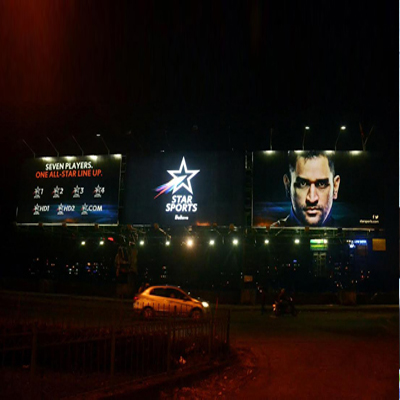
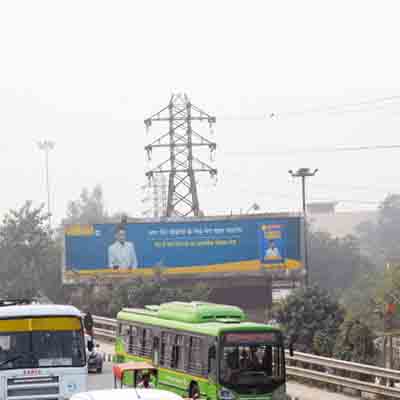
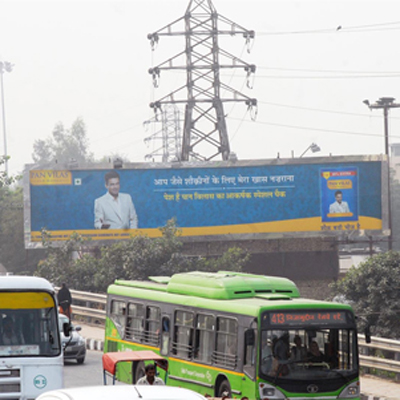
    Mumbai: As the markets and public spaces open up and consumers’ mobility return back to normal, the OOH (Out-Of-Home) industry is rebounding from a long phase of shutdowns. The festive season in India this year witnessed a resurgence in OOH campaigns as the industry shifted gears and advertisers adjusted their game plan to take advantage of the evolving OOH landscape.

    “Though the internet gained momentum in the last few years, people are always going to be spending time outdoors, including a significant amount of time commuting. That means there will always be opportunities for companies to make an impact and grow their brand using attention-capturing, visually appealing billboard advertising,” said Posterscope OOH country head Imtiyaz Vilatra.

    OOH has always been a critical part of the media mix for most marketers, and it was also the one which was hardest hit by the lockdown. But, it is slowly reviving as vaccination drives gain pace, offices open up and economic activity revives. The festive period also saw a flurry of campaign launches from across categories such as OTT, Retail, Education, Automobile & BFSI.

    “We witnessed more than fifty campaigns in a span of forty days- campaigns where OOH has been an integral part- Parle, Airtel, Viacom18, Tata Sky, Bike Bazaar, to name a few,” said Vilatra, adding, “We have been able to drive measurability data and deliver better ROI through our Location specialist capabilities for our clients and the response has been great.”

    As India lifted lockdown restrictions, major brands such as Tanishq, Tissot,  Titan, Croma, Kotak Mahindra Bank, Raymond unveiled festive campaigns, and so did new age brands like Rapido, Tendercuts and Bumble. The women-first social networking & dating app launched exclusive out of home campaigns across major cities like Mumbai, Delhi and Chennai that grabbed eyeballs, leveraging the medium featuring taglines with humorous, localised takes at dating culture.

    Laqshya Media Group also executed a multi-city high decibel OOH campaign for Hero Lectro E-cycles. The campaign encompassed a mix of large format media units, cluster brandings and other unconventional mediums across all cities.

    “A host of brands are choosing OOH – not only as a medium, but as one of the lead mediums. Across the country, the biggest spenders straddle industry verticals from Real Estate to Automobiles, from insurance to OTT, and from Jewellery to electronics (D2C as well as Legacy,” said Laqshya Media Group chief strategy officer Sai Nagesh. “During the month of October, we executed several prominent campaigns for clients like Tanishq, Maruti Suzuki etc, amongst others.”

    He cites two recent innovations executed by the agency-  cluster advertising used by Titan to dominate a geography across its brands, Titan watches and Tanishq and 3-dimensional billboards used by Maruti Suzuki for its brand Celerio- to highlight his point.

    [[{“fid”:”1050499″,”view_mode”:”default”,”fields”:{“format”:”default”,”alignment”:””,”field_file_image_alt_text[und][0][value]”:false,”field_file_image_title_text[und][0][value]”:false},”link_text”:null,”type”:”media”,”field_deltas”:{“2”:{“format”:”default”,”alignment”:””,”field_file_image_alt_text[und][0][value]”:false,”field_file_image_title_text[und][0][value]”:false}},”attributes”:{“height”:394,”width”:700,”class”:”media-element file-default”,”data-delta”:”2″}}]]

    Agencies also highlight how brands today are becoming highly data-centric and using advanced algorithms to measure the impact of various media available to them. “On our part, we have been sharing advanced OOH metrics off our proprietary platform SHARP that is able to generate the measure of quantum and quality of traffic across 32 cities in India along with metrics like Nett Reach & OTS. This has also aided the clients in re-allocating significant funds for OOH,” added Nagesh.

    The best measure of whether OOH campaigns are truly ready for a comeback after the pandemic-induced hit it took is the traffic on the roads. And the traffic back on streets is a positive sign for both businesses and media partners. Some of the agencies also tracked the mobility trends during the course of the pandemic and updated their clients. With people moving out after the pandemic-induced lockdowns, the traffic has also resumed across all roads.

    [[{“fid”:”1050509″,”view_mode”:”default”,”fields”:{“format”:”default”,”alignment”:””,”field_file_image_alt_text[und][0][value]”:false,”field_file_image_title_text[und][0][value]”:false},”link_text”:null,”type”:”media”,”field_deltas”:{“3”:{“format”:”default”,”alignment”:””,”field_file_image_alt_text[und][0][value]”:false,”field_file_image_title_text[und][0][value]”:false}},”attributes”:{“height”:367,”width”:615,”class”:”media-element file-default”,”data-delta”:”3″}}]]

    Out of Home advertising as a fast-growing industry is only set to develop further with advanced AI-powered tools that aid in accessing appropriate locations in each city to reach out to the core TG of the campaign and new technology trends over the year. A medium that was once static images with simple captions now also features interactive and electronic billboards with DOOH (Digital OOH). Brands can be much more creative with how they reach customers in all demographics using these latest innovations.

    Across the world, the OOH and mobile media are fast moving towards convergence. There is even data to show that OOH + Mobile advertising produces better recall than any other medium, according to a PJ Solomon study conducted in the US. “Unlike digital advertising, people can’t skip, quickly scroll past, use ad-blocks or avoid billboards using premium subscriptions. I think in a smartphone world, the biggest screens still matter,” summed up Vilatra.

  • Bisleri’s Anjana Ghosh reveals why the beverage brand floated its own e-comm platform

    Bisleri’s Anjana Ghosh reveals why the beverage brand floated its own e-comm platform

    MUMBAI: Last year when the pandemic-induced lockdown struck Indians, Bisleri launched the Bisleri@Doorstep initiative to fulfil the increasing demand for safe and pure mineral water. Soon after, it unveiled Shop.Bisleri.com an online platform where a consumer can easily access a range of Bisleri products and subscribe to get hassle-free uninterrupted supplies.

    Indiantelevision.com’s Anupama Sajeet spoke to Bisleri International director – marketing & business development Anjana Ghosh to know more about the bottled water conglomerate’s drive to go digital after decades of being recognised as an on-the-go retail product and what it hopes to accomplish through it. Ghosh also shared insights on the company’s long-term expansion plans and efforts to minimise the impact of plastic waste on the environment.

    Edited excerpts:

    On transitioning from an OOH retail product to launching online d2c website.

    We recognised that it was critical to understand operating issues at the ground level, sense changes in consumer behaviour, and refine our approach. As noted last year during the pandemic, there was a spike in home consumption, and we used five and ten litre jars which are easy to carry. The pandemic helped us penetrate new channels like chemists, milk booths, and grocery stores as these were the only stores allowed to be open. At that moment, consumers were constrained by restrictions and limited operating hours. 

    Now there is an increased affinity for online shopping, even for essential products. Consumers understand that it is a safer and more convenient way to shop. Last year was a valuable period for us to develop a deeper understanding of the challenges faced by consumers. This is how Bisleri@Doorstep was born.

    On Bisleri’s expansion plans in the country.

    We have a very well-distributed supply-chain model of being closer to market with over 150 plants and a robust, sustained production across India with over 4,500 active distributors.

    We are currently active across 40 top cities and have tied up with leading online delivery partners to scale up our servicing ability across the cities and ensure consumers have easy access to the full range of our products. In some cities, we tied up with a logistics partner to ensure our e-comm deliveries happen in 3 hours, reducing the time from 24 hours. In many cases, these partners helped us improve our service levels significantly. We are now expanding to tier-2 cities like Ahmedabad, Surat, Baroda, Coimbatore, Guwahati, Chandigarh, Ludhiana etc.

    We have developed a cost-effective hyperlocal model called the Mohalla Distribution model, leveraging synergies with trade partners. We are also transforming our route to market, factoring in all the learnings of the pandemic and the future challenges.

    On the customer response to Bisleri@Doorstep.

    We are proud to say that Bisleri is the first brand in the category to launch an e-commerce platform. Bisleri@Doorstep was launched to provide consumers access to our complete range of products and is turning out to be a big hit with the consumers. The digital campaign Ab Ghar Ayegi Bisleri was very well received as well on social media platforms. We advise people to stay in the safety of their homes while we deliver to them at the doorstep. So far, we have had 20 lakh users who visited the website, and our numbers are increasing at a steady rate.

    We are also moving towards marketing automation and have finalised a partner who will help us integrate consumer data from various touchpoints into one central data platform. We are gathering insights on consumer preferences and evaluating differentiated products in health & hygiene categories. This platform will create various consumer profiles and enable us to target consumers through personalised communication in the media of their preference.  

    We are witnessing almost 2.5 times more traction since the beginning of the new fiscal with our consumer engagement initiatives.

    On dealing with ‘Say No to Plastic’ as a brand & the Bottles for Change initiative.

    Treating plastic as waste is not the solution; if used and disposed responsibly, plastic is not harmful to the environment. Used plastic segregation that starts from home is a very basic but crucial part of the recycling process. There are many misconceptions among the masses as they fail to understand the proper ways of clean plastic segregation.

    Bottles for Change: Designed and implemented by Bisleri International, it aims to bring about a habit change in society by cleaning the plastic after its use, segregating and sending it for recycling. As a part of the program, we conduct plastic recycling awareness and collection drives in schools, colleges, corporate offices, malls, events, etc. This is done through a four-step process via which we provide effective tools to recycle plastic and provide a non-hazardous and hygienic work environment to our plastic agents.

    Bisleri has partnered with three NGOs in Mumbai – Parisar Bhagini Vikas Sangh, Sampurna Earth and Garbage Concern Welfare Society. The plastic collected by Bottles for Change is crushed into fine flakes, which are then used to create non-edible products such as furniture, cloth fabric, shoes, handbags, and many more. The motive of this model is to ‘Be the Change You Want to See’.

    Through our initiative we have reached out to more than five million people in the last four years and have helped in recycling more than 6,500 tonnes of used plastic. 

    On the new campaign Samajhdaar Bisleri Peete Hain.

    Our Samajhdaar Bisleri Peete Hai campaign was launched to reinforce consumers’ trust and raise awareness on the difference between the original Bisleri and all other bottled water which are called Bisleri in the market. Today’s consumer is aware, educated and diligent. However, when it comes to water, they don’t mind compromising and settling for unknown, unprocessed variants of mineral water. The campaign is an effort to initiate and provoke the consumer to be vigilant and choose a trusted mineral water brand, check the Quality parameters, the manufacturing process and not just settle for any bottled water.

    On the new launches in categories other than bottled water.

    Apart from packaged mineral water, we also have our range of fizzy fruit drinks. These were developed keeping in mind the evolving consumer preferences and are a healthier option with real fruit juices. We introduced three brands – Fonzo, Limonata & Spyci. We have a few more product launches lined up for the future. 

    On measures taken by Bisleri to ensure safety of its employees during this pandemic.

    We have made sure that the production and packaging remain completely contactless and have installed ozone tunnels to disinfect our employees in our facilities apart from additional safety protocols.

    We have also taken additional Covid insurance for our employees and housed staff closer to the plant to prevent exposure. We have put safety protocols in place for our delivery staff, like sanitizing vehicles and providing protective gear to them, in addition to other measures.

  • How Broadcoasters’ LED screens are lighting up the Mumbai coastline

    How Broadcoasters’ LED screens are lighting up the Mumbai coastline

    MUMBAI: What started as a seed of an idea to explore India’s vast coastline as a marketing medium led to a whole new and unique concept of having LED hoardings over water. Launched in 2017, Zen Digital Media is an Indian start-up co-founded by Sanjay Raval and Payal Raval and Broadcoasters is one of its first products to go live this month.

    The novel OOH set-up uses a customised, self-propelled vessel to carry high resolution LED screens with auto-brightness sensors along India’s coastal areas as an advertising platform, showcasing various formats of eye-catching static and video content. 

    While the start-up had the first-mover advantage in the segment, it did bring its fair share of challenges too. Right from designing the vessel according to the specifications mandated by the Indian Register of Shipping and customising it to support the weight of huge LED screens, combining high-tech tools with mobility while taking into account the wind pressure – the team had the whole thing planned down to a tee.

    “A lot of effort has gone into creating this kind of infrastructure. What we have done is make a platform that is very future tech-ready in terms of new technologies like VR, AR at our back end and infrastructure. So tomorrow if any gaming or tech companies want to take over the platform to screen gaming finales or have people interact with the screen, we will be ready for that too,” Zen Digital Media head of marketing Varun Ramrakhyani told Indiantelevision.com.

    Though capital-intensive and cost-heavy, Ramrakhyani believes the platform is different enough to warrant a new category in itself, and not be compared to other out-of-home (OOH) advertising media. “We are essentially broadcasters who can relay anything we want on our space, in addition to operating on the coast, hence the name Broadcoasters,” he quipped.

    The first Broadcoaster vessel was launched and anchored at Mumbai’s Bandra Worli Sealink promenade on 15 March. The next launch is scheduled across the beautiful coastline of Juhu-Versova Beach this month. It is a cyclical industry which can only operate in the ocean for eight months – between October and May – in a year, as they have to be out of the waters during the monsoon.

     “While there have been a few global precedents of having LEDs on water, we have opened up the platform to a lot of participants in a lot of different ways,” said Ramrakhyani. “It is new-age storytelling where brands can flex their creative muscles, play around with light, animation, VFX special effects, and long-form videos. The Brihanmumbai Municipal Corporation (BMC), Mumbai police and ASCI (Advertising Standards Council of India) are already participating and using the platform to educate people and relay their messages very creatively.”

    For the Juhu launch, the team has selected a five-kilometre stretch wherein the vessel will keep plying to and fro. The second vessel is accordingly designed to carry dual screens while moving from point A to point B and back, all while using heavy animation, VFX, and full-length videos.

    Zen Digital also plans to use the screens to highlight important events and achievements, such as an Olympics victory for India or an ISRO launch. “So, the entire idea is to engage, entice, educate and excite the audience in a way that has never been done before,” he remarked.

    Several brands such as Amul, MG Hector, Skoda, Tata Motors, Volvo, Mercedes, Kotak, HSBC, Amazon Prime, and non-government bodies such as ASCI are already on board. The start-up has also tied up with five-star properties along Juhu beach to conduct full-scale events.

    Its second initiative, ‘Beach and You’ is modelled along the lines of “Equal Streets” of Bombay, wherein it will showcase content which people coming to the beach can make use of, like Zumba or yoga. This will be executed with the help of tie-ups with health and fitness companies to air fitness sessions.

    But what of the profitability and feasibility aspects of this hitherto unexplored segment in India?

    “No capital-intensive business can be profitable from day one. We believe it will take its own sweet time to give returns. The traditional industry is very RoI-centric, and everything has to be measured. But creativity is very subjective and cannot be measured. Brands that want to test the market with creativity come to us,” summed up Ramrakhyani.

  • Priyanka Chopra stars in first TVC for Parle Agro’s Fizz portfolio

    Priyanka Chopra stars in first TVC for Parle Agro’s Fizz portfolio

    MUMBAI: Beverage company Parle Agro has strengthened its positioning in the sparkling fruit drink category by rolling out a multi-media campaign for its Fizz portfolio. The brand’s Appy Fizz and B-Fizz offerings are all set to go big with a first-ever television commercial.

    The film, featuring national brand ambassador Priyanka Chopra and leveraged in the south with superstar Jr NTR, is already on air and will be aired across national and regional channels.

    Parle Agro’s summer campaign for 2021 is set to build the Fizz portfolio further and position it as the next big super duo brand in the beverage industry. It plans on generating tremendous buzz with an aggressive multimedia campaign, including TV, OOH and digital.

    “Our brand ambassadors are not only the biggest and most celebrated icons in their fields, they also complement the leadership position of Parle Agro’s fizz brands as well. With the collective effort of this massive launch for our Fizz portfolio, we aim to double our market share in the sparkling fruit drink category in the coming year,” said Parle Agro joint managing director & CMO Nadia Chauhan.

    The TVC this year will also have a strong focus on digital strategy and engagement as Parle Agro invests in IPL to a large degree. With B-Fizz being a youth-centric brand, and IPL being a cricket format favoured by the youth, Parle Agro believes this digital partnership with IPL on Hotstar will generate the right reach.

    Plans are underway to expand B-Fizz’s SKU to reach new audiences and to expand the brand’s footprint. This will help Parle Agro build new opportunities that will further bolster the positioning of B-Fizz.

    &Walsh, the creative agency for Parle Agro, has led the campaign narrative for the television commercials, print and digital. The films have been produced by Superlounge, LLC, New York, USA along with Scissor Films and directed by John Poliquin.

  • Real estate emerges biggest spender on OOH advertising in 2020

    Real estate emerges biggest spender on OOH advertising in 2020

    NEW DELHI: 2020 was a very crucial year for humanity, as the entire world went into sleep mode due to the Covid2019 outbreak. From wearing masks, social distancing, the deadly virus changed the way people have been living for centuries. The pandemic also brought about changes in the out-of-home (OOH) ad segment, as people limited their lives inside their homes. 

    OOH segment de-grew 60 per cent in 2020

    As a majority of people were confined to their homes for the better part of last year, the OOH sector de-grew by 60 per cent in India. Revenue generated by the category was 15.6 billion in 2020, a steep drop I from Rs 39.1 billion in 2019. According to a recent study conducted by FICCI and EY, OOH advertising  will Blake a comeback in 2021, with the revenue rising to Rs 21.6 billion. By the end of 2023, the sector’s revenue will be Rs 31.8 billion, though still less than the 2019 earnings. 

    Traditional OOH comprised 60 per cent of revenues and remained the largest segment, while transit media comprised 35 per cent of the sector. The OOH spends on transit media was 39 per cent in 2019, and it witnessed a drastic fall as rail, metro, and air all witnessed large drops due to the lockdown and restrictions on travel. 

    Findings of the study showed that transit media comprised Rs 5.5 billion in 2020, and it is expected to grow to Rs 10.8 billion by 2023. This will be mainly due to 452 kilometers of metro line projects across the top seven cities that are currently under construction. Moreover, the government also plans to build or widen 60,000 km of roads by 2025. 

    As the vaccine rollout is progressing steadily, the sector is currently on the road to recovery. 

    Real estate dominates the ad sector in OOH

    Real estate and construction, FMCG, financial services, auto, and media are the top five categories that contributed to OOH spends in 2020. With 21 per cent spends, real estate dominated the OOH ad sector. Primarily, the factors that drove the real estate sector in 2020 were revision in home loan interest rates and conducive government policies. 

    However, OOH spends from hospitals, restaurants, educational sector, organised retail, and telecom witnessed a sharp fall in 2020. Moreover, from April to June 2020, most of the OOH sites were dominated by government ads about the pandemic. During this time, several companies refrained from spending on OOH, as Covid cases in the country were on the rise. 

  • Marketers hopeful about consumer spending in 2021, advertising to regain normalcy by 2023

    Marketers hopeful about consumer spending in 2021, advertising to regain normalcy by 2023

    MUMBAI: As the entire world went into sleep mode in 2020 due to the Covid2019 pandemic, the marketing sector faced a drastic setback. According to a recent FICCI-EY report, 2020 was a watershed year for advertising spends, as the industry slowed down by 29 per cent, the highest one-year drop ever witnessed in the history of Indian advertising expenditure. 

    Traditional media faces setback, digital media stays intact

    The Covid pandemic resulted in a drastic shift in the consumption pattern of customers, and being home-stuck with more time on their hands, many people started showing increased dependency on the internet before making any buying decisions. As a result, advertising in traditional media de-grew by 37 per cent in 2020. However, digital media remained flat, and was not badly affected by the new market trend. 

    Print media and radio, which were already on a downwards trajectory, continued to de-grow in 2020 as they lost some consumers due to reverse migration, cost-cutting, and changing habits. According to the FICCI-EY report, most of these lost consumers may eventually return as the market continues to grow, but some portion of the earlier consumer base will turn out to be a permanent loss. 

    Due to the decreased mobility of customers, OOH (out of home) and radio were also impacted. As people started maintaining strict social distancing measures, the experiential industry comprising events and cinemas too declined last year. 

    Marketers optimistic about 2021

    Even though the industry faced an unprecedented setback in 2021, marketers believe that advertising will grow by 27 per cent in 2021, and it will regain its earlier level by 2023. 88 percent of marketers believe that consumer spends will increase in 2021, while 12 per cent claim that it will stay the same. 

    As consumer spends are expected to increase in 2021, marketers believe that ad spends will also witness a rise this year. According to the report, 66 per cent of marketers expect that their ad spends would increase in 2021. However, 10 per cent of the marketers suggest that ad spends will reduce by over 10 per cent in 2021. 

    There are several factors that play their crucial role in determining the increased ad spends, and it includes key sporting events that include the Indian Premier League, Asia Cup, ICC T20 World Cup, and Olympics. Apart from these big-ticket events, several upcoming launches in the automobile sector, elections, growth of OTT, and mobile gaming could also contribute to rising ad spends in 2021. 

    In the meantime, the Covid crisis has accelerated direct-to-customers (d2c) initiatives in 2020. Most marketers enabled e-commerce channels during the lockdown, and even began to spend money to promote the same. Marketers during the lockdown period also experimented with online events, apps, communities, and martech. 74 per cent of the marketers expect to spend over 20 per cent of their spends on digital media, a sharp rise from 45 per cent of marketers last year. 

  • M&E sector witnessed 24% degrowth in 2020: FICCI & EY report

    M&E sector witnessed 24% degrowth in 2020: FICCI & EY report

    KOLKATA: Following a pandemic hit year, the Indian media and entertainment (M&E) sector declined by 24 per cent to Rs 1.38 trillion in 2020, compared to Rs 1.82 trillion in 2019. However, the allied sector is already seeing recovery with improvement in revenues for most segments in the last quarter of 2020. It is expected to recover 25 per cent to reach Rs 1.73 trillion in 2021, touching almost pre-Covid level scale, according to a report by FICCI and E&Y.

    The report titled ‘Playing by New Rules: India’s M&E sector reboots in 2020’ states digital and online gaming were the only segments which grew in 2020, adding an aggregate of Rs 26 billion and consequently, their contribution to the M&E sector increased from 16 per cent in 2019 to 23 per cent in 2020.

    Other segments dropped by an aggregate of Rs 465 billion. Largest absolute contributors to the fall were the filmed entertainment segment (Rs 119 billion), print (Rs 106 billion) and television (Rs 102 billion). The share of traditional media (television, print, filmed entertainment, OOH, radio, music) stood at 72 per cent of M&E sector revenues in 2020.

    However, television stood as the largest sector despite a 22 per cent downturn in advertising revenues on account of highly discounted ad rates during the lockdown months. Moreover, the sector also witnessed a seven per cent fall in subscription income, led by the continued growth of free television, reverse migration and a reduction in ARPUs due to part implementation of NTO 2.0.

    On the other side, digital advertising did not see much impact, led by increased allocation from traditional advertisers who accelerated their investments in digital sales channels. SME advertisers continued to spend on the medium and experimented more with e-commerce platforms like Amazon and Flipkart.

    For the first time ever, OTT subscriptions surpassed the 50 million mark. From 28 million paid subscriptions, it went up to 53 million in 2020 leading to a 49 per cent growth in digital subscription revenues. Growth has been attributed largely to Disney+ Hotstar, which put the IPL behind a paywall during the year. Increased content investments by Netflix and Amazon Prime Video and launch of several regional language products also catalysed the growth, the report added.

    Online gaming crossed all the marks with 18 per cent growth helped by work from home, school from home and increased trial of online multi-player games during the lockdown. Online gamers grew 20 per cent to reach 360 million in 2020.

    Among the pandemic hit sectors, print’s revenue declines were led by a 41 per cent fall in advertising and a 24 per cent fall in circulation revenues. Theatrical revenues plummeted to less than a quarter of their 2019 levels, partly offset by direct-to-digital releases.

    “While the M&E sector usually grows faster than GDP, it also falls more than GDP degrowth, given the discretionary nature of advertising. In 2020, when the GDP fell by eight per cent advertising fell over 25 per cent while the sector overall fell by 24 per cent,” the report read.

    The M&E sector is expected to rebound in 2021 and double to around Rs 2.68 trillion by 2025, the recovery of various segments will vary albeit. TV, film, music will take one to two years, animation and VFX will take two to three years; print, radio, OOH will take the longest time, even more than three years.

  • Nabendu Bhattacharyya moves on from Milestone Brandcom

    Nabendu Bhattacharyya moves on from Milestone Brandcom

    NEW DELHI: Nabendu Bhattacharyya, an industry veteran with more than two decades of experience in the Indian out-of-home (OOH) space, has decided to move on from his current role as CEO and MD of Milestone Brandcom, the India-based OOH specialist agency from the house of dentsu international.

    He will leave the business on 31 December, ending his more than six-year-long stint with the network, to explore and pursue his personal interests.

    Bhattacharyya said, “My almost seven-year-old journey with dentsu in India has been nothing less than a celebration with a bagful of wonderful memories and some exceptional people that I met across the global network. Dentsu International is an incredible place to be in. It is packed with extraordinary talent and remarkable professionalism in every little pocket of the globe and I must forever reiterate that working with Ashish and Anand has been one of the most phenomenal experiences of my life, professionally and personally.”

    “Even as I embark upon a new journey hereon, my adventures and escapades will, of course, continue to be in the field of creative and business communication. However, it must now go beyond the scope of work that I have been engaged in for the last two decades. I intend to explore and delve deep into the other expanded ranges of advertising and communication and see what I can freshly withstand. I am leaving behind Milestone Brandcom in a rock-solid state and I know it will continue to grow with the strong leadership team that currently sits at its helm,” he added.

    dentsu CEO- India Anand Bhadkamkar said, “Nabendu is a fantastic professional and a veteran in his field. His creative vision, coupled with his leadership skills, makes him an absolute powerhouse. He charges ahead with unrelenting clarity and determination, translating businesses into the unadulterated largeness that they eventually become. I wish him all the luck for his future endeavours, hoping that one day we will get to work together once again.”

    It is pertinent to note here that dentsu international, formerly known as Dentsu Aegis Network, acquired a majority stake in Milestone Brandcom in July 2014. It was by far one of the biggest deals in the outdoor space in India then, and together with Posterscope – the network's global outdoor media agency – went on to establish dentsu as the largest player in the Indian OOH segment.