Tag: OOH

  • Loc8 by Osmo shifts OOH from counting impressions to capturing attention

    Loc8 by Osmo shifts OOH from counting impressions to capturing attention

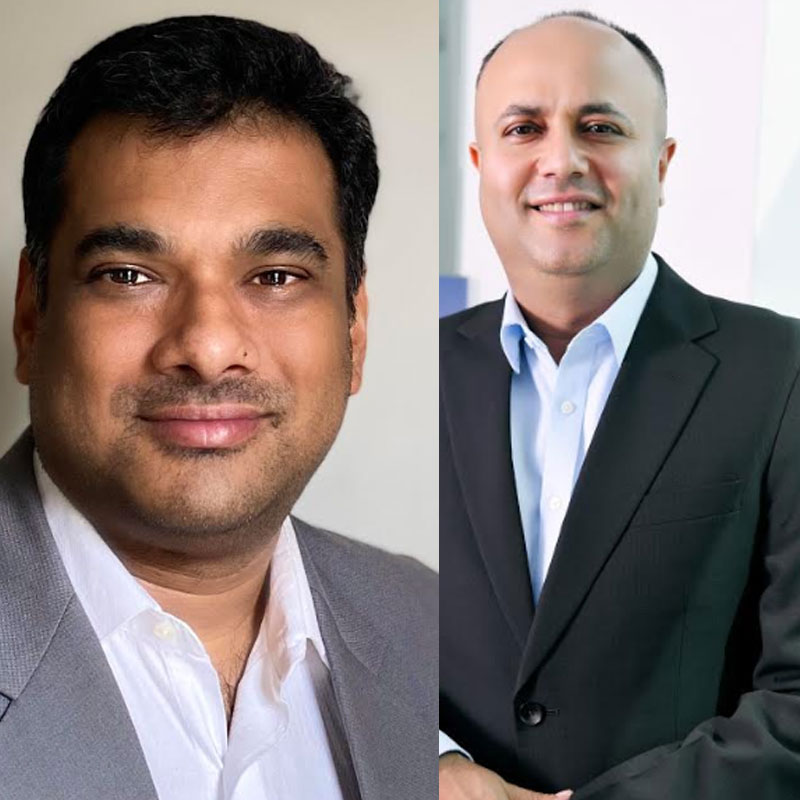
    MUMBAI:  Having shaped impactful campaigns for brands like Renault, HP, Daikin and Max Estates, OSMO, one of India’s fastest-growing OOH agencies, has unveiled the power behind its success: Loc8, its proprietary planning platform.

    Loc8 is a first-of-its-kind tool built at the intersection of AI and human vision cognition that shifts out-of-home advertising from measuring reach to measuring attention. For the first time, Osmo is detailing how Loc8 delivers actionable insights that answer marketers’ most fundamental question: “Will people notice?” By transforming raw video data into quantifiable visibility and attention metrics, Loc8 provides advertisers with a sharper understanding of audience engagement and placement potential.

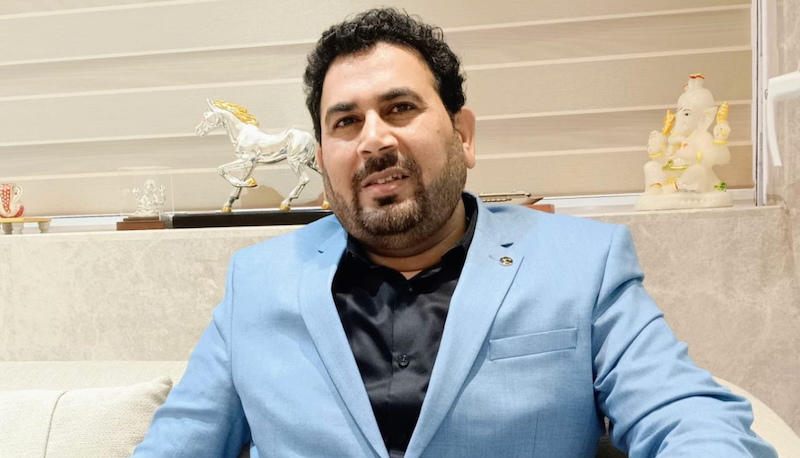
    “OOH stands at the brink of a transformation. Advertisers no longer want just eyeballs; they want evidence of attention and ground truth. Loc8 is the breakthrough the OOH industry has been waiting for – a next-generation metric that captures real-time audience attention,” said Osmo, co-founder, Mangesh Shinde.

    He added, “In a world where attention is the most valuable currency, Loc8 equips brands with the power of AI, enabling campaigns that are smarter, measurable and impossible to ignore. At Osmo, we say ‘Attention is the New Oil.’ And with Loc8, we’re helping clients harness it.”

    Loc8 works by combining real-world data collection, machine learning and cognition science into a seamless framework. Real-world site footage captured via IoT devices is analysed by machine learning engines, which generate attention metrics and a visual saliency score refined with live traffic conditions. These insights are then mapped across people, places and placements, measuring commute journeys, traffic speeds, impressions, points of interest, visibility, positioning, obstruction and dwell time. This process helps identify which OOH assets reach the right audience, how many they engage and the depth of attention they command. The results are made instantly accessible through an engagement console that presents clear attention metrics and effectiveness dashboards, enabling advertisers to plan smarter and more attention-led campaigns.

    Already embedded into several landmark campaigns across categories such as automobiles, real estate and consumer goods, Loc8 has been instrumental in unlocking deeper engagement and brand recall in crowded urban landscapes.

    “OOH is at a stage where advertisers increasingly demand accountability. As investments in the medium grow, LOC8 enables decision-makers to conduct a virtual recce with confidence. By combining AI, ML and cognition science, our attention metrics build trust, benchmark asset performance and ensure campaigns are noticed, not just seen,” said Osmo, co-founder, Nipun Arora. 

  • Mukesh Sharma appointed CEO of Bright Outdoor Media

    Mukesh Sharma appointed CEO of Bright Outdoor Media

    MUMBAI: Bright Outdoor Media Ltd has announced the appointment of Mukesh Sharma as its new chief executive officer. Sharma, a seasoned professional with a strong background in the media industry, is expected to spearhead the company’s strategic growth, focusing on expanding revenue, strengthening profitability, and identifying new opportunities within the dynamic advertising and media landscape.

    Bright Outdoor promoter Yogesh Lakhani expressed his pleasure in welcoming Sharma, highlighting his impressive track record and expertise in driving growth, building robust business ecosystems, and delivering stakeholder value.

    Sharma previously served as business head at Mid-day Infomedia Ltd, where he gained valuable experience in leading media operations. His appointment is poised to play a crucial role in elevating Bright Outdoor Media’s brand in the competitive out-of-home (OOH) media sector, signalling a move towards a “brighter, bolder future” for the company.

  • Frido’s Father’s Day push hits the right joints

    Frido’s Father’s Day push hits the right joints

    MUMBAI: This Father’s Day, D2C wellness brand Frido is skipping the mugs and neckties and going straight for the knees — quite literally. Its cheeky-yet-heartfelt campaign, “Gift him what he truly KNEEds”, turns the spotlight on a group that rarely complains but often aches: dads.

    At the heart of the campaign is Frido’s Active Knee Cap, designed to ease years of wear-and-tear borne by fathers who power through their day without pause. The message? Don’t gift your dad another “World’s Best Dad” trophy — gift him comfort he can feel.

    To scale up the emotional punch, Frido deployed a full-funnel strategy. From dad-centric influencer reels on Instagram to high-visibility OOH across metros and feel-good user contests, the brand created a real tear-jerker with muscle. Families were urged to share personal stories, sparking a flood of nostalgic posts that proved this wasn’t just another token holiday campaign.

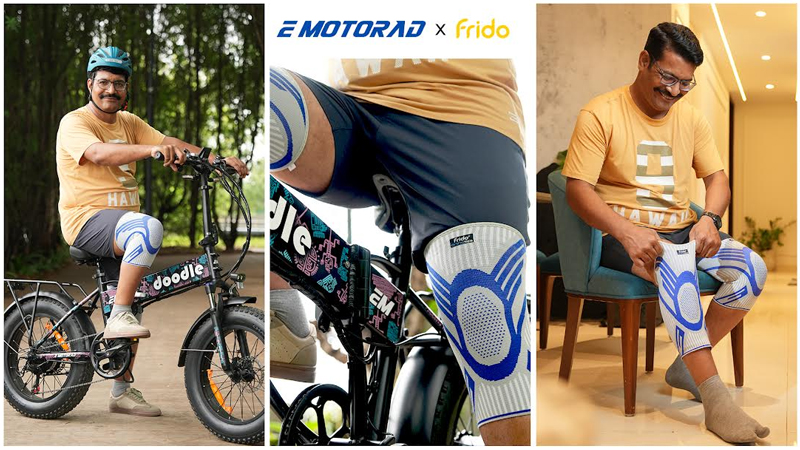
    Turning the campaign into a full-body experience, Frido teamed up with EMotorad — India’s leading e-cycle brand — to offer the perfect one-two punch: support at home, and mobility on the road. Together, they’ve crafted a Father’s Day experience that’s both caring and cool.

    Speaking on the initiative, Frido CEO & co-founder Ganesh Sonawane said, “Most fathers carry on without ever saying a word about their own discomfort. This campaign is our way of shifting the spotlight, just for a moment, onto them. At Frido, we believe comfort isn’t a luxury, it’s a quiet form of care. This Father’s Day, we wanted to go beyond the usual and offer something that actually makes a difference in their everyday life. Teaming up with EMotorad helped us complete that thought – whether it’s rest or movement, every dad deserves a gift that understands him.”

    EMotorad co-fouinder & CEO  Kunal Gupta said, “Growing up, I saw my dad put his heart into everything he built. That mindset shaped a lot of what EMotorad stands for. This collaboration with Frido felt like teaming up with someone who shared that same drive to create more than just products, but real possibilities. This Father’s Day, we want to celebrate that quiet, persistent drive in every father. With this campaign, we want to show that a meaningful gift can keep him moving, just like he always has for us.”

    By leaning into authentic emotion and functional gifting, Frido isn’t just celebrating dads — it’s elevating the art of giving. After all, this season, the best present isn’t presence. It’s a bit of relief for those tired knees.
     

  • Digital media dethrones television as India’s M&E king, Ficci M&E report  report reveals

    Digital media dethrones television as India’s M&E king, Ficci M&E report report reveals

    MUMBAI: India’s media and entertainment sector has hit a milestone, crossing the Rs 2.5 trillion mark in 2024, but it’s digital media that’s stealing the show, according to the latest FICCI-EY report. The digital realm, growing by a stonking 17 per cent, has officially overtaken television, which has held the crown for two decades. Think of it as a digital coup, a right royal shake-up.

    While the overall sector grew by a respectable 3.3 per cent, reaching Rs  2.5 trillion ($29.4 billion), growth has slowed compared to the previous year, thanks to a 2 per cent dip in subscription revenues and a global slump in animation and VFX outsourcing. Still, it’s a hefty contribution to India’s GDP, at a solid 0.73 per cent.

    Advertising revenues, however, are booming, surging by 8.1 per cent, driven by digital performance advertising and a surge in premium OOH media. “The digital revolution has not only transformed how content is created and consumed but has also redefined the very essence of the M&E industry,” said Ashish Pherwani, media & entertainment leader and partner at EY India, rather grandly.

    Kevin Vaz, chairman of FICCI’s media and entertainment committee, declared the industry is at a “defining moment,” predicting it will surpass Rs 3 trillion by 2027. “The future is brimming with untapped potential,” he said, sounding positively chuffed.

    Key takeaways? Digital advertising is booming, live events are back with a bang (up 15 per cent), and OOH media is getting a digital makeover. However, subscriptions are taking a bit of a hammering, and online gaming is struggling under the weight of a 28 per cent GST and illegal offshore competition. “The online gaming segment could struggle unless illegal offshore platforms are not curbed,” the report warns, a rather pointed observation.

    Looking ahead, the report predicts a 7.2 per cent growth in 2025, reaching Rs 2.7 trillion, and a 7 per cent CAGR to Rs  3.1 trillion by 2027. AI is tipped to play a major role, bringing efficiencies across content production and distribution. “Artificial intelligence will play a large role in bringing efficiencies,” the report states, sounding rather futuristic.

    In short, India’s M&E sector is in a state of flux, with digital leading the charge and traditional models facing a bit of a squeeze. But with a bit of innovation and a dash of good old-fashioned British grit, the industry is poised for further growth. Quite right, too.

  • GroupM’s year-end ad industry update and projections for 2025

    GroupM’s year-end ad industry update and projections for 2025

    MUMBAI: GroupM, WPP’s media investment group, today published the topline findings of its End-of-Year Global Advertising Forecast for 2024. The report, which analyses advertising investments over the past 12 months and shares projections for 2025 and beyond, finds that strong performance of the largest sellers of advertising and increased digital expansion have propelled growth in global advertising investment to 9.5 per cent this year.  The industry will surpass $1 trillion in total revenue for the first time in 2024 (excluding US political advertising) and grow another 7.7 per cent in 2025 to reach $1.1 trillion. Additionally, ad revenue growth will outpace nominal GDP growth in 2024 and 2025.

    Ad revenue growth

    Pure-play digital advertising (excluding digital extensions of traditional media such as CTV and digital out of home – DOOH-  but including YouTube and Tiktok) –  remains the strongest channel and is estimated to grow 12.4 per cent globally in 2024 and make up 72.9 per cent of total advertising in 2025. It is expected to grow 10 points in 2025 to $813.3 billion. The steady growth till 2029 will see it capture 76.8 per cent of all spends. 
    TV remains the most effective form of advertising, according to research. Yet we forecast global TV (including both linear and streaming, but excluding political revenue) will grow just 2.4 per cent on a compound basis from 2024 to 2029, significantly slower than total advertising growth of 6.4 per cent.  It is estimated to grow 1.9 per cent in 2025 to touch $169.1 billion.

    Retail media continues to emerge as a rapidly expanding segment within digital advertising, is estimated to reach $177.1 billion globally in 2025, surpassing total TV revenue, including streaming, for the first time.

    Out-of-home (OOH) advertising has maintained its share of the global advertising industry, largely due to the strong performance of its digital counterpart, DOOH, which is predicted to account for 42 per cent of total OOH revenue in 2025. Growth in 2025  is expected to be at at 7.2 per cent reaching $56.1 billion and accounting for five per cent of overall global ad spend. OOH has done  better than any other channel in the face of the digital onslaught.  It has almost certainly benefited from its “unskippable” nature in more recent years, its location-based value proposition, and its rapid digitalisation and innovation.

    Global AD growth vs Global GDP growth

    Global audio revenue will remain largely flat in 2025. But  streaming audio will see double digit growth in 2024 and 4.4 per cent growth on a compound annual basis through 2029.. Traditional audio, however, will see its share drop from 1.8 per cent of global advertising in 2024 to 1.2 per cent in 2029  (although it will still account for more than 60 per cent of total audio ad revenue).

    Print advertising, inclusive of all traditional and digital formats across both newspapers and magazines, will face further declines, dropping 4.5 per cent in 2024 and a further 3 per cent in 2025 to $48.1 billion. This medium continues to faces further declines, largely due to increasing digitization and the influence of AI.   By 2029 their combined share will represent just 3.0% of total ad revenue, down from 10.7  per cent in 2019 and 35.1 per cent in 2009. 

    Cinema advertising is forecast to grow 5.2 per cent in 2024 and a further 5.9 per cent in 2025, though the $2.3 billion total will fall short of 2019’s $3.0 billion global figure. Some markets will have surpassed 2019 levels by 2025, but of the world’s five largest cinema ad markets, namely the US, Brazil, the UK, India, and south Korea, only Brazil will have completed its recovery by 2025.

    All top 10  advertising markets are forecast for growth in 2024, although to varying degrees. The US and China remain the two largest markets, with total ad revenue expected to grow 9 per cent to $400.2 billion and 13.5 per cent to $204.5 billion respectively. The UK remains in third place, just ahead of Japan. Germany and France  maintain their rankings, followed by Canada, Brazil, India and Australia.

    Growth rates in ad revenues country by country

    On artificial intelligence the Group M report say that it is s a multiplier of technology and creativity, not a driver of advertising growth in and of itself. Brands are often rewarded by shareholders for touting their use of the technology to increase efficiency and improve productivity. Yet consumers are more fickle, at times embracing its uses and at other times decrying them. Brands that lean into the obvious direction of travel toward more AI while ensuring it remains ethically responsible are likely best positioned over the long
    term to capitalize on the effects. 

    The Group M report also gave some insights of the main advertising categories: 

    CPG: In a world preoccupied with conflict, technology, and an increasingly algorithmically driven media diet, CPG brands are looking to identify and align with cultural moments to help drive brand differentiation and sales growth. While media consumption has shifted in some part to online, and social channels in particular, the impact of TV (including both linear and streaming) is likely to retain its importance for CPG brands as companies look to drive both long-term brand health and near-term purchases.  the median advertising intensity (advertising expense as a percentage of revenue) is at 5.3 per cent.

    Digital endemics: In 2017, nearly a decade ago, the median advertising intensity (advertising expense as a percentage of revenue) for this group of companies was more than 19 per cent invested to a large extent on digital channels by in-house teams. Over the last two years, a focus on profitability amid rising interest rates and an increasing reliance on brand storytelling by the now “establishment players” has led to some growing pains and a sector-typical willingness to test, innovate, and make big bets. The median advertising intensity currently stands at 12.8 per cent.

    Retailers: While the biggest companies in this group, including Amazon, PDD and Walmart, have continued to report strong GMV growth, others (especially smaller, more nationally focused brick-and-mortar players), have sounded the alarm on consumer cautiousness and slowing sales. These companies may be able to offer an in-store experience the e-commerce players can’t, but some marketers may find it challenging to differentiate their store’s offerings across a range of more digital touch points. The median advertising intensity  for this category stands at 0.8 per cent.

    Media and entertainment:  The outlook for the year ahead does appear more positive than when we penned last year’s report. Streaming platforms at Disney, WBD, Paramount, and Netflix have all turned quarterly profits, and losses are narrowing at Comcast, ITV, and others. Revenue growth accelerated in Q3 of this year for all segments other than music, with positive growth in all segments (the first time that has been true since Q1 of 2022). However, linear TV’s gains from having the U.S. elections, the Olympics, the Copa America, and the Euros all in the same quarter are unlikely to be sustainable going forward. The median advertising intensity  for this category stands at 5.9 per cent.

    Automotive: Automotive advertisers are now caught in a similar situation to media companies. The writing seems to be on the wall as to future emissions requirements and the transition to battery powered and hybrid cars (similar to the shift to streaming). But the economics haven’t yet caught up and the competitive field for electric vehicles is much more fragmented than that of traditional combustion vehicles. Newer players like Byd are offering cheaper EVs and at the same time investing in coveted sports sponsorships like the UEFA Euros tournament in summer of 2024. The median advertising intensity  for this category stands at 7.4 per cent.

    Financial services: Because of compliance issues and integration complexities, the industry has been slow to avail itself of a host of new offerings that other sectors have adopted, including retail media networks, social media, and influencer marketing. Partly due to a renewed (and necessary) focus on brand building, companies in the sector continue to make significant investments in audio, TV, and sports sponsorships. Economic uncertainty and the growing distrust of traditional financial institutions further complicate the landscape, creating both opportunities and challenges for tech-forward financial brands. Balancing brand building with performance marketing and navigating compliance requirements are likely to remain key areas of focus. The median advertising intensity  for this category stands at 1.9 per cent.

    Technology:  The rapid pace of innovation is forcing adaptation on the part of tech advertisers. B2B brands are shifting to more digital marketing-led strategies, adding complexity to existing measurement and reporting. Digital channels are increasingly seen as critical to reaching new generations of consumers (whether for consumer or enterprise products), but as competition heats up, differentiation is challenging. Brand building continues to rely on sports, though advertisers are finding the space crowded as more sectors look to sporting events for scaled reach and cultural relevance. The median advertising intensity  for this category stands at  2.1 per cent.

    Pharma: Every industry is in a constant state of evolution and flux, but healthcare may rival advertising with the pace and magnitude of external factors driving change for the sector. Populations are aging and environmental and dietary factors are rapidly influencing future health outcomes (and future healthcare and pharmaceutical needs). And, in a recurring motif from this year’s report, competing successfully in a rapidly evolving industry can be complicated by internal divisions, regional and local nuance, and lagging technological integration. The median advertising intensity  for this category stands at  2.8 per cent.

    Luxury: Luxury advertisers have experienced significant volatility by region over the last four years. Consumption has flagged in China this year, and organic growth has slowed in North America as well. The APAC region, excluding Japan, has declined in the last three quarters for most companies reporting such a segment. Outperformance in Japan likely has more to do with a weaker yen and travelers from China, especially, looking for deals, implying a more transactional and price-conscious luxury consumer in 2024 and 2025.  The median advertising intensity  for this category stands at nine  per cent. 

    The report concludes by saying that the advertising industry is hurtling through a rapid evolution brought on by the pervasive use of AI and an ongoing shift to digital channels. Pureplay digital advertising, projected to surge 12.4 per cent  in 2024 and 10.0 per cent in 2025, is solidifying its dominance, representing 72.9 per cent of total advertising revenue in 2025 and a projected 76.8 er cent  by 2029. This digital dominance, however, is accompanied by increasing scrutiny and regulation, creating a complex environment for marketers to navigate. 
     
    While the narrative of television’s decline persists, its effectiveness remains undeniable. Despite this, global TV revenue, including streaming, is forecast to grow at a more modest 2.4 per cent  compound annual rate from 2024 to 2029, significantly trailing overall advertising growth. This divergence underscores the need for marketers to pursue a balanced approach, leveraging all the tools and channels available to meet both performance and long-term brand goals.

    (The visual was generated using Canva. No copyright infringement is intended)
     

  • IOAA, GroupM & JCDecaux to move the needle of sustainability in OOH

    IOAA, GroupM & JCDecaux to move the needle of sustainability in OOH

    MUMBAI: OOH is finally joining the sustainability bandwagon. GroupM, WPP’s media investment group, in collaboration with the Indian Outdoor Advertising Association (IOAA), has announced the formation of a dedicated task-force committee to advance sustainable practices within the out-of-home (OOH) advertising industry.

    The committee, comprising GroupM MD cinema, OOH and experiential marketing  Ajay Mehta, IOAA chairman Pawan Bansal and  JCDecaux Advertising India executive chairman Pramod Bhandula, is focused on guiding media owners in adopting sustainable practices. The committee’s ambitious target is to ensure that 50 per cent  of all advertising sites in India utilise recyclable materials by 2027.

    A three pronged thrust has been planned. First, in the area of digital OOH (DOOH) and power consumption, the second in the use use of fabric instead of flex materials and finally a recycling program for billboard waste. 

    To address the rise in power consumption from the transition to DOOH  advertising, the task force will prioritise the adoption of renewable energy, particularly solar power. The committee will develop a roadmap for transitioning OOH assets to renewable energy and enhancing cost efficiency through bulk procurement. 

    Additionally, the committee will explore alternative, sustainable materials such as fabric and polyethylene to replace traditional flex, aiming for options that are lightweight, weather-resistant, recyclable, and durable. Due diligence will be conducted to vet suppliers, and bulk deals will be negotiated to ensure a cost-neutral transition.

    A “Take Back Program” will also be introduced to recycle used billboard materials in partnership with non-profit organizations. This initiative aims to further minimize waste and encourage industry-wide accountability. The committee’s mission is to foster environmental responsibility among media owners and partners, ensuring the widespread adoption of sustainable practices. Insights from the World out of home organization (WOO) will also be leveraged to support global sustainability efforts within the OOH space.

    GroupM’s OOH Solutions team has already piloted sustainability initiatives with brands such as ICICI, Zepto, and Blinkit, using polyethylene fabric, showcasing actionable solutions that align with sustainable principles. 

    Mehta explained: “As leaders in the media industry, it is our responsibility to move the needle, inspire transformation, and ensure that sustainable practices become the norm rather than the exception. I truly believe that we should all do good while doing well, and this committee will strive to balance innovative advertising with environmental responsibility.”

    Bansal believes that “sustainability is the future of advertising and IOAA is committed to guiding media owners towards responsible, eco-friendly practices. This initiative will not only reshape the future of outdoor advertising but also set a benchmark for industries worldwide to follow in balancing growth with environmental stewardship.”

    According to  Bhandula, “sustainability is not just an option; it is a necessity for the future of our industry. At JCDecaux, we believe in driving positive change by embracing greener solutions that leave a lasting impact. This collaboration will propel the outdoor advertising sector towards a sustainable, innovative, and environmentally-conscious future.”

    (Picture courtesy: IOAA website)
     

  • dentsu elevates Imtiyaz Vilatra to lead Postercope India

    dentsu elevates Imtiyaz Vilatra to lead Postercope India

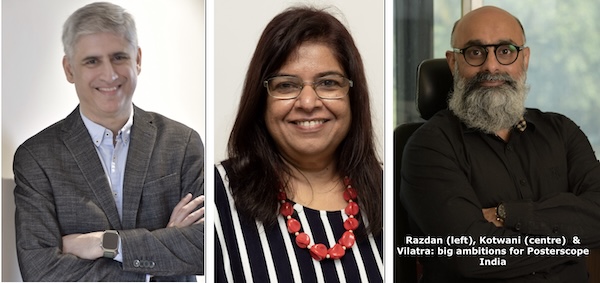
    MUMBAI: He is going to be the new poster boy of dentsu’s OOH initiatives. The agency has promoted Imtiyaz Vilatra to chief executive officer of Posterscope India.

    In his new role, he aims to enhance Posterscope’s digital out-of-home (DOOH) and intelligent OOH (iOOH) offerings with a strong emphasis on data-backed, measurable outcomes for clients. He will report to dentsu media, south Asia, CEO Anita Kotwani.

    With more than  25 years’ experience, Imtiyaz is known for his focus on innovative and impactful OOH campaigns. He plans to further integrate advanced technologies like augmented reality, 4D experiences, and AI to strengthen Posterscope’s capabilities.

    By merging dentsu’s digital expertise with Posterscope’s established OOH foundation, his vision is to meet evolving client needs and expand the agency’s reach in both urban and rural sectors. This move aims to establish Posterscope as a leader in both traditional and digital OOH.

    Says dentsu south Asia CEO Harsha Razdan:  “Imtiyaz’s elevation is a timely and strategic move, enabling him to drive Posterscope’s expansion in experiential and below-the-line (BTL) divisions, strengthening our urban and rural reach. His leadership remains a vital link between strategy and execution, translating our goals into meaningful partnerships for our clients and communities. I am confident that under Imtiyaz’s continued guidance, we will not only meet but exceed the evolving needs of our clients, setting new benchmarks for excellence. His exceptional passion and deep industry insights will be pivotal as we navigate a path where innovation meets purpose, driving change that resonates far beyond the immediate.”

    Adds Kotwani: “Imtiyaz’s elevation is a testament to his visionary leadership and commitment to redefining the OOH landscape. Under his leadership, Posterscope will strengthen its position within the dentsu ecosystem, embodying our ‘Onedentsu’ vision of unified, cross-channel marketing solutions. By seamlessly integrating OOH with digital, media, and experiential campaigns, Posterscope is set to deliver transformative, multi-channel experiences powered by dentsu’s advanced audience insights, driving precision and impact that elevate client outcomes.”

     “The OOH industry stands at a transformative juncture, with technology and data insights reshaping how we connect with audiences,” points out Vilatra. “Posterscope’s future lies in harnessing AI, programmatic DOOH, and real-time analytics to deliver dynamic, measurable campaigns. Integrating dentsu’s digital intelligence into our OOH offerings enhances our capabilities and raises the value we deliver through deeper engagement, personalisation, and an integrated, ROI-focused approach.”

    That’s exactly what ad spend-focused marketers are increasingly demanding. If things work out as planned, the trio of Razdan, Kotwani and Vilatra could well be raising their champagne glasses in celebration soon. 

  • Titan unveils Mumbai billboard for its Stellar collection

    Titan unveils Mumbai billboard for its Stellar collection

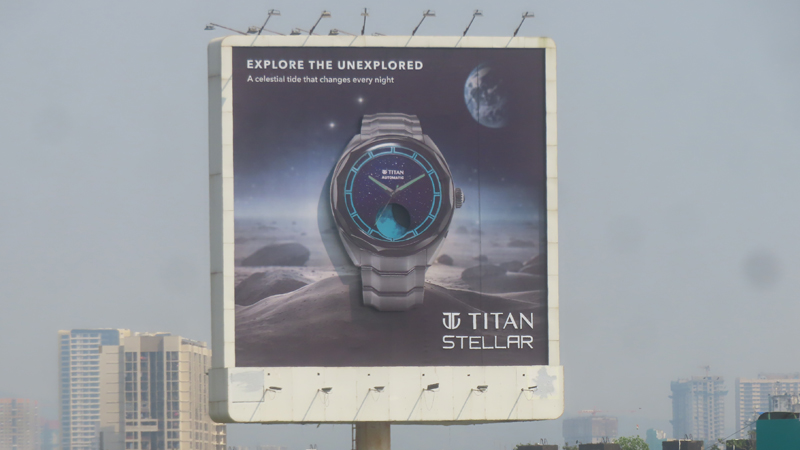
    Mumbai: Titan has launched a 40ft x 40ft billboard in Mumbai to showcase its new ‘Titan Stellar’ collection. The installation features a motorised moon display that mirrors the lunar phases, reflecting the precision and celestial theme of the Stellar timepieces. Strategically placed in a high-traffic area, the billboard blends innovative design with technology, creating an immersive brand experience.

    Neon acrylic pins and backlit elements add a radiant, futuristic look, while the moon’s glow intensifies at night, enhancing the cosmic theme. This project demonstrates how technology and creative design can elevate outdoor advertising.

    Titan Watches marketing head Aparna Ravi said, “The Titan Stellar collection is an ode to the beauty and precision of celestial movements, and we sought an innovative way to bring that to life. Our collaboration with Laqshya Media Group has resulted in a creative billboard featuring a motorized moon display and advanced neon lighting, showcasing the intricate craftsmanship and innovation that define the Stellar collection. Our aim was to create an engaging experience that mirrors the inspiration of our watches, and we hope it leaves a lasting impression on all who experience it.”

    Laqshya Media COO Amarjeet Singh Hudda said, “At Laqshya Media Group, we believe in pushing the boundaries of what’s possible in outdoor advertising. This innovative billboard installation showcases the precision and beauty of Titan Stellar collection and marks a significant leap in how brands can engage audiences in the outdoor space. We’re proud to have created a visual experience that’s as dynamic and timeless as the watches themselves, and this campaign showcases the future of interactive, immersive advertising.”

  • Wrap2Earn secures ad rights on Cityflo buses

    Wrap2Earn secures ad rights on Cityflo buses

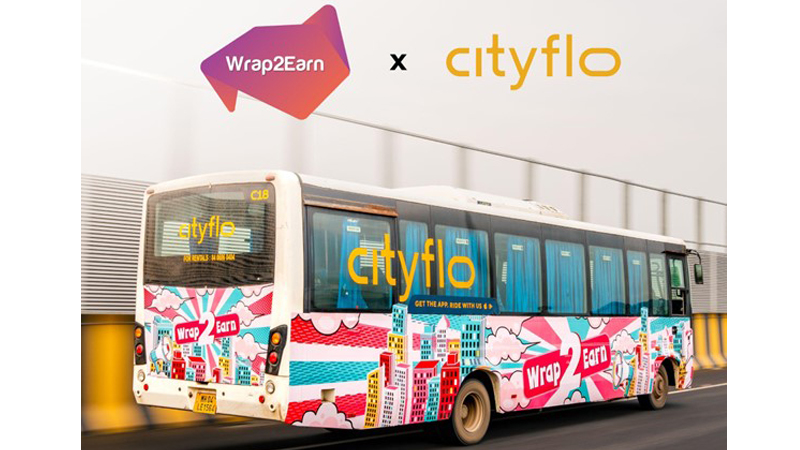
    Mumbai: Wrap2Earn has partnered with Cityflo, a premium bus service providing home-to-office rides in Mumbai and Hyderabad. As part of this collaboration, Wrap2Earn has secured exclusive advertising rights on all Cityflo buses, offering brands access to over 40 routes covering key commercial and residential hubs in both cities.

    “By partnering with Cityflo, we’re offering advertisers a unique opportunity to tap into a premium audience that represents new-age corporate India,” said Wrap2Earn CEO Elmer. “This collaboration is a seamless extension of our cab branding expertise, further strengthening our prowess in the transit advertising space.”

    Advertisers can utilise Cityflo’s buses for external branding and also target passengers with internal bus ads. Additionally, brands can extend their campaigns digitally by running impression-based ads on the Cityflo app, creating an integrated offline and online marketing experience.

    “We view Wrap2Earn as the ideal partner due to their expertise and focus on delivering high-impact, quality campaigns for their clients,” stated Cityflo co-founder and CEO Jerin Venad. “The Cityflo fleet is the most striking transit media asset in Mumbai at the moment. This partnership will elevate our presence by introducing relevant campaigns that resonate well with our brand.”

    As cities like Mumbai and Hyderabad continue to evolve, the demand for impactful and engaging advertising strategies grows. Together, Wrap2Earn and Cityflo aim to transform the transit advertising landscape, providing brands with unparalleled opportunities to connect with their target audiences in meaningful ways.

  • Brand Street Integrated’s OOH division successfully executes major projects for Tata Stryder and Kenstar

    Brand Street Integrated’s OOH division successfully executes major projects for Tata Stryder and Kenstar

    Mumbai: Brand Street Integrated, a pioneer in brand transformation and immersive brand experiences, is proud to spotlight its dynamic OOH (out-of-home) division, led by industry veteran Leena Sharma and supported by business director – west (Mumbai) Rajat Chakravarty,. Under their expert guidance, the OOH division has successfully executed numerous high-impact campaigns, enhancing the agency’s reputation as a comprehensive marketing solutions provider.

    Leena Sharma, with her extensive experience and visionary approach, has been instrumental in driving the OOH division to new heights. Rajat Chakravarty, known for his strategic insights and regional expertise, plays a crucial role in managing and expanding OOH operations in the western region. Their combined leadership has ensured that Brand Street Integrated’s OOH campaigns are not only visually striking but also strategically positioned to maximize brand visibility and engagement.

    Latest Projects: Tata Stryder and Kenstar

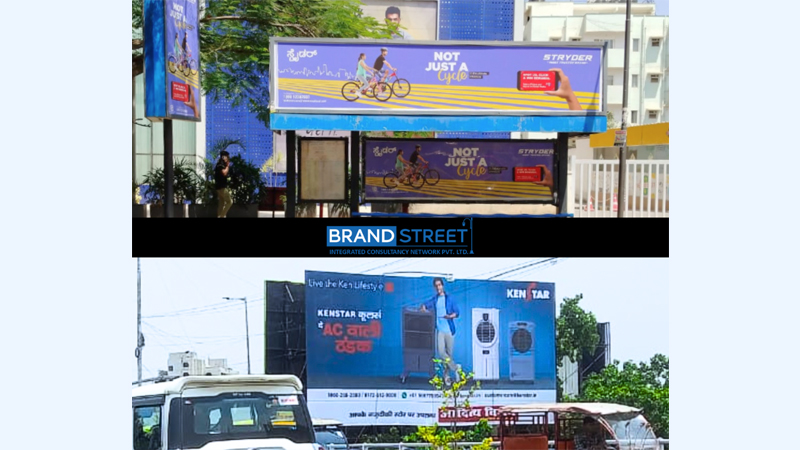
    Brand Street Integrated’s OOH division recently completed a series of impactful campaigns for Tata Stryder, deploying visually captivating hoardings and billboards across key cities such as Jamnagar, Bangalore, and Kolkata. These campaigns have significantly bolstered Tata Stryder’s brand presence, reaching a wide and diverse audience.

    In another notable project, Brand Street Integrated executed a highly successful OOH campaign for Kenstar. The campaign featured striking hoardings and billboards across Bihar and Uttar Pradesh, capturing the attention of local consumers and driving brand awareness to new levels. The creative and strategic execution of these campaigns has cemented Brand Street Integrated’s position as a leader in the OOH advertising space.

    Vision and Leadership

    Their OOH division focuses on creating immersive and impactful brand experiences that resonate with audiences. With an approach that combines creative excellence with strategic planning, ensuring that each campaign delivers maximum ROI for clients.

    “At Brand Street Integrated, our goal is to create OOH campaigns that not only catch the eye but also engage and resonate with the audience,” said Brand Street Integrated’s head of the OOH division Leena Sharma. “The success of our recent projects with Tata Stryder and Kenstar showcases our commitment to delivering innovative and effective outdoor advertising solutions. We are excited to continue expanding our OOH services and helping brands connect with their audiences in impactful ways.”

    Business director – West (Mumbai) Rajat Chakravarty, brings a wealth of regional knowledge and strategic acumen to the OOH division. His efforts in managing and expanding OOH operations in the western region have been pivotal in executing successful campaigns and enhancing regional outreach. “Our OOH campaigns are designed to strategically maximize brand visibility and engagement,” said Rajat Chakravarty. “The team aims to deliver high-impact OOH solutions that drive brand recognition and consumer connection across diverse markets.”

    Expanding OOH services

    Brand Street Integrated’s OOH division offers a comprehensive suite of services, including strategic planning, creative design, and execution of hoardings, billboards, transit advertising, and more. The agency’s ability to deliver end-to-end OOH solutions has made it a go-to partner for brands looking to create impactful outdoor advertising campaigns. As Brand Street Integrated continues to expand its OOH capabilities, it remains dedicated to providing innovative and effective advertising solutions that help brands connect with their audiences in meaningful ways. With a strong track record of successful campaigns and a team of seasoned professionals, the agency is well-positioned to lead the way in the OOH advertising industry.