Tag: online

  • New iGameLeague allows advertisers to sponsor individual players

    New iGameLeague allows advertisers to sponsor individual players

    MUMBAI: iGameLeague – a platform through which mobile games for all age groups can be played offline or online professionally anytime and anywhere, aims at revolutionizing the industry as it allows advertisers to become sponsors of individual players.

    The platform has been created by four experts – serial entrepreneur Devesh Gupta, sales and marketing maverick Nilesh Thakkar, animation and VFX industry veteran Susanta Dutta and Nishith Maheshwari. “IGameLeague is first and sole professional mobile gaming platform in India. How YouTube is a platform for video the same we are for gaming industry with monopoly,” said co-founder NIlesh Thakkar.

    “Apart from print, TV, outdoor, radio and online, IGameLeage will add as yet another medium for advertising, where users not only play and win cash, the media partners and advertiser also reach their target audience,” Thakkar shared, adding, “Being a sole platform, brands like Citrus will give our users Rs 50 per players as sponsors. So we bring ready advertiser with us.”

    As per Thakkar, the startup is already valued at Rs 70 crore after investment from venture capitals.

    Bringing alive the idea of ‘Play Mobile games –Win Real Cash’, the platform has more than 20 popular mobile games on the platform. With a very simple and easy to use interface, players can download, register and start winning cash from their favourite games.

    After testing the waters through a beta launch in Mumbai where more than 2300 students from 18 top colleges including HR, Nationals, Thakur, KJ Somaiya, etc participated,  iGL is in the process of doing a massive national launch of the platform through Brand, Media and Celebrity partnerships.

    Various business houses have evinced interest in buying the territorial rights of various regions of the platform.

    Since it has brought to the fore a completely new age medium for mass engagement, it is expected to be lapped up by the Smartphone and IT industry. 

  • New iGameLeague allows advertisers to sponsor individual players

    New iGameLeague allows advertisers to sponsor individual players

    MUMBAI: iGameLeague – a platform through which mobile games for all age groups can be played offline or online professionally anytime and anywhere, aims at revolutionizing the industry as it allows advertisers to become sponsors of individual players.

    The platform has been created by four experts – serial entrepreneur Devesh Gupta, sales and marketing maverick Nilesh Thakkar, animation and VFX industry veteran Susanta Dutta and Nishith Maheshwari. “IGameLeague is first and sole professional mobile gaming platform in India. How YouTube is a platform for video the same we are for gaming industry with monopoly,” said co-founder NIlesh Thakkar.

    “Apart from print, TV, outdoor, radio and online, IGameLeage will add as yet another medium for advertising, where users not only play and win cash, the media partners and advertiser also reach their target audience,” Thakkar shared, adding, “Being a sole platform, brands like Citrus will give our users Rs 50 per players as sponsors. So we bring ready advertiser with us.”

    As per Thakkar, the startup is already valued at Rs 70 crore after investment from venture capitals.

    Bringing alive the idea of ‘Play Mobile games –Win Real Cash’, the platform has more than 20 popular mobile games on the platform. With a very simple and easy to use interface, players can download, register and start winning cash from their favourite games.

    After testing the waters through a beta launch in Mumbai where more than 2300 students from 18 top colleges including HR, Nationals, Thakur, KJ Somaiya, etc participated,  iGL is in the process of doing a massive national launch of the platform through Brand, Media and Celebrity partnerships.

    Various business houses have evinced interest in buying the territorial rights of various regions of the platform.

    Since it has brought to the fore a completely new age medium for mass engagement, it is expected to be lapped up by the Smartphone and IT industry. 

  • Section 377: Films, TV, Online and LGBT content

    Section 377: Films, TV, Online and LGBT content

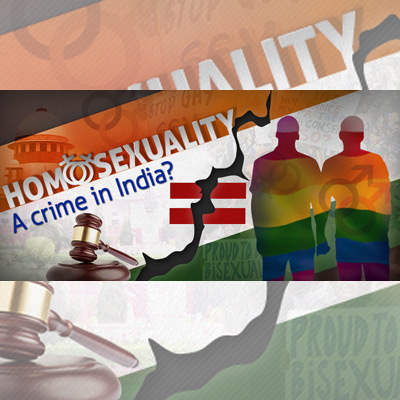
    MUMBAI: Ten years ago most Indians probably did not know what Section 377  of the Indian Penal Code was all about. But the lobbing around that it has received since then has made it a common-as-garden word in the country today.

    It dates back to 1860 and it criminalises  “voluntarily carnal intercourse against the order of nature (by) any man, woman or animal.” Under it, any member of the already marginalised lesbian, gay, bisexual, transgender (LGBT) community could be sent to jail.

    In 2009, in keeping with the rising LGBT voices, it was declared unconstitutional by the Delhi High Court. Four years later, that decision was overturned by the Supreme Court, which said that its amendment or annulment should be the prerogative of the parliament, not the judiciary. Then on 2 February, 2016, a three-member bench of the Supreme Court said that a five-member bench would review afresh all the petitions that had been filed with it. A decision that was met with resounding applause by an estimated three million publicly declared Indian LGBTs (the number would be higher if one were to consider those who prefer to keep their sexual preferences private).

    Indiantelevision.com decided to take a dekko at how TV channels and other audiovisual media have dealt with those who prefer the same gender.

    Indian news channels have on the whole been objective, giving both sides – those favouring gay and bisexual rights and those against – an equal platform to air their views. Some English news channels have however taken an advocacy position for them. India’s first transgender news anchor Padmini Prakash made her debut on Tamil television recently. A few years ago, India’s first transgender television talk show hostess Rose Venkatesh was seen on Ipapdikku Rose on Star Vijay.

    Hindi GECs on the whole have caricatured and forced stereotypes on audiences – whether it was ‘Maddy’ in Jassi Jaisi Koi Nahi or characters in Pyaar Kii Yeh Ek Kahani. On the unscripted front, cross dressing male actors on various comedy shows have parodied the third gender. Recently, MTV India was bold enough to air an episode of The Big F titled ‘I Kissed A Girl,’ which featured two young girls’ desire for each other and also the first lesbian kiss on Indian television.

    TV audiences either did not watch the episode or thought it was okay for girls to make out and fall in love with each other because no complaints to the Broadcasting Content Complaints Council (BCCC) were announced at least till the time of writing this story. However, a few months back viewers objected to an episode of Grey’s Anatomy featuring a homosexual encounter and complained against the broadcaster Star World to the BCCC. They however have kept mum when episodes of American series like Orange is the New Black, Lost Girl, Orphan Black, Faking It, and How to Get Away with Murder aired, featuring steamy and risqué scenes between members of the same sex.

    “Though TV has tried to experiment with LGBT content, shows like Maryada… Lekin Kab Tak, which dealt with matured relationship between two married gay men, need to come back to the idiot box,” says Sridhar Rangayan, who directed many a Hindi TV series before setting up Solaris Pictures, which makes films with a special focus on queer subjects.

    Rangayan has also been the festival director of the Kashish Mumbai-International Queer Film Festival. This year’s edition, which is to be held from 25 to 29 May 2016, will take a look at the LGBT community in a larger way. “Love is not just romantic love but is also different shades of love. We are bringing in more regional and Indian films this year. We are going to encourage more parents, friends and colleagues to attend this festival,” adds Rangayan.

    Talking about the representation that the community gets in today’s society in India he further adds, “There is a need for happy, affirmative and positive stories or at least a normal portrayal of them. What bothers me and is sickening is this entire image of them taken as caricatures. Shows like Comedy Circus or Comedy Nights with Kapil (now off air) ridicule them and the way they are conceptualised is gross. I don’t know why they can’t have actual transgender actors coming in which can make it look more real for people to watch them.”

    “I don’t think a subject or work or genre works independently. It goes hand-in-hand. In such a scenario, producers need to be sensitive about not using the characters in the show as caricatures just for the sake of it,” expresses Monozygotic co-founder Rajiv Ram. “I also believe that we should watch our sense of humour. Jokes are being cracked on other communities as well, which is not a problem. The problem is the lack of acceptance, knowledge, sensitivity and the mindset of the people in the society.”

    Rangayan believes that Indian TV production houses have been progressive and have been open to deal with stories around various subjects (including those targeting the LGBT community) but the fear of governmental, legal and societal retribution has made them tread cautiously. “The same applies to actors, broadcasters and the entire TV fraternity. We all are just waiting for that spark from the government,” he adds.

    Whether there will be a backlash or not will be tested in the not too distant future. If the gossip rags are to be believed, veteran actor Anil Kapoor has expressed his interest to adapt the American sitcom Modern Family (featuring gay characters as two of the main protagonists) for Indian television.

    “We look for great stories wherever they come from. I believe there are great stories within the gay and lesbian community just like any other and we do seek to tell them within the confines of what is permitted by broadcasting regulations and sensibility. In our youth series Kaisi Yeh Yaarian, we explored stories in this space and told them well and were also well received,” says BBC Worldwide India MD and creative head Myleeta Aga.

    Industry professionals say shows will pass muster as long as certain criterion are kept in mind.

    “The content should comply with the internal decency standards of the regulatory board and the government,” says AXN and Sony Pix business head Saurabh Yagnik.

    “The characters need to be interesting and universal, and the stories need not be written from the western mindset. They need to have an Indian context,” says Sunshine Productions founder Sudhir Sharma. “If you are creating something, which is not relevant to the Indian audiences or from the Indian culture’s point of view, such content will be difficult to digest. I think the government will have an issue only if we get into some edgy controversial topics.”

    Media and creative professionals say the winds of change have been blowing in other mediums and will continue to do so. Hindi cinema, for instance. Films like Margarita with a Straw and Aligarh have gone an inch forward in spreading the right message about the community. Other films like Dostana, Fire, Bomgay, My Brother Nikhil, Honeymoon Travels Pvt Ltd, etc, have portrayed characters partially related to those preferring same sex or from the third gender.

    Online is one medium, which is going to see a flood of LGBT content flowing. Badmshiyaan director recently shared the promo of his soon to be launched series titled All About Section 377. The web series consists of eight episodes produced by Weirdoze and The Creative Gypsy. It features Gulshan Nain, Ankit Bhatia, Mustafa Shaikh and Amit Khanna himself. 

    Yash Raj Films’ youth banner Y-Films has also got into the fray when it launched the music video of India’s first transgender band named 6-pack band. The video features its first song titled as ‘Hum Hai Happy,’ which is a cover version of Pharell Williams’ song, ‘Happy.’

    ALT Entertainment – a Balaji Telefilms company – is believed to be incubating ambitions to launch many a web series targeting LGBT subjects for its soon to be launched OTT platform.

    Khanna echoed many an Indian’s thought at the launch of his web series promo when he said, “The existence of Section 377 itself is frightening. How does someone else get to decide how, when and who, one should love? Basically the right of ‘freedom of choice’ isn’t legal anymore…”

    That is something the five member  Supreme Court bench will have to really ponder on.

  • Section 377: Films, TV, Online and LGBT content

    Section 377: Films, TV, Online and LGBT content

    MUMBAI: Ten years ago most Indians probably did not know what Section 377  of the Indian Penal Code was all about. But the lobbing around that it has received since then has made it a common-as-garden word in the country today.

    It dates back to 1860 and it criminalises  “voluntarily carnal intercourse against the order of nature (by) any man, woman or animal.” Under it, any member of the already marginalised lesbian, gay, bisexual, transgender (LGBT) community could be sent to jail.

    In 2009, in keeping with the rising LGBT voices, it was declared unconstitutional by the Delhi High Court. Four years later, that decision was overturned by the Supreme Court, which said that its amendment or annulment should be the prerogative of the parliament, not the judiciary. Then on 2 February, 2016, a three-member bench of the Supreme Court said that a five-member bench would review afresh all the petitions that had been filed with it. A decision that was met with resounding applause by an estimated three million publicly declared Indian LGBTs (the number would be higher if one were to consider those who prefer to keep their sexual preferences private).

    Indiantelevision.com decided to take a dekko at how TV channels and other audiovisual media have dealt with those who prefer the same gender.

    Indian news channels have on the whole been objective, giving both sides – those favouring gay and bisexual rights and those against – an equal platform to air their views. Some English news channels have however taken an advocacy position for them. India’s first transgender news anchor Padmini Prakash made her debut on Tamil television recently. A few years ago, India’s first transgender television talk show hostess Rose Venkatesh was seen on Ipapdikku Rose on Star Vijay.

    Hindi GECs on the whole have caricatured and forced stereotypes on audiences – whether it was ‘Maddy’ in Jassi Jaisi Koi Nahi or characters in Pyaar Kii Yeh Ek Kahani. On the unscripted front, cross dressing male actors on various comedy shows have parodied the third gender. Recently, MTV India was bold enough to air an episode of The Big F titled ‘I Kissed A Girl,’ which featured two young girls’ desire for each other and also the first lesbian kiss on Indian television.

    TV audiences either did not watch the episode or thought it was okay for girls to make out and fall in love with each other because no complaints to the Broadcasting Content Complaints Council (BCCC) were announced at least till the time of writing this story. However, a few months back viewers objected to an episode of Grey’s Anatomy featuring a homosexual encounter and complained against the broadcaster Star World to the BCCC. They however have kept mum when episodes of American series like Orange is the New Black, Lost Girl, Orphan Black, Faking It, and How to Get Away with Murder aired, featuring steamy and risqué scenes between members of the same sex.

    “Though TV has tried to experiment with LGBT content, shows like Maryada… Lekin Kab Tak, which dealt with matured relationship between two married gay men, need to come back to the idiot box,” says Sridhar Rangayan, who directed many a Hindi TV series before setting up Solaris Pictures, which makes films with a special focus on queer subjects.

    Rangayan has also been the festival director of the Kashish Mumbai-International Queer Film Festival. This year’s edition, which is to be held from 25 to 29 May 2016, will take a look at the LGBT community in a larger way. “Love is not just romantic love but is also different shades of love. We are bringing in more regional and Indian films this year. We are going to encourage more parents, friends and colleagues to attend this festival,” adds Rangayan.

    Talking about the representation that the community gets in today’s society in India he further adds, “There is a need for happy, affirmative and positive stories or at least a normal portrayal of them. What bothers me and is sickening is this entire image of them taken as caricatures. Shows like Comedy Circus or Comedy Nights with Kapil (now off air) ridicule them and the way they are conceptualised is gross. I don’t know why they can’t have actual transgender actors coming in which can make it look more real for people to watch them.”

    “I don’t think a subject or work or genre works independently. It goes hand-in-hand. In such a scenario, producers need to be sensitive about not using the characters in the show as caricatures just for the sake of it,” expresses Monozygotic co-founder Rajiv Ram. “I also believe that we should watch our sense of humour. Jokes are being cracked on other communities as well, which is not a problem. The problem is the lack of acceptance, knowledge, sensitivity and the mindset of the people in the society.”

    Rangayan believes that Indian TV production houses have been progressive and have been open to deal with stories around various subjects (including those targeting the LGBT community) but the fear of governmental, legal and societal retribution has made them tread cautiously. “The same applies to actors, broadcasters and the entire TV fraternity. We all are just waiting for that spark from the government,” he adds.

    Whether there will be a backlash or not will be tested in the not too distant future. If the gossip rags are to be believed, veteran actor Anil Kapoor has expressed his interest to adapt the American sitcom Modern Family (featuring gay characters as two of the main protagonists) for Indian television.

    “We look for great stories wherever they come from. I believe there are great stories within the gay and lesbian community just like any other and we do seek to tell them within the confines of what is permitted by broadcasting regulations and sensibility. In our youth series Kaisi Yeh Yaarian, we explored stories in this space and told them well and were also well received,” says BBC Worldwide India MD and creative head Myleeta Aga.

    Industry professionals say shows will pass muster as long as certain criterion are kept in mind.

    “The content should comply with the internal decency standards of the regulatory board and the government,” says AXN and Sony Pix business head Saurabh Yagnik.

    “The characters need to be interesting and universal, and the stories need not be written from the western mindset. They need to have an Indian context,” says Sunshine Productions founder Sudhir Sharma. “If you are creating something, which is not relevant to the Indian audiences or from the Indian culture’s point of view, such content will be difficult to digest. I think the government will have an issue only if we get into some edgy controversial topics.”

    Media and creative professionals say the winds of change have been blowing in other mediums and will continue to do so. Hindi cinema, for instance. Films like Margarita with a Straw and Aligarh have gone an inch forward in spreading the right message about the community. Other films like Dostana, Fire, Bomgay, My Brother Nikhil, Honeymoon Travels Pvt Ltd, etc, have portrayed characters partially related to those preferring same sex or from the third gender.

    Online is one medium, which is going to see a flood of LGBT content flowing. Badmshiyaan director recently shared the promo of his soon to be launched series titled All About Section 377. The web series consists of eight episodes produced by Weirdoze and The Creative Gypsy. It features Gulshan Nain, Ankit Bhatia, Mustafa Shaikh and Amit Khanna himself. 

    Yash Raj Films’ youth banner Y-Films has also got into the fray when it launched the music video of India’s first transgender band named 6-pack band. The video features its first song titled as ‘Hum Hai Happy,’ which is a cover version of Pharell Williams’ song, ‘Happy.’

    ALT Entertainment – a Balaji Telefilms company – is believed to be incubating ambitions to launch many a web series targeting LGBT subjects for its soon to be launched OTT platform.

    Khanna echoed many an Indian’s thought at the launch of his web series promo when he said, “The existence of Section 377 itself is frightening. How does someone else get to decide how, when and who, one should love? Basically the right of ‘freedom of choice’ isn’t legal anymore…”

    That is something the five member  Supreme Court bench will have to really ponder on.
  • Zomato enters US with Urbanspoon acquisition

    Zomato enters US with Urbanspoon acquisition

    MUMBAI: Zomato, the restaurant search app, has acquired US-based food portal Urbanspoon for an undisclosed amount in an all-cash deal. The acquisition marks Zomato’s entry into the United States.

    This also establishes Zomato’s presence in Australia and Canada, while adding to its already dominant position in United Kingdom and New Zealand. After the acquisition, Zomato will be present in 22 countries across the world. Its restaurant coverage will increase from about 300k restaurants to more than 1 million restaurants across the globe. Zomato’s traffic will more than double from about 35 million visits per month to more than 80 million visits per month, probably making it the largest restaurant search company in the world.

    Zomato founder and CEO Deepinder Goyal said, “Our US entry has been on the cards for a while now, and we’re delighted to be doing so by welcoming Urbanspoon into Zomato. They have a strong presence in the US and the UK, and they also dominate restaurant search in Australia and Canada. Urbanspoon has a huge following, and is home to legions of people who are as passionate about food as we are. We will soon be integrating the two products to bring the best of both products to our users in the United States as well as the rest of the world.”

    The teams will be working closely over the coming months to integrate Urbanspoon into Zomato. In due course of time, all Urbanspoon traffic will move to Zomato.com, and all Urbanspoon app users will be able to use the Zomato app. This acquisition also has a lot to offer to restaurant businesses. Zomato’s hyperlocal advertising model, combined with Zomato for business app suite, will allow restaurant businesses to reach out to, connect with, and engage customers like never before.

    “Zomato has experienced phenomenal growth in recent years, and our customer bases complement each other’s perfectly,” said Urbanspoon CEO Keela Robison. “Zomato’s significant investments in people and technology will bring Urbanspoon customers, restaurant owners, and food bloggers a number of new capabilities and features. We’re excited to combine our strengths to accelerate growth.”

    This is Zomato’s sixth acquisition in the past six months, and the biggest one. Zomato has recently acquired local dominant restaurant search players in New Zealand, Poland, Czech Republic, Slovakia and Italy.


  • There is tremendous liquidity on our platform, says OLX’s Amarjit Singh Batra

    There is tremendous liquidity on our platform, says OLX’s Amarjit Singh Batra

    MUMBAI: The reasons to buy used goods are countless – some practical, some unimaginable, some quirky, and many deeply entrenched in our daily lives. These buyers are flocking to OLX, persistently looking for products, and waiting for sellers to upload ads for them. This and more is revealed by the two latest ads released by OLX.

    Borrowing humorous snippets from everyday life scenarios, the two new OLX ads, #SushilBachcha and #PatiParmeshwarNOT give persuasive yet intriguing reasons to people for selling more actively, highlighting that there are a plethora of buyers out there for everything. The TVCs end with a closing line that says, “Aise bahot se log intezar kar rahe hain aapki cheezon ka…Ab toh OLX pe Bech De.”

    Said OLX India CEO Amarjit Singh Batra, “OLX has seen a substantial surge in online buying and selling of used goods between individuals. Our users have been excited about being able to sell their items in a day, sometimes even minutes. This has proved to us that there is tremendous liquidity on our platform with buyers for all kinds of regular as well as unique items browsing OLX. But on the other hand we also found through our research on the used goods market – Consumer Research on Used Goods and Selling Trends (CRUST) – that Indians have a habit of stocking goods they are not using. We combined these two insights to come up with this campaign, and reinstate that it’s preferable to sell an item than to stock it because there is always a buyer for your item on OLX.  To communicate our message, we chose scenarios that are a part of every family, and hence easily relatable.”

    The new ads depict buyers urging sellers to post their items on OLX, emphasising their own urgent need for specific used products. The campaign comes on the back of the highly successful and appreciated OLX TVCs that had comedian Kapil Sharma play products talking to their owners, pushing them to sell what is not of use to them.

    “OLX has built the market for consumer-to-consumer (C2C) classifieds in India, and it continues to expand the market for it every day by bringing people together for win-win exchanges. We are among the top 10 apps on Google Play Store India, and the only classifieds player to be among the top 10 searched terms in India for 2013 and 2014 consecutively according to Google Zeitgeist. We have emerged as the undisputed market leaders in India possessing 80 per cent market share of the C2C classifieds trade in the country,” added Batra.

    Conceived by Lowe Lintas, the campaign depicts light-hearted scenarios of potential buyers urging the audience to sell their unwanted and unused goods.

    Lowe Lintas group creative director Shayondeep Pal said, “People have been selling on OLX. But what about people who are buying? They have specific needs and they are looking desperately. Those are the people we portrayed in the campaign. The sense of urgency adds to the humour. The idea was to make it as real as possible and visually approach it with an observant camera. Overall, make it look as if we are peeping into their lives, their stories.”


  • GOSF: Bringing out the shopping bug

    GOSF: Bringing out the shopping bug

    MUMBAI: The e-commerce sector is booming and how. The very purple patch, every now and then, gets a boost with OTT sale bonanzas.

    The addictive online shopping portals lured customers through Big Billion Sale or Diwali Dhamaka Week throughout this year, but the icing on the cake has been the Google promoted Great Online Shopping Festival (GOSF).

    The 72 hour shopping festival was expected to bring out the crazy shopaholic within us all, and if stats are to be believed then it has succeeded in many ways. For instance, in  December LimeRoad, witnessed explosive growth that sent its implied revenue run rate shooting up to Rs 450 crore on the first day of GOSF 2014 – this despite the platform being only focused on women.

    Quick deliveries, cash on delivery, and big deals have made it hard for even non-shoppers to resist the temptation to shop online.

    The portals too are glad to have made the most of it.

    “Successful in creating a delightful shopping frenzy, Google Online Shopping Festival this year has witnessed a great response from the consumers. Three days of this shopping carnival is not less than some annual festival that customers await around this time of the year. On the first day itself, we have observed an extraordinary leap with our revenue rising four times compared to our sales on any regular day.  There has been a rise in revenue from mobile at least by six times as compared to the last GOSF.  Even the traffic from GOSF on the website has significantly risen by eight times as compared to the last year. This tremendous excitement shown by our customers has made us open doors to some of the best offers from exclusive brands like River Island, Dorothy Perkins, Miss Selfridge and more. All in all, we are geared to double the excitement and make this festival bigger, better and brighter like never before,” said Jabong.com founder and MD Praveen Sinha.

    Added, LimeRoad founder and CEO Suchi Mukherjee, “Whilst the growth in sales is interesting and a reflection of our non-linear growth curve throughout the rest of this year, we are super delighted both at the scale and at the trajectory of our organic traffic.”

    Speaking about the response on GOSF 2014, CouponDunia.in CEO and founder Sameer Parwani said, “So far we have seen a very good response to GOSF. Our traffic increased 4X as compared to the daily traction on the website. There was a massive spike as soon as GOSF started during midnight however the traffic peaked the highest on the first day of GOSF during lunch hours.”

    However, he believes that GOSF 2014 was comparatively lukewarm if 2013 edition is taken into account. One of the reasons for this is the kind and number of deals merchants provided compared to GOSF last year or even for that matter deals during Diwali, a few months back. “GOSF 2014 deals were both, less in number and not providing as deep discounts as we’d expected. Also some of the bigger players, have already exhausted their best offers due to their own festivals like Flipkart’s Big Billion Day, Amazon’s Appiness day and Snapdeal’s ongoing 9am to 9pm shopping fest. Most of them have offered almost 40-50 per cent discounts on regular days or their special days, so they do not have anything bigger than that to offer at the moment.”

    He also added, “As a result of frequent online shopping festivals, these festivals are no longer a novelty factor for the consumer. They have higher expectations and expect the best from everyone and are not impressed easily now it is the e-tailer’s turn to come up with better and bigger deals every festival to meet these demands and expectations.”


  • Vdopia announces APAC launch of Chocolate

    Vdopia announces APAC launch of Chocolate

    MUMBAI: Vdopia, the global leader in mobile and online video advertising has announced Asia-Pacific (APAC) launch of programmatic buying and selling platform exclusively for mobile video advertising.

    The new marketplace product called, Chocolate, is built from the ground up solely for mobile video advertising. It is designed for brand marketers and demand partners who want a highly functional marketplace platform that offers top quality mobile video inventory at significant scale with complete transparency. Chocolate is being launched with a potential audience reach of more than 200 million unique users globally.

    “Vdopia has constantly delivered excellent video ad campaigns for top brands in APAC. With more than 10,000+ mobile sites and apps globally, we are excited to support brands and publishers to deliver amazing ad experience in a more efficient manner,” said  Vdopia CEO Saurabh Bhatia and added, “With Chocolate, we’re providing an automated, scalable solution for advertisers to further take control of their campaigns; advertise on mobile with a high ROI; and generate more loyal customers. Chocolate is positioned to capitalize on macro trends including moves into programmatic and the emergence of mobile native advertising.”

    The Chocolate platform is device-agnostic and is compatible with all major operating systems. All ads served through Chocolate are vast compliant. The platform is integrated with leading demand partners, analytics providers such as Metamarkets and measurement partners including Nielsen (mobile OCR) and comScore vCE to provide a highly transparent, scalable and measurable advertising experience for brands and their agencies.

    “One of the unique advantages of Chocolate is its capability to provide real-time bidding to demand partners which have only basic VAST support but no RTB or Real Time Bidding capability,” said Vdopia CTO Srikanth Kakani.

    “The new marketplace unifies a fragmented mobile video market space and addresses growing mobile industry complexities including lack of standards, brand safety and a dearth of quality mobile video inventory” said Vdopia APAC senior VP Preetesh Chouhan. “Chocolate is the only marketplace that offers end to end functionality for scaling video ads on mobile and best monetisation opportunities for publishers”.

    Chocolate also allows leading brands to auto-play video ads on mobile web pages and apps, adjacent to content, on virtually any smartphone, without disrupting the user’s web-browsing experience. This keeps users on the page without annoying distractions and increases video reach and measurability. Chocolate takes advantage of Vdopia’s proprietary .VDO technology, which enables advertisers and publishers to seamlessly run video-enabled ads on the mobile web and apps using simple tags and SDKs.


  • Capital Numbers targets Rs 50 crore turnover by CY 2019

    Capital Numbers targets Rs 50 crore turnover by CY 2019

    KOLKATA:  Capital Numbers Infotech Pvt Ltd (CNPL), a Kolkata headquartered consulting,  application development and testing services company, which is likely to end the current fiscal with revenue of around  Rs 12 crore ($2 million), is targeting a turnover of Rs 50 crore by the end of calendar year 2019.


    CNPL is a consulting-led, integrated, web design, web development, mobile app development and search engine marketing services for startups, SMEs, digital agencies and IT consulting. The company which is used as the production backend for digital agencies is looking to up its bench strength to 1,000 professionals from the current 200 employees.


    “We are expanding our services and hope to achieve the targets of achieving Rs 50 crore turnover by CY 2019,” said CNPL director Mukul Gupta. “We work with lots of start-ups, small businesses and large organisations such as Edelman, Ordina, Doosan, Harvard University and Duke University among others,” Gupta added.


    Among CNPL clients include Harvard University, which was looking to create an online presence for two of its internal publications: The Harvard Health Policy Review and The Harvard Science Review. “We helped create their entire online presence from ground up where information about current and past issues for these magazines can be accessed,” Gupta said.


    Another project that CNPL undertook was for Condé Nast, a media company that has 9.5 crore (95 million) consumers across its industry-leading print, digital and video brands like: Vogue, Vanity Fair, The New Yorker, Wired etc., CNPL helped Conde Nast  make its content to be available to mobile users across 27 countries


    “Established by a team of professionals with over ten years of practical experience in outsourcing, our difference is its clear focus on the delivery of long term measurable business improvement,” concluded Gupta.

  • Zomato acquires Gastronauci.pl

    Zomato acquires Gastronauci.pl

    Zomato has acquired Poland’s restaurant search service, Gastronauci.


    Zomato founder and CEO Deepinder Goyal said, “Ola and the Gastronauci team have built an excellent product that has a significant mind share in Poland. We are very happy to welcome Gastronauci into the Zomato family. Both Zomato and Gastronauci are committed towards building the best platform possible to connect users and the restaurant industry. We are excited to work on building an integrated product combining our technology with Gastronauci’s exhaustive reach in Poland.”


    The team at Gastronauci will be working closely with the Zomato team following the acquisition.


    “We have had great success in building a strong and engaging user base for Gastronauci in Poland since 2007. This is an exciting new chapter for us and we look forward to working with Zomato and use their technology and product expertise to bring a new enhanced experience for both consumers and merchants,” said Gastronauci founder and CEO Ola Lazar.


    Zomato international operations director Pramod Rao added, “We are planning to expand into multiple geographies in the immediate future and expansion in Europe is one of our key focus areas. We are delighted to have Gastronauci on board and look forward to strengthening our presence further in Central and Eastern Europe.”


    Zomato has been aggressively expanding its global presence over the past two quarters, while also strengthening its presence in existing 16 markets. In August 2014, Zomato acquired Lunchtime.cz and Obedovat.sk, the Czech Republic’s and Slovakia’s most popular restaurant guides respectively, for a combined amount of $3.25 million. Shortly before that, in July 2014, Zomato acquired MenuMania, the leading restaurant discovery service in New Zealand. The three acquisitions in the Czech Republic, Slovakia and Poland are strategic moves to establish Zomato’s presence as a leader in the restaurant discovery space in central and eastern Europe.