Tag: Online Streaming

  • Brightcove predicts seismic shift in global streaming

    Brightcove predicts seismic shift in global streaming

    Mumbai: Brightcove has predicted a significant global shift in how brands, enterprises, creators, and influencers engage, influence, and interact as they emerge as producers with true agency and ownership of their distribution and platforms and not just creators of their content, according to Brightcove Inc.

    With video streaming increasing and the value of the market, according to Fortune Business Insights, set to top $1.6 trillion by 2029, the trusted leader in streaming technology is expecting significant changes, including diversification amongst creators and a shift to more engaged direct marketing models for content owners.

    Commenting on the same, Brightcove chief executive officer Marc DeBevoise said, “Platforms such as YouTube and Netflix have helped take the industry forward to where we are now, but we do not believe these aggregator platforms and services are going to be enough going forward.”

    “We see a fundamental shift to owning content, its distribution and monetization, and its distribution platform, with the development and release strategy to super-serve the most loyal and highest-value followers, customers, and fans. The internet and streaming have allowed all of these producers to have a more defined and controlled voice, truly own their digital future, and control how their stories are told. Brightcove calls this phenomenon the producer economy,” added DeBevoise.

    The producer economy is the concept that brands and creators can now have more control over content creation, distribution, and monetization by building robust, multi-channel businesses across multiple established platforms and creating their own direct-to-audience platforms for their deepest and most loyal users, adding control over their first-party data.

    Brightcove highlighted its key predictions for this emerging trend during Brightcove PLAY Season 1, a streaming experience that features over 30 episodes of unique expert insights on how businesses can leverage the power of streaming to grow their digital businesses and reach. These predictions include:

    •     Creators will seek broader distribution and new ways to monetize content, including working with and extending beyond existing aggregators and services. Creators will diversify to own their own capabilities in creation, distribution, and audience, creating their own direct-to-consumer channels, endpoints, sites, apps, and free ad-supported streaming TV (FAST) channels.
    •     All companies and brands with consumers or customers on the internet will embark on further digital transformation and expand their audience reach across various owned and controlled channels, utilising social networks and platforms.
    •     The streaming ecosystem will evolve to enable creators to become producers with the ability to create, upload, store, manage, distribute, own their own platforms, own their data, and measure their content at all times. 

    “The move from creator to producer is critical. We currently operate in a robust market for streaming, and we also know how rapidly things can change. Brands and businesses must be able to tell their stories and stream videos to audiences on all digital platforms, including their own and third-party platforms. If you’re not ready now as a company, you will need to be very soon, or you won’t have the consumers and customers you have today,” said DeBevoise.

  • Vidnet’22: Industry experts talk about availability of original content remain unexplored in OTT space

    Vidnet’22: Industry experts talk about availability of original content remain unexplored in OTT space

    Mumbai: Over the top, commonly known as OTT, has come a long way in the last five years. According to a new report by independent transaction advisory firm RBSA Advisors, India’s streaming market is predicted to be worth $15 billion by 2030 and out of which the video market will grow to $12.5 billion size and the audio will be $2.5 billion.

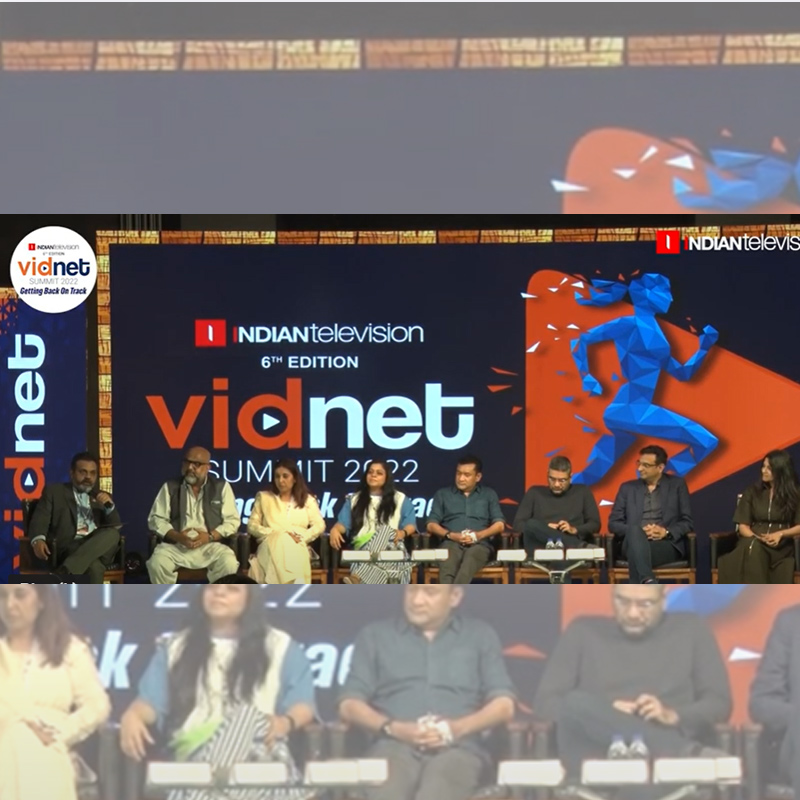
    During the sixth edition, Indiantelevision.com’s pioneering Vidnet Summit held in April brought together the industry experts to deliberate views on the evolution of OTT space and how the new order will be.  

    The experts such as Lyca Productions CEO Ashish Singh, Fremantle India Television Productions managing direct Aradhana Bhola, MX Player chief content office Gautam Talwa, Indian film direct and screenwriter Ken Ghosh, Eros Now head of content Puja Rajadhyaksha, Juggernaut Productions OTT president and COO Samar Khan, Ullu head-content strategy and business alliances Nivedita Basu and moderated by Bodhitree Multimedia Ltd managing direct Mautik Tolia were among the panelists present during the discussion of the topic ‘The Evolution Of OTT Content: The New Order’, recently held in Mumbai.

    Reminiscing the initial days of OTT, Tolia highlighted how challenging it was to produce OTT content, to ensure that it reaches the right audience in the market.

    “When we started our first Youtube show, it was twelve-minutes long, we were so worried if the audience would watch it, how would they deal with buffering, will they like it? and other challenges,” he said.  

    Further, he also put some light on the evolution of the OTT space, he named a few shows like Mirzapur, etc., which really helped the industry become bigger.

    Opening up the conversation, he asked Khan about how he’s seeing the new order or second phase of OTT taking place?

    Specifically, pointing out the challenges that the second phase of OTT is presently struggling with, he said, “If we look at the content required on an annual basis across the top OTT platforms- the biggest challenge is to find new stories for the next phase of OTT. If all the platforms launch just one show per month, on an average the industry would require 85-90 shows every year. But where are the stories?”

    In addition, he said, “the second challenge is to find talent to tell those stories on screen.”

    However, Rajadhyaksha disagreed with Khan. She said, “there’s a lot to be explored in the country.” She feels that OTT creators are not struggling with the content, there will be a surge in the regional content. She added, “As the mindset of the young Indian audiences is evolving, topics like women empowerment, cultural and inspiration stories,etc., are yet to be explored. So, finding new stories is not a challenge.”

    Basu who has recently joined Ullu thinks that stories are around us all the time, creators need to present them beautifully to leave an impact. Quoting the example of stories like Gullak, Mai, she said, “We don’t really need to hunt for something new but to present what is there with all our heart.”

    During the conversation, she also revealed that Ullu will launch a new Hindi GEC.

    Revealing this, Basu said, “We are going to launch a new Hindi GEC in future. While I announce this news, you all may think that there’s no space for a new GEC but we see a space. We are coming up with a completely new phenomenon where audiences will get to see OTT type content on TV.”

    Taking the conversation to the creators side, Tolia said, “In the initial days, there was a lot of passion to create. But now, as the OTT space is evolving, there’s a hassle to create new content within short deadlines.”

    Throwing up the next question to Ken, he asked, “As the industry has taken up a speed, now directors, writers and actors are working on multiple projects at the same time. With this speed, how will enthusiasm sustain?”

    Ken answered, “Yes, that’s true, creators are now pacing up, working more than one project simultaneously. But to sustain, industry needs to go slow.”

    “There is no need to make fake deadlines and there’s no need to run behind the stars but to invest the right amount of time in the content making process,” he said.

    Taking the discussion ahead, he asked Gautam how do we not fall into the trap of just creating content without understanding the needs of the audiences? Gautam answered, “content fatigue is there. It is important to have clarity on who you’re making content for.”

    Tolia asked Gautam, “compared to other platforms, MX Player has been extremely prolific. How are you able to churn out the number of shows you do with the same quality?”

    Gautam asserted, “We spend a good amount of time, well planned out, and give so much attention to writing.”

    Singh, who has closely seen the industry evolve over the last six-seven years, thinks that OTT has changed the dynamics of the industry from revenue point of view, from production point of view and in all other spheres.

    He said, “In the last few years, we have only learnt what OTT is! We are just on the tip of the iceberg, there’s a lot to explore. And in the coming years, we have a lot to create and present”.

    “We are one-sixth of the population and we are yet to make our own Squid Game, Money heist and a lot more,” Singh added.

    Shifting the conversation to the unscripted content on OTT, Bhola said that there’s a lot of space to grow even in the unscripted content space.

    Calling herself a radical optimist, she said, “We cannot say that there are no new stories. In fact, this is the best time to create content. However, we need to focus in terms of coming up with new seasons, we need to go slow.”

    Concluding her statement Bhola said, “There’s a lot of room to create content in India. We are super rich in terms of culture and we have a lot to create and show to the world.”

    Watch the entire panel discussion on The Evolution Of Ott Content: The New Order by clicking on the link here:

  • Vidnet’22: How OTT is accelerating tech infrastructure investments

    Vidnet’22: How OTT is accelerating tech infrastructure investments

    MUMBAI: How has the exponential growth in consumption of OTT content impacted the tech – especially hardware – infrastructure needs of those running streaming platforms or serving video entertainment to consumers?

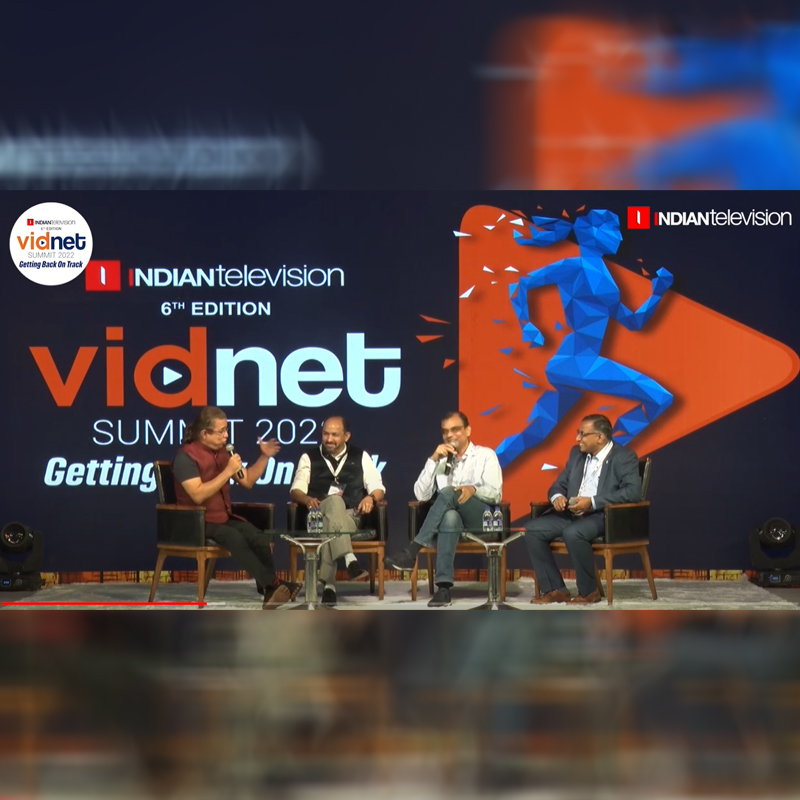
    That was the main question that was discussed during the tech session at the sixth edition of Indiantelevision.com’s pioneering Vidnet Summit held in end April. Titled Rise of Digital Revolution – Accelerated Growth Led by Disruptive Innovation in the world of OTT, the session featured Dell Technologies medium business leader Radhesh Shankaranarayanan, Sony Pictures Networks India head of Sony LIV Technology Manish Verma,  NXTDigital COO Rouse and Indian Television Dot Com founder, CEO & editor-in-chief Anil Wanvari as the moderator.

    Ten years from now, this period will be called the digital revolution period across the globe, expounded Shankaranarayanan, referring to the industrial and information revolutions which transformed the world in every way in earlier centuries. “There was a pressure or push to move into digital before this, but the pandemic has actually accelerated the digital drive completely.”

    Specifically pointing out to the media and entertainment ecosystem he opined that production houses have suddenly seen a huge amount of video content business flowing into them and, as a result, the  demand for Dell workstations and servers has  skyrocketed.

    “Earlier this segment used to be very niche in terms of technology adoption, but today I have seen so many production houses mushrooming in the last couple of years,” he revealed. “I am currently talking to at least 400-odd production houses in the country- right from Delhi to Trivandrum. Hence we want to be as close to  content creation that’s happening. We are really keen on offering even more of them solutions which will help them keep pace with the burgeoning needs by offering them workstations with the fast video processing power they need.”

    What demonetisation has done to the payment industry, I think the lockdown has done for the OTT industry, added SPNI’s Manish Verma.

    “We have seen consumption increasing crazily during the lockdowns and it has essentially increased in three different areas. One is the premium VOD (video-on-demand) service, people have actually started paying for content where earlier they used to find means to not to pay. Second is sports, which is a very good driver of consumption for us, we offer multiple live sports. That’s where we have seen good consumption happening and that’s always been there.”

    Third big area was interactivity- KBC Play along, wherein users can play the same KBC on their devices, while the show is on air, adds Verma. “All three areas require a lot of backend infrastructure, which has increased exponentially for us. We need to make sure that our backend infrastructure is scaled properly to handle the traffic, so that when concurrent users are coming in there is no latency.” 

    Another phenomena that is happening is the shift in devices from personal mobile viewing patterns to consumption on bigger screens such as smart TVs for a better viewing experience, he noted.

    NXTDigital’s Rouse Koshy offered his perspective on how his cable network was impacted on the tech infrastructure front by the increase in video consumption.

    “The pandemic didn’t hit us as hard as these guys (OTT platforms) hit us!” he expressed. He went on to add that in the last one and a half year, the company started digitising and coming up with combo products such as broadband with video etc.

    “Now in the last six months we have also started aggregating all OTT platforms and selling it as a bouquet.” This transformation is going to be a challenge, admitted Koshy as cable TV operators have a different mindset and to train them to transform is going to be a “humongous exercise.”

    4K adoption will need to further demand for tremendous processing power houses of workstation going forward, noted Shankaranarayanan,  even as 8K is still distant.

    “I am seeing this as another huge additional spend coming in hardware, software and cloud infrastructure along with 5G opening up a totally new experience,” he explained

    Going forward, we see this trend of gaming and music, apart from entertainment genres as a part of OTT platforms, revealed Koshy, which would further accelerate hardware needs at the consumer end.

    With 5G emerging, we will need to further scale up infrastructure, bandwidth requirement, affirmed Verma in response to Wanvari’s observation about the telecom spectrum transition happening globally which is expected to hit India in the next 12 months or so.

    When it comes to Metaverse, it’s too early for us to say how it’ll take off, Koshy confessed, and whether it will end up as a fad. Shankaranarayanan was more optimistic about the surge in hardware infrastructure investments  that the metaverse era is going to bring with it. “The compute power is going to be huge, and for that the Dell  has products which can cater to the requirement so consumers can have a seamless experience,” he highlighted.

    Watch the entire panel discussion on the Rise of Digital Revolution –  Accelerated Growth Led by Disruptive Innovation in the world of OTT by clicking on the link here: 

  • Industry experts discuss OTT growth, need for measurement system

    Industry experts discuss OTT growth, need for measurement system

    MUMBAI: To measure or not to measure? Despite the humongous growth of OTT in the country, experts still can’t seem to agree on this question. While some of the experts believe a TV like measurement system will bring more transparency in the ecosystem, other players think third-party tools are already serving the purpose.

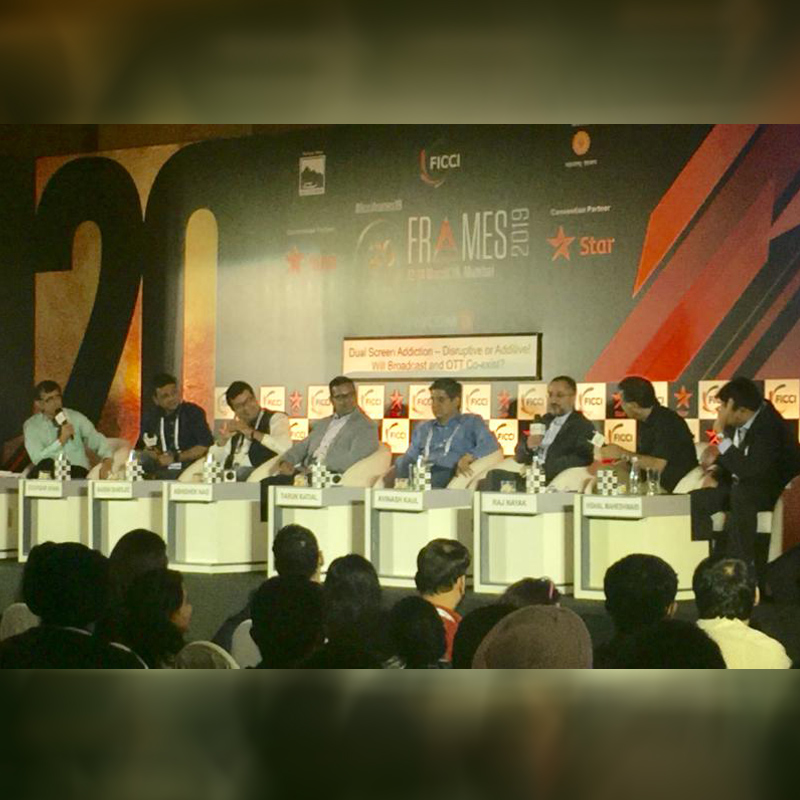
    A session on Dual Screen Addiction saw panellists Star India Hindi GEC president and head Gaurav Banerjee, ZEE5 CEO Tarun Katial, Network 18 COO, A+E Networks MD Avinash Kaul, media veteran Raj Nayak, Netflix partnerships director Abhishek Nag, Hooq India MD Zulfiqar Khan, Vuclip country head Vishal Maheshwari and moderated by Balaji Telefilms group CEO Sunil Lulla.

    Speaking at a session in FICCI FRAMES 2019 Banerjee emphasised on the need of a unified measurement system. “As we have entered into digital, we have not thought of putting in place a measurement system which is extremely robust,” he said. Banerjee thinks it will make assessments of watch-time easier for the advertisers.

    Katial strongly disagreed and argued that there are robust third-party tools in the market. He also cited the example of YouTube and Facebook’s strength in digital advertising. According to him, if there was no credibility in measurement, advertisers would not have put so much money.

    “In the case of TV, when consumers now exercise their choice some channel may lose its base of 198 million and drop to 20 million but that also shows the affluence of the customer who can pay Rs 20 a month. Otherwise, channels on DD Free Dish would have retained revenue three times greater than Star Plus,” Kaul commented.

    Nayak said that advertising money is going to get fragmented and it’s going to get worse with more players coming in. “In the OTT space, the number of players will shrink. I predict that in the next 3-5 years there won’t be more than 10 players in this space. I think then the realisation of value will happen both in terms of subscription and advertising,” he added.

    Talking about monetising on OTT through advertising, Katial said the volume of content on the platform is a necessity. He added that when ZEE5 was launched it kept the faith on three ‘v’s – voice, vernacular and video which worked. According to him, CPM is also rising on the contrary to popular belief in the industry.

    However, the experts agreed to the growing subscription model in the country. Netflix partnerships director Abhishek Nag said this is a great time for subscription business in India. The use of credit cards for online payment without fear of fraud and mobile wallets especially the ones with low bandwidth has opened up revenue channels for the platforms. Nag also thinks bundling of telco or broadband plans with live TV and OTTs can make it stronger.

    ZEE5 CEO said along with B2B2C, the B2C model is growing. According to him, proper bundling and pricing play a major role in B2C revenue. In the case of B2B2C, he said partnerships with e-commerce platforms like MakeMyTrip will add value to the model in future.

  • Broadcasters need to relook at content to cope with OTT platforms

    Broadcasters need to relook at content to cope with OTT platforms

    MUMBAI: With the upsurge in demand for OTT platforms in India, the future of broadcasters has been debated much. TV still has enough headroom to grow thanks to underpenetrated households. While the players in the ecosystem firmly believe that TV is not going to die soon, they also think broadcasters need to rethink their content.

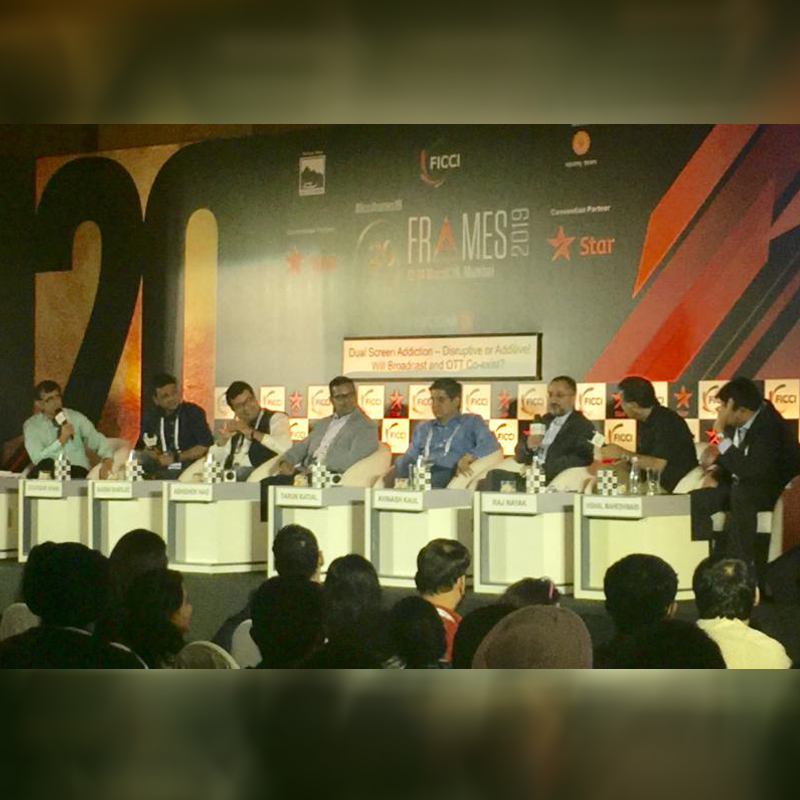
    On the second day of FICCI Frames 2019, experts from the television and OTT industry discussed on ‘Dual Screen Addiction –Disruptive or Addictive! Will Broadcast and VoD Co-exist?’ It had panellists Star India Hindi GEC president and head Gaurav Banerjee, ZEE5 CEO Tarun Katial, Network 18 COO, A+E Networks MD Avinash Kaul, media veteran Raj Nayak, Netflix partnerships director Abhishek Nag, Hooq India MD Zulfiqar Khan, Vuclip country head Vishal Maheshwari and moderated by Balaji Telefilms group CEO Sunil Lulla.

    Banerjee said they are in the business of curating stories where making purposeful stories is important. He thinks it should be left to consumers what stories they want to watch together and on which personal device.

    Agreeing with Banerjee, Katial said, “It’s good to tell stories, eventually you have to make money and yes, we are all trying to monetise content in different formats. What OTT brings to the table is totally different from TV which is a high degree of personalisation and segmentation, and the ability to discover content at your own convenience. That’s not going away. Consumers are going to want more and more of that. I think we all say linear TV should stay, the convenience aspect of digital is huge.”

    Lulla raised the question of how broadcasters should defend their turf with all these changes. Media veteran Raj Nayak said that he is a big believer that television is here to stay. He added that families in small towns, even today, sit together to watch TV in the evening. According to him, OTT and TV will co-exist in India at least for another ten years.

    Banerjee also echoed Nayak’s view that OTT is not going to kill linear TV. According to him, three generations watching TV together and having a conversation is very important in Indian society. He added that TV consumption is only on the upward side in the country.

    But Nayak also reminded the fact that amid ongoing changes in the ecosystem, consumers now compare the quality of TV and OTT content. Hence, Nayak thinks TV channels will have to course correct to give content on linear TV which is as compelling as OTT.

    Hooq India MD Zulfiqar Khan added that streaming services have a direct connection with consumers which helps them to have great knowledge of consumer choice. On the other hand, linear TV has been a consumer facing brand but not consumer facing business. Hence, he said that at a content level as well as business level there has to be a rethink.

    “The households not yet penetrated by TV will continue to be the main stake of linear TV. Most of it is coming from the northern and eastern parts of India. OTT and TV will obviously co-exist. The question is how they will compete with each other and take best practices from each other,” Kaul said while adding that OTT ‘s biggest advantage is its one-on-one relation.

    Vuclip country head Vishal Maheshwari said India is the only country where broadcasters are so well organised on their OTT businesses. According to Katial, broadcasters created a catch-up content environment in the early days and went slow on premium content compared to platforms like Netflix.

    The industry experts agreed that rather than having a debate about TV content and OTT content, the debate should be on linear and non-linear consumption and the need for compelling content.

  • More group stage streamers for FIFA 2018 WC than entire 2014

    More group stage streamers for FIFA 2018 WC than entire 2014

    MUMBAI: The streamers are on the rise and what better way to get everyone online at the same time than sports. The FIFA world cup 2018 in Russia saw more online viewers glued in the group stage itself than the entire 2014 world cup.

    The rise in mobile data consumption and emergence of OTT platforms can be regarded as major reasons behind the enormous increase of online viewers.

    According to a study released by cloud delivery platform Akamai, viewers of the first round of Russia 2018 streamed 65 per cent more data compared to the whole season of Rio World Cup.

    Sony bets big on 2018 FIFA World Cup

    The study revealed that the highest number of concurrent streams peaked at 9.7 million on 27 June during Mexico-Sweden and South Korea-Germany matches. In the entire Rio tournament, the record viewing peak hit five million during concurrent streams only.

    According to another report quoted by Forbes during the first week of the World Cup, 393 million plays of matches were successfully streamed via 59 million unique video streaming apps.  On the other hand, Akamai reports that while the peak bandwidth in Brazil was 6.99 Tbps, it was 23.8 Tbps in the first round in Russia.

  • YouTube views for Hindi dub of ‘Sarrainodu’ soar

    YouTube views for Hindi dub of ‘Sarrainodu’ soar

    MUMBAI: Telugu actor Allu Arjun as well as the South Indian film industry has hit a new milestone. Telugu-language action film Sarrainodu, after being released in 2016, was dubbed in Hindi and Malayalam. The Hindi dubbed version has been raking in the views becoming one of the most watched Indian movies on YouTube.

    Since the day the Hindi version was uploaded on YouTube, it was super hit and created new records. In a span of nine days, the film garnered 25 million views with 1.75 lakh likes.  Now, after six months, 145 million viewers have watched the Hindi version on YouTube. Moreover, the movie now has more than 5 lakh likes.

    The success of the film again proves that the increased use of social media is helping regional content to reach audiences across the country. The success of Sarrainodu has banked, to a large extent, on Allu Arjun’s increasing following in North India. The success of the movie also indicates the Indian audience’s growing affinity for video-streaming services.

    Other than social media, the Boyapati Srinu-directed film was also a hit at the box office. According to reports, back in 2016, the film raked in Rs 127 crore at the box office. It was the fifth South film to enter the Rs 100 crore.

    Also Read:

    100 mn hrs of YouTube viewed on TV: Google CEO Sundar Pichai

    YouTube, FB to corner major ad spend globally over 5 years

  • Streamers 50% of online population; 60% content streaming on mobile devices: GroupM

    Streamers 50% of online population; 60% content streaming on mobile devices: GroupM

    NEW DELHI: Globally online streaming is getting mainline. Or so it seems. Streamers make up almost 50 per cent of the online population, while over 60 per cent of content streaming, led by music, is now done over mobile devices and much of it can be linked to “moods and moments”, according to a study done by GroupM and Spotify.

    The report, put out by GroupM on its website early 2017, says the TV and movie streaming landscape is currently dominated by paid subscriptions, which promise users a high-quality, ad-free viewing experience. The TV and movie streamers make up about 40 per cent of the streaming realm.

    According to the study, if the entry price point for TV and movie streaming is typically a monthly subscription fee, the entry price point for music streaming is even better: free. Because while most music streaming services do offer a paid subscription plan—much like the top video services— some, such as Pandora, Spotify, YouTube, and SoundCloud, also offer a completely free listening experience, supported by ads.

    The study, undertaken in seven markets, including the US and parts of Europe, further observes that approximately 20 per cent of mobile music steamers report listening to music while out running errands and 30 per cent say they listen to music while showering.

    Streaming audio and video content now play a constant role in people’s daily lives—and this drives a whole new set of consumer behaviours that the analysts like to call the streaming mindset. GroupM feels as people clamour for more content that they can get anytime, anyplace, their consumption habits span a wider range of media types and drive higher engagement across their day. The result is a greater value on access to content over ownership.

    http://www.indiantelevision.com/sites/drupal7.indiantelevision.co.in/files/styles/large/public/groupm1.jpg?itok=DZqKdB4j

    http://www.indiantelevision.com/sites/drupal7.indiantelevision.co.in/files/styles/large/public/groupm2.jpg?itok=O47Pk624

    As streaming becomes standard, it’s now an expectation for consumers to have access to all media, all the time. In the process, the concept of “ownership” has become outdated. The study found that streamers are 23 per cent more likely than non-streamers to report valuing access to content over ownership, not only for music but for TV and movie content as well. “Controlling for demographic variables, this sentiment runs true across generations. Similarly, streamers in more mature markets (for example, the US) are more likely to endorse an access mindset, suggesting that the sentiment indeed grows over time,” the study observes.

    “Today, streamers make up almost 50 per cent of the online population, according to our survey. So it’s time to see streaming as the norm rather than the niche— as an integral piece of your media plan rather than an afterthought,” observes Rob Norman, Chief Digital Officer, GroupM, adding that for brands and marketers, these on-demand, on-the-go streaming services have the potential to provide unprecedented levels of consumer under¬standing. 

    This ‘moods’ and ‘moments’ approach has the potential to open up about  $220 million in new ad revenue in the seven markets surveyed, AdAge comments.

    For this study, GroupM paired Spotify’s streaming data for its +100 million users alongside GroupM’s LIVE PANEL, a 30-market consumer resource panel built from a Lightspeed database of 5.5M consumers. To add some context to the product and LIVE PANEL data, GroupM also surveyed 20,000 people around the globe to uncover the streaming state of mind.

    http://www.indiantelevision.com/sites/drupal7.indiantelevision.co.in/files/styles/large/public/groupm3.jpg?itok=q8ozdDB9

    “Our results reveal rising trends, key metrics, and important truths that can ultimately help make sure your media plan is future-proof, built around high-quality content and made for the consumers of tomorrow,” Norman explains.

  • Streamers 50% of online population; 60% content streaming on mobile devices: GroupM

    Streamers 50% of online population; 60% content streaming on mobile devices: GroupM

    NEW DELHI: Globally online streaming is getting mainline. Or so it seems. Streamers make up almost 50 per cent of the online population, while over 60 per cent of content streaming, led by music, is now done over mobile devices and much of it can be linked to “moods and moments”, according to a study done by GroupM and Spotify.

    The report, put out by GroupM on its website early 2017, says the TV and movie streaming landscape is currently dominated by paid subscriptions, which promise users a high-quality, ad-free viewing experience. The TV and movie streamers make up about 40 per cent of the streaming realm.

    According to the study, if the entry price point for TV and movie streaming is typically a monthly subscription fee, the entry price point for music streaming is even better: free. Because while most music streaming services do offer a paid subscription plan—much like the top video services— some, such as Pandora, Spotify, YouTube, and SoundCloud, also offer a completely free listening experience, supported by ads.

    The study, undertaken in seven markets, including the US and parts of Europe, further observes that approximately 20 per cent of mobile music steamers report listening to music while out running errands and 30 per cent say they listen to music while showering.

    Streaming audio and video content now play a constant role in people’s daily lives—and this drives a whole new set of consumer behaviours that the analysts like to call the streaming mindset. GroupM feels as people clamour for more content that they can get anytime, anyplace, their consumption habits span a wider range of media types and drive higher engagement across their day. The result is a greater value on access to content over ownership.

    http://www.indiantelevision.com/sites/drupal7.indiantelevision.co.in/files/styles/large/public/groupm1.jpg?itok=DZqKdB4j

    http://www.indiantelevision.com/sites/drupal7.indiantelevision.co.in/files/styles/large/public/groupm2.jpg?itok=O47Pk624

    As streaming becomes standard, it’s now an expectation for consumers to have access to all media, all the time. In the process, the concept of “ownership” has become outdated. The study found that streamers are 23 per cent more likely than non-streamers to report valuing access to content over ownership, not only for music but for TV and movie content as well. “Controlling for demographic variables, this sentiment runs true across generations. Similarly, streamers in more mature markets (for example, the US) are more likely to endorse an access mindset, suggesting that the sentiment indeed grows over time,” the study observes.

    “Today, streamers make up almost 50 per cent of the online population, according to our survey. So it’s time to see streaming as the norm rather than the niche— as an integral piece of your media plan rather than an afterthought,” observes Rob Norman, Chief Digital Officer, GroupM, adding that for brands and marketers, these on-demand, on-the-go streaming services have the potential to provide unprecedented levels of consumer under¬standing. 

    This ‘moods’ and ‘moments’ approach has the potential to open up about  $220 million in new ad revenue in the seven markets surveyed, AdAge comments.

    For this study, GroupM paired Spotify’s streaming data for its +100 million users alongside GroupM’s LIVE PANEL, a 30-market consumer resource panel built from a Lightspeed database of 5.5M consumers. To add some context to the product and LIVE PANEL data, GroupM also surveyed 20,000 people around the globe to uncover the streaming state of mind.

    http://www.indiantelevision.com/sites/drupal7.indiantelevision.co.in/files/styles/large/public/groupm3.jpg?itok=q8ozdDB9

    “Our results reveal rising trends, key metrics, and important truths that can ultimately help make sure your media plan is future-proof, built around high-quality content and made for the consumers of tomorrow,” Norman explains.

  • SES, Samsung unveil Africa’s first TV with integrated FTA satellite receiver

    SES, Samsung unveil Africa’s first TV with integrated FTA satellite receiver

    MUMBAI: SES is collaborating with Samsung to drive digital broadcasting via satellite in sub-Saharan Africa.


    Samsung will introduce LED television with an integrated free-to-air satellite receiver, the Samsung LED TV Free Satellite, that will be distributed in Nigeria, Ghana, Cote D’Ivoire, Senegal, Democratic Republic of Congo and Cameroon in August 2012. Distribution to additional countries will follow.


    The integrated satellite receiver will allow consumers to receive free-to-air television channels without the need for an additional set top box as the LED TV will be directly connected with the satellite dish. In preparation for the launch, SES and Samsung will jointly arrange training sessions with distribution partners and installers to ensure the proper connection of the TV device to the satellite dish. Both partners will also run a joint marketing campaign in June 2012.

    As a leader in the free-to-air digital TV market, SES delivers more than 60 free-to-air channels in more than 40 African countries. The launch of the new Samsung LED TV Free Satellite coincides with more channels becoming available in Africa.


    SES senior director of marketing development and Marketing in Africa Christoph Limmer said, “This collaboration is the first of its kind and will drive digitalisation in Africa .Today, one out of three households in Africa has a TV set but less than 10 million homes receive content in digital format. Our cooperation will not only help to improve access to digital content for African consumers but it will also encourage African broadcasters to launch more content. In servicing more than 40 African countries, we are well aware of the huge demand for more and higher quality TV services. The opportunity lies in providing an increasingly sophisticated African viewership with a significantly increased number of TV channels – a first for many African countries.”

    Samsung Africa Regional Product Manager Dae Hee Kim said, “The Samsung LED TV Free Satellite is our contribution to the continent’s efforts to ’go digital’, providing African consumers with greater choice and broadcasters with the opportunity to grow the region’s media industry.”