Tag: online shopping

  • Snapdeal targets low-end value shoppers in strategic shift

    Snapdeal targets low-end value shoppers in strategic shift

    KOLKATA: It has been more than six months since the onset of the pandemic. While most businesses have taken a major hit, e-commerce has been have a rollicking time with a further boost projected during this festive season.

    A recent report from ReedSeer Consulting said that goods with a gross merchandise value of  $3.1 billion were sold by e-commerce companies  like Flipkart, Amazon, Myntra, and Snapdeal  in less 4.5  days of starting their festive sales. Snapdeal’s Kum Mein Dum sale, which concluded on 20 October, saw a massive adoption in smaller cities. Eager to hold on to this fresh inflow of shoppers, the platform is widening the depth of the value segment, said Snapdeal communications & corporate affairs SVP Rajnish Wahi.

    He explained that a large part of the audience the company targets is in tier-2, tier-3 and beyond. Moreover, many of them have high aspirations but limited disposable incomes. After fulfilling basic expenditures, they may not have Rs 10,000 to buy a pair of shoes at the end of a month. But they shop often, mostly in local outlets. “Our target is to bring the same collection online which they would possibly go to local markets for,” he said, adding that most products on the platform are priced between Rs. 250-2,000.

    The e-tailer has added 10,000 small and local sellers  and manufacturers in the last couple of months.

    Along with creating the value shopping segment, Snapdeal is also trying to make the service easier and more accessible for buyers of all shades and income levels. As a number of them are not comfortable with English, it has also added eight Indian local languages to its user interface. 30 per cent of the overall users opt for the UI in vernacular languages. Not only can they shop in their mother tongue, but also get promotional messages in that language as well.

    “India is a very heterogeneous market. At first, the 80-100 million who came online were largely urban, English-speaking with high disposable incomes. In the second phase, up to 300-400 million are going digital, and these people have different tech-awareness, different language preferences, and lower disposable income. Those who seek to discover, who want to explore further are our target segment. What differentiates us is the depth of merchandise in  our "value" segment,” said Wahi.

    He emphasised that owing to its good brand awareness and high recall value, Snapdeal is among the top three e-commerce players in India.

    With the change in its business strategy, Snapdeal has also started going hell for leather by investing increasingly in digital marketing, especially on social  media. Wahi explained that the platform has moved beyond the brand-building phase and is now looking at a more targeted, result oriented marketing strategy.  While social media can also help to explain a product, it’s word of mouth that greatly helps a discovery-led platform like Snapdeal, he added.

    Will visitors make a great deal out of Snapdeal's  broadbasing strategy?-

  • India’s online retail market to hit $100 bn by 2020: Kantar IMRB report

    India’s online retail market to hit $100 bn by 2020: Kantar IMRB report

    MUMBAI: Kantar IMRB has launched a report on India’s shopping scenario in 2017 that provides comprehensive insights on buying behaviour of India’s online shoppers. The study is conducted among active internet users in urban India covering a vast range of categories.

    Dubbed as the fastest growing e-tail market in the world and with the online retail market in India expected to touch $100 billion by 2020, the space accommodates a vast array of players and complex market dynamics.

    It is an end-to-end environment scan of Indian e-tail landscape, with insights on consumer behaviour across demographic groups, market dynamics, online vs brick and mortar and other emerging trends. Furthermore, the report also offers a bird’s eye view of the changing landscape due to policy developments, lays down special focus on festive season and sector specific trends.

    Kantar IMRB head of digital Akhil Almeida says, “This comprehensive study will serve as a critical decision-making tool for both marketers as well as e-tail players. 2017, by all accounts, has been a landmark year for the Indian e-tail market with 4G-led mobile internet usage galloping and with an increasing presence of digital wallets. Despite the demonetisation shock, the whopping numbers recorded in the space both in terms of buyers and spends, stand testimony to the still-to-be-unleashed potential of e-tail in India’’.

    The report aims to answer critical questions about mapping the e-tail landscape, size of e-tail market, who is the buyer, how different are the buying pattern in large cities vs. small cities, how often do these consumers buy? And how much are they ready to spend, etc. 

    The report gives nuances of the online shopping space by slicing out shoppers for different categories, festival versus non-festival months, ticket size and frequency that can help brand formulate blueprint to craft their e-tail strategies.

    Insights for the report were derived from an exhaustive study of 50,000 online shoppers across urban India. Respondents across different age-groups, locations, socio-economic backgrounds and gender participated in this study.

  • Jabong’s ‘Be You’ trumpets unique fashion statements

    Jabong’s ‘Be You’ trumpets unique fashion statements

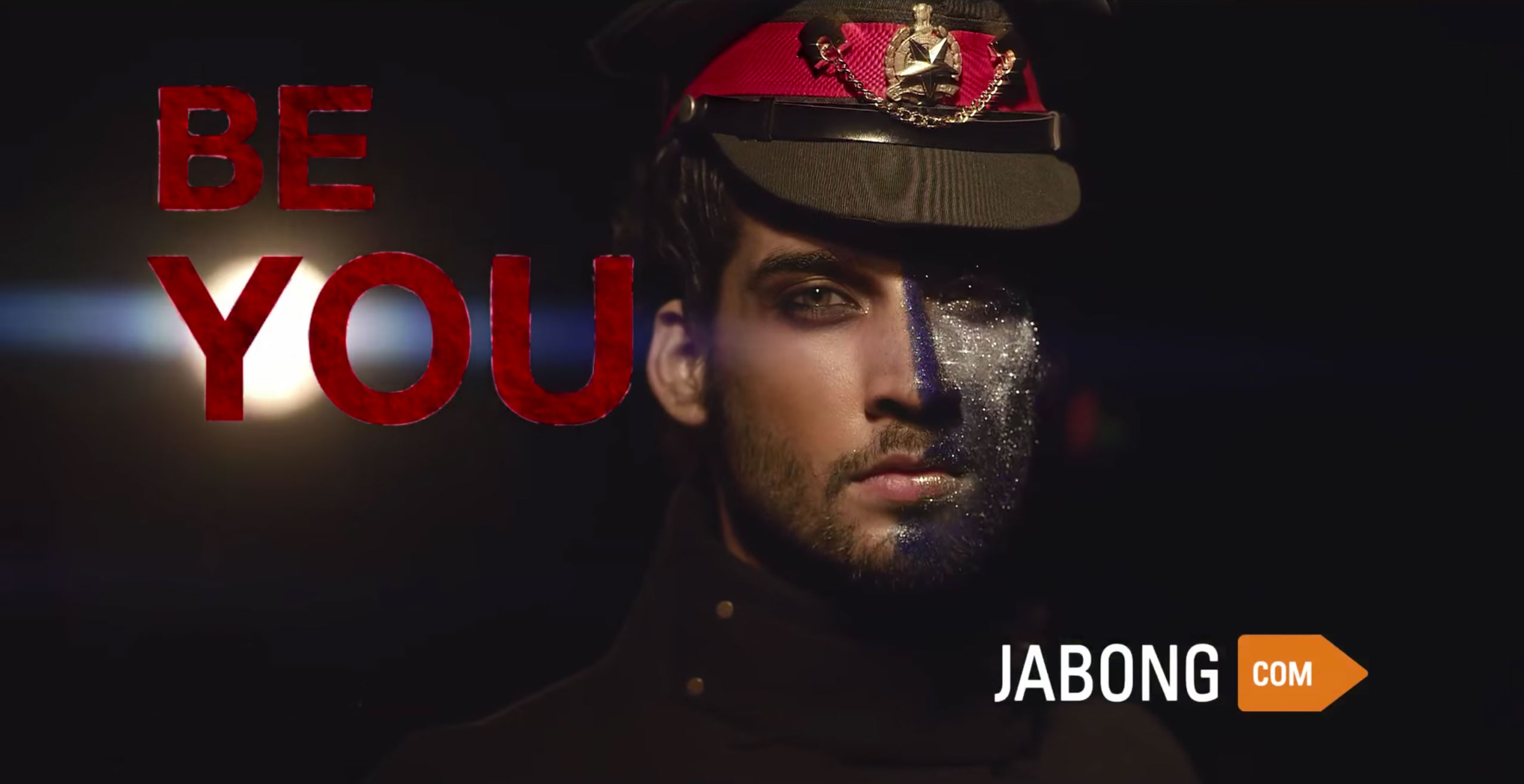
    MUMBAI: A bearded man flaunting an elaborate and glittery nose-ring, a woman donning a shirt as a ‘pagri’, and a man wearing his jacket as pants. Sounds familiar? No? Well, that’s the point. Or at least the ‘statement’ that Jabong is trying to make with its new 2 minute long video that takes its brand statement ‘Be You’ to a whole new level.


    Conceptualised by Bates CHI & Partners, the film takes viewers on a picturesque journey of fashion, style, colour and uniqueness, be it through very obvious stereotype breakers or subtle hints at breaking the mould. Whatever be the complicated collective thought behind the campaign, (left to the viewer’s interpretation), it took the production team five days of prep work and a day of shoot at a ‘desi’ Mumbai studio to churn out this 2 minuter. A forty seconds version of the ad will also run as a TV spot. The quick shoot could also be due to availability of dates from London based award winning film, creative & art director Harvey B Brown of the IndiGo Airlines and Incredible India fame, who shot this ad film.

    Breaking down what his vision behind the campaign was and what he saw through his lens, Brown said, “Fashion can be bold and brave and yet be within reach. Through this campaign, I want to break the stereotypes that limit the very creative expression that is needed to make a truly personalized fashion statement. Beauty in advertising is usually defined to fit set criteria. I wanted our styling to be contrarian and inspirational. So you’ll see young men and women wear shirts as colourful turbans, sweatshirts as pants, men’s trousers as women’s jackets, and so on,” said Brown. Apart from the artfully shot frames, what is hard to miss is the semi ethnic trance like music that plays in the background, scored by well-known music composer and Abby winner Sameeruddin. The mandate from the client was simple, or rather there wasn’t any strict mandate to begin with. But there was an idea. “They were not looking at yet another campaign that talks about the great offers, deals, or the range of the ecommerce site’s inventory; or the advantages of online buying,” spoke out Bates CHI & Partners president Asheesh Malhotra. “Jabong clearly wanted the campaign to speak to the youth directly and bring in their perspective of fashion in the limelight. The campaign emphasises on Jabong’s brand statement ‘Be You’ and be comfortable in their own skin. So here was a client more interested in building a brand through a campaign, rather than a short term quarterly goal of sales,” he shared, adding that the campaign talks in language the youth of today speak, a language that is devoid of bias based on gender, size, ethnicity, etc.

    A recent market research done by MTV titled ‘Many Me Project also spoke of the plurality that exists in abundance in today’s Indian youth, a reflection of which can be seen in Jabong’s campaign. “This campaign marks the beginning of a new chapter for Jabong. Youth today are confident, comfortable in their skin and ready to make bold choices. They want to be fashionable, yet not be slaves to a trend. You could be skinny, plus sized, bold, meek, short or tall – but you are who you are – and fashion helps you Be You. This campaign celebrates their choices, and makes our brand philosophy much more relevant in the current context. After strengthening our fundamentals in last few months, we are bringing the focus back to our brand,” said Jabong CEO and MD Sanjeev Mohanty.

    Reiterating the same thoughts, Malhotra elaborated, “Today’s youth have an opinion and they are not afraid to speak it out. And fashion to them is about being comfortable in their own skin and making a statement as well. Otherwise, there really isn’t anything differentiating the many options we have to buy clothes online. You go to Koovs, you go to Myntra, you go to any other site under the sun, and buy the same piece of cloth. What differentiates Jabong is its understanding of the youth’s sense of fashion. Consumers can buy a full cloth and chose to wear just the sleeve, and Jabong is cool with that. That’s what’s ‘Jabong’ about their fashion statement.” This isn’t the first time an online retail brand has opted to take up the ‘bold’ approach. Going bold also has its downside. Trying too hard to steer clear of the stereotypes can be dangerous. It can altogether put you in another box of ‘different for the sake’. “It’s not about rebelling against or for a certain cause. Or forcefully connecting fashion with homosexuality or treatment of pregnant women in our society just for the sake of the stir it will create,” pointed out Malhotra, heavily hinting on Myntra’s ‘Bold Is Beautiful’ campaign.

    Does dressing models in attractive and eye-catchy clothes, and painting them in bold colors achieve that much needed reasoning behind ‘breaking stereotypes’?, we asked Malhotra. “Our focus was fashion and the spectrum that it covers. Sure, there is a lot of extremes shown in the video. We didn’t want to go out of our way to show extremes in fashion, but until and unless we depict a cross section of people with unique fashion sense that is natural for them, we we would miss the nerve of the campaign,” Malhotra justified. Bates CHI & Partners won the account for Jabong’s creative mandate not too long ago in March, and has already planned to go long term with the brand. The agency already has another video in store, shot and ready to be released by first week of July.

  • Jabong’s ‘Be You’ trumpets unique fashion statements

    Jabong’s ‘Be You’ trumpets unique fashion statements

    MUMBAI: A bearded man flaunting an elaborate and glittery nose-ring, a woman donning a shirt as a ‘pagri’, and a man wearing his jacket as pants. Sounds familiar? No? Well, that’s the point. Or at least the ‘statement’ that Jabong is trying to make with its new 2 minute long video that takes its brand statement ‘Be You’ to a whole new level.


    Conceptualised by Bates CHI & Partners, the film takes viewers on a picturesque journey of fashion, style, colour and uniqueness, be it through very obvious stereotype breakers or subtle hints at breaking the mould. Whatever be the complicated collective thought behind the campaign, (left to the viewer’s interpretation), it took the production team five days of prep work and a day of shoot at a ‘desi’ Mumbai studio to churn out this 2 minuter. A forty seconds version of the ad will also run as a TV spot. The quick shoot could also be due to availability of dates from London based award winning film, creative & art director Harvey B Brown of the IndiGo Airlines and Incredible India fame, who shot this ad film.

    Breaking down what his vision behind the campaign was and what he saw through his lens, Brown said, “Fashion can be bold and brave and yet be within reach. Through this campaign, I want to break the stereotypes that limit the very creative expression that is needed to make a truly personalized fashion statement. Beauty in advertising is usually defined to fit set criteria. I wanted our styling to be contrarian and inspirational. So you’ll see young men and women wear shirts as colourful turbans, sweatshirts as pants, men’s trousers as women’s jackets, and so on,” said Brown. Apart from the artfully shot frames, what is hard to miss is the semi ethnic trance like music that plays in the background, scored by well-known music composer and Abby winner Sameeruddin. The mandate from the client was simple, or rather there wasn’t any strict mandate to begin with. But there was an idea. “They were not looking at yet another campaign that talks about the great offers, deals, or the range of the ecommerce site’s inventory; or the advantages of online buying,” spoke out Bates CHI & Partners president Asheesh Malhotra. “Jabong clearly wanted the campaign to speak to the youth directly and bring in their perspective of fashion in the limelight. The campaign emphasises on Jabong’s brand statement ‘Be You’ and be comfortable in their own skin. So here was a client more interested in building a brand through a campaign, rather than a short term quarterly goal of sales,” he shared, adding that the campaign talks in language the youth of today speak, a language that is devoid of bias based on gender, size, ethnicity, etc.

    A recent market research done by MTV titled ‘Many Me Project also spoke of the plurality that exists in abundance in today’s Indian youth, a reflection of which can be seen in Jabong’s campaign. “This campaign marks the beginning of a new chapter for Jabong. Youth today are confident, comfortable in their skin and ready to make bold choices. They want to be fashionable, yet not be slaves to a trend. You could be skinny, plus sized, bold, meek, short or tall – but you are who you are – and fashion helps you Be You. This campaign celebrates their choices, and makes our brand philosophy much more relevant in the current context. After strengthening our fundamentals in last few months, we are bringing the focus back to our brand,” said Jabong CEO and MD Sanjeev Mohanty.

    Reiterating the same thoughts, Malhotra elaborated, “Today’s youth have an opinion and they are not afraid to speak it out. And fashion to them is about being comfortable in their own skin and making a statement as well. Otherwise, there really isn’t anything differentiating the many options we have to buy clothes online. You go to Koovs, you go to Myntra, you go to any other site under the sun, and buy the same piece of cloth. What differentiates Jabong is its understanding of the youth’s sense of fashion. Consumers can buy a full cloth and chose to wear just the sleeve, and Jabong is cool with that. That’s what’s ‘Jabong’ about their fashion statement.” This isn’t the first time an online retail brand has opted to take up the ‘bold’ approach. Going bold also has its downside. Trying too hard to steer clear of the stereotypes can be dangerous. It can altogether put you in another box of ‘different for the sake’. “It’s not about rebelling against or for a certain cause. Or forcefully connecting fashion with homosexuality or treatment of pregnant women in our society just for the sake of the stir it will create,” pointed out Malhotra, heavily hinting on Myntra’s ‘Bold Is Beautiful’ campaign.

    Does dressing models in attractive and eye-catchy clothes, and painting them in bold colors achieve that much needed reasoning behind ‘breaking stereotypes’?, we asked Malhotra. “Our focus was fashion and the spectrum that it covers. Sure, there is a lot of extremes shown in the video. We didn’t want to go out of our way to show extremes in fashion, but until and unless we depict a cross section of people with unique fashion sense that is natural for them, we we would miss the nerve of the campaign,” Malhotra justified. Bates CHI & Partners won the account for Jabong’s creative mandate not too long ago in March, and has already planned to go long term with the brand. The agency already has another video in store, shot and ready to be released by first week of July.

  • LimeRoad For Men revolutionises online shopping & style discovery for men

    LimeRoad For Men revolutionises online shopping & style discovery for men

    MUMBAI: Limeroad revolutionized style discovery for women, today announced the launch of its new offering – LIMEROAD for Men.

    LIMEROAD for Men is launching with 100,000+ style suggestionsand products for men, in order to address a unique need gap – people care deeply about how they look, yet find it difficult to find what they love when shown millions of options. LIMEROAD’s unique community of 200,000+ scrapbookers together with their deep algorithms create for users, fresh, unique looks, every 30 secondson the platform.

    LIMEROAD for men includes 23 sub categories of apparel and accessories from over 250 Indian and International brands, together with tens of thousands of innovatively styled looks like “Style-like-bhai, shirts & sneakers, island style, cheeky graphics and minimal prints.”

    This is a first for Indian men, who will now be able to look at their favourite stars, movies, sports heroes, as well as the latest trends in fashion and pick similar, affordable styles at a click – all thanks to LIMEROAD’s unique extensive community of stylists, called scrapbookers. As users keep repeating on LIMEROAD, the platform’s personalization algorithms kick in, thus automatically getting users closer to what they are likely to like the most. It is this content that drives the highest engagement and conversion rates in the industry – 13.5% for repeat users, and 7.5% for new users on the LIMEROAD app.

    “Our mission is to build India’s most extensive discovery platform, driven by unique engaging content. We started out solving the problem first for women, and tackled the most fragmented of supplier and option ranges, enabling women to discover local and global trends like indie/ikat, gota patti, palazzos or fringes and botanical prints, pretty much as soon as they are first seen. All of this at super affordable prices. We will now bring this same discoverability to Indian men. We are ultimately democratizing fashion.” says Suchi Mukherjee, Founder & CEO, LimeRoad.

    At launch, the internal team at LIMEROAD, 70% of who are men, were simply ecstatic. Says Prashant Malik, co-Founder & CTO, “I have spent the last 3 hours simply unable to do anything else but browse the platform. So glad we have launched LimeRoad For Men. Why should girls have all the fun?” Anuj VSN, LIMEROAD’s new CMO adds saying “We are solving a fundamental problem for men. We believe that at a macro level, men are getting more conscious about how they look, driven by local and global influences. And LimeRoad For Men is a delightful way to solve the problem.”

  • LimeRoad For Men revolutionises online shopping & style discovery for men

    LimeRoad For Men revolutionises online shopping & style discovery for men

    MUMBAI: Limeroad revolutionized style discovery for women, today announced the launch of its new offering – LIMEROAD for Men.

    LIMEROAD for Men is launching with 100,000+ style suggestionsand products for men, in order to address a unique need gap – people care deeply about how they look, yet find it difficult to find what they love when shown millions of options. LIMEROAD’s unique community of 200,000+ scrapbookers together with their deep algorithms create for users, fresh, unique looks, every 30 secondson the platform.

    LIMEROAD for men includes 23 sub categories of apparel and accessories from over 250 Indian and International brands, together with tens of thousands of innovatively styled looks like “Style-like-bhai, shirts & sneakers, island style, cheeky graphics and minimal prints.”

    This is a first for Indian men, who will now be able to look at their favourite stars, movies, sports heroes, as well as the latest trends in fashion and pick similar, affordable styles at a click – all thanks to LIMEROAD’s unique extensive community of stylists, called scrapbookers. As users keep repeating on LIMEROAD, the platform’s personalization algorithms kick in, thus automatically getting users closer to what they are likely to like the most. It is this content that drives the highest engagement and conversion rates in the industry – 13.5% for repeat users, and 7.5% for new users on the LIMEROAD app.

    “Our mission is to build India’s most extensive discovery platform, driven by unique engaging content. We started out solving the problem first for women, and tackled the most fragmented of supplier and option ranges, enabling women to discover local and global trends like indie/ikat, gota patti, palazzos or fringes and botanical prints, pretty much as soon as they are first seen. All of this at super affordable prices. We will now bring this same discoverability to Indian men. We are ultimately democratizing fashion.” says Suchi Mukherjee, Founder & CEO, LimeRoad.

    At launch, the internal team at LIMEROAD, 70% of who are men, were simply ecstatic. Says Prashant Malik, co-Founder & CTO, “I have spent the last 3 hours simply unable to do anything else but browse the platform. So glad we have launched LimeRoad For Men. Why should girls have all the fun?” Anuj VSN, LIMEROAD’s new CMO adds saying “We are solving a fundamental problem for men. We believe that at a macro level, men are getting more conscious about how they look, driven by local and global influences. And LimeRoad For Men is a delightful way to solve the problem.”

  • DEN Snapdeal TV Shop to clock Rs 500 crore GMV by Dec 2015: Goel

    DEN Snapdeal TV Shop to clock Rs 500 crore GMV by Dec 2015: Goel

    MUMBAI: The 50:50 home shopping channel joint venture between DEN Network and Snapdeal, which was launched earlier this year, has been witnessing 50 per cent month-on-month growth. What’s more, DEN Snapdeal TV Shop is expecting to touch gross merchandise volume (GMV) of Rs 500 crore by December 2015.

    Commenting on the channel’s journey so far, DEN Snapdeal TV Shop CEO Maneesh Goel said, “Our business has started to optimally utilize the synergies of both the brands and gain advantage vis-a-vis other players in competition. Through its online marketplace platform, Snapdeal.com is able to cater to the Internet audience in the country, which stands at approximately 200 million.”

    According to Goel, there are over 400 million people (100 million households) in the country that consume content through television but may not have access to the Internet and that’s how the idea to launch a TV shopping channel came about.

    “Presently, the unique and finest product offerings have reached 30 million households and we expect to reach 80 million households by this Diwali,” Goel added.

    The 24×7 TV commerce channel, which launched with an initial reach of 13 million homes, has increased its footprint to 30 million homes across several other distribution partners, mainly large and regional cable operators.

    It has products ranging from electronics, mobiles, kitchenware, home appliances, men’s apparels, beauty and personal care, health and nutritional, cameras and accessories, toys and contemporary jewellery through its home shopping channel.

  • Mobile commerce: The key to impulse shoppers

    Mobile commerce: The key to impulse shoppers

    E-commerce industry’s success stories and reliability are the key factors determining its popularity. Customers have gained a new edge of convenience with products and services available at a click. Apparently, a new wave of innovation in the name of mobile commerce is gaining prevalence by driving new avenues for the e-commerce industry in India.


    Accessing an e-commerce portal on desktops and laptops has never been a hindrance; however, accessing the same website on phones have bulged various problems because they were primarily designed for big screens. Considering the mounting usage of mobile phones over big screen computers, mobile commerce has emerged as a key to impulse shoppers.


    Mobile commerce offers dual benefit – ease of navigation tools and the flexibility to shop; therefore, attracting a large number of customers. Nowadays, more and more e-commerce websites have become mobile friendly, which has accelerated the footfall on such websites by a huge number. The trend is gradually catching up in India like our European counterparts.


    According to a study conducted by global financial group ING, Europeans are now shopping frequently via mobile phone, British being the most impulsive shoppers. India has adapted to this innovation extensively and is observing its acceptance from customers on a large scale. Currently, a major chunk of our tech savvy population is inclined towards mobile commerce. Various studies have shown that mobile devices such as smartphones and tablets are leading to an increase in impulse buying among consumers. There is also a lot of scope for growth in this segment as only 40 per cent users make purchases using their mobile devices.


    Impulse shopping is triggered among consumers due to the availability of simple and easy to use technology that is used widely in m-commerce platforms. Its usage is rapidly increasing with evolution of mobile technologies. This innovative transformation is creating seamless opportunities for prospective businesses. While adding greater convenience to customers by providing more personalised services, mobile commerce equally benefits the retailers by reducing their cost of production.


    According to an independent study conducted by Manusis Technologies, 42 per cent purchases made on mobile devices are based on impulsive decisions. The attractive offers and discount coupons offered by mobile apps create a sense of urgency among buyers. Often, they make hurried purchases fearing an impending stock-out situation or rising prices of the commodity. Eventually, it positively impacts the store owners’ sale and revenues.


    M-commerce is a great opportunity for these retailers and e-commerce owners to tap impulse purchases from customers. Snapdeal, one of India’s biggest e-commerce stores, has witnessed an increase in sales via mobile purchases in the past year. Many of these purchases might have been made at the spur of the moment.


    (These are purely personal views of StoreHippo.com CEO and founder Rajiv Kumar and indiantelevision.com does not necessarily subscribe to these views.)

  • Online shopper base in India to reach 100 million by 2016

    Online shopper base in India to reach 100 million by 2016

    MUMBAI: Convenience and variety is what today’s shoppers look for. And the platform giving them these both is e-commerce.


    As per Google in its annual online shopping growth trends report, consumer confidence to shop online will only continue to rise and India will have 100 million online shoppers by 2016.


    The report compiled by combining an extensive research conducted by Forrester Consulting and Google search trends revealed that India’s e-tailing market is at an inflection point and will see rapid growth to become a $15 billion market by 2016.


    The research conducted by Forrester Consulting by interviewing 6859 respondents covering both online buyers and non-buyers in 50 cities/towns, found out that online shoppers base will grow three times by 2016, and over 50 million new buyers will come from tier I and II cities.  The confidence to shop online was on the rise as 71 per cent non-buyers from tier I and II cities said they plan to shop online in next 12 months. The findings also revealed that women buyers in tier I cities were more engaged in online shopping, and outspend men by double. Women were also responsible for driving growth in categories like apparels, beauty & skincare, home furnishing, baby products and jewellery.


    Over 60 per cent respondents also felt that buying online was directly correlated with social status. Mobile phones emerged as an important access device for online shoppers with one out of three online buyers transacting on their mobile phones in tier I and II cities. In tier III cities, one in two buyers said they use mobile phones to purchase products online. This was also reflected in Google search trends with mobile phones queries growing three times in last three years. Today, over 50 per cent of shopping queries were coming from mobile phones; this share was as low as 24 per cent just two years back.


    Google India local and classified ecommerce industry director Nitin Bawankule said, “The consumer confidence to shop online has grown significantly in  last year and a half, and our objective was to understand the factors that are driving this growth and arrive at indicators that will help propel the Industry forward. As the report indicates, behavior of Indian online buyer is fast mirroring buyers in more developed markets as more subjective product categories have started to see significant growth. The e-tailing Industry needs to act now to cater to this strong user growth trend. Improved customer experience across all touch points, easy to use mobile apps can create a strong pull for non-buyers to shop online in tier I and II cities. Women buyers are set to become the most significant contributor to the growth of online shopping and there is a huge opportunity waiting to be unlocked in this user segment.”


    Amongst the challenges, 62 per cent buyers said they were not satisfied with their online shopping experience. 67 per cent buyers also highlighted that the current return process was too complicated and expensive. Trust was a major issue with non buyers, 55 per cent non buyers did not trust the quality of products sold online, 63 per cent said they were concerned about the safety of transacting online and 65 per cent said, they don’t feel comfortable sharing personally identifiable information online. 66 per cent of total respondents said that poor connectivity was also a major barrier for them to shop online.


  • Celebrate ‘Mission to Mars’ with Amazon.in

    Celebrate ‘Mission to Mars’ with Amazon.in

    MUMBAI: In celebration of India’s successful Magalyaan mission, Amazon.in, has announced the launch of ‘Mission to Mars’ weekend for customers in India from 4th-6th October 2014. The Mission to Mars weekend will see out-of-the-world deals and great saving for customers in addition to the everyday great deals & savings that are ongoing as part of the Online Shopping Dhamaka on www.amazon.in this festive month.


    “We are very proud on the successful completion of India’s Mars mission. It is a great achievement for India and we are celebrating this success by hosting a ‘Mission to Mars’ weekend between October 4th -6th for our customers,” says Amit Agarwal, Country Manager & VP, Amazon India.


    The ‘Mission to Mars’ weekend will begin on 4 October offering customers a weekend full of out-of-the-world deals that will add immense excitement to their festive shopping.


    “We have witnessed a fabulous response in the first week of our Online Shopping Dhamaka. We wish to make Week 2 much more exciting by offering customers great deals and savings every day during the festival shopping peak. There has been a 250%  increase  in the number of customers who have taken advantage of the deals on the Amazon.in in the last one week.


    The Top 5 categories of last week were Customer Electronics (including PC), Books, Home & Kitchen, Health and Personal Care and Baby. The Micromax Canvas A1 was one of the top selling products last week. Amazon.in is on track to selling 100K units of the device in less than two weeks of its launch and is by far the best selling phone on Amazon.in. Amazon.in also sold more than 75 thousand cans of Coke Zero in less than a week of its launch; iPhone sales witnessed a 5x jump in sales while customers bought twice the number of books during the 1st week of the Online Shopping Dhamaka.


    As the Online Shopping Dhamaka enters its 2nd week, customers can save big everyday and get great deals on thousands of top-selling products. Customers can enjoy –


    •             Flat 40% off on branded watches

    •             Flat 50% off on movie titles

    •             Flat 50% or more off on Shoes

    •             Flat 30% off on Pet Supplies

    •             Flat 30% off on Diapers


    Customers will get to enjoy exclusive access to new brands and products that are set to launch on Amazon.in this week. In addition, customers can benefit from several cash back offers.


    Customers can find more deals on http://www.amazon.in/Gifts-Store which has huge savings across a variety of Amazon.in categories – i.e home décor, electronics, kitchen appliances, video games, apparels, jewellery and more.


    Customers on www.amazon.in and Amazon’s mobile shopping application can shop anywhere with ease and confidence from over 18 million products across a broad range of departments including Books; eBooks & Tablets; Movies & TV shows; Kindle Devices, Computers & Accessories; Mobiles & Accessories; Consumer Electronics; Toys & Games; Baby Products; Health and Personal Care products; Watches; Fashion Jewelry; Home & Kitchen products; Beauty Products; Video Games; Music; Luggage & Bags; Handbags & Clutches; Sports, Fitness & Outdoor equipment; Shoes; Men’s, Women’s & Kid’s wear; Pet Supplies; Gift Cards. Customers across several cities in India are increasingly enjoying Amazon’s guaranteed next-day delivery on more than 325,000 products fulfilled by Amazon.


    All customers on www.amazon.in benefit from a safe and secure ordering experience, convenient electronic payments, Cash on Delivery, no-risk hassle-free returns policy, Amazon’s 24×7 customer service support, and a globally recognized and comprehensive 100% purchase protection provided by Amazon’s A-to-Z Guarantee.