Tag: online shopping

  • Beauty, food delivery & grocery are most purchased online categories in India: Report

    Beauty, food delivery & grocery are most purchased online categories in India: Report

    Mumbai: Live shopping and conversational commerce are gaining popularity in India, with nearly nine out of 10 people saying they enjoyed the shopping experience, as per a report released by global data and measurement-driven media agency Essence on Monday. Beauty (39 per cent), food delivery/ takeaway (30 per cent), and grocery (29 per cent) were the most purchased categories online in the country, stated the report. More than half of the respondents spent between Rs 1,000 and Rs 5,000 on average on a single transaction on social media, even as there is a growing preference for newer payment methods such as digital wallets and mobile payments.

    88 per cent of the respondents said they are likely to buy via social media, as per the report which aims to help brands unlock the potential of social commerce. Essence has unveiled its first-ever social commerce report, which investigates the rapidly growing trend of consumers buying products and services directly on social platforms. The report illustrates the significant opportunity brands have in social commerce, with three out of four people surveyed globally saying they are likely or highly likely to buy through social media in the future.

    According to the Essence survey, 41 per cent of respondents worldwide made purchases or intend to make purchases involving social platforms. While social media platforms have always provided an environment for buyers and sellers to interact, the survey demonstrates a shift towards organised commerce on platforms. Increasingly, social commerce enables discovery, browsing and purchasing to take place on one platform without the need to interact with any external websites or applications. Ultimately, it creates a seamless experience with fewer clicks and higher potential revenue and conversion rates.

    Global Trends

    China, unsurprisingly, is the leader in social commerce, which is forecast to account for 13 per cent of total e-commerce sales in 2021, the report indicated. According to the Essence survey, almost 80 per cent of consumers in China purchased items on social media. India came a close third after Singapore followed by Indonesia, with 49 per cent of consumers.

    Transaction Value

    In most countries, the average transaction value on social commerce is higher than the average transaction value on e-commerce transactions. Respondents in Japan recorded the highest average transaction value, between $96.74 to $483.67 for social commerce, followed by the United States, which had an average transaction value between $101 and $200.

    The higher value transactions look to be driven primarily by men (35 per cent) and by millennials in the 25 to 44 age segment (72 per cent), noted the report. Both the male and the 25 to 44 age segments are skewed towards the purchase of higher-value categories such as hardware, home cleaning, luxury, and furniture.

    Live Shopping and Streaming

    Social innovations have propelled the growth of virtual shopping. Live shopping and conversational commerce experiences increase the propensity to buy on social media. Four out of five respondents are likely to buy on social media if they have watched a livestream or participated in conversational commerce. Livestreaming has emerged as a major factor in luxury social e-commerce.

    “We expect that the future of online shopping – and not just social commerce – will be discovery-driven. Customers tend to be exposed to new and innovative products as they browse more on social media or encounter algorithmically mediated recommendations from friends and family on social platforms,” said Essence technology and e-commerce senior director Aniket Basu. “E-commerce is maturing as a field, with social media giving brands and retailers new ways to reach audiences and new growth opportunities. In this environment, social commerce serves as a key future-proofing method for the next five years and beyond.” 

    While the use of livestreaming in e-commerce was primarily centred in the Asian market, it is now commonplace worldwide. Luxury brands including Hermès, Louis Vuitton and Burberry all launched their Fall or Winter 2021 shows by livestreaming worldwide. Brands such as L’Oréal are also driving growth in the luxury beauty segment, partly because social media enables the brand to interact with consumers, influencers, beauty advisers and salespeople on the same platform. These innovations and collaborations are driving sales of luxury items both online and offline.

    The research indicates that most consumers enjoy the livestream shopping experience, with almost half (43 per cent) of respondents claiming to have enjoyed it and 39 per cent of respondents highly enjoyed it. These statistics held up not only in China, but also in other markets where social commerce is still in its infancy. Globally, 85 per cent of the respondents who watched shopping livestreams report that they are more likely to purchase via social media.


  • ‘Hyperlocal’ is the latest buzzword for E-commerce sites

    ‘Hyperlocal’ is the latest buzzword for E-commerce sites

    MUMBAI: The Great Indian Festive sales have gotten underway with every e-commerce platform launching its biggest annual blockbuster sale campaign. The growth in internet users, reduction in data prices, and changing consumer behaviour fuelled by the pandemic have spurred the evolution of online retail to go beyond the metros and tier-1 towns. The rapid growth of Bharat online is re-shaping India’s e-commerce landscape like never before with ‘hyperlocal’ being the new buzzword.

    India’s e-commerce market is estimated to record sales worth $ 55 billion during 2021 with the addition of 40 million new online shoppers, as per a recent Indian Retail Industry Report. The number of online shoppers for 2021 is estimated to reach 190 million compared to 150 million in 2020. India is poised to become the third-largest online retail market by 2030 after the US and China with an annual Gross Merchandise Value (GMV) of S$ 350 billion. This changing e-comm landscape is largely driven by hitherto underpenetrated regions in the country, alongside the emergence and growth of multiple e-commerce platforms and D2C (direct-to-consumer) start-ups catering to these lesser explored segments.

    The growing popularity of online shopping has led the e-commerce players to further expand their consumer base into the country’s villages and towns, in time for the busy festive season. Online marketplaces have been localising various offerings in the areas of regional language, Voice, and Video in a bid to break the language barrier and make e-commerce more accessible and convenient for customers pan India.

    E-commerce giant, Amazon India announced that its website will now be available in Marathi and Bengali in addition to Hindi, English, Kannada, Malayalam, Tamil, and Telugu. The e-tailer plans to expand its regional language offering further with the launch of a voice shopping experience in Hindi. “Our aim is to make e-commerce accessible, relevant and convenient for customers. Every month, tens of millions of customers visit Amazon.in in regional languages and 90 per cent of the customers are from tier-2 and below cities,” said Amazon India director- customer experience & marketing Kishore Thota.

    Snapdeal too announced the expansion of its call center capabilities to speak to users in eight Indian languages, making customer support services available in additional local languages. “The pandemic has accelerated the adoption of digital channels, and today people in smaller cities are now purchasing items such as everyday fashion, home decor, kitchenware, and other items online. And as more and more people gravitate towards e-commerce, they will increasingly expect customer services to be in their languages,” said a Snapdeal spokesperson.

    Marketplaces like Amazon and Flipkart are leading the hyperlocal agenda by increasing Bharat’s presence into newer as well as niche markets, said WATConsult managing partner Sahil Shah. “E-tailers who are into mass-market products have shifted gears since the pandemic. There is a clear plan to capture the new India that comes from various parts of the country, using the most localised form of experiences that one can create,” he noted.

    While events like Big Billion Days and special sales on Independence Day and Republic Day offering were organised earlier too, it is only now that India’s e-tailers have sensed an opportunity in regional festivals like Ganesh Chaturthi or Onam to propel sales in different states.

    “E-commerce players are shifting focus to regional activations and are offering region-specific deals as people tend to shop more ahead of their own festivals. To achieve maximum penetration, e-tailers are using vernacular communication channels and deploying social media influencers popular in specific states or regions to promote such events,” said ClanConnect CEO and co-founder Sagar Pushp.

    The changes have become more pronounced since the outbreak of the COVID-19. There has been a three-fold rise in the number of influencers being engaged by e-tailers to promote their sale events through personalised messaging.

    With the Pujo and Navratri celebration underway, and Dusshera and Diwali just around the corner, lifestyle and fashion e-tailers like Myntra, Ajio, Meesho, Purplle have launched campaigns with distinctive regional flavour and feel in multiple vernacular languages. These shopping marts are trying to outdo one another in grabbing eyeballs and finger clicks onto their platforms with special offers & Pujo Makeup Guides and, exclusive launches, and cash-back schemes for their customers. E-tailers are leaving no stone unturned to increase their brand awareness through creative ad spend. After a brief lull in the April-June quarter, they are going all out to redefine KPIs and cater to the newly emerging consumer segments.

    “In terms of marketing spends, we have seen a shift of 20-30 per cent budget being allocated to regional campaigns compared to last year. Focus has moved from generic creatives to specific ones in various vernacular languages to garner more sign-ups,” said cashback and coupons app, CashKaro co-founder Swati Bhargava. Celebrities and brand ambassadors are also picked carefully, with a heightened focus on regional audiences. There also has been a 3x rise in influencer-led digital promotions.

    CashKaro has implemented measures like device-level and language-based targeting after studying the data from Tier-2 to Tier-6 cities, from where 45-50 per cent sale is expected. “At CashKaro, for instance, the activation rates for Tier-2 and beyond have shot up by 40 per cent because of integrating regionally popular creators into the pipeline. The organic impact has been massive as we’ve seen an 8x jump in our traffic during this sale time compared to last year,” shared Bhargava.

    The rise of micro and macro influencers from small towns has come into the spotlight over the last year, as people looked for somebody they could relate to. To leverage this want, many e-tailers have implemented activation of regional celebrities and influencers to acquire more users.

    Myntra’s celeb-heavy campaign features brand ambassadors with a massive regional following like Vijay Deverakonda, Dulquer Salmaan, Mallika Dua, Konkona Sen Sharma and Samantha Akkineni, in addition to those with a national following like Hrithik Roshan, Disha Patani and Kiara Advani. These stars will be seen in region-specific engagements through various content formats such as reels, videos, and stories. Apart from this, over 100 high-impact celebrities and influencers with heavy local presence from the worlds of Bollywood, OTT, reality TV, and digital will drive awareness through pre-buzz and event days for the e-tailer. Other Fashion e-sites like Ajio too have launched campaigns featuring a plethora of celebrities with each of the films voiced in a different regional language, targeting a particular zone across the country.

    Meesho released its latest TVCs which will be aired on major regional TV networks, such as SunTV, VijayTV, Gemini TV, AsiaNet, UdayaTV, TV9, and ETV, in addition to YouTube, and OTT platforms in Hindi, Tamil, Telugu, Kannada, and Malayalam, in order to reach deeper into the Tier 2+ markets. The etailer also plans to leverage regional content creators on multiple alternate channels like – Sharechat, Moj, MX TakaTak, and other favoured content channels for the target group.

    Purplle has also rolled out a 360-degree campaign across Television, Print, Digital, and Social Media channels which will see over 3000 regional influencers participating in a bid to reach out beyond metros to the tier 2, 3 towns.

    “From onboarding regional influencers who create content in local languages to adaptations of the videos and even static content in local languages, we have personalised offers to drive traffic from these locations,” said digital-first agency Lyxel&Flamingo co-founder and COO Shreyansh Bhandari, adding that the agency also maps traffic and revenue from these new towns. “Across campaigns, we have seen the View through rates, CTRs (click-through rates) have been much better when we have localised content for the TG.”

    Brands that were only focused on Tier-1 cities are now seeing exponential growth from smaller towns. What digital has been able to do so well is to provide them access to great content in their language. The confidence of creators, publishers, and OTT platforms is only increasing to keep investing and producing content for them.

    “Digital and e-commerce in the last decade were about India– its urban, English-speaking audience. However, this decade is all about Bharat– it’s rural, small-town audiences who prefer to consume content in a language that is native to them,” added Bhandari.

  • Connected consumers in India plan to spend 42% more than last year: InMobi

    Connected consumers in India plan to spend 42% more than last year: InMobi

    Mumbai: Indians are all set to welcome the festive season with a larger online shopping budget compared to last year, despite the initial few tough months this year. Almost 68 per cent of the respondents plan to shop online this festive season, with 43 per cent of Indians increasing their online shopping budgets this year, and parallelly, 39 per cent decreasing their offline shopping budgets, according to the new report launched by InMobi on Wednesday.

    The report titled ‘Decoding the 2021 Festive Shopper’ reveals that connected consumers in India plan to spend Rs 21,230 on average, 42 per cent higher than last year. Clothing and accessories, personal-use gadgets, and home appliances top the charts as the most popular shopping categories.

    InMobi surveyed over 2500 smartphone users across 80 tier 1, 2, and 3 cities and clusters in India using its consumer intelligence platform Pulse, to throw light on consumer preferences, shopping patterns, peak-shopping timelines, and device usage patterns. Additionally, one in three respondents that hail from tier 2 and 3 cities claim to be first-time online shoppers.

    “The festive season always remains about larger-than-life emotions, get-togethers, and a plethora of traditions. Amongst all this constancy, mobile has emerged as the medium for connected consumers to learn, explore, communicate, and buy,” said InMobi MD for Asia Pacific Vasuta Agarwal. “Our research shows that over 60 per cent of respondents use their mobile to research, explore, or make the final purchase. This makes it extremely critical for brands to be mobile-first in their festive strategy to win the connected festive shopper this year.”

    In India, the seasonal celebrations continue from the beginning of September to the end of the year, and the one thing that stays consistent throughout these four months is shopping. Almost 60 per cent of respondents in tier 1, 2, and 3 cities plan to make purchases in the period before Dussehra, defining the peak timeline for their festive shopping.

    The report also reveals deeper insights on the evolving shopping patterns this year among the Bargain Hunters, Category Explorers, and Brand Lovers segments.

    • 47 per cent of festive shoppers fall in the Bargain Hunters segment, as they are unsure on the categories they plan to purchase and are primarily on the hunt for attractive offers, irrespective of category.

    • 39 per cent of festive shoppers fall in the Category Explorers segment as they have decided the categories that they intend to shop in but are yet to finalize the exact brand or product. They are expected to spend 20% higher than last year.

    • 14 per cent are Brand Lovers as they have already made their decisions on the specific brands and the products that they will purchase. With focus on jewellery and home decor, brand lovers have the largest budgets of all the three segments.

    “Over the past year, we have seen a diverse set of brands leverage InMobi’s shoppable mobile experiences and online to online/ offline commerce solutions to drive relevant engagement with connected consumers,” added Agarwal. “These solutions will play an even more significant role in the upcoming festive season as brands look to strengthen their online presence and drive growth.”

  • Amazon India expands language support ahead of festive season

    Amazon India expands language support ahead of festive season

    Mumbai: Ahead of the festive season, Amazon India on Monday announced that customers can now access the shopping portal in Marathi and Bengali in addition to the six previously available languages – Hindi, English, Kannada, Malayalam, Tamil, and Telugu.

    In the coming weeks, Amazon will expand its regional language offering further with the launch of the voice shopping experience in Hindi. These launches break the language barrier and make e-commerce more accessible and convenient for millions of customers across India, said the brand in a statement.

    In 2021, more than five million customers shopped on Amazon in the Indian language and customers using voice shopping in English grew two times YoY, it added.

    Amazon customers can select their preferred language across Android and iOS apps, mobile and desktop sites.  Once selected, the language preference will be recorded and remembered for future visits.

    The upcoming launch of the voice shopping experience in Hindi follows the launch of voice shopping in English in 2020. With this customers will be able to use their voice in Hindi to search for products or check their order status after updating their Amazon app. The voice offering will be available only for Android devices, said the statement.

    “Every month, tens of millions of customers visit Amazon India in regional languages and 90 per cent of the customers are from tier-2 and below cities. Our aim with regional language shopping experience is to make e-commerce accessible, relevant, and convenient for customers,” said Amazon India director of customer experience and marketing Kishore Thota.

  • Snapdeal opens 130 new distribution hubs across India

    Snapdeal opens 130 new distribution hubs across India

    Mumbai: E-commerce marketplace Snapdeal announced that it has opened 130 new distribution hubs across all of India since January, covering 26 states and two union territories. The expanded network is designed to cater to the surge in demand ahead of the festive season starting in India from early October. 

    The e-tailer further shared that the maximum number of these hubs are located in Maharashtra, Karnataka, Telangana, and Uttar Pradesh. In addition, Snapdeal has augmented its logistics network in Jammu & Kashmir and in the North-East. 

    The network expansion serves the growing demand for online shopping from smaller cities, said the e-tailer, such as Baramulla (J&K), Saharanpur (Uttar Pradesh), Khammam (Telangana), Alwar (Rajasthan), Sambalpur (Odisha), Tumkur (Karnataka), Latur (Maharashtra), Dimapur (Nagaland) and is designed to speed up deliveries for customers in these cities and in surrounding areas.

    “The new hubs are located in areas where there is either growing buyer demand or higher seller concentration. The new facilities are designed towards rapid pick-ups from sellers and faster deliveries to buyers”, a Snapdeal spokesperson said. “The network expansion will also reduce the distance that some of our shipments travel by helping fulfill some of the demand from within the region,” the spokesperson added. 

    With the addition of these new hubs, Snapdeal now serves over 26,000 pin codes, reaching over 90 per cent of Indians across India, including metros, tier 1 & 2 cities, and most of tier 3 and 4 towns of India, stated the e-tailer.

    The growing importance of online consumers from India’s smaller cities in driving India’s e-commerce growth was highlighted in a recent report by global consulting firm Kearney. The report shared that aspiring & mass households earning less than Rs 10 lakh per annum account for nearly 70 per cent of India’s non-food, value-driven retail demand. However, this segment today accounts for only 16 per cent of value e-commerce demand. This is expected to grow to 38 percent by 2026 and to nearly 50 per cent of value e-commerce demand by 2030. 

    Growing internet adoption and whittling away of resistance towards online shopping during the pandemic is driving online adoption in this segment. The Gen-Z users in India’s smaller cities are digitally savvy and they are joining the millennials as independent shoppers, which is expected to accelerate the growth of value e-commerce in India. 

    The rise of value-conscious shoppers, especially beyond the bigger cities in India is expected to be one of the key drivers of value e-commerce growth in India, the Kearney report added.

  • Online retail market in India to rise 3X in next 4-5 years: MMA & GroupM study

    Online retail market in India to rise 3X in next 4-5 years: MMA & GroupM study

    Mumbai: The online retail market in India is set to rise three folds in the next four to five years, majorly driven by under-penetrated categories like grocery, education, and health, as per a new study conducted by MMA India and GroupM.

    Online video spends have seen the highest growth rate of 46 per cent in 2020, as compared to other media channels. Online content consumption grew 35 per cent post Covid, with a total growth of 13 per cent in time spent on OTT from January 2020 to January 2021.

    The industry playbook titled ‘Modern Marketers Guide to Connected Consumer Journeys’ launched by MMA India on Tuesday, along with the AMMP Council and GroupM India is a compilation of learnings and insights by multiple industry experts and an analysis of the e-commerce landscape in India. In the context of the accelerated adoption of online channels, the playbook provides marketers with insights into the changing e-commerce landscape and the factors driving this shift. It also delves into the evolving customer buying journey and purchase patterns, sales-driving technologies such as Voice, AR/VR driving sales and effective channel strategy for improved business ROI.

    According to the playbook, ‘Voice’ is at a nascent stage Indians are leapfrogging on Voice adoption and the market is expected to grow by 40 per cent by 2022. Not just on Google Assistant, voice is rapidly growing as a preferred medium of input across Search and YouTube, driven by vernacular internet users’ preference of voice, who find it to be a more natural way of interacting with technology, helping reduces friction, found the study. Hindi on voice assistants is second biggest globally; 72 per cent Indians prefer non-English language.

    Urban internet users are relying on online platforms for product research. At least 62 per cent of urban users are researching products online before making any purchase either online or offline, as per the guide. As many as 50 per cent of offline shopping across categories involves online product research.

    The biggest retail trend is the increasing popularity of the direct-to-consumer or DTC model, according to the handbook. D2C brands are witnessing a high number of subsequent funding rounds and strategic sales to incumbents. Brands with a DTC model can leverage direct relationships through loyalty programs, special discounting and promotions, and unique and category-specific shopping experiences, says the study.

    The study also highlights that online retail is shifting from electronics to grocery and 73 per cent of customers have purchased through online shopping platforms in the past 12 months. The deciding factors, as per the guide are – product quality ( 63 per cent), price (55 per cent ) and product information (55 per cent), return and cancellation policy, and product warranty.

    There has been an interesting purchase pattern in the consumer journey in the last three months where Amazon, Flipkart, and Myntra were the top three online shopping destinations, notes the study. Groceries, fashion and health, beauty, and personal care were the most searched product categories.

    India today has 622 million internet users (8 per cent growth over 2019) and is expected to touch 900 million users by 2025. With affordable data prices, consumers are increasingly becoming more “digital Conversational Commerce, Voice Search, Video Streaming and Augmented Reality will also help brands drive their e-commerce strategies, says the guide.

    MMA India board member; country head – India, MMA Moneka Khurana said, the playbook outlines how organisations and digital business leaders can improve their understanding of the shift in consumer behavior and solutions that will drive the next phase of growth. “Consistent digital exposure, combined with the presence of available omnichannel touchpoints has resulted in the development of a new consumer purchasing process. MMA through its e-Commerce Council aims to build an overall understanding of the ecosystem and address cluster-specific issues improving capability in omnichannel marketing. We hope this playbook will assist marketers and brands to effectively re-strategise their market approach – from the customers they target to the channels they sell-through,” said Khurana.

    GroupM South Asia president – growth and transformation, Tushar Vyas said the growth in internet users, reduction in data prices, and changing consumer behavior are the key growth drivers for the evolution of eCommerce in India. “We understand the changing online retail market and how it is set to grow 3x in the next 4-5 years mainly driven by underpenetrated categories like grocery, education, health. Considering the emergence and growth of eCommerce platforms, this handbook provides A-Z solutions on how marketers can use eCommerce as a platform to enhance a brand’s reach in these rapidly evolving times,” said Vyas.

    According to Tata Industries Ltd. executive director, KRS Jamwal, going forward, platforms and brands will need to differentiate by providing customers with a better, preferably personalised, yet holistic buying experience that enhances the browse and purchase journeys, and even attempt to bring aspects of the in-store experience online, leveraging tech. “The MMA report provides an overarching view on consumer behavior shifts as well as identifies challenges those organisations may face as a result of those shifts, with best practices and possible solutions”, he added.

  • How Amazon, Flipkart performed in 2020

    How Amazon, Flipkart performed in 2020

    KOLKATA: The stringent lockdown during the early phase of the Covid2019 pandemic brought about sea changes in consumer behaviour in India. E-commerce was one of the sectors which emerged as beneficiaries thanks to first time online shoppers and increasing online payment. Among the leading players, both Amazon and Flipkart grew substantially.

    While Amazon started the year 2020 with a substantial lead on penetration, Flipkart has closed in by December. Both etailers grew reach, as more consumers shifted online during the age of social distancing. However, Flipkart’s 20 per cent growth left Amazon’s five per cent growth, although on a much larger base, looking low, a report from Kalagato said.

    Moreover, e-commerce penetration has deepened across the board. Interestingly, the highest growth was seen among older customers of 45+ age group and the 35–45 age group to a lesser extent. The former category has the potential to unlock further growth for the sector, as it still remains the most under penetrated segment. Data from the research firm also showed that this is the cohort where the gap between Amazon and Flipkart is the biggest.

    From the transacting/paying customers, Flipkart performed better in the year. While the Walmart-owned online retailer started 2020 on a stronger footing than Amazon, the platform has come out on top through the pandemic as well, the report added. Amazon grew transacting reach by 1.5X, while Flipkart doubled it during the year. The growth was sharper among females, tier-3 towns and older customers.

    Flipkart with higher open rates and time spent also led in average transaction value per customer at 12 per cent higher order values on average than Amazon, and a whopping  30 per cent lead during the festive period – October 2020. But an Amazon customer orders 30 per cent more frequently than a Flipkart customer, highlighted the report. The better loyalty of Amazon customers have been attributed to holistic bundled service including Prime Video content.

    The report added that Flipkart would need to work on greater reach and desirability, whereas Amazon needs to move its inactive base into transacting customers. Moreover, the entry of Reliance Industries with Ajio and JioMart and the Tata Group with TataCliq and its investment into 1MG and BigBasket has made the competitive e-commerce space more complicated.

  • Flipkart sees tier 3+ markets as the new frontier for e-commerce

    Flipkart sees tier 3+ markets as the new frontier for e-commerce

    KOLKATA: With the need for social distancing and prioritising safety, the pandemic has led to millions of people turning to e-commerce this past year, not only in metros but in tier-3 regions and beyond as well. Etailers have focused on ecosystem partnerships, technological advancements and new tools that enable ease of experience for first-time users and to meet the needs of consumers this year, while ensuring business continuity for millions of MSMEs and sellers.

    Flipkart has witnessed interesting demand patterns across India in 2020 as it catered to an array of consumer requirements in this unprecedented year. The company focused on consistently addressing the needs of aspiring customers in tier-3+ regions, who seek the latest products but have limited access, and customers in metros who seek new products with a minimum delivery time frame.

    From changes in category preferences, the emergence of the ‘new essentials’ category, to the adoption of native languages, and surge in new-age forms of payments, 2020 has borne witness to an array of unique consumer trends.

    ‘Bharat’ consumers lead the race in a post-pandemic world

    E-commerce established deep inroads in different regions of the country this year. As people turned to online shopping to meet daily necessities as well as non-discretionary purchases, Flipkart witnessed a new user growth of close to 50 per cent right after the lockdown, with tier-3+ regions registering the highest growth of 65 per cent during the Unlock (July-September) phase. Consumers from tier-2 and tier-3+ regions also spent the most time on the platform, signalling a continuing rise in user engagement and a shift in shopping preferences.

    Increased adoption courtesy voice assistant and vernacular interface

    To ensure that first-time users are at ease while shopping, Flipkart introduced two new capabilities to handhold them through the purchase journey – a voice assistant in grocery, and vernacular interfaces across multiple languages including Hindi, Tamil, Telugu and Kannada. As more consumers joined the e-commerce bandwagon this year, a growing preference to shop in their local language was seen. This year, the adoption of native languages saw a 2.5X increase from pre-Covid to the festive period (January to November 2020).

    Digital transactions reach new heights with UPI surge

    This year, consumers across India embraced and increasingly relied on the convenience of online financial transactions. UPI adoption on the Flipkart platform increased nationally by 4.5X from January 2020 to August 2020, with Maharashtra taking the lead with a 5.2X growth. Andhra Pradesh, Telangana, Kerala, Karnataka and Tamil Nadu were the other states that were at the top of the list for UPI adoption on the platform.

    MSMEs and micro-businesses become atmanirbhar

    E-commerce, over the last few years, has played a significant role in accelerating the growth of MSMEs, micro-businesses, artisans, weavers and handicraft makers across the country. This year, e-commerce played an even more essential role in extending livelihood opportunities and a chance of operational revival as these businesses were hit severely due to the pandemic.

    Flipkart saw close to a 35 per cent increase in sellers onboarded in 2020, in comparison to the same period last year. These sellers came from tier-2 and tier-3 regions such as Tirupur, Howrah, Zirakpur, Hisar, Saharanpur, Panipat, and Rajkot. They primarily catered to categories such as household needs, women’s ethnic wear, grooming, home decor and toys and school supplies.

    To ease the transition of MSMEs to online retail, Flipkart has offered working capital support, constant counsel to leverage unique benefits on its marketplace model, analytics and market intelligence to support business decisions as well as on-ground support to ensure smooth movement of goods.

    The emergence of ‘new essentials’ in 2020

    The term ‘essentials’ got a whole new interpretation in 2020, as consumer needs evolved dynamically throughout the year. Moving beyond what was previously perceived as critical goods, the definition has now shifted to include daily items that a consumer needs, not just for food or health, but also for work and even remote learning. Pre-Covid, the most searched products included personal care, men’s clothing, footwear and women’s clothing. During the lockdown, food and nutrition, household, toys and audio products witnessed the highest demand.

    In fact, this year has been marked by catering to evolving consumer preferences, said Flipkart Group chief corporate affairs officer Rajneesh Kumar said.

    “The emergence of ‘the new essentials’ has seen the creation of greater opportunities and partnerships on our marketplace. This past year, we have strived to expand our offerings across categories to ensure our consumers are well-equipped with everything that they need. We have consistently worked towards creating an ecosystem that serves consumers’ growing needs and also helping Indian sellers and MSMEs access the pan-India market more effectively and efficiently,” Kumar added.

  • Timex Group forges e-retail partnership with Timehut

    Timex Group forges e-retail partnership with Timehut

    NEW DELHI: The retail industry was steadily growing, till the pandemic brought an abrupt paradigm shift in the consumer sentiments, affecting the industry in an unprecedented way. Ensuing restrictions like lockdown and sanitisation protocols has led to a transformation in shopping habits that is led by the emergence of e-retail.

    To capitalise on the growth in e-retail and to offer its consumers a worry-free shopping experience, Timex group has partnered with retail entity Timehut as an authorised online retailer for its leading brands. This deal authorises Timehut to sell all the brands under Timex group across various ecommerce portals such as Flipkart, Amazon, Myntra, Ajio, Tata Cliq as well as the brand's own channels. This will help Timex India to have control and grow the marketplace across channels.

    Timex Group  MD Sharmila Sahai said, “We are elated to announce the partnership with Timehut today which will efficiently help us in reaching our existing and new customers base faster and offer an exhilarating digital experience to them. With Timehut, we are expanding our product portfolio and increasing preference for our brands across segments to cater to the diversified needs of our consumer groups. We will ensure we meet the requirements across markets – metros and tier-1 and 2 through a convenient shopping experience for all.”

    Timehut, supported by TGIL, is fully developed for e-commerce platforms and is open for strategic partnerships with brands looking to amplify their online presence. What it also offers to its consumers is 100 per cent guaranteed authentic watches, the biggest range of products which no other single entity can have, smooth delivery within 72 hours and support of a dedicated consumer helpline.

    Ranging from luxury watch brands such as Salvatore Ferragamo, Versace & Teslar to premium fashion brands including Ted Baker, Furla, Nautica & Versus Versace to home-grown brands like Timex, Helix and TMX, Timehut will be authorised to sell all brands under the Timex group at all e-commerce marketplaces and will cater to the needs of the convenience-seeking and fashion-oriented customers. Apart from the pan India outreach, this will also enable consumers in smaller cities, with limited offline stores, to shop from the vast range of watches offered by Timex group brands.

  • How virtual sales across categories improved during Covid-2019

    How virtual sales across categories improved during Covid-2019

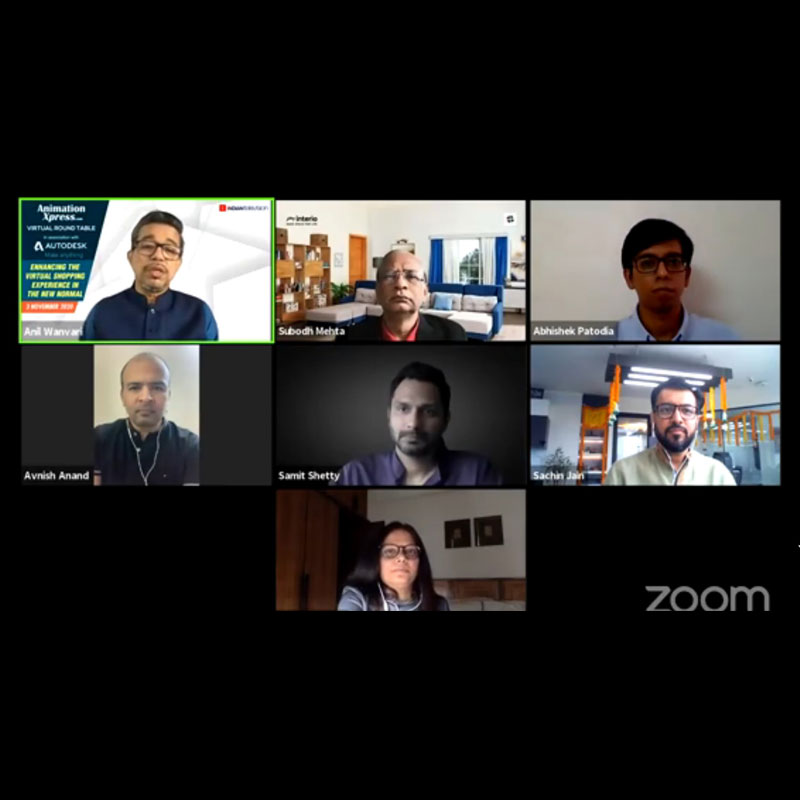
    NEW DELHI: The online sales of jewellery, used cars, and furniture segment witnessed a huge spike in terms of traffic and sales during the lockdown period, representatives from some of the most popular brands claimed in a recent panel discussion on enhancing the virtual shopping experience in the new normal, organised by AnimationXpress.com. They are also hyped about the festive season improving their sales further. 

    Godrej Interio SVP (B2C) Subodh Mehta said that after a slow first quarter, the brand observed an unexpected surge in virtual footfall. “In earlier days, we saw five times the demand for work-from-home furniture. People have started visiting the online stores much more and I am expecting it will only grow in the festive season. There already has been a 20 per cent uptick in sales and I am hoping November will be even better.”

    He added that all retailers are now trying to improve the experience on their online platforms and promotions for Godrej Interio have mostly moved to digital. “We relied on a lot of local-digital content. We have generated a tremendous amount of leads from local geo-targeting.”

    Hometown CMO Medha Tawde also agreed with Mehta and claimed that integrating their shopping channels has helped the company improve its sales. “Categories like work-from-home and storage did pretty well during the lockdown period. We grew 2-3 times in the former category. Additionally, our online ticket size has increased, clocking a 5x increase in online sales.”

    De Beers India MD Sachin Jain, however, noted while there was a “dramatic dip” in diamond sales in the tier-1 markets, they saw a jump in the tier-2 and tier-3 sectors. 

    The speakers attributed this growth to the merging of their virtual and physical shopping experiences. Tools like video calling, virtual store walk-ins, etc have made customer conversions easier. 

    Carwale SVP (used cars) Abhishek Patodia highlighted that most consumers today do their research online, and when they walk into the store, they know exactly what they want. 

    He said, “People want to know everything about a car before they buy it and therefore the video option on our platforms is a big hit. We have witnessed a 50-70 per cent growth in our traffic in the past three months, as compared to the same period last year. Also, as the category requires a lot of involved purchases with several people having a say in the decision, the digital presence augments the shopping experience.”

    Caratlane co-founder and online head Avnish Anand shared a similar view, noting that 90 per cent of the purchases in the jewellery segment still remain assisted and that’s why providing experience through technology helps the sector grow.