Tag: online media

  • Zenith India retains Nestlé’s media business

    Zenith India retains Nestlé’s media business

    Mumbai: Publicis Groupe-owned media agency Zenith India  has retained the media business of Nestlé India, according to the company’s statement.

    The business was won in a highly competitive multi-agency pitch which began in April 2022. The mandate includes the full range of duties i.e., offline media, online media, commerce, SEO and analytics.

    Zenith was the natural choice of partner, given that Nestlé was looking for holistic solutions across the board and powerful personalised communications. The agency has been handling Nestlé’s media planning and buying business, across all segments, for 17 years. It was appointed as the packaged goods company’s agency of record (AoR) back in 2005.

    Zenith India’s CEO Jai Lala said, “We are delighted that Nestlé has once again chosen us as their media partner and it’s a clear endorsement of our strong ROI approach and ability to deliver marketing excellence and innovation. The retention is testament to the rock-solid working relationship we share with Nestlé and indeed we are proud of the industry-leading work we’ve produced for them over the course of many years. Zenith has a deep and inherent understanding of Nestlé’s business needs and the strategic direction of its brands. Our teams were able to demonstrate unique insights, integrated approaches and data-driven decision -making. We look forward to harnessing the best of our capabilities, talent, technology and partnerships and helping Nestlé build even more powerful consumer connections.”

  • Online is second most consumed media after TV in rural India: Report

    Online is second most consumed media after TV in rural India: Report

    Mumbai: There has been an internet revolution in rural India, with online being the most consumed media after television, according to a joint report released by media agency GroupM and insights and consulting firm Kantar on Wednesday.

    With respect to online content consumption, music/audio leads the pack at 69 per cent followed by news at 49 per cent and gaming at 33 per cent. Usage of video/OTT apps is driven by YouTube at 87 per cent (most in Rajasthan, AP/ Telangana, TN, and Bihar), followed by Disney+ Hotstar at 30 per cent (highest usage in UP, TN, Gujarat, Kerala), the report said.

    WhatsApp and Facebook are the most used social media/ messenger platforms at 87 per cent (most in Rajasthan, AP / Telangana, Karnataka) and 66 per cent (most in Odisha, UP, Gujarat and West Bengal) usage respectively, according to the second edition of the Rural COVID Barometer report. 

    The report explores rural India’s concern about the impact of the second wave and how it alters consumer behaviour and purchase patterns. The research was conducted with Kantar’s data and insights network and Dialogue Factory’s rural marketing intelligence in eighteen Indian states, across rural adults (18+ years in age) with representation across gender, NCCS, and age groups.

    Phone Pe is the most used digital payments app with 19 per cent of rural consumers having used these services in the last 6 months, says the report. Usage of Phone Pe is driven by Karnataka at 46 per cent followed by Rajasthan at 38 per cent.

    Growth in the consumer durables and automotive (two-wheeler) sectors is likely to slow down in the next six months. However, the smartphone category is expected to see fast growth in the near future.

    The construction sector is also expected to see a bounce-back with consumers expected to spend on building a house/undertake smaller construction work in the next six months.

    As a result of the pandemic, rural consumption and shopping patterns have witnessed a major shift. With respect to retail channels, 56 per cent of consumers prefer local village shops for purchasing groceries, and 49 per cent for personal hygiene, and 45 per cent for cleaning products. Even big-ticket items like consumer electronics and durables are preferred to be bought at these local shops at 50 per cent and 46 per cent respectively. 

    Rural consumers are saving 25 per cent of their income, the report stated. Southern India (except for Tamil Nadu) is saving more in comparison to other parts of the country. As expected, expenses are higher on personal care, hygiene and cleaning products while spends on indulgence and beauty products have been deprioritised.

    “The pandemic has evolved the rural consumer’s decision-making process. They are watching their spending and prioritising their buying patterns by the need of the hour,” said GroupM Dialogue Factory, head of experiential marketing – APAC, Dalveer Singh. “There is a positive acceptance of the vaccination and the upper- and middle-class rural Indians are being more proactive in financial planning to deal with covid constraints, which make these markets a significant place to introduce investment and savings products. There is a deep sense of uplift on the subject of India’s economic future.”

    While rural India is concerned about the COVID situation in the second wave, most are also positive about economic recovery once the situation normalises. Nearly three in four rural households have received some form of assistance via government schemes, thus providing the much-needed financial cushion to consumers, the report stated.

    “With a highly concerned rural consumer, rural India is planning finances better and inclined towards a savings mindset,” stated Kantar Insights Division, senior executive director, Puneet Avasthi. “We are witnessing a significant rise in digital payments as an important mode of transaction. With the change in consumption priorities in favor of health and hygiene products, FMCG marketers should leverage this trend for planning their innovation pipeline.”

  • Bombay HC seeks government’s response over stay on IT media rules

    Bombay HC seeks government’s response over stay on IT media rules

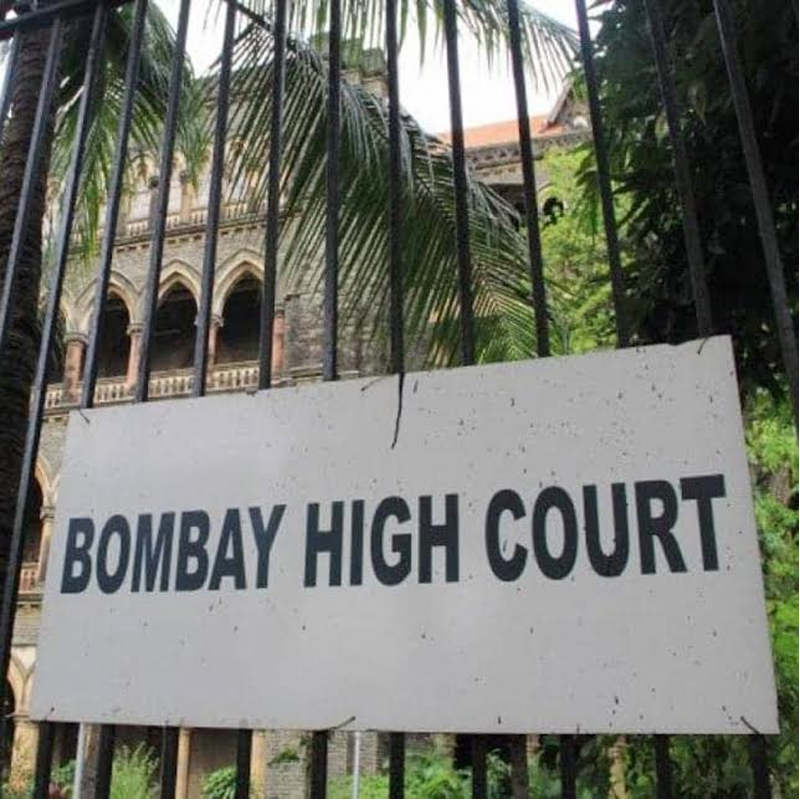
    New Delhi: The Bombay high court has asked the central government to submit a response as to why an interim stay should not be given to the implementation of the Information Technology (IT) Rules, 2021, as demanded by two petitions.

    “File a short affidavit on why interim relief should not be granted,” the HC told the Union government, adjourning the hearing to 13 August.

    The court was hearing two petitions filed by digital news portal `The Leaflet’ and journalist Nikhil Wagle who had challenged the new regulations notified by the government in February this year. According to the petitions, the new rules are “vague”, “draconian”, and bound to have a “chilling effect” on the freedom of press and right to free speech guaranteed by the Constitution.

    The petitions had also contended that the rules “go beyond the parameters set by the Information Technology Act and limits set under Article 19 of the Constitution.”

    It is significant to note that similar petitions opposing the new rules have been filed in high courts across the country. The government has been asked to submit its response by 13 August.

    In a separate case, the government told the Delhi high court on Tuesday, that Twitter was prima facie in compliance with the new IT Rules by appointing a chief compliance officer (CCO), resident grievance officer (RGO) and nodal contact person on permanent basis.

    The Information Technology (Intermediary Guidelines and Digital Ethics Code) Rules, 2021 seek to regulate dissemination and publication of content in cyber space, including social media platforms.

    The rules also recommend a three-tier mechanism for the regulation of all online media. Under the rules, the digital publishers are required to take urgent steps for appointing a grievance officer, if not done, and place all relevant details in the public domain. They also need to constitute self-regulatory bodies through mutual consultation so that the grievances are addressed at the level of publishers or the self-regulating bodies themselves.

  • The Trade Desk Launches in India, appoints Tejinder Gill as General Manager

    New Delhi: Global advertising technology firm, The Trade Desk has launched operations in India, and appointed Tejinder Gill as the company’s India general manager.

    Gill will lead the company’s business and growth strategy in India, helping Indian brands and publishers unleash the full potential of the open internet where Indian consumers are increasingly spending their time.

    Rapid digitization of the media industry has provided a paradigm shift in the way Indians consume content online. In particular, content consumption on the open internet has exploded in the last 18 months. In a statement released on Wednesday, the company said it aims to help India’s digital marketers capture these fast-growing opportunities. “With The Trade Desk’s industry-leading data-driven capabilities, marketers can access a marketplace of premium advertising inventory across a wide range of websites, apps, podcasts and streaming OTT platforms,” it said.

    The omnichannel platform plans to enable marketers to reach relevant audiences across different devices (including computers, mobile devices, tablets and connected TV), and engage with them meaningfully along their entire digital journey.

    “Digital is the fastest-growing advertising segment in India and, as a result, marketers in India are seeking more trust and transparency as they shift more campaign budgets there,” says The Trade Desk, India, general manager, Tejinder Gill. “While Indian consumers are spending 70 percent of their time on the open internet, almost 80 percent of India’s digital ad revenue still goes to the big tech platforms, which sit outside the open internet. The Trade Desk is here to bring the much needed data-driven decision making and transparency to India’s digital advertising ecosystem, offering marketers a credible choice where they can tap into the immense opportunities of the open internet.”

    Dentsu, Media-South Asia, Divya Karani, said, “Digital duopoly has existed for quite a while in India. However, we are now seeing brands increase their spends on other platforms on the open internet. Seeing how programmatic advertising has grown multi-fold in the past few years, The Trade Desk has arrived in India at the right time, when opportunities on the open internet are expected to grow much faster than traditional digital channels.”

    According to Publicis Media Services CEO Tanmay Mohanty, winning in programmatic media is important in the platform world. “Digital marketers are being exposed to the power of data, and they want to embrace it more fully across advertising channels. At Publicis, we invest ahead in training our talent. And so our talent who are certified by The Trade Desk can help marketers drive real-time campaigns with qualified reach and accuracy while transparency is an effort in the same direction,” he said.

  • Time to have rules ensuring no one player dominates media: Smriti Irani

    Time to have rules ensuring no one player dominates media: Smriti Irani

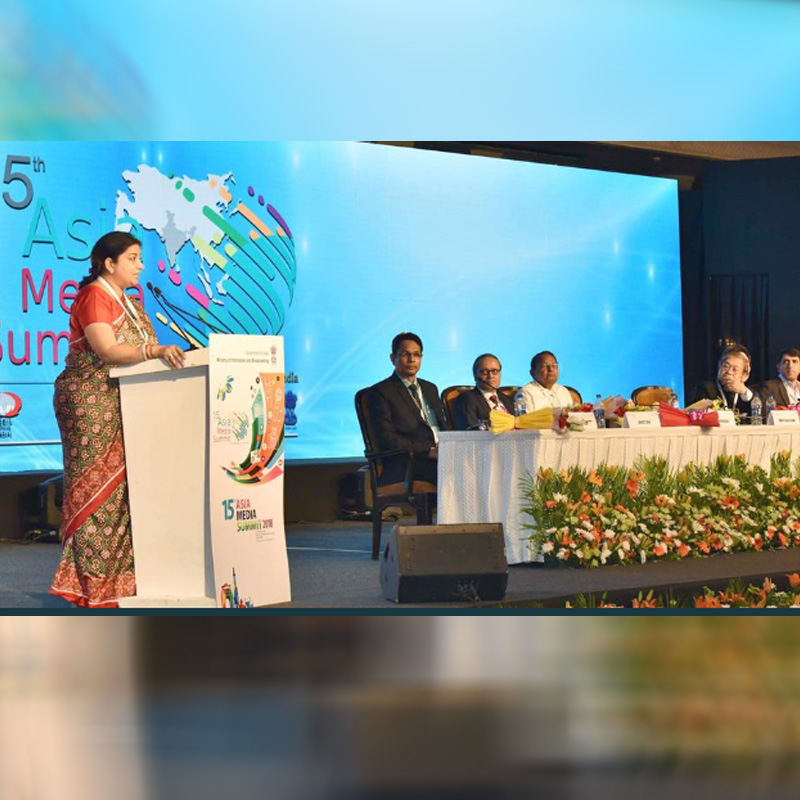
    NEW DELHI: Minister for Information & Broadcasting Smriti Zubin Irani yesterday said that the time has come to put laws, ethics and rules into place that will help in balancing the media industry so that no one dominant player can rule the roost. She, however, did not elaborate what those parameters should or could be.

    Speaking at the 15th Asia Media Summit (AMS) 2018 yesterday, she, however, hinted at her version of what good content could be, throwing oblique references to the growing digital-spurred edgy content in Indian media, including television.

    Pointing out that India will have around 969 million internet users by 2021 and that the media industry looks upon the digital world “not only as a challenge but also as an opportunity”, Irani asked, “How do we attract, retain and develop talent, which frees good content from the trappings of revenue needs and brings about a balance in media institutions?” 

    She hoped that the media event would deliberate on ways to “delve and deliberate on Asia values”, and the need for good stories to be told.

    Dwelling on the need for regulations to ensure level playing field for all, the minister referred to an address made by media baron Vineet Jain, group MD of Times Group, before her at the media conference to drive home a point that present laws may be inadequate to deal with the changing landscape of the Indian media.

    Jain, during his address to the delegates at AMS 2018, had said, “But for Indian media to realise its full potential, regulatory reforms are needed across the board – to make it easier to do business, remove anomalies in the system, and above all, ensure a fair marketplace that benefits the consumer.”

    Carrying forward, Irani said the India media is getting more consumer-centric because of the opportunities (and challenges) that the digital ecosystem is offering stakeholders, apart from the overall evolution of the industry.

    Giving a perspective of the expanding Indian media industry, Irani said India was one of the fastest growing advertising market that is expected to touch $10.59 billion by the end of 2018, while the mobile spend was estimated to grow to $1.55 billion in the current year. “We have a vibrant media industry, which has a direct established impact of Rs 1.35 lakh crore and indirect and induced benefits of Rs 4.5 lakh crore, with close to 4 million people associated with it,” she added.

    The three-day 15th Asia Media Summit is being hosted by the Ministry of Information and Broadcasting jointly with the Indian Institute of Mass Communication (IIMC), and Broadcast Engineering Consultants India Limited (BECIL) in New Delhi. The theme of this year’s summit is ‘Telling Our Stories – Asia and More’, which would encourage regional and bilateral dialogue and cooperation to respond to challenges to the broadcasting sector in the region.

    The minster expressed hope that the event will throw up new ideas so that pathways to strengthen media institutions for a better mankind could be explored.

    Addressing the inaugural session, Minister of Information from Bangladesh Hasanul Haq Inu outlined six complex challenges the world faces today: poverty, gender disparity, terrorism, ICT revolution, climate change and uneven globalisation. Expressing concern at cybercrimes, he stressed upon the need to fight a war against cyber-criminals to keep the media safe and expanding.

    This is the first time that the Asia Media Summit is being held in India. Over 220 foreign delegates representing 39 countries (SAARC, ASEAN, East Asia, Africa, Oceania, Europe, Syria, Uzbekistan, USA, China) and senior officials of the government and members of Indian media industry are participating in the event.

    Also Read:

    MIB moves to regulate online media: various organisations join issue   

    Online media professionals write to Smriti Irani expressing regulation concerns

    TRAI seeks to regulate online streaming platforms

  • GroupM report forecasts global online media time spent to overtake TV in 2018

    GroupM report forecasts global online media time spent to overtake TV in 2018

    MUMBAI: For the first time ever, time spent on online media will overtake linear TV globally in 2018, according to GroupM’s State of Digital report. The report, which researched consumer media consumption and advertising investment trends worldwide, tabulated consumers’ time spent with each media format along with average time spent with media overall.

    GroupM predicts consumers will spend an average of 9.73 hours with media in 2018, up from 9.68 hours in 2017. Online media will have a 38 per cent share of the total engagement; TV will have a share of 37 per cent.

    The increased inclination for online media will support growth of e-commerce, too. GroupM predicts 15 per cent growth to $2.442 trillion in 2018 from cumulative transactions worth $2.105 trillion in 2017.

    In a scenario wherein the digital revolution is gaining more momentum, Google and Facebook continue to be the key growth drivers. While Google search is critical to clients, YouTube is increasingly important for scaled, ‘premium’ video. Facebook’s success is partly due to the delivery of younger audiences via Instagram.

    While examining programmatic (automated) ad investment trends, the report found 44 per cent of online display investment was transacted programmatically in 2017 versus 31 per cent in 2016. This is expected to rise to 47 per cent in 2018.  Programmatic is smaller for online advertisement trends. From 22 per cent in 2017, it is predicted to rise to 24 per cent this year.

    Also Read :

    SonyLIV and Republic World announce a strategic tie-up to expand digital presence

    Viacom18 Motion Pictures forays into digital content

  • Online media professionals write to Smriti Irani expressing regulation concerns

    Online media professionals write to Smriti Irani expressing regulation concerns

    MUMBAI: A group of more than 100 journalists and other professionals related to online media have written to the information and broadcasting minister Smriti Irani to express their concerns over the ministry’s proposal to extend traditional broadcasting rules and restrictions to the internet. The journalists include veterans of the industry such as Raghav Bahl, MK Venu, Madhu Trehan, Nalini Singh, Paranjoy Guha Thakurta, Shivam Vij, Sanjay Pugalia, Aniruddha Bahal and Raman Kirpal, as well as younger generation media entrepreneurs like Dhanya Rajendran (The News Minute), Seema Mustafa (The Citizen), Ritu Kapur (The Quint), Tanmay Bhat (All India Bakchod) and Bharat Nayak (The Logical Indian).

    In their letter, the journalists and media professionals expressed concerns that bringing legacy media structures—such as licensing and content regulation—could have a drastic impact on a medium that is widely credited with making the media and information landscape more open and democratic across the world. “Internet-based media, by its very nature, promotes broader democratic values globally and cannot be dealt with in the way national governments try to regulate or control traditional media,” said MK Venu, founding editor at The Wire, a new-generation, online-only publication. “Internet-based media and global media aggregators like Facebook, Google have changed the content and distribution landscape in ways that national governments cannot easily control. Nor should they try to. It is a free democratic space and must remain as such,” he added.

    Geeta Seshu, a journalist and a media analyst with a keen interest in freedom of expression issues, too called on the government to embrace the change the spirit of freedom brought about by the internet in media and communication sectors. “Today, digital media in India is evolving into a space, which allows for access to information, untrammelled by traditional gate-keeping structures and despite infrastructural limitations such as low broadband speeds or poor internet penetration,” she said. She expressed disappointment at the government’s attempt to ‘regulate’ online media by setting up a committee comprising mostly of government officials. “This committee hardly reflects the complexities of online media, much less represent all its practitioners,” she said. “Its mandate to regulate the dissemination of information smacks of the most alarming attempts to censor a burgeoning medium. It is ironic that one of the terms of this committee is to examine international standards when India is hailed for taking a strong and unequivocal stand on net neutrality,” she added.

    Raghav Bahl, founder of Network18 and Quintillion Media, urged the government to look at the approach taken by other democracies in dealing with issues of online content. “Any hasty action by the government will likely result in overreach,” he said. “Therefore, we believe that the starting point for the government should be to study the global best practices for online content regulation. Many advanced democracies have already debated this and come up with good frameworks that ensure free speech and transparent regulation. No need to reinvent the wheel,” he added. 

    Journalist Madhu Trehan, the co-founder of NewsLaundry, one of the earliest digital news ventures, warned about the far-reaching impact that interfering with the citizens’ freedom of expression, online or offline, can have. “Regulating the internet is a tricky thing. Its impact is enormous and far reaching,” said Trehan. “The proposal to regulate (and its need at all) must be a consultative process in the most open and transparent way.” Seema Mustafa, founder editor of The Citizen, a news and current affairs website, warned that chances of ‘online content regulation’ being used for suppression of opinions critical of the government remain very high.
    The journalists organised themselves using social media, particularly WhatsApp, spontaneously after news broke that the government had set up a committee to come up with a regulatory structure for online media “on the lines applicable to print and electronic media”. Over 100 journalists and professionals, including those from dozens of online organisations, signed the petition. A website, https://onlinefreedomfoundation.org, has also been set up to allow ordinary citizens to oppose the move to regulate online content.
     

  • MIB moves to regulate online media: various organisations join issue

    MIB moves to regulate online media: various organisations join issue

    NEW DELHI: Even as a debate on the need to regulate online news media gains momentum, various organisations have moved the Ministry of Information and Broadcasting (MIB) hoping to be made a part of the committee that will look into various aspects of proposed regulations—a panel that surprisingly doesn’t include, at present, any representation from the sector that is being sought to be brought under checks.

    According to media industry sources, Broadband India Forum (BIF), chambers of commerce FICCI and Confederation of Indian Industries (CII), Internet and Mobile Association of India and Hong Kong-based Asian media advocacy group CASBAA are amongst some of the organisations that have sought representation on the government panel to add value to the policy-making process. The MIB secretary is the convener of the nine-member panel at present.

    In an order issued in the first week of April this year, MIB had announced constitution of a committee for framing regulations for online media, news portals and online content, which would look not only look into the areas mentioned but also at digital broadcasting, entertainment and other media aggregators. The government justification has been that considering the print and electronic medium were governed by various government-mandated rules and also self-regulatory policies, online media (both news and entertainment) ought also to be brought under a similar regulatory framework.

    Though it’s not spelt out in so many words, industry observers feel that despite broadcast carriage regulator TRAI keeping away from it for the time being, video OTT and social media platforms could be brought under the proposed regulatory framework.

    The panel, despite some representation from overall media industry (Indian Broadcasting Foundation, News Broadcasters Association of India and Press Council of India), looks dominated by the government at the moment with members including secretaries from the Ministry of Electronics & IT, Ministry of Home Affairs and the Ministry of Law and Ministry of Commerce, apart from the CEO of another government organisation called MyGov.com. What raises some hope is that the convener can add representatives from any other organisation as deemed fit.

    Meanwhile, the Press Trust of India on Monday reported that the Congress attacked the Modi government over its proposal to install a chip in television set-top boxes to ascertain viewership data, dubbing the move a serious breach of privacy and the “next stage of surveillance.”

    Congress communications in-charge Randeep Surjewala alleged that I&B minister Smriti Irani wanted to now know about shows people watched within the four walls of their bedrooms. In a Twitter post, Surjewala referred to the Modi government as “surveillance sarkar” (surveillance government), raising questions over the right to privacy.

    “In a serious breach of privacy, Smriti Iraniji wants to know what show you watch on your TV, within the four walls of your bedroom, without your permission! Why? ‘Ab ki baar Surveillance sarkar’. The right to privacy broken into pieces,” PTI quoted the Surjewala tweets as stating.

    Within its lengthy views on the DTH sector, the MIB had proposed installing a chip in new set-top boxes that would provide data about channels watched and the duration of the viewing. A senior official of the ministry, according to the PTI report, said that the move was aimed at getting “more authentic” viewership figures for every channel that would “help advertisers and the DAVP (government’s media buying agency) to spend their advertising expenditure wisely.”

    ALSO READ:

    MIB forms committee to draft online media norms

    MIB proposes installation of chip in DTH boxes: Report

  • MIB forms committee to draft online media norms

    MIB forms committee to draft online media norms

    MUMBAI: After retracting the order which called for guidelines to punish journalists for fake news, the government has upped the ante to regulate online media. Smriti Irani-led Ministry of Information and Broadcasting (MIB) has constituted a committee of 10 members to discuss and recommend a regulatory framework for online media.

    The order which was released on 4 April named the secretaries of the ministries of Home, Electronics and Information Technology, and the departments of Legal Affairs, and Industrial Policy and Promotion as part of the committee. Along with that, it will have representatives from the Press Council of India, News Broadcasters Association and the Indian Broadcasters Federation.

    It has been reported earlier also that government was in talks to come up with regulations  for online media. Speaking at an event, Irani said that the ministry was planning to bring about regulations, especially for online news, opinion and entertainment content.

    In the terms of references, three reasons have been cited. The first one is to “delineate the sphere of online information dissemination which needs to be brought under regulation, on the lines applicable for print and electronic media”.

    The second reason is to “recommend appropriate policy formulation for online media/news portal and online content platforms, including digital broadcasting which encompasses entertainment/infotainment and news/media aggregators, keeping in mind the extant FDI norms, programme and advertising code for TV channels, norms circulated by PCI, code of ethics framed by NBA and norms prescribed by IBF”.

    Finally the order said that the committee would analyse the international scenario on such existing regulatory mechanism to incorporate the best practices.

    Commenting on the update, news broadcaster NDTV said, “The youngest and most democratic of all media – online media – must be allowed self-regulation: the chance to develop and implement its own guidelines for responsible and fair journalism. The IT Act already applies to online content. The government move that seeks to decide new rules for online media excludes any representatives from online news publishers and reads as exclusionary and coercive. Online publishers are perfectly capable of forming a credible organization, pairing their own leaders with eminent and independent voices, similar to those that represent broadcasters and print media. Allow a real discussion, a genuine debate. That is the fundamental operating principle of the internet.”

    When a newspaper or a television channel runs news, it has to adhere to the law. There are self-regulatory bodies to set guidelines for traditional media. In the online ecosystem, however, the legislation in terms of news or video content is not very clear.

    Since a while, governments all over the globe have been attempting to prevent “fake news”. In India, the move has been criticised by many media professionals and organisations as a step to curb the freedom of media. The authority is looking to restrict news content spread via YouTube, Facebook and WhatsApp as the order refers to “digital broadcasting” too.

    Also Read :

    Smriti Irani says govt mulling legislation for online content

    Comment: MIB’s botched whip on fake news akin to testing waters

  • Bangladesh braces up to keep tabs on online media

    NEW DELHI: All online media in Bangladesh will have to register with a National Broadcasting Commission to be formed under the National Broadcast Act before launching operations, under a new decision of the country’s cabinet.

    The format of the Commission is yet to be drafted, but National Inline Mass Media Guideline has been approved.

    Under the draft drawn up recently by the prime minister Sheikh Hasina-led Cabinet, newspapers and TV channels registered under the 1993 Press and Publications Act will not require approval from the Commission for their online outlets, but will have to notify the regulator before the launch of their services.

    Action will be taken suo moto by the Broadcasting Commission against online broadcasters, if it appears that they have violated the code of conduct and discipline. The Commission is also empowered to take punitive actions against an online broadcaster if any content of broadcast poses a threat to security, territorial integrity, peace, public order and unity of the country.

    The Commission is further authorized to take actions against the broadcasters for disseminating vulgar, false and malicious stuff and contents against the spirit of the War of Liberation and distorts national history and heritage.

    Section 57 of the Information and Communication Technology Act, 2006 (ICT Act) already criminalises the offences which the Broadcasting Commission seeks to penalise.