KOLKATA: Amid concerns over misleading advertisements on online gaming and fantasy sports, the ministry of information and broadcasting (MIB) has issued advisory to TV channels to follow guidelines issued by the Advertising Standards Council of India (ASCI) on 24 November.
“All broadcasters are advised that the guidelines issued by ASCI are complied with and advertisements broadcast on television adhere to the guidelines of the ASCI. It may also be ensured that advertisements do not promote any activity which is prohibited by statute or law,” MIB stated.
A large number of commercials on online gaming, fantasy sports etc have been appearing on television, MIB noted in the advisory. But those ads appear to be misleading, do not correctly convey to the consumers the financial and other risks associated thereof.
Hence, MIB, along with the ministry of consumer affairs and the ministry of electronics and information technology, convened a stakeholders consultative meeting on 11 November with ASCI, News Broadcasters Association, Indian Broadcasting Foundation, All India Gaming Federation, Federation of Indian Fantasy Sports and the Online Rummy Federation.
After discussions, it was agreed that ASCI would issue appropriate guidelines for the benefit of the advertisers and broadcasters to ensure that the ads are transparent and protect consumers.
According to the recent ASCI guidelines issued on the same, no gaming advertisement may depict any person under the age of 18 years engaged in playing an online game for real money winnings, or suggest that such persons can play these games.
NEW DELHI: Acting on a PIL against the ill-effects of online gaming filed by an advocate Mohammed Rizvi, the Madras High Court has issued notices to Cricket team captain, Virat Kohli, President of Board of Control for Cricket in India (BCCI), Saurav Ganguly and the Central and Tamil Nadu governments.
The TN government, represented by AAG Sricharan Rangarajan, has asked for 10-days time to file a response. The case has thus been adjourned to 19 November.
The court also voiced concern that lives have been lost due to online games and the lack of law governing such issues in Tamil Nadu.
The PIL also names Telecom Regulatory Authority of India (TRAI) and celebrity endorsers such as actors Prakash Raj, Tamannah Bhatia, Rana Daggubati and Sudeep as respondents.
In his petition, Razvi had risen serious concerns about gaming addiction and social stigma. He cited instances of children who have died by suicide on account of playing online games similar to the Blue What challenge and after losing in PUBG to state exposure to online gaming introduces the kids to a world of crime and negative thinking,
Other instances where people have died because they have lost money while playing Online Rummy and online gambling were also highlighted by him.
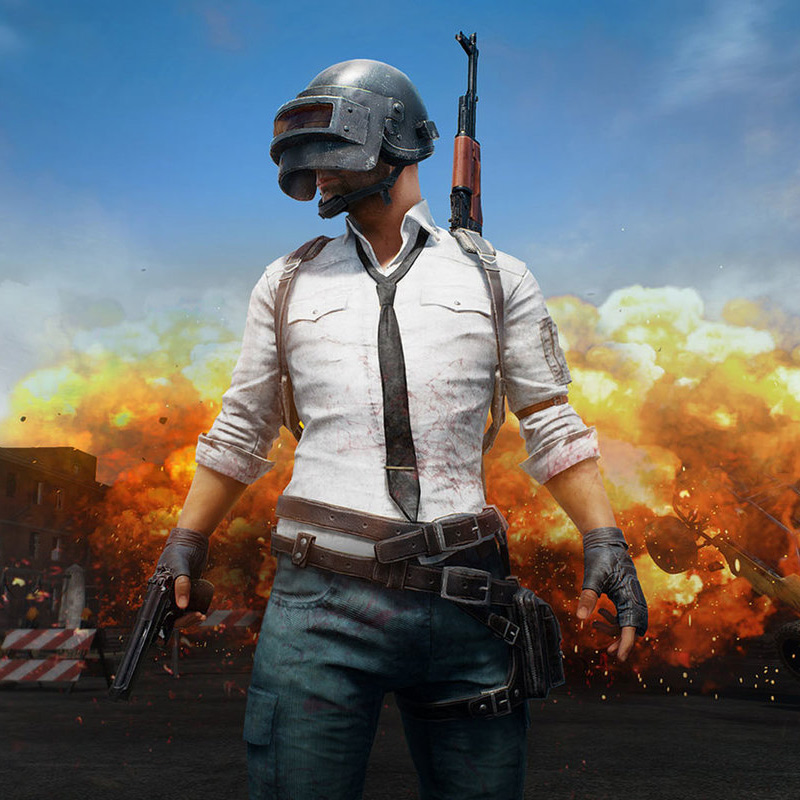
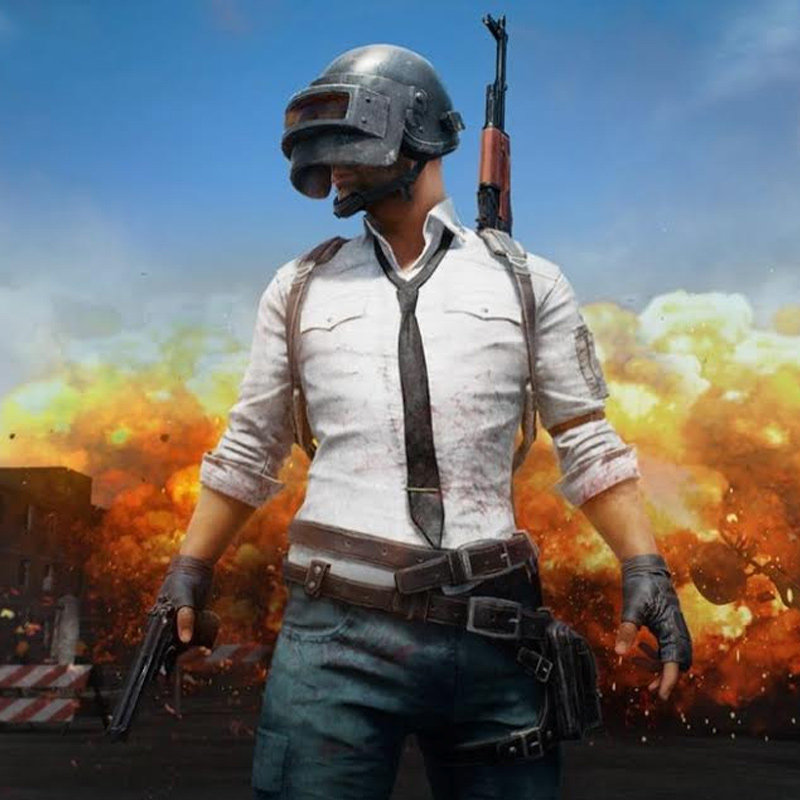
KOLKATA: Despite the ban on PUBG Mobile in India, fans were desperately hoping that it might eventually make a comeback. Those hopes were sadly dashed when Tencent Games, the publisher, announced its decision to shut down all services and access for users in India on 30 October.
“To comply with the interim order of the ministry of electronics and information technology dated 2 September 2020, Tencent Games will terminate all service and access for users in India to PUBG MOBILE Nordic Map: Livik and PUBG MOBILE Lite (together, “PUBG Mobile”) on 30 October 2020. The rights to publish PUBG MOBILE in India will be returned to the owner of the PUBG intellectual property,” the company said in a statement posted on its official Facebook page.
Back in September, the Indian government had banned PUBG Mobile, along with 117 other Chinese apps, citing security concerns. India was one of the largest markets for PUBG Mobile and the game had generated close to $28 million since July 2019 through in-app purchases alone, a report from Sensor Tower stated.
“Protecting user data has always been a top priority and we have always complied with applicable data protection laws and regulations in India. All users’ gameplay information is processed in a transparent manner as disclosed in our privacy policy,” the statement added.
KOLKATA: The online gaming ecosystem is evolving rapidly in India. While many aspirant game developers are trying to make their mark on the industry, there is a gap when it comes to conceptualizing a game on the drawing board and selling it in the market. CapeTitans Games is trying to bridge that schism.
According to co-founder and CEO Debasis Kayal, CapeTitans Games is not just another game publishing platform but an incubation centre for talented game designers, developers and indie-game companies. Speaking at GEMS 2020, Kayal said that their aim is to mentor and help thinkers grow.
“We need to create an ecosystem where people can showcase their products, they can concentrate on the development part. We are here for strategic partnership, promoting, funding, giving them insights. Game development requires so many techniques, talents, artwork, so does marketing and promotion,” he stated.
The company touts itself as a launchpad for those who don’t just aim to make it to the store, but want to make revenue from strategic promotion. It so often happens that talented indie game developers with brilliant vision, creativity and skills have no choice but to work with limited resources. This is where CapeTitans steps in, and those who team up with them get the support they need – right from the innovation stage, to product development, and all the way to game’s roll out and marketing.
Kayal also elaborated on his philosophy of the ID3R model – a template for the gaming industry to emulate. He explained that 'I' stands for an idea, 'D' for develop and design, 'R' for release, revenue and relax. Once someone develops a new game, they do not need to worry about sales, promotion, or even how to make money for the next game, he
“Our real USP lies in the fact that we don’t just invest in promising games, our approach is human-centric. We want to partner with real talents who can prove themselves given adequate support and hand-holding,” said Kayal.
And it’s not just professional game developers who benefit, but students too. CapeTitans has partnered with Backstage Pass Institute of Gaming and Technology, and Kayal described it as their “solid knowledge foundation.” Founded in 2010, Backstage Pass is among the pioneers of gaming education in India, with a Forbes article saying it “provides international standards of gaming education for game enthusiasts of all socio-economic backgrounds.”
Tags: CapeTitans Games, Game Developer, Online Gaming, Game Publishing platform
KOLKATA: With a spurt in consumption during the lockdown, gaming is projected to only grow further. Although the gamers are majorly young and male till now, the users are gradually emerging across demographics.
While a story of the rapid surge in online gaming is playing out, there are certain areas which need to be looked at more carefully. Google Play India business development manager Sharan Tulsiani shared insights on the ecosystem to fill the gaps in understanding.
Who are the gamers? How they discover content?
It is a cliché but the rapid expansion in smartphone adaptation, mobile broadband has definitely led the industry to maturation. At the same time, 70 per cent of users with devices with more than two gb ram, sharp fall in data cost, higher usage of UPI payment methods have also played a major role, Tulsani elaborated.
Citing a survey conducted by Google, he added that 62 per cent of Indian gamers are of 18-25 years age group, 64 per cent are male, 65 per cent are single and 45 per cent are students. The demographic ratio is almost similar for the game buyers. 18-24 years age group accounts for 67 per cent and males account for 72 per cent of buyers.
For the discovery of new games, Tulsiani stated that the play store has emerged as the most important source for users, YouTube social media networks being other important channels. The users go to the play store for ratings, reviews and access videos on YouTube to understand graphics. However, Indians prefer to watch local influencer videos rather than global ones. Word of mouth is also a very strong source as Indian games are far younger compared to other parts of the world and hence more impressionable.
“Consumers are hungry for quality content. They also look at gaming as aspirational recreation. Thus when it comes to the functional reason behind gaming, the storyline, game design, graphics are super important for selection,” he added.
Moreover, building social experiences and community management is critical to retaining users as well. He said that social experience needs to be part of core UX. Along with plain multiplayer experience, leaderboards and asynchronous multiplayer allow interaction too. He also added that audio and video chat while playing are very popular in India.
Developers also need to take note of the barriers to payments. 63 per cent payment related issues are caused by lack of awareness, concerns over personal information sharing. As a solution to this, Tulsiani suggested that simple measures like a visual guide for users on how to make payments. He further added that simple in-game or social media banners go help in closing the awareness gap.
However, the awareness gap is not the only reason to prevent gamers from paying for games. 57 per cent of users lack value perception, which stood out as another reason. Some of them are worried about spending more money than the planned budget, many others want to want for a discount or sale. More significantly few gamers feel it is not worthy to spend money on.
According to Tulsiani, lowering the price point is not sufficient enough to convert them as paid users. As Indian consumers are value-sensitive, creating clear value for in-game items and the economy is a necessity. In addition to that, the primary aim should be converting “never spenders”.
KOLKATA: A few years ago, online gaming was regarded as a mere recreational activity in India. With the digital ecosystem reaching a new pinnacle, the gaming industry has observed rapid expansion in terms of users as well as investment. To keep users hooked and grow the existing base, the industry is shifting its focus to quality user experience. Alongside that, the stakeholders are increasing investment in security too.
In a panel discussion at GEMS 2020, ‘Building a robust backend and infrastructure network’, moderated by indiantelevision.com founder, CEO and editor-in-chief Anil Wanvari, industry experts weighed in on factors that should be considered for user engagement and platform security.
Name of the game is user experience
With India being one of the top five mobile gaming markets in the world, Indian players are acquainted with buttery-smooth gameplay and immersive user interface, courtesy global giants like Tencent, Activision etc. If an app is in any way inferior to this golden standard, the consumers would reject it, said GOQII founder and CEO Vishal Gondal. Loco VP engineering Viral Mehta added that keeping users engaged outside of the core game should be of top priority.
Tata Communications media and entertainment services sales BD head Anand Pimprikar underscored that equal importance be accorded to pre-game and end-game experience. To this end, the use of multi-CDN and the good peering relation of delivery networks can benefit gaming platforms. Moreover, since bandwidth issue has always been a stumbling block in the Indian market, platforms should actively monitor the network to track performance and direct traffic accordingly, he said.
“Serving things through CDN helps a lot and I think a major part is that you have to write some really good fall back mechanisms. Let’s say your user has a really good 4G network and he is travelling and keeps going from 2G to 3G to 4G, you need to have a really good fallback on your backend and client both. And you render less information on his screen when he is on a lower network to make sure the critical part is always there to give him the experience of playing, ” POCKET52 co-founder and chief technology officer Satyam Verma elaborated.
Enhancing security: A work in progress
When there are more fish in the sea, the sharks gather to feast. DDoS attacks are par for the course, but attackers are becoming more and more sophisticated, said Verma. According to him, they read patterns to discover vulnerabilities; in fact, attackers are able to identify and exploit threats even before platforms flag them.
“Hence, you are the best judge for yourself to decide what is healthy traffic. You can identify these are my healthy URLs, healthy traffic, the patterns of traffic. If something is crossing that, it goes into the bad cluster, then we can put some restrictions,” Verma advised.
GAMES24X7 chief technology officer Sandeep Agarwal said there has been not a day without DDoS attack. Agarwal said that his team protects the platform at all levels using advanced software tools. Hosting an open source software on the cloud service provider has greatly helped the company. Overall, the security situation is steadily improving, Agarwal assured.
The strength of a program’s security depends on the ignorance of the user. But pirates are smart, enterprising and persistent. They cannot be eliminated, but that doesn’t mean developers are about to throw up their hands in despair.
“We keep analysing what sort of threat and attacks could come our way and the infrastructure we need to put in place in order to safeguard ourselves. We have third party services keeping those threats away. We have a team that keeps analysing those threats. It’s a continuous development,” Winzo lead backend developer Rahul Sharma said.
‘Social media and security risks go hand-in-hand’
The industry is more concerned about attackers resorting to social media networks to orchestrate security breach, GOQII’s Gondal said. Using social media, attackers can hack user credentials, compromise computers and smartphones with malware, and use phishing tactics to steal credit card, banking and other sensitive information.
Moreover, fake apps are mushrooming as well. Already, over 500 copycat Fauji apps have popped up on the Android and Apple app stores.
“We are massively struggling to get that down. These platforms don’t take any of these requests seriously. Also, there are several accounts on Instagram, Facebook, Twitter that sell you fake ids. At one end, while there is the whole server-side security, the bigger security risk is on the social network side where people are getting fooled. Frauds are happening in real money gaming also through passwords, OTPs,” he added.
The need for cybersecurity in gaming
Online gaming has a unique kind of duality when it comes to cybersecurity. A gamer is a software user just like any other; he or she is subject to the same security risks and threats as any other user. The same security principles are just as effective and important. However, each threat also involves a unique twist, adding a complication that isn’t seen in any other field.
As security threats pose a grave challenge for all parties involved, Supercric co-founder and CEO Arvind Sivdas finds that it is better to formulate a security plan while development is in the nascent stages.
Often, gaming companies tend to overlook security aspects at the initial juncture due to funding concerns, but following the Fortnite fiasco in 2018, they should know better. Even if they cannot fix the threats at that stage, conversations such as this panel at GEMS today may direct them in the proper direction.
“When you understand a pattern of threat, attackers will come up with a new pattern. You can’t overdesign security,” Pimprikar added.
Today, attackers have more options to compromise a player’s security at their disposal than ever before. By knowing which aspects of security are the same and which are different, game companies and their customers can protect themselves, and stay safe in a way of life that’s “just for fun” while avoiding potential for real loss.
MUMBAI: Gameloft Distribution Solutions, leader in the mobile entertainment gaming market, has been chosen by ZEE5, to power the games on to its platform as a part of its strategy to bring wholesome entertainment under one roof.
Under the partnership, high-quality snackable hyper-casual online games will be curated to deeply engage audience by adding a dose of thrill and competitiveness for the users.
The new PLAY5 games leverages Gameloft’s twenty years of expertise in developing gaming services for more than 300 carriers in the world. Thanks to Gameloft’s offer, entertainment service providers can launch their fully customizable branded game services with monetization and full transparency on their analytics.
Rajneel Kumar, business head, expansion projects & head of products, ZEE5 India, said: “We want to be the country’s entertainment super-app and our partnership with Gameloft is yet another step in that direction. We are constantly evolving as a platform and now boast multiple offerings for a diverse set of audiences and taste clusters – from bespoke content library across originals, movies, catch-up shows to kids content and music. With PLAY5, it is yet another use case that we have added by staying true to our philosophy of being a super-app. We are committed to making ZEE5 reach out to consumers at every stage of their life and serve uninterrupted entertainment via various offerings anytime, anywhere.”
“We are committed to the true potential of gaming in India and therefore had been continuously working towards offering content in the manner which offers ease of consumption for the masses and our online games enables mass casual users to have a shot of adrenalin to pump up their energy levels. We shall continue to strive towards offering gaming in a manner which suits the larger section as they evolve. We are pretty convinced that with a partnership with Zee5, a leading entertainment player on digital space, we shall have rapid adaptation and transmission of gaming into the world of uninitiated” explained Florent Vallauri, managing director, south east Asia pacific (SEAP), at Gameloft.
“Gameloft’s longstanding expertise in the mobile ecosystem allows us to create top performing platforms and services, adapted to the needs of each of our partners.”
MUMBAI: The Indian Media and Entertainment (M&E) sector reached RS 1.82 trillion (US$25.7 billion) in 2019, a growth of 9 per cent over 2018 states the FICCI EY report ‘The era of consumer A.R.T. – Acquisition Retention and Transaction,’ launched today. With its current trajectory, the M&E sector in India is expected to cross INR2.4 trillion (US$34 billion) by 2022, at a CAGR of 10 per cent*.
While television and print retained their positions as the two largest segments, digital media overtook filmed entertainment in 2019 to become the third largest segment of the M&E sector. Digital subscription revenues more than doubled from 2018 levels and digital advertising revenues grew to command 24 per cent of total advertising spend.
The sector continues to grow at a rate faster than the GDP, driven primarily by growth in subscription-based business models and India’s attractiveness as a content production and post production destination.
The rapid proliferation of mobile access is enabling on-demand, anytime-anywhere content consumption nationwide. With a population of 1.3 billion, a tele-density approaching 89% of households, 688 million internet subscribers and nearly 400 million smartphone users, India’s telecom industry is poised to become the primary platform for content distribution and consumption. India ranks as one of the fastest-growing app markets globally, where entertainment apps are driving significant consumer engagement.
Online gaming retained its position as the fastest growing segment on the back of transaction-based games mainly fantasy sports, increased in-app purchases and a 31 per cent growth in the number of online gamers to reach around 365 million.
Uday Shankar, Senior Vice President FICCI, said, “Riding the wave of exponential progress made towards digital accessibility and adoption, the M&E industry has been a forerunner of a dynamic and aspirational India. New products and business models are being imagined to capitalize on the rise in media consumption. Global players are recognizing the need to build India-centric offerings. The coming years are likely to usher in greater innovation in content formats, means of dissemination, and business models.”
Ashish Pherwani, Partner and Media & Entertainment Leader, EY India, stated, “The M&E sector witnessed a surge in content consumption as digital infrastructure, quantum of content produced and per-capita income increased in 2019. Driven by the ability to create direct-to-customer relationships, the sector firmly pivoted towards a B2C operating model, changing the way it measured itself. As entertainment and information options grew and choice increased the era of consumer Acquisition, Retention and Transaction (ART) redefined the media value chain leading to the emergence of many new trends and strategies across content, distribution, consumption and monetization.”
“The coronavirus outbreak will have a significant adverse impact on the sector, the situation is still evolving both in India and many parts of the world, the scale of the impact cannot be estimated immediately,” he added.
Key findings
Television:
The TV industry grew from Rs 740 billion to INR 788 billion in 2019, a growth of 6.5 per cent. TV advertising grew 5 per cent to Rs 320 billion while subscription grew 7 per cent to Rs 468 billion. Regional channels benefited from the New Tariff Order as their consumption increased by over 20% in certain cases. General entertainment and movie channels led with 74 per cent of viewership. On the back of several key announcements by the central and state governments such as Article 370, the Citizenship Amendment Act, and a general election, the news genre witnessed a growth to almost 9 per cent of total viewership, up from 7.3 per cent in 2018. In sports cricket emerged as the big winner in 2019 as it accounted for over 80 per cent of the sports viewership, up from 70 per cent last year, due to the ICC World Cup.
Key insights – Television will remain the largest earner of advertising revenues even in 2025, approaching Rs570 billion. Viewership of regional language channels will continue to grow and reach 55 per cent of total viewership in India as their content quality improves further. Content viewed on smart TV sets will begin to reflect that consumed on mobile phones, providing a window for user generated content companies and other non-broadcasters to serve content on the connected television screen.
Print:
Despite a 3 per cent revenue degrowth at Rs 296 billion, print continued to retain the second largest share of the Indian M&E sector. Circulation revenues increased by 2 per cent to Rs 90 billion as newspaper companies tactically increased prices in certain markets. Advertising revenues fell 5 per cent to INR 206 billion in 2019 as AdEX volumes fell by 8 per cent. Margins improved as newsprint cost measures were implemented and companies benefited from the reduction of newsprint prices.
Key insights – 2019 witnessed a significant growth in digital news consumers over 2018 when 300 million Indians consumed news online. Most large print companies had a defined digital business, with two companies crossing Rs 1 billion in digital revenues. Digital subscription, though nascent, has increased as several publications have put digital products behind a paywall.
·Digital media:
In 2019, digital media grew 31 per cent to reach INR 221 billion and is expected to grow at 23 per cent CAGR to reach Rs 414 billion by 2022. Digital advertising grew 24 per cent to Rs 192 billion driven by increased consumption of content on digital platforms and marketeers’ preference to measure performance. SME and long tail advertisers increased their spends on digital media as well. Pay digital subscribers crossed 10 million for the first time as sports and other premium content were put behind a paywall. Consequently, subscription revenue grew 106 per cent to Rs 29 billion. Digital consumption grew across platforms where video viewers increased by 16 pe cent, audio streamers by 33% and news consumers by 22 per cent.
Key insights: By 2020, OTT subscription market will approximate 10 per cent of the total TV subscription market (without, however, considering data charges). We estimate over 40 million connected TVs by 2025, which will provide a huge opportunity for content creators to reach family consumers. Better bandwidth will drive large screen consumption. By 2025, 750 million smart phone screens will also increase the demand for regional, UGC and short content, creating a short video ecosystem that can create significant employment. The battle for content discovery will intensity and move to the unified interface.
·Films:
The Indian film segment grew 10 per cent in 2019 to reach INR 191 billion driven by the growth in domestic theatrical revenues and both rates and volume of digital/ OTT rights sold. Domestic film revenues crossed INR 115 billion with Gross Box Office collections for Hindi films at Rs 49.5 billion – the highest ever for Hindi theatricals. Overseas theatricals revenues fell 10 per cenr to Rs 27 billion despite more films being released abroad primarily as films with superstars didn’t perform as well in 2019. 108 Hollywood films were released in 2019 as compared to 98 in 2018. The gross box office collections of Hollywood films in India (inclusive of all their Indian language dubbed versions) grew 33 per cent to reach Rs 16 billion. As single screens continued to reduce, the total screen count decreased by 74 to 9,527.
Key Insights: Digital rights continued to grow in 2019 with an increase in revenues from Rs 13.5 billion in 2018 to Rs 19 billion in 2019. Digital release windows shortened with some movies releasing on OTT platforms even before their release on television. In-cinema advertising grew marginally to Rs 7.7 billion in 2019 as multiplexes and advertising aggregators started signing long-term deals with brands. Seventeen hindi films entered the coveted Rs 100 crore club in 2019, which is the highest ever. Interestingly, six movies made it to the rs 200 crore club in 2019, as opposed to three in 2018. The future will be driven by immersive content (technology and VFX rich) experiences to drive theatrical footfalls and some genres of films could migrate to home viewership only. We can expect to see creation of a segmented Hindi-mass product for the heartland at low ticket prices.
Mergers and Acquisitions in M&E
While the number of deals increased to 64 in 2019 from 41 in 2018, the overall deal value was
much lower at Rs 101 billion as compared to Rs 192 billion in the previous year. This was largely due to the absence of big-ticket deals with only four deals crossing the US$100 million threshold. The highest amount of investment was made in television, followed by digital, radio and gaming. Deal activity was spearheaded by new media such as digital and gaming, which witnessed 54 of the 64 deals in 2019, however, in terms of deal value, the share of traditional media segments such as TV, radio and film exhibition was 63 per cent.
MUMBAI: The media and entertainment industry is now on the road to recovery after facing headwinds due to major regulatory interventions such as demonetisation, GST and RERA, resulting in lower consumption and ad spend during FY18.
The KPMG in India’s – Media and Entertainment report 2018, launched on 5 September 2018, stated that strong and consistent economic growth fueled by a rise in consumption and growth in digitisation provided support, enabling the Indian media and entertainment (M&E) industry to grow at 11 per cent over FY17 to reach Rs 1,436 billion in FY18.
The TV industry in India was estimated at Rs 652 billion in FY18, a growth of 9.5 per cent from FY17, having grown at a CAGR of 10.7 per cent between FY14-18. The market size consisted of advertisement revenues of Rs 224 billion and subscription revenues of Rs 428 billion in FY18.
Television advertising grew at a rate of 10.3 per cent in FY18, aided by the strong performance of Indian Premier League (IPL), free-to-air (FTA) channels and consumer promotions by FMCG companies in the festive season. FMCG, telecom and auto sectors contributed more than two-thirds of the spends on television advertising in India. However, the first half of FY18 was majorly impacted by the implementation of GST and RERA as FMCG and real estate companies kept their ad spends on hold. Large broadcasters with a client base of national advertisers were less impacted than the ones with a predominantly local advertiser base.
The long term outlook for the M&E sector remains strong on the back of a buoyant Indian economy, robust domestic demand, particularly in rural and regional markets and growing digital access and consumption. This year, telecom-media-technology (TMT) convergence took centre stage. This has the potential to significantly change how media is created, distributed and consumed and media companies need to take a relook at their strategies and business models to successfully operate and thrive in the new paradigm.
KPMG in India partner and head – media and entertainment Girish Menon said, “The India media and entertainment industry was affected by lower ad spend in FY18 due to goods and services tax (GST) rollout and the lingering effects of demonetisation. However, this effect has been temporary and the industry is seeing positive long term outlook on the back of rapid growth in digital access and consumption, coupled with strong domestic demand especially from the rural and regional markets. The sector grew by 10.9 per cent in FY18 to reach Rs 1,436 billion and it is expected to grow at a CAGR of 13.1 per cent over the next five years to reach Rs 2,660.2 billion by FY23. Growing presence of telecom and technology players in media distribution has led to convergence of business models across TMT and media companies will have to evolve to successfully operate in the new paradigm.”
According to the report, digital advertisement revenues have been growing rapidly in India, and the trend continued in FY18 with a growth of 35 per cent to reach Rs 116.3 billion. Key growth drivers were developments in digital infrastructure; increased inclusion of and adoption by regional, non-urban users; increase in the penetration of mobile phones; and increase in maturity in the digital ecosystem driven by public and private investments.
KPMG in India head – technology media and telecom Mritunjay Kapur said, “Digital technology, coupled with radical shifts in consumption patterns have undeniably resulted in blurring of boundaries that define the TMT sectors. TMT convergence is now a reality and will likely cause significant disruptions across the value chain. Media organisations would need to re-evaluate their existing strategies and operating models to leverage the emerging opportunities and sustain against new evolving challenges.”
Mobile gaming in India has seen a tremendous uptick. From a meagre contribution of 18 per cent in 2012 (the smallest segment), mobile gaming comprised 46 per cent of the global gaming revenue in 2017 and this number is set to reach 60 per cent by 2021. Mobile gaming already leads from the front in India with nearly 89 per cent of all gaming revenue in India generated by mobile games in 2017. The higher than expected growth in online gaming over the past 18 months has primarily been on account of the mobile gaming segment, which has benefitted from the fall in 3G and 4G data costs. “On the other hand, Esport is a very niche market and while it is growing, I’m not sure that it is going to become a very sizable number. The bulk of the gaming revenue is going to come from the online gaming business,” Menon added.
MUMBAI: Indian online sports gaming platform Dream11 has announced cricketer Mahendra Singh Dhoni as its new brand ambassador. The former Indian captain will be the new face of Dream11’s multi-channel marketing campaigns and brand engagement activities.
Dream11 is a game of skill that offers sports fans a platform to showcase their knowledge. Dhoni’s immense popularity will play a significant role for attracting more users.
Dhoni is delighted on the new association and said, “It gives millions of sports fans an opportunity to be the decision maker, create their own team and experience the game first-hand. The Dream11 platform perfectly defines the importance of choosing the right players and building a team as per the playing conditions.”
“We are thrilled to have Dhoni on board, who is well-known for being a strategic thinker and a visionary leader – attributes that resonate perfectly with Dream11’s brand proposition. This partnership is impeccably timed with Dream11’s next phase of growth and the unveiling of its new logo and visual identity. We believe that our association with Dhoni will further build the Dream11 brand, enabling sports fans to experience our unique format,” said Dream11 CMO Vikrant Mudaliar.
On Dream 11 platform fans can create their own team of real-life players from upcoming matches, score points based on on-field performance and compete with other fans. It helps sports fans increase their engagement and connect deeper with the sport they love by being a team owner, not just a spectator.