Tag: online business

  • WhatsApp India supports small businesses to go digital; unveils #SMBSaathi Utsav

    WhatsApp India supports small businesses to go digital; unveils #SMBSaathi Utsav

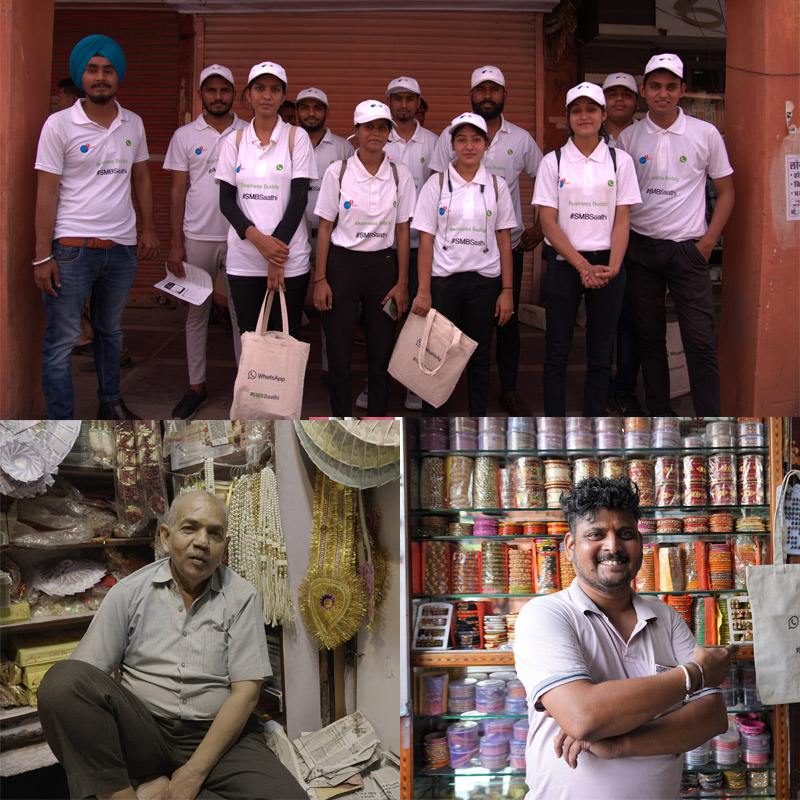
    Mumbai: WhatsApp India on Tuesday unveiled #SMBSaathi Utsav, a programme aimed at supporting small businesses in adopting digital tools like the WhatsApp Business App to conduct their operations. The goal of this programme, which was launched in partnership with Josh Talks, is to educate and assist small businesses in realising their full potential through WhatsApp.

    #SMBSaathi Utsav has kicked off with a pilot in Jaipur’s Johri Bazaar and Bapu Bazaar where 500+ small businesses are being trained on various aspects of running their business online. 

    India is home to approximately 63 million MSMEs (micro, small and medium enterprises) accounting for 30 per cent of the country’s GDP (gross domestic product) and employing over 110 million people at present. During the pandemic, these businesses were severely affected witnessing a 20-50 per cent decline in their overall earnings. One of the major reasons behind this fall was the lack of market access. To help these businesses revive from this downturn, WhatsApp launched the #SMBSaathi initiative earlier this year. The #SMBSaathi Utsav is the second phase of the #SMBSaathi campaign. 

    The initiative showcased inspiring stories of business owners across India who pivoted to digital ways of doing business during the pandemic. For many of these businesses, WhatsApp was their first digital gateway and an easier & more effective alternative to building and maintaining a website. 

    Businesses across sectors such as traditional arts and handicrafts, jewellery, fashion and apparel, food and beverage outlets and several others are being trained on using the various features of the WhatsApp Business App and are being guided on how they can market their product to the right audiences.

    WhatsApp India head Abhijit Bose said, “We are excited to launch the #SMBSaathi and #SMBSaathi Utsav, programmes that are dedicated to India’s small business community. Small businesses are the backbone of our economy and technology has the potential to further boost their business. During the pandemic, we saw several small business owners thriving by using simple platforms such as WhatsApp Business App to stay connected with their customers. A small beauty salon in suburban Mumbai used WhatsApp Business App to keep her regular customers engaged through the lockdown, a dhaba owner in Gurgaon, is directly connecting with his customers using WhatsApp Business App thus driving an overall efficiency in his operations and reaching newer markets. Examples such as these are a testament to the fact that India’s small business owners have the ambition, passion and creativity to leverage simple and reliable technologies. We are committed to finding new ways of increasing awareness about simple digital tools for businesses to support and celebrate the spirit of entrepreneurship and innovation in India.”

    Jaipur’s Rupam Jewellers owner Arvind Sharma said, “I always thought that taking my business online would be a difficult and tedious process. As small business owners, we have earlier focused only on the traditional ways of doing business. However, the pandemic taught us that it is important to innovate and find new ways of running our business on digital platforms as that is where the audience is today. WhatsApp plays a very important role in our everyday communication with our regular customers and now with my business digitally available on the WhatsApp Business App, it will become a lot easier to connect with newer customers and service them quickly.”

  • GoDaddy is boosting digital skills development in India: Nikhil Arora

    GoDaddy is boosting digital skills development in India: Nikhil Arora

    NEW DELHI: Covid2019 has impacted every part of our lives, from financial spending to the places we can go to. Running a sustainable business has emerged as one of the bigger challenges that this crisis has brought to the forefront. It has now become crucial for businesses to adapt to the current situation and recharge their foundations to help survive in these challenging times.

    Amidst this pandemic, GoDaddy has witnessed an increase in the customer footfall, as companies revamp their strategies, move online, and find unconventional ways to communicate with their customers.

    In lieu of the situation and looking at the current need and demand from small-scale ventures, GoDaddy launched a global #OpenWeStand campaign, a virtual movement encouraging everyone to share products and services, learnings, and insights to help small businesses survive and thrive.

    According to GoDaddy Inc, VP and MD India Nikhil Arora, owing to the rising need for digital skills, the brand set up the first online educational platform – GoDaddy Academy, offering basic technology and online business training, free of cost. “We also joined forces with Ketto, India’s leading crowdfunding platform, helping local entrepreneurs and small business owners to start fundraisers for free and raise money to pay off any business debts, employee salaries, etc. during the crisis.”

    GoDaddy Academy is an online education platform in India, where people (with varied levels of technical expertise) can come and take certification courses to learn online business and technology skills. After receiving a positive response on GoDaddy Academy, the brand has also partnered with EduSkill, a non-profit social enterprise designed to help boost digital skills development in India. With this partnership, it aims to create a talent pool of over 50,000 skilled youth in the country, by offering GoDaddy Academy courses to more than 2000 educators across eduskills’ 800+ partner universities and engineering colleges in India for a period of one year.

    The brand is constantly working towards helping small enterprises from tier-2 and tier-3 cities to come and grow online. Arora shared, “We are hopeful and excited to be here in this market at the time to witness the tremendous internet boom and help educate and enable small businesses to realize the benefits of being online. We have penetrations in all markets across India but are strongly focused on bringing small businesses and local entrepreneurs from tier cities, which form 50 per cent of our India customer base.”

    With the objective of raising awareness among the SMEs community, the brand recently kicked off the second phase of its Indian marketing campaign – Bijness Bhai. The initiative continues the focus on encouraging small businesses in India to build an integrated online business. The ad campaign is available in seven Indian languages, including Hindi, Gujarati, Kannada, Malayalam, Marathi, Tamil and Telugu, to help spread the message to Indian small business owners and entrepreneurs across multiple geographies in the country.

    GoDaddy launched the campaign during the IPL to build a more personal and emotional connect with the target audience across India.

    The first phase of Bijness Bhai was launched in 2018, when the brand worked towards encouraging people to turn their ideas into reality online and help people understand the ease and affordability of building a website to manage and grow their businesses.

    Arora stated that due to the outbreak of the pandemic, marketing mix of various brands have been disrupted and the choice of medium has significantly shifted towards TV and OTT platform viewership, as well as social media conversations.

    For the Indian market this year, the brand decided to use a range of media and marketing channels, including TV, social, and other digital properties to maximise reach with a variety of audiences. “Our distribution pattern while advertising for this year’s campaign included TV, Disney+Hotstar and all GoDaddy owned social platforms, from October until the end of this IPL season.”

    He firmly believes that in today’s context customers have a number of tools at their fingertips to make purchase decisions. “This shift has given birth to omnichannel advertising to provide customers with a seamless experience across all communication channels. We are also working towards reaching out to our customers through various mediums of advertising.”

  • Lifestyle retailers ride on festive cheer, but will it last?

    Lifestyle retailers ride on festive cheer, but will it last?

    NEW DELHI: Businesses across varied sectors are trying their best to beat the lockdown blues altogether after months of economic slowdown. Apparel and lifestyle retailers have some cause for cheer as the sector is showing signs of revival. The players are banking on the festive season to revive their sales further.

    In August, lifestyle retailers reported almost 20 per cent growth, the best since outlets reopened in June after months of lockdown.

    Retailers say that the business has started picking up over the past few weeks, and now with Diwali and the wedding season around the corner, it will help brands to perform better as compared to the lockdown period. However, companies believe that it will take around six months at least for the business to be back on the actual sales and revenue figures.

    Consumer demand registered an uptick on the occasion of Navratri and Durga Puja but so far, the average ticket size is small.

    Cantabil Retail India Ltd director Deepak Bansal said the brand is expecting around 40 per cent growth compared to the previous months. “We anticipate achieving 75 per cent of what we achieved vis-à-vis last year. With the new merchandise and festive offers, we are hopeful it will act as a pull factor for the customers and the season will prove to be good for the whole industry.”

    He shared that to achieve the same growth figures as last year will take time, and not to expect the market to function at pre-pandemic levels before the next financial year.

    TCNS Clothing Co Ltd head – marketing Aarti Ahuja agreed that there has been a revival of demand for festive products such as ethnic dresses, accessories, and attires. Consumer trends may not match the demand created by festivals in normal times but the growing sale of festive products is reviving the sector and displaying high inclination of buying festive products, she added.

    Havas Media managing partner- North & West India Uday Mohan was of the view that the lockdown has resulted in pent-up demand. A lot of discretionary spends on travel/holidays/eating out have been cut down, so all these savings should be pumped towards retail spends especially with a plethora of deals available.

    By contrast, Spykar CEO Sanjay Vakharia doesn’t perceive the current situation to be sustainable. “Festive period would be comparatively good, and that will lead us into the end of season months. Post that will be the real test and what turns the business will depend on a lot of variables.”

    It was an unprecedented crisis for the retail sector when stores were shut for months during the lockdown, but the unlock phase has its share of challenges too. Now, customers are preferring to shop online instead of stepping out. The situation has driven companies to focus on the e-commerce model.

    Bansal explained while offline sales have bounced back in the second quarter and look stable for Tier 2 and 3 cities, the customer in Tier 1 cities are still more comfortable ordering online. “We have been working towards strengthening our digital channel. We have forayed into the online market space recently, so this would be the first festive season we would be available online and are expecting good traction in the number of sales".

    Ahuja also chimed that the brand is witnessing a rise in footfall as the year progresses, however, there is a growing trend of people leveraging both online and offline channels to purchase products.

    In order to boost sales, retailers have been offering heavy discounts of up to 60 per cent. Future Group, for example, is running discount offers of up to 60 per cent on apparels through third-party online sales, including Amazon India, and also offline via its own retail chains such as Big Bazaar and fbb.

    Considering most of the sales take place in this period, brands do extensive promotion and stress a lot on the marketing channels to leverage it. All the major brands have started launching campaigns, promoting products through the ATL and BTL modes.

    Ahuja shared that over the years, TCNS clothing has been exploring all mediums of advertising including print, outdoor, TV as well as OTT to reach the TG. However, the outbreak of the pandemic has disrupted the way media and content is being consumed. “We are evolving with the TG and focusing on changing trends in the ‘new normal’ by creating personalised communication for both online and offline consumers while bridging the gap. All costs are being challenged from a zero-based budgeting principle.”

    She further mentioned that various initiatives like hyper-local pop-up stores and virtual store visits are being experimented with. "The brand is exploring influencer marketing in a more structured and sustained manner. In terms of leveraging other media channels, it would depend largely on how the current situation evolves soon".

    Cantabil this year is focusing more on personalized communications for both offline and online consumers channels through SMS campaigns, influencer engagements, or strategic digital campaigns, in order to maintain connect with the target audience

    Biba MD Siddharth Bindra said that brands are planning innovative and creative ideas in terms of marketing to cope up with the current situation, with the maximum spend being on digital. “We, too, have changed our strategy and are adapting to the new. We are engaging with our existing consumers through our CRM tool and are very active online to keep our audiences abreast with what is new at Biba.”

    “From an overall perspective, TV and digital are the two lead mediums. For retail, specifically print (newspapers) continues to be the focus option. IPL and news are the key genres on TV where the bulk of advertising has been focused on,” Mohan concluded.

  • Brands halt retail expansion; focus on online models

    Brands halt retail expansion; focus on online models

    NEW DELHI: As the digital media started to pick up pace in India, retail brands like Pepperfry, Zivame, Nykaa, Lenskart, UrbanLadder, cropped up with entirely online business models. Slowly, they began to enter into the offline space to help customers engage with the brand in multiple ways and maintain recall factors. But with almost a 50 per cent drop in footfall and high rent rates, companies are unable to sustain. It’s not uncommon to hear of layoffs as well.

    The reverse phenomenon is happening now. Offline retailers are going online as they see that’s where maximum sales will happen. Most of them have paused omnichannel expansion across India.

    Furniture e-commerce brand Pepperfry had delayed its plans to launch new stores to mid-June due to the lockdown but has now resumed their offline expansion. The brand used to get 38 per cent from offline sales. As per media reports, fashion retail brand FabAlley is also dealing with the same issue. The brand has around 430 stores across India out of which only 200 are currently open. However, its online sales have picked up at a higher pace.

    Even cosmetic brand Nykaa, which extensively forayed into offline stores, has also taken a blow due to the lockdown. According to reports, the brand believes online is the only option to bounce back. 

    Business strategist and angel investor Lloyd Mathias explains, “Shutting down brick n mortar stores will certainly impact business revenue in the short term. Categories which are overly dependent on physical stores such as spas and salons and luxury goods will take a big hit and some permanent loss of revenue.”

    However, Brand-nomics MD Viren Razdan feels, “It depends on the digital maturity of the product category and within that, the role your brand has played up until now. Have you been a late entrant to the digital play or were you up ahead in the game? New categories would have teething issues such as jewellery shopping might not have the comfort of first-time digital shoppers.” 

    According to the Retailers Association of India (RAI) report, malls in India have registered negative growth and the street retail shops have also seen a decline. 

    The lower demand for offline shops in India is due to the touch-based factor and even brands like FabIndia have started a new category of ‘experimental zones’ for better engagement. Once the situation returns to normalcy, brands will prefer an offline medium again.

    Independent communication and marketing consultant Karthik Srinivasan shares, “Offline behaviour in India is deep-rooted, and the fact that digital money and internet availability is not 100 per cent, an offline presence is a necessity. Offline is an experience-led medium. Most brands that go back to offline would probably start questioning what they are bringing in terms of the experience that cannot be mirrored online. And that difference is what will help them continue because if everything else can be done online, there is no need for the offline version.”

    Mathias also feels that brick and mortar presence will remain relevant for consumers who want the look and feel of real shopping. “A large section of consumers will always like this option available to them. So, while the Covid2019 pandemic has been a set back to the offline stores – over time they will come back. However, for many this period has broken the stranglehold of brick and mortar with increased adoption of digital payment options and the sheer number of first-time online shoppers,” he asserted. 

    “India will always have markets with our country operating at varying levels of sophistication in technology adoption, so a phyigital reality will have room to play for some time to come,” Razdan shares.

  • eBay India to organise seminar on starting your own online business

    eBay India to organise seminar on starting your own online business

    eBay India invites all Mumbaiites to attend a seminar in your city
    and explore the possibility of starting your own online business
    A convenient way to earn and learn more at eBay Academy

    Mumbai, June 22, 2006: The eBay Academy to be held in Mumbai, aims to reach out to the entrepreneurial community of local sellers to the buyers across India and around the world.

    Attend a free seminar in your city, meet the experts and understand how you can start a business or expand your business on eBay.

    Date: Saturday, June 24, 2006

    Timings: Session 1: 10:30 am – 12:00 noon
    OR
    Session 2: 4:00 pm – 5:30 pm

    Venue: P L Deshpande Maharastra Kala Academy,
    Ravindra Natya Mandir,
    Near Siddhivinayak Temple,
    Sayani Road, Prabhadevi,
    Mumbai – 400 053


    For free registration, please call 32006735 / 32001073 or log onto
    www.ebay.in/academy.

    RSVP
    Deepa Thomas /Sneha Deshpande Mythili Rao /Anushri Dubey
    eBay India Vaishnavi Corporate Communications
    Tel: 91-22-66690000 91-22-56568716
    dthomas@ebay.com/sndeshpande@ebay.com mrao@vccpl.com/adubey@vccpl.com