Tag: Onir

  • ‘My Melbourne’ hits home, Indian directors put Aussie city on silver screen

    ‘My Melbourne’ hits home, Indian directors put Aussie city on silver screen

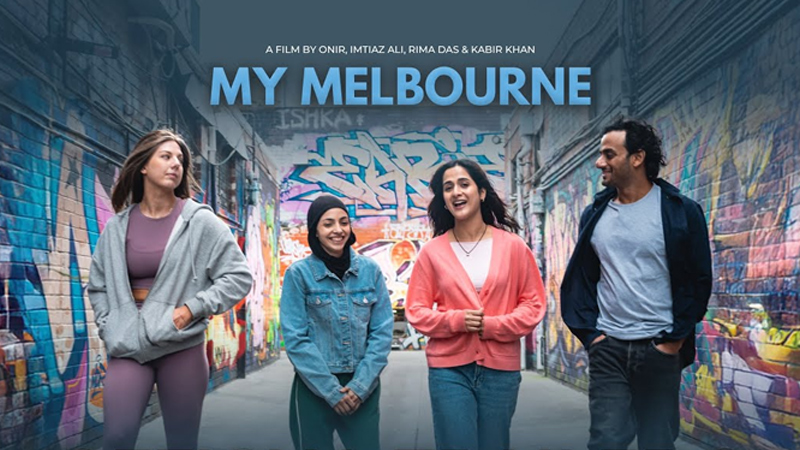
    MUMBAI: Ever felt the urge to pack your bags for Melbourne, but your wallet disagreed violently? Relax, India’s finest filmmakers are bringing the Aussie charm straight to you. Forget about flight costs and pesky visas—My Melbourne is your cinematic passport, presenting a city bursting with diversity, cricket fever, and more multicultural spice than your favourite curry.

    Premiering in Australia and New Zealand on 6 March 2025 and released in India on 14 March, My Melbourne is co-presented by Visit Victoria and is an anthology of four unique stories. Directed by India’s film powerhouses—Kabir Khan, Imtiaz Ali, Onir, and Rima Das—the film explores identity, belonging, and the spirit of multicultural Melbourne through true-to-life narratives.

    Each director puts their signature spin on stories woven around diversity’s four pillars: sexuality, gender, disability, and race. Curious yet? Let’s dive into these captivating tales:

    In Nandini, directed by Onir, Indraneel, a queer Indian man, reunites with his estranged father in Melbourne for a ceremonial ritual. Expect some father-son fireworks, raw emotions, and maybe a box of tissues.

    Jules, directed by Arif Ali under the creative guidance of Imtiaz Ali, follows Sakshi, a newly married woman bonding with Jules, a homeless local. Who knew friendship could bloom amid Melbourne’s streets, coffee shops, and unpredictable weather?

    Rima Das directs Emma, a heartfelt story of a talented deaf dancer overcoming discrimination and self-doubt after an inspiring meeting with another deaf dancer. Talk about dancing to your own rhythm!

    And then there’s Setara, a real-life epic directed by Kabir Khan, about a courageous 15-year-old Afghan girl rebuilding her life in Melbourne after fleeing the Taliban. Cricket and resilience? Move over, Hollywood superheroes.

    “Through this cinematic journey, explore the uniqueness of Melbourne that makes it every bit different. Enjoy Melbourne through this creative lens that showcases art, culture, food, sport, entertainment and hidden laneways. Don’t miss this colourful celebration of unity and diversity!” says the film’s promotional team. A bit dramatic? Maybe. But hey, it’s cinema!

    So, why not grab some popcorn and experience Melbourne’s captivating diversity right from your couch? Beats battling jetlag any day.

  • “I don’t think of filmmaking being gender-specific:” Mitakshara Kumar

    “I don’t think of filmmaking being gender-specific:” Mitakshara Kumar

    Mumbai: In the world of Indian cinema, where grandeur and storytelling often collide, Mitakshara Kumar stands out as a filmmaker whose journey is as captivating as her creations. With a background in Economics from Lady Shri Ram College and prestigious training from the Film and Television Institute of India, Kumar has seamlessly transitioned from a promising student to a celebrated director and writer. Her cinematic journey began as an assistant director with the iconic Bluffmaster! and has since soared to the grand stages of working on Sanjay Leela Bhansali’s epics and helming Disney+Hotstar’s The Empire.

    Indiantelevision.com’s Suman Baidh caught up with filmmaker Mitakshara Kumar as she took the helm of Netflix and Sanjay Leela Bhansali’s highly anticipated Heeramandi as episodic director, Kumar reflects on her career, her passion for diverse storytelling, and the future she envisions for herself and the industry.

    Edit Excerpts:

    On your entry into the film business working with Emmay Entertainment, and collaborating with Sanjay Leela Bhansali.

    I must agree that God and my parents have been kind, to say the least. Even before graduation, I had decided to write the FTII entrance exams, much to the disappointment of my father because I was an economics student. However, when I cleared FTII and thankfully because it is a premier Government Institution, my father’s disappointment soon turned into pride, especially because I was awarded a scholarship. After that, the decision to move to Mumbai was a natural step. I am thankful to all the filmmakers I had the opportunity to work with, be it Rohan Sippy, Onir, Nikhil Advani or Sanjay Leela Bhansali, each one of them have taught me so much and have helped me be the filmmaker I am today. I cannot say I had it tough, because the reality is that I did not… I definitely worked hard to get here, but the truth is also that the people I worked with were generous to let me learn.

    On directing the magnum opus Empire and then becoming the episodic director for Heeramandi, was there any difference for you, considering both were grand period pieces

    Honestly speaking, not quite. Because thanks to my training with Sanjay Sir on the films he made, I was comfortable with working on the scale and grandeur of these series. I am grateful to Nikhil Advani, Monisha Advani and Madhu Bhojwani for entrusting me with The Empire. It was my first and their confidence in me, in a way, bolstered mine as well. Then when Heeramandi happened, because it was Sanjay Sir, the world and the script was to the minutest of detail. So as a filmmaker for me on both fronts, it was easy, also as we had the best of crew and talent working on them with the utmost of passion. What more can a filmmaker ask for. (Laughs)

    On your concern towards being labelled as a filmmaker who only does period pieces

    There are days when I do think about it, I will not lie. But then I think that is the nature of the business. We are quick to slot people as to what they can and cannot do, till you break that for yourself. As a filmmaker, I want to be known for my quality of work and the legacy I will get to leave behind. I am working on my next, feature debut which is a contemporary, off-beat subject and have written another thriller that I am working on. So for myself, I am exploring different genres of cinema. I want to keep challenging myself to grow as a filmmaker.

    On the most difficult thing about being a filmmaker

    I think growing up, my parents much like everyone else’s, always told me that no matter what you do, do it to the best of your ability. That is something I try and do on every piece of work I do. I think I am now conditioned in a manner wherein I look at the difficulties presented on a set as an opportunity and find solutions around them. I think that is the best way to tackle a problem be it on set or off. On a day to day basis every film set will have something or the other that poses as a problem, the key for me is to be able to not lose focus on the larger picture and more importantly the story being told.

    On that note, you are one of the few female filmmakers in the country

    I don’t think of filmmaking being gender specific. That being said, yes there are fewer women filmmakers in the country, but that is something I also believe is on the path of change. Today we have the likes of Zoya Akhtar, Anjali Menon, Payal Kapadia, Kiran Rao, Meghna Gulzar, Farah Khan and so many others who are championing Indian cinema not just here but globally. I think what is crucial is that more press highlights the achievements of all these brilliant storytellers, which in turn can inspire a whole new breed of women storytellers.

    On inspiring a new breed of storytellers

    As an art form, Cinema is meant to inspire and evoke emotions. If through my work I can even influence one person for the good, then why not? Something I am more conscious about in my filmmaking is having more women part take in the making of my films and content. Just like I was given the platform, I only think it is fair and just to pave the way for others and pass it forward. Knowledge is always to share and that is something that I have learnt both from my parents and all my collaborators across everything I have done so far. The only thing I keep telling everyone is never stop dreaming and if you fail, keep trying till you succeed. “Himmat harne ki cheez nahi hai” (“Courage is not something that one loses”).

    Could you tell us a bit about what’s next

    I have a couple of interesting things lined up. Like I mentioned, one of them is a feature film with Emmay Entertainment. Collaborating with Nikkhil, Monisha and Madhu is always fun, for me they are home. I have a women-centric comedy I am working on and then there is also a thriller and musical that I am working on. I think it would be a little early in the day to share more details and I would leave that to my producers to do when the time is right. I want to focus on the creative and storytelling.

  • SonyLIV announces new web series ‘Pulwama Key No 1026’

    SonyLIV announces new web series ‘Pulwama Key No 1026’

    Mumbai: SonyLIV has announced that it will create a series on the Pulwama terror attack called “Pulwama Key No 1026,” helmed by National award-winning director Onir. 

    The eight-episode show will be based on the book “The Lover Boy of Bahawalpur” by award-winning author and journalist Rahul Pandita. “As a journalist reporting from conflict areas, my endeavour always has been to lend a face to people who otherwise get buried in history as statistics. The soldiers killed in the Pulwama attack had names, lives, dreams, hopes of the future. So do those who investigated the case painstakingly, often putting themselves in danger. I am glad that with my friend Onir we will be able to tell these individual stories all woven in one epic drama,” said Pandita, about the upcoming project.

    On 14 February 2019, a gruesome terror attack claimed the lives of 40 Indian soldiers and evoked the nation’s anger. “The series is a tribute to all those martyrs whose dreams were blown to smithereens the minute the suicide bomber’s car hit the bus,” the streaming platform said in a statement. 

    “The Pulwama terror attack did not just claim the lives of 40 CRPF Jawans, it broke India and its people,” said director and showrunner Onir. “It’s a story every Indian should know, and I feel honored to helm this project along with writer Rahul Pandita.”

    “Since its revamp last year, SonyLIV’s constant endeavor has been to highlight stories of India that have a global relevance,” said Sony Pictures Networks India head of content for SonyLIV and Sony Entertainment Television Ashish Golwalkar. “Rahul Pandita’s book The Lover Boy of Bahawalpur is a noteworthy read and brings out the unknown facts about the incident and what ensued thereon. We are pleased to announce this project that’s backed by Onir, an amazing director.”

  • NFDC’s Raja Chhinal passes on

    NFDC’s Raja Chhinal passes on

    MUMBAI: The National Film Development Corp of India lost one of its flag bearers on 17 May. Deputy general manager Raja Chhinal died in BLK Hospital in New Delhi where he was undergoing treatment after suffering from a brain abscess and undergoing surgery for the infection. He had been ailing for a while. He was only 47 and leaves behind his wife and twin daughters.

    The reason why indiantelevision.com is writing about his is because he was the man who worked on a lot of the Indian independent film maker delegations that made their way to the Cannes Film Festival, Berlinale and MIPCOM and MIPTV, Hongkong Filmart and many other markets. And he was key to the pavilions that were set up there.

    A mild and unassuming professional he was a hardcore long-term NFDC executive and played an important role – along with the then managing director Nina Lath Gupta – in transforming the film funding corporation into the outfit that it is today.  For her, he was the go-to man for international markets. And for Film Bazaar, held in Goa, which has become the annual event for the independent film making community the world over.

    Social media was full of expressions of shock and condolences to Raja.

    “So sad to hear.  A good soul,” wrote Lunchbox  director Ritesh Batra.

    “Very, Very Tragic,” expressed film maker Onir.

    Said Indo German Films founder Stephen Ottenbruch: “ “We will miss you Raja. Rest in peace.”

    “God bless his soul with eternal peace.  A luvly human being…gone too soon.
    Heartfelt condolences to his family. Sad,” opined VR Films joint managing director Krishi Dutt.

    “Dear Raja, There's so much to write and say on the little ways in which you made a difference to the Indian indie scene and to NFDC! All I can say here is thank you, god bless & you will be missed. Rest in Power! And in Peace,” penned MovieSaints India head Anupama Bose, who worked with him closely at NFDC some time back.

    We at indiantelevision.com also offer our condolences to his family and to his colleagues – former and current – at NFDC.

    Picture courtesy: Svetlana on twitter

  • Berlin Festival: Amar Kaushik’s ‘Aaba’wows audience

    MUMBAI: Indian filmmakers never cease to amaze the global audience with their storytelling and filmmaking skills. As the Berlin Film Festival drew to a close on Saturday, Indians had a reason to rejoice. Debut filmmaker Amar Kaushik’s short film, Aaba bagged the prestigious award at the 67th Berlin International Film Festival 2017. The unconventional love story won Special Prize of the Generation K Plus International Jury for the Best Short Film of the year.

    The film was premiered in the Generation Kplus competition on 11, 15, 16 and 19 February 2017.

    Aaba is the brainchild of Amar Kaushik, who has gone full circle in life before penning down this moving tale about a man on the edge of his death bed. Produced by Raj Kumar Gupta and Mitul Diskshit and co produced by Onir and Alison Welly, the film was shot in Apatani language in Ziro district of the picturesque valley of Arunachal Pradesh, with a cast comprising locals of the state. The story revolves around an orphan girl who comes across the news of her grandfather reaching the terminal stage of lung cancer. As the grandfather (Aaba) starts counting his days, the family faces unexpected turns.

    Kaushik said, “Aaba is my first film as a director and the project is very close to my heart. Being awarded at the Berlin Film Festival for Aaba has given me moments that I will cherish all throughout my life. This award is for my entire team without whom, this would not have been possible. Special thanks to my mother for sharing such a wonderful story with me and to all my producers for placing their trust in me.”

    The producers were confident that the heart-rending story will strike a chord with the audience. From the locations, situations, people and expressions, Amar has put his best foot forward to replicate his imagination into this film. The confidence that Raj, Onir and Mitul had in ‘Aaba’ has clearly well paid off, as the premiere of the film at the 67th Berlin International Film Festival received amazing response, followed by the award on Saturday evening.

    Commenting on Aaba’s success at Berlinale, producer Raj Kumar Gupta, said, “I feel very proud and am elated that our film has won at such a prestigious festival. It was a script that had moved me and I decided to produce it along with my friend, Mitul Dikshit. Congratulations to each and every team member who made this film happen.”

    Born in 1983 in Uttar Pradesh, India, Amar Kaushik grew up in Kanpur with his grandparents and the north-eastern state of Arunachal Pradesh, where his father worked in the government’s forest department. He completed his graduation in Science with an aim to join the Indian Air Force, only to slowly realize that it wasn’t his real calling.

  • ‘Wazir:’ Give me Ludo any day!

    ‘Wazir:’ Give me Ludo any day!

    Vidhu Vinod Chopra’s company has some very successful entertainers and they have been huge money-spinners for the banner. To this end, his tie-up with director Rajkumar Hirani has proved to be fruitful. But, left to his own, Chopra likes to indulge in stories of intrigue, the earlier one being Eklavya. This time Chopra is credited with the original story ofWazir. Simply put, it is a story about two persons, Amitabh Bachchan and Farhan Akhtar, affected by the same villain and the way they join forces to avenge the wrong done to them.

    But Chopra does not like to make it so simple. He weaves a web of complications around the script and the characters like the game of chess, which is at the centre of this film. What backfires on the script is that the audience knows who the culprit is while Bachchan and Farhan try to expose him.

    Farhan is out with his wife, Aditi Rao Hydari, and daughter. While Aditi goes to a shop to get some work done; Farhan, waiting for her, spots a dreaded terrorist who, the authorities think, is in Karachi. A dutiful ATS officer that he is, he starts to chase the terrorist’s car. The chase ends abruptly when, after he turns a corner, the terrorists are waiting for him and start shooting at him. Farhan takes a bullet but survives while his daughter falls to a bullet. 

    The happy family of Farhan is shattered. Aditi holds him responsible and wants nothing to do with him anymore. Soon, Farhan learns where the killer of his daughter is. He defies the ATS cadre, which is out to get the convict with instructions to take him alive since he is linked to an influential minister. Farhan’s rage is uncontrollable and he kills the terrorist. 

    As is the norm in Hindi films of suspending honest and brave officers, Farhan too is suspended from the force. Farhan is forlorn and also decides to commit suicide at his daughter’s grave when Bachchan steps in. He gives Farhan time to have a second thought and, purposefully, drops his wallet at the gate of the cemetery. Luring Farhan to come visit his home to return the wallet. 

    Bachchan runs a Bal Bhavan at his home. He is some sort of an expert on chess and teaches small children to play the game. There is another woman around who teaches them the skills of drama. Bachchan has lost his wife and both his legs for being flamboyant. Out on a ride with his wife, he exceeds the speed limit of his car and tragedy ensues. 

    As it turns out, Bachchan’s daughter has been murdered by the same villain, Manav Kaul, who is also responsible for Farhan’s tragedy. Being handicapped, Bachchan needs a brave man with the same determination to finish the wrongdoer. Bachchan starts working on Farhan and while teaching him to play chess, fills his mind with a purpose, which is to kill Kaul. 

    By now, Farhan has grown very fond of Bachchan, who creates a fictitious character called Wazir. Wazir torments Bachchan and hurts him and also promises to kill him. Why Bachchan and why not Farhan himself as the handicapped Bachchan is no threat to anyone while Farhan is the one capable of taking revenge. But, that is Bachchan’s way of emotionally blackmailing Farhan to go out and get the man who killed his daughter.

    Kaul for his part lives a dual life. He is a terrorist who has killed the entire population of his village in Kashmir but using dramatics has emerged as the victim and as a patriot. He has even won elections and is now in a position to call the shots with police. Bachchan adopts all the tricks in the trade to convince Farhan to go after Kaul. Farhan does so. Kaul is at a public rally, surrounded by an army of guards but Farhan makes it look so easy that the audience satisfaction of justice to the villain is lost. 

    The script of the film is like a game of chess for one who is not familiar with the game. The revenge angle is stretched and even it just a little over 100 minutes, the narrative sags. And the director’s fancy for creating rain and shooting in low light most of the time makes the viewing drab. It is the same complaint with cinematography: too much of low light. The film has little scope for songs but is loaded with seven numbers. Editing has no place here for that would have rendered the film to the length of a TV episode. 

    Bachchan makes his presence felt by being loud. His get-up makes him look like a caricature and is quite a put off. Farhan justifies his character to the best of his abilities. Aditi has little to do. Cameos by John Abraham and Neil Nitin Mukesh are okay. Kaul does a fair job despite his stereotypical character. 

    Wazir has nothing for the single screens, and its time at the multiplexes won’t be exciting either. 

    Producer: Vidhu Vinod Chopra

    Director: Bejoy Nambiar

    Cast: Amitabh Bachchan, Farhan Akhtar, Aditi Rao Hydari, Manav Kaul and cameos by John Abraham and Neil Nitin Mukesh

    ‘Chauranga:’ This is not cinema

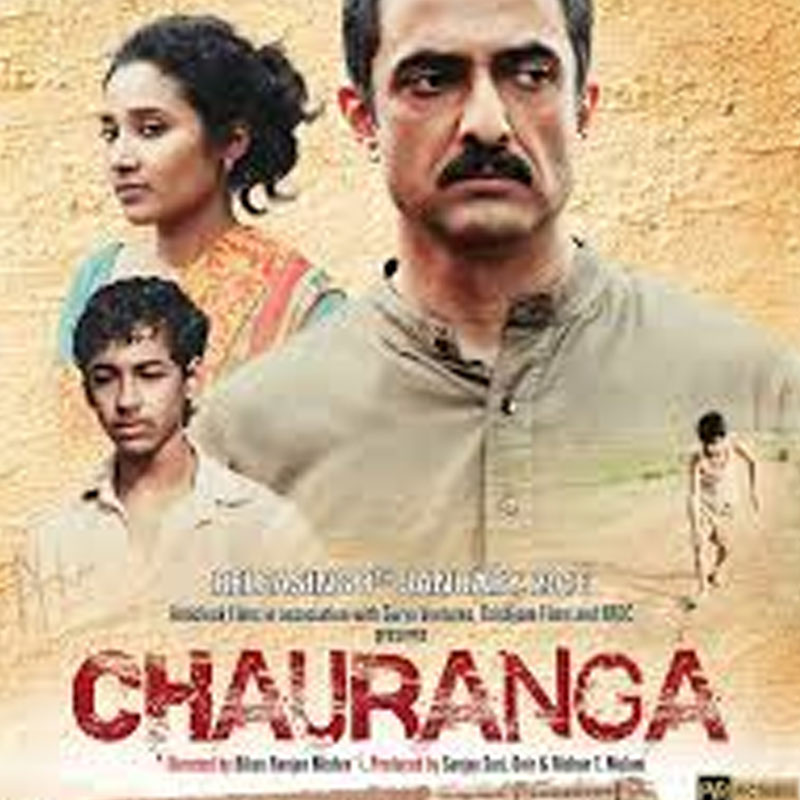
    Chauranga is one more offering from the National Film Lab organised by NFDC and others, which means it is meant to exploit poverty, class differences and such problems in India and earn glory at various film festivals. This film has been doing the festival circuit since 2014 and has finally come to try to reach the Indian audience.

    Two brothers coming from a backward class family are thick in their brotherhood. While the elder, Riddhi Sen, studies in a school away from his village, the younger, Soham Moitra, whiles away his time hanging around a jamun tree, watching the village strongman’s (Sanjay Suri) daughter passing on her two-wheeler. He has fallen in love with her and is convinced she too loves him because she always spares a smile for him.

    Suri is the village headman by proxy as he takes all the decisions for a voicelessgram panchayat. While the population of the village is purely segregated between upper and lower castes, it does not come in the way of Suri from having a liaison with the mother of these two boys, Tannishtha Chatterjee. Her job is to look after the cowsheds of Suri and that is where their rendezvous takes place. In return, Suri looks after the education of her son. 

    Suri has built a hand pump to solve the village’s water problem. He decides to invite a politician to inaugurate the pump followed by a film show for the entire village. This way, while the whole village is glued to the cinema, he can have his time with Tannishtha in the cowshed.

    From the beginning of the film, there is a naagin slithering around on the screen, protecting her eggs. And during the duo’s rendezvous, she decides to leave her eggs, slithers into the cowshed and bites Tannishtha.

    Earlier, besotted Soham has convinced his educated elder brother to pen a love letter to Suri’s daughter. Doting on his brother, the elder one obliges. It is some lines from a film song, which Suri had heard from the boy on an earlier occasion. That sounds the death knell for the boy. The younger one manages to board a goods train to escape to safety. 

    Having sat through it, it is tough to understand the purpose of such a film. Its theatrical release spells disaster. 

    Producers: Onir, Sanjay Suri

    Director: Bikas Ranjan Mishra

    Cast: Sanjay Suri, Tannishtha Chatterjee, Riddhi Sen, Soham Maitra, Ena Saha

  • Filmmakers Onir and Sanjay Suri resort to crowd funding for Chauranga

    Filmmakers Onir and Sanjay Suri resort to crowd funding for Chauranga

    MUMBAI: Looks like Onir and Sanjay Suri‘s upcoming film Chauranga is all about crowd sourcing.

    After crowd sourcing talent like its publicity designer and background score designer who were picked through an open contest on Facebook, the filmmakers have now resorted to crowd funding for their film to be directed by Bikas Mishra.

    Crowd funding is collective pooling of resources by people, usually via the internet, to support efforts initiated by other people or organisations.

    Chauranga, a fictional account of six days in a dark corner of India, tells the story of class oppression in rural India.

    This project was part of Screenwriters‘ Lab at Locarno Film Festival and ScriptStation at Berlin Talent Campus. It won the Incredible India award for the best project at the co-production of NFDC Film Bazaar, Goa 2011. It also received script and project development funding from Goteborg International Film Festival, Sweden. It was recently invited for Paris Project, the co-production market of Paris International Film Festival 2012.

  • Onir displeased with DD for refusing to telecast I Am

    Onir displeased with DD for refusing to telecast I Am

    MUMBAI: Filmmaker Onir is upset that his national award-winning movie I Am has been refused a screening on Doordarshan.

    “Despite having cut seven minutes of the film and all abuses, we are refused whereas the same TV shows other much more adult stuff. I am dismayed at the double standards of the Censor board. While it‘s ok to show Satyamev Jayate on DD prime time, telecasting of my film is refused,” Onir tweeted.

    The film is divided into four stories dealing with issues like homosexuality, child abuse, Kashmir problem and sperm donation. 

    Trade analysts are of the view that I Am has been given a U/A certificate while it is necessary to be ‘U‘ certified for it to be telecast on DD. “Anyway it‘s a joke that Doordarshan needs a ‘U‘ certificate while all the other satellite channels are allowed U/A,” he said.

    Incidentally, I Am won the National Award for best Hindi film and best lyrics this year.

    The film, starring Rahul Bose, Manisha Koirala, Juhi Chawla and Sanjay Suri, has already been screened at various national and international film festivals.

  • Guwahati fest jury to include Onir and Cyrus Dastur

    Guwahati fest jury to include Onir and Cyrus Dastur

    MUMBAI: The second Guwahati International Short Film Festival (GISFF) will include filmmaker Onir and theatre personality Cyrus Dastur.

    The jury, to be held from 4 to 6 May, will be headed by senior filmmaker Gautam Bora. It will also consist of National award winning director Sanjeev Hazarika and this year‘s National award winning film critic Manoj Barpujari as members.

    Interestingly, Onir‘s film ‘I Am‘, a compendium of four short films that won the National Award for the best Hindi Film as well as best lyrics recently, will have its northeast premiere at the festival.

    The preview jury will be headed by noted cinema and theatre personality Nayan Prasad and have film critic Chandan Sarmah, editor Kaju and film society activist Nesimul Mazid as members. The preview juries will shortlist the entries for final screening at the festival.

    The festival will organise a number of seminars, workshops and open discussions in April as a run-up towards the main event.

    While the competitive sections of the festival will have Northeast Shorts Competition (open only for filmmakers from northeast) and National Mobile Phone Short Filmmaking Contest, the non-competitive sections will have World/Indian premiere, world kaleidoscope, Indian kaleidoscope and student kaleidoscope.